Top 10 New Term Checklist: Are You Ready?

It is never too early to make a list at the beginning of term
With the Spring 2011 academic term off to a bang this week and next, I thought I would put together a list of areas to check off as students navigate their first few weeks of classes. It is never too early to get yourself prepared and create a good game plan to make this semester better than the last—it can take many semesters to get all of this down, believe me! 

So without further ado and in no particular order, here are ten ways to ready yourself for the new year:

1. Check your classroom listings: this is imperative to do, especially if you attend a large university or have classes that take place on more than one campus (yes, I always have students at the beginning of each term who make this mistake). It never hurts either to take a dry run finding your listed classrooms ahead of time and even scoping out the most advantageous seats and plug-ins for laptops. It sure beats the frustration and rushing around on the first day of class to make sure you find the place you are supposed to be. Online campus maps are also terrific for pre-planning, so Google your university’s name and map to begin the process.

2. Read over syllabi carefully: A syllabus is like a contract and establishes the mutual expectations for a class between student and professor. One of the first things you want to check immediately are the dates for any midterms and finals. These dates are written in stone, and if you cannot make them because of other plans (and no, a trip to Hawaii or a friend's wedding are not legitimate reasons to miss an exam), consider dropping the class.  Remember, deadlines are your responsibility. Also, make sure to check your syllabus before emailing your professor with a question about the course. I cannot tell you how many questions I get each term that are clearly answered by the syllabus. Consider keeping a copy with you whenever you attend the class.

3. Get your books (eventually): Ask any senior undergraduate or graduate student about purchasing books, and they will no doubt tell you what nobody ever reveals to you in your first year-- wait to buy your books. Yes, I said wait. And although some of you might find it really tough to resist the urge to line up with hundreds of other students and spend hours to buy books during the first week of class (something that always amuses me), you will have the luxury of shopping in relative peace and quiet and perhaps save some money if you do. First, it often helps to wait until after you go to your first class and find out if you need all of the books listed at the bookstore (many times, you don’t). Another option is to wait and check the titles and prices of the books at the online university bookstore and see if you can find them for better prices elsewhere. I have seen students make ridiculous savings buying textbooks on Amazon, Chapters or Abebooks.

4. Check on-line course material: Almost all courses these days have an online component through tools like WebCT or Moodle where professors post links, images, class material and provide discussion boards etc... Make sure to check either on your syllabus or through a quick preview of your personal university homepage to see if your course also has an online component. Most institutions have a personalized portal which links you directly to any online connection to a class. Make sure to check the online material frequently and take note of any additional information related to assignments and/or exams that are often posted there.

5. Note important dates and deadlines: Along with the syllabus, it is important to bookmark or make a copy of your university’s dates and deadlines so that you are clear when add/drop dates, holidays, tuition deadlines, registration deadlines, graduation deadlines, final exams, etc.. etc.. occur. I usually just cut and paste these deadlines directly into my day planner or check them periodically to make certain I do not show up to teach a class during reading week J

6. Double check your registration: The saddest thing is when a student finds an “F” on their transcript at the end of the term because they erroneously remained registered for a class that they “meant” to drop. Be warned, not all universities will listen to your tale of woe, so do yourself a favour and double/triple/quadruple check your registration before the final add/drop deadline to make sure you are not registered for classes other than those you are actually planning to attend.

7. Purchase school supplies: I admit that this is my favourite thing to do each term. And yes, I was that geek in grade school who was happy in August when the school supplies showed up in the stores! Remember too that you can charge a killing if you are that one student with a mini stapler on the day assignments are due in class.

8. Look into taping your lectures: I encourage students who find it difficult to keep up with note-taking or enjoy having another listen to ideas raised in classroom lectures and discussions to consider taping lectures. Some things to keep in mind—first, make sure to check and see if it is OK with your professor before taping the first time (you need their permission); and second, see if your professor is already having the service done by another source. Some universities provide a lecture taping service and playback for large lecture courses. You can also check my blog post on this topic for tips and different approaches to the task.

9. Make a transportation plan: You might be surprised how easily and affordably you can create a carpool or learn about better ways to get yourself to classes by talking to fellow students and/or checking with your university’s website for resources (many schools help arrange car pooling). Also check your transit provider's website for routing plans-- many of them give alternative (and shorter!) suggestions getting from Point A to B.

10. Pay your tuition: Don’t forget—it is crazy how many students do.

Counterculture Moments: CBC RetroBites


From the top-down: Iggy Pop, Hunter S. Thompson,
Jack Kerouac, and Jimi Hendrix
I absolutely love vintage footage of artist interviews and last fall I began to follow and collect YouTube clips from the CBC’s RetroBites series. Canada’s national public television and radio broadcaster has been putting out these fantastic selections from its rich archives for some time now, and I am always surprised and delighted with the great insight and material these vintage clips offer. I recently blogged on the topic of film director’s defending their craft with a great juxtaposition of CBC interviews done with Orson Welles, Leni Riefenstahl, and David Cronenberg, and it made for great classroom discussion with students about the question of artistic intent in the understanding of how meanings circulate for specific art projects.

In this post, I have collected interviews with four famous counterculture figures—Jack Kerouac, Hunter S. Thompson, Jimmy Hendrix, and Iggy Pop. Starting with Jack Kerouac, his associations with and influence on the post-WWII Beat Generation are well known, but many may not realize his French-Canadian heritage and the profound role it played in the development of his oppositional politics. I find the brief yet powerful CBC interview fascinating for the way it captures Kerouac’s Quebecois accent (he even digresses into French) while defending the validity and power of the Beat movement. By contrast, Hunter S. Thompson’s defence of his infamous book on Hell's Angels culture is much lower key and signature blasé. Still, the inventor of “gonzo journalism” offers viewers more than a glimpse of his approach through the use of sarcasm, irony, and humour to expose his object of scrutiny. Moving on to Jimi Hendrix’s interview, we are presented with the famous musician as very relaxed and open to discussion on a range of topics, from underground radio, to his fans, and even the experimental nature of electronic music. His charisma is infectious in this clip, as is his demonstrated passion for tying music to social change. Finally, the Iggy Pop interview offers up a remarkable and beautifully concise defence of punk rock music by one of the movement’s most influential and innovative artists. I especially love how the idea of “punk” is dissected and qualified here—brilliant!      

Enjoy the videos as follows: Jack Kerouac (1959); Hunter S. Thompson (1967); Jimmy Hendrix (1969); Iggy Pop (1977)


Further Reading:

Bill, Roger. "Traveller or tourist? Jack Kerouac and the commodification of culture." Dialectical Anthropology 34.3 (2010): 395-417.

Itzkoff, Dave. "Iggy Pop: Open Up and Bleed." Biography: An Interdisciplinary Quarterly 31.1 (2008): 199.

Klein, Joe. "Gonzo: The Life of Hunter S. Thompson." Biography: An Interdisciplinary Quarterly 31.1 (2008): 207.

Price, C.G. "Got My Own World to Look Through: Jimi Hendrix and the Blues Aesthetic." Journal of American & Comparative Cultures 25.3/4 (2002): 442-446.

Weekly Twitter Round Up


Happy New Year! Kicking off 2011 with glorious sunshine filled days here in Vancouver has been amazing to counteract the soggy winter blues that were beginning to creep in with all of the holiday rain. The mere hint of spring (people were jogging the seawall and even playing tennis while we set out for a long afternoon walk today-- eat your heart out Toronto!) brings thoughts of renewal as the new academic term is set to begin. Enjoy the last of the holidays and check out some of my Twitterverse favourites from the past week. 

Why Criticism Matters: Masters of the Form: A sampling of defenses of criticism from great critics past


11 artists to watch in 2011


The 10 most overrated artists of the decade. Damien Hirst comes in at #1


The future of 3D home television


Kodachrome fades to black: An colourful era ends as world’s final developer of iconic film turns off his machine


Design of Coin Celebrating Prince William + Catherine Middleton Engagement Fares Poorly with Critics + Citizens


What AA Bronson Can Gain From A Smithsonian Shit-In. Take the Poll 

Top 10 Modern and Contemporary Art Exhibitions of 2011 Worth Visiting

For many of us, the new year invites thoughts of new beginnings, new adventures, and new resolutions. For me, the new year also invites plans of travel and an entire year of new art exhibitions to research and visit, and for several years now I have made concerted efforts to coordinate personal and business trips around upcoming shows at favourite modern and contemporary galleries around North America and Europe. Seeing Marina Abramovic at MoMA last spring was a true highlight of 2010. This year is no different, and with a research trip planned to Europe over the summer, a late spring trip to New York and a fall visit to Washington D.C. and/or Chicago, I am already thinking about how to work in a good schedule of museum and gallery going.

Over the holiday break, I began the process of planning ahead, and have picked ten modern and contemporary art exhibitions that I think are more than worth a visit. Because many galleries can only announce upcoming events into the late summer, keep in mind that this list represents mainly the best of 2011 through the early fall. I am just keeping my fingers crossed that I can find my way to more than a few of the following:

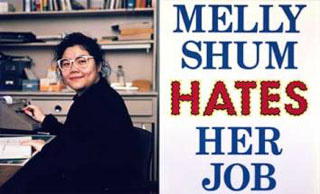
Ken Lum, Melly Shum Hates Her Job (1990)
10. Vancouver Art Gallery, Vancouver: Ken Lum (February 12- September 25)

I am starting with an exhibition close to home, and one that surveys the work of Vancouver-based artist Ken Lum who has played an important and influential role in the development of contemporary conceptual art discourse both locally and globally. Lum has both represented Canada at Documenta and helped train and guide new generations of Canadian visual artists through his work and writings. He was also a professor in my department while I was a graduate student at UBC—so happy to see VAG producing this show!  

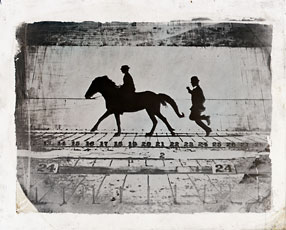
Eadweard Muybridge, Phases of a Stride (1879)
9. San Francisco Museum of Modern Art, San Francisco: Helios Eadward Muybridge in a Time of Change (February 27- June 11)

I have already blogged about this fantastic exhibition and its history, but I am placing it on my list since it will be happening so close to home and only a quick plane ride away.

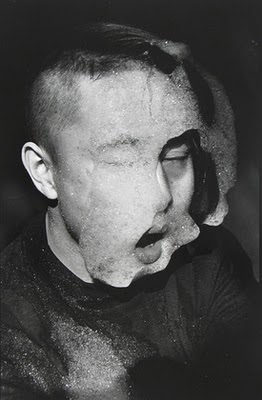
8. Museum Moderner Kunst, Vienna: Direct Art—Viennese Actionism in an International Context (November 12- May 29)

The Viennese actionists are an avant-garde performance art group originating in the 1960s that have always both intrigued and repelled me at the same time. Where better to learn about the controversial movement and its international contexts than in Vienna (at one of my favourite modern art gallery spaces)? This show is technically from 2010, but since it will be running into late spring, I wanted to include it on my list.

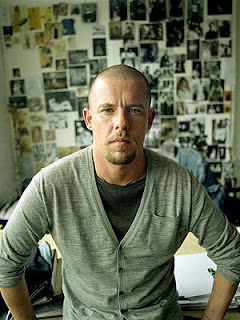
Alexander McQueen, late fashion designer
7. Metropolitan Museum of New York, New York: Alexander McQueen, Savage Beauty (May 4- July 31)

Normally I am not a big fan of fashion retrospectives at art museums, but I am making an exception for the work of Alexander McQueen, a true conceptual artist and creative designer who pushed the envelope of what constitutes fashion in the contemporary moment. His tragic death last year sparked many calls for commemoration, and I think this exhibition will begin this much needed process.


My area of special interest remains the fin de siècle period of modern art and visual culture up until the First World War, so I am especially thrilled that the Guggenheim will feature many of its most important works from this period in a dedicated show. More than 100 works representing an international and radical collection of artists is promised, and the timing of the exhibition coincides beautifully with the MoMA exhibition on Hungarian Revolutionary posters of 1919.

5. Museum of Modern Art, New York: Staging Action, Performance in Photography since 1960 (January 28-May 9); Abstract Expressionism and Film (February 13- May 23)
Rong Rong, East Village Beijing No. 81 (1994)

As mentioned in the previous entry, MoMA is already on my list with its look at Hungarian graphic art, but I will also make a trip to check out the exhibition showcasing the role of photography in the documentation and creation of performace art, and the fascinating topic of abstract expressionism’s influence on the world of filmmaking.


This dedicated exhibition featuring the work of female artists in one of the highest profile modern and contemporary art galleries in the world has been part of an ongoing series of thematic exhibitions since mid-2009. Unfortunately I have yet to manage a visit to the Beaubourg to see how this curatorial idea pans out in the exhibition space—there are many critics who do not think this show succeeds at all, but I want to check it out and decide for myself.


As I continue to pursue research in the area of digital and new media art, I am increasingly interested in seeing how curators and art institutions deal with exhibiting and pushing the discourse forward in this arena. I think this particular approach by Berlin’s House of World Culture Museum is both refreshing and very timely. Too bad it is only a week long event!


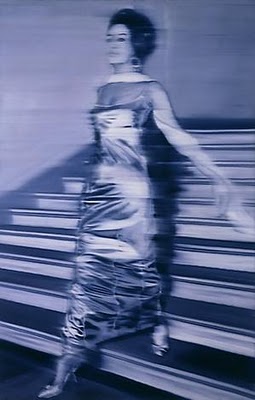
Gerhard Richter, Woman Descending
the Staircase
(1965)
For students who have taken contemporary art history classes with me and probed the question of what happens to painting after the demise of modernism, you know my admiration for Gerhard Richter. This first major retrospective of the German artist’s work is sure to be one of the highlights of the year for many art critics, art historians, and art enthusiasts alike.


As an art historian who spends a great deal of time introducing the concept of modernism and tracing the beginnings of modern art, I would both like to visit but also love to take an entire group of students to view and discuss this particular exhibition. Edouard Manet is of course a key artist in what is arguably a Franco-centered modern art discourse (one that I question and often challenge in my own work), but this exhibition promises to do more than simply celebrate the painter—it promises to consider the painter’s legacy and residual impact on the direction of art historical discourse writ large. This and the Richter show are tied as my first and second choice of the year, but I would always take a trip to Paris over a trip to London-- sorry my British friends!

Essential Reading| Taschen’s “Now” Series

Essential book covering 100+ contemporary artists
working in the international art scene today.
This is the time of year that I love to catch up on my reading and check out all of the various publisher and book seller newsletters that have accumulated in my inbox since September. Like many professors, I am a serious bibliophile and still love the whole process of hunting down great books for my home collection—especially books that serve as a point of reference and/or help me in my day to day teaching. I also get many requests at the end of term from students about what books to purchase in the area of art/film/photography/visual arts studies to start a core library in the field. In an effort to introduce and discuss some of these great picks for both students and other blog readers alike, I will be featuring some of my favourite books under the subcategory of “essential reading” over the next term. I will also continue to include these selections in the “Suggested Musings” section of the blog’s homepage with a link to more information at Amazon.com.

Diverse and covering filmmakers
from around the world-- visually stunning as well!
The first two books I will recommend are great basic foundation texts that come from the German art book publisher Taschen—Art Now! Volume 3 (2008) and Cinema Now! (2007). The first of these books is the third installment in a series that was first published in 2001, creating a primer for the contemporary art scene with a well researched list of the 100+ most important contemporary artists working in the international scene. Yes the list is subjective (what list isn’t)  and no it is not all-inclusive (it tends to favour gallery and exhibition darlings), but the book serves as a fantastic point of entry for anyone that would like to learn about the themes, issues, and core discourses determining the direction of the present-day art world and its many markets. Each entry (in an A-Z format) contains a short bio and discussion about the chosen artist (in English, German, and French) along with selected publications and exhibitions for quick reference, and of course selected images of the artist's work. Lucky for all of us, Taschen has also reproduced the book online in a format that allows you to virtually thumb through and explore the content.

Taschen's flagship store in London
Cinema Now! following in the footsteps of the popular Art Now! series sets out to examine the work and key themes of 60 contemporary filmmakers working around the world today. What I love about this book is how well the publishers and contributors have represented a diversity of world cinema (and of all genres) including the Asian new wave, the new auteur filmmakers coming out of South America and Central and Eastern Europe, and independent directors from North America. Taschen also includes a great DVD with the book that includes short films, trailers, extracts, and other great features to help highlight the books well written content. Visually appealing, concise, and well priced, Taschen’s books provide a nice entry point into the world of art/film/design/photography/fashion (among other areas concerned with the visual arts) that are more than just of the flashy coffee table variety. Taschen in fact has staked its reputation on publishing edgy and non-mainstream art and visual culture content along with its core introductory texts, including books that explore the world of fetishism, pornography, queer art, and the critical intersection of advertising and high art. You may have already spotted their recognizable texts in museums, galleries, and nicer book stores (Taschen books are routinely sold at MoMA for example). But, if you ever find yourself in Cologne, Berlin, Brussels, New York, Copenhagen, London or Paris, do yourself a favour and visit the Taschen flagship stores to explore the books in the publishing houses beautifully dedicated spaces. German design and content at its best!