Documenta 13: The Plan is No Plan at All

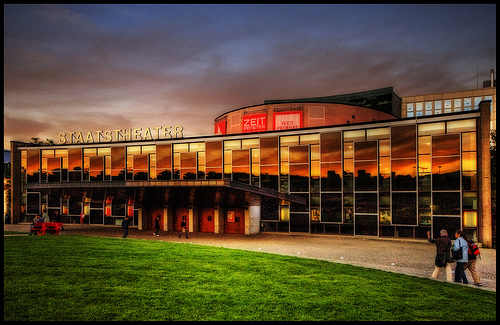
The Staatstheater in Kassel, Germany, one of the venues for  Documenta
For visual artists, Documenta represents the Olympics of contemporary art exhibition. Taking place once every five years in the German town of Kassel, the 100 day event has been organized on twelve separate occasions and maintains a long and dynamic history stretching back to the mid 1950’s. Back then, German architect, painter, teacher and curator Arnold Bode organized the first Documenta, featuring an exhibition of modern art works that had been unavailable to German audiences as a result of the Nazi party’s “Entartete Kunst” campaign that had categorized and banned virtually all modern art from Germany as “degenerate” and dangerous.  Over the years, the focus of exhibition has turned almost exclusively to contemporary art and maintained a tradition of open dialogue and discussion which foregrounds questions concerning art's relationship to the political, social, and economic dimensions of the modern world.

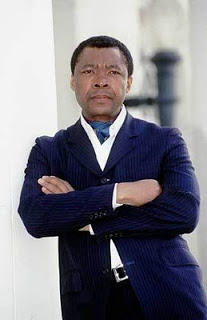
Okwui Enwezor, curator of Documenta 11
In the past several weeks, I have been paying closer attention as information has started to emerge related to Documenta 13, which will run from June 9-September 16, 2012. For the past several Documentas, the naming of the lead curator and overall theme of the exhibition has become a much anticipated part of the event. This has especially been the case since Documenta 11 in 2002 when Nigerian-born American critic and curator Okwui Enwezor attempted to push the conceptual boundaries of the often Eurocentric exhibition and introduce important themes concerning globalization, the divisions between the rich and the poor of the world, and the important debate about what the global art community's responsibility is to directly engage with the social and political problems of our time. I was fortunate enough to see and hear Enwezor speak when I was a graduate student at UBC around that time, and have continued to follow his important writings and talks about what he now defines as the tensions between the world of art production and the politics of disaggregation (see YouTube clip below).


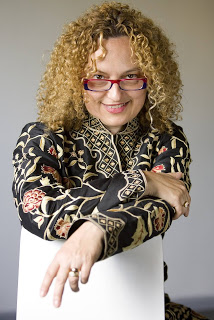
Carolyn Christov-Bakargiev,
curator of Documenta 13
For Documenta 13, Carolyn Christov-Bakargiev, a curator and writer in Rome, Turin and New York, was named to the position late in 2008. She is currently the Chief Curator at the Castello di Rivoli Museum of Contemporary Art in Turin and was the Artistic Director for the 16th Sydney Biennale (2008). Christov-Bakargiev has also organized exhibitions as an independent curator in several different countries. But not much has been discussed publicly about the direction of Documenta 13 until this past October 29th, when at a press conference in Berlin, the Documenta organizers finally announced the complete curatorial team and process for the first time. In an interesting and quite radical move, Documenta 13 will not follow any one single curatorial concept, but will rather engage in what the organizers describe as "conducting, and choreographing manifold materials, methods, and knowledges." Weighing in on the announcement, Christov-Bakargiev focused on the important connection of the art world to the socially networked and digitally mediated universe we increasingly inhabit: "In an art world dominated by the curatorial, to act without a predefined curatorial plan offers a possibility to both repeat the network of connectivity of the digital age, while also reflecting on its shortcomings and implications from a critical viewpoint."

I am quite fascinated how all of this will unfold and have pasted below the complete statement from the official Documenta 13 website about the core questions to be addressed in 2012:

The official visual identity of Documenta 13 is being managed
by the Italian graphic design company Leftloft. 
What is dOCUMENTA (13) about?

Questions of personal and collective emancipation through art emerge in the process of making dOCUMENTA (13) by thinking through a number of composite ontologies that generate paradoxical conditions of contemporary life and artistic production. These include: 

  • participation and withdrawal as simultaneous modes of existence today;
  • embodiment and disembodiment, and their mutual dependency;
  • rootedness and homelessness, as a dual condition of subjecthood;
  • proximity and distance, and their relativity;
  • collapse and recovery, occurring simultaneously as well as in succession;
  • the flood of uncontrolled information and the contemporaneous obsession with control and organization;
  • translation and untranslatability, and their negotiation;
  • inclusion and exclusion, and their connectedness;
  • access and inaccessibility, and their co-existence;
  • the obsolescence of a Eurocentric notion of art and the paradoxical emergence of practices related to that same notion in the world at large today;
  • human life and other forms of life facing multi-species entangled  histories;
  • advanced science/technology and its alliance with ancient traditions;
  • tangible and intangible heritage and their interconnectedness with contemporary culture;
  • the specificity of being an artist and the non-specificity of artistic practice.
Exploring this set of composite ontologies and considerations, the exhibition will be held in various locations and places, and will include new works by more than 100 artists from around the world.

I have also embedded two lectures below. The first is given by Okwui Enwezor at Parsons New School of Design just two weeks ago in New York, and the second an address by Carolyn Christov-Bakargiev to graduate students in the California College of the Arts this time last year. Both lectures are dense and very involving, yet it is interesting to note the points of comparison and contrast in their discussions and individual approach to the issues facing contemporary artists.


Focus on Research| Top 10 Common Student Mistakes When Preparing Research Essays (PART ONE)

Each semester without fail I find myself correcting the exact same batch of student mistakes when marking research papers. In an effort to help students improve their writing skills (and quite frankly to make the reading experience more enjoyable on my end), I have compiled a top ten list of the most frequent and easily avoided errors when preparing and writing a research paper. Part One appears below and Part Two will be posted later in the week. Remember that a clear and easy-to-read paper that shows evidence of argument, research, and analysis is your end goal. 

1. Failing to state a thesis up front in the essay.

When first picking up and reading an essay, I am almost immediately trying to identify and understand what the paper’s thesis or core argument is all about. I wrote in a previous post about the importance of developing a topic question and a thesis statement to guide your efforts. Bottom line, you must state up front in the paper (ideally within the first paragraph or two) what exactly you are arguing.  Many students bury their thesis in the middle of their paper or sometimes state very clearly what they are arguing at the conclusion of their essays. Careful outlining and delaying the writing of your paper’s introduction until later in the writing process will help prevent this common mistake.

2. Not introducing sources correctly (or at all).

This is perhaps the most frustrating mistake that students make when preparing research papers, but also one of the riskiest since it can read as plagiarism to your professor. In its most common appearance, students will simply drop a quotation into their paper without properly introducing their source in any way.

For example, I will take a passage from a peer-reviewed article by Steven Goldsmith titled “The Readymades of Marcel Duchamp: The Ambiguities of an Aesthetic Revolution” in The Journal of Aesthetics and Art Criticism Vol. 42, No. 2 (Winter, 1983), pp. 197-208  to make my point. The passage I have chosen to cite is on page 197 and reads:  

“Not only did the readymades find their way into permanent museum collections, but they solidified their position in the academic history of art by crucially influencing later developments.”

Students will sometimes simply drop a quote like this into their papers without introducing the author in any way, so that they begin a sentence with the quoted passage. NEVER EVER DO THIS. This is not only a mistake, it can reads as though you are simply passing off the quotation as your own, even if you place it in quotes. The correct way to integrate a quote like this would be to

introduce

it:

  • As Goldsmith suggests in his essay concerning Duchamp, “Not only did the readymades find their way into permanent museum collections, but they solidified their position in the academic history of art by crucially influencing later developments" (197).

Alternatively, you could use only part of the quote, working the idea into your own words/thesis:

  • I agree with Goldsmith who argues that readymades “solidified their position in the academic history of art by crucially influencing later developments” (197) since this helps explain the rise of art writing about non-traditional art forms in the past twenty years.

Or, you could simply paraphrase the idea into your own words and offer the citation like this:

  • Goldsmith developed a landmark argument in his essay “The Readymades of Marcel Duchamp: The Ambiguities of an Aesthetic Revolution” by suggesting that the readymade was critical to the transformation of museum and art historical practices (197).

3. Padding a paper with large block quotes

Picking up on the previous error, some students end up simply inserting large block quotes into their papers without taking the time to comment on them and/or summarizing the importance of the quote in their own words. Remember that any large quote of more than 4 typed lines needs to be set off as a block quote, but it also has to be used sparingly and with proper introduction and commentary. Using the same Goldsmith article, here is an example where the block quote is properly introduced and then commented upon:

Goldsmith developed a landmark argument in his essay “The Readymades of Marcel Duchamp: The Ambiguities of an Aesthetic Revolution” by suggesting that the readymade was critical to the transformation of museum and art historical practices. As Goldsmith suggests: 

  • Not only did the readymades find their way into permanent museum collections, but they solidified their position in the academic history of art by crucially influencing later developments. Without Duchamp's experiments it is likely that the Pop Art celebration of everyday objects or the current profusion of "junk" sculpture might never have occurred. In any case, such vigorous movements have helped theorists perceive the inadequacies of traditional criteria for art, such as imitation or expression, and have encouraged them either to abandon definition altogether or pursue it in some other direction. (197)

Therefore, Goldsmith introduces an important idea concerning the limitations and oversights of the art world, arguing that the readymade revealed how many more options existed in the evaluation of art and art objects.

The mistake many students will make is to simply insert the block quote and then not comment on it, or fail to connect the ideas to their own paper. In this case, the use of large block quotes without proper contextualization reads as simple and lazy padding of the paper (or trying to get the word count up).

4. Incorrectly citing on-line and web based sources.

The use of electronic sources is an increasing reality in the world of academic research, but there is no excuse not to properly cite the various forms that exist. Nothing irritates professors more than glancing at a list of citations in a bibliography and seeing a list of decontextualized URLs! On the resources page of this blog, I have provided a link to both an MLA and a Chicago Style citation generator. The MLA version in particular is incredibly comprehensive and helps you create quick bibliographic citations for every imaginable type of electronic source, ranging from web-based videos to online magazine articles.

5. Mixing up citation styles.

Students also get confused with citation formats and/or combine them in error. When in doubt with humanities based paper (like art history), use the MLA or Modern Language Association style to cite your sources. Remember that page numbers are placed in parentheses after the idea or quote is used, and that it falls BEFORE the period, like this -(156).  Remember too that not every source you look at for your research will always be cited in your paper, but anything you consult for your paper should be included in your bibliography. Professors are looking for evidence of rich research and the bibliography provides a visual roadmap of the ideas you traversed to arrive at your final paper. 

PART TWO of this post will appear later in the week, so stay tuned......

Weekly Twitter Round Up


Where did the week go? Even with an extra hour of rest with daylight savings and an additional day off to catch up with tasks this past Remembrance Day, it seems like the term is blazing along relentlessly..... And are those Christmas lights I see up in my neighbours window??!!! Grab a hot chocolate and take pause to check out this week's faves from the Twitterverse. 

November art auctions in NY bring in total of $1.1 billion, double amount from same time in 2009


It is the second time in the last ten years that Vancouver earns the title Cultural Capital of Canada.


Michel Foucault Audio Archive, a trove of MP3s


VIDEO: Douglas Coupland on Massey Lectures


Abu Dhabi airline to launch new "art enthusiast club" for members of its loyalty program 


Abstract Expressionist NY videos: how Pollock dripped  and Newman zipped & more!


I've finally realized as long as you use profanity when you talk about art and fashion it's better accepted!!!

The Writer as Artist: What are the Rules of the Game, and Should They Be Broken?

"Bad boy" of the literary world James Frey
This past week, New York Magazine ran a most intriguing article that posed a question I have often thought of myself—is it possible to create a conceptual work of literature that can operate something  like a conceptual work of visual art? In other words, how much can the genres of literature (such as fiction, non-fiction, biography, and fantasy) be blurred, and what is the responsibility that falls upon the writer as artist to produce what is expected of a genre? With the recent surge in popularity of the memoir genre (a category that forms accounts of individual author’s personal experience) the possibilities grow even more ambiguous and potent. These sorts of questions were exactly at the core of this rich article which explored the notorious writer James Frey and a graduate seminar at Columbia University that he participated in called “Can Truth Be Told?”

The infamous memoir which sparked
the controversy over the author's obligation
to tell the truth to its audience.
James Frey is that author who will forever be linked to the scandal involving the partial fabrication of his hugely successful 2003 memoir A Million Little Pieces. In the book, Frey recounts what is presumably a story of his past—a 23 year old's struggle with drugs and alcohol told in excruciating and vivid detail. Utilizing a form of stream of consciousness writing (not unlike a surrealist rant in parts) and a highly conceptual approach to his depiction of the mind of an addict, Frey won critical acclaim for his unique writing style that was so graphic and realistic that one critic dubbed it “the War and Peace of addiction.” Frey’s appearance on television, most notably on the Oprah Winfrey show to promote the book as part of her book club (something Jonathan Franzen  had at first regretted as I posted about back in September), resulted in the book selling more copies in the U.S. in 2005 than any other title. However, Frey’s popularity and his sensational story of drug abuse and criminality prompted sceptics to investigate some of the more seemingly far-fetched stories in the book, leading to the infamous 2008 Smoking Gun expose which detailed many inaccuracies, embellishments, and outright fictional components of the memoir.  Frey appeared on Oprah once again to try and explain the criticisms of his book, apologizing for the inaccuracies and being largely discredited through the process as a liar and deceiver. Still, Frey attempted to restate his position, arguing in a revised author’s note to the book that: "I believe, and I understand others strongly disagree, that memoir allows the writer to work from memory instead of from a strict journalistic or historical standard…A Million Little Pieces is a subjective truth, altered by the mind of a recovering drug addict and alcoholic. Ultimately, it's a story, and one I could not have written without having lived the life I've lived."

Andy Warhol's "Factory" in the 1960's, a place
where Warhol and his assistants mass produced
the pop artist's most famous works. 
Two years later, Frey is still defending his position, but has now elaborated and strategically connected his approach to that of the many contemporary artists he has as friends and close acquaintances. Of particular interest to me in the article is how closely Frey has come to conceive of his fictitious memoir as a kind of conceptual or even (dare I say it) avant-garde act. Frey is quoted in the NYM article claiming that he wanted to write in the tradition of Tropic of Cancer, “A Season in Hell,” and Paris Spleen—transgressive works by transgressive authors. The article also goes on to describe and more carefully detail Frey’s close connection to the world of art (he is a former student of the Art Institute of Chicago) and his understanding of the writing process as one of strategic transgression: “I have very few friends who are writers … I’m a big fan of breaking the rules, creating new forms, moving on to new places. Contemporary artists like [Richard] Prince, Hirst, and Koons do that, but there are no literary equivalents. In literature, you don’t see many radical books. That’s what I want to do: write radical books that confuse and confound, polarize opinions. I’ve already been cast out of ‘proper’ American literary circles. I don’t have to be a good boy anymore. I find that the older I get, the more radical my work becomes.” 

Frey as Warhol today creating a "Fiction Factory"
(image from NY Magazine article and Gluekit)
As part of the Columbia seminar, Frey announced that he will be turning to a new writing project (dubbed by the article’s author Suzanne Moses as "James Frey’s Fiction Factory," but officially called Full Fathom Five- a line taken from Shakespeare's The Tempest which suggests transmutation) that will be looking to exploit commercially popular themes in novels through the creation of a book-churning company. He sees “aliens” and young-adult novels as the next big trend. As the article goes on to describe, Frey wants to appeal to recent university graduates of writing programs to join his mission and create a kind of writer as artist collective. As he suggests,  “Andy Warhol’s Factory is an example of that way of working. That’s what I’m doing with literature.” Most literature students of the Columbia seminar interviewed for the article expressed deep scepticism of Frey’s proposal, and struggled with the line between artistic integrity and commercial success. As one seminar participant was heard saying after the seminar: “I feel like I need to go take a shower.” Still, I am left wondering if Frey doesn’t in fact make a valid point. Why shouldn’t authors be afforded an opportunity to participate in art-making strategies that question the many established norms of book writing and the powerful institutions that support the enterprise? Does a writer have an obligation to always give the audience what it expects?

James Frey Interviewed on CBC's The Hour in 2008 discussing the controversy:

New Courses for Spring 2011: Topics in New Media and the Avant-Garde

As registration for Spring 2011 academic courses begin, I have been fielding many questions about the two upper level courses I will be instructing in January. See below a more detailed description and preview of both offerings--I look forward to a dynamic and engaging term with both classes! 

Kwantlen Polytechnic University (Mondays 4:00-6:50pm, Fir D2422)
This course offers a critical and historical examination of “new media” and the influence of technological, digital, computerized, and networked information and communication technologies in the development of new formats of art making. Looking first to the history of late nineteenth and early twentieth century avant-garde stagings and engagement with new technologies of seeing (through photography and early cinema for example), the course will examine how innovative ideas about representation and free use of materials in the art of cubism, futurism, surrealism and dada set out to re-envision the strict adherence to traditional hierarchies of art represented by painting and sculpture. The course will then explore how artists and art movements of the last fifty years have embraced new media formats to further their visions.

Stan Douglas, Abbott and Cordova, 7 August 1971 (2008)
From conceptual photography to video, collage to assemblage, installation to performance, digital to virtual environments, new media formats have extended notions of what art could materially consist of, but have also affected the anticipation of audiences for that work, having social as well as aesthetic implications. An important aspect of the course will therefore involve thinking about how contemporary new media practices must be understood in a broader historical and social context involving changing ideas about time, duration, and narrative, notions of embodiment, and the turn to a digitally mediated world. Ultimately, our attention will be on the network where new media art is made, exhibited, and reacted to by different parties, and to the ways that portions of the art system have conceived of and explained the workings of such a system and the society it exists within. 

Simon Fraser University (Tuesdays 5:30-8:20pm, Woodwards Room W-4390)
The avant-garde movements of the late nineteenth and twentieth centuries (particularly in the area of visual culture, performance, film, dance and music) have been determining forces in shaping collective ideas about artistic practice and culture, social history, and subversive intent.  Originally a French military term meaning the part of an army that goes ahead of the rest, the core meaning and concerns of avant-gardism are framed within a specific cultural and temporal context tied to ideas of progress, social disruption, structuralism and an attack on traditional or mainstream artistic values. As a result, the history and theory of the avant-garde has been critical in shaping Western and Eurocentric ideas about modernity, modernism, and the disputed sacredness of the “art object,” but has faced more difficulty in recent years with the turn to post-structural theory and a more diverse and globally conceived understanding of art and culture.
French anarchist publication
edited by Paul Brousse from 1871

In this seminar, we will examine how the current climate of post-structural intervention has attempted to forge more direct links between previously separated realms of art and culture, but also consider how the problem persists that little has been done to dislodge the ironclad structures that constitute the historical narratives of "the avant-garde" writ large—accounts that often pit favoured notions of artistic autonomy, departure from tradition, and radical resistance in opposition to much maligned conceptions of mass culture, vernacular expression, and the alienating effects of new technology. The goal of this seminar will therefore involve: 1) examining and understanding how the history and theory of the avant-garde has been shaped through competing and shifting discourses of nationalism, tradition, modernity, and technology; and 2) consider a range of alternative bodies of theory and artistic practice that present a more broadly defined and interconnected matrix of avant-garde(s) or “neo avant-garde” practice.