Location | Paris: Meet Field School Blogger Alison MacDonald


Meet Alison!

Tell us a little bit about yourself—school, background, major, reasons for taking this trip, anything else interesting you want to share.

Hello! My name is Alison and I am a student of the BFA program at Kwantlen University in my third year. I have returned to Kwantlen again after taking several years away and completing my Diploma in Make-up artistry. I have a passion for Art History and hope to get a minor in it. I thought that being able to see some of the artworks we have studied in class would be an amazing opportunity. It is completely different to see the paintings up close than looking at them on slides. I felt that I would be able to grow from this trip both in an educational and personal way, as I would get to experience a different culture. I have previous travel experience from working on a cruise ship in the Caribbean and I also lived with a family in Mexico when I was a teen for a rotary exchange. I love to travel and see how other people live. I know a little bit of Spanish and French but I would love to have a second language that I could speak fluently.

The Eiffel tower seen from the L'Orangerie
What has met or exceeded your expectations or surprised you about Paris so far? I am surprised by my reaction to some of the art works that I have seen so far.

Today at the L`Orangerie museum I got to see the fantastic Water Lily paintings by Monet. Previously I wouldn’t have thought that I’d be so excited to see these paintings, as the image of Monet’s water lilies has been reproduced on so many things in our visual culture that I saw it almost as a mainstream commodity. Seeing the images in person was completely different. The way they were displayed added to the beauty; the paintings were in large panels that curved with the shape of the wall and they were lit from above. The colours used and paint strokes were amazing- the blues, purples and greens worked beautifully together. I felt like I could spend a very long time standing in front of these works, being totally captivated by them. Also, getting to see the Eiffel tower today from the Architecture museum was a wonderful experience. The Eiffel tower is another image that is so ingrained into our visual culture that I have probably seen it reproduced hundreds of times before. Again, getting to see the “Iron Lady,” as it is sometimes referred to, in person, is a totally unique experience. I had the opportunity to sit in the gardens of the Architecture Museum and sketch the tower. The amount of detail in this cultural icon is fascinating. I’m sure I will never forget the experiences that I had today.

Give us some insight into your assigned art work from for the Orsay Museum. After seeing the work in person, what struck you most about it and/or how did the art work’s form, content, and context shift for you when seeing it?
Pissaro, The Seine and the Louvre (1903)

My assigned art work from the Orsay was The Seine and the Louvre by Pissarro from 1903. This soft and misty landscape was painted the same year the Artist died, from a window in the second floor of a house. Pissarro placed increasing importance on sky and water in his compositions in the last ten years of his life and had an interest in observing the light. This image shows the atmosphere of a winter’s day in soft light. By painting this view of the Louvre, Pissarro pictures himself as away from the Louvre, both pictorially and symbolically. Unfortunately I didn’t get to see my artwork in the Orsay (it was not on exhibition), which was a little disappointing. I did, however, get to see a few other works by the artist. I stood in front of another painting entitled Vue sur la cote des Mathurins, Pontoise, from 1873, and quickly drew it in my sketch book and took notes. This work is different from the one I was assigned. It contains a different palette of mostly earthy browns, yellow and greens, but it’s not as muted as The Seine and the Louvre and includes some vibrant shades of green. The scene in this landscape is of a man gardening in the foreground. Some plant beds are painted on the ground in repeating squares, and behind that is a brick wall and brick houses, painted in similar colours to each other- white with hints of brown and yellow. I found the image slightly hard to read because I think the perspective is off. Behind the houses there is a curved hill painted with stripes of different greens and yellow. The background consists of a light sky with a few quickly painted trees. This landscape has a totally different feeling than the one I was assigned. It doesn’t convey the misty softness of a cold winter day but more an energetic feeling of Spring.
Interior shot of Architecture Museum with view of Eiffel tower.
Today’s activity was also at the L’Orangerie and the Museum of Architecture and French Monuments. What were your impressions? What will be your take away of the experience? Any memorable moments?

A Soutine painting Alison especially liked at the L'Orangerie.
As I said in my earlier response, I was very impressed by Monet’s work that was displayed at L’Orangerie. I think that this museum has been one of my favourites so far. It held so much beautiful work by artists like Derain, Cezanne, Picasso, Gaugin, and one artist- Soutine, that I had never heard of. There were a number of his portraits displayed that I found to be quite interesting. Visiting this museum was a good learning experience for me as it further established my admiration for certain artists like Cezanne and Gaugin and allowed me to become aware of other artists.I am not as passionate about architecture as I am about paintings but there were some great things to be seen at the Architecture Museum as well. Seeing all the sculptures of Angels and different religious figures like the Virgin and Child brought me back to the Renaissance Art History class that I took years ago and reminded me of the Catholic Church that I used to go to when I was younger. I think what I will remember most from being at the Architecture Museum was spending time in the surrounding gardens with a gorgeous view of the grand Eiffel tower, peacefully sketching in the sun. That for me was a moment that will last a long time in my mind! J

Location | Paris: Meet Field School Blogger Charis Au


Meet Charis, posing on one of the many bridges crossing the Seine.

Tell us a little bit about yourself—school, background, major, reasons for taking this trip, anything else interesting you want to share.

I am Charis Au in the Bachelor of Fine Arts, Visual Arts program at Kwantlen Polytechnic University and I am a third year student. Apart from going to Paris(!), I came because I saw this to be an opportunity for me to experience Europe in a fascinating way. I think my classmate and I have a different experience as to how to approach gallery spaces. Many classmates that I know well were with me while I become enamoured by the many artworks and having them around me once I processed information provided a wonderful opportunity for me to discuss and compare notes. Before meeting with the class on June 3rd, in Paris, Sam (Stephanie) and I travelled to Italy for nine days. The nine days proved to be spectacular and provided me with a history of art before coming to Paris to study Impressionism.

What has met or exceeded your expectations or surprised you about Paris so far?

Paris proved to be an interesting city for me; she is, unarguably, a beautiful city. Apart from Vancouver, I believe this is the best city I have seen with constant life and activity around all the time. One thing I noticed was the efficiency of the metros around Paris. The metro system is effective and easily navigated. A metro station would be within three blocks of the area I was in. This system, which runs underground avoiding foot or automobile traffic, provides the ability for everybody to walk through Paris. Another thing I really like are the chairs in the Tuileries garden-- allowing all of us to move and sit together to enjoy a public space in the middle of Paris. The chairs are meant for people and there seems to be an honour system in place between everyone and the garden to not take the chairs home.

Give us some insight into your assigned art work from for the Orsay Museum. After seeing the work in person, what struck you most about it and/or how did the art work’s form, content, and context shift for you when seeing it?

Renoir, The Swing (1876)
There were many things that changed when I first saw the painting in person. First of all, in a formal aspect, the colour and tone of the whole piece was different from a digital copy.  The colours were actually a lot brighter; this applies to not only my painting but almost every painting I saw a digital copy of. I understand now why Impressionism is described as painting with “light”. From the research I did about this painting, as I had spoken before, Renoir played with the colours of the shadows.  The shadows were a deep purple colour and the purple defined the painting. Another thing I noticed was a strange line above the little girl’s hat; the line was not ever visible in digital copies but the strangeness of this line becomes an obvious point in the painting. In terms of content, I discovered that many things were not as it seemed. The group of people in the background were actually a wedding that seemed to be happening behind the swing. The expression of the girl, which I had spent a lot of time trying to understand her coy expression, was actually an uncomfortable glance away from the two gentlemen. From looking at the piece in person changed the entire premise as to what I base the feeling extracted from the painting. In the Orsay, the painting was placed on an “edge” of the exhibition called: Paintings of Modern Paris. The painting Floor Scrapers dominated that wall and Renoir’s own Le Moulin de la Galette overshadowed the presence of The Swing.  The class differences represented between Floor Scrapers and The Swing becomes obvious as the lower working class and the leisure time of the bourgeois is compared.

Today’s activity was also at the Orsay. What were your impressions? What will be your take away of the experience? Any memorable moments?

Today’s activity was at the Orsay Museum and I was really excited to see some of the masterpieces that I admired so much including Manet’s Olympia. After a quick debriefing, a classmate and I went along the first floor of the Orsay and we were struck by the beautiful brushstrokes of these many artists. We spent over an hour to go through three exhibitions on the first floor of the museum. My brain was completely overwhelmed and I realized for the first time that the best paintings on this earth were in this building and I occupy a space with it! After a quick lunch, all of us headed over to the gardens and sat around a fountain to sketch. The activity of a collective sketching seemed to create a spectacle and we had many people came up to us to either take a picture of us or look on as we draw. This feeling of being a type of spectacle feels surreal. 
Group of field school students sketching in the park with Nancy

Location | Paris: Meet Field School Blogger Stephanie MacKay


Meet Stephanie (Sam) MacKay.
Picture taken in Rome where she was traveling ahead of the Paris trip.
Tell us a little bit about yourself—school, background, major, reasons for taking this trip, anything else interesting you want to share.

Participating in this Paris field school was an unexpected opportunity for me while pursuing higher education. During my previous career as an AME, I was fortunate to be able to travel; however, cultural history was something I knew little about. As an avid camper/backpacker, I usually avoid cities and venture out into nature based settings. I am a BFA student (at Kwantlen) and one of the most surprising and enjoyable parts of my program so far have been my art history classes. The history of art juxtaposes socially and politically within society in engaging and interesting ways. These complex, tangled relationships fascinate me and I think that combining an open studio class with an intensive and specific art history course is a brilliant and effective way to learn. My name is Stephanie MacKay

What has met or exceeded your expectations or surprised you about Paris so far?

I try to keep an open mind and absorb experiences as they arise. Paris has a larger-than-life reputation and I had no idea what to expect upon arrival. I spent 9 days in Italy prior to meeting up with the class, and was already neck-deep in history by the time I got here. Adjusting from low key stays in convents and budget hostels to being part of a large group has been a huge shift. I have thoroughly enjoyed observing the reactions of those new to travel as their senses are inundated with new sounds, smells and sights. I find the architecture here exciting, but I also love the interesting and chameleon-like graffiti that I have seen around the city. Space invader tile work, clever stencils and wild colours prevail. We have only been here a couple of days, but my favourite sight so far has been the stalactites growing from the ceiling at Jaurès metro station.

Discovering street art in Paris has been one of Sam's favourite passtimes

Give us some insight into your assigned art work from for the Orsay Museum. After seeing the work in person, what struck you most about it and/or how did the art work’s form, content, and context shift for you when seeing it?

Lautrec, La clownesse Cha-U-Kao (1895)
La clownesse Cha-U-Kao (1895) by Henri de Toulouse-Lautrec was my assigned image for this term. The painting became larger than life in my mind as I meditated on its meaning, on the artist’s experiences, used it for inspiration in my own work, and wrote papers about it. I entered the museum without a map and let my senses guide me. Immediately separated from the group, I took the path of least people. I stumbled upon the Lautrec exhibit shortly after and was pulled in.  A dimly lit room, with dark walls and low ceilings house the Orsay’s impressive collection of Lautrec’s work. The write up near the door describes Lautrec’s brush as caustic. I found my painting off in a corner, juxtaposed with an enormous family portrait: a strange combination. I watched while lines of people paused for the obligatory 3 second blurb on their rental headsets before finding myself a suitable gap to move in for a closer look. Pushing my face as close as I could without touching the glass covered card, I saw the spaces between. Lautrec’s brush strokes were indeed caustic, frantic, and provocative. He was a man with an insatiable fire to create; I could feel both his passion, and his release in this work.

Today’s activity was also at the Orsay Museum. What were your impressions? What will be your take away of the experience? Any memorable moments?

Interior shot of the Orsay Museum
Today was our first day of class in Paris. We embarked on a metro adventure, wandered through the Tuileres Gardens, crossed the Seine River on a bridge covered with love locks and found our first museum. The Orsay is breathtaking; as a converted railway building, the architecture is stunning. A vaulted ceiling draws your eyes immediately upward as you walk through the doors. After the initial awe, many hallways, rooms and floors present themselves for further exploration. Artistic highlights of today for me were Gustave Caillebotte’s Raboteurs de Parquet, Edgar Degas’ Petite Danseuse de 14ans, and Vincent van Gogh’s Self-Portrait. Between feelings of being swallowed whole by the crowds, intense gratitude for the opportunity to be here, and the vast visual bombardment of masterpieces, I was captured by the children, with long lines of red hats holding hands, clutching notebooks, and each other’s hands. How privileged they are to visit a place like this on a school trip. They walked in order; following their teacher, and sat cross-legged in neat little rows in front of various masterpieces to listen, to look. Some fidgeted, but most sat hypnotized. The honesty and raw emotion of these paintings landed perfectly in these open, young minds. We should all be so lucky.  
Clockwise from left: Andres, Rosaura, Sam, Charis, Courtney, Wei, Tessa

Sam spotted this gem just outside the Orsay.

Location | Paris: Field School Blogging Project


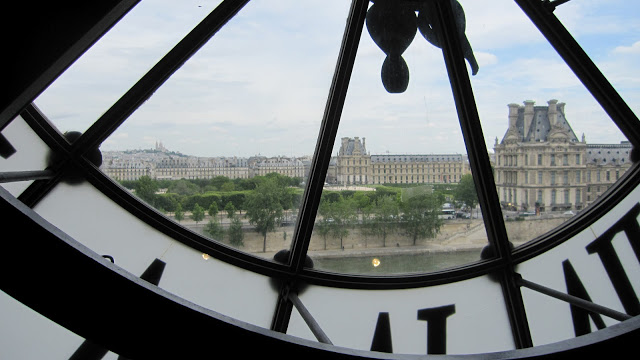
Looking at the Louvre through one of the famous windowed clocks of the Orsay
 You can spot the Sacre Coeuer on Montmarte in the background. (photo by author).
Arriving in Paris late on Sunday night, I was finally able to realize a long-standing desire to travel with a group of engaged and passionate students to see in real life the art works they had come to know in their classes through textbooks, visual reproductions, and the screen. It is very difficult to describe that moment when one first glimpses a work of art they have been deeply inspired by, and it is an experience I wanted to share. There is the initial recognition, the quick scan for all of the features that one loves most, and then the deeply satisfying process of discovering the nuances and contours of the art work in its original form.  But for many people, especially art historians and artists who travel great distances to see inspiring art, it is one that is usually experienced alone or in isolation. I don't know how many times I have had just such a "moment" in a gallery or archive and nearly burst with excitement to share my observations with anyone near me. As such, it is almost impossible to describe how much more amazing these moment are when you witness someone else, or a group of people, making that same discovery. It was one of the main reasons I wanted to be part of this trip, and I, together with my wonderful colleague, field school partner, and artist Nancy Duff, have had the pleasure of witnessing many of those moments already in the short time we have been here.

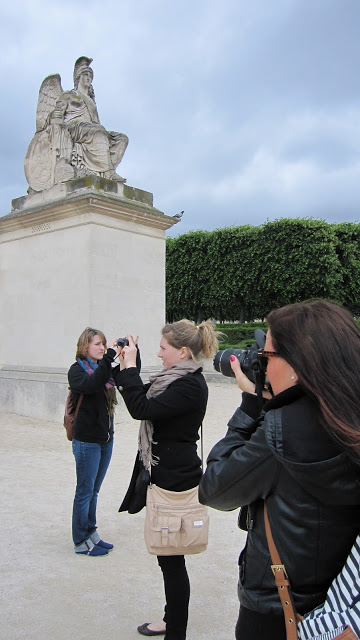
Students Jessica, Yvonne, and Courtney capturing the views
(photo by author)
To understand Paris is to experience it. It is a city designed to be walked and viewed from many different perspectives. To this end, over the next two weeks, you will be introduced to the students of the field school through their own words, thoughts, and reflections. Each student will be composing their blog post in response to a set of questions that provides some insights into what has interested and surprised them most about Paris, and later on the Documenta exhibition in Kassel, Germany. In addition, students are being asked to share thoughts about their assigned art works from the Orsay Museum, which have formed a core feature of the studio and art history classes they have taken with Nancy and I (to see all of the assigned art works, check out the dedicated Pinterest board assembled here). We developed the courses carefully and in close connection to one another, addressing the themes of modernity, urban transformation, and avant-garde experimentation associated with the art of Manet and the Impressionists. Before leaving for Paris, the students spent three intensive weeks immersed in the core critical writings, theories, formal approaches and techniques surrounding the Impressionist movement. This culminated in several writing and studio assignments, together with two art exhibitions which demonstrated how students negotiated and developed a visual response to the artist/artwork assigned to them. 

While in Paris, students will be continuing the coursework through a more intimate practice of journal writing and the production of mall scale artworks. Prompted through a daily question connected to the activity of the day, and taking full advantage of the experiential nature of Paris and all that students bring through the knowledge gained in the first part of the courses, each blog post will share some sense of how the trip is being processed through the students' many senses. We invite you to join us and share the journey. 

You can find the dedicated blog, along with daily postings and other images from the trip here-- also see the navigation bar at the top of this page marked "Paris Field School" for a quick link. I will also post all of the individual student entries on my blog mixed in with my own entries for the duration of the trip. We are very lucky with the group we have here in Paris-- I think you will find that out over the next several weeks!
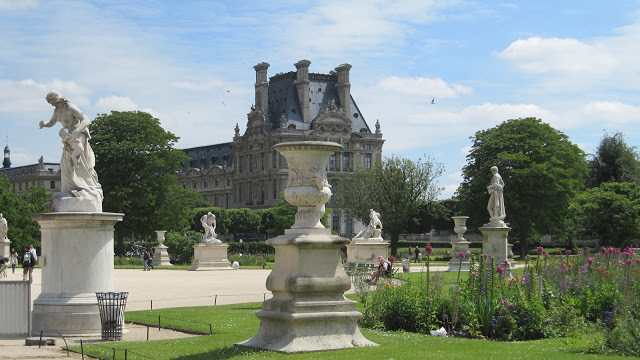
Tuileries Garden (photo by author)

New Courses for Fall 2012: Topics in Art and Theory, Architecture, Film and Visual Culture


As registration for Fall 2012 academic courses begins soon, I wanted to provide more information about new and rotating courses I will be teaching in September. Please see detailed descriptions below including a new special topics class in the History of Architecture (Part One will be offered this Fall, while Part Two will be offered in the Spring semester). If you have any specific questions that are not answered here or in the links I provide you to the registration for the courses, you can contact me directly. I look forward to another rich and engaging semester with both new and familiar faces.

Kwantlen Polytechnic University (Tuesdays 4:00-6:50pm, Room Fir 3414)

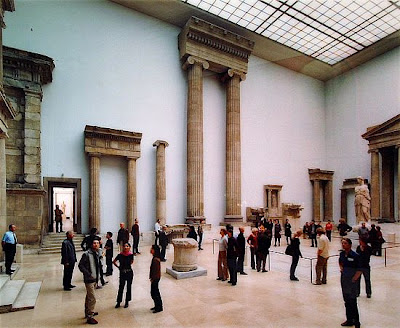
Thomas Struth, Pergamon Museum 1, Berlin (2001)
This course traces the history of architecture from early developments in the Paleolithic Age through the Renaissance, approaching architecture as a unique medium with its own visual vocabulary and spatial codes. The various formal languages, designs, and theories that have shaped the history of architecture will be explored through the close examination of select buildings and spatial environments set within specific cultural, social, political and economic contexts of their planning and construction. The broader purpose of this course is to provide students with the ability to critically evaluate and recognize how the history and theory of architecture of the early eras of Western culture, within the framework of a broader visual culture and art history, continue to impact our collective spatial, visual, intellectual and cultural environments today.

All of the buildings under examination (which will introduce and cover aspects of architecture and spatial planning from Prehistoric Europe, Ancient Egypt, the Aegean, Ancient Greece, the Roman Republic, Early Christian and Islamic cultures, and the period of the Medieval, Gothic and early Renaissance in Europe) will be related to their original contexts and functions, but also raise questions about the range of functions that architecture might fulfill within different societies. While the primary focus of the course will be on Western architecture and culture, the architecture of the Middle East, Asia, the Americas and Africa will also be explored through targeted readings and lectures. The course will therefore not just be about following a chronological and progressive trajectory of “great buildings” but will instead address broad issues related to political power, gender, sexuality, race, and the formation of individual and group identities. In this way, the ideas raised in this course will also draw attention to the dynamics and ongoing debates of what it means to make a building and design a space in any cultural context.

Kwantlen Polytechnic University (Mondays 4:00-6:50pm, Room Fir 128)

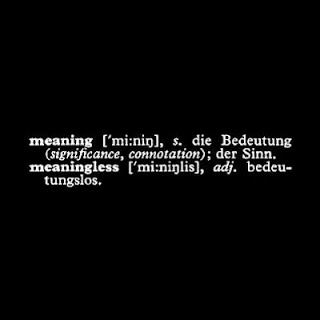
Joseph Kosuth, Art as Idea as Idea (1967)
This course offers a critical examination of selected art works in connection to key theoretical and historical turning points in art history and critical theory. Focusing on international visual art and culture from the early 20th century to the present, each class is designed to explore specific and well-known key art artists and their art practice, while pinpointing the specific conversations, theories, and histories that have made those art practices and objects so important to the understanding of the contemporary art world. Artists under examination include, but are not limited to, Pablo Picasso, Gustav Klimt, Diego Rivera, Brassai, Le Corbusier, Marcel Duchamp, Robert Rauschenberg, Andy Warhol, Cindy Sherman, Eva Hesse, Robert Smithson, Gerhard Richter, Martha Rosler, Jeff Wall, Marina Abramovic, Damien Hirst, Mike Kelley, Banksy, Stan Douglas and more recent art projects examined in recent international exhibitions like Documenta and the Venice Biennale.This format will provide a launching off point to explore the range of associated historical events, factors of patronage and institutions, as well as changing attitudes to making and approaching art in modern and postmodern contexts. Throughout the course, we will consider traditional media forms alongside the addition of new media practices of recent decades. 

The assignments and final take-home project for this course will be developed closely with student input to help support existing art practices and/or specific interests students have in the field of art history. A critical component of this course will also include visits and discussion concerning local and international art exhibitions and recent developments in the art world so that students can gain a more informed sense of how they fit (if an artist) and/or understand (if interested in the art world) the shifting visual culture shaping up around them.Ultimately, our attention will be on the network where art is made, presented to and reacted to by different parties, and to the ways that portions of the art system―such as art history and critical theory―have conceived of and explained the workings of such a system and the society it exists within. 

Kwantlen Polytechnic University (Fridays 1:00-4:50pm, Room Fir 128)

Students will study the history and development of world cinema, and the comprehension and theory of film as a visual language and art-making practice from its inception in the late nineteenth century to the present. The goal of the course is to introduce students to the critical interpretation of the cinema and the various vocabularies and methods with which one can explore the aesthetic function, together with the social, political, and technological contexts and developments, of moving pictures. The weekly format of this course (as a 4 hour block) will normally entail a 1.5-2 hour lecture and the screening of a full-length film. Each film will thus serve as a starting point and gateway for discussion about the course’s weekly theme.

Simon Fraser University—Harbour Centre, Vancouver (Thursdays 2:30-5:20pm, Room HCC1800)

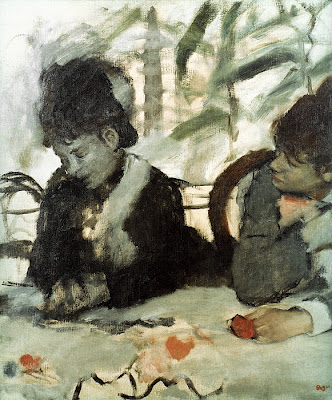
Edouard Degas, At the Cafe (1875-77)
This course provides an introduction to the complex ways in which social and political change, and ideologies of gender, class, race and ethnicity, worked to shape aspects of 19th century visual culture in Europe and North America. Emphasis will be placed on the roles played by industrialization, political revolution, rapid urban growth, global commerce, and the new media technologies of an expanding consumer culture in defining a wide range of visual culture. Throughout the term we will also examine different representations and debates around the idea of modernity and the “modern.” Since the time period under investigation has often been called “The First Modern Century”, we will pay particular attention to shifting ideas related to labour and leisure, urban social space and spectacle, and issues bearing on Euro-American expansion of empires in relation to indigenous populations, throughout the 19th century to turn of the twentieth century up to WWI.

Importantly, this class is not intended to be all-inclusive in which each and every monument contributing to the “canon” of Western art is studied. Therefore, we will also consider the constructed nature of the discipline of art history in order to trouble assumptions, both historical and contemporary, regarding the nature of art, its relation to different social and political institutions, and issues of patronage and viewing publics. Furthermore, through an introduction to critical and historical methods, students will develop the basic tools and terminology for analyzing visual culture, a skill set of crucial importance in understanding the barrage of images and technological stimulus at play in our postmodern world.