• Fall 2025
  • Blog
  • Resources
  • Field School
  • Students
  • Feedly
  • About
Menu

Avant-Guardian Musings

  • Fall 2025
  • Blog
  • Resources
  • Field School
  • Students
  • Feedly
  • About
large monogram_2018-02-01_22-31-07.v1 (1).png
“Art is an outlet toward regions which are not ruled by time and space”
— Marcel Duchamp

Avant-Guardian Musings is a curated space of ideas and information, resources, reviews and readings for undergraduate and graduate students studying modern and contemporary art history and visual art theory, film and photography studies, and the expanding field of visual culture and screen studies. For students currently enrolled in my courses or the field school, the blog and associated social media links also serve as a place of reflection and an extension of the ideas and visual material raised in lecture and seminar discussion.

Blog RSS

Screenshot 2018-02-05 20.56.45.png
Blog
KPU FINE ARTS PARIS + VENICE BIENNALE FIELD SCHOOL (MAY/JUNE 2026)
about 3 months ago
"No Fun City" Vancouver: Exploring Emotions of Detachment in Palermo, Sicily at AISU
about 4 months ago
Making Sense of Art in the Age of Machine Learning—A Suggested Reading List
about 5 months ago
From the Archives | How (And Why) To Take Excellent Lecture Notes
about a year ago
Weekly Musings + Round Up... And A Few More Things
about 2 years ago

Screenshot 2018-02-05 20.56.51.png
As we start the week in a storm of activity, new beginnings, and global uncertainty, I am grounded in my word for 2026– INTENTIONAL 🩶— “done with purpose, willingness, deliberation, and consciousness.” I see this word represe
As we start the week in a storm of activity, new beginnings, and global uncertainty, I am grounded in my word for 2026– INTENTIONAL 🩶— “done with purpose, willingness, deliberation, and consciousness.” I see this word represented in the symbol of the heart, and for this reason and many others both personal and professional, I will be bringing this much needed energy to my year. The power of a yearly word is transformative. I started in 2019 and my words have guided and carried me through some important moments and life decisions. If you haven’t already, give it a try, but remember to choose very wisely ☺️ “Radiate” 2025 ✨ “Maintain” 2024 💪🏻 “Refine“ 2023 🙌🏻 “Acta non verba” 2022 🤐 “Audacious” 2021 💃🏼 “Fearless” 2020 😛 “Unapologetic” 2019 💅🏻 #happynewyear #wordoftheyear #intentional #monicavinader @monicavinader
Polar bear ride! 🐻‍❄️🏍️💨🏍️ First motorcycle outing of 2026 in the books. A balmy 4C 🥶We love you Vancouver— good to be home 💙😊Wishing everyone a very Happy New Year! 🥳 
.
.
.
#happynewyear #vancouver #motorcycle #motorcyclesofinstag
Polar bear ride! 🐻‍❄️🏍️💨🏍️ First motorcycle outing of 2026 in the books. A balmy 4C 🥶We love you Vancouver— good to be home 💙😊Wishing everyone a very Happy New Year! 🥳 . . . #happynewyear #vancouver #motorcycle #motorcyclesofinstagram #motocouple #husqvarna #vitpilen401 #svartpilen401 #motogirl #motogirls
2025... where did it go?! 😂 Like a ray of light, I was very much guided by my chosen word of the year “radiate”— to shine and send out beams of energy— and this allowed for a great deal of adventure, new experiences, ideas an
2025... where did it go?! 😂 Like a ray of light, I was very much guided by my chosen word of the year “radiate”— to shine and send out beams of energy— and this allowed for a great deal of adventure, new experiences, ideas and people and opportunities to flow back into my life. Above all else, I found myself very much on the move all year! Travel took me from New York to Lausanne, Paris to Seoul, and Palermo to Maui, while my motorcycling stayed more on the road and less on the track as Brian and I balanced our time, energy, and commitments. But as always, we found every spare moment to prioritize this shared passion and we hope to find a way back to the track in 2026. Professionally, the year was... A LOT... and highlighted by many new research partnerships, conferences, workshops, writing projects, some failed plans and sharp detours, but also the planting of new seeds for future ventures. In the classroom, AI brought many new challenges and opportunities to rethink the purpose of my teaching and courses, but overall I was inspired and at times surprised by what my students were able to accomplish with the new assessment models I put into place. All of this technological change remains very much a work in progress for academics, and I prefer to remain optimistic that the artists I work with will find a way to maintain their voice and vision in it all. The historian in me knows this to be true. Personally, I connected more to my heart and intuition in 2025, listening to that inner voice to guide many key decisions. Brian and I also kept up a decent health and fitness regime that had us energized and aiming for consistency to match our midlife pace. Use it or lose it is a reality in your 50s!!! Sending wishes of peace and love and a very Happy New Year to all! May your 2026 be filled with fun, awe, purpose, and good health and much happiness. Remember to be good to yourself so you can be good to others. I’m still working carefully on my 2026 word… but whatever it is, I know it will be the right one ❤️ . . . #happynewyear #yearinreview2025 #wordoftheyear #motorcyclelife #arthistorianlife
Resting, dreaming, and plotting the year ahead 💙✨😘
.
.
.
#maui #hawaii #vacationmode #newyear #planning
Resting, dreaming, and plotting the year ahead 💙✨😘 . . . #maui #hawaii #vacationmode #newyear #planning
Riding and chasing sunsets across Maui ✨💙🌺🌴🧡
.
.
.
#maui #hawaii #motorcycle #motorcyclesofinstagram #motogirl #vacationmode #sunsets
Riding and chasing sunsets across Maui ✨💙🌺🌴🧡 . . . #maui #hawaii #motorcycle #motorcyclesofinstagram #motogirl #vacationmode #sunsets

Screenshot 2018-02-05 20.57.02.png
  • November 2025 (1)
  • September 2025 (1)
  • August 2025 (1)
  • September 2024 (1)
  • February 2023 (1)
  • January 2023 (3)
  • August 2022 (1)
  • March 2022 (1)
  • February 2022 (3)
  • January 2022 (4)
  • November 2021 (2)
  • October 2021 (3)
  • September 2021 (3)
  • July 2021 (2)
  • June 2021 (1)
  • May 2021 (3)
  • April 2021 (3)
  • March 2021 (3)
  • February 2021 (4)
  • January 2021 (5)
  • December 2020 (3)
  • November 2020 (6)
  • October 2020 (4)
  • September 2020 (1)
  • July 2020 (1)
  • June 2020 (4)
  • May 2020 (9)
  • April 2020 (5)
  • December 2019 (2)
  • November 2019 (5)
  • October 2019 (3)
  • September 2019 (1)
  • July 2019 (6)
  • June 2019 (19)
  • April 2019 (2)
  • March 2019 (5)
  • September 2018 (2)
  • July 2018 (1)
  • June 2018 (4)
  • May 2018 (2)
  • April 2018 (5)
  • March 2018 (5)
  • February 2018 (8)
  • January 2018 (3)
  • December 2017 (4)
  • November 2017 (5)
  • October 2017 (7)
  • September 2017 (3)
  • July 2017 (6)
  • June 2017 (15)
  • April 2017 (2)
  • March 2017 (3)
  • February 2017 (1)
  • January 2017 (2)
  • November 2016 (2)
  • October 2016 (1)
  • September 2016 (3)
  • August 2016 (1)
  • June 2016 (2)
  • May 2016 (3)
  • April 2016 (2)
  • March 2016 (5)
  • February 2016 (7)
  • January 2016 (9)
  • November 2015 (1)
  • October 2015 (2)
  • September 2015 (3)
  • August 2015 (3)
  • July 2015 (1)
  • June 2015 (20)
  • May 2015 (4)
  • March 2015 (2)
  • January 2015 (1)
  • November 2014 (1)
  • October 2014 (2)
  • June 2014 (1)
  • May 2014 (4)
  • April 2014 (6)
  • February 2014 (1)
  • January 2014 (2)
  • November 2013 (1)
  • September 2013 (1)
  • July 2013 (3)
  • June 2013 (10)
  • December 2012 (1)
  • November 2012 (3)
  • October 2012 (6)
  • September 2012 (3)
  • August 2012 (1)
  • July 2012 (1)
  • June 2012 (25)
  • May 2012 (5)
  • April 2012 (4)
  • March 2012 (7)
  • February 2012 (11)
  • January 2012 (6)
  • December 2011 (5)
  • November 2011 (11)
  • October 2011 (11)
  • September 2011 (8)
  • June 2011 (9)
  • May 2011 (15)
  • April 2011 (9)
  • March 2011 (14)
  • February 2011 (17)
  • January 2011 (16)
  • December 2010 (11)
  • November 2010 (18)
  • October 2010 (24)
  • September 2010 (30)

Screenshot 2018-02-05 20.57.07.png

© Dorothy Barenscott, Avant-Guardian Musings, and dorothybarenscott.com, 2010-2023. Unauthorized use and/or duplication of this material without express and written permission from this blog’s author is strictly prohibited. Excerpts and links may be used, provided that full and clear credit is given to Dorothy Barenscott, Avant-Guardian Musings, and dorothybarenscott.com with appropriate and specific direction to the original content.

Jude taking a selfie at Washington Square Park

Jude taking a selfie at Washington Square Park

Location | New York: Meet Field School Blogger Jude Campbell

June 06, 2015

Tell us a little bit about yourself—your background, major program of study, reasons for taking this trip, and anything else interesting you want to share (maybe something people might not know about you).

Greetings from Williamsburg. I am Jude Campbell, today's blog host. I am a Fine Arts student at Kwantlen Polytechnic University, beginning my second year of study. A recently retired teacher, I've returned to university as a student for the first time in many years, throwing myself into painting, sculpture and drawing. In the past term I've begun to be interested in the history of art and how artists have engaged with contemporary issues in their cultures. The field school came along as the perfect investigative opportunity, a chance to study and discuss art with others who share my interests, and a chance to experience so much contemporary work firsthand in two venues of world-class importance in the art world. I could hardly say no!

What has met or exceeded your expectations or surprised you about New York so far?

Our New York portion of the field school is rapidly coming to a close; time for a few reflections to date. My reactions to New York have been mixed. Seeing work in the major galleries has been a joy. With even the little I've learned of art history and studio practices in my classes I feel like I see works through a new lens. Many pieces are so large, surfaces so deeply textured, all qualities not possible to capture in photographic representations. Meeting them up close for the first time often packs a powerful punch. Meeting other group members in passing, or later over food and comparing notes on what we loved or what perplexed or intrigued us, is a rare pleasure I've never before experienced.

The whole gang posing in front of an empty SoHo lot-- Jude is the first person in the left of the photo.

The whole gang posing in front of an empty SoHo lot-- Jude is the first person in the left of the photo.

I have a love/ hate relationship with the experience of New York City. One moment I'm in love, riffing on the speed and abundance, the largest bookstore, the best known names and googaws, every imaginable product, the enlightened use of public spaces like Central Park, the conspicuous glamour and the twenty-four hour grocery stores on every corner. The next minute I'm sickened by the noise, the dirt, the speed, the concentration of materialism, of over-consumption of every possible product under the sun, the feeling that nothing is ever just enough. Life is nothing if not full of contradictions.

Give us some insight into your assigned artwork from the Museum of Modern Art. Who is the artist? When was this work made? What is the content of this work? In what context and as part of what art movement was it made?

Jude was assigned Carolee Schneemann's performance art work Meat Joy (1964)

Jude was assigned Carolee Schneemann's performance art work Meat Joy (1964)

Here is Jude standing in front of her video performance piece; a response to the Schneemann work.

Here is Jude standing in front of her video performance piece; a response to the Schneemann work.

I've been looking closely at the work Meat Joy (1964) by American artist Carolee Schneemann. Schneemann is a feminist artist, involved at this period in performance work, often relating to issues of gender identity and sexuality. This work was first presented as a performance at the Festival d'Expression Libre in Paris in 1964. In the piece a group of young women and men, naked but for underwear, come together theatrically in a group, then fall to the ground and writhe together on the floor in gyrations of passionate physical and sexual pleasure. Waiters enter with trays of raw chicken and fish, dropping them amongst the bodies who interact with them, tenderly kissing and caressing the meat. The group moves on to pleasuring in the sensation of paint poured on bodies and rollicking in waves of crumpled paper. The performance is an exuberant, assertive celebration of the pleasures of the flesh.

How did you approach the creative task of responding to this assigned work in studio? What were your challenges as an artist to be in dialogue with the artwork and artist? Would you do anything differently now that you have seen the work in person?

I had several challenges in finding a way into this work. I related closely with the period of time in which it was produced. I am sixty-four years old, only about ten years younger than Schneemann. I was a feminist and social activist in a similar period, deeply invested in women claiming control of their bodies and sexual pleasure free of the repression of familial, state and religious restrictions. Almost a half century has passed since Meat Joy emerged.

I began thinking a lot about my changing relationship to embodiment, to the realities of the degrading physical flesh, to adaptations to counter ageist assumptions in a youth-obsessed culture about the sexuality of aging flesh. I contemplated an adapted reenactment of Meat Joy relating the fleshly pleasures of aged bodies. Yet this did not seem finally to touch on the deepest point of relation for me. Where I finally found entry was in reflecting upon the context in which it was presented, in Paris, in a culture deeply entrenched in the sexually repressive beliefs of the Roman Catholic church.

I considered my own vehement rejection at the time of the patriarchal structures of the church and what has happened over the ensuing years. I think we categorically gave up on all belief in spirituality, and ultimately threw out the baby with the bathwater. In our youthful conviction we did not consider the importance of other roles of spiritual practice. We could not yet reflect upon the role of connection, comfort, community and service to others in dealing with the vicissitudes of long lives. 

View from the top of the Empire State Building looking south towards financial district.

View from the top of the Empire State Building looking south towards financial district.

I have, over the ensuing years, never returned to an organized church structure, but I have evolved a deeply rooted practice within a tradition of Buddhist meditation. For nearly ten years I have sat in meditation each week with a small group of women. Afterwards we drink tea and laugh and talk in community. We support each other in myriad ways and my soul misses that place when I am away from it. In my piece I worked to give voice to this embodiment. I filmed myself meditating and merged it with images of my group sitting, working to balance the energy of my personal practice as it is integral to and supported by a group presence. While I have a number of other responses I could make to Meat Joy I do not have one that I think would reflect my thinking more effectively at the moment.

After seeing your assigned art work in person (and any other related art from the same artist or art movement associated with the assigned work), what struck you most, and/or how did the artwork’s form, content, and context shift for you when seeing it?
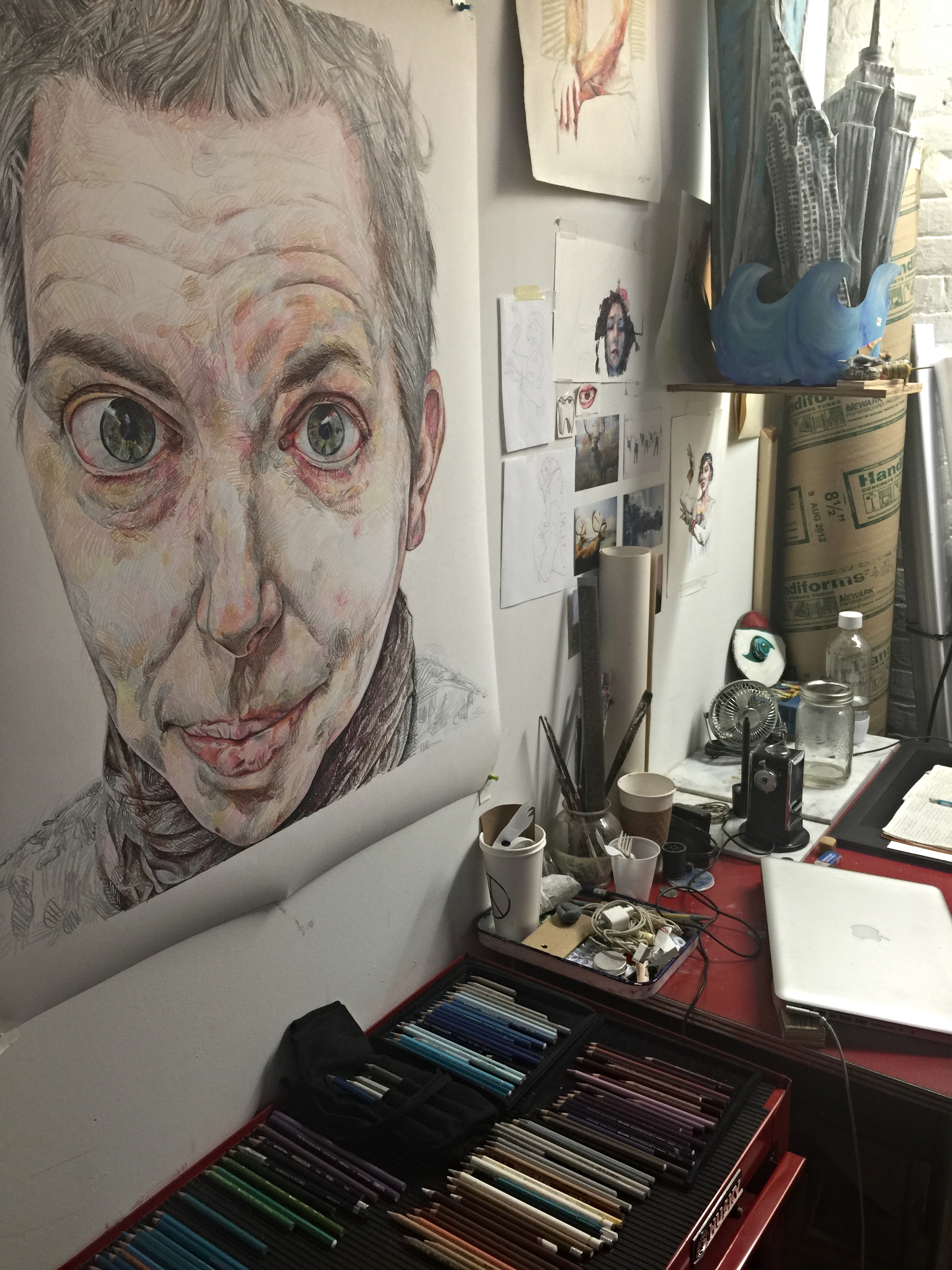
A shot captured inside Maya Seuss's studio space in the Gowanus neighbourhood of Brooklyn.

A shot captured inside Maya Seuss's studio space in the Gowanus neighbourhood of Brooklyn.

The copy of Schneemann's piece I worked with on the computer was different to that at MoMA in two significant ways. The YouTube clip I used was filmed in Paris, whereas the MoMA piece was shot from its first performance in New York, at the Judson Memorial Church. The document contained a few clips of the church and audience, giving it richer context clues. It was interesting for me because I had looked at the history of this church when preparing the Greenwich neighbourhood resource list for our group tour. It's a congregation with a long history of activism on many fronts, including welcoming avant-garde artistic endeavours, fighting for gay rights, and supporting AIDS activism. As well, I had not been able to get a clear understanding of the sound script for the piece at home, but here I listened through several times, even turning my back to the images and listening for the rhythm and content. This careful attention provided a much better insight into how it was married to the performance.

Today’s activity was at the Empire State Building and a studio visit in Brooklyn. What were your impressions of this part of New York after learning about it first in the pre-departure classes? What will you take away of the experiences of this day?  What are the most memorable moments for you?

Saturday we visited the Empire State Building in the morning, a wonderful art deco extravaganza.  In the afternoon we met with artist Maya Suess, visiting her gallery show and studio space in the Gowanus neighbourhood of Brooklyn, where artists have converted industrial spaces into newly purposed work areas. Maya trained at Simon Fraser University and then moved to New York where she has family. Since 2008 she's been part of the Gowanus Studio Space artists' collective of about fifty people who've converted a large industrial space into studios to accommodate practices ranging from pastel drawing to jewelry making, to printmaking, woodwork and digital media. For a base fee of $160 per month artists have 24 hour access to work space. Additional fees are levied depending on the size and kind of space used. The whole operation is managed by a committee from the collective. In addition to constructing studio spaces to different dimensions inside the warehouse they've also set up substantial printmaking and woodwork shops. It was truly inspiring to see the scope of what they have accomplished together. I am always thinking about how we can create ways to support each other outside our university setting, as we move into establishing our practices.

The whole experience illustrated for me an outstanding model of how to create an artist run work and gallery space for some of the artists working in Surrey, particularly in the north end of the city. Truly wonderful.

 To see more photos and impressions of New York and Venice as the field school continues, check out our Instagram feed #kpunycvenice

Another image captured inside the shared artist collective space.

Another image captured inside the shared artist collective space.
1 Comment
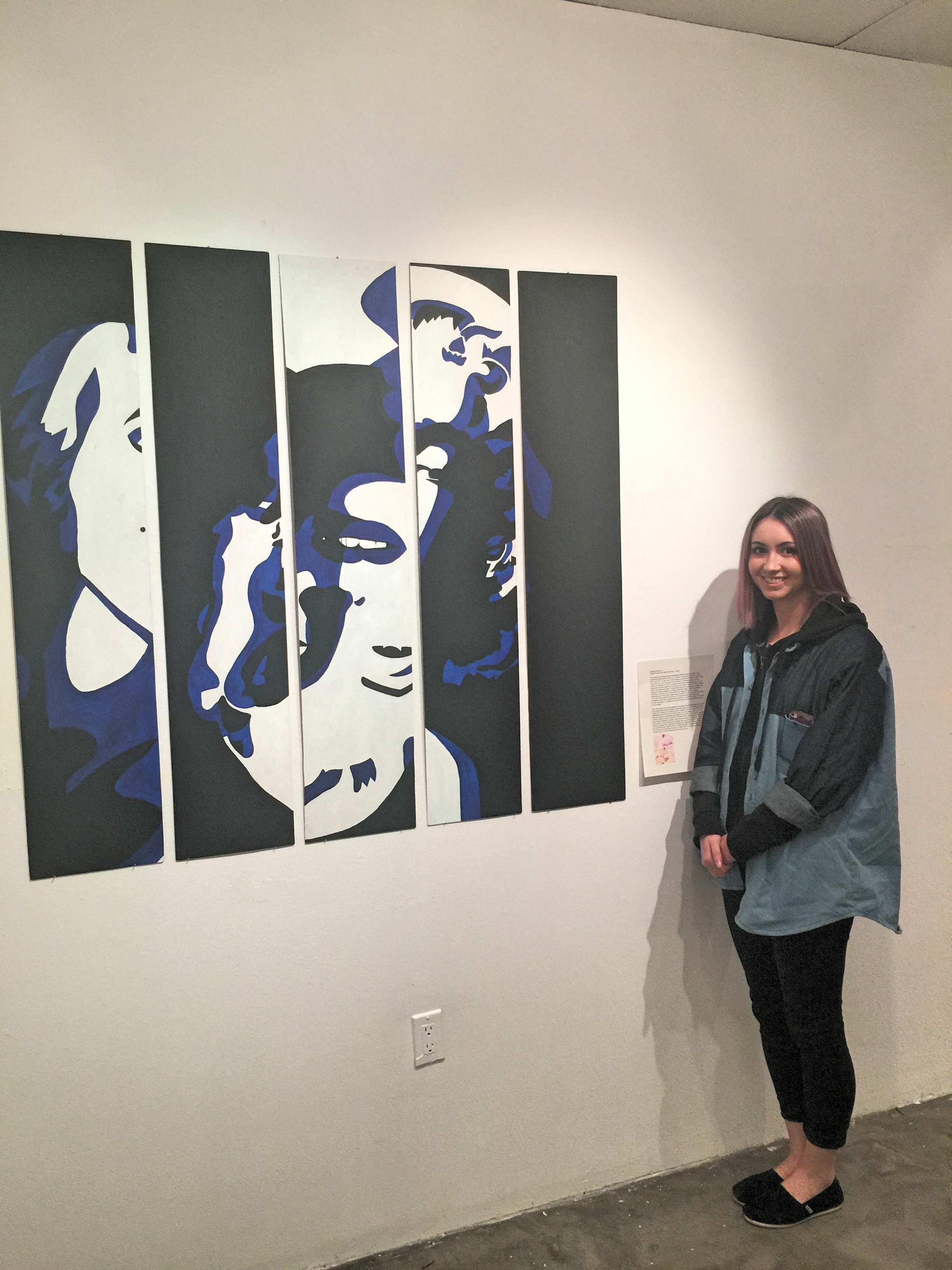
Michelle standing in front of her assigned art work, James Rosenquist's Marilyn Monroe I (1962)

Michelle standing in front of her assigned art work, James Rosenquist's Marilyn Monroe I (1962)

Location | New York: Meet Field School Blogger Michelle Beaulieu

June 05, 2015

Tell us a little bit about yourself—your background, major program of study, reasons for taking this trip, and anything else interesting you want to share (maybe something people might not know about you).

Hi! My name is Michelle Beaulieu! I am attending the Fashion Technology and Design program at Kwantlen Polytechnic University. I am taking this trip because I love art and because fashion is strongly influenced by art works; I strongly believe that it is just as important to learn about the history of art as it is about the history of fashion. After taking these classes, I think my designs will be much stronger because I will have the influence and knowledge of another form of art and of the world. This trip will benefit my life in only positive ways, and I can’t wait to share what has happened so far!

What has met or exceeded your expectations or surprised you about New York so far?

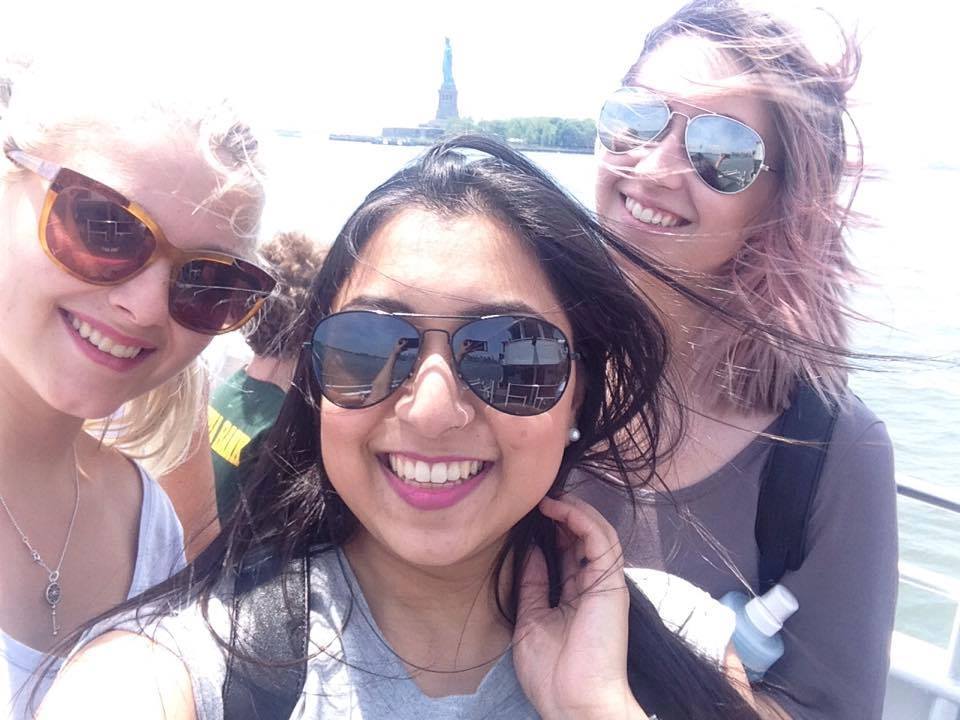
Olivia, Jessica, and Michelle, aka "the Fashion Girls" are all in the Fashion Technology and Design Program at KPU. Here they are on the boat tour of New York City.

Olivia, Jessica, and Michelle, aka "the Fashion Girls" are all in the Fashion Technology and Design Program at KPU. Here they are on the boat tour of New York City.

Honestly, when I first arrived in New York City, I thought I would feel like how it is portrayed in the movies, like all my dreams will come true, when really it felt like I was still in Vancouver. It took up until I took the boat tour of the city and the Statue of Liberty to actually feel like, “Wow, I’m actually in New York!” When people say New York people drive like ‘crazy people’ I understand why now… they drive so much faster than they should, and there are lines on the road, but I don’t think they can see them. So far, I love the city: it is dirty, loud, busy, and amazing in so many ways. You can be yourself without any judgment, you can find ANYTHING and the history, buildings, clothing, artwork, and music is exciting and so interesting. I find it interesting how you can fit into a certain area of the city, for myself, I fit into Chelsea. I swear I got two compliments on my faded out hair within 10 minutes of each other.

Give us some insight into your assigned artwork from the Museum of Modern Art. Who is the artist? When was this work made? What is the content of this work? In what context and as part of what art movement was it made?

Michelle stands with her response art work to the Rosenquist piece she was assigned from MoMA.

Michelle stands with her response art work to the Rosenquist piece she was assigned from MoMA.

The artwork displayed in the Museum of Modern Art is Marilyn Monroe I  and the artist who created this piece is James Rosenquist. He is an American artist known for his involvement in the pop art movement. This piece was created in 1962, just shortly after Marilyn Monroe’s tragic death. This artwork is made with oil and spray enamel on a canvas the size of 7’9” x 6’1/4” (236.2 x 183.3cm). He used the three primary colours of red, blue and yellow. I think he used the three base colours to represent pain, love and happiness; blue for pain because of the struggles she had endured with drugs and they way she passed, red for love because she was such an iconic symbol in the pop/social culture and she was an extreme sex symbol that everyone adored, and yellow because she did have happiness in her life. He also used black and white to bring the vintage of classical vibe out in the portrait.

This portrait of Marilyn Monroe is scrambled, she is cut up and placed back together, there are words on this portrait as well but it is also scrambled which makes in unreadable. I believe this was done on purpose because by the end of her like she was a mess and if she was a book, you wouldn’t be able to read what she is trying to say. Rosenquist used the Marilyn Monroe Coca-Cola ad because by the end of her life she had been consumed by her status. I think Rosenquist chose Marilyn Monroe as his muse because of her death during that same year. I think this piece was either something to show the issue with consumerism, or as a memorial piece of her life. And although it is difficult to see the full picture of her, you know it is Marilyn Monrow because of her iconic look. Even though this image is scrambled, it is still glamorous, just like her life, and I think it was made to celebrate her. 

How did you approach the creative task of responding to this assigned work in studio? What were your challenges as an artist to be in dialogue with the artwork and artist? Would you do anything differently now that you have seen the work in person?

When I was first assigned this work I was a bit shocked I was given a pop art piece, because fashion is so strongly influenced by pop art. Although I guess it makes sense because Marilyn Monroe was not only a sex icon but also a fashion icon. It took me a good week to even think of something to riff off from this piece. I decided to use the context by using Marilyn Monroe as my influence and the technique of scrambling as my content. I painted a portrait of Marilyn Monroe with white skin and black background and blue shadowing using a pop-art form, and then I cut the board into five panels and scrambled them out of order and upside down. I found it difficult to work with this piece because I have never taken a studio art class and I wasn’t sure what I was supposed to be looking at when I was looking for something to influence me. I also found it a struggle because I didn’t know what I was capable of until I actually started, especially because I knew this piece is famous and I wanted to make Rosenquist proud if he were to see what I created.

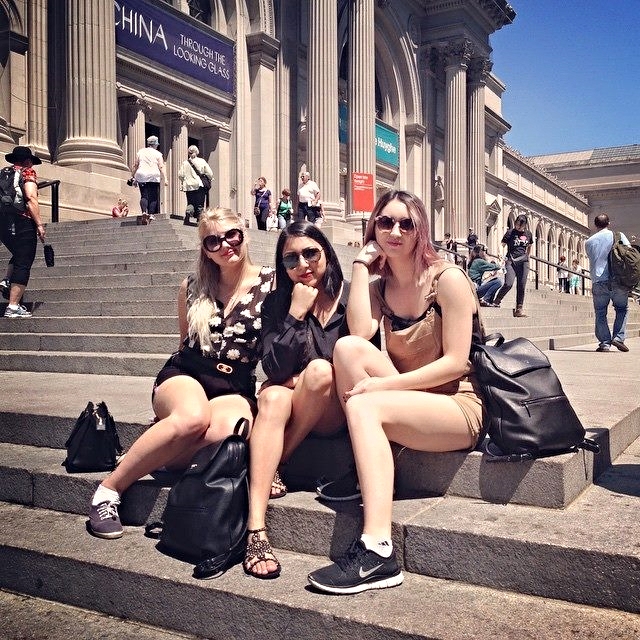
Olivia, Jessica, and Michelle on the steps of the Metropolitan Museum of Art.

Olivia, Jessica, and Michelle on the steps of the Metropolitan Museum of Art.

After seeing the piece in person, it felt very exhilarating because I know about it, I studied it and I understand it and how it was made. I knew it was beautiful before, but in person I was amazed how fascinating and marvelous it is. Because it is absolutely stunning, I thought that if I were to redo my studio piece I would have used the same technique of scrambling the boards, and the same context, but instead of a portrait, I would paint CONSUMED across the board and then mix the words all up so you don’t know that it is a word, but the meaning is there. Instead of using the contrast of black and white, I would use a more glamorous colour like gold to riff off of Andy Warhol’s Marilyn paintings.  I would use the gold to represent the value and perceived glamour of her life and white to represent how “impure” her actual life was (and also to be ironic in a way, because she is known for her white dress).

After seeing your assigned art work in person (and any other related art from the same artist or art movement associated with the assigned work), what struck you most, and/or how did the artwork’s form, content, and context shift for you when seeing it?

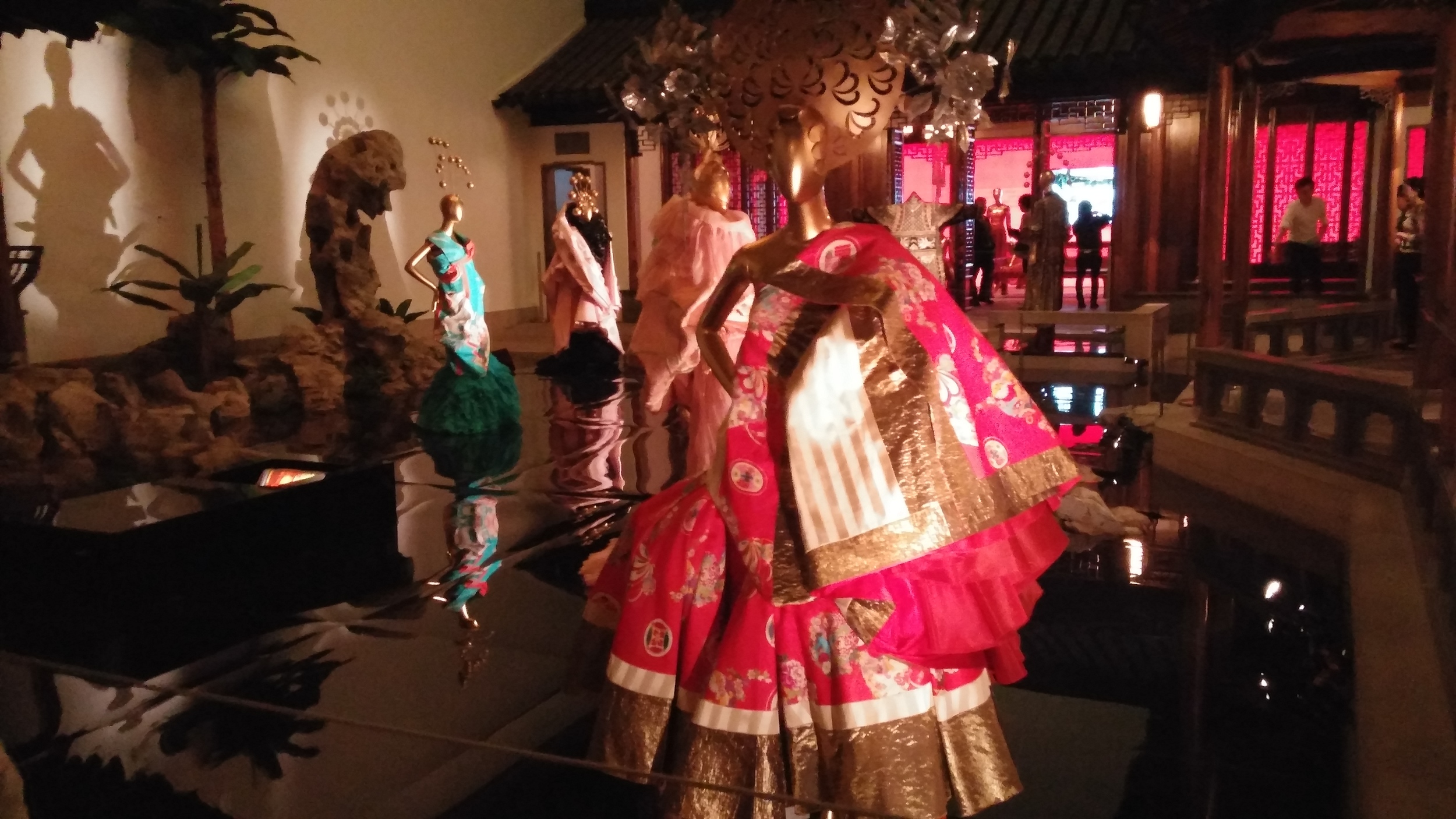
Michelle's favourite dress by Guo Pei, on display at the Met Costume exhibition "China Through the Looking Glass"

Michelle's favourite dress by Guo Pei, on display at the Met Costume exhibition "China Through the Looking Glass"

After seeing Rosenquist’s art work, I noticed how striking the usage of colour was, and how he used simple portraits of people or objects that have a deeper meaning. For example, F-111 has many random images collaged together, like of a little girl, or spaghetti, or a plane, when really the meaning of why they are together can be understood. For example, Rosenquist took the F-111 Fighter plane as his inspiration, the newest, most technologically advanced weapon in development at the time, and positioned it, as he later explained, “flying through the flak of consumer society to question the collusion between the Vietnam death machine, consumerism, the media, and advertising.”

Today’s activity was at the Metropolitan Museum in the Upper East Side neighbourhood. What were your impressions of this part of New York after learning about it first in the pre-departure classes? What will you take away of the experiences of this day?  What are the most memorable moments for you?

Today’s activity was at the Metropolitan Museum and the Upper West Side neighborhood. The Upper West Side is located between Central Park and the Hudson River. Before arriving in NYC, in the pre-departure classes, I thought this neighborhood was an upscale residential area. The upper sides of Manhattan (Upper West Side and Upper East Side) seem to be where most of the pricey real-estate is and where many of the more wealthy-upper class residents of New York live (for instance, Blaire Waldorf, you might recognize her as one of the spoiled and fabulous rich girls who live in NYC from the television show Gossip Girl, who lives in the Upper East Side). During our visit to the MET, I especially loved the special exhibition, “China Through The Looking Glass”. This exhibition perfectly displays how European fashions have been so strongly influenced by Chinese culture. My favourite dress from this exhibition has to be the golden evening gown. It was made for spring/summer 2007 haute couture by Guo Pei. This gown is gold lamé embroidered with gold and silver silk, metal, and sequins. I don’t think I have ever felt so emotional about any fashion before, maybe the occasional butterfly, but every garment in that exhibition was amazing and exhilarating.

Michelle enjoying herself in Central Park!

Michelle enjoying herself in Central Park!

Taking in the dinosaur exhibits at the American Museum of Natural History.

Taking in the dinosaur exhibits at the American Museum of Natural History.

So far, the MET has been my favourite museum. I love how there is not only art but historical artifacts as well; other than the special exhibition, I loved the Victorian furniture and room displays, especially the room displays of Marie Antoinette. I also enjoyed experiencing more of the Monet water lilies and the Van Gogh flowers. My most memorable experiences of the day have to be taking pictures sitting on the steps of the MET (reenacting the classic Gossip Girl MET lunch group steps) and retaking my pictures of Central Park (because silly me, I accidentally deleted all of my previous ones), and burning my bum on the mushroom of the Alice in Wonderland sculpture while taking pictures. I think I will always remember seeing dinosaur bones in the American Museum of Natural History. As a child, I loved dinosaurs (Jurassic Park must have been my favourite for ages) so that moment I don’t think I could ever forget. 

To see more photos and impressions of New York and Venice as the field school continues, check out our Instagram feed #kpunycvenice

2 Comments
Zerlinda capturing herself in a selfie against the backdrop of the energy and craziness of Times Square in the heart of New York City.

Zerlinda capturing herself in a selfie against the backdrop of the energy and craziness of Times Square in the heart of New York City.

Location | New York: Meet Field School Blogger Zerlinda Chau

June 04, 2015

Tell us a little bit about yourself—your background, major program of study, reasons for taking this trip, and anything else interesting you want to share (maybe something people might not know about you).

Zerlinda enjoying a Negroni, her favourite cocktail, in a NYC restaurant.

Zerlinda enjoying a Negroni, her favourite cocktail, in a NYC restaurant.

Hello readers, my name is Zerlinda Chau and I am a Bachelor of Arts student at Kwantlen Polytechnic University, majoring in Psychology and minoring in Counselling. In January, when the opportunity to attend this year’s Fine Arts Field School came up, I had to make a split decision to apply. In the end, I chose to register for this 6-week program because I have always had an interest in fine arts. Personally, I do artwork in photography and ceramics, and these two have been my preferred art forms since high school. To integrate my passion in both fine arts and psychology, I am pursuing a career in Art Therapy, which I will study at Adler School of Professional Psychology upon graduation from KPU. The two courses that are included in this field school will fulfill my final two requirements for my Certificate in Fine Arts. I will complete my BA within the next year and move onto my Master’s program! Exploring cities has also been a hobby for me. At home, I love to go out to visit different neighbourhoods of Greater Vancouver and participate in local activities such as farmer’s markets, flea markets, special events, and so on. This makes a trip like this extra fun because I can explore an entirely new city.

What has met or exceeded your expectations or surprised you about New York so far?

This brings me to my first impressions of New York City. It is my first time visiting the Big Apple, and I am sorry to say that it has not met the glitz and glamour that I had imagined before arriving here. The songs about the amazing facets of New York seem to apply to only a small portion of the city. However, that doesn’t mean I dislike the city. As a CBC (Canadian Born Chinese), I have found NYC to be the perfect combination of Vancouver and Hong Kong. The entire city looks like Downtown Vancouver in which the blocks are small, buildings are large, streets are cobblestoned, and stores appear one after the next so there is never a lack of things to see. Conversely, the city’s milieu feels like Hong Kong because there is a lot of people, although not as much as HK, and everyone seems to always be in a rush to get somewhere. New Yorkers walk with a purpose. Do not get in their way. Also, the subway here reminds me of HK’s MTR system. They both have underground tunnels taking people to and from nearby stations, which often have stores on either side of the hallways.

Midnight pizza on the steps of the NYC Post Office next to Madison Square Garden-- Zerlinda at the top of the group pyramid in the left of the photograph.

Midnight pizza on the steps of the NYC Post Office next to Madison Square Garden-- Zerlinda at the top of the group pyramid in the left of the photograph.

On the other hand, something that surprised me about the vibe of the city is its artistic activity. Over the past five days, I have noticed street art, sculptures, graffiti, and countless performances around the city. There was a man who drummed rhythms using the bottom of ice cream tubs; he played in the same location all day. We left the station in the morning for our day’s activities, and returned in the evening to go back home, and he was still there! I saw the same string quartet in different locations of the subway station over the past two days. There were also dance performances in the subway stations, in the park, and on the streets. I find that New York is a city that is always moving. There were also other activities, such as fights in train cars, mice running across people’s feet, and cockroaches roaming the sidewalks. These are all a norm in NYC.

Give us some insight into your assigned artwork from the Museum of Modern Art. Who is the artist? When was this work made? What is the content of this work? In what context and as part of what art movement was it made?

Zerlinda was assigned Yta Barrada's Autocar-Tangier (2004)

Zerlinda was assigned Yta Barrada's Autocar-Tangier (2004)

As you may know from previous blog posts, prior to embarking on our adventure, we were in classes for three weeks on campus at KPU. Each student was assigned an artist to study; for me it was Yto Barrada, a French photographer who lives and works in Tangier, Morocco. Barrada is deeply rooted in the history of Tangier as her hometown, and works within the geopolitical space art movement to create work that reflects on the situation of this city. I studied her piece titled Autocar-Tangier, Figs. 1-4 (2004), which depicts four close-up photographs of colourful corporate logos on the sides of buses that travel from Tangier to cities in Europe. For people wishing to cross the border, albeit illegally, these images signify something more important. Each represents a destination to which these individuals may be able to escape. Illiterate migrants use them to distinguish between buses and the prospective cities of freedom to which they could go. After reading some news articles from the 2000s about the tough journeys people endure in order to illegally immigrate to Europe in hopes of a better life, the symbolism behind these bus logos become even more significant. People travel from far and wide, across the desert, from Saudi Arabia, to Tangier just for a chance to get to Spain and other parts of Europe where they envision a new and better life.

How did you approach the creative task of responding to this assigned work in studio? What were your challenges as an artist to be in dialogue with the artwork and artist? Would you do anything differently now that you have seen the work in person?

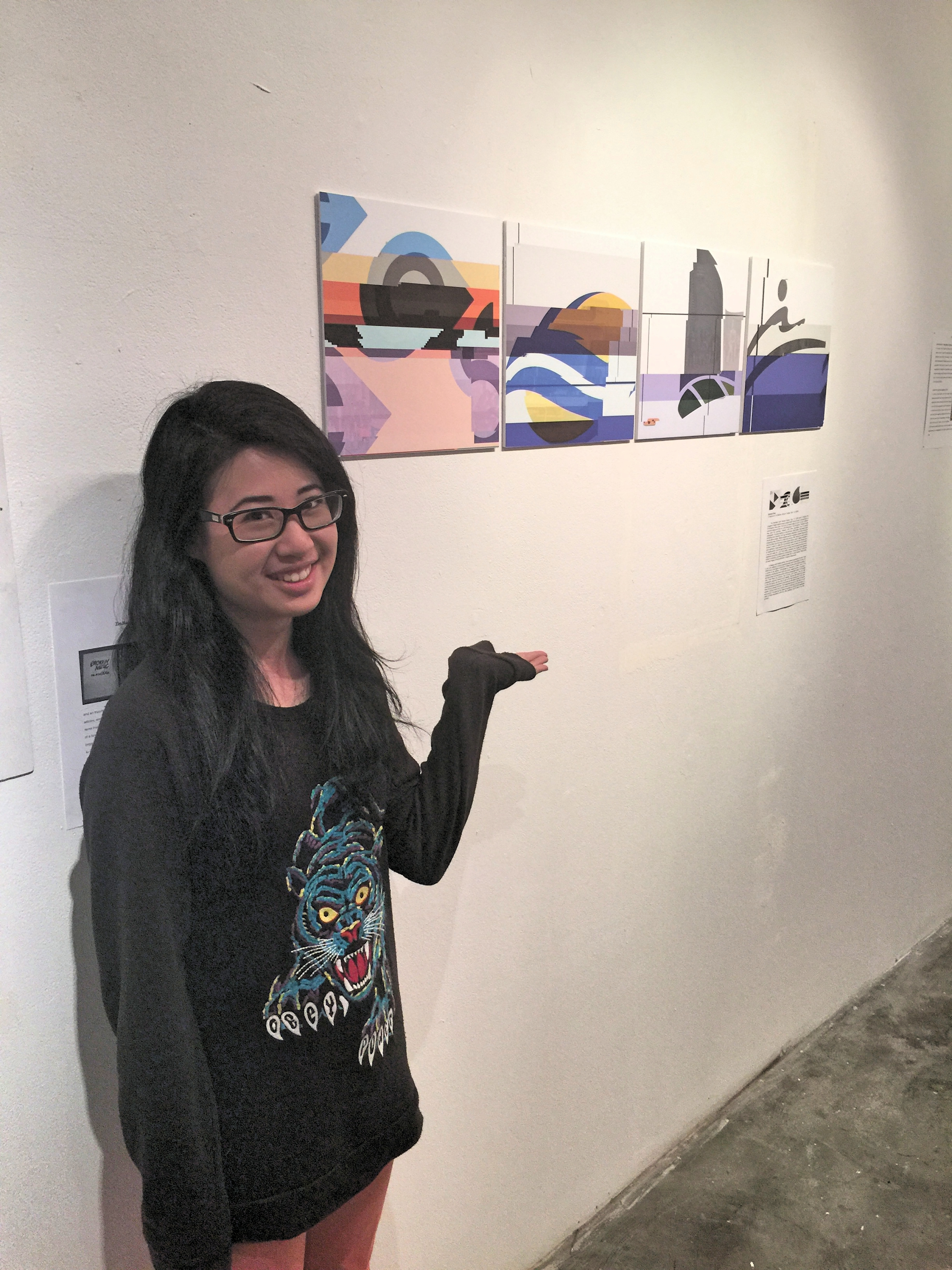
Zerlinda in conversation with Barrada's work, using the recent TransLink issues at home as her point of departure.

Zerlinda in conversation with Barrada's work, using the recent TransLink issues at home as her point of departure.

In dialogue with Barrada’s work, I created a quadriptych of my own, turning the attention to transportation in my own hometown of Surrey, BC. In my piece, I have used logos of the corporate companies related to our transit system: the Compass Card, Coast Mount Bus Company, City of Surrey, and TransLink. Similarly to Barrada, I work in photography, capturing TransLink’s lack of usefulness. Is Surrey’s bus system easy to use? Does Surrey’s bus system do what we need it to do? There are often line ups at bus stops so long that people may even have to wait for the next scheduled bus to get a ride. Another preposterous phenomenon is that people are often waiting outside in a long line when the bus is already at the stop. It is especially ridiculous on a rainy day or in cold weather, and bus drivers would not allow patrons to board the bus and wait where it is warm and dry. The glitches in the final image represent the corruption and untrustworthy nature of these corporations that we, often unwillingly, place the fate of our daily commute.

After seeing your assigned art work in person (and any other related art from the same artist or art movement associated with the assigned work), what struck you most, and/or how did the artwork’s form, content, and context shift for you when seeing it?

It was very exciting to see Yto Barrada’s work at the MoMA! The four photos were approximately 3’x3’ surrounded by an extra foot of white frame. In real life, it is much more evident that the images depict the side of buses because the cracks on the images and the light on the third one have more depth in the real photo than in an image of the photo. Alas, the constraints that we had during our classes did not allow for more extensive artwork. I also like to work in ceramics, but having only one week did not give me enough time to complete my pieces in time. However, I would love to create clay tiles of my pieces which would give it a similar 3D feel that I got from seeing Barrada’s real work in the MoMA. In addition, Barrada’s work in the gallery was situated between two video installations. I could hear the sounds from both sides as I stood sketching the piece: from my right came the sound of breaking glass, and from my left was construction sounds of hammering and drilling. This was striking to me because I found that it accentuates her piece by creating a sense that Tangier is broken and there is a need for rebuilding in that city.

Today’s activity was at the Metropolitan Museum in the Upper East Side neighbourhood. What were your impressions of this part of New York after learning about it first in the pre-departure classes? What will you take away of the experiences of this day?  What are the most memorable moments for you?

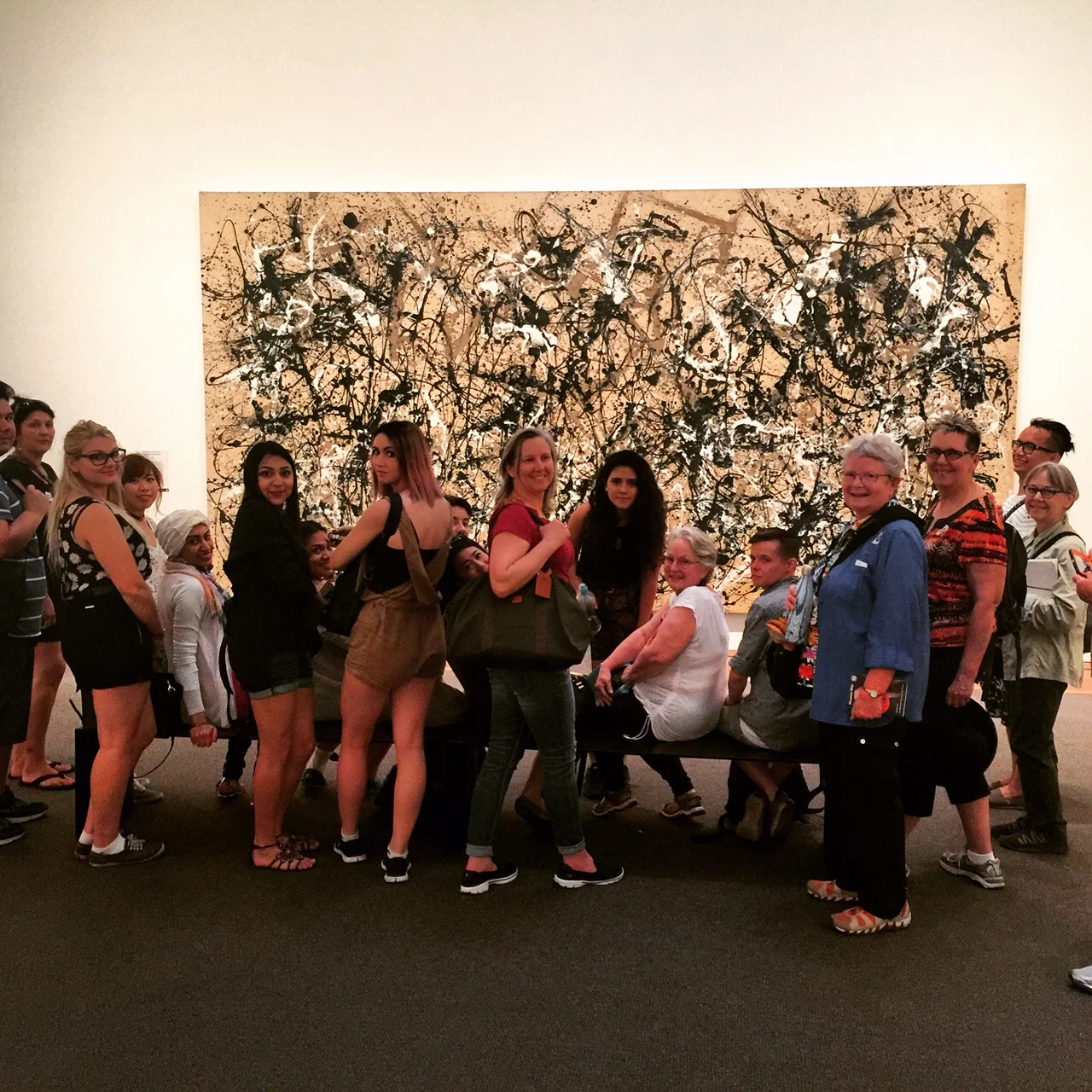
Visting Jackson Pollock's Autumn Rhythm (1949) at the Metropolitan Museum of Art

Visting Jackson Pollock's Autumn Rhythm (1949) at the Metropolitan Museum of Art

Today, our adventures took us to the Metropolitan Museum of Art in the Uptown East Side. My first impression of the Met before going was of a large museum full of fine art artifacts from around the world. However, my initial idea was an understatement of its true nature. The museum is not simply large, it is colossal. The vastness of the building and the museum’s collection of artwork are astonishing. I could live in New York City for an entire year and visit the Met once every single day and not have enough time to see everything. My most memorable moment of the day was going through one of the temporary exhibitions, China: Through the Looking Glass. I especially enjoyed the Anna Wintour Costume Center where they were showing the costumes worn by Anna May Wong in her films. It was so interesting to see the influence of Chinese culture in Western style high fashion. In the evening, we also visited Times Square where we went to O’Lunneys Pub. That was my favourite part of the trip so far. From here, I am looking forward to other art museums and also our free days, so I can visit more pubs.

To see more photos and impressions of New York and Venice as the field school continues, check out our Instagram feed #kpunycvenice

Zerlinda documented part of the China Looking Through the Looking Glass exhibition at the Anna Wintour Costume Center at the Metropolitan Museum.

Zerlinda documented part of the China Looking Through the Looking Glass exhibition at the Anna Wintour Costume Center at the Metropolitan Museum.

Comment
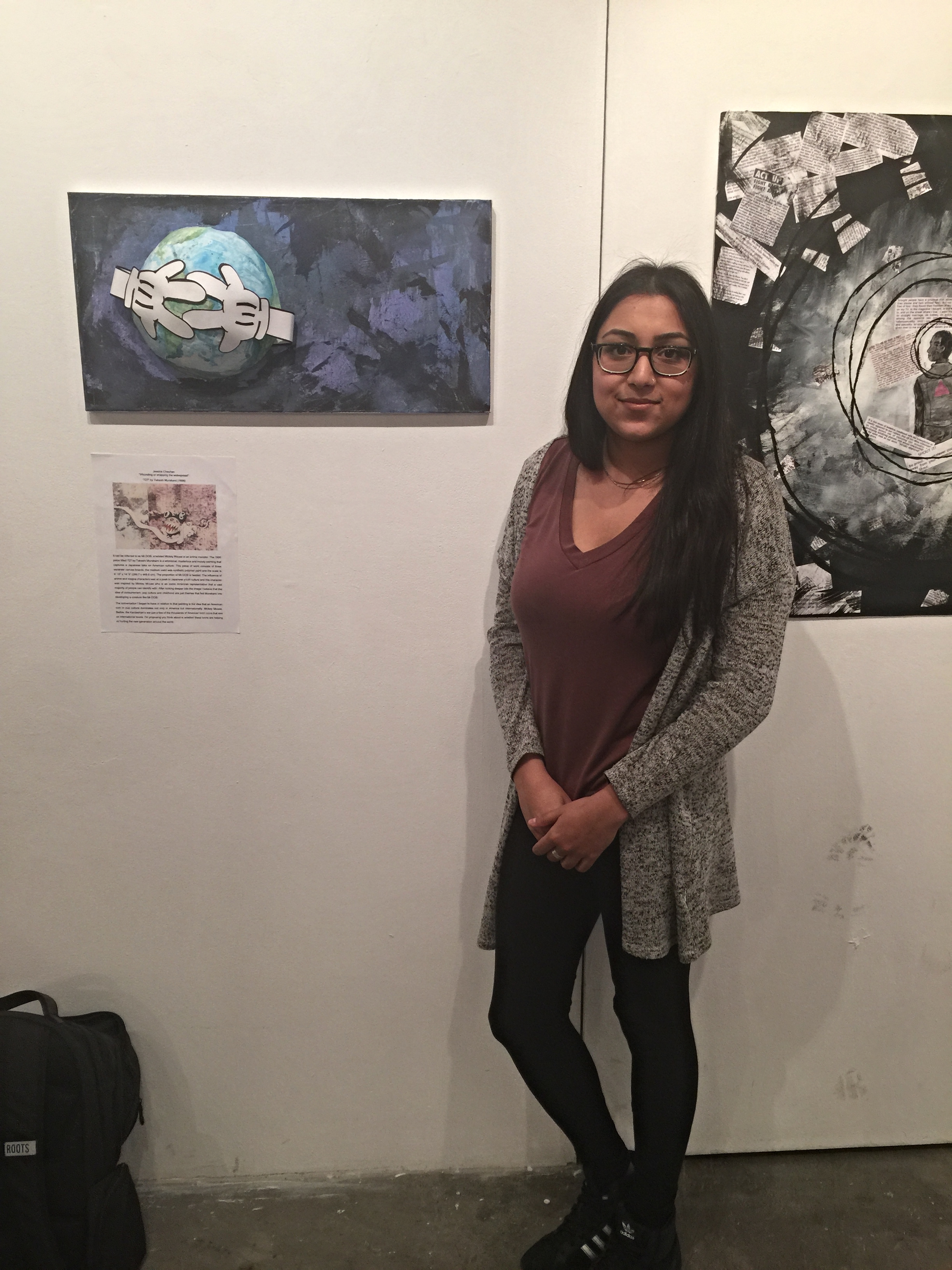
Jessica standing in front of her assigned art work at the Museum of Modern Art-- Takashi Murakami 727 (1996)

Jessica standing in front of her assigned art work at the Museum of Modern Art-- Takashi Murakami 727 (1996)

Location | New York: Meet Field School Blogger Jessica Chauhan

June 02, 2015

Tell us a little bit about yourself—your background, major program of study, reasons for taking this trip, and anything else interesting you want to share (maybe something people might not know about you).

I'm Jessica Chauhan and I'm a 3rd year student at KPU studying Fashion Design & Technology. Fashion design has been a life long interest of mine since I was a child and I wanted to take part in the field school opportunity to experience the art scene. I have previously been to New York City (May 2014) for a trip with the Fashion program, and I got to do and see a lot of things in relation to fashion. I wanted to experience a different aspect of New York City through art and also go to Europe, which I have never done before.

What has met or exceeded your expectations or surprised you about New York so far?

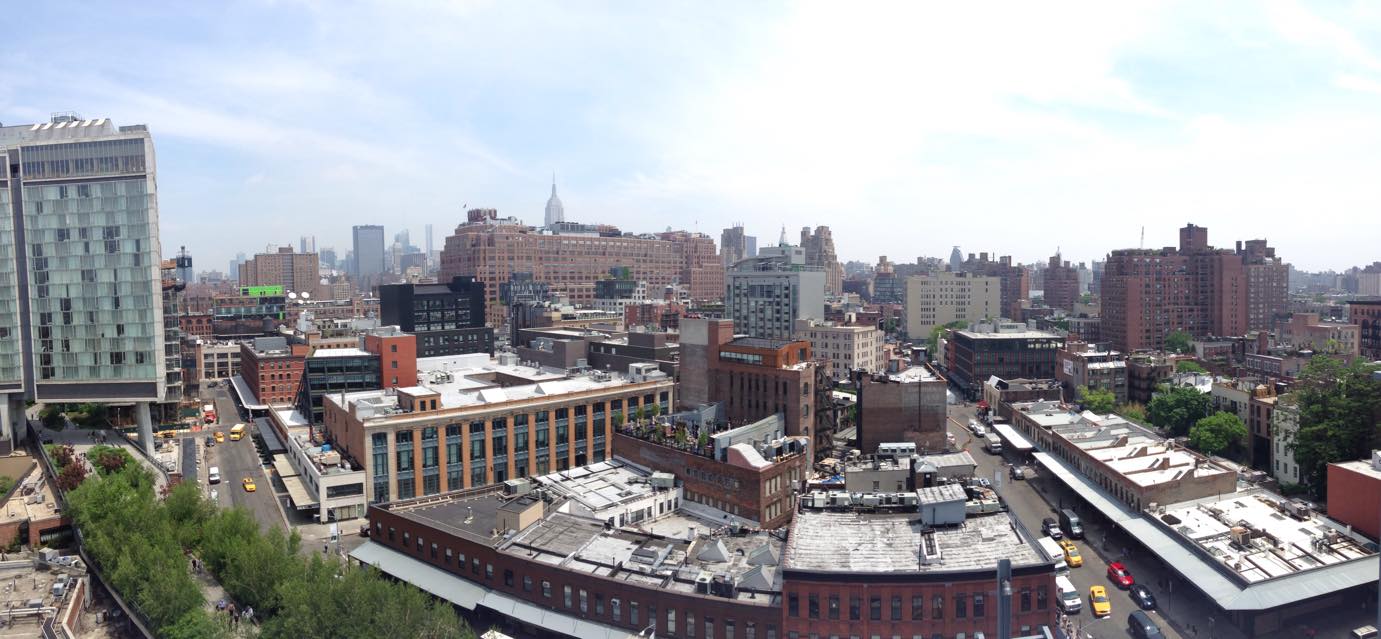
Five days into the trip and I've been doing a lot of things around the city that I didn't get to do the first time I was here. Going to the New Whitney Museum, walking the Highline, going to an amazing donut place were just a few highlights! Staying in Brooklyn is definitely interesting and though I would have much rather stayed in Manhattan, staying in Brooklyn is an amazing opportunity to see and learn about a part of New York that has so much history surrounding art (& fashion).

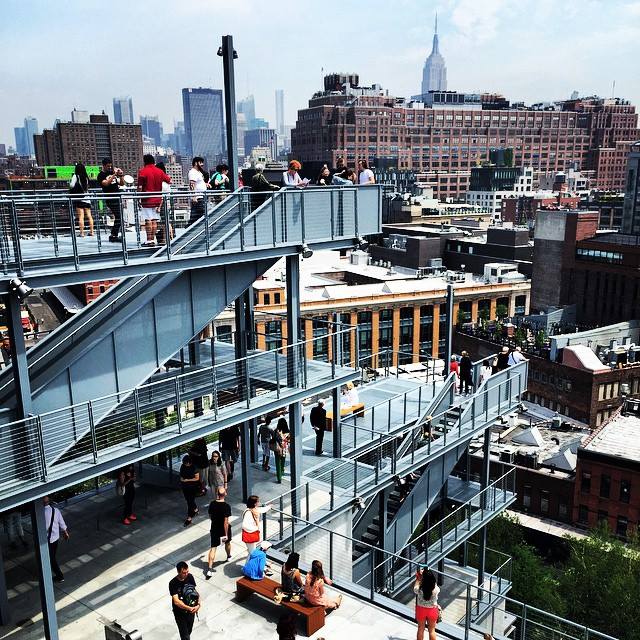
Jessica captured this fantastic panoramic shot of the Meatpacking District from the top of the new Whitney Museum.

Jessica captured this fantastic panoramic shot of the Meatpacking District from the top of the new Whitney Museum.

I've been exposed to a new way of thinking about design through art work and architecture, and looking at spaces and colors differently, and trying to get inspired by the rush of New York City. I've always been a city girl and it's so crazy how parts of New York vary from one to the next. One second I can be walking down a brick road in Greenwich Village then I'll be walking down the busiest blocks in Times Square.

Give us some insight into your assigned artwork from the Museum of Modern Art. Who is the artist? When was this work made? What is the content of this work? In what context and as part of what art movement was it made?

The art piece I was assigned from the Museum of Modern Art was Takashi Murakami's 1996 piece titled 727. It was made up of three of the same sized canvas and was painted with a polymer paint medium. This piece was made in the Neo-pop art era. This was after Andy Warhol and people actually consider Murakami as the Japanese Andy Warhol because of the way he interprets pop culture into his art work.

The surrounding art works in the room with Jessica's assigned Murakami piece-- Olivia and Michelle in the foreground in the left of the photograph.

The surrounding art works in the room with Jessica's assigned Murakami piece-- Olivia and Michelle in the foreground in the left of the photograph.

In preparation for the MoMA I tried to imagine my piece bigger then what I assumed it to be. I didn't expect there to be non neo-pop art pieces around it. The room just seemed like a modge-podge of large art piece. I also expected there to be some sort of super-flat pieces somewhere in the space of the 727, but there was not. I guess in a way, I was disappointing with the set up of the room my piece was in, but I was not disappointing by my assigned art piece.

How did you approach the creative task of responding to this assigned work in studio? What were your challenges as an artist to be in dialogue with the artwork and artist? Would you do anything differently now that you have seen the work in person?

Jessica standing with the art work she exhibited at KPU as part of the "Talking Back" exhibition ahead of the trip portion of the field school.

Jessica standing with the art work she exhibited at KPU as part of the "Talking Back" exhibition ahead of the trip portion of the field school.

When I began my process of responding and having a conversation with this art piece I had to just get started. I began drawing things and looking around me and what I personally related to to and began the molding of my art piece. I was struggling to come up with a concept for my piece because this is the first non-fashion-art work that I've made in years. It was overwhelming learning about how the art world works, how my artist in the era of neo-pop art works, and how having a conversation back with my artist works. An idea occurred after I began thinking about how my life, my childhood ad upbringing related to the piece of work. Murakami was trying to show how messed up American culture looked to Japanese youth, hence the morphed Mickey Mouse character in the middle of his painting.

There are a few things about the art that I produced that I would do differently after seeing it in person. I would have thought about making claws on the hands of Mickey Mouse, I would also consider making the piece bigger, and making a change to the background of the painting, maybe making look more like outer space.

After seeing your assigned art work in person (and any other related art from the same artist or art movement associated with the assigned work), what struck you most, and/or how did the artwork’s form, content, and context shift for you when seeing it?

When I saw the art work in person it wasn't the size that surprised me, it was the color! The skin of the character was very pinky-peach and the whole piece had much of a pinker tone then what I saw from images online. I also kind of expected there to be more Murakami pieces around but there wasn't. The room was just a mix of different large contemporary pieces from various artists. 

Today’s activity was at the New Whitney Museum of American Art in the Chelsea neighbourhood. What were your impressions of this part of New York after learning about it first in the pre-departure classes? What will you take away of the experiences of this day?  What are the most memorable moments for you?

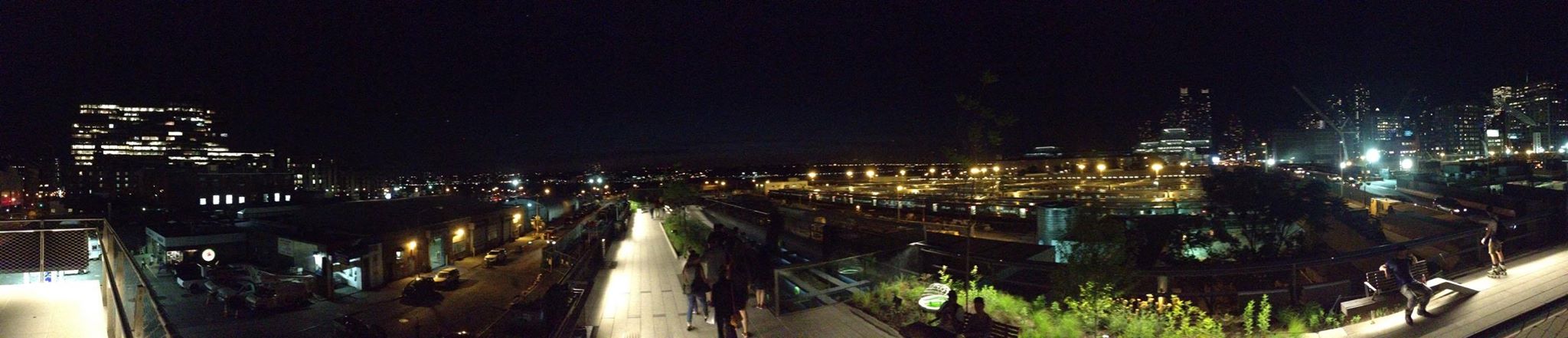
A great panoramic shot of the Chelsea Highline at night

A great panoramic shot of the Chelsea Highline at night

Jessica captures the food love she experienced at Friedman's Lunch!

Jessica captures the food love she experienced at Friedman's Lunch!

Seeing the New Whitney Museum was incredible! After reading the reviews online and seeing photos of the building and artworks inside it was a surreal feeling to explore the building and engage in a very minimalist space. The building was gorgeous, exterior and interior, the high white walls and large art pieces made it easy and comfortable for me to read the art. After the wonderful trip to the New Whitney, I was ready to get some grub. Michelle, Olivia, and I (also known by the larger group as the "Fashion Girls") hit the Chelsea Market, roamed underground then had an amazing meal at a restaurant called FRIEDMAN'S LUNCH, and to says it was delicious is an understatement. After being fueled the three of us went thrift shopping at a few places, one of which was Beacon's Closet. Lets just say that fashion students and designer thrift items go together quite well. It was nice walking around Chelsea and looking at the beautiful architecture. While walking to the metro station after station I had a very New York moment, I got asked for directions! I literally felt like I belonged in Manhattan. It was probably the best random moment of the trip so far.

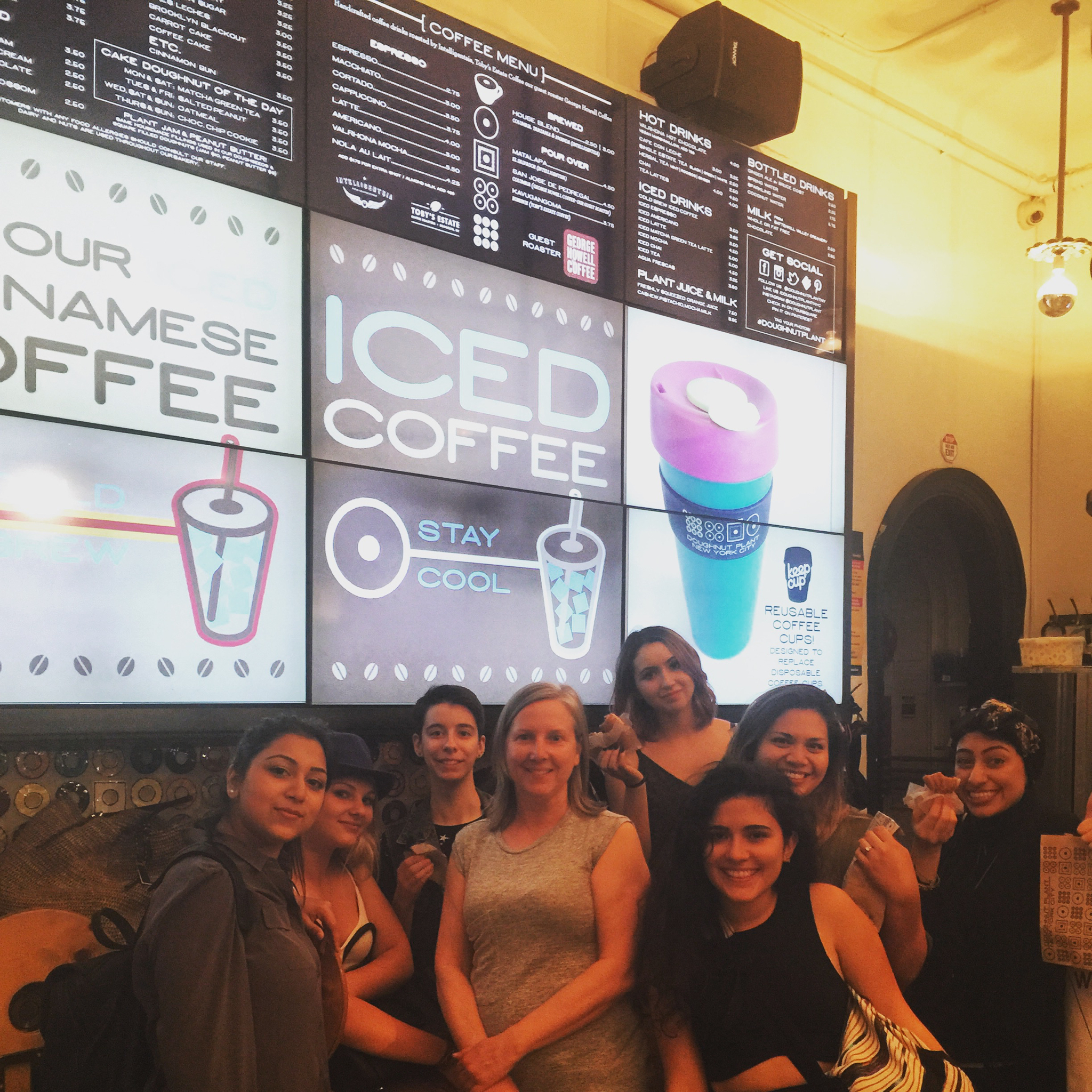
Group shot at the late night donut run to Donut Plant, right next door to the Chelsea Hotel. Jessica at the far left in the photograph.

Group shot at the late night donut run to Donut Plant, right next door to the Chelsea Hotel. Jessica at the far left in the photograph.

We rushed back to the Hostel after shopping to change into our new clothes (of course) then met up with our teacher Dorothy and several of our classmates to walk the Highline and watch the sun set. The whole park is amazing, the view, seating and art that was up there was stunning. Though the walk was long Dorothy insisted that we grab a donut at a shop beside the Chelsea Hotel. Let's just say that Tim Horton's has nothing on the mind blowing coffee cake donut that I ate. I am lucky enough to have met so many amazing people and I am so excited to continue the rest of this journey with them. 

To see more photos and impressions of New York and Venice as the field school continues, check out our Instagram feed #kpunycvenice

Comment
Kenneth walking on the streets of New York with the city's ubiquitous graffiti acting as backdrop for this colourful composition.

Kenneth walking on the streets of New York with the city's ubiquitous graffiti acting as backdrop for this colourful composition.

Location | New York: Meet Field School Blogger Kenneth Yuen

June 01, 2015

Tell us a little bit about yourself—your background, major program of study, reasons for taking this trip, and anything else interesting you want to share (maybe something people might not know about you).

Hi, my name is Kenneth Yuen and I'm currently studying at Kwantlen Polytechnic University for my Bachelor's of Fine Arts degree. My specific fields of interest in fine arts would be painting/drawing and installation/sculpture. Since I was a child, art has always been an important interest of mine, and still remains that until this day. The main reasons I joined this field school was that I couldn’t pass up an opportunity to visit these two incredibly cultural and artistically rich, but different cities that happen to be in two different continents, but that also hold such historical importance in the art world and it's movements. Plus, what would be a better circumstance to visit these two cities with people who share the same interest and passions as I do?

What has met or exceeded your expectations or surprised you about New York so far?

Kenneth capturing the energy of New York's iconic Times Square.

Kenneth capturing the energy of New York's iconic Times Square.

Bushwick in Brooklyn as captured by Kenneth in his travels around the borough.

Bushwick in Brooklyn as captured by Kenneth in his travels around the borough.

The fact that New York definitely lives up to the hype comes as a surprise to me; the city is so culturally rich and diverse, and its culture differs so drastically from it's neighborhoods, boroughs and districts. Manhattan is totally different compared to Brooklyn, just as the Lower Eastside is totally different compared to Tribeca. Despite there being so many different neighborhoods, none of them really stand out more or less, and that's not a bad thing. Every single district and neighborhood holds it's own; all of them literally have their specific culture and vibe in the air and they all stand out. 

On a side note, it really came to me as a pleasant surprise that people genuinely are who they want to be and don't seem self-conscious here in New York; they really say what they want to say and behave the way that they want to behave. Maybe it's that kind of casual honesty that catches people off guard at times and unfairly earns New Yorkers reputation of being "rude.” In general, New York really has given me a wonderful first impression and it definitely lives up to the hype; the character of the city is in the air and everywhere else and there is no doubt why movies and music always choose this city as their settings and inspirations

Give us some insight into your assigned artwork from the Museum of Modern Art. Who is the artist? When was this work made? What is the content of this work? In what context and as part of what art movement was it made?

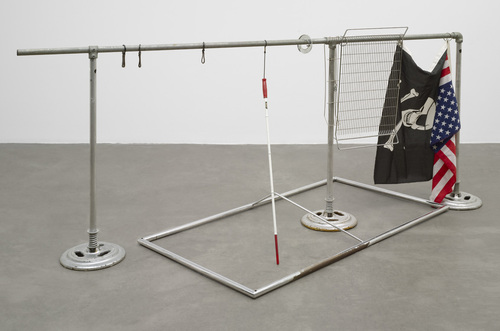
During the portion of this program that was done locally back in Vancouver, each participating student was assigned a piece of artwork that is currently displayed at the Museum of Modern art; mine happened to be an installation piece by Cady Noland called The American Trip which was made in 1988. Cady Noland is an internationally displayed and acclaimed postmodern installation artist born in 1956 and is also the daughter of the abstract painter Kenneth Noland who was active in the 1950s and 1960s. 

In her piece that was assigned to me, Noland criticizes American culture and the concept of the American Dream, and makes statements of how they both are heavily deep seeded in violence and thievery. The piece's composition is incredibly casual, especially for something that's making such a bold and strong statement about one's own country and cultural identity. 

Kenneth was assigned Cady Noland's The American Trip (1988) at MoMA.

Kenneth was assigned Cady Noland's The American Trip (1988) at MoMA.

How did you approach the creative task of responding to this assigned work in studio? What were your challenges as an artist to be in dialogue with the artwork and artist? Would you do anything differently now that you have seen the work in person?

In the studio portion of this program, we were also instructed to create our own piece of art that was in direct dialog with our assigned artist and work. Despite being totally aware of America's history of violence and exploitation, the idolization of the American Dream and "cliché American lifestyle" involving upward mobility, status and material wealth is something that's very ingrained in my personality and how I present myself to people initially, which is why I think my piece was assigned to me in the first place. With that being said, I took this assignment as an opportunity to express my point of view in regards to the American Dream coming from the perspective of a person of minority decent that only recently moved to North America two years ago, and also has family who have moved else where with the purpose and intention of upward mobility. 

Kenneth's response to the Noland piece was this installation, as seen in the Kwantlen Polytechnic University Student Art Gallery "Talking Back" exhibition.

Kenneth's response to the Noland piece was this installation, as seen in the Kwantlen Polytechnic University Student Art Gallery "Talking Back" exhibition.

The initial challenge of creating my piece was how to incorporate my own cultural identity into my commentary of the American Dream and reference the exploitation of my people through symbolism (such as a crown that involves a railroad spike and references the railroads that my people built in the first place), but not have it come off as seeking understanding, but as a confrontational celebration of triumph in an exploitive system. The second challenge was then to embody the whole spirit of the American Dream and immigration, by finding a way to make my piece self-reliantly and physically craft every part of my sculpture on my own; from the bust itself to the American flag, all the way to the plinth that the sculpture sits on. 

In my personal opinion, I wouldn't change anything about my sculpture as I personally feel like I've pursued my vision to the best of my ability with the skills and resources that were available to me. I feel like I was able to successfully compositionally juxtapose Noland's piece compositionally and in vibe, while expressing my different point of view. 

After seeing your assigned art work in person (and any other related art from the same artist or art movement associated with the assigned work), what struck you most, and/or how did the artwork’s form, content, and context shift for you when seeing it?

It really was a pleasure to see The American Trip in person; I really gained so much more respect for the piece. The casualness of Noland's statement and composition really shines through in person as it is much smaller than I expected it to be. The fact that most viewers just simply walk by the work without giving it a second thought, despite the pirate flag being right next to the American flag really is a testament to the success of her statement, that most people are blind to America's deep seeded roots in violence and piracy and how it holds a place in the American cultural identity and psyche. The placement of Noland's work was also really well thought out by the museum in my opinion, which also builds another really interesting ephemeral context for her piece; as it was placed in the same room with really large spectacular murals, and behind it was a dark room that had an installation piece that involved lights and sounds, which all attract more immediate attention compared to Noland's piece.  

Today’s activity was at the Whitney Museum in the Chelsea neighbourhood. What were your impressions of this part of New York after learning about it first in the pre-departure classes? What will you take away of the experiences of this day?  What are the most memorable moments for you?

The Whitney Museum of American Art opened only last month in its new location just off the Chelsea Highline.

The Whitney Museum of American Art opened only last month in its new location just off the Chelsea Highline.

Chelsea was an interesting place to visit, especially because it's where New York's current art movement is in the present, evidence being that this area has over 200 art galleries and hosts the Whitney Museum of American Art’s brand new building. So it was cool to see the center of New York's art world in the flesh.  From a visual perspective, Cheslea really reminded me of Yaletown back in Vancouver as it is significantly more gentrified and polished up than areas like Bushwick (Brooklyn), which also seem quite gentrified itself, but not to the same degree. Chelsea being right by the water/chanel that separates it from Gramercy & Flatiron probably also contributes to me visually and geographically comparing it to Yaletown. 

The Whitney was a great pleasure to visit. From the outside, the building wasn't immediately striking, but once getting inside, the simple interior design really works for itself and allows the artwork to speak for itself. One thing that surprised me was how much natural light got into the building while still being able to meet the requirements that an art museum would need, those being wide walls, open floors and high ceilings. On the inside, the museum's interior and rooms really did seem to flow naturally; the way the floors were separated was also a nice surprise, as they placed the art work chronologically from top to bottom, which creates a great narrative in regards to America's artistic development. The higher floors focused on American art from the 1940s that was trying way too hard to be European. As you go down the building and see the floors focused on postmodern and contemporary art, you really see America's artistic culture, identity and development, and how it has come a long way from the 1940s. It is almost like watching someone mature into their own identity and become much more introspective and capable of self-criticism.

To see more photos and impressions of New York and Venice as the field school continues, check out our Instagram feed #kpunycvenice

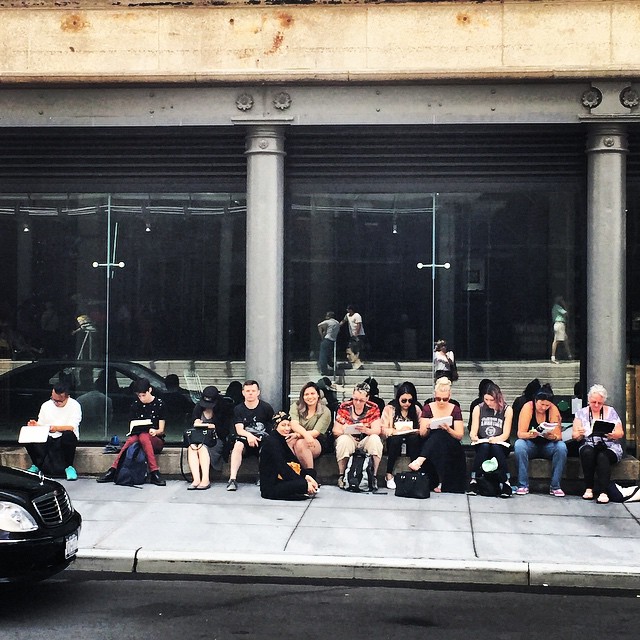
The students sketching outside the Whitney Museum while waiting to get inside. Kenneth is seated first person to the left in the photo.

The students sketching outside the Whitney Museum while waiting to get inside. Kenneth is seated first person to the left in the photo.

Comment
Newer / Older
Back to Top
Screenshot 2018-02-05 20.48.17.png

© Dorothy Barenscott, 2010-2025