• Fall 2025
  • Blog
  • Resources
  • Field School
  • Students
  • Feedly
  • About
Menu

Avant-Guardian Musings

  • Fall 2025
  • Blog
  • Resources
  • Field School
  • Students
  • Feedly
  • About
large monogram_2018-02-01_22-31-07.v1 (1).png
“Art is an outlet toward regions which are not ruled by time and space”
— Marcel Duchamp

Avant-Guardian Musings is a curated space of ideas and information, resources, reviews and readings for undergraduate and graduate students studying modern and contemporary art history and visual art theory, film and photography studies, and the expanding field of visual culture and screen studies. For students currently enrolled in my courses or the field school, the blog and associated social media links also serve as a place of reflection and an extension of the ideas and visual material raised in lecture and seminar discussion.

Blog RSS

Screenshot 2018-02-05 20.56.45.png
Blog
KPU FINE ARTS PARIS + VENICE BIENNALE FIELD SCHOOL (MAY/JUNE 2026)
about 2 months ago
"No Fun City" Vancouver: Exploring Emotions of Detachment in Palermo, Sicily at AISU
about 4 months ago
Making Sense of Art in the Age of Machine Learning—A Suggested Reading List
about 5 months ago
From the Archives | How (And Why) To Take Excellent Lecture Notes
about a year ago
Weekly Musings + Round Up... And A Few More Things
about 2 years ago

Screenshot 2018-02-05 20.56.51.png
As we start the week in a storm of activity, new beginnings, and global uncertainty, I am grounded in my word for 2026– INTENTIONAL 🩶— “done with purpose, willingness, deliberation, and consciousness.” I see this word represe
As we start the week in a storm of activity, new beginnings, and global uncertainty, I am grounded in my word for 2026– INTENTIONAL 🩶— “done with purpose, willingness, deliberation, and consciousness.” I see this word represented in the symbol of the heart, and for this reason and many others both personal and professional, I will be bringing this much needed energy to my year. The power of a yearly word is transformative. I started in 2019 and my words have guided and carried me through some important moments and life decisions. If you haven’t already, give it a try, but remember to choose very wisely ☺️ “Radiate” 2025 ✨ “Maintain” 2024 💪🏻 “Refine“ 2023 🙌🏻 “Acta non verba” 2022 🤐 “Audacious” 2021 💃🏼 “Fearless” 2020 😛 “Unapologetic” 2019 💅🏻 #happynewyear #wordoftheyear #intentional #monicavinader @monicavinader
Polar bear ride! 🐻‍❄️🏍️💨🏍️ First motorcycle outing of 2026 in the books. A balmy 4C 🥶We love you Vancouver— good to be home 💙😊Wishing everyone a very Happy New Year! 🥳 
.
.
.
#happynewyear #vancouver #motorcycle #motorcyclesofinstag
Polar bear ride! 🐻‍❄️🏍️💨🏍️ First motorcycle outing of 2026 in the books. A balmy 4C 🥶We love you Vancouver— good to be home 💙😊Wishing everyone a very Happy New Year! 🥳 . . . #happynewyear #vancouver #motorcycle #motorcyclesofinstagram #motocouple #husqvarna #vitpilen401 #svartpilen401 #motogirl #motogirls
2025... where did it go?! 😂 Like a ray of light, I was very much guided by my chosen word of the year “radiate”— to shine and send out beams of energy— and this allowed for a great deal of adventure, new experiences, ideas an
2025... where did it go?! 😂 Like a ray of light, I was very much guided by my chosen word of the year “radiate”— to shine and send out beams of energy— and this allowed for a great deal of adventure, new experiences, ideas and people and opportunities to flow back into my life. Above all else, I found myself very much on the move all year! Travel took me from New York to Lausanne, Paris to Seoul, and Palermo to Maui, while my motorcycling stayed more on the road and less on the track as Brian and I balanced our time, energy, and commitments. But as always, we found every spare moment to prioritize this shared passion and we hope to find a way back to the track in 2026. Professionally, the year was... A LOT... and highlighted by many new research partnerships, conferences, workshops, writing projects, some failed plans and sharp detours, but also the planting of new seeds for future ventures. In the classroom, AI brought many new challenges and opportunities to rethink the purpose of my teaching and courses, but overall I was inspired and at times surprised by what my students were able to accomplish with the new assessment models I put into place. All of this technological change remains very much a work in progress for academics, and I prefer to remain optimistic that the artists I work with will find a way to maintain their voice and vision in it all. The historian in me knows this to be true. Personally, I connected more to my heart and intuition in 2025, listening to that inner voice to guide many key decisions. Brian and I also kept up a decent health and fitness regime that had us energized and aiming for consistency to match our midlife pace. Use it or lose it is a reality in your 50s!!! Sending wishes of peace and love and a very Happy New Year to all! May your 2026 be filled with fun, awe, purpose, and good health and much happiness. Remember to be good to yourself so you can be good to others. I’m still working carefully on my 2026 word… but whatever it is, I know it will be the right one ❤️ . . . #happynewyear #yearinreview2025 #wordoftheyear #motorcyclelife #arthistorianlife
Resting, dreaming, and plotting the year ahead 💙✨😘
.
.
.
#maui #hawaii #vacationmode #newyear #planning
Resting, dreaming, and plotting the year ahead 💙✨😘 . . . #maui #hawaii #vacationmode #newyear #planning
Riding and chasing sunsets across Maui ✨💙🌺🌴🧡
.
.
.
#maui #hawaii #motorcycle #motorcyclesofinstagram #motogirl #vacationmode #sunsets
Riding and chasing sunsets across Maui ✨💙🌺🌴🧡 . . . #maui #hawaii #motorcycle #motorcyclesofinstagram #motogirl #vacationmode #sunsets

Screenshot 2018-02-05 20.57.02.png
  • November 2025 (1)
  • September 2025 (1)
  • August 2025 (1)
  • September 2024 (1)
  • February 2023 (1)
  • January 2023 (3)
  • August 2022 (1)
  • March 2022 (1)
  • February 2022 (3)
  • January 2022 (4)
  • November 2021 (2)
  • October 2021 (3)
  • September 2021 (3)
  • July 2021 (2)
  • June 2021 (1)
  • May 2021 (3)
  • April 2021 (3)
  • March 2021 (3)
  • February 2021 (4)
  • January 2021 (5)
  • December 2020 (3)
  • November 2020 (6)
  • October 2020 (4)
  • September 2020 (1)
  • July 2020 (1)
  • June 2020 (4)
  • May 2020 (9)
  • April 2020 (5)
  • December 2019 (2)
  • November 2019 (5)
  • October 2019 (3)
  • September 2019 (1)
  • July 2019 (6)
  • June 2019 (19)
  • April 2019 (2)
  • March 2019 (5)
  • September 2018 (2)
  • July 2018 (1)
  • June 2018 (4)
  • May 2018 (2)
  • April 2018 (5)
  • March 2018 (5)
  • February 2018 (8)
  • January 2018 (3)
  • December 2017 (4)
  • November 2017 (5)
  • October 2017 (7)
  • September 2017 (3)
  • July 2017 (6)
  • June 2017 (15)
  • April 2017 (2)
  • March 2017 (3)
  • February 2017 (1)
  • January 2017 (2)
  • November 2016 (2)
  • October 2016 (1)
  • September 2016 (3)
  • August 2016 (1)
  • June 2016 (2)
  • May 2016 (3)
  • April 2016 (2)
  • March 2016 (5)
  • February 2016 (7)
  • January 2016 (9)
  • November 2015 (1)
  • October 2015 (2)
  • September 2015 (3)
  • August 2015 (3)
  • July 2015 (1)
  • June 2015 (20)
  • May 2015 (4)
  • March 2015 (2)
  • January 2015 (1)
  • November 2014 (1)
  • October 2014 (2)
  • June 2014 (1)
  • May 2014 (4)
  • April 2014 (6)
  • February 2014 (1)
  • January 2014 (2)
  • November 2013 (1)
  • September 2013 (1)
  • July 2013 (3)
  • June 2013 (10)
  • December 2012 (1)
  • November 2012 (3)
  • October 2012 (6)
  • September 2012 (3)
  • August 2012 (1)
  • July 2012 (1)
  • June 2012 (25)
  • May 2012 (5)
  • April 2012 (4)
  • March 2012 (7)
  • February 2012 (11)
  • January 2012 (6)
  • December 2011 (5)
  • November 2011 (11)
  • October 2011 (11)
  • September 2011 (8)
  • June 2011 (9)
  • May 2011 (15)
  • April 2011 (9)
  • March 2011 (14)
  • February 2011 (17)
  • January 2011 (16)
  • December 2010 (11)
  • November 2010 (18)
  • October 2010 (24)
  • September 2010 (30)

Screenshot 2018-02-05 20.57.07.png

© Dorothy Barenscott, Avant-Guardian Musings, and dorothybarenscott.com, 2010-2023. Unauthorized use and/or duplication of this material without express and written permission from this blog’s author is strictly prohibited. Excerpts and links may be used, provided that full and clear credit is given to Dorothy Barenscott, Avant-Guardian Musings, and dorothybarenscott.com with appropriate and specific direction to the original content.

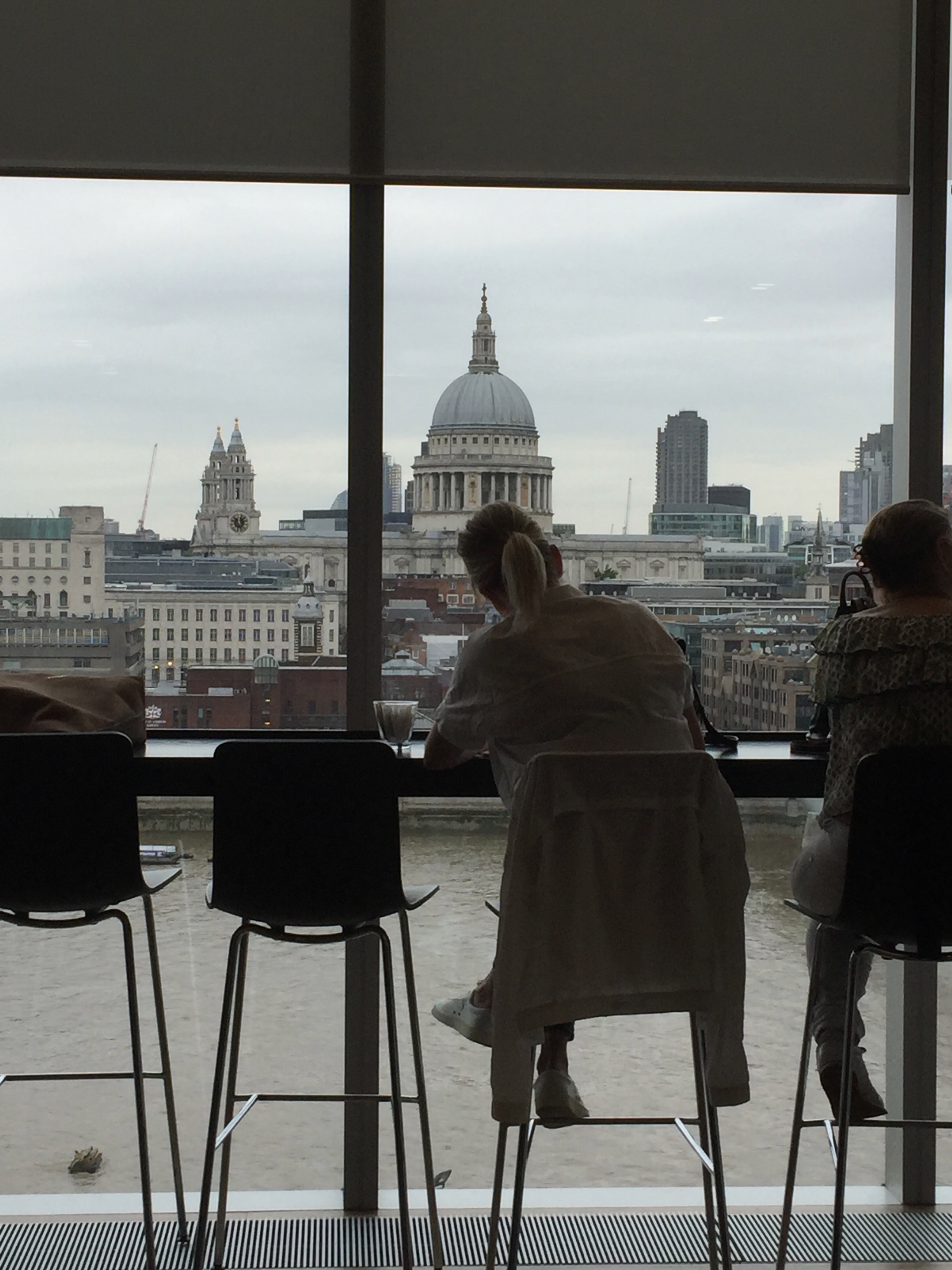
A recent image I captured in London (on the London/Venice Biennale Field School) that shows the sharp contrast of building styles reflective of many global cities. Learn about this topic and the role of architecture in the history of art and design in the newly offered course, ARTH 2260.

Courses for Fall 2019: Topics in Architecture, Urban Screen Culture, Film Studies, and 19th Century Art

July 09, 2019

As registration for the Fall 2019 academic semester begins, I wanted to provide more information about courses I will begin teaching starting September, 2019. Please see detailed descriptions below. If you have any specific questions that are not answered here, you can contact me directly. I look forward to another rich and engaging semester with both new and familiar faces. **ARTH 2260 is a new course and DOES NOT require that you have ARTH 2160 as a pre-requisite**

ARTH 2260: HISTORY OF ARCHITECTURE: BAROQUE TO POSTMODERN

Kwantlen Polytechnic University (Wednesdays 7:00-9:50pm, Surrey Campus Fir 130). Prerequisites: 6 credits from courses at the 1100 level or higher

I am excited to be offering this new course in the history of architecture for the first time at KPU! Built space and the questions of how buildings and environments reflect culture is an ongoing research interest of mine, and a topic that is both fascinating and timely. In this course, we will also tackle questions about the role of art and design, individual architects, architecture movements, and the place of building technologies in the creative expression of designed space from the Baroque period of the eighteenth century to that of the contemporary present.

COURSE DESCRIPTION: Students will study a survey of the development and history of architecture from the period of the late Baroque in the eighteenth century through to the postmodern architectural styles associated with the contemporary present, approaching architecture as a unique medium with its own visual vocabulary and spatial codes. Students will assess a variety of formal building and visual languages, designs, and theories that have shaped the modern and postmodern history of architecture through the close examination of select buildings and spatial environments set within specific cultural, social, political and economic contexts of their planning and construction.

ARTH 1130: INTRODUCTION TO FILM STUDIES

The evolving role of Hollywood studios and the emergence of the movie sequels/prequels and franchise film phenomenon is just one of many topics explored in this course.

Kwantlen Polytechnic University (Fridays 1:00-4:50pm, Surrey Campus Fir 128/130). Prerequisites: None

The ever popular film studies course is continuing to evolve and update to consider recent developments in the film industry, together with new research that links histories of cinema's past to its present. This is a course that will have you thinking critically about motion pictures long after the final exam-- it also provides an opportunity to visit and see films at the Vancouver International Film Festival (September 26- October 11). 

COURSE DESCRIPTION: Students will study the history and development of world cinema, and the comprehension and theory of film as a visual language and art-making practice from its inception in the late nineteenth century to the present. The goal of the course is to introduce students to the critical interpretation of the cinema and the various vocabularies and methods with which one can explore the aesthetic function, together with the social, political, and technological contexts and developments, of moving pictures. The format of this course (as a 4 hour block each class) will normally entail a one hour lecture, the screening of a full-length film, and a focused group discussion. Each film will serve as a starting point and gateway for discussion about the course’s daily theme. 

ARTH 1140: INTRODUCTION TO VISUAL ART, URBAN, AND SCREEN CULTURE

This course will explore case studies in street and graffiti art, hip-hop and punk culture, video gaming, anime, new media and Internet art, urban performance art, activist art, grassroots fashion, street photography, and the world of mobile photography and filmmaking.

Kwantlen Polytechnic University (Wednesdays 4:00-6:50pm, Surrey Campus Fir 136). Prerequisites: None

Formulated to compliment ARTH 1130: Introduction to Film Studies, this course extends the conversation about screen culture to the world of urban studies and public art. We begin with the question "How do we navigate and make sense of the fast-changing world of new urban visual environments and the emerging world of screen culture?" and explore case studies in street and graffiti art, hip-hop and punk culture, video gaming, anime, new media and Internet art, urban performance art, activist art, grassroots fashion, street photography, and the world of mobile photography and filmmaking.

COURSE DESCRIPTION: Students will study the broad field of contemporary visual art and culture with a specific focus on the role of urban environments and the emerging world of screen culture in shaping new possibilities for global art production and circulation. Students will explore how they can become active agents rather than passive observers through engagement with the diversity of visual art and culture surrounding them. They will investigate interdisciplinary topics connecting the world of visual art with urban and screen cultures through case studies in street and graffiti art, hip-hop and punk culture, video gaming, anime, new media and Internet art, urban performance art, activist art, grassroots fashion, street photography, and the world of mobile photography and filmmaking.

CA 117: VISUAL ART & CULTURE I

Why did Beyonce choose this particular painting at the Louvre (Jacques Louis David's The Coronation of Napoleon (1805-07) to feature in a recent music video? How do the themes and issues evoked in this work of art resonate with us today? Find out when you study the art history of the 19th century in CA 167.

Simon Fraser University (Thursdays 6:30-9:20pm, Vancouver Harbour Centre Campus 1800). None

Offered as a core required course in SFU’s School for the Contemporary Arts, CA 117 offers an introduction the visual arts of the nineteenth century, with a critical focus on the roots of modernism and the avant-garde. If you have ever wondered how Western art evolved from its more traditional, Renaissance roots to the challenging and at times difficult-to-understand contemporary art of today, this is the course that holds many of your answers.

COURSE DESCRIPTION: This course provides an introduction to the complex ways in which social and political change, and ideologies of gender, class, race and ethnicity, worked to shape aspects of nineteenth century visual culture in Europe and North America. Emphasis will be placed on the roles played by industrialization, political revolution, rapid urban growth, global commerce, and the new media technologies of an expanding consumer culture in defining a wide range of visual culture. Throughout the term we will also examine different representations and debates around the idea of modernity and the “modern.” Since the time period under investigation has often been called “The First Modern Century”, we will pay particular attention to shifting ideas related to labour and leisure, urban social space and spectacle, and issues bearing on Euro-American expansion of empires in relation to indigenous populations, throughout the nineteenth  century to turn of the twentieth century up to WWI.

Comment

Meet field school co-leader Dorothy (me, Hi there!), seen here near the entrance to the Giardini venue at the Venice Biennale.

Location | London & Venice: Meet Field School Co-Leader Dorothy Barenscott

July 07, 2019

Tell us a little about yourself—your teaching areas and interests and/or your background and how you became connected to the London Venice field school? 

Cheerio and Ciao! My name is Dorothy Barenscott, and I have had the pleasure of co-leading this field school to London and the Venice Biennale with Elizabeth Barnes. I am an art historian and researcher with a Ph.D. and specialization in the field of modern and contemporary art, and this is my fourth field school adventure in just under seven years that I have helped organize and run through Kwantlen Polytechnic University for the Fine Arts Department (past field schools include two separate trips to Paris and Documenta in 2012 and 2017, and a trip to New York and the Venice Biennale in 2015).

Although my interests and research are primarily focused on the historical avant-garde, urban studies, film/photography, and theories of modernism, I have in recent years been exploring the art market, new media studies, and looking more closely at street art and graffiti and more non-traditional and emerging modes of artistic expression. I am also a lifelong traveller, both as an adult and graduate student studying in the world’s archives and museums-- but also as a child traveling between Canada and Eastern Europe to visit family and navigate the complexities of very different cultures. As such, I have long believed that world travel fosters a kind of active and pragmatic critical thinking, compassion, and tolerance that is unique and distinctive from other kinds of social engagement. My blog (and the field school blogs assembled here) serve as extensions of this broader interest in “travel” to reach beyond the classroom and enter into dialogue across wider distances and dimensions.

Arriving on Day 1 of our adventure in London. Dorothy (fifth from right) captured with co-leader Elizabeth and the most of the group (special thanks to Sharon Greeno for getting this great photograph!).

How did you approach the task of teaching and working with students inside and outside the classroom for the field school?

Working on the field schools is among the most rewarding aspects of my job, and I approach each opportunity to travel as entirely unique and context specific. We had chosen London as a new locale for a multitude of reasons—including the rich and accessible art collections in the local art museums and galleries (many of which are free!); the dynamic and growing street and graffiti art scene; the fluidity between the worlds of commerce, art, design, and fashion in the city; and the importance London has played via the Tate Modern in the establishment of a global contemporary art culture. Moreover, London presented us with the tensions surrounding both Brexit and the growing crisis, Europe-wide, around the Syrian refugee crisis and growing ethnic nationalism and illiberalism at the political level. This potent mix provided a rare opportunity to probe how artists are both impacted, and challenged, by shifting social, political, and cultural forces. We then connected what was happening on the ground in London to the wider conversation taking place at the Venice Biennale, a global art exhibition that includes over 90 participating countries and takes place in the Italian cultural hub every two years.

London is a study in contrasts, and this year’s field school played off the tensions that have emerged in UK, Europe, and globally around Brexit, the Syrian refugee crisis, and growing ethnic nationalism and illiberalism globally.

This year’s theme for the core art history course “London Calling: Post-War Art and Consumer Culture” was centered around the transformation of modern and contemporary London through the lens of art and consumer culture. We began with the era of “Swinging London” fashion and pop art of the 1950-60s, then moved to the punk, new wave, and experimental art movements of the 1970-90s, together with the “Young British Artists”, and ended with the street art movements of the 1990-2000s connected to mega-celebrity artist “brands” such as Damien Hirst and Banksy. In each era explored, we sought to unpack how consumer culture intersected with movements grounded in avant-garde art, yielding new business models and approaches that sought to mainstream art to the masses. Students were assigned one British contemporary artist and one “global” artist (understood to be part of the modern and contemporary art canon worldwide and found in the collection of the Tate Modern) and were challenged to assess how their assigned artists worked to inform new kinds of critical conversations at the level of form, content, and context in their artworks.

What was unique or memorable about experiencing London and Venice with a group of students already interested in and/or practicing art making?

This was our first field school to London, but it is a city I have traveled to a great deal. To me, London is a very accessible and friendly city, with a local population that is very interested and open to contemporary art. And unlike the stereotypes many people have of the “stiff upper lip” and conservatism of the U.K., what I absolutely love about London is its incredibly diverse and multi-ethnic population, not unlike New York, and the historical legacy of the punk, labour, and anarchist movements, that manifest in all kinds of spatial, cultural, and political ways throughout the city’s many distinct neighbourhoods. And then there is that ever-present British humour and wit, qualities that seep into all areas of everyday life. All of these incredible qualities are mirrored directly in the art, both past and present, in London. And for our students, London provided a virtual artistic smorgasbord—from the refined antiquities of the British Museum, to the latest in contemporary art at Tate Modern, the fashion exhibitions at Victoria and Albert Museum, and ever-changing street and political art in the streets. Everything and anything one would want to discover art-wise can be found in London.

View fullsize 6118039D-43A9-41BF-BD63-A5454819C724.jpg
View fullsize 01365FC1-E3D1-41DB-8124-0F9E4A097CDC.jpg
View fullsize 2177481B-86DA-4E6D-928D-725C6E79968E.jpg
View fullsize 1A04121E-3BDC-420F-86A3-118815C17417.jpg
View fullsize EB67D198-DDC1-4C2F-B631-55B2D9D739C2.jpg
View fullsize 3B5F8DE9-C5C7-4C47-9A91-99CBEE3B2543.jpg

Moving from London to Venice did feel a bit more like whiplash than in other field school pairings (the temperature difference alone had us scrambling for entirely different wardrobes!), but the connective tissue was this year’s curator, Ralph Rugoff, an American curator working in London, with his theme “May You Live In Interesting Times.” His chosen theme was directly informed by the recent turmoil both in the UK and Europe, and as Rugoff describes in his introduction to the Biennale, the world must pay attention to the role art can play in raising awareness of the stakes involved in recent world events:

May You Live in Interesting Times will take seriously art’s potential as a method for looking into things that we do not already know - things that may be off-limits, under-the-radar, or otherwise inaccessible for various reasons. It will highlight artworks that explore the interconnectedness of diverse phenomena, and that convey an affinity with the idea, asserted by both Leonardo da Vinci and Vladimir Ilyich Lenin, that everything connects with everything else.”

We likewise challenged our students to pay attention and look for the major stakes that were being taken up by this year’s chosen artists, along with the messages that were channeled through the many national pavilions that sought to communicate what they deemed worthy and critical to the Biennale audiences. Of all the years I have attended this event, this year’s Venice Biennale was among the most powerful, urgent, and targeted, with a strong message to both audiences and artists to pay critical attention and take action in the world around them. All this through the power of art.   

Which of the activities during the trip stand out to you? Any special highlights or memorable moments for you?

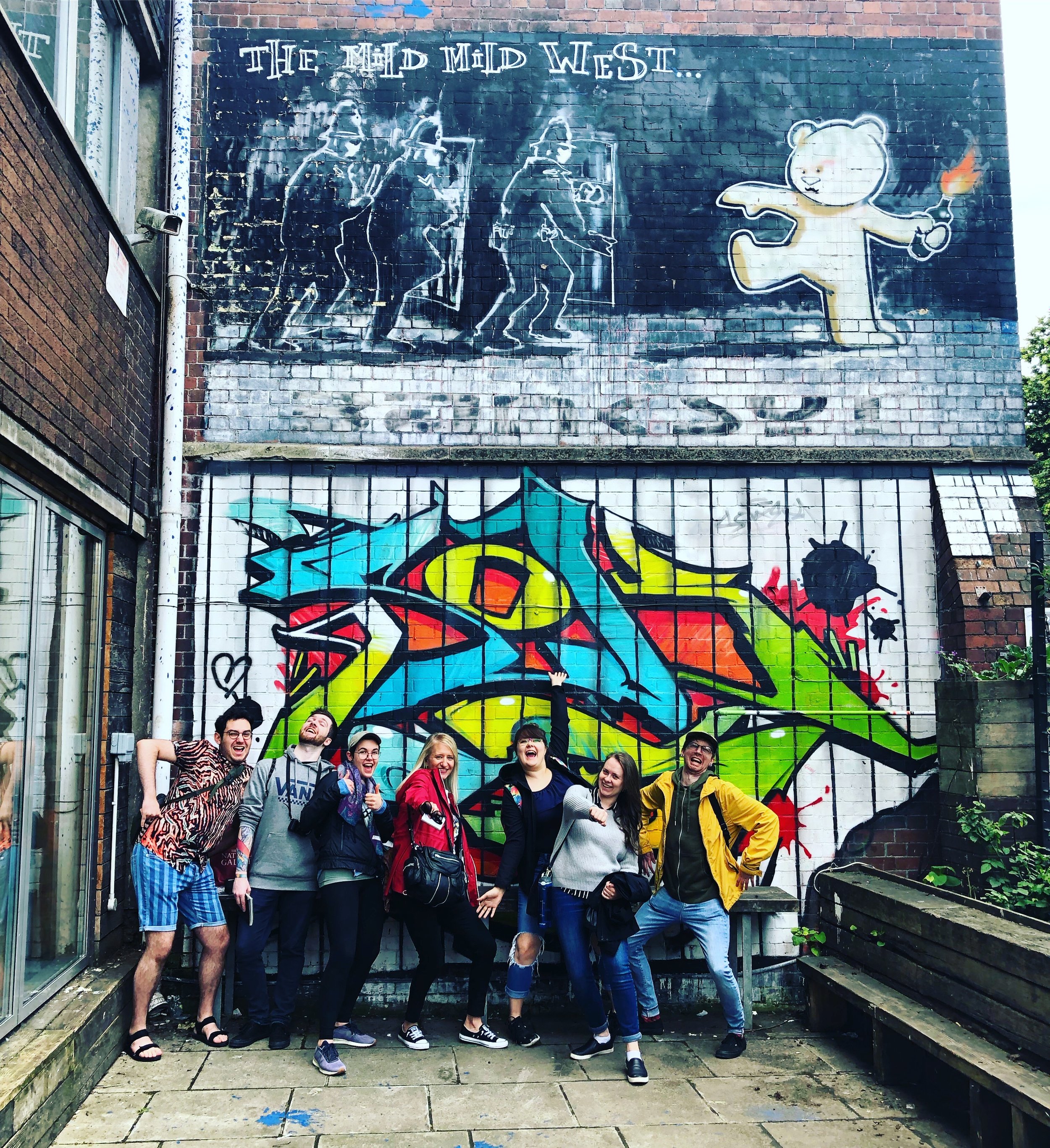
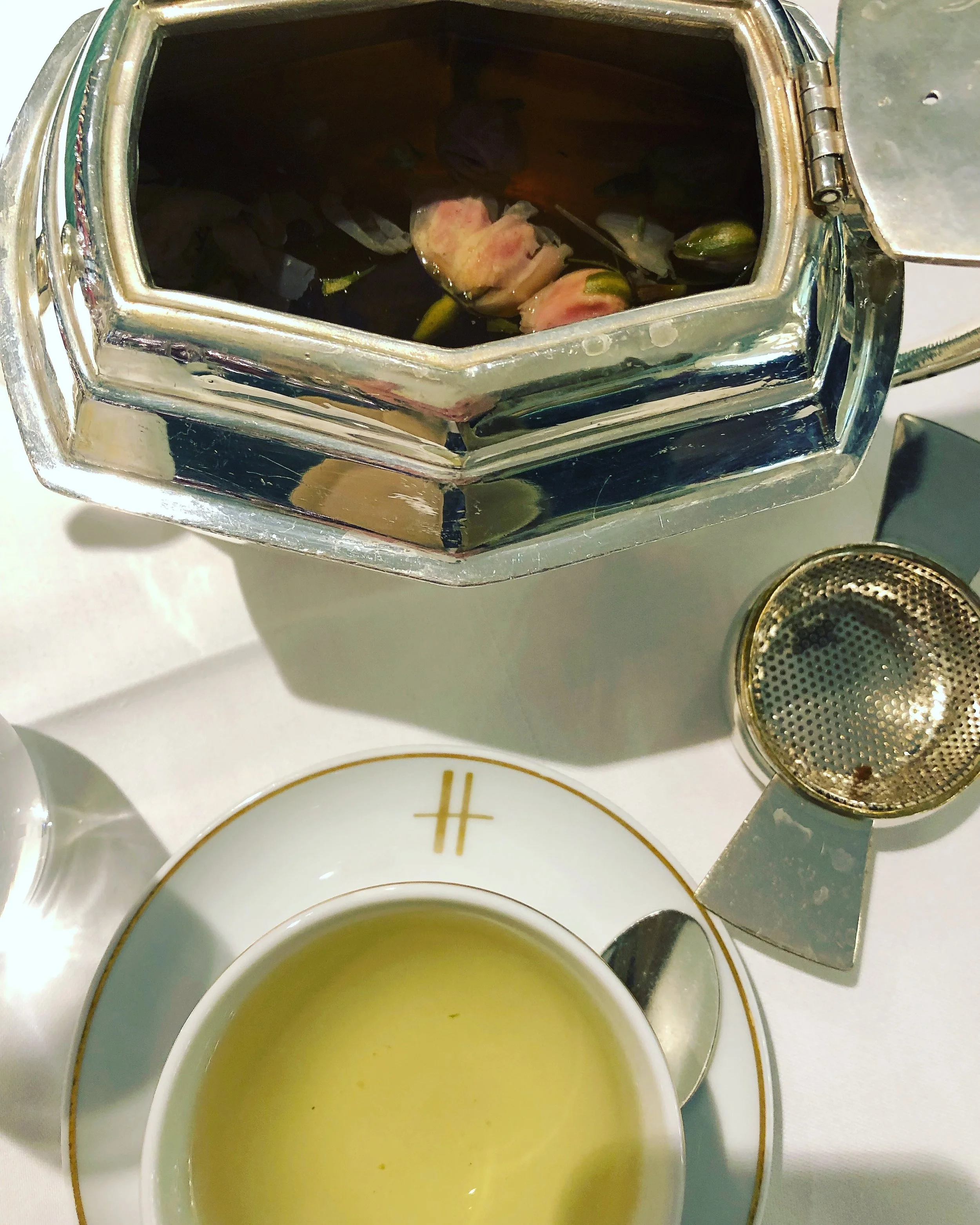
There were so many memorable moments of the trip, but as always, the most exciting thrill for me personally and professionally is seeing our students encounter works of art that they have intently studied but only experienced via reproductions, and always at a distance. For this reason alone, the trips to Tate Modern and Tate Britain were very special. I was also very happy to see many of our students find the confidence to plan short adventures and excursions out of London on their own—something that will trigger a lifelong love of travel adventure. Other London moments, such as taking long walks with students and on my own through London’s many neighbourhoods, traveling with a small group to Bristol to see Banksy’s first street art works, being invited into Patrick Hughes’ studio for a private tour with the group, our sunset bike ride, finally getting to White Cube gallery, meeting up with KPU colleagues Sharon Greeno and Heather Clark for special dinners, and finding the perfect moment of calm at a tea service in Harrod’s or on a solo visit to see a Lee Krasner exhibition—all of these moments stand out for me. As always, I wanted to share as many moments as possible through photography, an area of interest I only claim as an enthusiast, and enjoyed the process of selecting, editing, and filtering images for the field school Instagram hashtag #kpulondonvenice.

View fullsize 4D9CE58D-A618-4A25-B3B2-A60900076945.jpeg
View fullsize 30457F59-A937-4D86-BBC9-2B3D34BCD742.jpeg
View fullsize 6E308411-DD42-43C5-8EDB-3B2E6F713849.jpg
View fullsize 54D5EBD3-4214-44EC-84AC-4BBAF401E4D1.jpg
View fullsize IMG_2416.jpg
View fullsize IMG_3389.jpg
View fullsize 682019AC-A5DE-4037-A1C8-E5A81328AE76.jpeg
View fullsize D7EFDD04-83CE-45F3-98E7-5C67E5BD8DFE.jpeg
View fullsize IMG_7430.jpeg
View fullsize 2198B1D4-7D06-4B2C-947F-088FB1B8992B.jpg

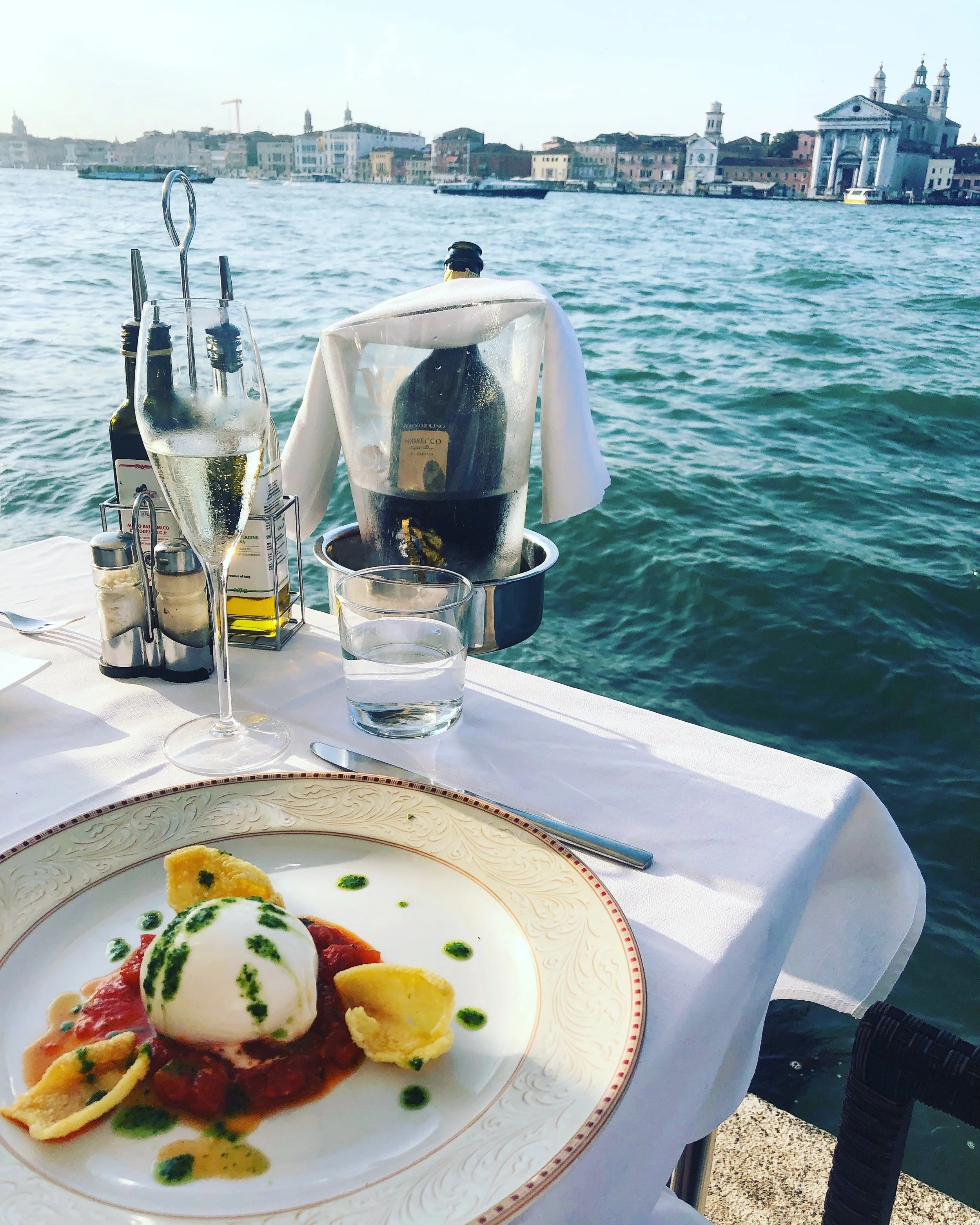
In Venice, the entire atmosphere of the Biennale, especially at the Arsenale, was incredibly charged, and this was so exciting to witness, and deeply inspiring for all of us. Our tranquil nightly dinners seaside near our quiet (and air-conditioned!) hostel were heavenly, and the final day of marathon art-going with Elizabeth is one of those special days in one’s life that will never be forgotten. All in all, this field school was as distinct and special as the many individuals who were chosen to be part of this unique adventure, and I have memories shared with each and every member of this group that brings a big smile to my face! We will all be bonded by what we shared in London and Venice, and the special gift of travel, infused with a love of art, will be a residual souvenir of this journey for a lifetime.

View fullsize 0863FEA0-EC91-4A22-A5F9-9F82A65054B0.jpg
View fullsize 7CCDDF54-71A3-4B0E-A2A1-881E9921BB29.jpeg
View fullsize 12F0E52D-9A33-484F-A5E3-17F759F9A891.jpg
View fullsize C70E611C-491D-4BAB-9CE8-776F2DDEF9FE.jpeg
View fullsize 92D13574-BE8D-4129-BD28-1E07FC362758.jpg
View fullsize ECF4ABEC-6542-4B80-895A-DACF3F941EB5.jpg
View fullsize 5057568B-45FE-4F86-8AB1-5737FF0DC400.jpg
View fullsize FE972BA3-057A-43A4-884C-6D47A974F0D5.jpg

To see more photos and impressions of London and Venice as the field school continues, check out our Instagram feed and follow us at #kpulondonvenice


Comment

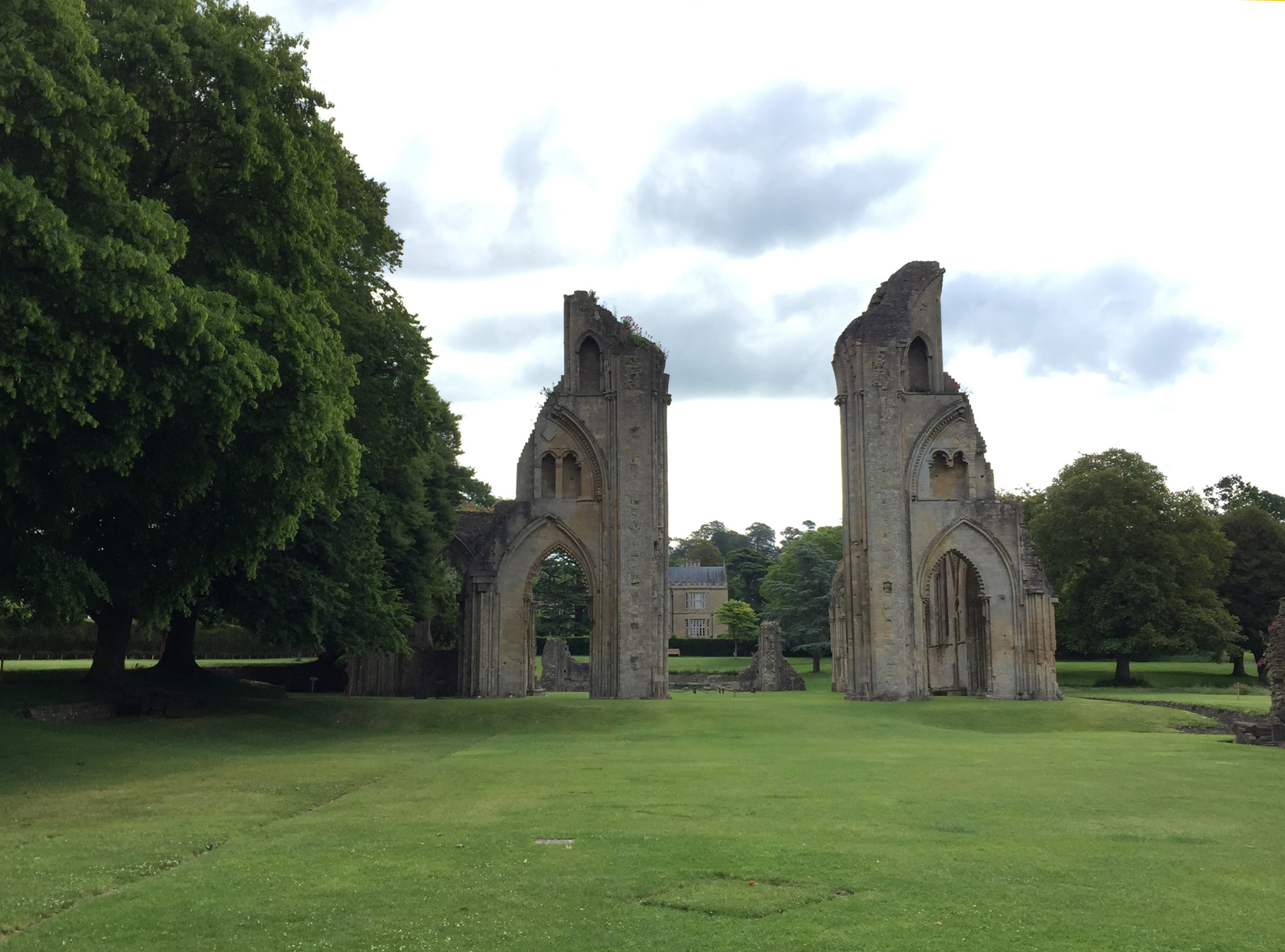
Meet field school co-leader Elizabeth, seen here in the remains of the southwest corner of the Abbot’s Great Hall at the Glastonbury Abbey

Location | London & Venice: Meet Field School Co-Leader Elizabeth Barnes

July 06, 2019

Tell us a little about yourself—your teaching areas and interests and/or your background and how you became connected to the London Venice field school? 

My name is Elizabeth Barnes and I attended the London/Venice field school as one of two guiding faculty members. I have worked as an instructor in post-secondary education while maintaining a professional studio practice for the past 28 years. I have taught at KPU since 2009, in drawing, painting, and advanced studio courses. This is my second time to join Dorothy Barenscott in running the Fine Arts field school. Once again, this experience has far exceeded my expectations.

Elizabeth, at Pallazo Cini in Venice, taking in the exquisite painting Raft (2019) by contemporary artist Adrian Ghenie.

Elizabeth, at Pallazo Cini in Venice, taking in the exquisite painting Raft (2019) by contemporary artist Adrian Ghenie.

My personal studio practice is based in painting and drawing, although I also work in sound production and digital media. I am currently looking forward to a 6-month Educational Leave in which I will pursue a project in Mexico and at home in Vancouver. This project will continue my long-time interest in the intersections between art and technology, while also producing work within a self-defined ritual practice, research, and sensory experience of space and history in these two cities. The intensive curriculum of our field school and on-the-ground experience in both London and Venice have been invaluable to my thinking as I prepare for this upcoming project, while also providing much to think about for my return to teaching in January of 2020.

How did you approach the task of teaching and working with students inside and outside the classroom for the field school?

The studio aspect of the field school began with three weeks in our Surrey studio, where students completed two projects informed by the work of two artists whose work they would later see in London on visits to the Tate Modern and the Tate Britain. The focus of this field school was on art and culture in post-war London, moving from the emergence of Pop Art in the 1950’s to the present. Students studied these movements closely in the art history portion of the program, and applied this study to developing their own ideas in relationship to their experience of contemporary art, culture, and fashion. My method of teaching often involves individual conversations with students while in the studio, providing them with examples and encouraging them to take risks and build on their already developed skills and ideas. The work we visited and assigned for this field school was challenging and often very complex. The intensive and experiential aspect of this way of teaching is amazing for helping the students to move their work forward and consider new possibilities. During our travels in Europe I was encouraged by the fact that many students were able to continue making connections to the work they had produced in the studio and the work they were observing in the galleries and museums. Students were required to keep a journal where they sketched and wrote daily, as their ideas and knowledge continued to evolve.

Elizabeth (right) with Ronald and Alison at White Cube art gallery in London viewing work by Zhou Li.

What was unique or memorable about experiencing London and Venice with a group of students already interested in and/or practicing art making?

Travelling with a group meant that we all became much better acquainted and more open to sharing our thoughts. Having closely studied the recent trajectory of London art from modern to contemporary in the weeks before the trip, allowed for a deeper understanding of everything we viewed and experienced in London. The studio investigation into contemporary art, prepared students to move beyond their discomfort with contemporary art and actively engage with the work at the Venice Biennale. Watching students become excited over seeing the actual art they had studied was equally as exciting as seeing the work myself for the first time. It became clear that this trip would change students understanding of art and the way they make it. I look forward to seeing what they produce over the next school year.

Which of the activities during the trip stand out to you? Any special highlights or memorable moments for you?

Each day of this trip was packed with new and exciting discoveries. Our visit to the Tate Modern stands out for me, as it was where students were able to view much of the work they had studied in class, and also featured an amazing and diverse collection of late modern and contemporary art.

Elizabeth, fifth from right, posing with the group in the Gerhard Richter room at the Tate Modern

Lorna Simpson, Then and Now, 2016 (reworking of two photographs, one of the Detroit Rebellion in 1967 where 43 people were killed when police attempted an arrest in an unlicensed bar in an African American neighbourhood, the other photograph of recent protests of African American deaths by police. Elizabeth felt compelled to spend some time with this image while thousands of Londoners were protesting the arrival of Donald Trump not all that far away)

Another event that stands out for me was a side trip I took on our free days to visit an old friend in Glastonbury. Glastonbury is a small town in southwest England known for its ancient and medieval sites, including sites of Arthurian legends and pagan mythology. I was able to hike to the Glastonbury Tor, chant at the Chalice Well, and walk in the early morning through the stunningly beautiful ruins of the famous Glastonbury Abbey, which dates back to the 7th century (see images below).

Glastonbury Abbey, including King Arthur’s tomb (image from Wikipedia)

View fullsize 4.abbey.2.jpg
View fullsize 4.abbey.3.jpg
View fullsize 4.abbey.arthurs.tomb.jpg
View fullsize 4.abbey.detail.jpg
View fullsize 4.abbey.jpg
View fullsize 5.Tor.jpg

The third highlight was our time in Venice. Our hostel location on the water away from the tourist crowds was a welcome place to relax and take in the beauty of Venice after long days walking. The work at the Biennale was complex and inspiring.

Cameron Jamie, Smiling Disease (2008) at the Venice Biennale Arsenale venue. This installation reminded Elizabeth of the Beau Dick installation two years ago at Documenta and how well that installation would have fit in here.

On our final  day in Venice I had the once in a lifetime privilege of visiting some of the most stunning exhibits of contemporary painting I have ever experienced. The contrast of this work, rich in historical and political inquiry, and its placement in Renaissance architectural wonders was very moving. This will be something I carry with me and revisit in my pedagogical and personal studio practice for a very long time.

Luc Tuymans, Mountain, 2016 at Palazzo Grassi, Venice, a part of the extraordinary day of art exhibitions Elizabeth experienced on the final day of the field school in Venice.

To see more photos and impressions of London and Venice as the field school continues, check out our Instagram feed and follow us at #kpulondonvenice


Comment

Meet field school blogger Amiee— here trying on a fantastic steampunk hat at Camden Market in London. Amiee is a BFA student in the Fine Arts program with a focus on ceramics.

Location | Venice: Meet Field School Blogger Amiee Risby

July 05, 2019

Tell us a little bit about yourself—your background, major program of study, reasons for taking this trip, and anything else interesting you want to share (maybe something people might not know about you).

Being able to view artwork at its home base was the first and foremost reason I came on this trip. Seeing the flesh and bones of the work as well as the privileged people who are constantly saturated in this culture and art work. I did, however, want to explore independence, experience a different social rapport, and analyze the behavior of those around me. This includes my peers and understanding what type of people they really are, how they act in a new environment, view work, and respond to social interactions. My focus here at Kwantlen Polytechnic University is Fine Arts with a focus on ceramics and, more recently, unconventional materials. I am also a painter and appreciate digital media, performance and most mediums. My ceramics practice focuses on biology of the human body and the interconnectivity of our mental and physical state often seen in somatization. These studies have driven me into various directions that scrape the surface of obsession and mental health. Seeing work in different countries was important to me because of all the obligations of daily life intertwined with a sole focus on the task at hand and only worrying about taking in what I was viewing. I think for the first time I was given an opportunity that allowed me to really experience art for art’s sake.

What has met or exceeded your expectations or surprised you about London (or Venice) so far?

What shocked me most about London was the similarities it had with Vancouver and finding a city with a better transit system. Granted the system is chaotic, it is more reliable, frequent, bike friendly, and walkable. Everywhere I had previously visited couldn’t even hold a candle up to Vancouver’s transit, but London was exceptional. I also found it hilarious to watch people from the upper decks of the buses scramble for their lives. It was a risk to cross the street most times because the traffic lights face the opposite direction from the crosswalk. Not to mention the cyclists that appear out of nowhere and It doesn’t help to have the habit of checking the wrong direction.

IMG_3559.jpeg
IMG_3561.jpeg

On the upside the humour was amazing, self-deprecation in many instances, and the location names were hilarious. My favorite jokes regarding the underground system was the continuous reminder to “Mind The Gap,” as the tube was so old that the platform and train are inconsistent at every stop and you could lose a child in it if you’re not careful! Before leaving for London I had this expectation of cobblestone streets and beautiful architecture. This exceeded my expectations because our hostel was placed near the Saint Pancras station, the most gorgeous building with peaks and arches for days, and Kings Cross, which is where Harry Potter’s trains were filmed. Both were marvelous land marks that made you feel safe and direction savvy. The historical architecture has persevered and around every corner something beautiful, like a mural or artwork. The galleries and museums were free entry and were works of art themselves. The ceilings decorative, the curb side appeal on point, and made the experience unforgettable. Another thing that was amazing in both London and Venice was the food quality, real butter and amazing croissants’. Most memorable thing for me was the underground line that’s called Piccadilly line to Cockfoster (where of course you can always pick your dilly to Cockfoster).

Give us some insight into your assigned artwork from the Tate Modern. After seeing the work in person in London (and any other related art from the same artist or art movement associated with the assigned work), what struck you most about it and/or how did the artwork’s form, content, and context shift for you when seeing it.

After studying Eva Hesse for three weeks and then viewing her artwork, it was extremely rewarding. I was able to make out all kinds of detail that was impossible to capture in a reproduction. Seeing so many works that had similar qualities really put in perspective how influential this work was. You could tell how it shifted other contemporary artists in their own practice and the potential of Hesse’s work if she was still practicing. Initially the size shocked me, Hesse’s Addendum (1967) was much larger than I had anticipated as well as coolness of the colour, implied mass was heavier and display choice that lead to a direct conversation with humanity through the work surrounding it. In the room it was displayed a simplified casted human stood looking directly at it (see image below) caught in the sublime of the work. And although large, the human figure seemed so bound up in its emotions, that it was as if it was looking into the sky slowly sinking into the universe, just a speck, humbled by Addendum.

Eva Hesse’s Addendum (1967) as captured at the Tate Modern by Amiee.

Eva Hesse’s Addendum (1967) as captured at the Tate Modern by Amiee.

While getting more than expected, the shift in form, content, and context wa reconfirming what I had learned, other than the materials that were said to be less finished and rough. Addendum seemed very clean and complete to me. My opinion, however, is distorted by the work I usually see now which has no limits to the unfinished qualities, sometimes barely a concept started. Knowing that this work contributed to the allowance we have today was profoundly moving. I found myself understanding the articles and the write ups better than before, and I could see how this sculpture was pushing the confinements and separations of painting, sculpture, and the wall. I saw many works that came in later time periods and saw how similar the work was. This includes Keith Sonnier’s, Red Flocked Wall (1969). From looking at Red Flocked Wall (see images below), I could tell Hesse’s influence by the choice of materials mixed together that included liquid latex, pigment, saw dust, and flocking. This looks to be mixed and then applied to the wall and carefully ripped off the wall and secured to the ground. It shows the aspects of Hesse’s influence by the lean of the work off the wall, material choice, and human quality that’s hard to identify, but there. This work expands on Hesse’s work by not only using formal qualities, but by bringing in a disturbing element by appearance instead of analyzing the downfalls of humanity, which I tend to relate to Hesse’s obsession with terminology and common constructs.

View fullsize Keith Sonner - Red Flocked Wall - Detail.jpg
View fullsize Keith Sonnier - Red Flocked Wall.jpg

One thing I did not see coming was the grandeur and intimidation that came with it, I usually associate this quality with male-centric works however, but this was apparent while sitting on the floor and studying different angles of Addendum. I am so blessed to have the opportunity to see everything in these galleries in the round.

Amiee examining Eva Hesse’s Addendum (1967) at the Tate Modern

How did you approach the creative task of responding to your assigned artists in studio? What were your challenges as an artist to be in dialogue with the artwork and artist? Would you do anything differently now that you have seen the work in person?

When I start strategizing my response I knew I had to keep certain aspects of the work associated to Hesse. I chose to keep her titling process, the obsessive mathematics in placement, and the need to merge traditional notions of sculpture and painting. Addendum means to attach something to an already existing item, and in Hesse’s case, the title Addendum was a crucial aspect of the reading for the viewers. Hesse used a visual format to display the definition. When I read this piece, I saw that she was adding to both painting and sculpture by providing a new plane for painting to exist. Removed from the wall and joined by the shadows, Hesse had made a sculptural material an assembled painting. This helps with textile art work that formed as paintings later and sculptures to be flattened and considered paintings as well. I took this concept and applied it to something I am passionate about studying, human biology. Lugubrious (2019) is my addendum to the studies of human biology. It relates the mental state of mind; the human condition, to the physical evolution which it is contingent to. I tried to stay within the visual language of Hesse’s Addendum while responding, so I decided to use ribbon to connect both the half sphere’s, that change in size and distance, to the ceiling (see Amiee’s response artwork below). The spheres are meant to relate to mitosis and the ribbon to the mind, constantly dispersed with no real aim and the overlapping of one another, to your own emotions and others.

Amiee’s response artwork Lugubrious (2019) in conversation with Eva Hesse’s Addendum.

One of the most important visual aspects of the work that relates to Hesse is the lines that make the plane and merging the painting with objects. I thought this was my way of expanding the dialogue because it is not only leaned up against the wall, but removed entirely. This could be a deficiency because I have removed the shadows that perch on the wall behind Addendum, but it can be positive too as it invites the viewer from both sides, creating a shadow on the viewer, making them a part of the work. After viewing Addendum in person, I would definitely make my spheres larger and give it more girth, possibly have its expanse over an entire hallway, shifting from one side to another, controlling how the viewer moves through space.

Today’s activity was located at the Venice Biennale. What were your impressions? What will you take away of the experiences of this day?  What are the most memorable moments for you?

The 2019 Biennale “May You Live In Interesting Times” curated by Ralph Rugoff and a jurying panel has over 90 participating countries and multiple sites of installations. There is the Giardini that has both pavilions dedicated to individual countries and a central pavilion that is an exhibition of all the artists, the Arsenale with all artists, and even off- site collateral events. Today the class explored the Arsenale, which out of all the sites I was able to get to, was my favorite. In the country dedicated pavilions, I saw some amazing work that represented the current state of nationhood and thought it to be inspiring and informative, however, the Arsenale was breathtaking. The work was more rooted in the way times are now, more generally, and the possibilities of the future. I found most of the work to be speaking about the present and the future as one merged concept. One unifying factor was the amount of video and audio work that was present. This seemed to be a cohesive need in represent the interesting times we live in.

View fullsize Bircken - Eskalation detail 2.jpg
View fullsize Bircken - Eskalation.jpg
View fullsize Bov Bather.jpg
View fullsize Bov.jpg
View fullsize Campo De La Tana Biennale Arsenale.jpg
View fullsize Lui Wei microworld.jpg
View fullsize Muholi.jpg
View fullsize Zanele Muholi.jpg

My favorite artists from the Arsenale were comprised mainly of female artists including Zanele Muholi, a photographer who made gigantic portraits that stare directly into the viewers eyes. She prefers to be known as a visual activist. Her work involves African lesbians and disregards the viewer’s gaze as she meets it eye to eye with a look of disinterest. Alexandra Bircken, from Germany, who displayed multiple hung black body suits around ladders and other site-specific structures that gave suggestions of suicide, impossibilities, and dystopic views. Carol Bov, from Switzerland, produced work that was mainly large metal sculptures that looked soft and pliable. This made me think about the developing world’s shift to properly valuing and understanding all people including women for the skill and work they make and not regarding them only as female artists or marginalized peoples. Another thing I loved about the Biennale was the need to see what all people are doing around the world, given that the focus is still toward the usual countries of power and influence. This gives all countries a chance to fight and have a say in how they are represented and how influential they can be to the rest of the world no matter how small others think they may be.

To see more photos and impressions of London and Venice as the field school continues, check out our Instagram feed and follow us at #kpulondonvenice


Comment

Meet field school blogger James, pictured here enjoying the many antiquities of London’s art museums

Location | Venice: Meet Field School Blogger James Weis

July 04, 2019

Tell us a little bit about yourself—your background, major program of study, reasons for taking this trip, and anything else interesting you want to share (maybe something people might not know about you).

My name is James Weis and I am currently part of the Fine Arts program at KPU. I'm nearing the end of my BFA and I thought this would be an unforgettable experience that would help push my practice forward as well as inspire me for future projects. I haven’t travelled much prior to this trip so I was just really excited for the change of scenery and it has also always been a dream of mine to go to London and Venice. I am very inspired and easily captivated by classical art, especially sculpture. I have always been influenced by and been interested in Greek mythology/mythology in general and I find that these things always find a way into my own work, so seeing all of the paintings and sculptures so far has been a very nostalgic dream come true for me. I mainly work digitally now but I am also very passionate about sculpture/ceramics and I still enjoy working traditionally, mainly with watercolours and ink.

What has met or exceeded your expectations or surprised you about London (or Venice) so far?

James, second from left, is nearing the end of his BFA program and is shown here visiting one the many small galleries in London’s Shoreditch neighbourhood.

London exceeded my expectations just by the sheer amount of events available to attend every day. I was also surprised by how interesting and unique every building/neighbourhood was as every corner I took was something new and interesting to visit/look at. I didn't think that I would adjust to London as fast as I did, but it was actually really easy for me to navigate the transit system as well as just plan a full day of activities on my free days including orchestras, plays, street tours and gallery visits. Venice is definitely a different environment entirely, but it’s really exciting to see all of the architecture and attempt to navigate the labyrinth of alleyways. Each island that I’ve visited has been a unique experience and it’s interesting to see what’s going on at different times of the day. For example, my friend Leah and I were sitting on a dock and saw a group of students sailing small boats as part of their class which left me a bit jealous I didn’t do that in school. I was also excited for all of the sculpture and cathedrals which definitely did not disappoint. After this trip, I definitely want to go back to London and explore the places I didn’t get the chance to as I can see myself spending endless hours in their galleries and just absorbing all of the culture available there.

Give us some insight into your assigned artwork from the Tate Modern. After seeing the work in person in London (and any other related art from the same artist or art movement associated with the assigned work), what struck you most about it and/or how did the artwork’s form, content, and context shift for you when seeing it.

My assigned piece at the Tate Modern was Nan Goldin’s Jimmy Paulette & Misty in a Taxi, NYC (1991). My experience of the piece did not shift for me at the Tate Modern as much as it did for my assigned piece at the Tate Britain. Being that it was a photograph I didn’t feel that I was missing that much information, other than its quality, size and the surrounding images by the same artist. It was better to see it next to Goldin’s other work as they all worked well together. At the Tate Britain, Deanna Petherbridge’s ink painting The Destruction of the City of Homs (2016) was very large and included details where her hand was more visible in the piece up close as those details were lost in the photograph of it. As for Goldin’s piece, for me personally, I think I got most of the information I needed seeing the image even as a photocopy as its original medium is a photograph anyway.

James seeing one of his assigned art works, Deanna Petherbridge’s ink painting The Destruction of the City of Homs (2016), at the Tate Britain.

How did you approach the creative task of responding to your assigned artists in studio? What were your challenges as an artist to be in dialogue with the artwork and artist? Would you do anything differently now that you have seen the work in person?

When it came to my studio projects and being in conversation with my assigned artists (see James’ two art works below) I was interested in the process behind both artists and I mainly focused on adopting certain aspects of their process that resulted in the work I was assigned. It was challenging for me to work with photography as I’m not a photographer and I think that certain aspects may have been missing from my work as I was working with a different medium, but it was an interesting challenge nonetheless. If I would've had the time to I think I would have enjoyed working with actual ink on a large canvas as a way of connecting more with Deanna Petherbridge’s process. The amount of detail and evidence of work put into Petherbridge’s piece that can only be seen in person was really inspiring for me and I think I would have gone deeper into the amount of detail put into my own work.

IMG_2345.jpeg
IMG_2208.jpeg

Today’s activity was located at the Venice Biennale. What were your impressions? What will you take away of the experiences of this day?  What are the most memorable moments for you?

Today I went to the Arsenale and also returned to the Giardini to compare the two works created by artist Dominique Gonzalez-Foerster for the Biennale. I was thoroughly fascinated by the Arsenale and found many of the works at the Giardini to complement the main pieces well. I've never been so captivated by such an abundance of artwork so it was slightly overwhelming for me. Gonzalez-Foerster's work was an interactive virtual reality piece and It was a very inspirational experience for me as I've worked with virtual reality tools for previous projects and never thought I’d see a VR headset in a gallery. It was interesting to see their work at the Giardini and how it contrasted their virtual reality piece as it was a physical display as opposed to virtual and worked with a similar theme. I think the most memorable experience of this day for me was just the feeling I got from seeing all of the work and the burst of motivation I had to start working on my own project. It was really important for me to see the new forms of media being placed in an exhibition, especially something as big as the Biennale is, so that’s something I will definitely take with me from the day. After the Giardini, I wandered the streets with my friend Leah and we spent some time working on our journals, freaking out over a pool full of turtles, and ended the day with a picnic by the ocean where we relaxed and watched one of the many beautiful sunsets we were able to appreciate in Venice.

65753170_674446359683083_7891837136058449920_n.jpg
65710653_897789937223348_5992133119187091456_n.jpg
65824615_2392590187652490_6490469215240192000_n.jpg
66226393_437650136785541_8130519450928545792_n.jpg
65786032_2776429749098796_9055121400318132224_n.jpg
66136917_614861402341834_5663582195650920448_n.jpg
66109918_339796176919663_2574912973617233920_n.jpg
unnamed.jpg
66237756_1028598730681533_5655219421879205888_n.jpg
66397543_682149298968195_151459053871038464_n.jpg

To see more photos and impressions of London and Venice as the field school continues, check out our Instagram feed and follow us at #kpulondonvenice


Comment
Newer / Older
Back to Top
Screenshot 2018-02-05 20.48.17.png

© Dorothy Barenscott, 2010-2025