• Fall 2025
  • Blog
  • Resources
  • Field School
  • Students
  • Feedly
  • About
Menu

Avant-Guardian Musings

  • Fall 2025
  • Blog
  • Resources
  • Field School
  • Students
  • Feedly
  • About
large monogram_2018-02-01_22-31-07.v1 (1).png
“Art is an outlet toward regions which are not ruled by time and space”
— Marcel Duchamp

Avant-Guardian Musings is a curated space of ideas and information, resources, reviews and readings for undergraduate and graduate students studying modern and contemporary art history and visual art theory, film and photography studies, and the expanding field of visual culture and screen studies. For students currently enrolled in my courses or the field school, the blog and associated social media links also serve as a place of reflection and an extension of the ideas and visual material raised in lecture and seminar discussion.

Blog RSS

Screenshot 2018-02-05 20.56.45.png
Blog
KPU FINE ARTS PARIS + VENICE BIENNALE FIELD SCHOOL (MAY/JUNE 2026)
about 2 months ago
"No Fun City" Vancouver: Exploring Emotions of Detachment in Palermo, Sicily at AISU
about 4 months ago
Making Sense of Art in the Age of Machine Learning—A Suggested Reading List
about 5 months ago
From the Archives | How (And Why) To Take Excellent Lecture Notes
about a year ago
Weekly Musings + Round Up... And A Few More Things
about 2 years ago

Screenshot 2018-02-05 20.56.51.png
As we start the week in a storm of activity, new beginnings, and global uncertainty, I am grounded in my word for 2026– INTENTIONAL 🩶— “done with purpose, willingness, deliberation, and consciousness.” I see this word represe
As we start the week in a storm of activity, new beginnings, and global uncertainty, I am grounded in my word for 2026– INTENTIONAL 🩶— “done with purpose, willingness, deliberation, and consciousness.” I see this word represented in the symbol of the heart, and for this reason and many others both personal and professional, I will be bringing this much needed energy to my year. The power of a yearly word is transformative. I started in 2019 and my words have guided and carried me through some important moments and life decisions. If you haven’t already, give it a try, but remember to choose very wisely ☺️ “Radiate” 2025 ✨ “Maintain” 2024 💪🏻 “Refine“ 2023 🙌🏻 “Acta non verba” 2022 🤐 “Audacious” 2021 💃🏼 “Fearless” 2020 😛 “Unapologetic” 2019 💅🏻 #happynewyear #wordoftheyear #intentional #monicavinader @monicavinader
Polar bear ride! 🐻‍❄️🏍️💨🏍️ First motorcycle outing of 2026 in the books. A balmy 4C 🥶We love you Vancouver— good to be home 💙😊Wishing everyone a very Happy New Year! 🥳 
.
.
.
#happynewyear #vancouver #motorcycle #motorcyclesofinstag
Polar bear ride! 🐻‍❄️🏍️💨🏍️ First motorcycle outing of 2026 in the books. A balmy 4C 🥶We love you Vancouver— good to be home 💙😊Wishing everyone a very Happy New Year! 🥳 . . . #happynewyear #vancouver #motorcycle #motorcyclesofinstagram #motocouple #husqvarna #vitpilen401 #svartpilen401 #motogirl #motogirls
2025... where did it go?! 😂 Like a ray of light, I was very much guided by my chosen word of the year “radiate”— to shine and send out beams of energy— and this allowed for a great deal of adventure, new experiences, ideas an
2025... where did it go?! 😂 Like a ray of light, I was very much guided by my chosen word of the year “radiate”— to shine and send out beams of energy— and this allowed for a great deal of adventure, new experiences, ideas and people and opportunities to flow back into my life. Above all else, I found myself very much on the move all year! Travel took me from New York to Lausanne, Paris to Seoul, and Palermo to Maui, while my motorcycling stayed more on the road and less on the track as Brian and I balanced our time, energy, and commitments. But as always, we found every spare moment to prioritize this shared passion and we hope to find a way back to the track in 2026. Professionally, the year was... A LOT... and highlighted by many new research partnerships, conferences, workshops, writing projects, some failed plans and sharp detours, but also the planting of new seeds for future ventures. In the classroom, AI brought many new challenges and opportunities to rethink the purpose of my teaching and courses, but overall I was inspired and at times surprised by what my students were able to accomplish with the new assessment models I put into place. All of this technological change remains very much a work in progress for academics, and I prefer to remain optimistic that the artists I work with will find a way to maintain their voice and vision in it all. The historian in me knows this to be true. Personally, I connected more to my heart and intuition in 2025, listening to that inner voice to guide many key decisions. Brian and I also kept up a decent health and fitness regime that had us energized and aiming for consistency to match our midlife pace. Use it or lose it is a reality in your 50s!!! Sending wishes of peace and love and a very Happy New Year to all! May your 2026 be filled with fun, awe, purpose, and good health and much happiness. Remember to be good to yourself so you can be good to others. I’m still working carefully on my 2026 word… but whatever it is, I know it will be the right one ❤️ . . . #happynewyear #yearinreview2025 #wordoftheyear #motorcyclelife #arthistorianlife
Resting, dreaming, and plotting the year ahead 💙✨😘
.
.
.
#maui #hawaii #vacationmode #newyear #planning
Resting, dreaming, and plotting the year ahead 💙✨😘 . . . #maui #hawaii #vacationmode #newyear #planning
Riding and chasing sunsets across Maui ✨💙🌺🌴🧡
.
.
.
#maui #hawaii #motorcycle #motorcyclesofinstagram #motogirl #vacationmode #sunsets
Riding and chasing sunsets across Maui ✨💙🌺🌴🧡 . . . #maui #hawaii #motorcycle #motorcyclesofinstagram #motogirl #vacationmode #sunsets

Screenshot 2018-02-05 20.57.02.png
  • November 2025 (1)
  • September 2025 (1)
  • August 2025 (1)
  • September 2024 (1)
  • February 2023 (1)
  • January 2023 (3)
  • August 2022 (1)
  • March 2022 (1)
  • February 2022 (3)
  • January 2022 (4)
  • November 2021 (2)
  • October 2021 (3)
  • September 2021 (3)
  • July 2021 (2)
  • June 2021 (1)
  • May 2021 (3)
  • April 2021 (3)
  • March 2021 (3)
  • February 2021 (4)
  • January 2021 (5)
  • December 2020 (3)
  • November 2020 (6)
  • October 2020 (4)
  • September 2020 (1)
  • July 2020 (1)
  • June 2020 (4)
  • May 2020 (9)
  • April 2020 (5)
  • December 2019 (2)
  • November 2019 (5)
  • October 2019 (3)
  • September 2019 (1)
  • July 2019 (6)
  • June 2019 (19)
  • April 2019 (2)
  • March 2019 (5)
  • September 2018 (2)
  • July 2018 (1)
  • June 2018 (4)
  • May 2018 (2)
  • April 2018 (5)
  • March 2018 (5)
  • February 2018 (8)
  • January 2018 (3)
  • December 2017 (4)
  • November 2017 (5)
  • October 2017 (7)
  • September 2017 (3)
  • July 2017 (6)
  • June 2017 (15)
  • April 2017 (2)
  • March 2017 (3)
  • February 2017 (1)
  • January 2017 (2)
  • November 2016 (2)
  • October 2016 (1)
  • September 2016 (3)
  • August 2016 (1)
  • June 2016 (2)
  • May 2016 (3)
  • April 2016 (2)
  • March 2016 (5)
  • February 2016 (7)
  • January 2016 (9)
  • November 2015 (1)
  • October 2015 (2)
  • September 2015 (3)
  • August 2015 (3)
  • July 2015 (1)
  • June 2015 (20)
  • May 2015 (4)
  • March 2015 (2)
  • January 2015 (1)
  • November 2014 (1)
  • October 2014 (2)
  • June 2014 (1)
  • May 2014 (4)
  • April 2014 (6)
  • February 2014 (1)
  • January 2014 (2)
  • November 2013 (1)
  • September 2013 (1)
  • July 2013 (3)
  • June 2013 (10)
  • December 2012 (1)
  • November 2012 (3)
  • October 2012 (6)
  • September 2012 (3)
  • August 2012 (1)
  • July 2012 (1)
  • June 2012 (25)
  • May 2012 (5)
  • April 2012 (4)
  • March 2012 (7)
  • February 2012 (11)
  • January 2012 (6)
  • December 2011 (5)
  • November 2011 (11)
  • October 2011 (11)
  • September 2011 (8)
  • June 2011 (9)
  • May 2011 (15)
  • April 2011 (9)
  • March 2011 (14)
  • February 2011 (17)
  • January 2011 (16)
  • December 2010 (11)
  • November 2010 (18)
  • October 2010 (24)
  • September 2010 (30)

Screenshot 2018-02-05 20.57.07.png

© Dorothy Barenscott, Avant-Guardian Musings, and dorothybarenscott.com, 2010-2023. Unauthorized use and/or duplication of this material without express and written permission from this blog’s author is strictly prohibited. Excerpts and links may be used, provided that full and clear credit is given to Dorothy Barenscott, Avant-Guardian Musings, and dorothybarenscott.com with appropriate and specific direction to the original content.

The focus of this session is partly inspired by recent viral art world news stories that have sparked great public debate, such as the shredded Banksy performance at Sotheby’s London in 2018; the Maurizio Cattelan banana piece and aftermath at Art B…

The focus of this session is partly inspired by recent viral art world news stories that have sparked great public debate, such as the shredded Banksy performance at Sotheby’s London in 2018; the Maurizio Cattelan banana piece and aftermath at Art Basel last year; or closer to home, the controversies surrounding Rodney Graham’s public art work Spinning Chandelier funded by a luxury condo developer in Vancouver.

UAAC 2020 Call For Papers: "The Price of Everything: Commerce, Aesthetics, and the "Value" of Contemporary Art

July 02, 2020

I am happy to be joining forces once again with art historian, fine arts appraiser, and art advisor Dr. Lara Tomaszewska of Openwork Art Advisory to co-chair a session at the upcoming 2020 Universities Art Association of Canada Conference this fall. Our session’s title is “The Price of Everything: Commerce, Aesthetics, and the “Value” of Contemporary Art” and extends on ideas, themes, and approaches that we first explored at UAAC back in 2014 in a popular dual session we hosted titled “At the Intersection of Art History and the Art Market: Navigating The Business of Art.” This time, we are focusing squarely on recent transformations in the contemporary art world and art market that have challenged the ways in which art is valued (literally and with respect to cultural capital) and welcome submissions from researchers, art advisors, curators and/or those interested in the study of contemporary art valuation.

The full call for paper proposals reads as following:


The Price of Everything: Commerce, Aesthetics, and the “Value” of Contemporary Art

In recent years, the conversation around contemporary art, and how it is “valued,” has been set against the backdrop of public scandal and spectacle. Media coverage of record prices attained at art auctions, the global expansion of branded art fairs, and protests surrounding museum trustees and donors connected to conflicting interests, co-mingle with viral art world news stories that spark great public debate, such as the shredded Banksy performance at Sotheby’s London in 2018; the Maurizio Cattelan banana piece and aftermath at Art Basel last year; or closer to home, the controversies surrounding Rodney Graham’s public art work Spinning Chandelier funded by a luxury condo developer in Vancouver. This panel seeks to examine the broader and critical dimensions of this issue and calls for presentations that explore, whether through specific case study or theory-based examination, the contours and stakes around how contemporary art is “valued,” collected, and given meaning in the current climate.


We invite proposal submissions of 300 words max, along with a 150 word biography, through JULY 31, 2020, directed to dorothy.barenscott@kpu.ca and lara@openworkart.com that include the following. For more information on submissions, the conference, and other details related to the event, please visit: https://uaac-aauc.com/conference/

UAAC was to be originally going to be held in Vancouver this year, but has had to move online because of the Covid-19 global pandemic. We are still anticipating a vibrant and energetic conference, and are especially looking forward to our featured keynote speaker, artist Stan Douglas, who will also be representing Canada at the next Venice Biennale (postponed to 2022). Please contact me directly with any further questions or clarifications by clicking on the mail icon at the top of my blog page.
Comment
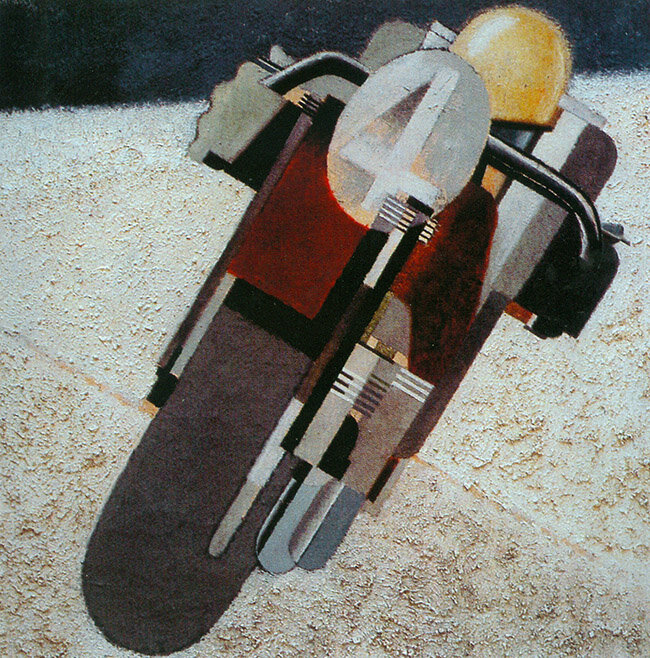
Ivo Pannaggi, Centauro’ (Centaur) (1931)

Ivo Pannaggi, Centauro’ (Centaur) (1931)

Weekly Round Up... And a Few More Things

June 21, 2020

This past week, I took a week long pause in my regular schedule and routine to learn how to properly ride a motorcycle. This has been on the top of my bucket list for several years now and stems in large part from my comfort with, and love of cycling, from the enjoyment I’ve had being a passenger on the back of my husband’s motorbike, and for those who know my love of driving well-engineered and beautifully designed automobiles, the enjoyment of handling a machine with manual transmission. And while this may seem somewhat disconnected from the world of art and art history that is the main focus of my research and this blog, the symbolic and cultural associations of motorcycling have important connections to the historic avant-garde and notions of subversion and subcultures of resistance.

“1. We want to sing the love of danger, the habit of energy and rashness.
2. The essential elements of our poetry will be courage, audacity and revolt.”
— Manifesto of Futurism

Take for example the stereotype many have of those who ride motorbikes. Portrayed in popular culture as rebels, outlaws, hoodlums, and the like, a biker is seen as slightly dangerous or even an agitator, operating outside the boundaries of control, and often embracing the exact fears and discomforts that the majority of us tend to avoid. That is not to say I have embodied those ideals as I learned to ride a motorbike—a skill set that requires the rider to overcome many basic reflexes and relax and ease into situations that ordinarily causes humans to panic—but what I have embraced is the heightened state of awareness, perception, full sensory engagement, and flow that comes with almost all creative pursuits, and is at the core of the motorcycling experience. The relationship to time, space, distance, and motion changes when riding a motorcycle, and from that comes a new way of seeing and experiencing the world. I highly recommend the pursuit, but only if done with proper training and a burning desire.

A few more things… before the round up

  • If you are interested in reading and learning more about how the motorcycle became muse to the Futurists (my feature art work this week is case in point), see this wonderful article by The Vintagent.

  • You can also read more at MoMA about how the Biker Jacket has become an iconic symbol of youth culture and urban resistance. The garment was part of an excellent show I attended a few years back called Items: Is Fashion Modern?

"What to do about problematic statues? (PODCAST)"

theartnewspaper.com

"K-Pop Stans Successfully Sabotaged Trump’s Tulsa Rally"

vulture.com

"The Art Angle Podcast: Meet the Smithsonian Curator Who Turns Protesters’ T-Shirts Into National Treasures (PODCAST)"

artnet.com

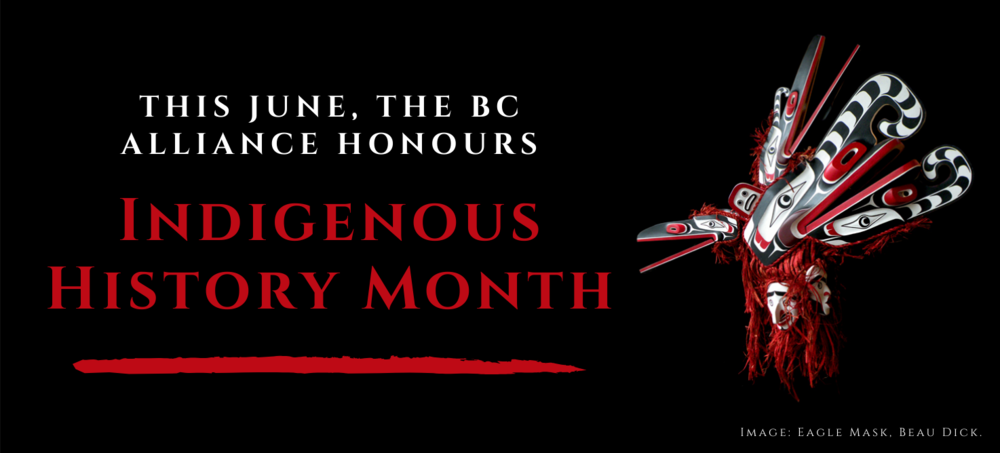
"The BC Alliance Honours Indigenous History Month"

allianceforarts.com

"Vancouver's Gassy Jack statue defaced, petition calls for its removal"

cbc.ca

"How Do We Photograph Freedom? A Conversation with Leigh Raiford"

hyperallergic.com

"Five Artists to Follow on Instagram Now"

nytimes.com

"5 Curators, Artists, and Art Historians on the Most Consequential News Images Since the Death of George Floyd"

artnet.com

"Jordan Casteel on Gerhard Richter | Artists on Artwork (VIDEO)"

metmuseum

"VAG Curator's Highlight Tour: lineages and land bases (VIDEO)"

vancouverartgallery

"What to do about problematic statues? (PODCAST)" "K-Pop Stans Successfully Sabotaged Trump’s Tulsa Rally" "The Art Angle Podcast: Meet the Smithsonian Curator Who Turns Protesters’ T-Shirts Into National Treasures (PODCAST)" "The BC Alliance Honours Indigenous History Month" "Vancouver's Gassy Jack statue defaced, petition calls for its removal" "How Do We Photograph Freedom? A Conversation with Leigh Raiford" "Five Artists to Follow on Instagram Now" "5 Curators, Artists, and Art Historians on the Most Consequential News Images Since the Death of George Floyd" "Jordan Casteel on Gerhard Richter | Artists on Artwork (VIDEO)" "VAG Curator's Highlight Tour: lineages and land bases (VIDEO)"
  • What to do about problematic statues? (PODCAST)

  • K-Pop Stans Successfully Sabotaged Trump’s Tulsa Rally

  • The Art Angle Podcast: Meet the Smithsonian Curator Who Turns Protesters’ T-Shirts Into National Treasures (PODCAST)

  • The BC Alliance Honours Indigenous History Month

  • Vancouver's Gassy Jack statue defaced, petition calls for its removal

  • How Do We Photograph Freedom? A Conversation with Leigh Raiford

  • Five Artists to Follow on Instagram Now

  • 5 Curators, Artists, and Art Historians on the Most Consequential News Images Since the Death of George Floyd

  • Jordan Casteel on Gerhard Richter | Artists on Artwork (VIDEO)

  • VAG Curator's Highlight Tour: lineages and land bases (VIDEO)

Comment
Banksy’s latest work (posted and verified on his Instagram account) is accompanied by the following statement of solidarity with the Black Lives Matter movement: “At first I thought I should just shut up and listen to black people about this issue. …

Banksy’s latest work (posted and verified on his Instagram account) is accompanied by the following statement of solidarity with the Black Lives Matter movement: “At first I thought I should just shut up and listen to black people about this issue. But why would I do that? It’s not their problem, it’s mine. People of colour are being failed by the system. The white system. Like a broken pipe flooding the apartment of the people living downstairs. The faulty system is making their life a misery, but it’s not their job to fix it. They can’t, no one will let them in the apartment upstairs. This is a white problem. And if white people don’t fix it, someone will have to come upstairs and kick the door in.”

Weekly Round Up... And a Few More Things

June 14, 2020

Keeping one eye on media reports of protests and the pandemic, and the other one on my summer course prep.. this pretty much sums up the rhythm of daily existence this past week. Whatever attention I have paid to the state of the art world has likewise been informed by these two modalities. My round up pretty much reflects this, and it is peppered with calls for reform—whether it be from within the academy and the need to address systemic racism at the level of university instruction (and interpersonal relationships with students and faculty), or to describing why the removal of particularly charged art monuments is happening globally, and furthering conversations around the impact the Black Lives Matter movement is having on questions of urban planning and policing. On that final note, I am so glad that there has finally been some serious critical attention paid to reality TV shows like Cops (canceled this week) and the popular culture landscape that has exacerbated the racial injustice and stereotypes that persist in film and television portrayals of POC. I am continuing to listen, learn, and act wherever I can.

 A few more things… before the round up

Screen Shot 2020-06-14 at 2.04.01 PM.png
  • Spike Lee’s latest film Da 5 Bloods has just been released on Netflix, can’t wait to see it, and if you still haven’t seen Do The Right Thing or She’s Gotta Have It, put them both on your movies must-see list ASAP.

  • For those living more local, the Vancouver Art Gallery is reopening this week and will be featuring an installation work by new media artist Matilda Aslizadeh. Aslizadeh’s installations are incredible and utilize cutting edge video technologies to produce immersive environments. Titled Moly and Kassandra (2018), the work is described by the VAG as addressing “the relationship between culture and resource extraction through the juxtaposition of economic statistics, divinations of the future and images of immense holes in the earth.”

  • Finally, it was my pleasure to work on the essay "Slow Photography" examining artist Sylvia Grace Borda's practice and the way her approach— spanning photography, filmmaking, installation, public art, and architecture— both extends and subverts elements of the "Vancouver School" traditions and legacies that have shaped her training and conceptual concerns. The newly published monograph Sylvia Grace Borda: Shifting Perspectives is an important and necessary addition to the histories of photography, new media art, photo-conceptual art, and Canadian contemporary art. I am very honoured to be part of this book project for many reasons (not least of which is having my work published alongside photographic historian Liz Wells) and I thank Sylvia for this opportunity.

"More Galleries and Museums Reopen—But Will Audiences Follow?"

canadianart.ca

"White Academia: Do Better."

medium.com

"America’s Cities Were Designed to Oppress"

ciytlab.com

"Why the Columbus Monument Should Be Seen as a Monument to the History of Whiteness in the United States"

artnet.com

"Protesters Topple Colonialist Monuments in England and Belgium as Black Lives Matter Demonstrations Spread Across Europe"

artnet.com

"The Unreality of Cops"

theatlantic.com

"Democracy’s Red Line"

nybooks.com

"7 Curators Using Instagram to Provide Access to Museums during Quarantine"

artsy.net

"A brave new virtual world or joyless mundane experience? Glamour of collecting gets lost in online translation"

theartnewspaper.com

"Culture Gabfest: The “Black Lives Matter” Edition (PODCAST)"

slate.com

"More Galleries and Museums Reopen—But Will Audiences Follow?" "White Academia: Do Better." "America’s Cities Were Designed to Oppress" "Why the Columbus Monument Should Be Seen as a Monument to the History of Whiteness in the United States" "Protesters Topple Colonialist Monuments in England and Belgium as Black Lives Matter Demonstrations Spread Across Europe" "The Unreality of Cops" "Democracy’s Red Line" "7 Curators Using Instagram to Provide Access to Museums during Quarantine" "A brave new virtual world or joyless mundane experience? Glamour of collecting gets lost in online translation" "Culture Gabfest: The “Black Lives Matter” Edition (PODCAST)"
  • More Galleries and Museums Reopen—But Will Audiences Follow?

  • White Academia: Do Better.

  • America’s Cities Were Designed to Oppress

  • Why the Columbus Monument Should Be Seen as a Monument to the History of Whiteness in the United States

  • Protesters Topple Colonialist Monuments in England and Belgium as Black Lives Matter Demonstrations Spread Across Europe

  • The Unreality of Cops

  • Democracy’s Red Line

  • 7 Curators Using Instagram to Provide Access to Museums during Quarantine

  • A brave new virtual world or joyless mundane experience? Glamour of collecting gets lost in online translation

  • Culture Gabfest: The “Black Lives Matter” Edition (PODCAST)

Comment
Gino Severini, Visual Synthesis of the Idea of “War” (1914). As WWI broke out, the Italian Futurist painter attempted to capture what he understood as the experience of industrial warfare through the assemblage of words, symbols, ideas, and concepts…

Gino Severini, Visual Synthesis of the Idea of “War” (1914). As WWI broke out, the Italian Futurist painter attempted to capture what he understood as the experience of industrial warfare through the assemblage of words, symbols, ideas, and concepts that others used when speaking of war.

Focus on Fundamentals: What is Synthesis?

June 12, 2020

In this FOCUS ON FUNDAMENTALS series located on my Resources Page, I will be looking more closely at three interconnected values that form important components of my course rubrics and help me to assess, evaluate, and grade a range of assignments (from simple group discussions all the way to research papers).

In three separate posts, I will discuss: 1) SYNTHESIS; 2) ORGANIZATION; and 3) UNDERSTANDING.


What is Synthesis?

SYNTHESIS is just a fancy word taken from the world of science to describe the process of creating complex chemical compounds from simpler ones. In other words, at the heart of synthesis is the idea of combining sources and ideas to create a new whole.

You can imagine yourself as the chemist, and your chemical compounds are the different kinds of content you are provided in any course (lectures, readings, visuals, videos, and demonstrations). Your science experiment then is to create new papers, presentations, and other forms of written, spoken, and visual assignments that showcase the unique way you are processing course content. In the video below from GCFLearnFree.org, the idea of synthesis is explored in its most simplest terms.


How to Achieve Synthesis?

To achieve synthesis, it is your job to:

 A) pay close attention to what you are learning from multiple sources on a given topic

B) identify the important, relevant, and interesting aspects of what you have learned from those sources

C) demonstrate that you understand what you have learned on a given topic by coming up with your own broad conclusions that bring together relevant aspects of the sources you have looked at.


What does synthesis look like in action?

In university writing, discussion groups (in person and online), one on one conversations, and even in art-making and performance, the ability to demonstrate synthesis comes down to moving away from simply restating or re-presenting the information from the sources on a given topic, and moving towards providing new insights or evidence of thinking through the ideas in your own way.

Some qualities of synthesis in action can include:

  • Actively reading, annotating, thinking, and making new connections when engaged with a new class topic

  • Expressing ideas that are also making an argument or stating and supporting your opinion and unique insights

  • Showing how and why you arrived at your opinion on a topic by pointing to the sources (from lectures, readings, other course content and research) that you learned from

  • Referring to notes you made or ideas that struck you when learning about a topic and putting your own spin on them

  • Using your first person voice to take ownership of ideas and differentiate your point of view from your sources or others in the discussion

  • Offering a comparison or contrast of ideas you have encountered on a topic


Why is Synthesis Important?

Synthesis encourages critical thinking, engagement with ideas, active learning, and the formulation of independent thought. These are important values in higher education as you move away from simple memorization, passive listening, and restating or copying what has come before, to becoming more fully and independently engaged with the ideas and concepts you encounter in a course. Synthesis is also part of a wider practice in academia to properly reference and give credit to the many ideas you encounter and learn from. Ideally, you will be finding ways to contribute to the larger conversations that are taking place in the field you are studying.

In these two writing examples taken from the Purdue Online Writing Lab, you can see why synthesis is so important when creating written responses and preventing plagiarism.

The first example shows where synthesis is NOT utilized well:

Example 1:

Parents are always trying to find ways to encourage healthy eating in their children. Elena Pearl Ben-Joseph, a doctor and writer for KidsHealth, encourages parents to be role models for their children by not dieting or vocalizing concerns about their body image. The first popular diet began in 1863. William Banting named it the “Banting” diet after himself, and it consisted of eating fruits, vegetables, meat, and dry wine. Despite the fact that dieting has been around for over a hundred and fifty years, parents should not diet because it hinders children’s understanding of healthy eating.


Why is this not an example of good synthesis? As you can see, the paragraph strings together a number of different facts (none of which are properly cited) and fails to offer any personal expression, strong argument, or clear conclusion.

An example of improved synthesis could look more like this:

Example 2:

Parents are always trying to find ways to encourage healthy eating in their children. In my analysis, I have found examples of scientists and educators that have different strategies for promoting a well-rounded diet while still encouraging body positivity in children. David R. Just and Joseph Price suggest in their article “Using Incentives to Encourage Healthy Eating in Children” that children are more likely to eat fruits and vegetables if they are given a reward (855-856). Similarly, Elena Pearl Ben-Joseph, a doctor and writer for Kids Health, encourages parents to be role models for their children. She states that “parents who are always dieting or complaining about their bodies may foster these same negative feelings in their kids. Try to keep a positive approach about food” (Ben-Joseph). Martha J. Nepper and Weiwen Chai support Ben-Joseph’s suggestions in their article “Parents’ Barriers and Strategies to Promote Healthy Eating among School-age Children.” Nepper and Chai note, “Parents felt that patience, consistency, educating themselves on proper nutrition, and having more healthy foods available in the home were important strategies when developing healthy eating habits for their children.” By following some of these ideas, I have found that parents can help their children develop healthy eating habits while still maintaining body positivity.


In this second example, the author brings together a number of different sources into conversation with one another. There is a move away from merely describing the sources to the author showing the connections among the sources (and properly citing them), along with indicating their own position using first person voice.  


To conclude, when an Instructor is evaluating for SYNTHESIS—be it through a simple discussion board or in-class conversation, all the way to a long form research paper—what they are looking for is how successfully a student has taken what they have learned from a variety of sources on a topic and offered their own insights, thoughtful reflections, and/or opinions on that topic.  

Comment
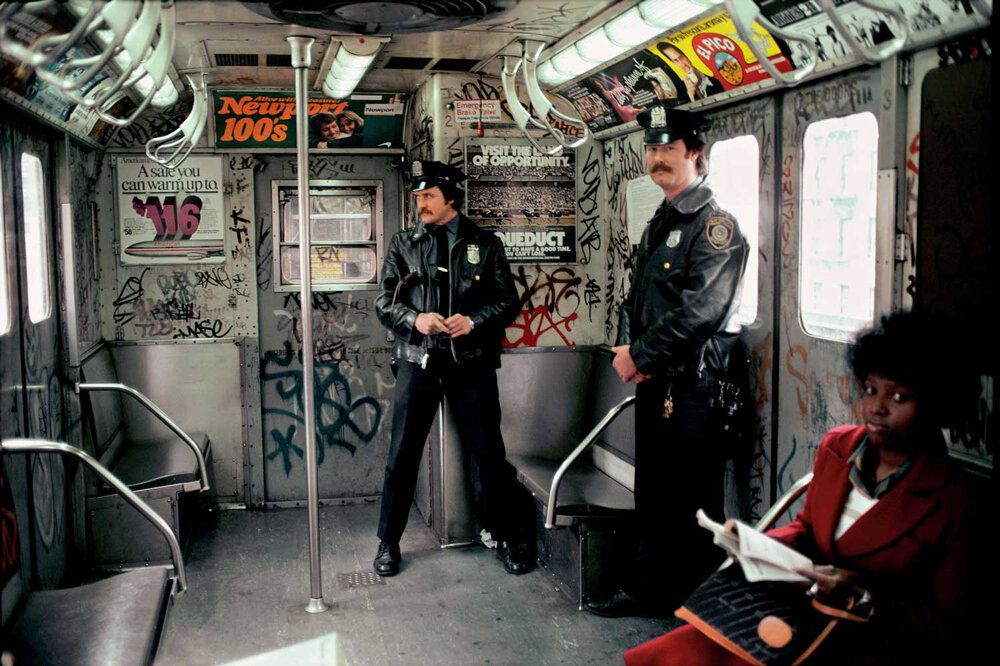
Martha Cooper captured the subculture of New York graffiti through her closely forged friendships and via photography, contributing to the understanding of this important and often misunderstood form of visual culture and protest art that has roots …

Martha Cooper captured the subculture of New York graffiti through her closely forged friendships and via photography, contributing to the understanding of this important and often misunderstood form of visual culture and protest art that has roots in the Civil Rights Movement of the 1960s,

Weekly Round Up ... And a Few More Things

June 07, 2020

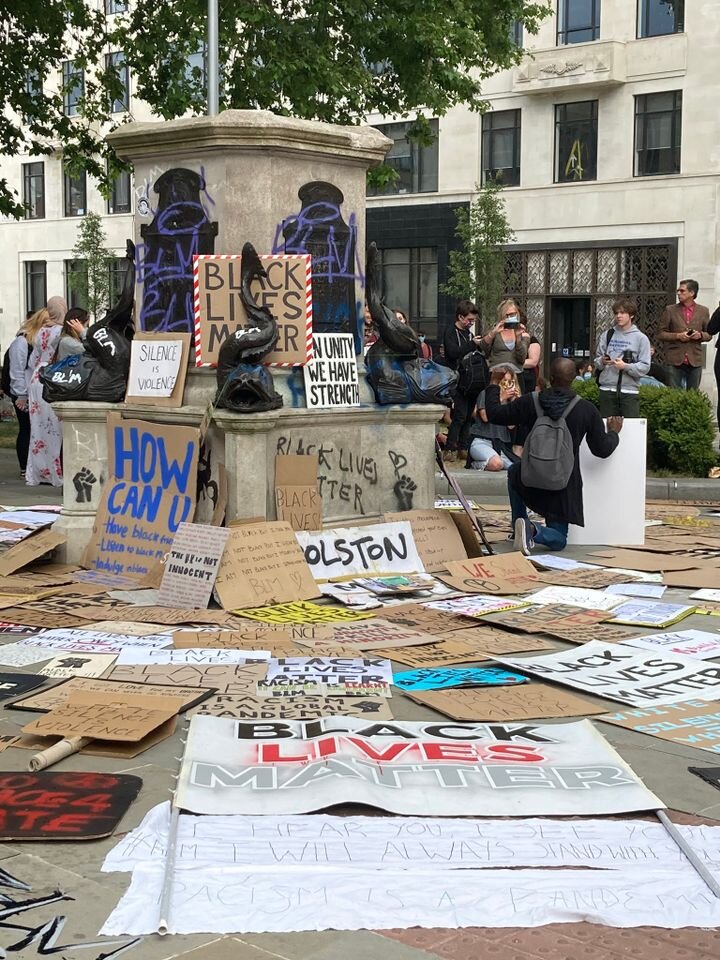
Sitting back this week to listen, to amplify Black voices, and to become better educated about systemic racism and institutions of policing, I found myself once again confronting and taking a hard look at the way racism and legacies of oppression have shaped the art world and, in particular, art history. And here, I am not talking about the kind of revisionist art history that has attempted to rescue and include both People of Colour and women into the canon of art history— a project that has had its own peculiar set of politics, agendas, and criticisms that could fill multiple blog posts. Instead, I am thinking more about the way art historians have traditionally and systematically avoided dealing with the significant role and influence that protest art, street and graffiti art, and mural and poster art have played in the art world and beyond. There is still a powerful elitism present within the academy and among art critics that refuses to acknowledge how this form of visual culture can and should be considered art with a capital A.

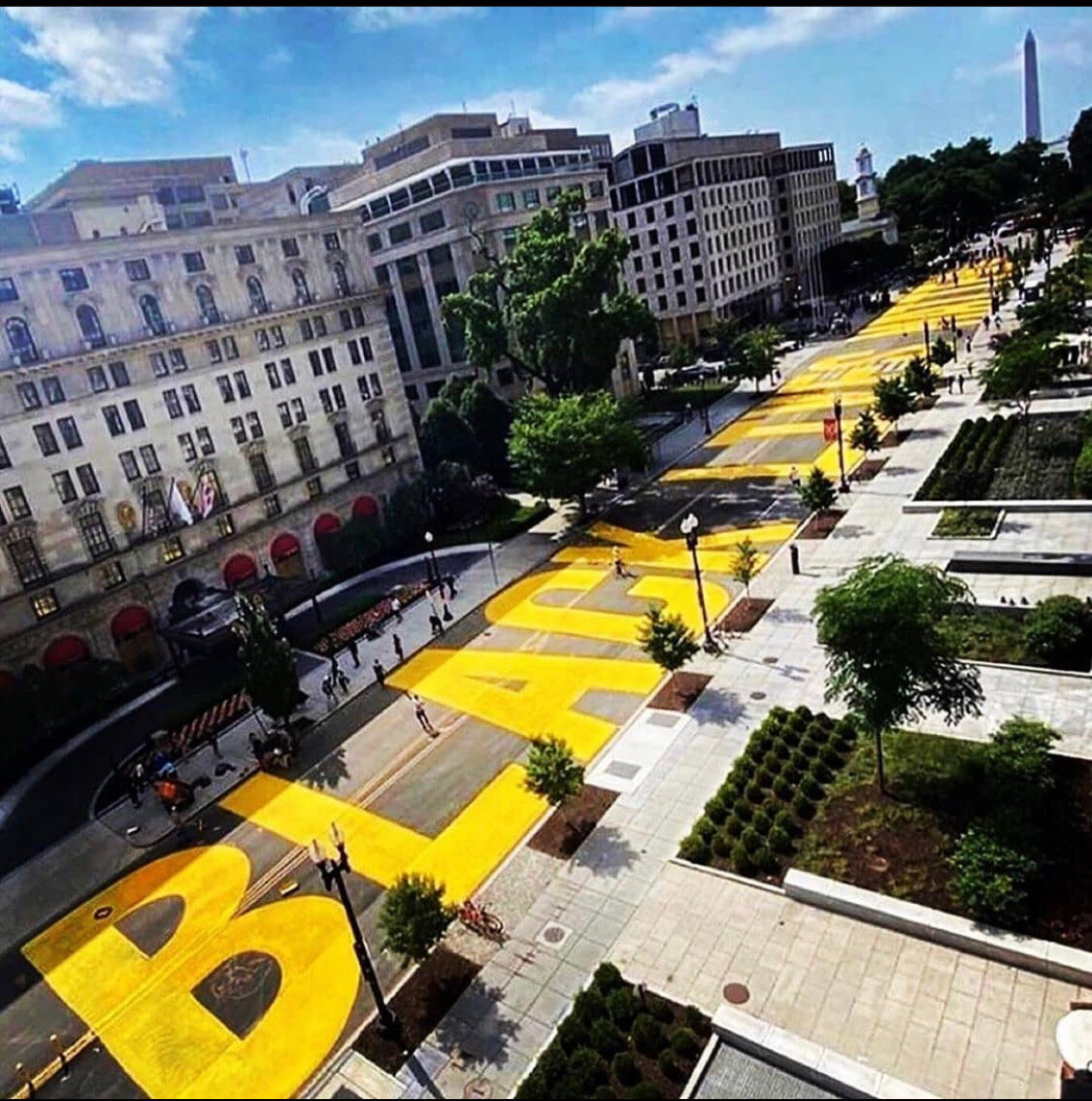
I was once again reminded of this inherent bias a few days ago while participating in an online e-mail thread among art historians about the instantly iconic Black Lives Matter street mural that was commissioned by the Washington D.C. mayor and debuted a day after #BlackoutTuesday (see image below). The discussion, while lauding the importance of the visual gesture and its impact, quickly turned to comments and questions about whether the mural was a work of art. Some claimed it was too “performative,” “graffiti-inspired,” or “political” to operate as a work of art, while others called it a work of protest or without artistic intent, failing to acknowledge the reality that artists were hired to complete the piece. Not unlike those art historians or art critics who refuse to take contemporary street artists seriously (and especially the ones with instant popular recognition and global influence and acclaim such as Banksy, KAWS, and Shepard Fairey— white artists who cite New York graffiti culture and African American writers and artists as their primary influence), there is a long practice within art history to dismiss the popular, the untidy, the difficult to categorize, and the unruly. Despite the legacy of the avant-garde and its impact on modern and contemporary art history— which it must be pointed out is disproportionately made up and shaped by white male artists, practitioners, and theorists of the 20th century— there exist critical omissions that cannot reconcile the high/low art divide that has plagued the art world since the days of Clement Greenberg and his critiques of Andy Warhol and Pop Art. Posters, graffiti, mark-making in the streets, and a myriad of other forms of difficult to place urban art-making and performance exist in this space, and it is not surprising that many of the practitioners associated with these works, and their critical histories, are People of Colour.

Screen Shot 2020-06-07 at 2.27.46 PM.png
IMG_8060.jpeg

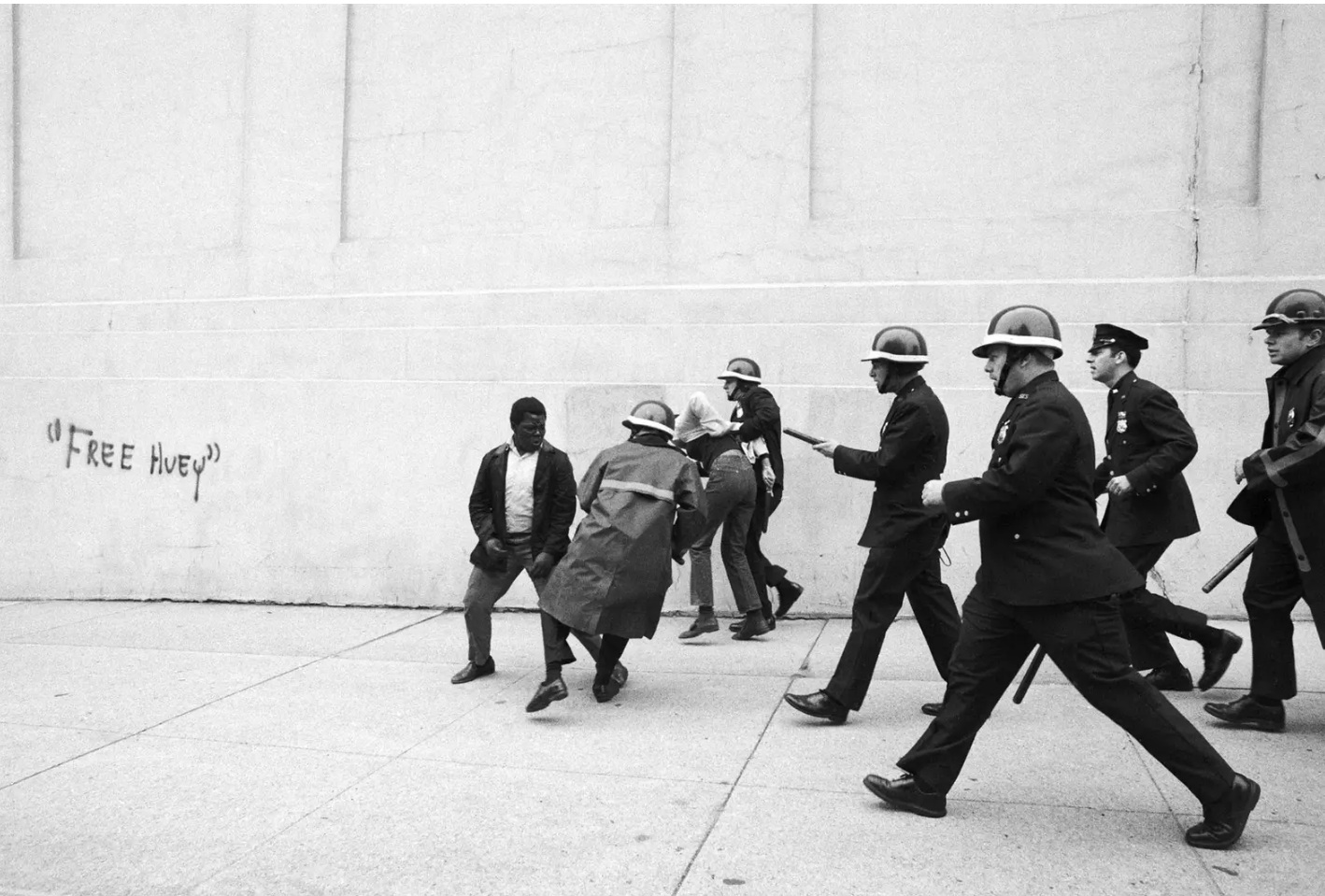
Pictured above is an image of NYC police officers confronting protesters in 1969 with the “Free Huey” graffiti marking on the left signaling reference to the jailed Black Panthers political activist and co-founder Huey P. Newton, and below an image of the Black Lives Matter street mural commissioned by Washington D.C. mayor Muriel Bowser.


Screen Shot 2020-06-07 at 4.46.16 PM.png

In lieu of my weekly round-up, I invite you to read Ivor Miller’s “Guerilla artists of New York City,” an essay I routinely assign to students in both my “Intro to Visual Art, Urban, and Screen Culture” and “Urban Graffiti and Street Art” courses. Published in Race and Class in 1993, the powerful and now classic essay tracks the early history of graffiti art in New York City, and gives voice to the young artist “writers” who participated in the movement. Importantly, Miller, who is not an art historian, correctly understands and analyzes the practice of graffiti as a form of art. As Miller writes, “Protest and self-affirmation are inherent in both the music and visual art of this inner-city renaissance. Grand Master Flash and the Furious Five came out with ’The Message’, ’Survival’ and ’New York, New York’. Melle Mel rapped the apocalyptic ’World War III’, with lines like ’War is a game of business’, and ’Nobody hears what the people say’. Writers painted names like ’Cries of the Ghetto’, ’Slave’ and ’Spartacus’, and eventually dominated the subway system with whole car paintings depicting the violence of their lives: images of guns, gangsters, and political statements like ’Hang Nixon!’ abounded. Subconscious though it may sometimes have been, the large-scale, collective motivations of writing culture reflected some of the important issues of the day.” Perhaps this essay will help spark more conversations about what is desperately missing from a more inclusive art history and art world, recognizing and listening more carefully and critically to Black voices and experiences.

Comment
Newer / Older
Back to Top
Screenshot 2018-02-05 20.48.17.png

© Dorothy Barenscott, 2010-2025