
Guest Blog | Jenna Kirouac: PuSh Festival and the Art of Counter Mapping

Guest Blogger Jenna Kirouac is Avant-Guardian Musings Vancouver Arts Correspondent. To see her previous posts, please click here.

View from World Trade Centre in NYC (1984),
the year de Certeau wrote of his observations.
courtesy New York Times
When philosopher Michel de Certeau famously described the spectacle of looking down on New York City from the 110th floor of the World Trade Centre as “a gigantic rhetoric of excess in both expenditure and production,” he spoke of an experience that provided the viewer with an awe-struck feeling of personal power. Why?  Because looking down on the city clearly lays out the grid-lined, bird’s eye view that reveals the organization and structure of the metropolis. It is a map, produced visually by one’s own sensory perception.

Maps make order. They identify and classify to help us navigate spaces. Of course I don’t really need to point out that Vancouver is not-so-much New York. But every metropolitan area is uniquely shaped in a few different ways: superficially by its structure, and linearly through history and culturally by the group of peoples that collectively call it home. Interestingly, the cultural shaping process is dynamic, not static. What if you could reinvent contemporary mapping practices to mirror the story of a human being? Take a second to think about your story, your narrative. What is the rhetorical discourse of your community? What we place importance on as a community reflects who we are as a collective group of peoples, and likewise we deflect what we chose to marginalize. 

Poster image from the Roundhouse website
At the opening of the PuSh Festival next week—Vancouver’s much anticipated annual international performing arts festival— Jordan Bent and Eli Horns’ collaboration for the exhibit Counter Mapping (curated by Caleb Johnston) seeks to create a method of cartography that represents real life experiences rather than empirical data.  Talking with Bent about the project as well as other future undertakings is an enlightening experience. Bent’s modest beginnings as a Vancouver artist began with a departure from the educational institution setting, straight to the local sea wall selling art. He describes the experience of interacting with people on such an organic level as an intense sensation of displacement without the safety and structure of operating within clear institutional boundaries. Bent has a commitment to interacting with his community through his work, even after the provincial cuts to art funding have made it harder for independent artists to live and practice in Vancouver. A narrative map of Vancouver will only faintly echo the voice of a creative collective if we choose to relegate our art community to a place of little importance.  

Be sure to check out Bent and Horns’ instillation entitled Scratch Map at the Roundhouse for the opening of the PuSh festival on Tuesday, January 18th as well as former Simon Fraser University Fine and Performing Arts students featured in the show.  Much like with DeCerteau’s reflections on New York, the gigantic rhetoric of Vancouver is undoubtedly concerned with expenditure and production, but what does it produce that’s worthwhile? You be the judge. 

For a closer look at the brochure for Counter Mapping, click here.

Vancouver's PuSh Festival runs from January 18th-February 6th. See the following video for a taste of what will be offered:
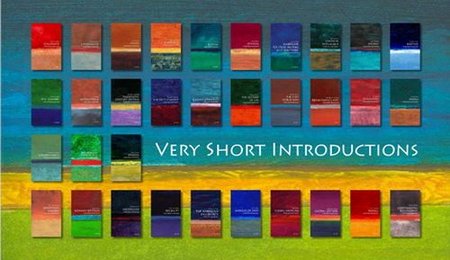

Essential Reading| Oxford U Press's Very Short Introductions

Oxford University Press's wildly popular Very Short Introductions series

At the very end of last year I began a series of posts that I am titling “Essential Reading” in an attempt to help interested students and art/culture enthusiasts to build their personal art and visual cultural library, especially in core reference material. The series really came as an extension of a conversation I recently had with a colleague about those special books that are pulled off our shelves regularly for consultation and reflection—those books that we lend out and/or repurchase extra copies of if the first one goes missing.

One of the best little book shops on the planet
Some years ago when I was working on my doctorate, I attended a conference at Oxford University and made a much anticipated visit to the Oxford University Press Bookshop—an absolute must if you ever find yourself in the area. I recall now how bad the money exchange was and how I was quite distressed about both the cost of the books and the problem of transporting them for the rest of my trip. Still, I wanted to bring back something as a memento. As I was pondering my dilemma, I noticed a very professorial looking man (think white hair, brown suede jacket, beautifully aged leather satchel) at the cashier with a stack of small spined books with a distinctly Rothko-esque look to them and I became intrigued. Upon closer inspection, I first laid eyes on what would become one of my very favourite series of reference books—the Oxford University Press’s Very Short Introduction Series

Note the Mark Rothko reference on the book design--
perhaps something significant to ponder for a future post... 
Seeing my interest, the cashier and I struck up a conversation about the series. She explained to me that the OUP had begun the series in 2000 as a way to produce and distribute academic-level essays on a range of topics that could serve as a dynamic introduction and engagement with the core ideas and discourse of particular topics. Experts are recruited for each individual book and asked to compose engaging and absorbing essays, often divided into a number of short chapters. What sets this series apart from other similar approaches by other publishers however is that the deceptively small size of the book delivers content that pushes non-specialist readers well beyond what would be labelled “introductory.” The subjects are treated as an evolving set of ideas and the authors often discuss how the topic areas have developed and influenced society in unexpected ways. Therein exists one of the fantastic ironies of both the series title and its handsomely designed packaging—it is far from superficial.


Since that first encounter at Oxford when I picked up Julian Stallabrass’s Contemporary ArtA Very Short Introduction —a book that I now routinely place on my reading lists as required reading—I have amassed a small collection of the books ranging from more familiar topics such as: Modernism, Art Theory, Art History, Dada, Modern Art, Postmodernism, and Poststructuralism. These are wonderfully written and very up to date accounts of the latest debates in my field, and I am proud to say I have either met or come to know a few of the book’s authors. I have also dabbled into other areas of interest such as:  Game Theory, Chaos, Quantum Theory, Consciousness and The History of Time. Each of the books provides a fantastic reference list at the back for further reading. The other strength of the series is with its individual philosopher publications. If you are struggling to understand the work of Foucault, Nietzsche, or Habermas, there is a book for you. And yes, I do admit they look very aesthetically pleasing on a book shelf-- that is just a nice bonus!

Lady Gaga Feat. Polariod: "Camera Glasses" That Take "Seeing and Being Seen" to New Dimensions

Lady Gaga wearing the "Camera Glasses" she helped
design for Polaroid
This past week Polaroid launched a rebranded line of camera equipment and accessories with the help of new creative director Lady Gaga. Debuting at the largest and most important consumer electronic show on the planet—the CES in Las Vegas—the new line of products produced under Polaroid’s “Grey Label” will feature three new products: the GL10 Instant Mobile Printer, GL30 Instant Digital Camera and the GL20 Camera Glasses. Of these, the Camera Glasses have immediately captured media and public attention at the CES as a truly innovative and provocative way to merge both the act of taking and producing pictures with the function of instantaneous display and self-fashioning—the glasses as touted by the company allow users to instantly capture or upload photos with the built-in camera and then display the images on the glasses' LCD screens for others to view.

Reading Polaroid’s press releases about its partnership with Gaga, it is clear that the company is attempting to tap into its long history and recognition as a chosen medium for a range of contemporary art practices: “This collaboration between two cultural icons reflects Polaroid's long standing tradition of innovation tracing back to founder Dr. Edwin Land and Lady Gaga's mission to deliver products that enable creativity for all, celebrate artistry and make sharing instantaneous across the physical and digital. The inaugural Polaroid Grey Label line is truly expressive of Lady Gaga's artistic vision… "I consider myself to be a visionary, not just a songwriter and a singer. I am an artist," said Lady Gaga, Polaroid's Creative Director. "I brought my vision and love of fashion, technology and obsession with the future into all of my work with Polaroid."”


A close up look at the GL20 Camera Glasses set to go on sale this coming year
Lady Gaga goes on to explain that all of the new Polaroid Grey Label products communicate “three essential elements of self-expression” including:

  • Creativity: “All Polaroid Grey Label products are designed with the idea that creativity and sharing go hand in hand, in both the digital and the physical world.”

 • Instant Artistry: “All features found in Polaroid Grey Label products celebrate, express and bring an element of artistry and originality to the act of image making.”

 • Fashion: “Intended to be just as much everyday fashion accessories as innovative imaging tools, all Polaroid Grey Label products feature unexpected design elements such as leather touch points, brushed metal and exposed mechanical details.”

You know who enjoying his Polaroid camera
I am fascinated by the potential that the camera glasses offer both to the lay public and the art community at large. At the most basic level, the camera glasses set out yet another dimension of “seeing and being seen” which raise questions about increasing isolationism in today’s mediated and digitally networked culture. On the other hand, the camera glasses provide a provocative new medium through which to explore, unpack, and discuss the complex process of self-display and self-fashioning that often gets effaced in the apparently “seamless” world of digital imaging. It will be left to be determined if this is just another product to feed  a self-absorbed and image obsessed culture or a product that will help expose some of its many mechanisms. Either way, Lady Gaga (like other famed artist icons before her-- see image above) has her finger on the contemporary cultural zeitgeist. 


YouTube clip discussing the Polaroid Grey Line from this past week's CES show in Las Vegas:

Weekly Twitter Round Up


My first week back to lecture and seminars starts tomorrow and I am looking forward to all that the new academic term will bring. The past week has been a terrific time to catch up on correspondence, prep readings, notes and making some much needed visits to local galleries and museums I had neglected over the craziness of December. I even managed to pick up an official Tate Modern Muybridge 2011 Calendar at the Vancouver Art Gallery for 50% off (locals make sure to check out their wonderful stock!). Here are some of my favourite tweets from the past week (as always, click the image to the left of the tweet for the full link), along with a bonus and hilarious YouTube clip from the Jimmy Kimmel show last week featuring singer Josh Groban performing Kanye West's tweets. Special thanks to Kyra for sharing the original link on Facebook!

Wore an Ed Hardy shirt last night as ironic wardrobe; irony lost on most people. I am not a d-bag doing G in a W Hotel lobby!


We are obsessed, obviously, with this free printable Andy Warhol paper toy designed by Matt Hawkins. It's very us


Your moment of zen


Women artists are outperforming their male counterparts. They've been undervalued for so long this isn't surprising. 


French Firm to Sell Shares in Works of Art 


Meet the 2011 Sundance Filmmakers | Over 50 Director Interviews Through January 


Diary: Making History. Kyle Bentley on the opening of the Mathaf Arab Museum of Modern Art 


Street Art Meets New Media Art Meets Video Gaming: Corridor Digital's "Graphic Violence"

Screen grab from Corridor Digital's "Graphic Violence" 2010
This term I will be tackling the hot topic of new media and digital art in an art history seminar exploring both the history and context for the development of non-traditional art forms and the recent explosion of interest in all things digitally produced under the label “art.” Not surprisingly, this entire area of study exists in a grey zone between competing and sometimes contradictory worlds of commercial design, contemporary art, street culture, and most recently, the under-examined world of video gaming. In fact, one of my goals this term is to think much more critically about how and where these worlds intersect.

A Banksy work sited in London in 2007 
A very recent case in point is an intriguing and skillfully produced video work by the post-production and visual effects studio Corridor Digital. Based in Los Angeles and working at ground zero in the world of Hollywood and motion picture special effects, the studio has found another avenue for promotion by posting short "artful" videos on their YouTube channel that explore their interest in action movies and video gaming. And although they have not posted many clips, the ones that have made it to the site are getting some serious buzz and circulation. Their most recent short video “Graphic Violence” (see clip below) caught my eye on my Twitter feed, and I immediately noted the strong references to both art-making (one of the main characters is painting at the outset of the narrative) and the influence of graffiti art, most notably the clear reference to the enigmatic street artist Banksy, whose cultural capital and mainstream notoriety exploded recently with a cameo appearance on the Simpsons.

Banksy, who works incognito, is allegedly captured here
in a rare photograph that circulated when the graffiti art
I posted above was first discovered.
Some people feel that this breaks the "illusion"
of Banksy's art-- an interesting question to ponder
in terms of the spectacle surrounding him.
Watching the video, you will notice how the main action involves duelling characters transform from flesh and blood humans into animated “action heroes” played out as graffiti rendered bodies not unlike those of Banksy. The background music features a retro Super Mario Brothers vibe which reminds the audience that they are in fact engaged within a gaming context. As the action unfolds, the characters move between the world of the real and the world of the digital, yet also contend with the added dimension of becoming graffiti figures, rendering new possibilities for subjectivity and action. With this added twist, Corridor Digital is able to display not only their aptitude and amazing talent as post-production digital designers, but also create a fantastic conceptual discourse that examines the dualities of analog and digital art and the role of producers and audiences in determining its many potentials. What I also enjoyed about the project is how willingly Corridor Digital exposed the means of representation by producing an accompanying video that discusses in detail exactly how they created the final special effects (see clip below). In this sense, the sensationalism or “spectacle” of the video is quietly disarmed and allowed to exist in the realm of technique and not just theatre—an important element that complicates the “art” category many people want to place this kind of project within.

Check out both the original video and accompanying tutorial for yourself. I think you will be pleasantly surprised at the innovative and boundary-breaking approach of this work: