• Fall 2025
  • Blog
  • Resources
  • Field School
  • Students
  • Feedly
  • About
Menu

Avant-Guardian Musings

  • Fall 2025
  • Blog
  • Resources
  • Field School
  • Students
  • Feedly
  • About
large monogram_2018-02-01_22-31-07.v1 (1).png
“Art is an outlet toward regions which are not ruled by time and space”
— Marcel Duchamp

Avant-Guardian Musings is a curated space of ideas and information, resources, reviews and readings for undergraduate and graduate students studying modern and contemporary art history and visual art theory, film and photography studies, and the expanding field of visual culture and screen studies. For students currently enrolled in my courses or the field school, the blog and associated social media links also serve as a place of reflection and an extension of the ideas and visual material raised in lecture and seminar discussion.

Blog RSS

Screenshot 2018-02-05 20.56.45.png
Blog
KPU FINE ARTS PARIS + VENICE BIENNALE FIELD SCHOOL (MAY/JUNE 2026)
about 3 months ago
"No Fun City" Vancouver: Exploring Emotions of Detachment in Palermo, Sicily at AISU
about 4 months ago
Making Sense of Art in the Age of Machine Learning—A Suggested Reading List
about 5 months ago
From the Archives | How (And Why) To Take Excellent Lecture Notes
about a year ago
Weekly Musings + Round Up... And A Few More Things
about 2 years ago

Screenshot 2018-02-05 20.56.51.png
As we start the week in a storm of activity, new beginnings, and global uncertainty, I am grounded in my word for 2026– INTENTIONAL 🩶— “done with purpose, willingness, deliberation, and consciousness.” I see this word represe
As we start the week in a storm of activity, new beginnings, and global uncertainty, I am grounded in my word for 2026– INTENTIONAL 🩶— “done with purpose, willingness, deliberation, and consciousness.” I see this word represented in the symbol of the heart, and for this reason and many others both personal and professional, I will be bringing this much needed energy to my year. The power of a yearly word is transformative. I started in 2019 and my words have guided and carried me through some important moments and life decisions. If you haven’t already, give it a try, but remember to choose very wisely ☺️ “Radiate” 2025 ✨ “Maintain” 2024 💪🏻 “Refine“ 2023 🙌🏻 “Acta non verba” 2022 🤐 “Audacious” 2021 💃🏼 “Fearless” 2020 😛 “Unapologetic” 2019 💅🏻 #happynewyear #wordoftheyear #intentional #monicavinader @monicavinader
Polar bear ride! 🐻‍❄️🏍️💨🏍️ First motorcycle outing of 2026 in the books. A balmy 4C 🥶We love you Vancouver— good to be home 💙😊Wishing everyone a very Happy New Year! 🥳 
.
.
.
#happynewyear #vancouver #motorcycle #motorcyclesofinstag
Polar bear ride! 🐻‍❄️🏍️💨🏍️ First motorcycle outing of 2026 in the books. A balmy 4C 🥶We love you Vancouver— good to be home 💙😊Wishing everyone a very Happy New Year! 🥳 . . . #happynewyear #vancouver #motorcycle #motorcyclesofinstagram #motocouple #husqvarna #vitpilen401 #svartpilen401 #motogirl #motogirls
2025... where did it go?! 😂 Like a ray of light, I was very much guided by my chosen word of the year “radiate”— to shine and send out beams of energy— and this allowed for a great deal of adventure, new experiences, ideas an
2025... where did it go?! 😂 Like a ray of light, I was very much guided by my chosen word of the year “radiate”— to shine and send out beams of energy— and this allowed for a great deal of adventure, new experiences, ideas and people and opportunities to flow back into my life. Above all else, I found myself very much on the move all year! Travel took me from New York to Lausanne, Paris to Seoul, and Palermo to Maui, while my motorcycling stayed more on the road and less on the track as Brian and I balanced our time, energy, and commitments. But as always, we found every spare moment to prioritize this shared passion and we hope to find a way back to the track in 2026. Professionally, the year was... A LOT... and highlighted by many new research partnerships, conferences, workshops, writing projects, some failed plans and sharp detours, but also the planting of new seeds for future ventures. In the classroom, AI brought many new challenges and opportunities to rethink the purpose of my teaching and courses, but overall I was inspired and at times surprised by what my students were able to accomplish with the new assessment models I put into place. All of this technological change remains very much a work in progress for academics, and I prefer to remain optimistic that the artists I work with will find a way to maintain their voice and vision in it all. The historian in me knows this to be true. Personally, I connected more to my heart and intuition in 2025, listening to that inner voice to guide many key decisions. Brian and I also kept up a decent health and fitness regime that had us energized and aiming for consistency to match our midlife pace. Use it or lose it is a reality in your 50s!!! Sending wishes of peace and love and a very Happy New Year to all! May your 2026 be filled with fun, awe, purpose, and good health and much happiness. Remember to be good to yourself so you can be good to others. I’m still working carefully on my 2026 word… but whatever it is, I know it will be the right one ❤️ . . . #happynewyear #yearinreview2025 #wordoftheyear #motorcyclelife #arthistorianlife
Resting, dreaming, and plotting the year ahead 💙✨😘
.
.
.
#maui #hawaii #vacationmode #newyear #planning
Resting, dreaming, and plotting the year ahead 💙✨😘 . . . #maui #hawaii #vacationmode #newyear #planning
Riding and chasing sunsets across Maui ✨💙🌺🌴🧡
.
.
.
#maui #hawaii #motorcycle #motorcyclesofinstagram #motogirl #vacationmode #sunsets
Riding and chasing sunsets across Maui ✨💙🌺🌴🧡 . . . #maui #hawaii #motorcycle #motorcyclesofinstagram #motogirl #vacationmode #sunsets

Screenshot 2018-02-05 20.57.02.png
  • November 2025 (1)
  • September 2025 (1)
  • August 2025 (1)
  • September 2024 (1)
  • February 2023 (1)
  • January 2023 (3)
  • August 2022 (1)
  • March 2022 (1)
  • February 2022 (3)
  • January 2022 (4)
  • November 2021 (2)
  • October 2021 (3)
  • September 2021 (3)
  • July 2021 (2)
  • June 2021 (1)
  • May 2021 (3)
  • April 2021 (3)
  • March 2021 (3)
  • February 2021 (4)
  • January 2021 (5)
  • December 2020 (3)
  • November 2020 (6)
  • October 2020 (4)
  • September 2020 (1)
  • July 2020 (1)
  • June 2020 (4)
  • May 2020 (9)
  • April 2020 (5)
  • December 2019 (2)
  • November 2019 (5)
  • October 2019 (3)
  • September 2019 (1)
  • July 2019 (6)
  • June 2019 (19)
  • April 2019 (2)
  • March 2019 (5)
  • September 2018 (2)
  • July 2018 (1)
  • June 2018 (4)
  • May 2018 (2)
  • April 2018 (5)
  • March 2018 (5)
  • February 2018 (8)
  • January 2018 (3)
  • December 2017 (4)
  • November 2017 (5)
  • October 2017 (7)
  • September 2017 (3)
  • July 2017 (6)
  • June 2017 (15)
  • April 2017 (2)
  • March 2017 (3)
  • February 2017 (1)
  • January 2017 (2)
  • November 2016 (2)
  • October 2016 (1)
  • September 2016 (3)
  • August 2016 (1)
  • June 2016 (2)
  • May 2016 (3)
  • April 2016 (2)
  • March 2016 (5)
  • February 2016 (7)
  • January 2016 (9)
  • November 2015 (1)
  • October 2015 (2)
  • September 2015 (3)
  • August 2015 (3)
  • July 2015 (1)
  • June 2015 (20)
  • May 2015 (4)
  • March 2015 (2)
  • January 2015 (1)
  • November 2014 (1)
  • October 2014 (2)
  • June 2014 (1)
  • May 2014 (4)
  • April 2014 (6)
  • February 2014 (1)
  • January 2014 (2)
  • November 2013 (1)
  • September 2013 (1)
  • July 2013 (3)
  • June 2013 (10)
  • December 2012 (1)
  • November 2012 (3)
  • October 2012 (6)
  • September 2012 (3)
  • August 2012 (1)
  • July 2012 (1)
  • June 2012 (25)
  • May 2012 (5)
  • April 2012 (4)
  • March 2012 (7)
  • February 2012 (11)
  • January 2012 (6)
  • December 2011 (5)
  • November 2011 (11)
  • October 2011 (11)
  • September 2011 (8)
  • June 2011 (9)
  • May 2011 (15)
  • April 2011 (9)
  • March 2011 (14)
  • February 2011 (17)
  • January 2011 (16)
  • December 2010 (11)
  • November 2010 (18)
  • October 2010 (24)
  • September 2010 (30)

Screenshot 2018-02-05 20.57.07.png

© Dorothy Barenscott, Avant-Guardian Musings, and dorothybarenscott.com, 2010-2023. Unauthorized use and/or duplication of this material without express and written permission from this blog’s author is strictly prohibited. Excerpts and links may be used, provided that full and clear credit is given to Dorothy Barenscott, Avant-Guardian Musings, and dorothybarenscott.com with appropriate and specific direction to the original content.

Rene Magritte, The Treachery of Images (1929). Understanding an artwork's meaning or content means literally looking at what is in front of you. What you see is not always, however, what you get.

Focus on Fundamentals of Visual Art & Culture: Content

January 19, 2016

All art seeks to express something—whether it be concise, profound, and substantive, or less immediately clear, contingent, or even superficial. In my previous blog post focusing on FORM, we inventoried how medium and materials helps express meaning through a consideration of the art object or film’s physical makeup. Moving to our next fundamental element, CONTENT, we tackle the question of subject matter, meaning, and the overall “message(s)” produced in a close reading of the visual object.

CONTENT

Returning to Robert Belton’s descriptions in Elements of Art in an Online Handbook, we can locate a useful and basic definition: 

“There is less consensus here. Some distinguish “subject matter” from “content” - - i.e., denotations vs. connotations, more or less — while others prefer terms like “meaning” vs. “significance.” To simplify matters, content means “message,” however that message may be organized…The primary content is the simplest way of taking inventory of what you see, as in literal images; straightforward subjects and imagery; and describable facts, actions, and/or poses. You might think, “what you see is what you get.” …The secondary content includes things which push “what you see” into “what you understand,” so to speak. ”
— Dr. Robert Belton

When looking at a visual object, the key to assessing content is to do a close visual reading of what you see right in front of you, nothing else. This sounds easy enough, but the temptation may be to add meaning to your assessment based on information you may know about the object’s date, artist/director, or other outside information related to the production and distribution of the object. Once again, you have to ignore the strong pull towards other aspects and only focus on what is before you. Content analysis usually comes quite naturally to most of us, as we are all storytellers to some extent, but I find that English and creative writing students (writers and poets) do best with picking up the nuances of this element of art.

Let us return to our three examples:

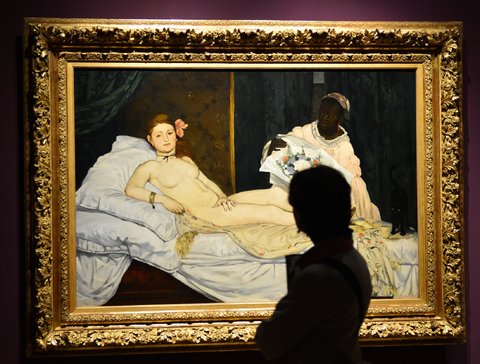
EDOUARD MANET, OLYMPIA (1863)

Edouard Manet, Olympia (1863)

This servant bringing Olympia flowers is important to our understanding of her implied status.

The first observations should be the quick description you would tell someone if you were identifying the most basic bare bones story/message of what you are literally looking at. This is outlined in the primary content. Here, the title of the painting can also guide you. You can then move onto the secondary content where you make larger connections linking the straightforward subject matter to other visual cues that help create a better understanding of what you are assessing.

Detail of Olympia's hand at the central vertical axis of the painting

Primary Content: What we see is a reclining naked woman, and she is looking out at the viewer. Another woman is bringing her flowers, and there is a black cat appearing frightened in the far right hand side of the painting. Taking into account the painting’s title, we can also assume that the woman featured in the painting is named Olympia.

Secondary Content: The woman is naked and is looking at the audience quite brazenly. Always note the attitude and demeanor of subjects to help you assess their feeling or mood. Her look suggests she is quite confident and not at all shy or ashamed of her nudity. Is she waiting for someone? Why is she nude? There are some questions here for sure. When looking at the central vertical axis of the painting (an important place to look for important meaning in Western art, especially prior to the twentieth century) we see that her hand is covering her genitals. We can also note the colour of her skin as being almost yellow, not especially inviting, and that her body seems a bit out of proportion. She appears to be reclining on a bed or couch (note the bedding) and the framing of the image is very tight around this one place and moment in time. By looking more closely at her clothing and jewellery, we can make an assumption about her wealth and maybe her status. This is in contrast to the woman bringing Olympia flowers, who appears to be more simply dressed. This other woman is likely a servant, and this is also a cultural assumption based on racial differences and her body language as she presents this gift to Olympia. Later, you will be able to test your hypothesis when looking at CONTEXT. The black cat appears frightened with his back raised, almost like you have walked in on the scene and scared him. You could of course go on and on here—and paintings of this kind beg for just this kind of close attention— but I want to flesh out a broader story to give you an idea of what a content analysis involves.

Note the details of a painting-- here we see Olympia wearing expensive gold jewellery.

Look around all of the margins of an artwork to see fine details. We almost miss the cat since it is painted very dark and blends into the background. Note also the fine silk robe and expensive shoes worn by Olympia.

DOROTHEA LANGE, MIGRANT MOTHER (1936)

Dorothea Lange, Migrant Mother (1936)

With this photograph, we will once again look at the most basic story and understanding of potential meaning.

Primary Content: A worried woman looks off into the distance as two children lean on her and turn their heads away from the camera. Taking into account the photograph’s title, we can assume that this woman is the mother of the two children.

Note the details of the dirt on the mother and children's hands and faces/heads. We can make inferences about the story of this photograph based on these visual cues.

Secondary Content: Looking more closely at the woman and children, we can see that they are dirty and that their clothing is very simple and worn, in fact rag-like. The children’s hair is cut very short and is messy—the canvas material behind them suggests they are in some kind of tent or temporary space. Deep worry lines on the mother’s weathered face and the gesture of her hand to her mouth suggest both concern and contemplation. Looking carefully to the bottom right, we see the mother is holding a baby, something that is not immediately apparent on first glance. The whole picture is very tight around this scene—we don’t have any sense of a bigger space or place that they belong to. We can also note that the set up for this kind of portrait image is not dissimilar to a long history of “mother with children” or “Madonna and Child” imagery, stretching all the way back to the Bible.

I want to add here, as with the previous image, that it is perfectly OK to use your own knowledge and guesses concerning metaphor and symbolism to help along your reading. Later when we add CONTEXT to the mix, you can decide if your hunches about content make sense.

Raphael, Small Cowper Madonna (1505) The theme of mother and children in visual art is a universal story that is part of the Western Judeo tradition.

THE WIZARD OF OZ, DIR. VICTOR FLEMING (1939)

The Wizard of Oz, Dir. Victor Fleming (1939)

With a film, the analysis of content takes on a bit more complexity since once again you are looking at far more material than a single still image. The content analysis follows more closely to the reading of a book since you are also often given dialogue and not just a visual experience. Even so, the mechanics of content analysis are very similar to the previous examples with the addition of two further points of consideration.

Primary Content: You are looking to identify the most basic synopsis of the film’s storyline. We can say that a girl named Dorothy from Kansas and her dog Toto are swept up in a tornado and transported to the Land of Oz where they embark on an adventure to find the Emerald City.

Secondary Content: Pushing the basic synopsis, you can note that the narrative follows a very typical three-act structure with a set-up, confrontation, and resolution (in this case, a happy ending). Along the way, many interludes allow musical numbers to unfold. The film’s storyline fits within the classic Hollywood genres of the musical and fantasy fiction. Looking closer, we can also note that Dorothy is set up as a classic hero—the audience is rooting for her—and that her adventures and many crossroads allow for new characters to enter into the narrative.

The Wizard of Oz follows a class three-act structure typical of many classic Hollywood films.

Explicit Content: Digging into the analysis of content, the explicit content suggest what we might think of as the “moral of the story” or attitude expressed by the narrative. Of course we don’t have to dig far with The Wizard of Oz since Dorothy hints to the audience near the very end of the film, “There’s no place like home.” We can also look at the core characters she encounters (i.e. the Scarecrow, the Tin Man, the Lion, Glenda the Good Witch, and the Wicked Witch of the East) as embodying particular traits that we can judge ourselves against.

Implicit Content: Moving deeper, the implicit content is more subjective and asks audiences to make broader connections to how the film’s story applies to general human relations. We can say here for example that Dorothy’s adventure, while following a yellow brick road, is similar to being on life’s path where we encounter obstacles and find resolutions. Finding maturity and strength through life lessons is one of the many implicit meanings communicated through the film’s plot.

To understand a film's content, you must consider the overall narrative structure and key turning points in the film's plot.

Stay tuned for the next post where I turn my attention finally to CONTEXT using the same three works discussed above.

Comment
David Bowie (1947-2016), a pioneer of the Internet age and a truly avant-garde artist. Here he is operating a desktop computer in 1994, only a few years from the creation of BowieNet-- see the article in my weekly round up discussing this new media …

David Bowie (1947-2016), a pioneer of the Internet age and a truly avant-garde artist. Here he is operating a desktop computer in 1994, only a few years from the creation of BowieNet-- see the article in my weekly round up discussing this new media history moment.

Weekly Flipboard Links and Media Round Up

January 17, 2016

Last weekend ended with a huge loss to the world of art, music, new media, and the avant-garde. David Bowie’s passing came as a big unexpected blow to many and the past week has been filled with tributes and reflections, all circulating and finding many audiences on social media. My round up this week bookends two pieces I found of particular interest—one talking about the phenomenon of feeling immense grief at the death of an artist, and the other telling the story of Bowie’s incredible foresight and understanding of the Internet’s power in its infancy. In my own circles, Bowie’s passing was remarked upon by many who understood his powerful influence on the artistic process, encouraging individuals to be their own unique selves, providing a living example of what it means to make art on one’s own terms. Releasing an album only days before his death speaks to his commitment to both his craft and his audience. I was also tremendously moved by the range of responses, from people my parent’s age (Bowie’s generation) telling stories of working with him, to people my age who remember buying their first Bowie albums and going to his concerts, and to many of my students, past and present, who took to Facebook, Instagram, and Twitter this week to share their favourite Bowie moments mined from his vast archive of material.

The week was also filled with news of both the Golden Globes results, and of course the Oscar nominations (I have links reflecting both) and there was once again talk of the lack of diversity and also the problem women face in finding power and recognition in the highest ranks of Hollywood. As I am teaching an American New Wave Film course this semester, I have included a link to a fantastic interview I heard this week with Illeana Douglas. She has just released a new memoir I Blame Dennis Hopper: And Other Stories from a Life Lived in and Out of the Movies, discussing her life in the thick of 1970’s Hollywood (this one also goes on my reading list). Many more intriguing picks to share this week, and I am beginning to add podcast episodes to my mix since I spend several hours a week listening to them on my commute. So much media, so little time—ENJOY!

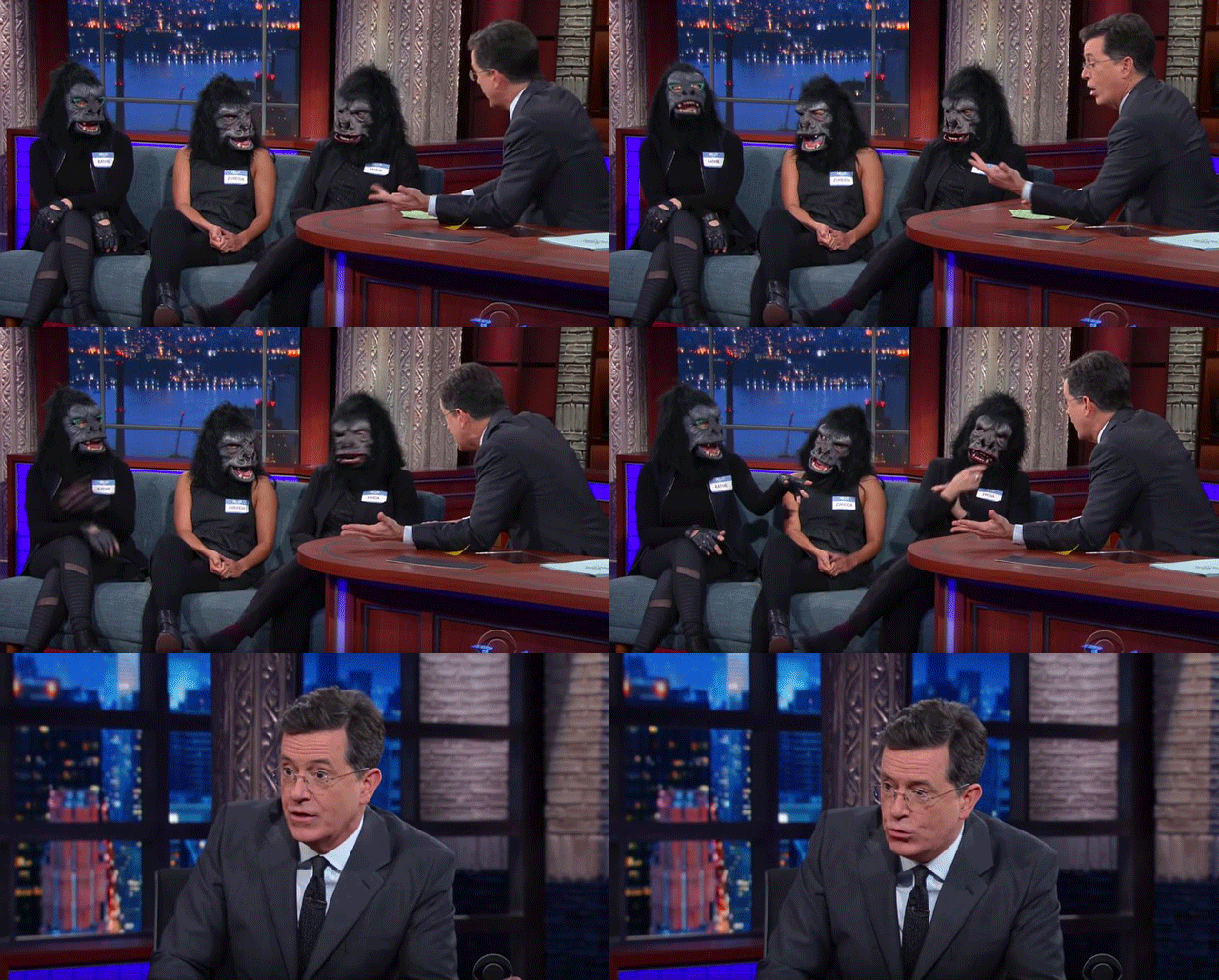
Stephen Colbert Interviewed the Guerrilla Girls Last Night

artfcity.com

"Why we grieve artists we’ve never met, in one tweet"

vox.com

"The Unbundling" PODCAST

canadalandshow.com

"Remembering a Time When New York City’s Subways Were Covered in Graffiti"

slate.com

"Oscar Nominations 2016: All the Major Snubs and Surprises"

vulture.com

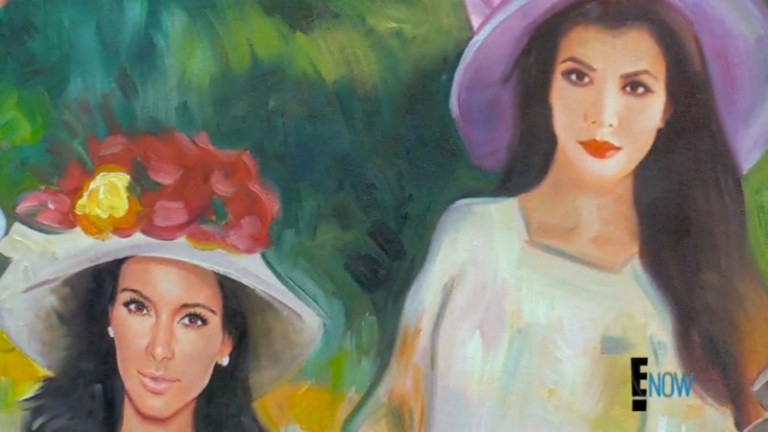
"A Match Made in Hell: Mr. Brainwash Paints the Kardashians à la Renoir"

hyperallergic.com

"At 15, Wikipedia Is Finally Finding Its Way to the Truth"

wired.com

"The Revenant director Alejandro González Iñárritu: 'So much pain was implanted in that time'" VIDEO

guardian.com

Illeana Douglas says Hollywood owes women more credit" PODCAST

cbc.ca

"BowieNet is proof David Bowie was an Internet visionary before Napster"

mashable.com

Stephen Colbert Interviewed the Guerrilla Girls Last Night "Why we grieve artists we’ve never met, in one tweet" "The Unbundling" PODCAST "Remembering a Time When New York City’s Subways Were Covered in Graffiti" "Oscar Nominations 2016: All the Major Snubs and Surprises" "A Match Made in Hell: Mr. Brainwash Paints the Kardashians à la Renoir" "At 15, Wikipedia Is Finally Finding Its Way to the Truth" "The Revenant director Alejandro González Iñárritu: 'So much pain was implanted in that time'" VIDEO Illeana Douglas says Hollywood owes women more credit" PODCAST "BowieNet is proof David Bowie was an Internet visionary before Napster"

List of links (for quicker clicking):

  • Why we grieve artists we’ve never met, in one tweet
  • Stephen Colbert Interviewed the Guerrilla Girls Last Night
  • "The Unbundling" PODCAST
  • Remembering a Time When New York City’s Subways Were Covered in Graffiti
  • Oscar Nominations 2016: All the Major Snubs and Surprises
  • A Match Made in Hell: Mr. Brainwash Paints the Kardashians à la Renoir
  • At 15, Wikipedia Is Finally Finding Its Way to the Truth
  • The Revenant director Alejandro González Iñárritu: 'So much pain was implanted in that time' VIDEO
  • Illeana Douglas says Hollywood owes women more credit PODCAST
  • BowieNet is proof David Bowie was an Internet visionary before Napster

Comment
One of the fundamental elements of evaluating art begins with a look at FORM.

One of the fundamental elements of evaluating art begins with a look at FORM.

Focus on Fundamentals of Visual Art & Culture: FORM

January 14, 2016

What are we looking at? How do we judge? At the beginning of each semester, I start most of my art history and film studies classes with these two questions, along with a discussion about the fundamentals of performing a critical reading of visual and/or cinematic language. Over the years, the close reading of images based on the inventorying of FORM, CONTENT, and CONTEXT, has come to serve as a cornerstone of my teaching—in fact, the blog post describing these values in brief is one of the most visited posts on my website!—still, the ideas behind each of these categories is often confusing and takes time to distinguish and truly understand.

Over the next week as I begin to introduce these concepts in each of my classes, I will create a separate post detailing and describing each of the three core elements of form, content, and context—creating a kind of ready tool kit for looking and assessing art and film. I have decided to do this using the same three examples—Manet’s Olympia (1863), Dorothea Lange’s Migrant Mother  (1936), and the classic Hollywood film The Wizard of Oz (1939)—in order to build a dynamic set of examples that create a more comprehensive whole.

As I tell my students, all of us come to look at art and film with a sense of our own aesthetic tastes—we can’t help it since we all have eyes and feel we can judge what we see—but it is in bringing awareness to how and why we evaluate and create those judgments that is core to the study of any art. Let us then begin with FORM.

FORM

Following Dr. Robert Belton’s descriptions in Elements of Art in an Online Handbook (thanks again to Dr. Bob, my first art history professor, for taking the time to produce this useful document), we can locate a useful and basic definition: 

“Form means the constituent elements of a work of art independent of their meaning (e.g., the colour, composition, medium or size of a flag, rather than its emotional or national significance). Formal elements include primary features which are not a matter of semantic significance (i.e., which do not carry meaning the way a word does): these include colour, dimensions, line, mass, medium, scale, shape, space, texture, value, and their corollaries. The secondary features are the relations of the primary features with one another: these include balance, composition, contrast, dominance, harmony, movement, proportion, proximity, rhythm, similarity, unity, and variety.”
— Dr. Robert Belton

When looking at a visual object, the key to assessing form is to try and ignore all of the strong pulls towards the narrative and/or other identifying characteristics of the works historical and/or social connections, and to just focus in on materials, size/scale, and the question of how the object under examination was literally put together. For artists and for those who make or repair objects, form is perhaps the easiest element of art to assess. Their natural curiosity about how another practitioner produces an object forces them to look first and foremost at the working parts and the “how to” of the piece.

Let us look at our three examples:

Edouard Manet, Olympia (1863)

Edouard Manet, Olympia (1863)

The first item to inventory with any work is the medium. Here, we are looking at an oil painting. Now, please forget for a moment that you are also looking at what appears to be a naked woman staring out brazenly at the audience—we will get to that later in CONTENT—and note for a moment the following values:

Medium: Oil painting on canvas. This is important to distinguish since this kind of painting produces particular kinds of effects that differ from watercolour painting, or painting on wood, for example.

Size: 51.4 inches x 74.8 inches. Measurements signal little without a sense of what those numbers mean, so I like to say that this painting is smaller than life size, and I have also provided a silhouetted picture of a person looking at it to help you get a sense of scale. The picture is intimate enough to look at closely, but not so small that you need to really get close to what you are looking at. Consider how different the impact of this artwork would be for example if it were as small as a cameo worn around the neck or as large as a gigantic wall mural.

Getting a sense of a visual art object's scale is critical to assessing its form.

Getting a sense of a visual art object's scale is critical to assessing its form.

Colours and use of light: cool tones of red, greyed white, pink, green, and shades of brown/black with a subdued and limited palette. This is just a fancy way to talk about the obvious in what you see in the artist’s choice of colour. Noting the range of the colours used and how the light falls is also useful. Here, the light appears harsh, casting shadows and creating strong contrasts between areas of the picture.

We are at a disadvantage to assessing form when we cannot see the work up close, but with the use of tools such as Google Art Project, we can begin to appreciate materials and the production of art objects. See for example the dark contours around parts of the figure and note the many layers of paint building up the composition.

Composition: Figures appear flattened, without much depth, or an attempt to create perspective and deep dimension; there is contouring/outlining around some of the figures; there is sharp contrast between light and dark values in the painting; the painting also appears to be divided in two by the yellow line drawn through the middle of the painting. These are some of my preliminary observations about the balance, contrast, and general makeup of the composition, but note that I am only discussing how the forms are rendered, not about the actual "story" of what is being shown.

Dorothea Lange, Migrant Mother (1936)

Dorothea Lange, Migrant Mother (1936)

As with the previous work, I am going to  ask you to ignore the obvious image of a woman with her children and ask you to notice that the medium we are examining here is a photograph.

Medium: Black and white analog photograph. Again, this is important since the quality of an analog image is different from a digital and/or colour photograph. The limitations of that media form are also important to consider.

Size: original negatives are 4 x 5 inches, but it is worth noting here that the size can range depending on how the image was reproduced (as photographs in a magazine layout, and/or print to fit in other newspapers and media). In other words, the size is variable and can be viewed at many different scales.

Assessing scale is not always an easy task with photographs, especially when the original prints have been shared and distributed widely, as is the case with this image.

The rule of thirds appears to apply in this image. In other words, It appears highly composed.


Colour and use of light: since black and white photography is being used, light is even more important. It appears by the lack of sharp contrasts that natural lighting is used to create this photo, and the tones and values are lighter in the bottom part of the image in contrast to the top half.

Composition: the image appears very carefully composed and adheres to the “rule of thirds" where an artist divides their image into thirds horizontally and vertically and makes sure to center points of interest on one or more of the intersections of these lines. It is enough to say here that there is obvious care in how the image is put together—it is not a snapshot photograph-- and this attempt to impose some aesthetic qualities to the image puts its documentary qualities as a photo into some tension.


The Wizard of Oz, dir. Victor Fleming (1939)

The Wizard of Oz, dir. Victor Fleming (1939) original movie poster.

In our final example, we will consider a work of film, a motion picture. Just as with traditional art, the inventory of FORM is concerned with the mechanics of how the movie is put together. Because films, by their nature as a moving media form, cannot and really should not be read via individual shots or freeze frames alone, we must consider the total system that the viewer perceives in the film. In other words, film form is the overall system of relations that we can perceive among the elements in the whole film.

Medium: Black and white and Technicolor motion picture

Size: 35 mm film with a 102 minute running time. Notice here that size and scale is considered differently for a work of film than other traditional art forms. The way we were originally meant to see the film by the director is also important to inventory.

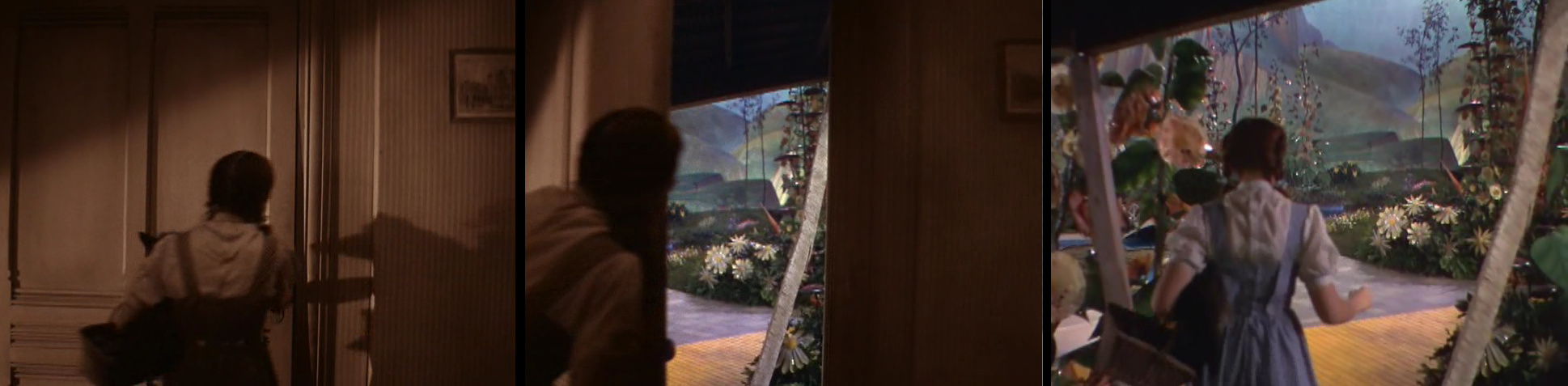
Colour and use of light: With this film, we have a combination of black and white (sepia tones) and Technicolor for the majority of the film’s length. Most of the shots in the colour sequences are highly saturated with low contrast and shadows, while the black and white sequences follow almost a film-noir exaggeration of light and dark combined with use of shadows.

Transitions from black and white sepia tones to Technicolor occur at both the start and end of the film.

Transitions from black and white sepia tones to Technicolor occur at both the start and end of the film.

Composition: This is where things get a little different with the formal analysis of film. We can talk here about assessing the cinematic language being used and how the work is put together, but with film many additional elements can be considered. We can focus here on technical elements of cinematography, editing, sound, and overall design, which have been assembled to make the film. I will make a few observations here. First, continuity editing is used to shoot and sequence this film in order to create and ensure a smooth and continuous flow across and between various perspectives offered through the film’s storytelling.  More technically, the film uses the 180 degree rule of editing. Music is also strategically used to draw attention to the main action of the film, and the overall pattern of the movie produces harmonies and pleasurable experiences in colour and sound throughout (with the small and notable exception of the opening and closing sequence of the film). 

The overall pattern and feel of the cinematic language, including the sound design, is harmonious and pleasurable to the senses.

The overall pattern and feel of the cinematic language, including the sound design, is harmonious and pleasurable to the senses.

Stay tuned for the next two posts where I tackle the element of CONTENT and the element of CONTEXT using the same three works discussed above.

1 Comment
Andy Warhol reading, or at least pretending that he is.

Andy Warhol reading, or at least pretending that he is.

Weekly Flipboard Links and Media Round Up

January 10, 2016

A new year brings resolutions, and one of mine is to bring back my weekly round up of the best I have encountered via my various social feeds and saved to my blog's Flipboard magazine. In years past, this was one of the best accessed parts of my blog, and I have always enjoyed hearing back from people who have read and circulated the material I share. Much of what I find of interest relates directly to the world of art, art history, new media, film, urban visual culture, and the courses I am teaching, but I also enjoy throwing a few wild cards into the mix, especially as I embark on new research streams and discover new writing and ideas.

This week has most definitely signalled the end of the holidays. It has been especially hectic but energizing, starting the first week of classes and meeting with new students who are already engaged and ready to tackle my courses. All good! As I write this, I am midway through watching the Golden Globes, and I must say I am thrilled to see my favourite new TV show of the year MR. ROBOT get the big win for TV Drama. I also had a chance to watch The Revenant in theatre over the weekend-- a must see, especially for Emmanuel Lubezki's cinematography and ode to Canada's wilderness (where the majority of the film was shot)-- and it looks like Alejandro González Iñárritu just won for best director! Can't wait for the Oscars in few more weeks.... Wishing you a great new week-- in the meantime, have a look at some of these links (simply click on the images in the gallery to take you to the original posting or go straight to the link list for instant gratification), and ENJOY :)

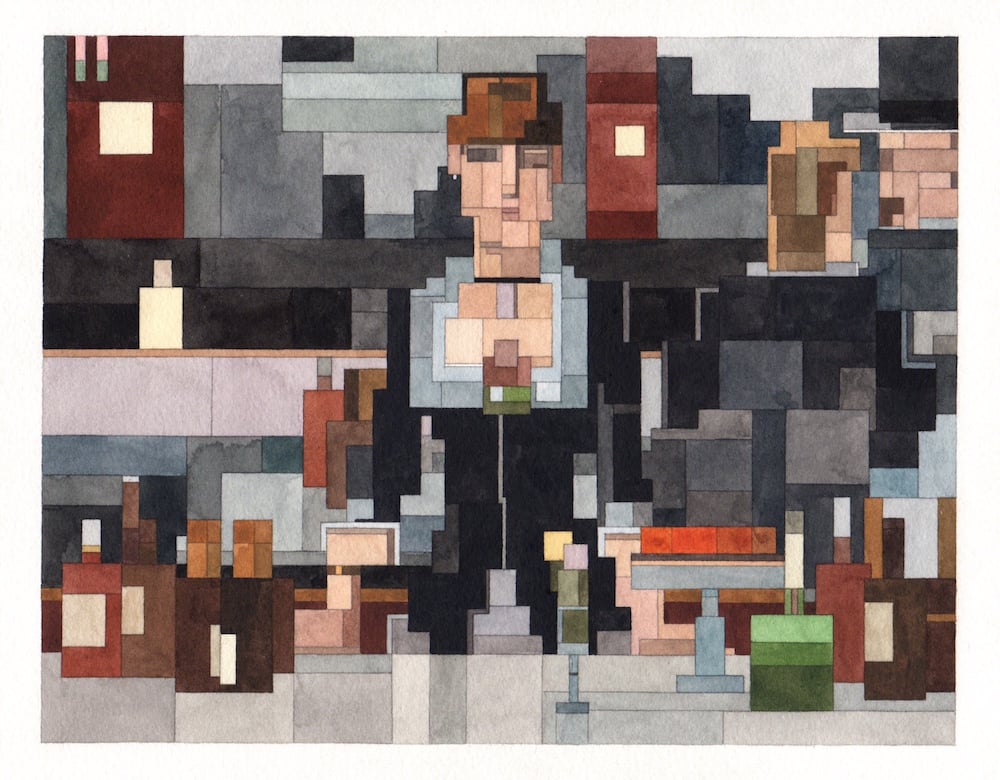
"New ‘8-Bit’ Watercolor Paintings Inspired by Famous Artworks and Pop Culture Icons by Adam Lister"

thisiscolossal.com

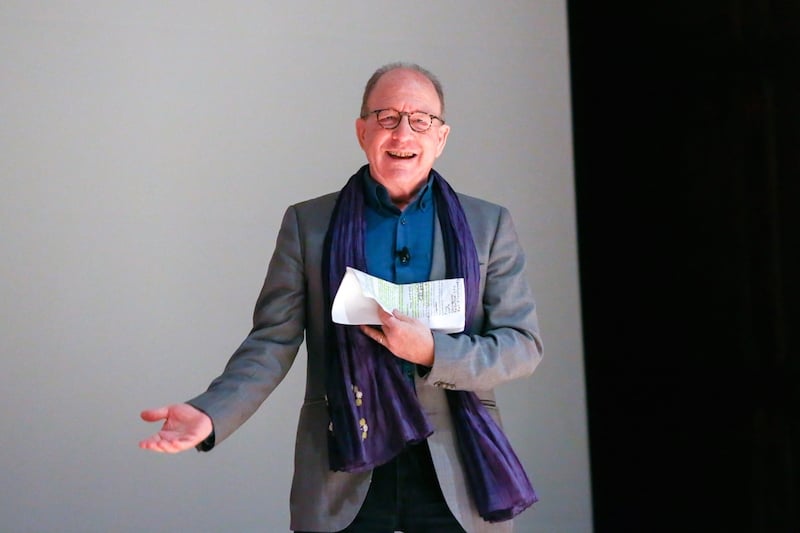
"How to Look at Art Like Jerry Saltz"

thecreatorsproject.vice.com

"The Year the Studios Get It Right"

nytimes.com

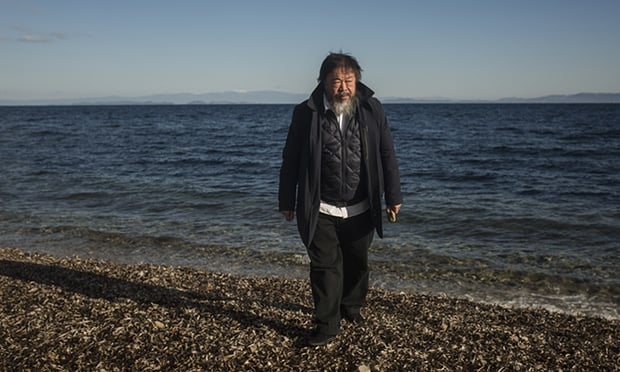
"Ai Weiwei sets up studio on Greek island to highlight plight of refugees"

theguardian.com

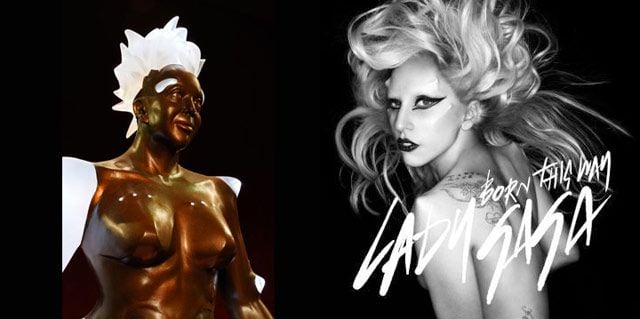
"Artist Orlan Tries Again to Sue Lady Gaga for Plagiarism"

hyperallergic.com

"CES 2016 Wrap-Up: All the Coolest Stuff We Saw at the Big Show"

wired.com

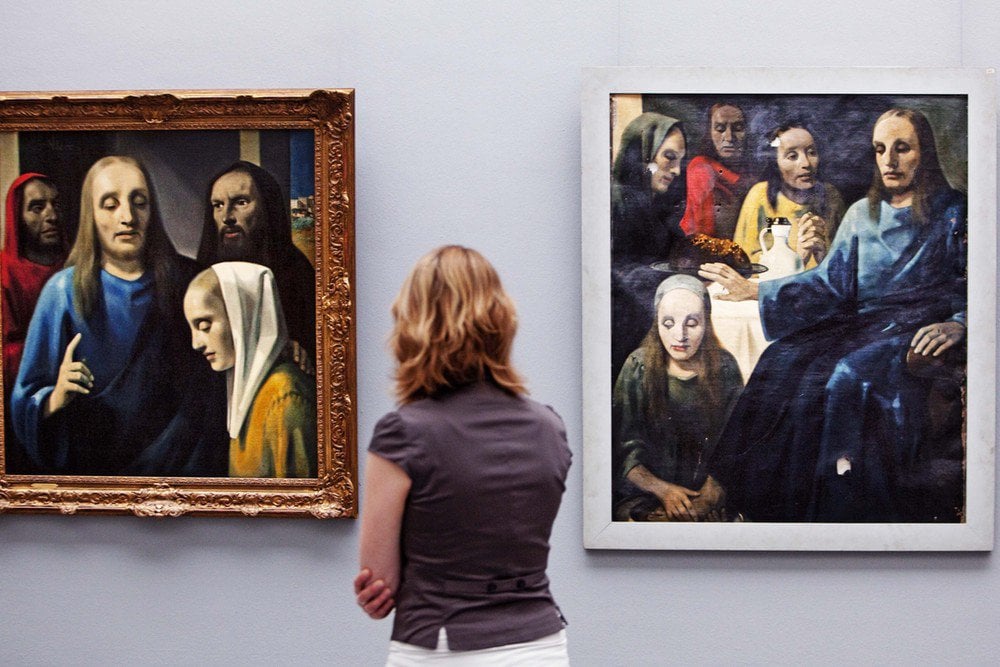
"The Secret to All Great Art Forgeries"

newrepublic.com

"Barbie as a Renaissance princess is one artist's smart, subversive creation"

mashable.com

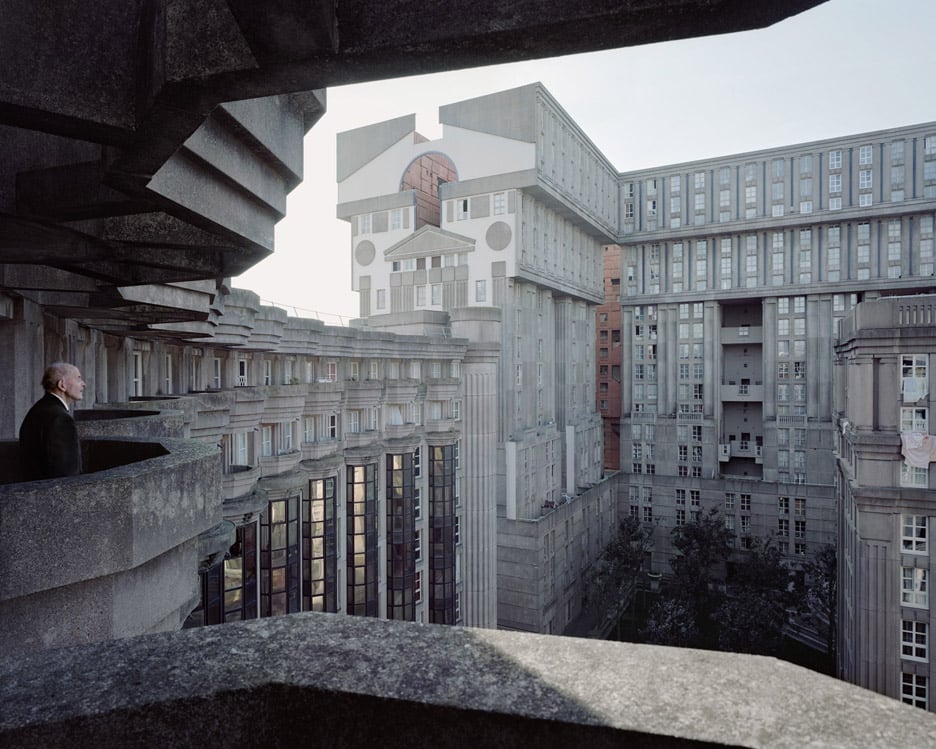
"Laurent Kronental's Souvenir d'un Futur photos show Paris' monumental housing estates"

dezeen.com

"Two New Books Get You Inside the Mind of Nintendo’s Game Master"

wired.com

"New ‘8-Bit’ Watercolor Paintings Inspired by Famous Artworks and Pop Culture Icons by Adam Lister" "How to Look at Art Like Jerry Saltz" "The Year the Studios Get It Right" "Ai Weiwei sets up studio on Greek island to highlight plight of refugees" "Artist Orlan Tries Again to Sue Lady Gaga for Plagiarism" "CES 2016 Wrap-Up: All the Coolest Stuff We Saw at the Big Show" "The Secret to All Great Art Forgeries" "Barbie as a Renaissance princess is one artist's smart, subversive creation" "Laurent Kronental's Souvenir d'un Futur photos show Paris' monumental housing estates" "Two New Books Get You Inside the Mind of Nintendo’s Game Master"

List of links (for quick clicking!):

  • New ‘8-Bit’ Watercolor Paintings Inspired by Famous Artworks and Pop Culture Icons by Adam Lister
  • How to Look at Art Like Jerry Saltz

  • The Year the Studios Get It Right

  • Ai Weiwei sets up studio on Greek island to highlight plight of refugees

  • Artist Orlan Tries Again to Sue Lady Gaga for Plagiarism

  • CES 2016 Wrap-Up: All the Coolest Stuff We Saw at the Big Show

  • The Secret to All Great Art Forgeries

  • Barbie as a Renaissance princess is one artist's smart, subversive creation

  • Laurent Kronental's Souvenir d'un Futur photos show Paris' monumental housing estates
  • Two New Books Get You Inside the Mind of Nintendo’s Game Master
1 Comment
I first visited Hito Steyerl's dynamic multimedia installation in the German pavilion at the Venice Biennale this past summer-- an absolute crowd pleaser-- and it is now making its debut in North America at the MOCA in Los Angeles this spring.

I first visited Hito Steyerl's dynamic multimedia installation in the German pavilion at the Venice Biennale this past summer-- an absolute crowd pleaser-- and it is now making its debut in North America at the MOCA in Los Angeles this spring.

Top 10 Modern and Contemporary Art Exhibitions Worth Visiting In Spring/Summer 2016

January 01, 2016

Happy New Year! Another year beckons with fantastic chances to see and experience visual art and culture both near and far. Like many of you, I've had a very relaxing holiday season spent close to home this year, but I am looking forward in 2016 to some great opportunities to travel and visit out-of-town exhibitions. It has also become something of a tradition for me to spend New Year's Day searching out many of the world's great modern and contemporary art museums to plan fantasty itineraries-- not a bad way to set the tone for a new year-- and I hope too that some of these picks inspire your own travel plans. Wishing you all a wonderful 2016 filled with many new art adventures!

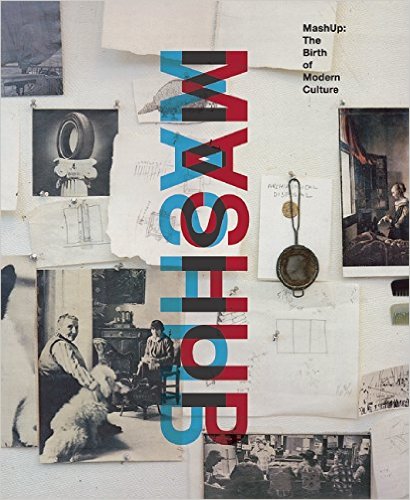
MashUp: Birth of Modern Culture

Vancouver Art Gallery, Vancouver: February 20- June 12, 2016

Starting close to home, I am thrilled that this unique and massive four floor survey of modern and contemporary art and culture opening next month at the Vancouver Art Gallery coincides with my regular offering of a contemporary art history course at KPU. As I have learned through my field school experiences, there is no better way to teach students about art and art history than having them experience works first-hand, and this particular opportunity will be a once in a lifetime chance for many Vancouverites to experience a virtual survey of recent contemporary art. 

MashUp at the Vancouver Art Gallery will also feature a comprehensive catalogue, one that I am looking forward to seeing. 

MashUp at the Vancouver Art Gallery will also feature a comprehensive catalogue, one that I am looking forward to seeing. 

Open Plan: Andrea Fraser

Whitney Museum of American Art, New York: February 26- March 13, 2016

Visiting the brand new Whitney Museum in New York last summer was one of the highlights of our NYC/Venice Biennale field school, and I only wish I could go back and see how this particular exhibition will utilize the expansive spaces of the place. Andrea Fraser caught my eye immediately when I was scanning the Whitney's upcoming exhibitions-- she is one of my favourite performance artists, and her specific interest in institutional critique should produce a very engaging piece for the new jewel in New York's art museums crown. Her site-specific work titled Down The River involves audio recordings taken at a correctional facility and will no doubt challenge audiences to engage with the views and associated contexts beyond the Whitney's walls.

The fifth floor of the Whitney features over 18,000 square feet of open space and will be the home to Andrea Fraser's new site-specific work Down the River.

The fifth floor of the Whitney features over 18,000 square feet of open space and will be the home to Andrea Fraser's new site-specific work Down the River.

Moholy-Nagy: Future Present

Guggenheim Museum, New York: May- September 2016

I cannot believe that this will be the very first retrospective of László Moholy-Nagy to appear in North America in over 50 years! There are so few artists whose influence in the fields of new media, technology, and multimedia are as relevant, if not even more so, today than they were in the time they were first conceived (in this case, in the early twentieth century). Of all the exhibitions on this list, this would be my top pick, and not just because I share Moholy-Nagy's Hungarian heritage (although I have spent a great deal of time studying his life and work as part of my own research). This is an artist who was a true visionary of the technological age, and this show is long long overdue.

0
0
1
7
42
Kwantlen Polytechnic University
1
1
48
14.0


Normal
0


false
false
false

EN-US
JA
X-NONE


 <w:LatentStyles DefLockedState="false" DefUnhideWhenUsed="true"
DefSemiHidden="true" …

László Moholy-Nagy, B-10 Space Modulator (1942)

Robert Mapplethorpe: The Perfect Medium

LACMA and Getty Museum, Los Angeles: March 20- July 31, 2016

When I was a graduate student, I published a paper concerning the Robert Mapplethorpe exhibition A Perfect Moment-- a key event that became the center-point of controversy during the US culture wars of the 1980-90's. In the past several years, many art institutions have begun to revisit that difficult historical moment when censorship and other hot-button issues concerning art and culture threatened artistic freedoms in the US as never before. This exhibition of Mapplethorpe's drawings, collages, and photographic works will be accompanied by another exhibition titled Physical: Sex and the Body in the 1980s and promises to further help position the controversy surrounding this artist in a much wider social and political context. All of these examinations are also most welcome in the highly contentious US election environment set for 2016.

Robert Mapplethorpe,&nbsp;Self-Portrait (1980)

Robert Mapplethorpe, Self-Portrait (1980)

Big Bang Data

Somerset House, London: December 3, 2015- February 28, 2016

I am most excited to be traveling to London this February to attend and deliver a paper at a conference devoted to the critical examination of the Venice Biennale (more on that in a future post). I will also be meeting up with my dear friend Lara-- we did our PhDs together, so we share a very special bond-- who recently moved to the UK to pursue her art advising/appraising business in the new and exciting arena of the online world. What better exhibition for us to explore together than one curated on the theme of data explosion and "datafication" via the arts transforming our world. I cannot wait to get to London to check this out!

Watch the trailer for the Big Bang Data exhibition here

Watch the trailer for the Big Bang Data exhibition here

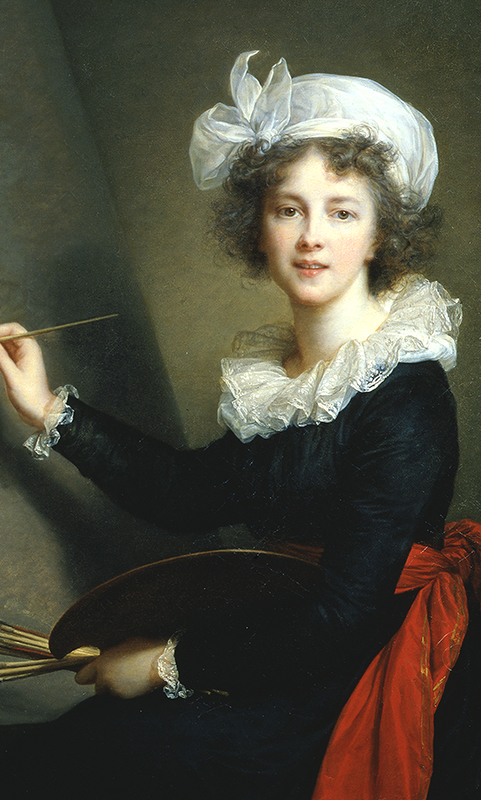
Vigée Le Brun: Woman Artist in Revolutionary France

Metropolitan Museum of Art, New York: February 15- May 15, 2016

The canon of art history is not very inclusive of women, especially prior to the nineteenth century, so I am thrilled to see one of the most intriguing French artists of the period leading up the French Revolution being given a retrospective. Vigée Le Brun was one of the very few women admitted to the French Art Academy and became the personal painter of Marie Antoinette and the royal family. The exhibition will no doubt cast new light on this turbulent period of France's social and cultural history, especially as it was represented via artists such as Vigée Le Brun.

0
0
1
8
46
Kwantlen Polytechnic University
1
1
53
14.0


Normal
0


false
false
false

EN-US
JA
X-NONE


 <w:LatentStyles DefLockedState="false" DefUnhideWhenUsed="true"
DefSemiHidden="true" …

Elisabeth Louise Vigée Le Brun, Self-portrait (1790) 

GRAPHIC MASTERS: DÜRER, REMBRANDT, GOYA, PICASSO, MATISSE, R. CRUMB

Seattle Art Museum, Seattle: June 9- August 28, 2016

I adore exhibitions that focus on one form of art production, and this expansive exhibition (located not too far from home in Seattle) will be devoted to the medium of printmaking. 500 years of history with 400 objects on view, from Durer, Rembrandt, Goya, Picasso, Matisse, and Crumb, all under one curatorial umbrella-- who wouldn't want to check this out?

0
0
1
13
75
Kwantlen Polytechnic University
1
1
87
14.0


Normal
0


false
false
false

EN-US
JA
X-NONE


 <w:LatentStyles DefLockedState="false" DefUnhideWhenUsed="true"
DefSemiHidden="true"…

Francisco Goya, Plate 43, "Los Caprichos": The sleep of reason produces monsters (1799)

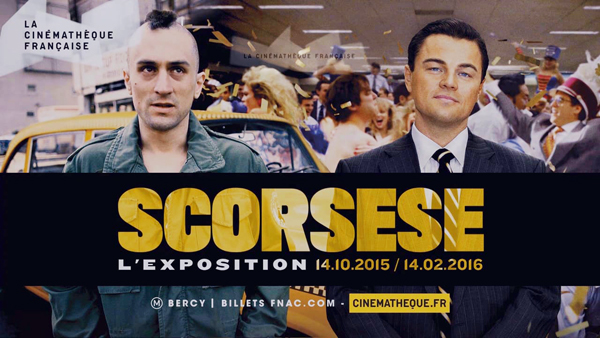
Martin Scorsese Retrospective

The French Cinematheque, Paris: October 14, 2015- February 15, 2016

This spring at long last I will be teaching a special topics class on American New Wave cinema. Prominent among the filmmakers of that period of the late 1960's to 70's is of course Martin Scorsese, and if I could wave a magic wand, I would transport the entire class on Day 1 to visit this important exhibition currently on at the French Cinematheque museum in Paris. Imagine rooms filled with Scorsese's storyboards, scripts, outtakes, and personal photographs and memorabilia. Not to mention all of the special film screenings and archival information on hand. Scorsese is deeply respected in France, and with good reason. He is as close to a living cinema auteur as we have in North America today.

I pray this exhibition dedicated to Scorsese finds a way to travel over to North America!

I pray this exhibition dedicated to Scorsese finds a way to travel over to North America!

Hito Steyerl: Factory of the Sun

Museum of Contemporary Art, Los Angeles: February 21- September 12, 2016

Last summer at the Venice Biennale, it was very very hot, and I was fortunate enough to find the best air conditioning at the venue while visiting the basement of the German pavilion. At the time, I was not even interested in the art being shown-- cooling off was the priority-- but once I settled into one of the comfy lounge chairs and actually paid attention to the unusual video installation on the massive screen before my eyes (exactly as pictured in the picture), I was both mesmerized and drawn in. It is a very difficult piece to describe-- so do go see it if for yourself if you are in LA over the next few months-- but suffice to say that the uncanny and surreal elements of the work created by German filmmaker Hito Steyerl capture something both attractive and menacing about our current screen culture. 

Andy Warhol-- Ai Weiwei

National Gallery of Victoria, Australia: December 11, 2015- April 24, 2016

This exhibition had me at its title-- Andy Warhol and Ai Weiwei. Are you kidding me? Who wouldn't want to check out how the curators brought such seemingly unlikely artists together. A guaranteed success I am sure. Now I just have to work on that plane ticket to Australia.... 

Andy meets Weiwei.... I would want to be a fly on that wall.

Andy meets Weiwei.... I would want to be a fly on that wall.


Comment
Newer / Older
Back to Top
Screenshot 2018-02-05 20.48.17.png

© Dorothy Barenscott, 2010-2025