Grading…. Grading…. Grading…. Enjoy the links and I will be back with a regular post later this week!






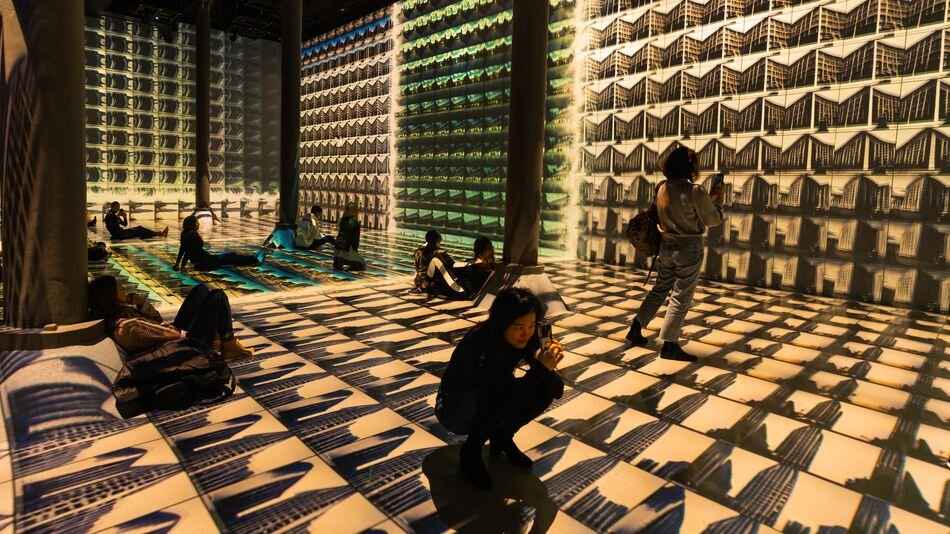
This weekend was the last chance to glimpse William Blake’s epic The Ancient of Days (1794) projected onto the dome of St. Paul's cathedral in London. This view looking across the beautiful Millennial Bridge was posted by the Tate Modern’s Instagram account and is a stunning work of public art.
Grading…. Grading…. Grading…. Enjoy the links and I will be back with a regular post later this week!
Henri de Toulouse-Lautrec, Au Salon de la Rue des Moulins (1894). Lautrec’s birthday is today and he is considered one of the most important painters of urban fin de siecle Paris.
As we wind down the final week of the semester ahead of the exams, I am looking ahead to the calm before the grading storm and working on some pressing research and writing projects ahead of Christmas vacation. It seems there are never enough days from September to December to get to all of my non-teaching tasks, but I do have some longer form blog posts I am working on for the coming month where I will explore ideas around cultural capital, take a comparative look at three of my favourite films of the year, and publish an annotated reading list of art and visual culture related fiction and non-fiction titles to enjoy over the holidays. Finally, I hope to preview some great modern and contemporary art shows slated for spring and summer 2020. It is never too early to plan, and I have many great art city trips planned already for the year to come. Hang in there folks—we are almost there! Enjoy the links.





An artwork by street artist Banksy portraying a migrant child wearing a lifejacket and holding a neon pink flare pictured during the November 13th floods in Venice. Photo by Marco Bertorello/AFP via Getty Images. As of today, that work is now reportedly completely underwater.
Watching the historic flooding in Venice this past week and learning of the closure of many of the city’s most important art institutions and spaces, I have been thinking back to the most recent field school and our visit to the Biennale. Many of the artists chosen for the exhibition took up the theme of climate change, and it was only a few weeks after our visit that the debate around overcrowding and “toxic tourism” reached new levels following the crash of a cruise ship into a Venetian dock. I always tell students before taking them to Venice that we can never take such a visit for granted. I firmly believe that the city will likely be underwater or shut down to tourists within our lifetime. As for the art world, the situation in Venice is a real threat to monuments and cultural institutions on a scale that is hard to fully fathom. Paintings, artifacts, drawings, and frescoes are on the frontlines of complete destruction. For those still in denial, perhaps the images of a drowned Venice, and an art city forever lost, will wake them up. If nothing else, the threat of losing all of that beauty will likely compel some into action. Enjoy this week’s links…





Dmitri Vrubel, My God, Help Me to Survive This Deadly Love (1990). One of the best known wall graffiti works at the Berlin Wall, the painting depicts Leonid Brezhnev and Erich Honecker in a fraternal embrace, reproducing a photograph that captured the same moment in 1979 during the 30th anniversary celebration of the foundation of the German Democratic Republic. This past week, the 30th anniversary of the fall of the Berlin Wall is being celebrated around the world.
Thirty years ago, the world gathered around their television sets to witness history unfold as the Berlin Wall began to fall. As a child of Hungarian immigrants and a frequent visitor to Budapest pre-1989, the events seemed both surreal to me, but also inevitable. In retrospect, most people talk about the speed of events, or surprise in seeing the peaceful exuberance of Berliners, East and West, as they helped one another climb over the rubble and explore unknown worlds. One of my favourite films to capture this historic moment in all of its complexities is Wolfgang Becker’s Goodbye, Lenin! (2003), a dramatic comedy that tells the story of Alex, a young man who gets caught up in the events of 1989 and tries to hide the regime change from his ailing mother, who happens to fall into a coma the evening of November 9th. Alex’s mother, a loyal party communist, awakens from her coma months later, but cannot be excited in any way to prevent a likely heart attack. As such, Alex goes to great lengths to keep up the pretense that communism still reigns in East Germany (buying up old communist brand foods, creating fake news broadcasts, and enlisting friends and family to keep up old appearances), but ultimately fails to keep up the charade. His mother, understanding the reality of the changes, comes to terms with the world she inhabits, however difficult and improbable. There is no going back, but there is also hope in the new freedoms gained.
For me, as a child raised in Canada with all the privileges of travel and access to a relatively unfiltered education, I was always hopeful that the relenting call of democracy and liberal freedoms would reach beyond the political rhetoric behind the Iron Curtain. I had been witness to the deep cynicism and open disdain for the Cold War experiment when visiting Hungary throughout my childhood, and it did not take much to reach a critical mass through the 1980s to the outcomes many witnessed with some level of disbelief in 1989. The tragedy, of course, is that so much has changed from the optimism of that time, and along with it, our media landscape. A rising tide of illiberalism and fear and distrust of global systems has taken hold in many of the same parts of Eastern Europe that were the first to champion the freedom of a world without walls. Conspiracy theories, false histories, and outright propaganda and hate speech overwhelms much of the conversation on both social media and state-controlled media outlets. Open public discourse and debate is fading as journalists and academics, increasingly distrusted and harassed by government officials, are seen as enemies by many in power in parts of Eastern Europe. At the same time, open hostility to immigrants, foreigners, non-Christian, non-European, and non-straight individuals raises serious alarm and comparisons to Europe in the 1930s.
Looking back at 1989, the shock I feel today is not how quickly events appeared to unfold in Berlin, but instead, how quickly many people have forgotten, or simply given up, on the promise and hope offered by open societies. While democracy is an imperfect system, it still holds out far greater possibility for freedom, critical thinking, and happiness than a turn to increasing state-control, tribalism, and fear-based ethnic nationalism. In fact, I realize that I have the same faith today that I had back in 1989. I trust there will be an inevitable turn towards the hope and revolutionary potential of that moment— a tearing away of walls, false differences, and hate.
I wish everyone peaceful reflection on this Remembrance Day long weekend. Enjoy the links.


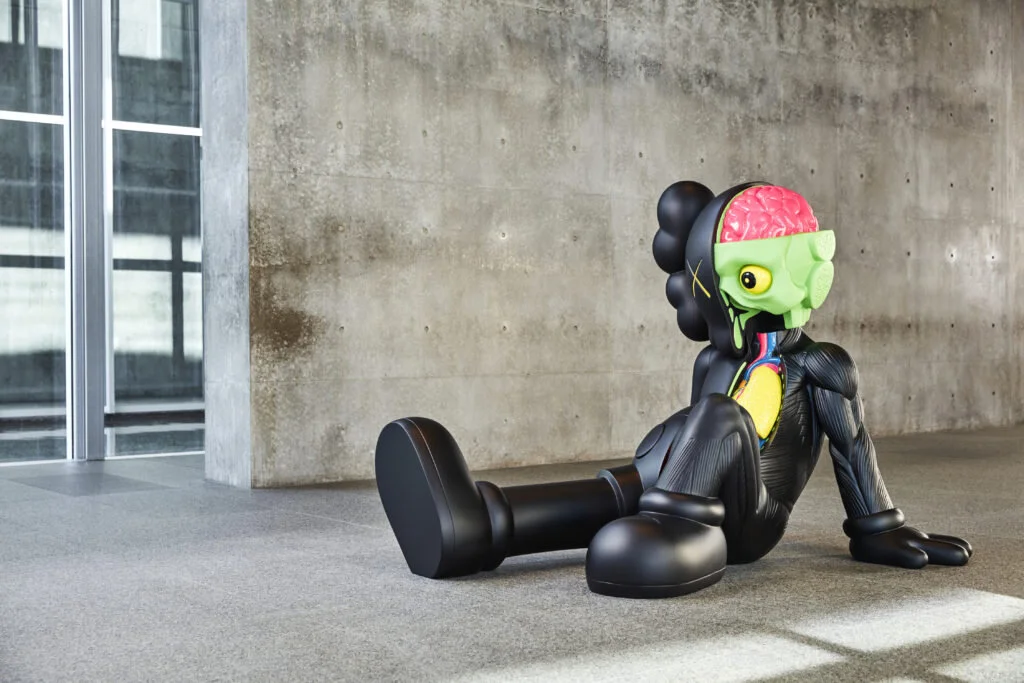




The Gray Market: Why KAWS Is More a Symbol of the Art Market’s Past Than Its Future
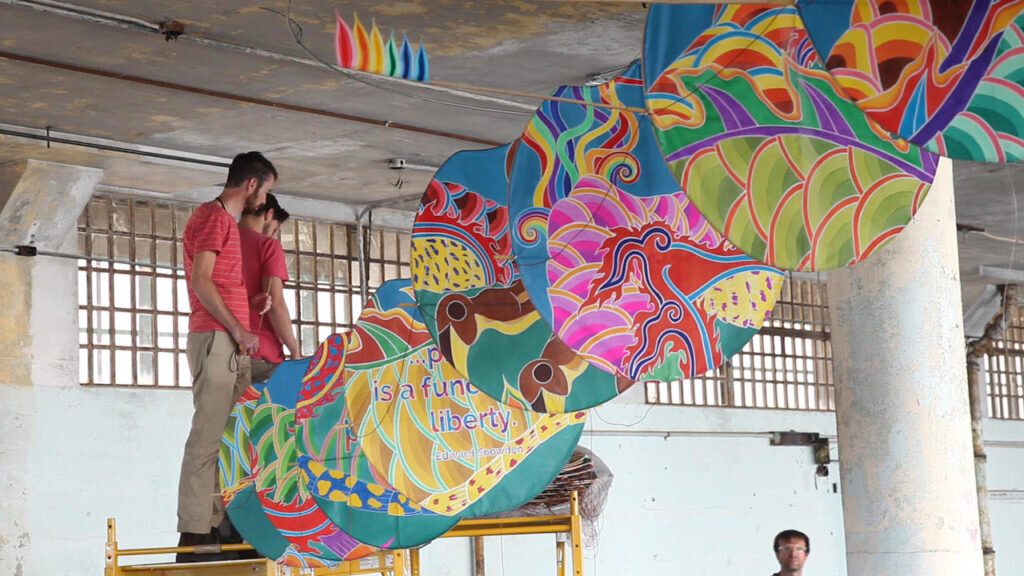
New Ai Weiwei Documentary Champions the Artist as a Global Activist
Cindy Sherman’s ‘Masterclass in Makeup’ Is a Full Frontal Challenge
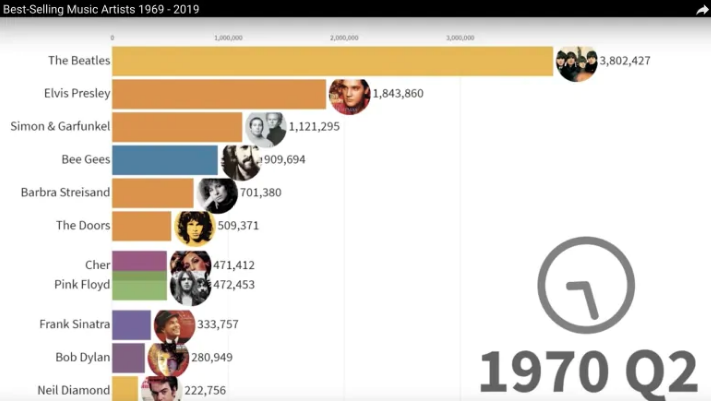
Fascinating animated timeline of bestselling music from past 50 years goes viral
“Anuses on Stems”? Parisians React to Jeff Koons’s Gift to the City
Slow Burn: Biggie and Tupac (Gangsta Rap vs. The Cops) (PODCAST)
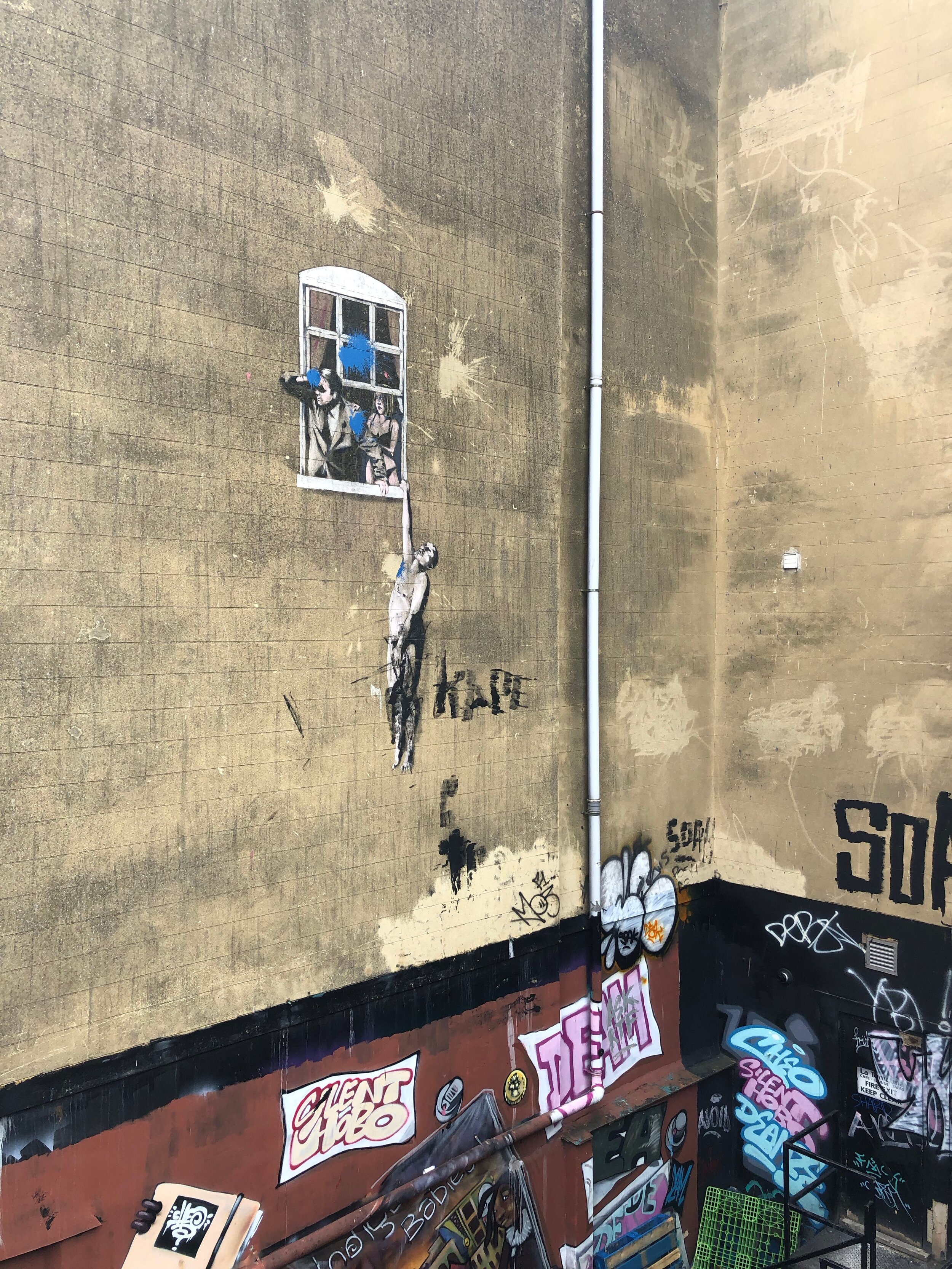
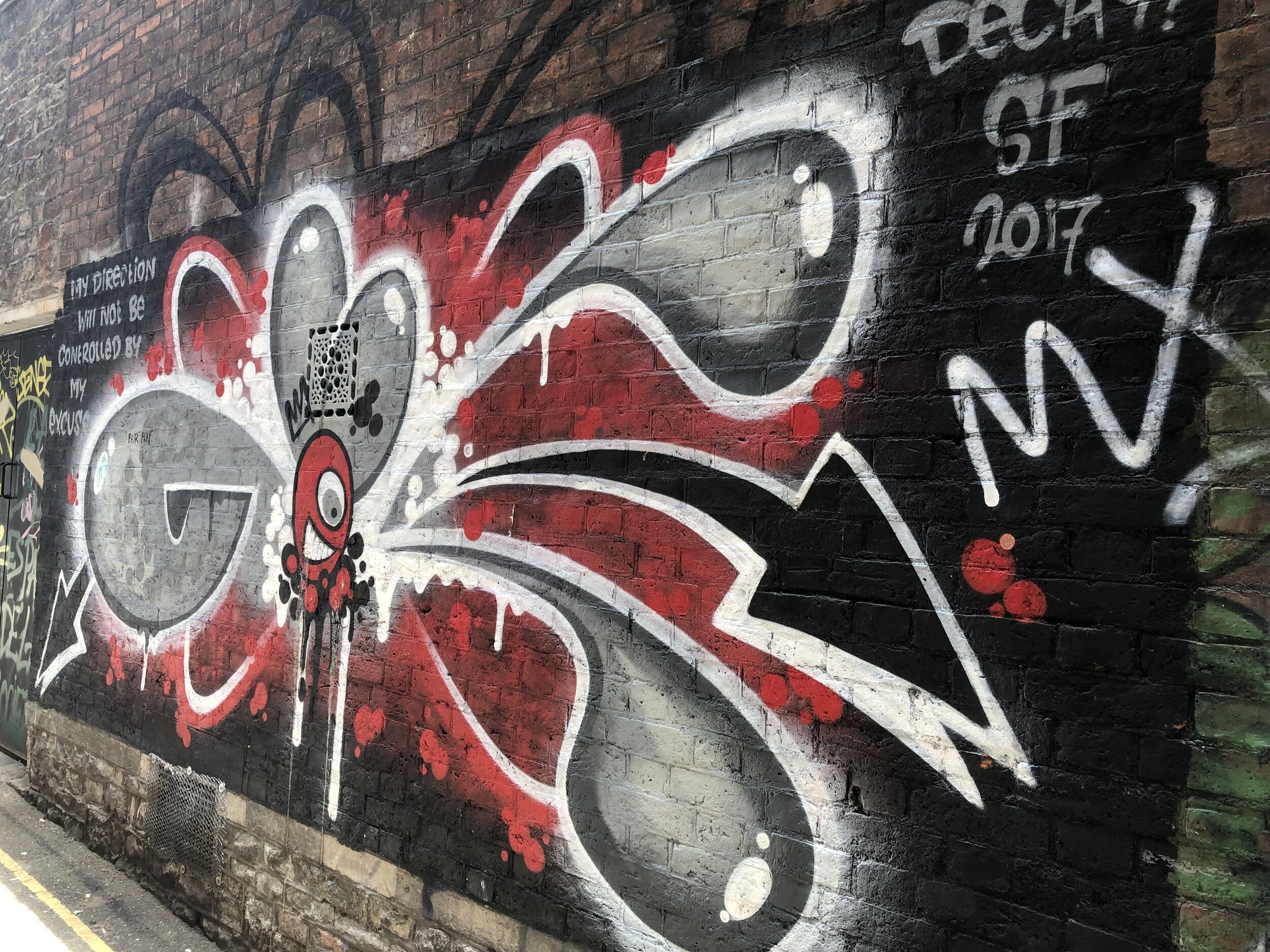
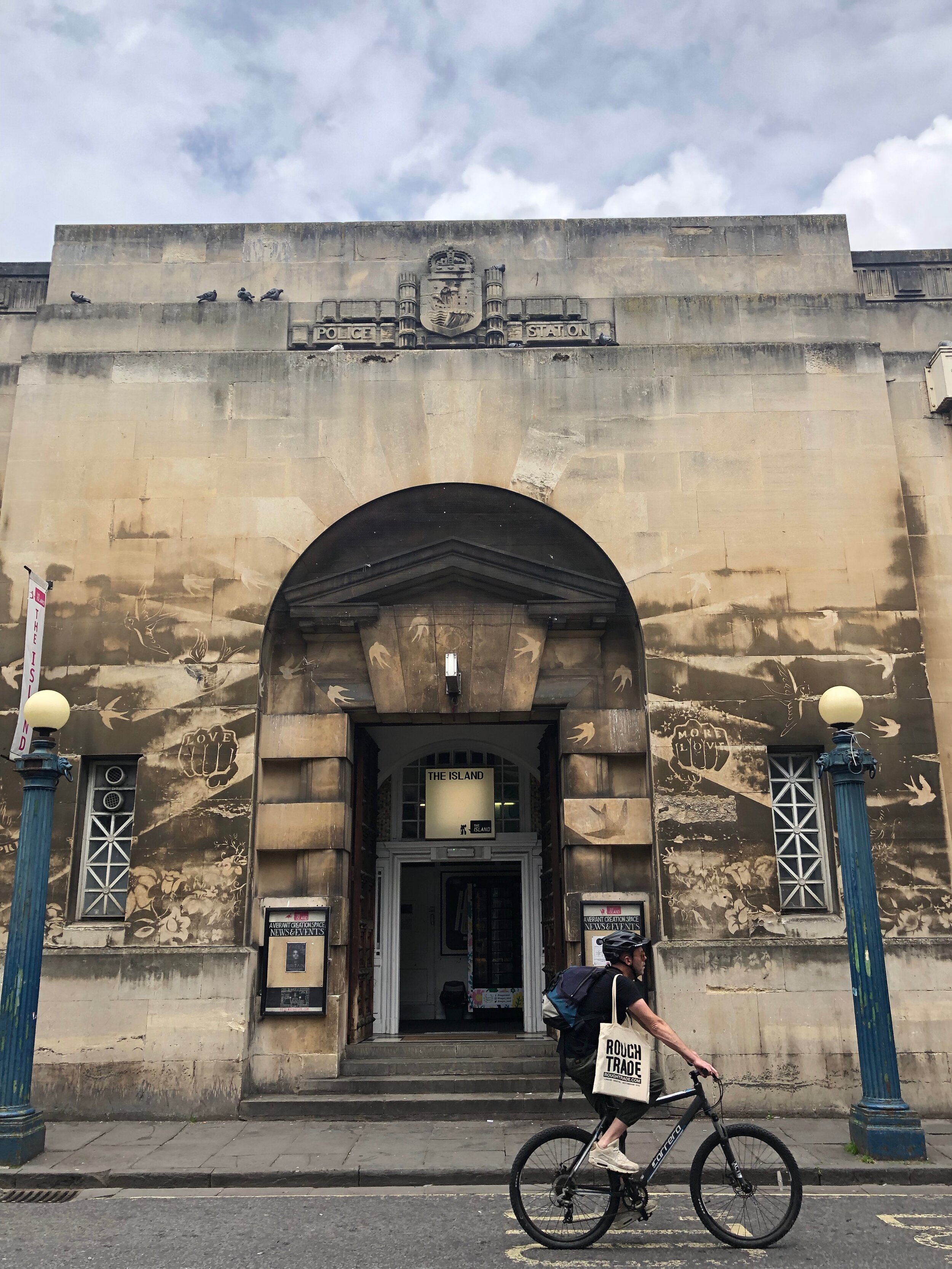
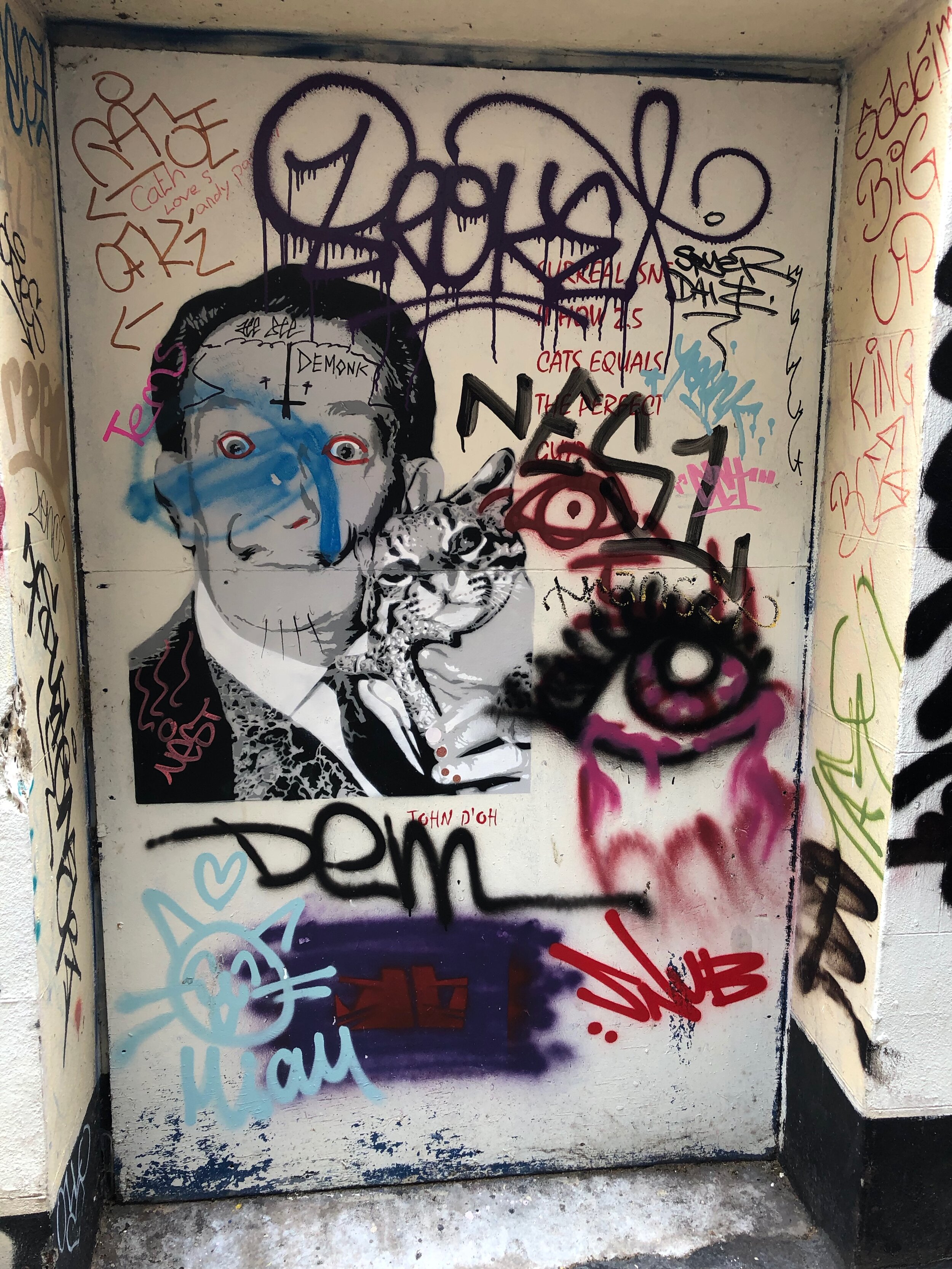
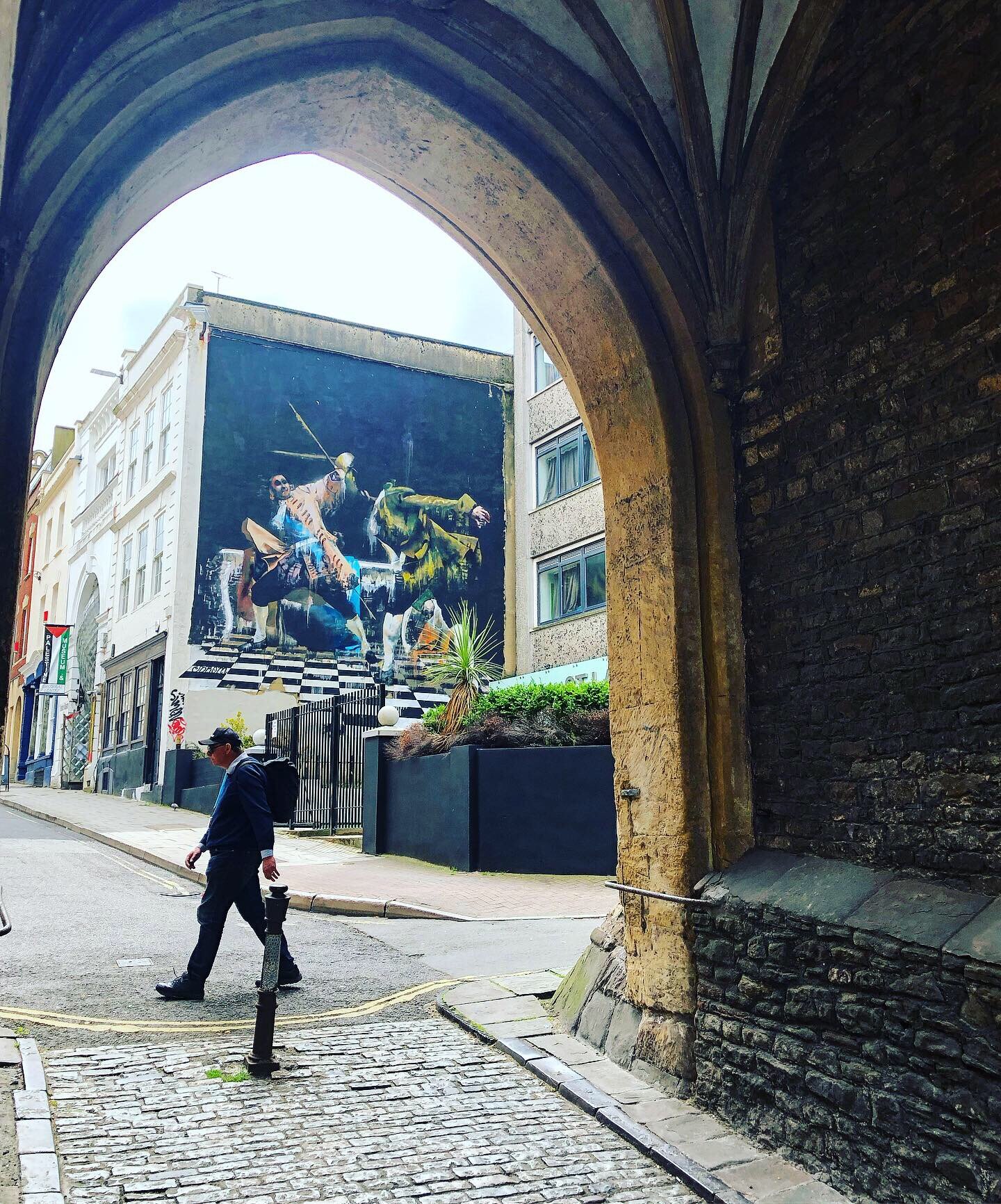
I will be debuting a brand new course at KPU this spring 2020 focused on the history of urban, graffiti, and street art. The course is a culmination of my own research and interests, and will include source material and many images from cities I have visited from around the world in recent years in pursuit of better understanding the growing popularity of this urban art practice. This photo and the ones in the gallery below are from a June 2019 visit to Bristol, England (Banksy’s hometown) with members of the London/Venice Biennale Field School. Pictured above is a Banksy work in conversation with other local graffiti artists.
As registration for Spring 2019 academic courses begins soon, I wanted to provide more information about courses I will begin teaching starting January, 2020. Please see detailed descriptions below. If you have any specific questions that are not answered here, you can contact me directly. I look forward to another rich and engaging semester with both new and familiar faces. **NOTE: Pre-requisites for ARTH 3160 and ARTH 2222 allow for more flexibility in registration for non-Fine Arts students**
Kwantlen Polytechnic University (Wednesdays 7:00-9:50pm, Surrey Campus Fir 136). Prerequisites: 6 credits of ARTH or 18 credits of 1100-level courses or higher, and ENGL 1100.
Street art in Bristol, England.
ARTH 3140 offers a critical and historical examination of the origins and evolution of graffiti and street art in the urban context. Beginning first with an overview of the subculture of graffiti as it emerged on the streets of Philadelphia and New York over forty years ago, the course will track the rise of graffiti and street art from its first appearance on North American city streets through to its often controversial foray into the contemporary art scene and into its present status as among the most circulated and highly visible forms of public art both on the Internet and in cities around the world. As such, the course will consider the broader role that graffiti and street art have played in the cultural landscape and consciousness of the city, dating back through earlier episodes in history when slogans and political/social commentary written illicitly on public walls emerged as the recognized precursor to modern forms of graffiti and street art.
Themes and issues covered in this course include the form and content of signature graffiti writing (tags, throwies, pieces) and street art media and techniques (murals, stencils, stickers, mosaic tiling, yarn bombing, street sculptures and installations); the emergence of key individuals, crews, and rivalries on local and global scenes; the influence of hip-hop and music cultures on graffiti and street art; identity politics and the contest over real and virtual public space; the role and influence of celebrity graffiti and street artists on the scene (i.e. Shepard Fairey, Banksy, David Choe, Retna, Os Gemeos, JR, Lady Pink, and Miss Van), and the influence of technological, digital, computerized, and networked information technologies in the creation, distribution, and circulation of graffiti and street art today.
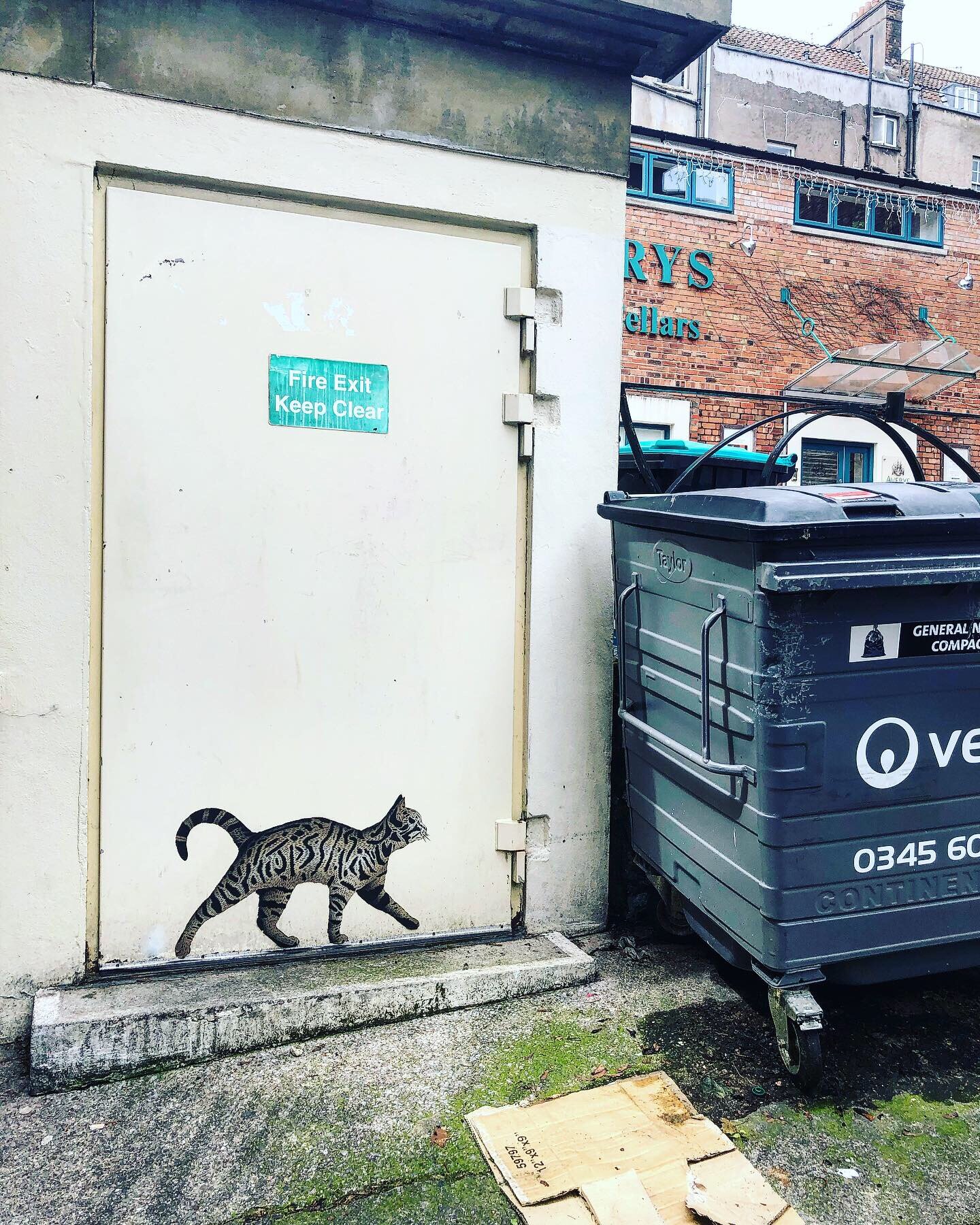
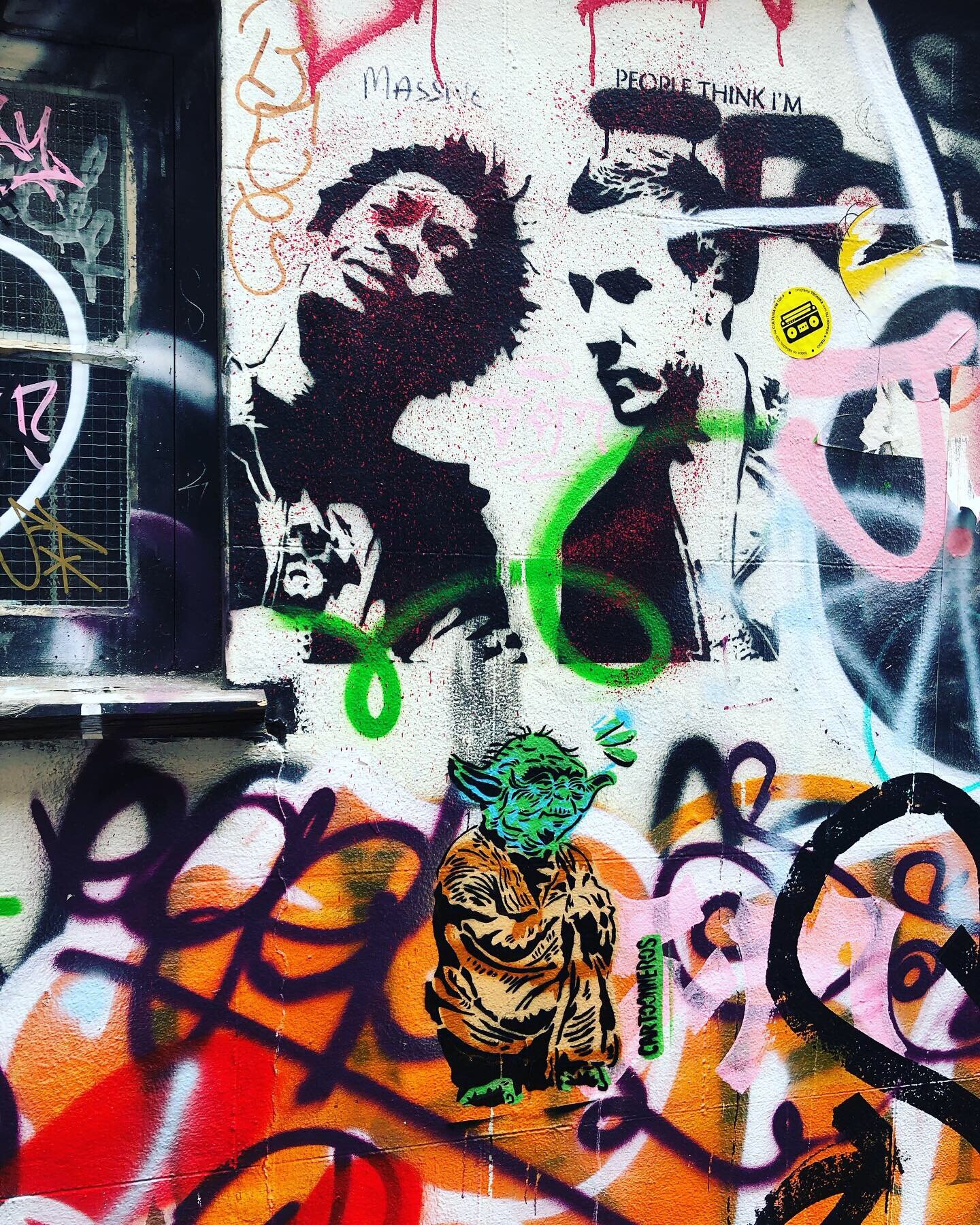
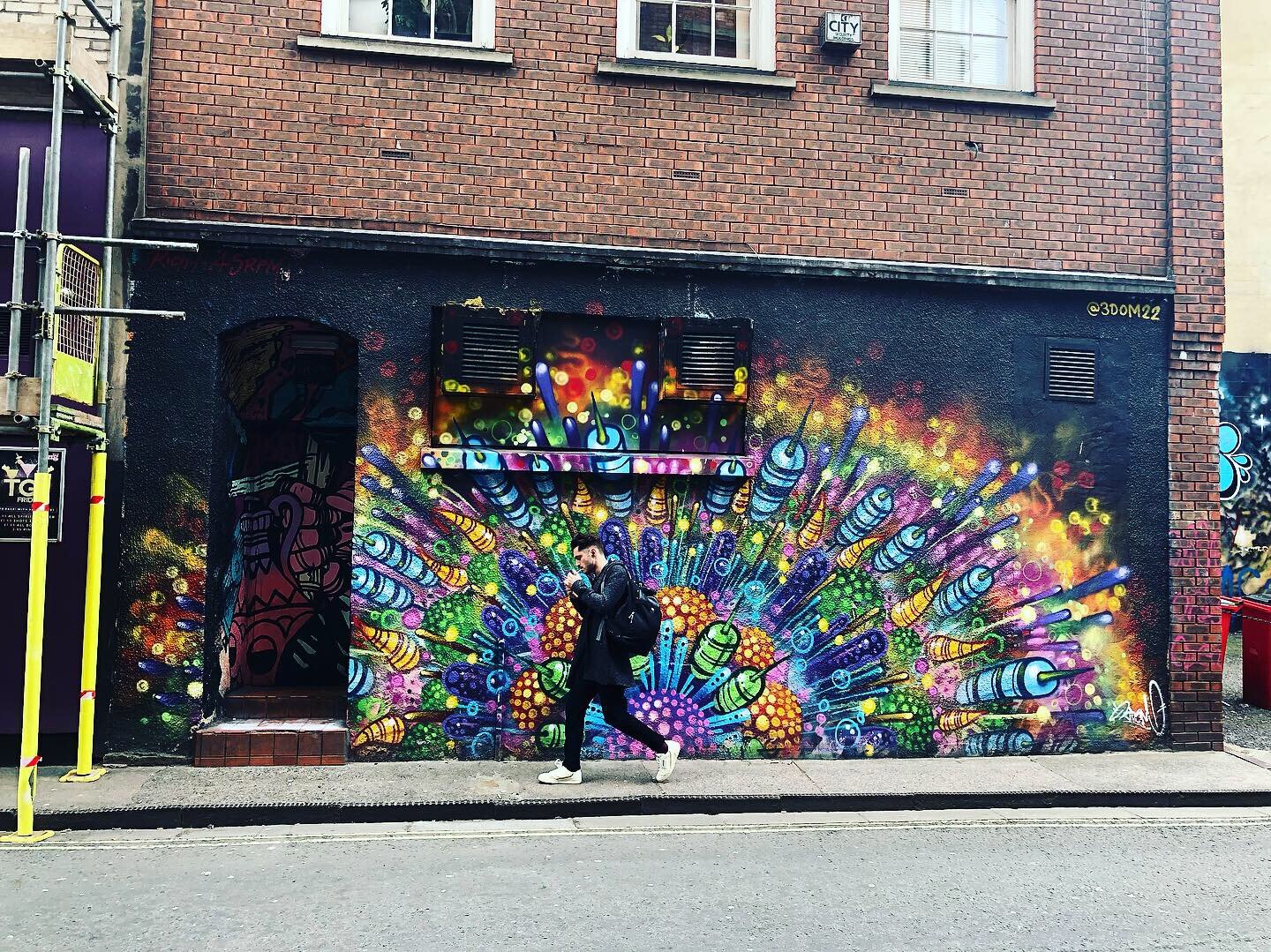
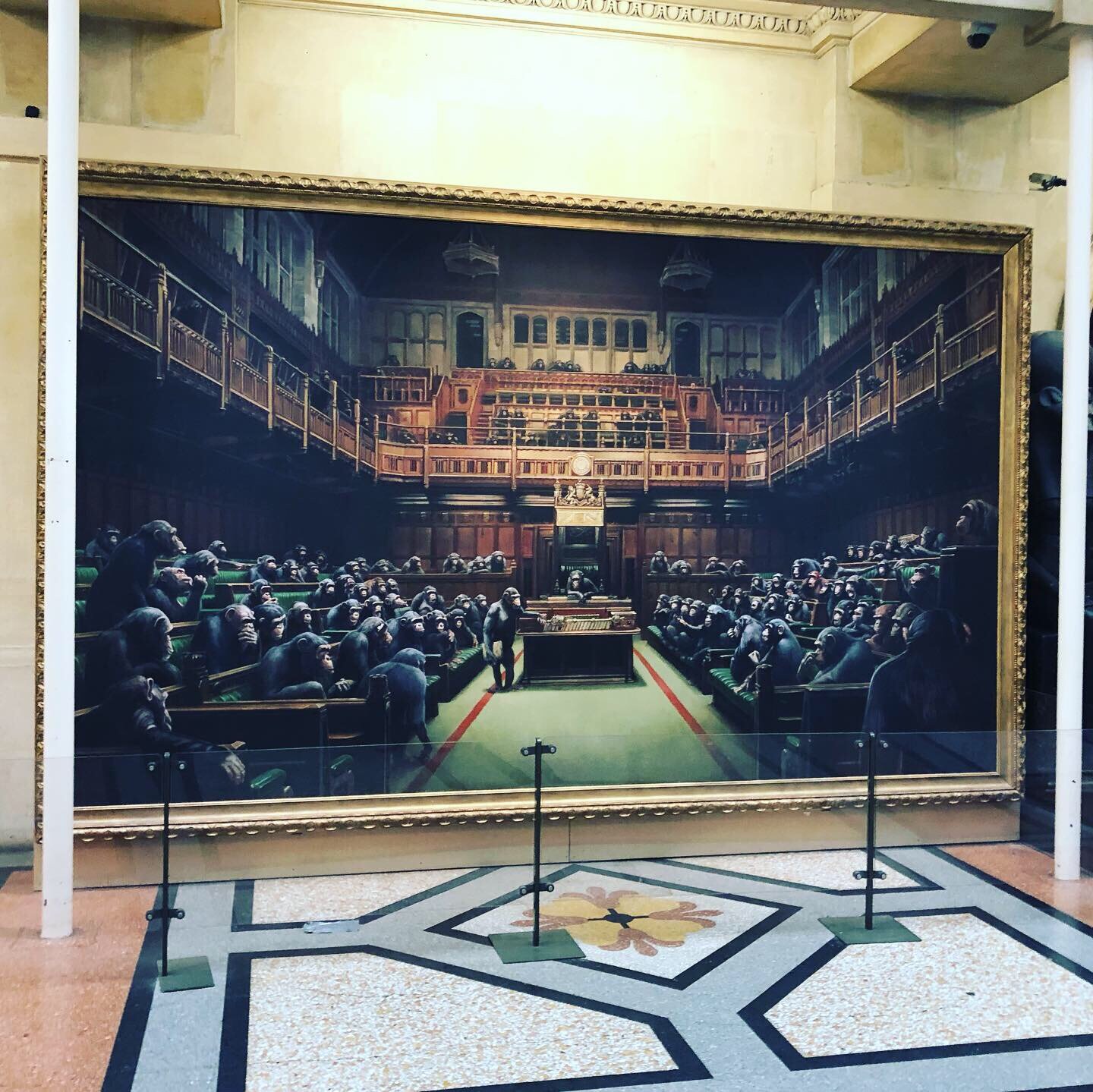
Kwantlen Polytechnic University (Fridays 1:00-3:50pm, Surrey Campus Fir 136). Prerequisites: 6 credits of any 1100-level courses or higher.
ARTH 2222 offers a critical examination of international visual art and culture focusing on the role of art in consumerist society and the emergence of postmodernism. The course concentrates on visual art from the mid-1940s to the present day, with particular regard for historical events, factors of patronage and institutions—as well as changing attitudes to making and approaching art—in modern and postmodern art. We will consider the traditional media of painting and sculpture but must also take into account the addition of innovative media to art practice in recent years.
From photography to video, collage to assemblage, installation to performance, such media have extended notions of what art could materially consist of, but have also affected the anticipation of audiences for that work, having social as well as aesthetic implications. Ultimately, our attention will be on the network where art is made, presented to and reacted to by different parties, and to the ways that portions of the art system―such as art history and cultural criticism―have conceived of and explained the workings of such a system and the society it exists within.
Robert De Niro as Travis Bickle in Martin Scorsese's Taxi Driver (1976)-
Kwantlen Polytechnic University (Fridays 4:00-7:50pm, Surrey Campus Fir 128). Prerequisites: none
Films that have been popular in recent years will be put in perspective through the study of film history and film concepts dating from the late nineteenth and early twentieth century right up to the present day.
Students will study the history and development of world cinema, and the comprehension and theory of film as a visual language and art-making practice from its inception in the late nineteenth century to the present. The goal of the course is to introduce students to the critical interpretation of the cinema and the various vocabularies and methods with which one can explore the aesthetic function, together with the social, political, and technological contexts and developments, of moving pictures. The format of this course (as a 4 hour block each class) will normally entail a one hour lecture, the screening of a full-length film, and a focused group discussion. Each film will serve as a starting point and gateway for discussion about the course’s daily theme.