• Fall 2025
  • Blog
  • Resources
  • Field School
  • Students
  • Feedly
  • About
Menu

Avant-Guardian Musings

  • Fall 2025
  • Blog
  • Resources
  • Field School
  • Students
  • Feedly
  • About
large monogram_2018-02-01_22-31-07.v1 (1).png
“Art is an outlet toward regions which are not ruled by time and space”
— Marcel Duchamp

Avant-Guardian Musings is a curated space of ideas and information, resources, reviews and readings for undergraduate and graduate students studying modern and contemporary art history and visual art theory, film and photography studies, and the expanding field of visual culture and screen studies. For students currently enrolled in my courses or the field school, the blog and associated social media links also serve as a place of reflection and an extension of the ideas and visual material raised in lecture and seminar discussion.

Blog RSS

Screenshot 2018-02-05 20.56.45.png
Blog
KPU FINE ARTS PARIS + VENICE BIENNALE FIELD SCHOOL (MAY/JUNE 2026)
about 2 months ago
"No Fun City" Vancouver: Exploring Emotions of Detachment in Palermo, Sicily at AISU
about 4 months ago
Making Sense of Art in the Age of Machine Learning—A Suggested Reading List
about 5 months ago
From the Archives | How (And Why) To Take Excellent Lecture Notes
about a year ago
Weekly Musings + Round Up... And A Few More Things
about 2 years ago

Screenshot 2018-02-05 20.56.51.png
As we start the week in a storm of activity, new beginnings, and global uncertainty, I am grounded in my word for 2026– INTENTIONAL 🩶— “done with purpose, willingness, deliberation, and consciousness.” I see this word represe
As we start the week in a storm of activity, new beginnings, and global uncertainty, I am grounded in my word for 2026– INTENTIONAL 🩶— “done with purpose, willingness, deliberation, and consciousness.” I see this word represented in the symbol of the heart, and for this reason and many others both personal and professional, I will be bringing this much needed energy to my year. The power of a yearly word is transformative. I started in 2019 and my words have guided and carried me through some important moments and life decisions. If you haven’t already, give it a try, but remember to choose very wisely ☺️ “Radiate” 2025 ✨ “Maintain” 2024 💪🏻 “Refine“ 2023 🙌🏻 “Acta non verba” 2022 🤐 “Audacious” 2021 💃🏼 “Fearless” 2020 😛 “Unapologetic” 2019 💅🏻 #happynewyear #wordoftheyear #intentional #monicavinader @monicavinader
Polar bear ride! 🐻‍❄️🏍️💨🏍️ First motorcycle outing of 2026 in the books. A balmy 4C 🥶We love you Vancouver— good to be home 💙😊Wishing everyone a very Happy New Year! 🥳 
.
.
.
#happynewyear #vancouver #motorcycle #motorcyclesofinstag
Polar bear ride! 🐻‍❄️🏍️💨🏍️ First motorcycle outing of 2026 in the books. A balmy 4C 🥶We love you Vancouver— good to be home 💙😊Wishing everyone a very Happy New Year! 🥳 . . . #happynewyear #vancouver #motorcycle #motorcyclesofinstagram #motocouple #husqvarna #vitpilen401 #svartpilen401 #motogirl #motogirls
2025... where did it go?! 😂 Like a ray of light, I was very much guided by my chosen word of the year “radiate”— to shine and send out beams of energy— and this allowed for a great deal of adventure, new experiences, ideas an
2025... where did it go?! 😂 Like a ray of light, I was very much guided by my chosen word of the year “radiate”— to shine and send out beams of energy— and this allowed for a great deal of adventure, new experiences, ideas and people and opportunities to flow back into my life. Above all else, I found myself very much on the move all year! Travel took me from New York to Lausanne, Paris to Seoul, and Palermo to Maui, while my motorcycling stayed more on the road and less on the track as Brian and I balanced our time, energy, and commitments. But as always, we found every spare moment to prioritize this shared passion and we hope to find a way back to the track in 2026. Professionally, the year was... A LOT... and highlighted by many new research partnerships, conferences, workshops, writing projects, some failed plans and sharp detours, but also the planting of new seeds for future ventures. In the classroom, AI brought many new challenges and opportunities to rethink the purpose of my teaching and courses, but overall I was inspired and at times surprised by what my students were able to accomplish with the new assessment models I put into place. All of this technological change remains very much a work in progress for academics, and I prefer to remain optimistic that the artists I work with will find a way to maintain their voice and vision in it all. The historian in me knows this to be true. Personally, I connected more to my heart and intuition in 2025, listening to that inner voice to guide many key decisions. Brian and I also kept up a decent health and fitness regime that had us energized and aiming for consistency to match our midlife pace. Use it or lose it is a reality in your 50s!!! Sending wishes of peace and love and a very Happy New Year to all! May your 2026 be filled with fun, awe, purpose, and good health and much happiness. Remember to be good to yourself so you can be good to others. I’m still working carefully on my 2026 word… but whatever it is, I know it will be the right one ❤️ . . . #happynewyear #yearinreview2025 #wordoftheyear #motorcyclelife #arthistorianlife
Resting, dreaming, and plotting the year ahead 💙✨😘
.
.
.
#maui #hawaii #vacationmode #newyear #planning
Resting, dreaming, and plotting the year ahead 💙✨😘 . . . #maui #hawaii #vacationmode #newyear #planning
Riding and chasing sunsets across Maui ✨💙🌺🌴🧡
.
.
.
#maui #hawaii #motorcycle #motorcyclesofinstagram #motogirl #vacationmode #sunsets
Riding and chasing sunsets across Maui ✨💙🌺🌴🧡 . . . #maui #hawaii #motorcycle #motorcyclesofinstagram #motogirl #vacationmode #sunsets

Screenshot 2018-02-05 20.57.02.png
  • November 2025 (1)
  • September 2025 (1)
  • August 2025 (1)
  • September 2024 (1)
  • February 2023 (1)
  • January 2023 (3)
  • August 2022 (1)
  • March 2022 (1)
  • February 2022 (3)
  • January 2022 (4)
  • November 2021 (2)
  • October 2021 (3)
  • September 2021 (3)
  • July 2021 (2)
  • June 2021 (1)
  • May 2021 (3)
  • April 2021 (3)
  • March 2021 (3)
  • February 2021 (4)
  • January 2021 (5)
  • December 2020 (3)
  • November 2020 (6)
  • October 2020 (4)
  • September 2020 (1)
  • July 2020 (1)
  • June 2020 (4)
  • May 2020 (9)
  • April 2020 (5)
  • December 2019 (2)
  • November 2019 (5)
  • October 2019 (3)
  • September 2019 (1)
  • July 2019 (6)
  • June 2019 (19)
  • April 2019 (2)
  • March 2019 (5)
  • September 2018 (2)
  • July 2018 (1)
  • June 2018 (4)
  • May 2018 (2)
  • April 2018 (5)
  • March 2018 (5)
  • February 2018 (8)
  • January 2018 (3)
  • December 2017 (4)
  • November 2017 (5)
  • October 2017 (7)
  • September 2017 (3)
  • July 2017 (6)
  • June 2017 (15)
  • April 2017 (2)
  • March 2017 (3)
  • February 2017 (1)
  • January 2017 (2)
  • November 2016 (2)
  • October 2016 (1)
  • September 2016 (3)
  • August 2016 (1)
  • June 2016 (2)
  • May 2016 (3)
  • April 2016 (2)
  • March 2016 (5)
  • February 2016 (7)
  • January 2016 (9)
  • November 2015 (1)
  • October 2015 (2)
  • September 2015 (3)
  • August 2015 (3)
  • July 2015 (1)
  • June 2015 (20)
  • May 2015 (4)
  • March 2015 (2)
  • January 2015 (1)
  • November 2014 (1)
  • October 2014 (2)
  • June 2014 (1)
  • May 2014 (4)
  • April 2014 (6)
  • February 2014 (1)
  • January 2014 (2)
  • November 2013 (1)
  • September 2013 (1)
  • July 2013 (3)
  • June 2013 (10)
  • December 2012 (1)
  • November 2012 (3)
  • October 2012 (6)
  • September 2012 (3)
  • August 2012 (1)
  • July 2012 (1)
  • June 2012 (25)
  • May 2012 (5)
  • April 2012 (4)
  • March 2012 (7)
  • February 2012 (11)
  • January 2012 (6)
  • December 2011 (5)
  • November 2011 (11)
  • October 2011 (11)
  • September 2011 (8)
  • June 2011 (9)
  • May 2011 (15)
  • April 2011 (9)
  • March 2011 (14)
  • February 2011 (17)
  • January 2011 (16)
  • December 2010 (11)
  • November 2010 (18)
  • October 2010 (24)
  • September 2010 (30)

Screenshot 2018-02-05 20.57.07.png

© Dorothy Barenscott, Avant-Guardian Musings, and dorothybarenscott.com, 2010-2023. Unauthorized use and/or duplication of this material without express and written permission from this blog’s author is strictly prohibited. Excerpts and links may be used, provided that full and clear credit is given to Dorothy Barenscott, Avant-Guardian Musings, and dorothybarenscott.com with appropriate and specific direction to the original content.

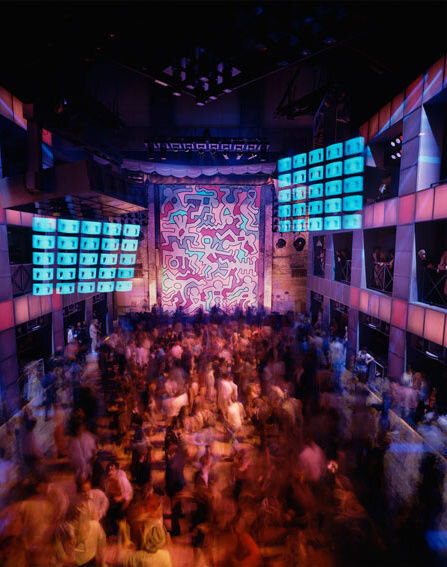
Mural by Keith Haring in the Palladium. Photo © Tim Hursley, courtesy of Garvey Simon Gallery.

Mural by Keith Haring in the Palladium. Photo © Tim Hursley, courtesy of Garvey Simon Gallery.

Instagram DJs and the Nostalgia for Live Relational Experience

April 22, 2020

As the global pandemic has grown and people have increasingly turned to social media for entertainment, connection, and escape from boredom, the newly termed “isolation economy” has yielded among the more popular cultural phenomena of our moment—Instagram Live DJ parties. Starting in mid-March, DJ D-Nice found a unique way to physically distance while spinning and mixing music for his followers. What began as a small party for a few hundred grew exponentially, and like any good party, word spread quickly. By the following week, over 100,000 Instagram users watched D-Nice in his newly dubbed “Club Quarantine” and his followers have since grown to over 2 million from only a few hundred thousand before the pandemic.

Observing this, I have been fascinated by how perfectly “Club Quarantine” captures the zeitgeist of our moment. Forced into isolation, or more accurately, forced into further isolation than what we have already experienced the past decade, the collective will to create relational experience and recreate something live, spontaneous, and energy-fueled has revived a kind of nostalgia and celebration of something that many of us of a certain age remember very well—the days of the pre-Internet nightclub.  D-Nice, aka Derrick Jones, in fact, emanates from that world. At 49, he is of a generation that came of age in the 1980s as the hip hop scene of the South Bronx collided with the Studio 54 disco vibes of midtown Manhattan. Out of this and other fusions of music subculture, fashion, experimental music, and art, was born the urban scene associated with the 1980s and 90s nightclubs that began to spread globally into most major cities.

In its heyday, Gatien’s club Palladium served as an art event laboratory.

In its heyday, Gatien’s club Palladium served as an art event laboratory.

This era holds a special interest for me, not only personally (with memories of my precocious teen years dancing away in Vancouver clubs very much in mind), but also as a point of research into the relational and spatial experience of urban nightlife, and its aesthetic potential as a kind of art form.  Not two weeks after D-Nice reminded all of us how cool it was to vibe together, without pretense, across all racial, age, gender, and geographic barriers, the much-anticipated memoir by New York club promoter Peter Gatien popped up on my Kindle. Having pre-ordered The Club King: My Rise, Reign, and Fall in New York Nightlife months earlier, I had no idea how timely and incredibly prophetic the book would turn out to be. The book opens with Gatien’s fascinating childhood and stories he tells as a French-Canadian and Indigenous kid trying to survive a life of conformity in a small southern Ontario town. From there, his entrepreneurial spirit and dreams of escaping into the world of American material success and the intoxicating world of nightlife entertainment takes over the narrative, and he weaves together his account of how he built and sustained the biggest nightclub scene and movement in New York as the owner/operator of Limelight, Tunnel, Club USA, and Palladium.

From his own descriptions and understanding, what made these clubs different, and ultimately special and unique, was his attention to creating temporary experiences and willfully experimenting with mixing audiences, musical genres, and moments that could not be duplicated one night to the next. As Gatien describes in his book, “My definition of culture was a communal form of creativity, like crowdsourced art (164).” Moreover, Gatien reflects on how important the physical experience, dancing, and being within the spaces of the club, were to sharing and co-creating the event, and wonders throughout the book what has been lost to a new generation raised on the dominance of screens, or, in his estimation, culture lived by proxy: “The heyday of the digital age changed everything. Before cell phones and Facebook and Instagram, before the web went worldwide, in order to find out what was happening everyone had to get up off the couch and physically present themselves in public. To discover what people were wearing, what they were listening to, what was hot and hip and cool, you had to get out and press the flesh (248).”

Having dug into the academic research on clubgoing (yes, it is a thing!— see my reading list below!) for my own courses, I am especially interested in this notion of shared experiential and aesthetic space that is discussed by American Studies researcher Madison Moore in a well-argued paper titled “Looks: Studio 54 and the Production of Fabulous Nightlife.” Therein, he talks about nightlife as a form of social sculpture: “I approach nightlife in two ways: nightlife as an aesthetic relational experience and nightlife as a site of curation and creation” (64). Drawing on the work of French art theorist Nicolas Bourriaud, Moore makes a persuasive case for the connections between the urban night scene and the conditions of art production. “Art itself is a state of encounter,” writes Moore, “one that demonstrates the features of a particular social world (65).” Not surprisingly, it is this world, documented and shaped by Andy Warhol, a key figure in Gatien’s memoir, that also attracted a whole new generation of visual artists that would come to define the New York art world from the 1980s onwards. Here, I could go down a rabbit hole of references (and these are the ones I routinely make and unpack in my courses) but suffice it to say, I was delighted to read about the gigantic Basquiat and Haring murals that adorned Palladium’s walls back in the day (see images).  

Mural by Jean-Michel Basquiat in the Palladium. Photo © Tim Hursley, courtesy of Garvey Simon Gallery.

Mural by Jean-Michel Basquiat in the Palladium. Photo © Tim Hursley, courtesy of Garvey Simon Gallery.

Returning to our present moment and the current fascination with Instagram Live DJ’s, I wonder what it can mean for our collective desire to move beyond the manufactured and experienced-by-proxy spectacles of many of today’s urban “scenes.” What makes Club Quarantine more reminiscent, at least for me, of the nightclub experiences of the past, is the way in which it foregrounds spontaneity and the relational experience of the music to move and unite people. You simply have to be there, in the moment, and in your body, to understand what is happening, and it will never happen the same way twice. Perhaps not surprisingly D-Nice’s goal with Club Quarantine is to realize it as a live (in real life) event sometime in the future. As he states in an interview with Rolling Stone this past week: “Once we’re able to be able to be together again, I want to pick three cities to actually do a Club Quarantine party live…play that same vibe and celebrate with the same people we’ve been celebrating with virtually…just to be able to see them face-to-face, play that music and feel that bass, that’s the ultimate goal that I have.”

References and Further Reading:

Bourriaud, Nicolas. Relational Aesthetics. Paris: Les presses du reel, 1998.

Chatterton, Paul and Robert Hollands. 2003. Urban Nightscapes: Youth Cultures, Pleasure Spaces and Corporate Power. New York: Routledge, 2003.

Gatien, Peter. The Club King: My Rise, Reign, and Fall in New York Nightlife (p. 164). Kindle Edition, 2020.

Moore, Madison. "Looks: Studio 54 and the Production of Fabulous Nightlife." Dancecult 5, no. 1 (2013): 61-74.

Peretti, Bruce. Nightclub City: Politics and Amusement in Manhattan. Philadelphia: University of Pennsylvania Press, 2003.

Thornton, Sarah. Club Cultures: Music, Media, and Subcultural Capital. Hanover: University Press of New England, 1996.


Comment
Top: Marina Abramovic and Ulay, photo still from Breathing In/ Breathing Out performance (1978-79); Bottom: Dorothy Barenscott and Brian Barenscott recreating a still of the original performance on April 19, 2020 while under quarantine for the Insta…

Top: Marina Abramovic and Ulay, photo still from Breathing In/ Breathing Out performance (1978-79); Bottom: Dorothy Barenscott and Brian Barenscott recreating a still of the original performance on April 19, 2020 while under quarantine for the Instagram #betweenartandquarantine challenge.

Weekly Flipboard Links and Media Round Up

April 19, 2020

Watching the art world react while the global pandemic grows has been a fascinating part of my daily Internet information diet and I am looking forward to picking back up and continuing my weekly round-up to bring those media items and share relevant links and information that have caught my eye. Looking back now, it seems years ago, but the first few weeks in mid-March, when New York was finally responding to the growing crisis, I watched intently as I was weighing the decision to travel there and complete some long-awaited research at MoMA and look at potential accommodations for the planned 2021 summer field school to NYC and Venice (a trip that is quite obviously now very much up in the air). My plan was to get in and get out of the city in under a week, but as we now know, the full extent of the exposure was only becoming fully apparent. Twenty-four hours before I was to leave, I finally got word that the Met was closing, and then finally, MoMA too. Within a week, all of the major world’s arts museums appeared to close, and soon thereafter, the galleries, private and public, followed their lead.

Banksy posted this image of his bathroom transformed during quarantine on Instagram this past week with the caption, “My wife hates it when I work from home.”

Banksy posted this image of his bathroom transformed during quarantine on Instagram this past week with the caption, “My wife hates it when I work from home.”

The question of the art world’s “essential” nature has therefore been a big part of the ongoing conversation since that very dramatic week of shut-down. Anxiety and fear around what will happen to the public spaces that facilitate the exposure of new and existing audiences to the visual arts is real and palpable. Clearly, art is not generally regarded as a must-have necessity during times of war and global emergency, but it has been the art world that has quickly stepped in to open its virtual doors and offer some measure of pleasure, comfort, amusement, criticality, and education to the confined masses. Take Banksy’s fantastic response to being quarantined at home— a post that went viral within hours of being posted! Many of my links this week explore this dynamic, beginning with the way the #betweenartandquarantine Instagram challenge (started by the Met, and one that I finally contributed to this week—see photo above) sparked creativity and challenged audiences old and new to carefully look at and recreate great works of art through whatever means at their disposal.

Other links examining notions of productivity (particularly in my world of academia) and how to navigate rites of passage online, like the art school year-end critique and other important aspects of art education have been eye-opening and yield many creative approaches. Many artists, art critics, curators, and others have also been writing with great passion about how to remain creative at such a difficult time, and I have included a few links on this topic as well. Finally, I have been starting to review a number of new podcasts and films on the topic of art and the art world that have appeared in recent weeks. Two that I am drawing attention to this week are a podcast discussing how photographic practices are already changing with the pandemic, and the release of the much anticipated film about the largest art fraud in the USA (involving lots of very good Rothko, Motherwell, and Pollock fakes)-- Made You Look: A True Story About Fake Art. There is so much great content out there right now, and I am only offering a small portion of what I am finding. To see more, check out my Flipboard of collected links here and enjoy!

Art Recreation Is the Only Good Instagram Challenge

nytimes.com

Your Maps of Life Under Lockdown

citylab.com

Adapting to Disaster: Research Productivity in Disaster Conditions

theprofessorisin.com

 Yayoi Kusama orders coronavirus to 'Disappear from this earth' in a new poem
Yayoi Kusama orders coronavirus to 'Disappear from this earth' in a new poem

cnn.com

The Art Angle Podcast: How Photography Is Being Revolutionized in the Coronavirus Era (PODCAST)

artnet.com

Can You Get Your Art Critiqued on Zoom? New York Art Students Are Finding Out

artnet.com

How Do You Make Art During a Pandemic? Jerry Saltz Has a Few Suggestions

slate.com

Jean-Phillipe Delhomme on Artistic Self-Promotion, From the 19th C Salon to Instagram

artnews.com

'Everybody On Earth Is Feeling The Same Way As You': Douglas Coupland offers slogans for the COVID-19 age

cbc.ca

Made You Look: A True Story About Fake Art (STREAMING FILM)

cbc.ca

Art Recreation Is the Only Good Instagram Challenge Your Maps of Life Under Lockdown Adapting to Disaster: Research Productivity in Disaster Conditions  Yayoi Kusama orders coronavirus to 'Disappear from this earth' in a new poem The Art Angle Podcast: How Photography Is Being Revolutionized in the Coronavirus Era (PODCAST) Can You Get Your Art Critiqued on Zoom? New York Art Students Are Finding Out How Do You Make Art During a Pandemic? Jerry Saltz Has a Few Suggestions Jean-Phillipe Delhomme on Artistic Self-Promotion, From the 19th C Salon to Instagram 'Everybody On Earth Is Feeling The Same Way As You': Douglas Coupland offers slogans for the COVID-19 age Made You Look: A True Story About Fake Art (STREAMING FILM)
  • Art Recreation Is the Only Good Instagram Challenge

  • Your Maps of Life Under Lockdown

  • Adapting to Disaster: Research Productivity in Disaster Conditions

  •  Yayoi Kusama orders coronavirus to 'Disappear from this earth' in a new poem

  • The Art Angle Podcast: How Photography Is Being Revolutionized in the Coronavirus Era (PODCAST)

  • Can You Get Your Art Critiqued on Zoom? New York Art Students Are Finding Out

  • How Do You Make Art During a Pandemic? Jerry Saltz Has a Few Suggestions.

  • Jean-Phillipe Delhomme on Artistic Self-Promotion, From the 19th C Salon to Instagram

  • 'Everybody On Earth Is Feeling The Same Way As You': Douglas Coupland offers slogans for the COVID-19 age

  • Made You Look: A True Story About Fake Art (STREAMING FILM)


Comment
Kenneth Goldsmith’s book Wasting Time on the Internet (2016) argues for another kind of productive and creative engagement with the online world.

Kenneth Goldsmith’s book Wasting Time on the Internet (2016) argues for another kind of productive and creative engagement with the online world.

Bonus Assignment | Wasting Time on the Internet

April 16, 2020 in bonusassignment

In the Avant-Guardian Musings "Bonus Assignment" series, I will occasionally post creative prompts for students to explore and expand their understanding around a range of art history and visual culture studies topics. These assignments will be collected under the Resources section of my website, hashtagged #bonusassignment under Search, and available as an Open Education Resource for educators. 

It would only seem fitting that I begin my foray back to musings on this blog with an idea sparked by Kenneth Goldsmith. Poet, conceptual artist, and founder of UbuWeb-- an early proponent of open access and web-based educational resources for avant-garde works, writings, and films-- Goldsmith is the individual who inspired me to begin Avant-Guardian Musings back in 2010. In my very first blog post, I spoke about how I had come to believe that through opening access to alternative spaces of dialogue beyond the university classroom, new fields of radicality and potential could emerge to break down traditional barriers. 

Goldsmith has continued to evolve his message and approach to thinking about accessible learning with an avant-garde mindset. Back in 2014, he sparked controversy by proposing and teaching a course at the University of Pennsylvania called “Wasting Time On the Internet.” Writing about his rationale for the creative writing class in The New Yorker, Goldsmith explained how the framework, mechanisms, and spatial/temporal elements of the Internet are tailor made for avant-garde experimentation:

Screen Shot 2020-04-16 at 1.10.40 PM.png
“The Surrealists’ ideal state for making art was the twilight between wakefulness and sleep, when they would dredge up images from the murky subconscious and throw them onto the page or canvas. Proposing sleepwalking as an optimal widespread societal condition, André Breton once asked, “When will we have sleeping logicians, sleeping philosophers?” It seems that the Surrealist vision of a dream culture has been fully realized in today’s technologies. We are awash in a new, electronic collective unconscious; strapped to several devices, we’re half awake, half asleep. We speak on the phone while surfing the Web, partially hearing what’s being said to us while simultaneously answering e-mails and checking status updates. We’ve become very good at being distracted. From a creative point of view, this is reason to celebrate. The vast amount of the Web’s language is perfect raw material for literature. Disjunctive, compressed, decontextualized, and, most important, cut-and-pastable, it’s easily reassembled into works of art.”

To his credit, Goldsmith found a way to create the course and went on to publish a fantastic manifesto-like book with the same name, accumulating many of his own reflections, ideas, and luckily for us, actual assignments and directives to re-create aspects of his course. Over the years, I have borrowed ideas from the book’s Appendix: 101 Ways to Waste Time on the Internet in a number of my new media and visual culture courses. But now, as we collectively isolate at home in the midst of a global pandemic, I figure what better time to spark creativity, critical thinking, and new perspectives around something we are all doing—“wasting time” on the Internet.


INSTRUCTIONS:

1) Select 1-2 of the tasks listed in the curated list below. I have chosen strategically from the original “101 Ways” list. Choose a task that you know will be a challenge and moves you out of your comfort zone. Trust me, it will be more of a benefit to the outcome of the assignment.

2) Execute the task(s) as faithfully as possible. While doing the task(s), or immediately afterwards (all will depend on the nature of your instructions), keep careful track of your thoughts, reflections, and the outcomes of your experiment. Ideally you can capture this more spontaneously via video or audio diary, captioned photographs/screen shots, and taking written/typed notes.

3) Take a few days to think and reflect further on the outcomes of your task(s). Assemble your findings from above into a document, video, visual presentation, or art work. To accompany your final submission, write a rich paragraph discussing how you understand the task(s) challenges/subverts/upends/disturbs the unspoken “rules” of the Internet/social media and its social norms. Include discussion about how your chosen task generates new perspectives or exposes problems/issues/inequalities/shortcomings of the Internet/social media.


Curated List of “101 Ways to Waste Time on the Internet”

 2.  Instagram something with the intention of it being taken down by Instagram. Take a screenshot of it; keep a record of it. Instagram the screenshot. Screenshot that Instagram. If it is taken down again, repeat the process until all you’re posting is a screenshot of a screenshot of a screenshot . . . of the original photo.

7.   Go on Netflix, and look at the first suggestion for your Top Picks. If you’ve already seen it, then pick the next suggestion. Read a generic Wikipedia article about the show/movie, and write a Facebook status using what you’ve learned (develop an opinion or a question or a statement). The status should not mention that you haven’t seen the show/movie. Tag at least one person in the status.

29.   Take an article you vehemently disagree with, post it as your Facebook status, and then say how you align yourself with everything it’s saying. Like this status. Share it. Post it on other people’s walls. Do the same thing on Twitter.

 32.   With a partner, watch a short video in turns with one both recording the other with a camera as well as taking notes on the other’s affective response. Put the original video, and the two reaction videos side by side in a new video.

41.   Ask each other about passwords. Talk about how you picked your password. Ask how other people picked their passwords. Share your password if you want and explain what you like and don’t like about it.

54.   Clog as much as you can. Clog online forums for your school or work. Post a series of blank posts on your Facebook feed, send a bunch of blank e-mails to everyone you know, open a bunch of blank tabs, and just clog everything. CLOG. What does it feel like to apply force to the Internet?

71.   Pick a genre of music you don’t usually listen to or that you dislike. Listen to five minutes of it without doing anything else. Once you pick a song, you have to listen to the whole thing. Don’t touch the computer as you listen. After the five minutes, write about what you felt/were thinking about. How did it feel to do nothing but listen to something you don’t like?

73.   Exchange phones with a partner and text someone from that phone whatever you feel like.

80.   Look through your Facebook messages and go back as far as you can. Find the oldest message to which you never responded. Write back. Make the responses really long and detailed. Make it super awkward. Don’t explain why you’re writing back now or apologize for not writing back earlier.

98.   For fifteen minutes, see who can tally the largest dollar amount by putting things in their Amazon shopping cart. The one with the most at the end of the time wins. Delete everything in your cart. Or don’t.


Tags: bonusassignment
Comment
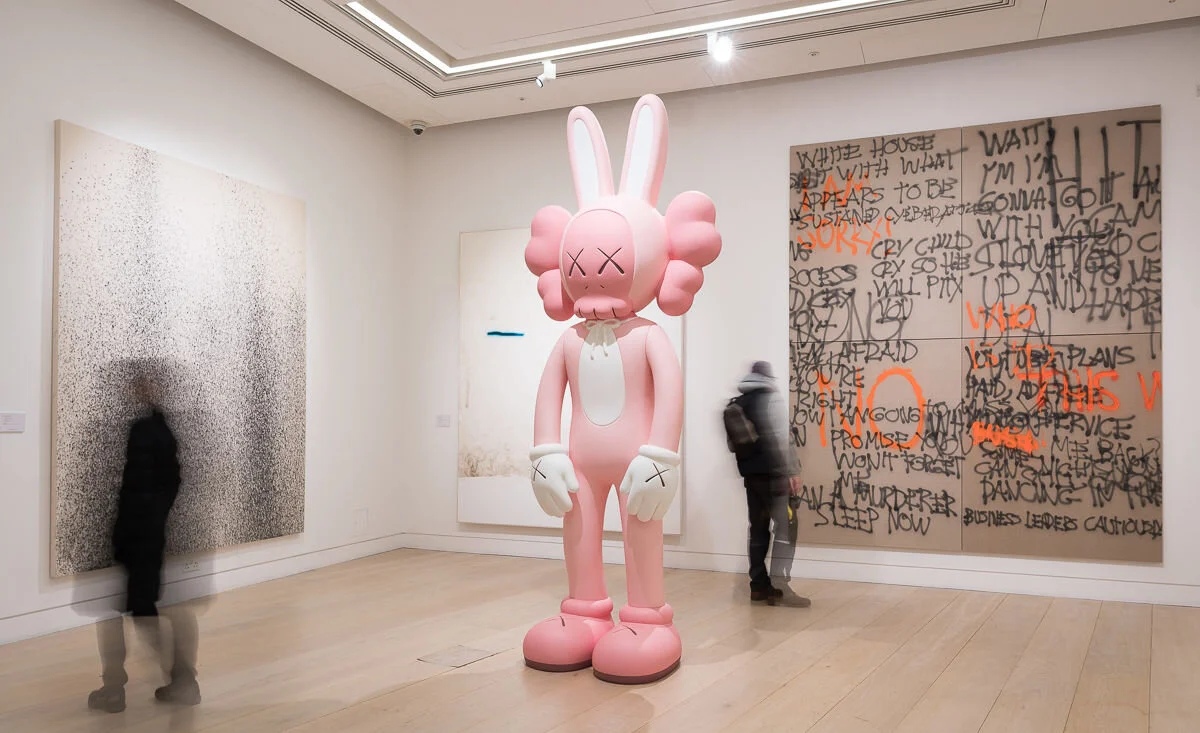
KAWS Accomplice, 2010 as seen at Phillips Berkeley Square

KAWS Accomplice, 2010 as seen at Phillips Berkeley Square

What is the New Normal for Art Historians Amid Covid-19?

April 13, 2020

How to even begin…..? Like you, I am figuring out how to process being thrust into a world pandemic and learning a new normal, and as I write these words, I am entering the fifth week of the Covid-19 quarantine here in Vancouver, Canada. As an art historian and university professor, I am also facing a time of many firsts. My first time transitioning courses online, my first time invigilating remote final exams, my first time completing a book chapter without benefit of primary research (research I was supposed to complete in New York two weeks ago— yikes, can you imagine?!), my first time applying for conferences, fellowships, and planning for a field school, all of which may never happen, and my first time planning collaborative and brand new summer courses without the ability to take students to museums, studio visits, or to research in archives. I am even facing the reality of a launch for a book project I have been co-editing for the better part of four years, and without a physical audience. Many many challenges.

So why am I turning to my blog? To be sure, I reached a real point of struggle with what to do and how to deploy my website late last year, even as Avant-Guardian Musings enters its tenth year in existence. As my teaching approach evolved over the years to become more experiential, case-study focused, and even experimental in terms of adapting new non-linear and flipped classroom modalities for art historical analysis and meaning-making, the kind of “musings” I used to regularly post on this blog have entered more directly into my classroom. As such, the website has served more as a repository for targeted blog posts and open-education resources that address research, studying, and visual arts analysis. These posts remain popular, and I intend to continue creating this type of content for my students. It is also the reason this website persists.

But what happens now outside the paradigm of my face to face classroom? How do I introduce and model the case studies, musings, and unrehearsed connections that frames so much of my classroom teaching? Much has drastically changed as I am once again forced to evolve my teaching and research methods. A big part of that shift will entail migrating materials online for digital consumption along with presenting and workshopping case studies and visual culture news in the way that I used to do on this website before I all but abandoned the more traditional “sage on the stage” lecturing format.

So in the coming weeks, I will begin using my blog once again as it was originally conceived— a place of reflection and an extension of the ideas and visual materials raised in my classroom. And as much as that classroom is now, and for the foreseeable future, remote, online, and at a physical remove from the kinds of experiential and in-person dialoguing that I enjoy most with my students, I am hoping that my “thinking aloud” and visual brainstorming on this blog will serve a larger and perhaps unintended audience. More than anything else, I believe the art world has a vital and key role to play in how we make sense of this global pandemic, and in a manner that is not always immediately apparent to those who sign up for an art history class. In the spirit of the avant-garde, I am looking to entertain whatever unorthodox outcomes all of this brings.

Comment
Street artist duo Osgemeos announced work appearing in the newly opened Museum of Graffiti in Miami this week— the first museum dedicated exclusively to graffiti art. This image “1980s”, pulled from Osgemeos’ Instagram account, is a nostalgic throwb…

Street artist duo Osgemeos announced work appearing in the newly opened Museum of Graffiti in Miami this week— the first museum dedicated exclusively to graffiti art. This image “1980s”, pulled from Osgemeos’ Instagram account, is a nostalgic throwback to the early days of New York graffiti.

Weekly Flipboard Links and Media Roundup

December 08, 2019

Bananas taped to walls, giant chandeliers hung under bridges, the art world has appeared especially provocative this week on my feed. And while much pearl-clutching has animated the debate, I am left mostly amused at how predictable all of the reactions have been. If art is, even at its “worst,” a direct reflection of society, then much of what we are seeing on the walls of galleries and in the public art spaces of cities is a signal of the spectacle culture that artists navigate on the daily. No doubt we live in a challenging contemporary art environment, but that is because power structures are abstracted and refracted through layers of meaning and networked contexts. The best of today’s artists speak simultaneously to multiple audiences, stopping us in our tracks with the provocation to think beyond the obvious “stunt” that an artwork may pose. And so it never fails to amaze me how much judgement and scapegoating befalls these same artists— artists that most people condemn and write off without digging a bit further.

Take for example street artist Banksy’s shredding of Girl With Balloon last year at Sotheby’s. After the faux outrage, anger, and eyerolls (and continued refusal of art world elites to take the artist seriously), there is the reality that the work brilliantly crystallized all that is problematic and symptomatic of an art market run amok in the past decade. This has been the ethos of Banksy throughout his long-standing career— to shine a light where the art world tends to ignore. Yes, the work was literal, and yes the work spoke to populist tastes, but the work also did what the best art does—it created a meaningful conversation and drew attention to networks of power.  What more can we ask of artists? And how can we blame them for taking commissions and patronage, or choosing to make work that lands them with higher visibility and in proximity to powerful individuals, or in apparent conflicts of interest. That is, after all, the precise nature of the art world. It is an eco-system where Art Basel co-exists with the Venice Biennale and Documenta, and where even the most serious and academic artists have to contend with collectors’ interests, the whims of the market, and the leveling effects of Instagram and screen culture. Enjoy the links this week and don’t forget to look beyond the headlines when hearing about your next art world provocation.

"Banana Splits: Spoiled by Its Own Success, the $120,000 Fruit Is Gone"

nytimes.com

"Goodbye Art World, Hello Art Industry: How the Art Market Has Transformed"

artnet.com

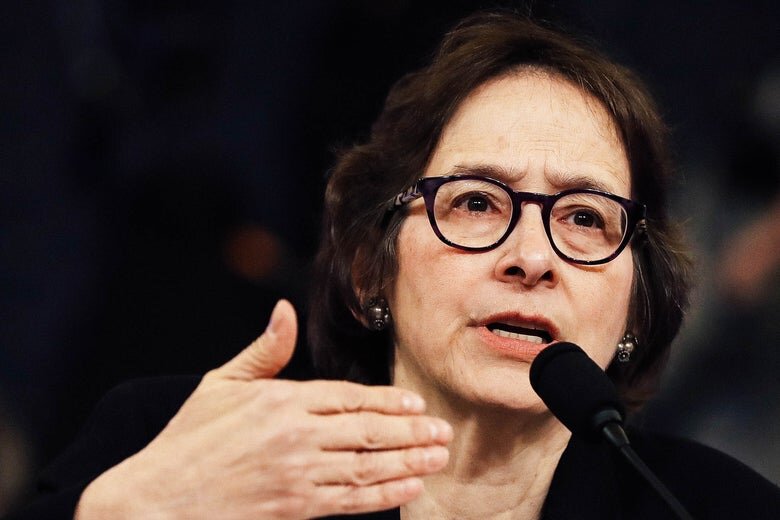
"The Women Who Still Speak Up"

slate.com

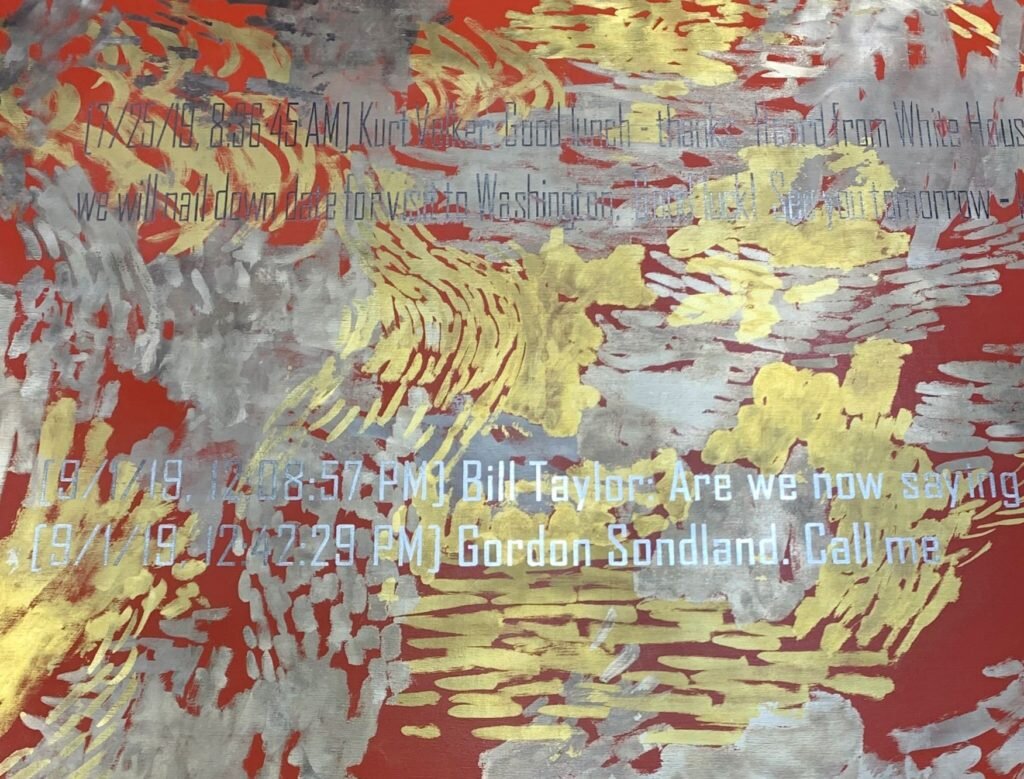
"‘Call Me’: Jenny Holzer’s Latest Paintings at Art Basel Miami Beach Highlight Revelations From  Trump’s Impeachment Hearings"
"‘Call Me’: Jenny Holzer’s Latest Paintings at Art Basel Miami Beach Highlight Revelations From Trump’s Impeachment Hearings"

artnet.com

"Cindy Sherman Has Unveiled Her First Non-Photographic Works at Art Basel Miami Beach"

artnet.com

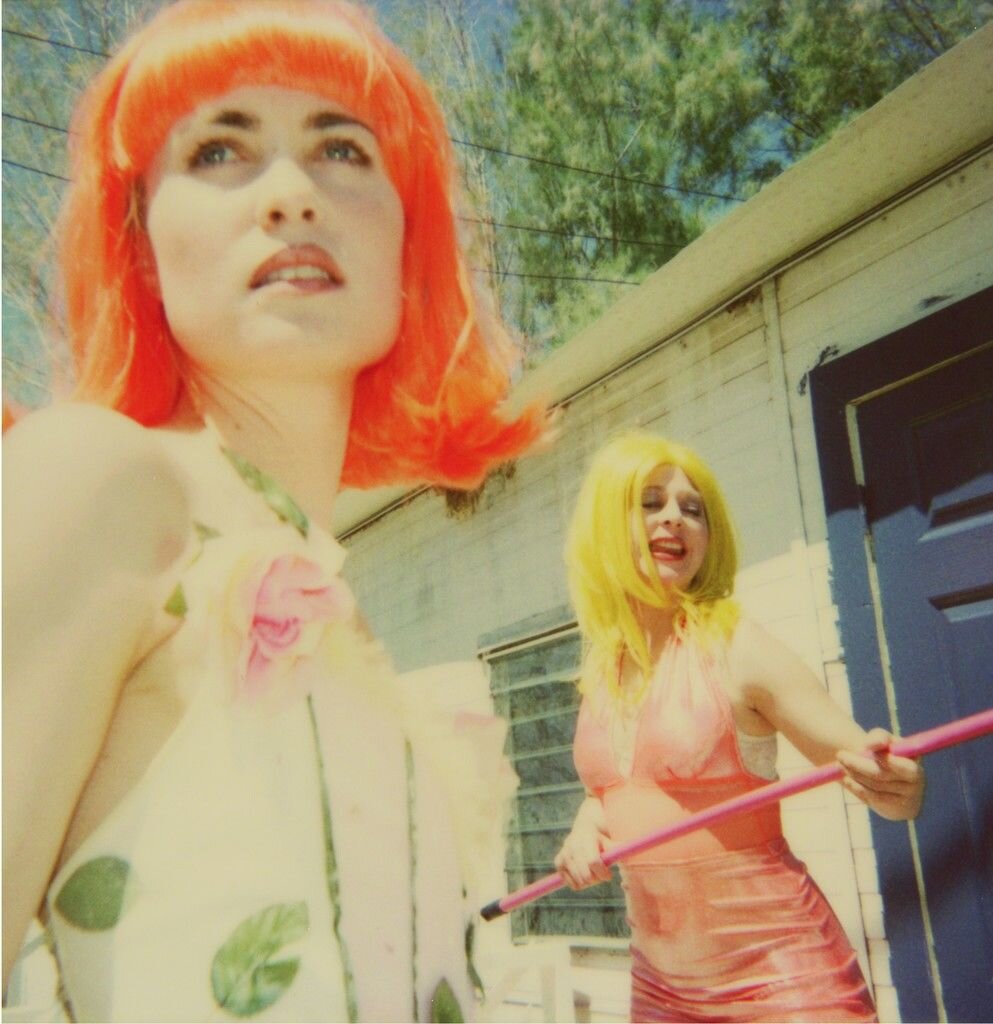
"This Photographer Captures the Fragile Beauty of Expired Instant Film"

artsy.net

"Turner Prize Will Be Split Among All Four Nominees, at Their Request"

hyperallergic.com

"How Hollywood Became Obsessed With De-aging Its Stars"

theatlantic.com

"In the Making: Rebecca Belmore (VIDEO)"

gem.cbc.ca

"Art Basel Miami Beach 2019: Vernissage TV (VIDEO)"

vernissagetv

"Banana Splits: Spoiled by Its Own Success, the $120,000 Fruit Is Gone" "Goodbye Art World, Hello Art Industry: How the Art Market Has Transformed" "The Women Who Still Speak Up" "‘Call Me’: Jenny Holzer’s Latest Paintings at Art Basel Miami Beach Highlight Revelations From  Trump’s Impeachment Hearings" "Cindy Sherman Has Unveiled Her First Non-Photographic Works at Art Basel Miami Beach" "This Photographer Captures the Fragile Beauty of Expired Instant Film" "Turner Prize Will Be Split Among All Four Nominees, at Their Request" "How Hollywood Became Obsessed With De-aging Its Stars" "In the Making: Rebecca Belmore (VIDEO)" "Art Basel Miami Beach 2019: Vernissage TV (VIDEO)"
  • Banana Splits: Spoiled by Its Own Success, the $120,000 Fruit Is Gone

  • Goodbye Art World, Hello Art Industry: How the Art Market Has Transformed

  • The Women Who Still Speak Up

  • ‘Call Me’: Jenny Holzer’s Latest Paintings at Art Basel Miami Beach Highlight Revelations From Trump’s Impeachment Hearings

  • Cindy Sherman Has Unveiled Her First Non-Photographic Works at Art Basel Miami Beach

  • This Photographer Captures the Fragile Beauty of Expired Instant Film

  • Turner Prize Will Be Split Among All Four Nominees, at Their Request

  • How Hollywood Became Obsessed With De-aging Its Stars

  • In the Making: Rebecca Belmore (VIDEO)

  • Art Basel Miami Beach 2019: Vernissage TV (VIDEO)

Comment
Newer / Older
Back to Top
Screenshot 2018-02-05 20.48.17.png

© Dorothy Barenscott, 2010-2025