iAnnote is changing how I grade and comment on papers-- also making
the whole process a lot less painful (screen shot from my iPad)
I know, I know, to call a software application a revolution
is a bit sensational, but I seldom get excited by technology like back in
the good old days when these sorts of things were a lot fewer and farther
in between. Flashback to the early 2000’s when I first got my hands on the
bibliographic software EndNote and completely
transformed the way I tracked and did my research. iAnnotate is right up there
in that category and is essentially moving me to a near 100% paperless
relationship with my students while enabling me to mark up and interact with my
drafts, research documents, and other essential paperwork in more dynamic and
intuitive ways.
What is
iAnnotate exactly? Well, according to their own website description, “iAnnotate's
intuitive interface and comprehensive, customizable set of features let you
annotate, manage, and share documents from your iPad. People use iAnnotate as
their "go-to app" for taking notes on lecture slides, annotating
important business documents, revising screenplays, grading papers, and much
more.” In short, the application allows you to do with a tablet computer what
you would normally do with a pen and paper, only you can manage the task more efficiently, back up all your edits, and keep all of your documents in one virtual place.
iAnnotate was also the reason I purchased an iPad. For all
of my railing against Steve Jobs and his closed Apple ecosystem, I was unable
to resist the lure of the device and this app when I first encountered a grad
student at a conference at NYU earlier this year marking up a document on his iPad while he sat next
to me. What immediately caught my attention was how quickly he was adding
comments and circling material while scrolling through a long document with
very little effort. At the break, he gave me a demonstration and revealed to me
that he was in fact marking an undergrad paper (yes during a conference, it
happens) and that he was carrying 20+ more on his device to turn around by the
end of the weekend. From my perspective,
I was immediately intrigued. I cannot tell you how many times I have lugged
student papers and other assorted documents for review on and off airplanes and
back and forth to university campuses over the years. Once I came back home, I
decided to make the transition over to the paperless system for the fall
semester.
Hundreds of papers all at my fingertips. That cool
stylus is also magnetic and sticks to your iPad cover.
Flash forward to three weeks ago, when I finally made my
peace with RIM and gave up my Blackberry Torch and Playbook tablet for an
iPhone 5 and iPad (that is a whole other long story—if you know me, you know
that this was a very difficult decision to make). The very first application I
purchased was iAnnotate, and I have now spent the past several weeks marking up
my first batch of student assignments. One of the first things I did to figure out a quick
workflow for the app was to consult a post that another professor using iAnnotate
had created, linking the capabilities of the app with the cloud based storage system Dropbox. In that
tutorial, I learned how to back up the files and manage a virtual archive of
student work for quick access in the future (this is also a very useful thing
to have on hand when students come asking for references and you need to be
reminded of their written work for the best possible letter on their behalf).
I have produced here as well a few screen shots from my iPad
to show just how I use the tools on a sample document. Notice that you can mark
up using both hand written notations (I recently purchased this stylus to do
this more precisely, but you can use your finger as well); highlight and add
more extensive comments via virtual sticky pads; scroll through the document
quickly with the touch of a tab; add stamp annotations of a letter grade or your own personally created annotations; and
(here is my very favourite feature) voice record comments! This last feature
has literally saved me hours in terms of writing out comments by hand and
also allowing me to offer far more detailed and specific feedback to students.
Now, each of the papers I grade has a small speaker icon next to it which
directs students to a personal voice message from me. Research shows that students nearly always ignore the handwritten corrections on papers and value
the professor’s comments at the conclusion of the assignment. Now, I can
actually offer far more in that respect than ever before.
Notice all the ways you can mark up, comment, and grade a paper.
I am also using voice recorded comments to enrich and personalize further the final feedback.
For students and others looking to use this app, I have
found that the editing and annotating functions work beautifully for marking up
assigned readings, distributed notes, and drafts of documents (both your own
and others). I am also finding ways to use iAnnotate in meetings where I add in
comments and reminders while working through an agenda. The uses are quite
limitless really (it could also work well to edit docs in groups for example), and I will be curious to hear back over time from others how
they are utilizing this kind of software tool.
iAnnotate is available for both the iPad and Android tablets
and costs $9.99. For me, the iPad’s size (roughly that of an actual piece of standard letter paper) makes it ideal for the purposes of marking. Hopefully the novelty
effect of this will not wear off any time soon!
P.S. As of October 24th, iAnnotate has updated
the software to a new version supporting WordDocs and PowerPoint (to date, I
just convert mine to PDFS): “Version 2.3
introduces several new features including the highest-quality reading and
annotating experience for Microsoft Word and PowerPoint documents on an iPad.
Just tap on a document and Branchfire’s new cloud-based processing ensures the
document is presented exactly as it was meant to be seen. In order to take
advantage of this exclusive feature, you’ll need to register for a FREE
Branchfire account at www.branchfire.com/account. “
One of many photos circulating this past summer showing Christina Eastwood
destroying an Hermes Birkin bag (at least we were lead to believe it was a real Birkin).
Is burning a Birkin a work of performance art? This was a
question posed to me by a student over the summer when news and photos leaked onto the
internet implicating Christina Eastwood (daughter of Clint Eastwood) as the
perpetrator of what many thought was a criminal act—deliberately
destroying one of the most prized objects of consumer desire, some say a work
of art itself, the much coveted Hermes Birkin handbag. Upon closer inspection,
it turned out that Eastwood’s boyfriend, photographer Tyler Shields, had
created the project as a kind of working commentary on the consumer obsessed
culture around elite designer handbags as art object commodities. On the one hand, I was
indeed impressed and thought that this would certainly fall under the category
of engaged art. But later, when further news leaked about Eastwood’s upcoming
reality show, I became more skeptical about the motivations behind the project.
NARS released a special collection of Andy Warhol
eyeshadows and accompanying cosmetics with the consent
and support of the Andy Warhol Foundation
(photo courtesy: tmagazine)
A few months later, another question emerged about the
collaboration between the Andy Warhol Foundation and cosmetics giant NARS set
to coincide with the opening of a huge Warhol show at the Metropolitan Museum
in New York. What can we make of Warhol’s artworks superimposed in pigment for sale
as cosmetics? Indeed, the project seems perfectly suited to Warhol’s legacy as
the master of the multiple. As one news release explained further “"For
Warhol, makeup was an arrow in the quiver one could use to embody his
democratic approach to beauty best embodied in his own words when he said, 'If
everybody's not a beauty, then nobody is,'" Still, there is clearly a disconnect
between the world of contemporary art with its precious and unique art objects and
the world of fashion merchandising with its notions of the infinite copy. In
this sense, the massive block sculpture of red Yves Saint Laurent lipstick by
artist Fabrice Hyber, currently on exhibition at the Palais de Tokyo in Paris, perhaps comes closer to a traditional notion of art.
It is all so very confusing, perplexing, and fascinating,
and leads me to the following question: At what point does a cosmetic or fashion
item become legitimized as art, and through what means do we unpack the uneasy connections between the worlds of art and fashion? Are we in fact looking at active examples where the separated realms of determining discourse are exposed as artificially separate?
Take as another recent episode Lady Gaga and the much anticipated launch
of her perfume Fame (marketed as the world’s first black perfume that sprays
clear-- what you see is not what you get-- get it?). The official launch took place in September at the Guggenheim Museum in
New York as a carefully executed work of performance art called “Sleeping With Gaga.” After the screening of a Steven Klein directed short film, the audience
was invited to engage with a sleeping Gaga inside a massive Fame perfume bottle—many
were seen on the video documenting the event reaching in and touching her body
in attempts to wake her from a deep slumber. Exhibition goers from among the elite
of the art, fashion, and celebrity worlds co-mingled in the spectacle, including
among others Yoko Ono, Marc Jacobs, and Lindsay Lohan.
It is also hard not to raise an eyebrow when
Brad Pitt puts on his best 'serious' artist face and lends his acting abilities and persona (as a true patron of the arts-- remember how he helped hype Documenta?) to promote Chanel No. 5 perfume. I'm sure you've heard about it-- it was all over the news this week. There was something both absurd and awkward, but also ironically
perfect, in the attempt to cast Pitt in the minimalist aesthetic frame that
Coco Chanel and the brand have become known for. In the days since the launch,
many spoofs of the ad have surfaced—most notably on Saturday Night Live this weekend, where they poke fun at how the discourses of art are used to sell items ranging from
designer perfume to fast food and condoms— further revealing a recognition of the
ongoing tensions between the overlapping worlds of art and fashion. For Chanel’s
part, the company has attempted to manage and uphold the legacy of Coco Chanel through
a series of carefully crafted and 'artful' film vignettes reminding people about the
avant-garde legacy that frames the fashion house’s rich history.
As a result of all of these examples and a number of others
I have blogged about over the past year, I’ve been thinking a great deal more about
the intersection of art and fashion, and it seems that I am not alone. Most
recently I have noticed an increased attention to the complicated entanglements of these two highly policed realms of discourse and also to the large gap in
understanding and theory that has marginalized the conversations and research
on this rich topic area. Two particular books that have caught my interest,
both published this spring, reveal just how complex and historically well-established
the links between artists, fashion designers, and the institutions that
help support them truly are. Adam Geczy and Vicki Karaminas’s edited
volume of essays, Fashion and Art, is perhaps one of the most significant
attempts to cover an entire range of theory while complicating notions of exhibition,
the avant-garde gesture, performance and conceptualism, among others. In a
similar vein, Alison Bancroft’s book Fashion and Psychoanalysis: Styling the Self, approaches the intersection of fashion and art through the lens of psychoanalytic
theory, arguing that the problems of subjectivity and finding coherence for the
fragmented self are played out through the world of fashion-- on a grand and
communal scale, and on an individuated and highly personal level. Both studies
take into consideration the rich tradition of fashion photography, haute
couture, and gay subculture to further illuminate points of overlapping
discourse. My prediction is that this is only the beginning of a more engaged
discussion that is well overdue and of interest to a large cross-disciplinary
audience.
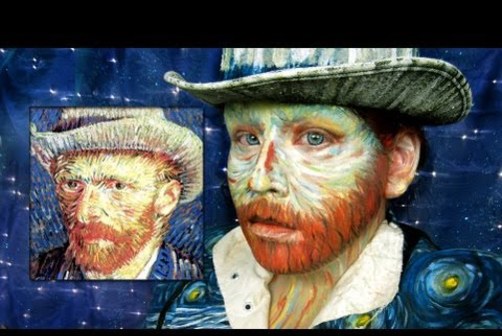
If only I had the time to devote to this Halloween costume prep....
Watch the step by step instructions below in the tutorial by YouTube user goldiestarling
I suppose it is time to start making admissions about the serious lack of time I have had to devote to my blog. I hate it when I read this kind of thing on other blogs I regularly frequent, so I will spare you the "dog ate my homework" excuses and simply state that I have over-reached and underestimated my time commitments since the beginning of term. I was told by other veteran bloggers that this would happen about year two of the blog-- something like the seven-year itch for marriages-- and it seems to have actually transpired. Still, like I tell so many of my students who have fallen behind on their assignments and personal projects, just get back to it. And so I am.... here are a selection of favourite tweets for my round-up from the past week. I look forward to writing more in the coming weeks (I have lots of ideas floating out there needing a home) and getting back into the routine of a more consistent blog. Stay tuned.
“If you enjoy it,
you understand it.” Gertrude Stein on understanding and meaning in rare 1934
interview
Exhibit presses the newspaper into artistic service
The facade of this building looks like it's folded like
an accordion
Gerhard Richter painting owned by guitarist Eric Clapton
sells for record $34.2m at Sotheby's, London last night
One is not enough: Why creative people need multiple
outlets
Do artists do research? How is research taught in PhD
programs for artists? Here's my best effort to summarize...
Fluxus Audio Anthology, originally consisting of eight
cassettes, recorded between 1962-92 [MP3]:
The Vancouver Film Festival is in full swing and I have managed to catch the first few of about a dozen or so films that I will be attending over the remainder of the event. With so many choices out there (380 over 75 countries!), I have put together a list of twenty films with a short synopsis straight from the VIFF site, a quick rationale for the choice, and a film clip or still. Just click on the title link for each film for screening times and locations. Overall, these are films that have been on my radar or caught my eye when the program landed, many of which I will see at this year's festival and/or plan to catch in the coming months when the best of VIFF and select films get a wider release. So here, in no particular order, are my selections. Enjoy!
"After the mammoth artistic triumph that was Carlos,
Olivier Assayas switches gears to tell the loosely autobiographical story of
Gilles (newcomer Clément Metayer), a high-school student in early 70s Paris who
is torn between his artistic inclinations and the political activism favoured
by his friends, especially the volatile Christine (Lola Créton)."
I adore Assayas’ cinematic vision (especially after Carlos
(2010)) and have been looking forward to his latest film centered around the
student movement of the immediate post-1968 era. In my lectures concerning the decline
of modern art and the dematerialization of the art object in the early 1970’s,
I often attempt to capture the energy of this time and make connections between
the world of art and the world of political activism. This is the kind of film
that I hope a new generation of artists go and see to get a better sense of how
transformative this time actually was (and without all the bad hippy
stereotypes that so many filmmakers end up referencing!).
"This bittersweet, charming documentary introduces us to some
of the world’s greatest graphic novelists, and the extraordinary college in
White River Junction, Vermont, where the comic artists of tomorrow get inspired
and get to work! Chris Ware, Lynda Barry, Art Spiegelman, Françoise Mouly and
Scott McCloud are among the many artists to take us into their imaginative
inner lives and craft. The fabulous soundtrack includes an original score by
Jason Zumpano."
Graphic novels and the turn to figurative art via cartooning
has been a very dynamic and evolving area of art production over the past
decade, and especially with the advent of cheaper and more mobile forms of digital
and analog circulation. This film caught my eye right away in this year’s
program and seemed especially fitting as one of my colleagues, Nancy Duff, is
offering a graphic novel special topics studio course at Kwantlen. I keep
hearing how much work that class is, and I think this film will help explain
why that is.
"In early 2011, inspired by the massive demonstration in New
York City, people the world over came together to demand an inclusive
redistribution of social and economic power. Going straight to the heart of the
Occupy movement, Velcrow Ripper’s hopeful documentary chronicles this global
paradigm shift."
The Occupy Movement has been in and out of the headlines for
the past year, and on the heels of the first anniversary of the first
occupation in New York, this film explores an intriguing dimension of the
community spirit and shared experience of love and friendship that has become
so pivotal to the sustaining energy of the movement. I have been hearing great
things about this film and hope that it can shift the conversation around
Occupy into a more action-oriented and positive direction.
"Upon discovering that whiskey distilleries make allowances
for evaporation, an ex-con schemes to (quite literally) skim a little off the
top of a premium cask and sell it to an unscrupulous buyer. A relaxed yet fully
realized work from the venerable Ken Loach, this is "a freewheeling
social-realist caper… an unfashionably uncynical and unironic kind of comedy…"—Guardian.
Winner, Jury Prize, Cannes 2012."
Every year, I try to pick a film that will be fun to watch
around the Thanksgiving festivities. This year, the Jury Prize winner from
Cannes caught my eye as the perfect film to watch ahead of Thanksgiving dinner.
It also has a Scottish twist which is just perfect since my sister-in-law Robyn
has family roots in Scotland. So while the turkey is in the oven, this will be the film that
we will be heading out to see with the family!
"Seized by the Nazis in Austria in 1939, Egon Schiele’s
titular painting reappeared in New York’s MoMA six decades later and instigated
an alley fight in the art world. Andrew Shea’s documentary "isn’t just
about stolen art: It’s about cultural skullduggery, political sleaze,
institutional hypocrisy and the virtues of persistence."—Variety"
The controversy surrounding Schiele’s famous painting of his
mistress, and the many hands that have traded the art object since, is an
example I often raise in class discussions concerning the underground art
market, big art institutions, and the battle over issues of provenance and
ownership in the art world. I have been looking forward to seeing a film about
this topic for a very long time.
"The avant-garde Russian art collective "War" has
been a persistent thorn in Putin’s side, and Andrey Gryazev’s immersive documentary
on these political provocateurs more than shows why. "An oddly stirring,
gripping and thought-provoking piece of work about a group of artists… whose
art-actions have exposed them to arrest and beatings, and attracted the support
of fellow artists from Brian Eno to Banksy."—Screen"
Simply put, one of my must-see films of VIFF, and a topic
area related to more recent avant-garde art activism in Russia in the aftermath
of the Putin crack-down on cultural expression in the country. I imagine that
interest for this film will only grow with the recent publicity surrounding the
arrest and detainment of members of Russia’s female punk rock group Pussy Riot.
"When a foreign visitor (the inimitable Mary Margaret O’Hara)
enlists a museum guard as her private guide to Vienna, Jem Cohen’s film becomes
a multifaceted exploration of an iconic city and the evocative power of art.
"Full of charm, intelligence and dry humor… an absorbing argument that
dusty old artworks have plenty to tell us about contemporary life…”—Hollywood
Reporter"
This is the kind of film art historians geek out over and I
already anticipate I will be working to unpack the image/narrative connection
for days and months after I see it. I will also be spending time in Vienna this
Christmas, so I am looking forward to a preview of one of my favourite European
cities.
"Where once there was harmony amongst a celebrated string
quartet, there’s now only dissonance. Consequently, their 25th anniversary
performance might just be their swan song. Drawing stellar performances from
Philip Seymour Hoffman, Catherine Keener and Christopher Walken, director Yaron
Zilberman uses the complexities of classical music as an inspired metaphor for
the intricacies of long-term relationships."
One name—Philip Seymour Hoffman. I will literally go see any
movie that this man is acting in and/or a part of. I also love Christopher
Walken and think this story-line is most intriguing.
"Four twenty-something Beijingers claim the city as their own
in award-winning Chinese director Zhang Yuan’s new romantic youth drama. Three
guys, a violence-prone unemployed dreamer, a parking attendant, and a
transvestite performer-poet, meet sultry singer-songwriter Youzi, and share
their dreams, frustrations and unexpected adventures."
This film caught my eye as a kind of extended context
surrounding the current state of social transformation in China, especially
among the youth. I teach many students from China (and Beijing specifically),
and the conversations we have about the shifts and tensions on the ground are
fascinating. I am hoping to get a better look at these themes through this
film, and also gain some understanding around the repressive nature of the
government when it comes to open artistic expression.
"Suspended in post-adolescence, twenty-something Sarah
alternates between hedonism and ennui. Urged on by her newlywed sister, Sarah
awakens to the possibility that life could be different. Directors Terry Miles
(A Night For Dying Tigers, VIFF 10) and Kristine Cofsky achieve a pitch-perfect
portrait of a quarter-life crisis."
In a similar sense to the previous selection, I enjoy getting
inside the head space of younger people and see the world through their eyes.
This film is from a Canadian female director to boot, so I think it will be a
good pick.
"An about-face from Gomorrah’s Matteo Garrone, who
exchanges hard-edged drama for blistering satire in this tale of a lowly
fishmonger with a burning ambition to be a reality TV star. "A perceptive,
unpredictable and frequently very funny critique of reality television’s
ability to elevate irksome nobodies into infinitely more irksome
somebodies…"—Telegraph."
I have been hearing about this film a lot since it won the
Grand Prix at Cannes, and since I am something of a closeted reality TV show
watcher, I can only imagine how fantastic this satirical look at the world of
the genre will be!
"Martin Scorsese, George Lucas, The Wachowskis, Christopher
Nolan, Ellen Kuras, James Cameron, David Fincher, Lena Dunham, Danny Boyle,
David Lynch and Michael Ballhaus are just some of the artists interviewed in
Keanu Reeves (host and producer) and Christopher Kenneally’s thorough and
fascinating documentary.
Any film that features a line-up like this is already worth
taking in, but I am especially intrigued with the topic of digital cinema’s
impact since it shapes a good deal of discussion in my Intro to Film Studies
course. Yes Keanu Reeves hosted and produced it… what can I say… I will still
go and see it.
"No longer content with simply firing embittered salvos from
the stage, a misanthropic stand-up comedian adopts an extreme approach to the
concept of "bombing." Joel Potrykus unforgettable debut plays like
"a twisted version of Louis C.K.’s FX show Louie…"—Indiewire.
Winner, Best Emerging Director, Filmmakers of the Present, Locarno 2012."
This film intrigues me. I think it has a lot to do with how
I am thinking about the potential for today’s underground films shot on phones
and small devices, but I am a sucker for finding out what a “a twisted version
of Louis C.K.’s FX show Louie” looks like on the screen.
"Brandon Cronenberg’s (yes, son of that Cronenberg) debut is
set in a dystopian near future in which obsession with celebrity has reached
such neurotic levels that fans get themselves injected with viruses and
diseases that once lived inside their idols… Amazingly controlled and confident
for a first film, Antiviral marks Cronenberg the younger as one to
watch."
I will probably not go see this movie since the trailer
completely creeps me out, but I am very interested in the screenplay and associated
cinematography of this film. Something about the culture of celebrity as it
morphs into the future world of bio-politics rings true to me, and so I think
this is a good pick for the festival (and hey, it is a film by Cronenberg’s
son, so that only adds to the appeal and irony).
"Salman Rushdie did not just give Canada’s Deepa Mehta (Water)
permission to adapt his epic novel—he wrote the screenplay and supplied the
first-person narration! The story of Muslim and Hindu babies—born at midnight
on Aug. 15, 1947, the day of India’s independence from Great Britain—switched
at birth conjures images and characters as rich and unforgettable as India
herself."
This film has already sold out all of its screenings, so I
will have to wait to see one of my favourite director’s film on its wide
release. I have not read Rushdie’s popular book, but I am trusting that Mehta’s
vision of it will be divine. Also, if you enjoyed Mehta’s previous films
exploring Indian history and Indo-Canadian relationships, this will be a
must-see.
"Based on fact and gorgeously shot in the South of France by
cinematographer Mark Lee Ping-Bin (In the Mood for Love), Gilles Bourdos’
wonderfully acted, lyrical period piece examines what happened when the
sprightly teenager Andrée (Christa Theret) entered the lives of painter
Pierre-Auguste Renoir (Michel Bouquet) and his soon-to-be-filmmaker son Jean
(Vincent Rottiers)."
I think this will be a wonderfully escapist, pleasurable,
and beautiful film to enjoy…. Nothing too deep, just like a typical Renoir
painting.
"VIFF favourite Thomas Riedelsheimer (Rivers and Tides, Touch
the Sound) returns with another visually transfixing exploration of art and
nature, this time chronicling the efforts of Spanish artist Cristina Iglesias
as she installs an environmentally enhancing and aesthetically daring sculpture
in the Sea of Cortez at Candelor Bay."
I have heard about this artist’s work for some time now and
look forward to seeing how her installations come to life on the screen. I am
also finding that some of the best documentaries being produced today concern
the life and work of contemporary artists, so I think this will not disappoint.
"Thom Andersen (Los Angeles Plays Itself) portrays 17
buildings and unrealized projects by 2011 Pritzker Prize-winning Portuguese
"starchitect" Eduardo Souto Moura. Political engagement vies with a fair
amount of Andersen’s dry humour as Souto Moura’s reconverted ruins and
Andersen’s visual style come together in a Vertovian dialectic."
As I am teaching a History of Architecture course over two
semesters this year, this film was on my radar from day one. I cannot wait to
see the work of this fascinating contemporary architect on the big screen!
"With a devastating economic and social crisis laying waste
to Greece, documentarians Nikos Katsaounis and Nina Maria Paschalidou
dispatched 14 photojournalists to uncover the stories overlooked by the
traditional media. In this visually arresting mosaic, artists, intellectuals
and ordinary citizens desperately try to make sense of the chaos gripping their
country."
I really enjoy watching documentaries on current and
unfolding events, and this film concerning the Greek economic meltdown is right
up my alley. We spent some time in Athens last summer and I recall thinking
that this topic deserved a better treatment than the scattered sound bites that
surround this very complicated and pressing situation at the centre of the
world economy.
"Bruce Sweeney’s (Dirty) moody mystery is a rich, moving
thriller in which character psychology and suspense are seamlessly merged.
Watch for very strong performances from Vancouver’s Gabrielle Rose and Nicholas
Lea."
I love Bruce Sweeney films—they evoke Vancouver AS
Vancouver and seem warm and familiar. I cannot imagine going to VIFF and not
seeing one his latest offerings.
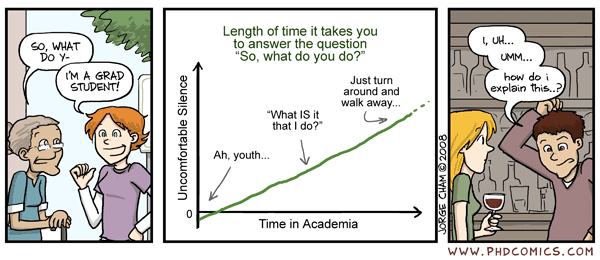
Truer than you think--trust me.
Image courtesty of PhDComics.
Extending the undergraduate university years is something
that many more students are thinking about today. And really, who could blame
them? With all of the grim employment statistics for youth globally, together
with the widely circulating idea that today’s undergraduate degree is
equivalent to the high-school diploma of 30 years ago, there is a tendency for
many students to view graduate school as some logical move in their academic
journey. More seems to equate to better. It is a conversation I have at least
once a week with a student in my office, and a continual reminder with the requests
for grad school referee letters that are a routine part of my job. But the common
misconception about graduate school as a continuation of the undergraduate
experience is one that warrants some serious consideration before accepting the major commitment and challenges that go along with another 2-10+ years of further education.
I first encountered this dose of reality when I began making
my own plans to attend grad school in the final year of my undergraduate program.
I was lucky enough to be given very honest advice and suggestions by my
professors. At first, what was most striking was how often I was actively discouraged
from applying without a clear financial plan and alternative road-map, underscoring the reality that completing grad school in no way guaranteed me a
job. I must stress that this is rare advice when it comes to weighing your grad
school options and was a valuable lesson when I grasped the full reality of the
graduate school undertaking as more about expanding my intellect than
collecting a better paycheque. Even so, the journey can indeed make financial sense (see this Grad School Calculator to see for yourself). In the end, I have no regrets whatsoever with
going the full distance and completing a masters and a doctorate degree, but I
know many more people who do. Many many more. And so what I present below are
some Dos and Don’ts I commonly go over for students seeking advice about grad
school (and the application process to a humanities/arts based grad program in
particular). Remember, these are only guidelines and are not applicable in every case.
Bottom line, it is a life-changing decision to pursue graduate
studies and one that many people decide without very careful assessment. Just
ask anyone with an advanced degree, and you will likely get a mix of
war-stories and open reflection about how the journey changed the trajectory of
their lives. As one favourite prof said to me in those years I was deciding: “Is
there anything else you would like to do besides complete a PhD? Well do that. Only go to grad school if you are passionate about learning and there is nothing else you can imagine doing with your life.”
DO:
Seek out and talk to graduate students already enrolled in a
grad program, especially the ones you are interested in applying into. Attend conferences
at local universities with grad programs to get a sense of the grad school culture.
Call-up and/or contact via email graduate students who are affiliated with the
program you are interested in attending.
Apply to multiple grad programs and across a wide range of university
types. The reality is that you will not always get acceptance into your first
choice, and if the time comes to decide between multiple schools who offer to
take you, you will have some leverage in making schools compete for you with
further offers of funding/jobs.
Research and find out who you would like to work with as a
potential advisor. The key to getting a spot in a program is being a good “fit”
with a particular faculty member. Find someone whose publications/work jibe
with your own interests.
Find out what the funding sources and distribution are for
the programs you are interested in. Teaching Assistantships are great, but they
are not the same as receiving a scholarship or getting the time and space to
research and produce projects
Ask for letters of reference well in advance of your actual
application. I would suggest up to a month’s notice with your letter of
interest attached so that the referee can say the right things in their letter
of support. The best idea is to schedule a meeting to discuss the letter in
person.
Look for clues about the culture of grad programs by taking
a very close look at the program’s website. Do they offer up lots of info about
current students and/or where their alumni are today? Are there regular updates
on department activities? If not, you should be cautious.
Talk to a wide cross-section of professors (older and newer)
at your current institution about their graduate school experience. You may be
very very surprised at what you are told!
Plan to finish grad school in a timely manner and consider
passing on job/volunteer positions to accomplish this goal. You will never
again have that much free and uninterrupted time to focus on your projects—consider
what other time-drains you can give up to focus on the goal of completion.
Consider the pros and cons of attending a Canadian versus an
international graduate program. This is especially true if you have your heart
set on becoming a professor and want to teach in a particular part of the
country and/or a particular kind of university.
Familiarize yourself with the realities of the job market,
especially if you are interested in becoming a professor of your chosen
discipline. I don’t want to be the bearer of bad news here, but the sooner you
understand the darker side of the academic labour market, the better off you
are in weighing your career goals. I suggest starting here for some sense of
the landscape.
DON'T:
Be discouraged if you are turned down upon your first
application to a grad program—this is far more common than you think and the
reasons for being turned down are usually related to a lack of good fit in the
program (with potential advisors, the direction of the program, the general
cohort) and not your aptitude or skill set. In other words, do not take a
rejection letter personally. Consider that it may take more than one academic
year to get into a school.
Apply to grad school as a way of sheltering yourself from a
bad job market. Believe me, this is a very short-sighted approach and may
result in both serious debt and major regrets later on.
Underestimate the importance of your application letter. It
will likely be the most important document you have ever written to date and it
requires no less than 2-3 other sets of eyes to refine and perfect before you
send it off in the mail. The letter must also be tailored for each program that
you apply to and list a range of your accomplishments and goals.
Worry that anyone will hold you to the project or research
ideas that you outline in your application letter. Having stated the previous point, graduate programs
expect that your ideas will change and evolve in the first year of the program.
Apply to a graduate program that lacks a clear mandate
and/or disciplinary path. This is very important, especially if you are interested
in going on to teach in a particular area. Make sure that the program you are
applying to has an established reputation and record of alumni achievement.
Send your application last minute and/or forget important
deadlines. It is always best to send an application several weeks and days ahead of
the deadline. The application packages are often looked at as they come in, and
you have the advantage of being flagged early for acceptance. Last minute
applications also tend to suggest less interest in the program and/or a last
minute decision to apply.
Forward a less than stellar application to a grad program. This
is for obvious reasons, but note also that the academic world is small, and if
you send a crappy application, chances are someone may remember your name
and/or have heard of you if you apply somewhere else.
Call and inquire about your application once you have sent
your application. Don’t bug the administrative people with your questions. If
you are accepted, believe me, they will contact you. The process also takes
weeks longer than you imagine in your mind, so stay patient and distract
yourself with other activities.
Overlook related and/or specialized graduate programs in
your field of interest. Think outside the box. There are many professional
degree programs for example (i.e. for curating, becoming a librarian/archivist, or in
computer studies) that could compliment your interests .
Lose sight of an equally acceptable Plan B. Always have a
Plan B and NEVER rely on your graduate program to find you a job. They won’t
and you should hear that here first.
And for some fun, check out what Hennesy Youngman's thoughts are on grad school (applied to the Visual Arts specifically). Remember, he offers but one opinion:


 What is
iAnnotate exactly? Well, according to their own website description, “iAnnotate's
intuitive interface and comprehensive, customizable set of features let you
annotate, manage, and share documents from your iPad. People use iAnnotate as
their "go-to app" for taking notes on lecture slides, annotating
important business documents, revising screenplays, grading papers, and much
more.” In short, the application allows you to do with a tablet computer what
you would normally do with a pen and paper, only you can manage the task more efficiently, back up all your edits, and keep all of your documents in one virtual place.
What is
iAnnotate exactly? Well, according to their own website description, “iAnnotate's
intuitive interface and comprehensive, customizable set of features let you
annotate, manage, and share documents from your iPad. People use iAnnotate as
their "go-to app" for taking notes on lecture slides, annotating
important business documents, revising screenplays, grading papers, and much
more.” In short, the application allows you to do with a tablet computer what
you would normally do with a pen and paper, only you can manage the task more efficiently, back up all your edits, and keep all of your documents in one virtual place.