• Fall 2025
  • Blog
  • Resources
  • Field School
  • Students
  • Feedly
  • About
Menu

Avant-Guardian Musings

  • Fall 2025
  • Blog
  • Resources
  • Field School
  • Students
  • Feedly
  • About
large monogram_2018-02-01_22-31-07.v1 (1).png
“Art is an outlet toward regions which are not ruled by time and space”
— Marcel Duchamp

Avant-Guardian Musings is a curated space of ideas and information, resources, reviews and readings for undergraduate and graduate students studying modern and contemporary art history and visual art theory, film and photography studies, and the expanding field of visual culture and screen studies. For students currently enrolled in my courses or the field school, the blog and associated social media links also serve as a place of reflection and an extension of the ideas and visual material raised in lecture and seminar discussion.

Blog RSS

Screenshot 2018-02-05 20.56.45.png
Blog
KPU FINE ARTS PARIS + VENICE BIENNALE FIELD SCHOOL (MAY/JUNE 2026)
about 3 months ago
"No Fun City" Vancouver: Exploring Emotions of Detachment in Palermo, Sicily at AISU
about 4 months ago
Making Sense of Art in the Age of Machine Learning—A Suggested Reading List
about 5 months ago
From the Archives | How (And Why) To Take Excellent Lecture Notes
about a year ago
Weekly Musings + Round Up... And A Few More Things
about 2 years ago

Screenshot 2018-02-05 20.56.51.png
As we start the week in a storm of activity, new beginnings, and global uncertainty, I am grounded in my word for 2026– INTENTIONAL 🩶— “done with purpose, willingness, deliberation, and consciousness.” I see this word represe
As we start the week in a storm of activity, new beginnings, and global uncertainty, I am grounded in my word for 2026– INTENTIONAL 🩶— “done with purpose, willingness, deliberation, and consciousness.” I see this word represented in the symbol of the heart, and for this reason and many others both personal and professional, I will be bringing this much needed energy to my year. The power of a yearly word is transformative. I started in 2019 and my words have guided and carried me through some important moments and life decisions. If you haven’t already, give it a try, but remember to choose very wisely ☺️ “Radiate” 2025 ✨ “Maintain” 2024 💪🏻 “Refine“ 2023 🙌🏻 “Acta non verba” 2022 🤐 “Audacious” 2021 💃🏼 “Fearless” 2020 😛 “Unapologetic” 2019 💅🏻 #happynewyear #wordoftheyear #intentional #monicavinader @monicavinader
Polar bear ride! 🐻‍❄️🏍️💨🏍️ First motorcycle outing of 2026 in the books. A balmy 4C 🥶We love you Vancouver— good to be home 💙😊Wishing everyone a very Happy New Year! 🥳 
.
.
.
#happynewyear #vancouver #motorcycle #motorcyclesofinstag
Polar bear ride! 🐻‍❄️🏍️💨🏍️ First motorcycle outing of 2026 in the books. A balmy 4C 🥶We love you Vancouver— good to be home 💙😊Wishing everyone a very Happy New Year! 🥳 . . . #happynewyear #vancouver #motorcycle #motorcyclesofinstagram #motocouple #husqvarna #vitpilen401 #svartpilen401 #motogirl #motogirls
2025... where did it go?! 😂 Like a ray of light, I was very much guided by my chosen word of the year “radiate”— to shine and send out beams of energy— and this allowed for a great deal of adventure, new experiences, ideas an
2025... where did it go?! 😂 Like a ray of light, I was very much guided by my chosen word of the year “radiate”— to shine and send out beams of energy— and this allowed for a great deal of adventure, new experiences, ideas and people and opportunities to flow back into my life. Above all else, I found myself very much on the move all year! Travel took me from New York to Lausanne, Paris to Seoul, and Palermo to Maui, while my motorcycling stayed more on the road and less on the track as Brian and I balanced our time, energy, and commitments. But as always, we found every spare moment to prioritize this shared passion and we hope to find a way back to the track in 2026. Professionally, the year was... A LOT... and highlighted by many new research partnerships, conferences, workshops, writing projects, some failed plans and sharp detours, but also the planting of new seeds for future ventures. In the classroom, AI brought many new challenges and opportunities to rethink the purpose of my teaching and courses, but overall I was inspired and at times surprised by what my students were able to accomplish with the new assessment models I put into place. All of this technological change remains very much a work in progress for academics, and I prefer to remain optimistic that the artists I work with will find a way to maintain their voice and vision in it all. The historian in me knows this to be true. Personally, I connected more to my heart and intuition in 2025, listening to that inner voice to guide many key decisions. Brian and I also kept up a decent health and fitness regime that had us energized and aiming for consistency to match our midlife pace. Use it or lose it is a reality in your 50s!!! Sending wishes of peace and love and a very Happy New Year to all! May your 2026 be filled with fun, awe, purpose, and good health and much happiness. Remember to be good to yourself so you can be good to others. I’m still working carefully on my 2026 word… but whatever it is, I know it will be the right one ❤️ . . . #happynewyear #yearinreview2025 #wordoftheyear #motorcyclelife #arthistorianlife
Resting, dreaming, and plotting the year ahead 💙✨😘
.
.
.
#maui #hawaii #vacationmode #newyear #planning
Resting, dreaming, and plotting the year ahead 💙✨😘 . . . #maui #hawaii #vacationmode #newyear #planning
Riding and chasing sunsets across Maui ✨💙🌺🌴🧡
.
.
.
#maui #hawaii #motorcycle #motorcyclesofinstagram #motogirl #vacationmode #sunsets
Riding and chasing sunsets across Maui ✨💙🌺🌴🧡 . . . #maui #hawaii #motorcycle #motorcyclesofinstagram #motogirl #vacationmode #sunsets

Screenshot 2018-02-05 20.57.02.png
  • November 2025 (1)
  • September 2025 (1)
  • August 2025 (1)
  • September 2024 (1)
  • February 2023 (1)
  • January 2023 (3)
  • August 2022 (1)
  • March 2022 (1)
  • February 2022 (3)
  • January 2022 (4)
  • November 2021 (2)
  • October 2021 (3)
  • September 2021 (3)
  • July 2021 (2)
  • June 2021 (1)
  • May 2021 (3)
  • April 2021 (3)
  • March 2021 (3)
  • February 2021 (4)
  • January 2021 (5)
  • December 2020 (3)
  • November 2020 (6)
  • October 2020 (4)
  • September 2020 (1)
  • July 2020 (1)
  • June 2020 (4)
  • May 2020 (9)
  • April 2020 (5)
  • December 2019 (2)
  • November 2019 (5)
  • October 2019 (3)
  • September 2019 (1)
  • July 2019 (6)
  • June 2019 (19)
  • April 2019 (2)
  • March 2019 (5)
  • September 2018 (2)
  • July 2018 (1)
  • June 2018 (4)
  • May 2018 (2)
  • April 2018 (5)
  • March 2018 (5)
  • February 2018 (8)
  • January 2018 (3)
  • December 2017 (4)
  • November 2017 (5)
  • October 2017 (7)
  • September 2017 (3)
  • July 2017 (6)
  • June 2017 (15)
  • April 2017 (2)
  • March 2017 (3)
  • February 2017 (1)
  • January 2017 (2)
  • November 2016 (2)
  • October 2016 (1)
  • September 2016 (3)
  • August 2016 (1)
  • June 2016 (2)
  • May 2016 (3)
  • April 2016 (2)
  • March 2016 (5)
  • February 2016 (7)
  • January 2016 (9)
  • November 2015 (1)
  • October 2015 (2)
  • September 2015 (3)
  • August 2015 (3)
  • July 2015 (1)
  • June 2015 (20)
  • May 2015 (4)
  • March 2015 (2)
  • January 2015 (1)
  • November 2014 (1)
  • October 2014 (2)
  • June 2014 (1)
  • May 2014 (4)
  • April 2014 (6)
  • February 2014 (1)
  • January 2014 (2)
  • November 2013 (1)
  • September 2013 (1)
  • July 2013 (3)
  • June 2013 (10)
  • December 2012 (1)
  • November 2012 (3)
  • October 2012 (6)
  • September 2012 (3)
  • August 2012 (1)
  • July 2012 (1)
  • June 2012 (25)
  • May 2012 (5)
  • April 2012 (4)
  • March 2012 (7)
  • February 2012 (11)
  • January 2012 (6)
  • December 2011 (5)
  • November 2011 (11)
  • October 2011 (11)
  • September 2011 (8)
  • June 2011 (9)
  • May 2011 (15)
  • April 2011 (9)
  • March 2011 (14)
  • February 2011 (17)
  • January 2011 (16)
  • December 2010 (11)
  • November 2010 (18)
  • October 2010 (24)
  • September 2010 (30)

Screenshot 2018-02-05 20.57.07.png

© Dorothy Barenscott, Avant-Guardian Musings, and dorothybarenscott.com, 2010-2023. Unauthorized use and/or duplication of this material without express and written permission from this blog’s author is strictly prohibited. Excerpts and links may be used, provided that full and clear credit is given to Dorothy Barenscott, Avant-Guardian Musings, and dorothybarenscott.com with appropriate and specific direction to the original content.

Something about this juxtaposition of nature, art, architecture, and light/space captured my attention as I sat for afternoon tea at the British Museum.

Something about this juxtaposition of nature, art, architecture, and light/space captured my attention as I sat for afternoon tea at the British Museum.

Location| London, UK: Money, Power, Collections

February 05, 2016

London as always is a rush. Like New York, it is a place that seems endless and no amount of planning can cover off all that you might want to see and experience. And so, like with any great buffet, you have to pick and choose wisely, knowing that many tempting things will not get onto your plate. This time around, I am here to attend a conference and give a paper related to the Venice Biennale. But I am also here to visit with a dear friend and fellow art historian, Lara, who has recently moved to London to pursue her professional interests in art advising, appraising, and all things art history. With this particular conference and visit thus far, I have been struck by intersecting themes around value, perception and status as it relates to both art collecting and exhibition—I am in London after all.
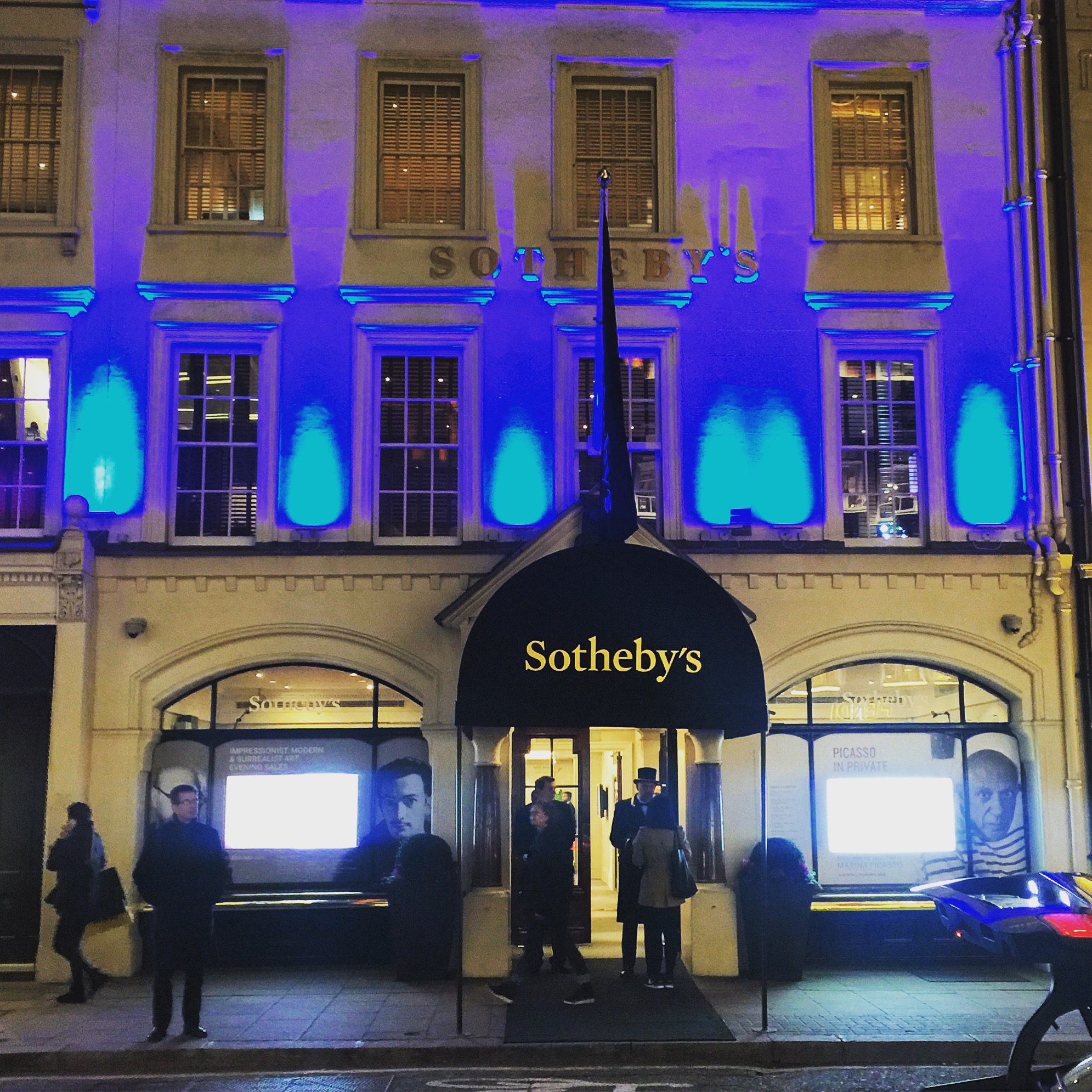
Capturing the scene outside of Sotheby's on the night of my arrival. The quiet on the street sits in contrast to the millions of dollars in art transactions happening inside.

Capturing the scene outside of Sotheby's on the night of my arrival. The quiet on the street sits in contrast to the millions of dollars in art transactions happening inside.

It started Wednesday night when I arrived and met with Lara at Sotheby’s to attend the Impressionist and Modern Art evening auction. I was fortunate that Lara could secure us tickets, and inside we were witness not only to a real “scene” in terms of conspicuous displays of wealth and posturing, but also the tens of millions of dollars in art sales transactions that transpired in minutes, and with such casualness and even an air of the banal. Flipping through the catalogue, it was fascinating to read both the provenance and exhibition history of each object—some of the works had not been seen publicly in decades, such as the much buzzed about Rodin statue which did sell for a higher price than expected—while others, such as Monet’s Le Palais Ducal had been circulated through well placed shows over the last century and would be recognized by educated collectors. Like a cabinet of curiosities, the assembly of items up for auction represented an eclectic and unexpected mix of objects that had landed together for a short time, each with its own long story of transmission.
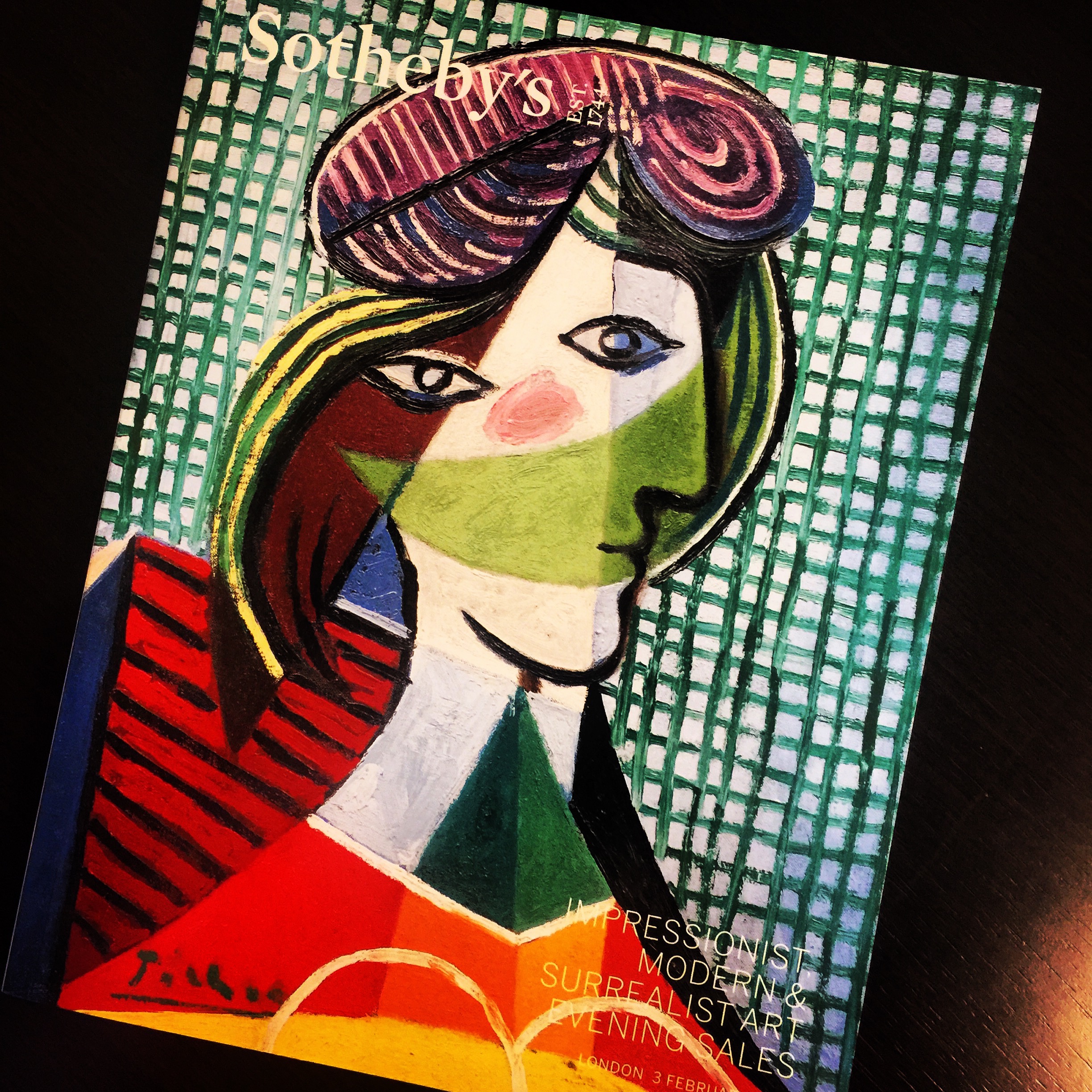
My souvenir from the night-- the catalogue (a million thanks to Lara for securing the tickets!)

My souvenir from the night-- the catalogue (a million thanks to Lara for securing the tickets!)

The next day I headed over to the University of London for the Venice Biennale conference. My paper, related to the ways in which the Biennale has been transformed by shifts in both perception and curatorial vision over recent decades, was part of a panel interrogating the evolution of the event’s strategic positioning in connection to the global art market. What struck me in the post-panel discussion was just how conflicted people remain about the motives around why and how people collect art. In my own arguments, I raised the issue of how difficult it is to stage a high-profile art exhibition claiming alterity and a call for art to speak truth to power when the biggest spenders in the current art market are people who have made their money in non-democracies with horrendous human rights records and history of attacks on artistic freedom. Others commented on the recent interest in collecting dematerialized art forms (such as performance and site-specific installations from the 1970s) that had originally been conceived to resist commodification. Is this part of an attempt to recognize and bring awareness to these art practices, or more cynically, is this just a form of niche collecting that is gambling on these objects having some future value. Is it both?
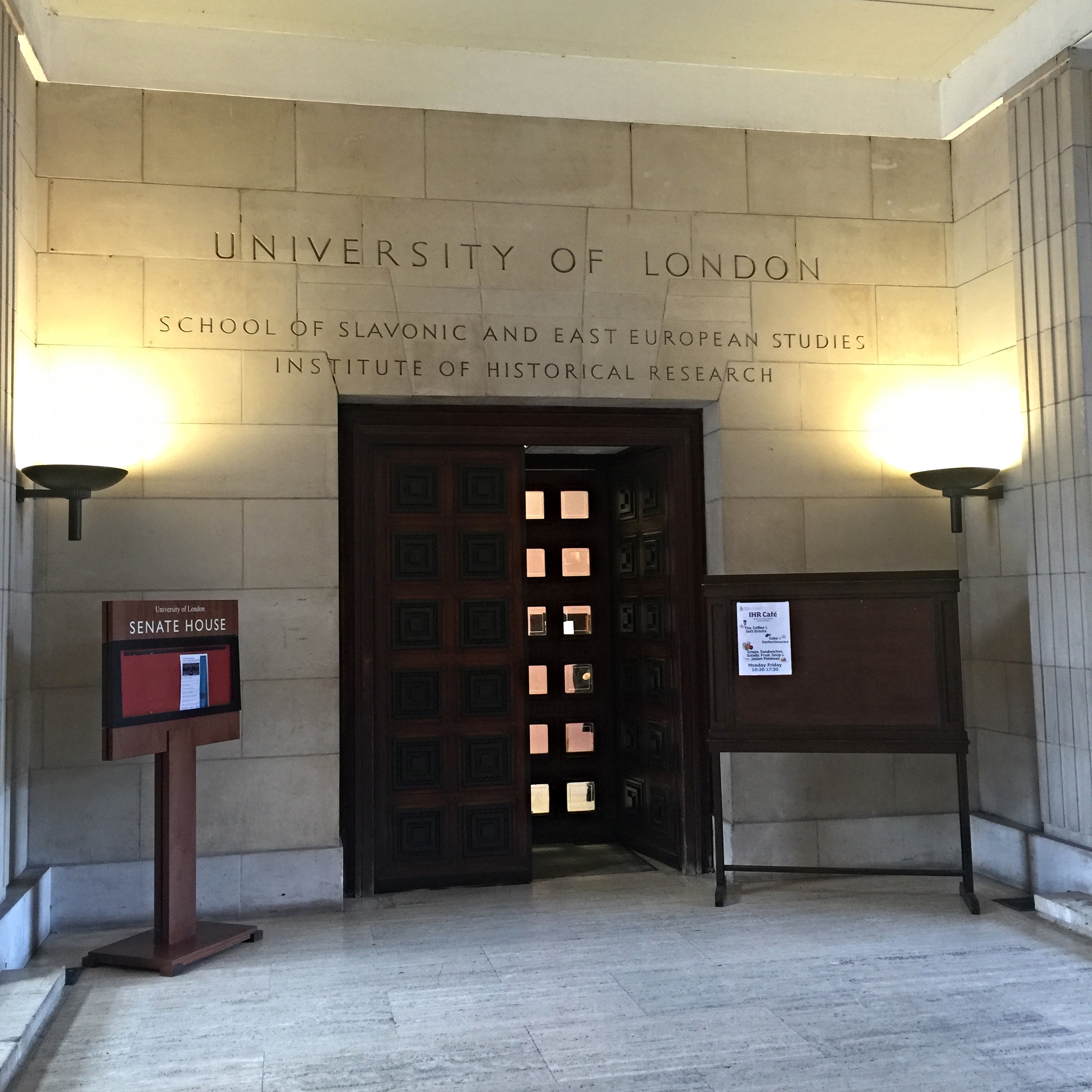
The somewhat imposing door and entrance to the conference venue. So much tradition and history at this particular institution.

The somewhat imposing door and entrance to the conference venue. So much tradition and history at this particular institution.

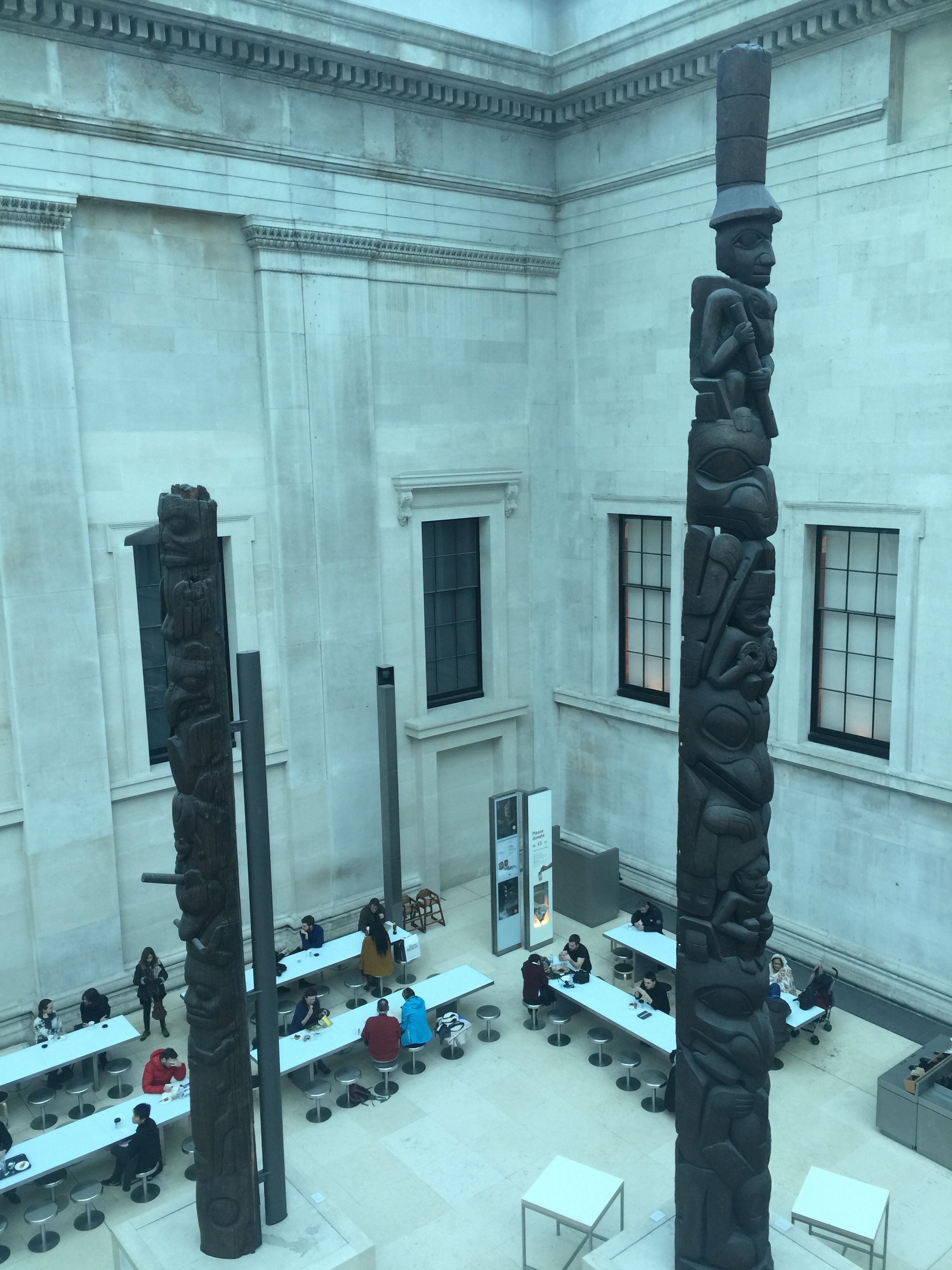
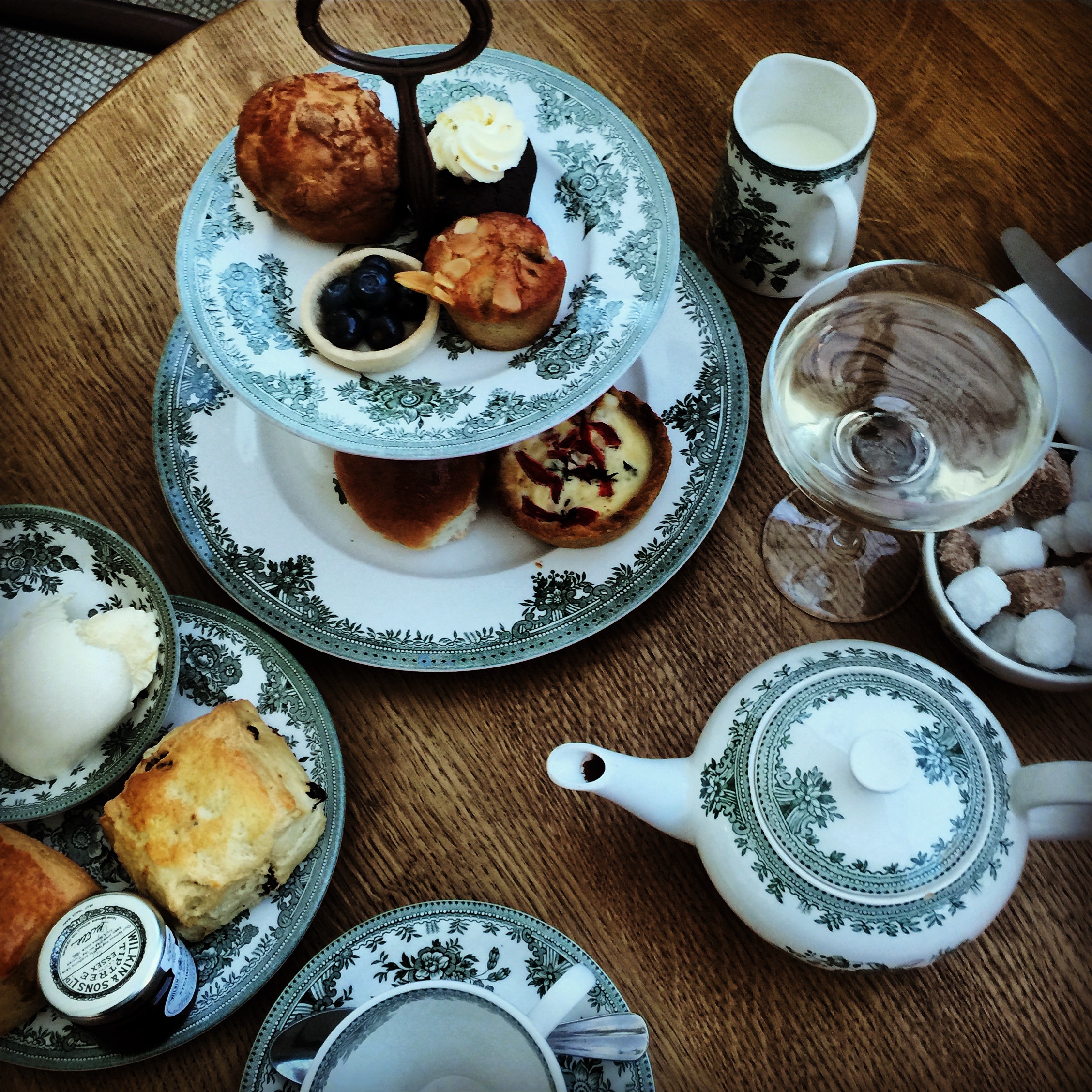
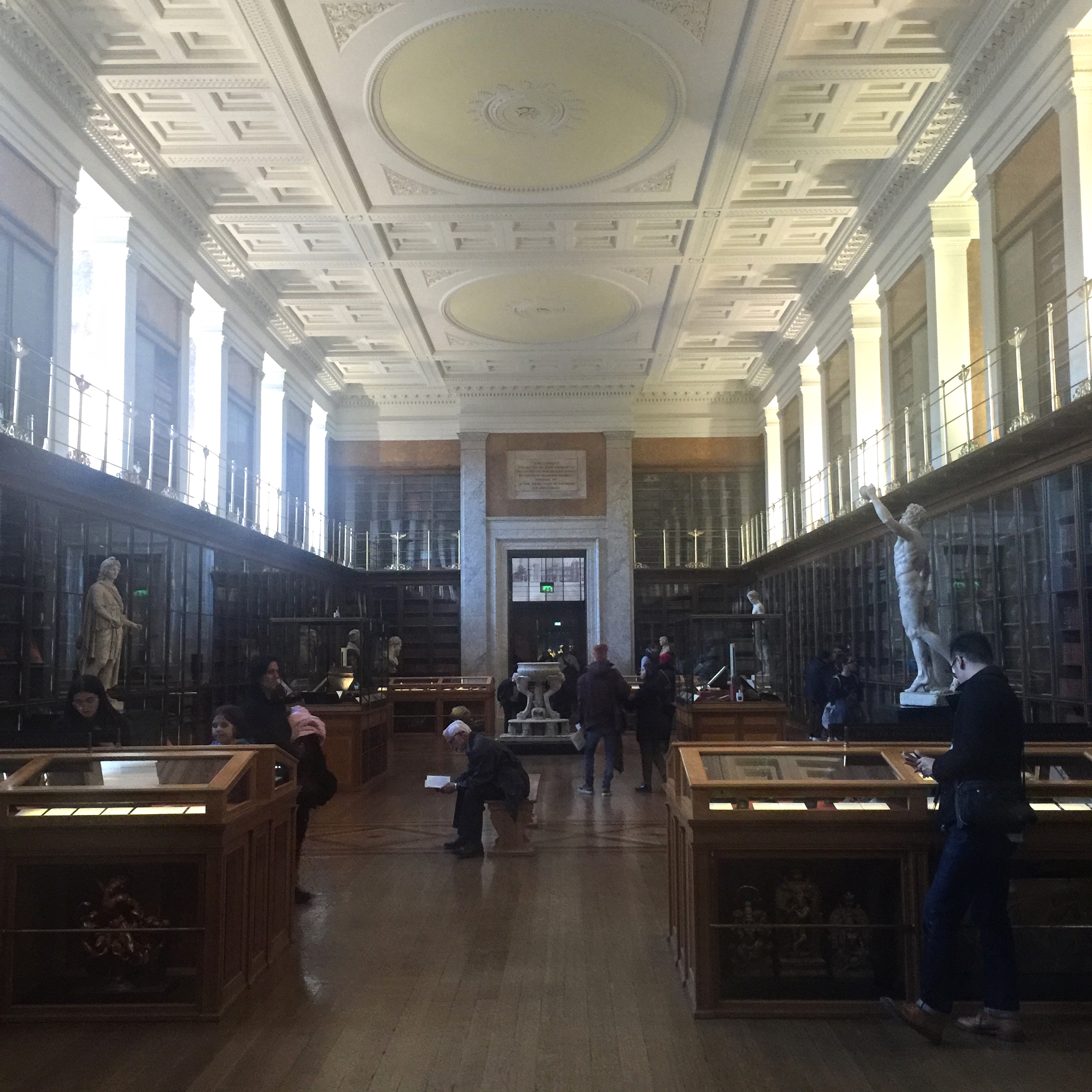
Later in the afternoon with my head spinning from conversations about art, money, and questions of legitimacy, I headed across the street to the British Museum. Oddly, in all of my trips to London, I had somehow never made the visit. Maybe it is my own natural resistance to tradition, or the problem again of the London buffet, but this time I was determined to see the famed Elgin marbles that I have lectured about dozens of times in my art history survey courses. My timing was perfect as the rooms with the marbles were quiet and almost empty. I couldn’t help thinking about the connections between what I was seeing, my night at the auction, and the conference discussion a few hours earlier. Of course the story of how these objects ended up in this room are part of all of those paradigms (I felt the exact same tension when viewing the Haida poles in the main museum entrance), but also my self-awareness over the way I was viewing and experiencing these objects. It was all a bit too palpable. Later after a much needed break and indulgent afternoon tea service (did I mention the jet lag yet?) I wandered through the Enlightenment section of the museum, cleverly constructed as a virtual space that places viewers inside an 18th century library complete with cabinets of oddities and objects to delight the senses. It was a reminder of how the impulse to assemble, order, and catalogue information is part of my own training. It was also a reminder of how the world of art and the study of its many messy contours remains incredibly relevant and vital. 
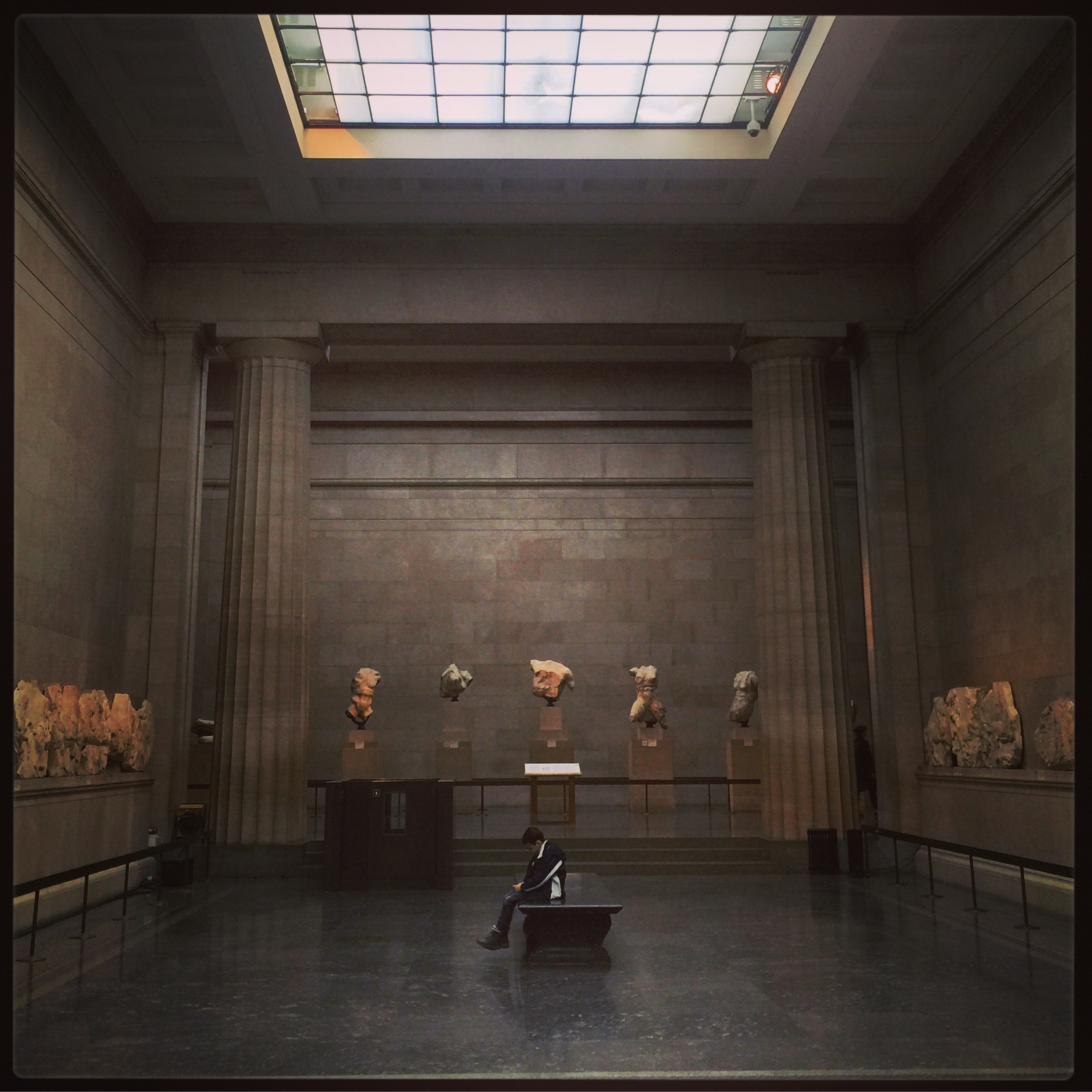
 The quiet spaces of the Elgin marbles rooms was unexpected but very welcome.

The quiet spaces of the Elgin marbles rooms was unexpected but very welcome.

 Seeing the Haida poles so dislocated from home brought a profound mix of feelings.

Seeing the Haida poles so dislocated from home brought a profound mix of feelings.

 Architecture juxtapositions abound at the British Museum.

Architecture juxtapositions abound at the British Museum.

 Afternoon tea was every bit of delicious as I expected, and the glass of Prosecco was the perfect addition.

Afternoon tea was every bit of delicious as I expected, and the glass of Prosecco was the perfect addition.

 The Enlightenment room ended up as a surprise favourite space on my visit. It reminds me of my own scholarly training and roots.

The Enlightenment room ended up as a surprise favourite space on my visit. It reminds me of my own scholarly training and roots.

 The quiet spaces of the Elgin marbles rooms was unexpected but very welcome.  Seeing the Haida poles so dislocated from home brought a profound mix of feelings.  Architecture juxtapositions abound at the British Museum.  Afternoon tea was every bit of delicious as I expected, and the glass of Prosecco was the perfect addition.  The Enlightenment room ended up as a surprise favourite space on my visit. It reminds me of my own scholarly training and roots.
Comment

Jean Béraud, Parisian Street Scene (1885) via Met Museum's Instagram feed this week.

Weekly Flipboard Links and Media Round Up

January 31, 2016

Another week down and I am finally starting to get into the swing of 2016 (at the end of January no less)-- how about you? It seems however that the tumultuousness of the economic markets and global tensions of the past month are now being directly reflected in this week's art news. My media feed lit up after Ai Weiwei announced via Instagram of his withdrawal from Danish exhibitions in protest of new and controversial immigration laws passed in that country. At the same time, new street art from Banksy has appeared opposite the French consulate in London that brings awareness about police violence against refugees in camps around Calais. In Russia, performance artist Pyotr Pavlensky has been detained by police and placed in a psychiatric hospital after his many protest pieces criticizing the Putin regime. I have linked to these stories and a few more related to stress in the creative economy around labour rights and artistic production. All pretty disheartening, but awareness and knowledge about these developing issues is powerful. 

On a much brighter note, I am very excited about the preparations underway for the Canadian Culinary Imaginations Symposium that I am co-organizing with Shelley Boyd for later this month, and about which I blogged earlier this week. I have included two food related media items in honour of the themes and ideas covered at this event. And finally, I am off to the UK in the coming days to present a paper at a conference in London at the IESA (Institut d’ Études Supérieures des Arts), a French HE Institute specialising in Collecting and Art Market studies in partnership with the Royal Holloway College and University of London. The conference focuses on the Venice Biennale and the art market, and I look forward to blogging more about my research, reflections, and visits to museums and other sites while there. Cheerio and stay tuned!

"The Collapse of Postmedia PODCAST"

canadalandshow.com

"Ai Weiwei Withdraws Art from Two Danish Museums in Protest of Controversial Immigration Law"

hyperallergic.com

"The MoMA Cookbook: Vintage Recipes and Reflections on Food by Salvador Dalí, Louise Bourgeois, Willem de Kooning, Andy Warhol, and Other Great Artists"

brainpickings.com

"Celebrate Yourself and Your Cool Pants With Our Kanye Motivational Posters"

nymag.com

"Steam’s Atari Vault Package Brings Back 100 Classic Games"

wired.com

"Banksy's First Interactive Work Criticizes Police Violence Against Refugees"

artnet.com

"Marina Abramović on Cindy Sherman's Untitled #90 (1981) VIDEO"

moma.com

"New Artist-Led Project Surveys Plight of Canadian Arts Interns"

artfcity.com

"Dissident Russian Performance Artist Sent to Psychiatric Hospital"

artnet.com

"What an Editor Learned from Cooking 90 Meals in 30 Days PODCAST"

food52.com

"The Collapse of Postmedia PODCAST" "Ai Weiwei Withdraws Art from Two Danish Museums in Protest of Controversial Immigration Law" "The MoMA Cookbook: Vintage Recipes and Reflections on Food by Salvador Dalí, Louise Bourgeois, Willem de Kooning, Andy Warhol, and Other Great Artists" "Celebrate Yourself and Your Cool Pants With Our Kanye Motivational Posters" "Steam’s Atari Vault Package Brings Back 100 Classic Games" "Banksy's First Interactive Work Criticizes Police Violence Against Refugees" "Marina Abramović on Cindy Sherman's Untitled #90 (1981) VIDEO" "New Artist-Led Project Surveys Plight of Canadian Arts Interns" "Dissident Russian Performance Artist Sent to Psychiatric Hospital" "What an Editor Learned from Cooking 90 Meals in 30 Days PODCAST"

List of links (for quicker linking):

  • The MoMA Cookbook: Vintage Recipes and Reflections on Food by Salvador Dalí, Louise Bourgeois, Willem de Kooning, Andy Warhol, and Other Great Artists
  • Dissident Russian Performance Artist Sent to Psychiatric Hospital
  • Banksy's First Interactive Work Criticizes Police Violence Against Refugees
  • The Collapse of Postmedia PODCAST
  • What an Editor Learned from Cooking 90 Meals in 30 Days PODCAST
  • New Artist-Led Project Surveys Plight of Canadian Arts Interns
  • Celebrate Yourself and Your Cool Pants With Our Kanye Motivational Posters
  • Ai Weiwei Withdraws Art from Two Danish Museums in Protest of Controversial Immigration Law
  • Marina Abramović on Cindy Sherman's Untitled #90 (1981) VIDEO
  • Steam’s Atari Vault Package Brings Back 100 Classic Games
Comment
You can visit the symposium registration page to view full schedule and bios of presenters. The student artwork featured on our poster was created by Tasman Brewster in connection to Canadian poet Lorna Crozier's poem "Jell-O." The student collabora…

You can visit the symposium registration page to view full schedule and bios of presenters. The student artwork featured on our poster was created by Tasman Brewster in connection to Canadian poet Lorna Crozier's poem "Jell-O." The student collaboration for this poem is featured here. 

Canadian Culinary Imaginations Symposium| February 19-20: REGISTRATION OPEN!

January 27, 2016

It is finally here—mark your calendars! On Friday, February 19th and Saturday, February 20th, the Canadian Culinary Imaginations Symposium of Literary and Visual Fare is set to take place on Kwantlen Polytechnic University’s Richmond Campus in the Melville Centre for Dialogue. This is an event that I have been co-organizing with Dr. Shelley Boyd (KPU English Department) as a two-day interdisciplinary event featuring over 25 invited speakers, ranging from local and international academics, to artists, curators, and writers, who will explore how Canadian writers and/or visual artists use food to articulate larger historical and cultural contexts. 

We are pleased to feature our creative keynote speaker Vancouver Poet Laureate Rachel Rose presenting a talk on the topic of poems inspired by food. Our other featured speaker is internationally recognized Visual Artist Sylvia Grace Borda who will lead a discussion on her art projects and their relationship to sustainable food systems and economies.

The symposium will coincide with the launch of the public art exhibition we have also planned, organized, and curated— "Artful Fare: Conversations About Food"— presenting the collaborative art projects of KPU Fine Arts and English students as they engage in creative-critical dialogues about Canadian poetry. Full schedule and list of participants and all registration information can be found HERE. Spread the word and join us in the conversation!

Background:

Over the past year, I have been working with Canadian Literature specialist Dr. Shelley Boyd on fostering a collaborative research stream related to her already well-developed research and publications in the field of literary food studies. In my own capacity as an art historian, I have had an interest in the representation and discourse around food, metaphors of consumption, and the symbolic use of food in modern and contemporary art, and especially among the avant-garde. Our interests intersected while I was working on a research project looking at the work of Canadian-born artist and designer Tobias Wong and his use of food and popular culture in several projects (I went on to present a paper related to this research titled “Object Lesson—The Case of Tobias Wong” at the AAH Association of Art Historians Annual Conference at the University of Reading in 2013). Wong’s close working relationship with novelist and artist Douglas Coupland, a prominent Canadian figure that Dr. Boyd has also been researching and presenting work about—notably, her paper “Douglas Coupland's "Digital" Landmarks: Navigating the Electronic Environment” presented at a Canadian Studies conference at the University College Dublin in 2012—sparked our interest in collaborating on a project looking at the literary and art historical implications of Coupland’s output on Canadian food narratives. Our collaboration and mutual interest in Coupland hinges on how he utilizes pop art sensibilities and aesthetics, which take obsession with consumer culture and convenience food as potent subject matter, and connects them to a literary style that relishes in the creation of dystopic fictional microcosms.

Our shared research, located at the intersection of literary and art historical analysis, laid the foundation for our collaborative work co-organizing the Canadian Culinary Imagination Conference and it also helped inspire a related student project that has been taking place at KPU since last fall.  

The online exhibition of "Artful Fare" accompanies two separate physical art exhibitions slated for February 19-20 and March 3-17 at KPU.

The online exhibition of "Artful Fare" accompanies two separate physical art exhibitions slated for February 19-20 and March 3-17 at KPU.

“Artful Fare: Conversations About Food Student Collaborative and Exhibition Project”—which can be viewed HERE— is an ongoing project started in fall 2015 and the brainchild of Dr. Boyd partnering KPU English students studying Canadian poetry together with Studio and Art History students working across a wide range of disciplines in the Fine Arts Department. All of the participating students were assigned Canadian poems selected by Dr. Boyd to align with the broader theme of food narratives. Students were then put in small mixed groups of English and Fine Arts students studying the same poem and encouraged to approach the themes of the poetry from their own disciplinary perspective while working collaboratively to share context and insights. The result of these student collaborations (focusing on 17 Canadian poems) can be explored on the online exhibition and will also be featured as two separate art exhibitions set to coincide with the symposium at KPU Richmond on February 19-20, and at KPU Surrey on March 3-17. 

1 Comment

Cindy Sherman, Untitled Film Still #13 (1978)

Weekly Flipboard Links and Media Round Up

January 24, 2016

The semester is well underway and it always seems like a million deadlines appear in the first few weeks of every term. The past seven days have been a blur of editing, teaching, prepping, grant writing, and attending many many meetings. I also have some exciting projects and events that I have been working on (both on my own and in collaboration) that I am looking forward to sharing when the time comes. Still, I have been enjoying the process of settling into my courses and getting to know my students. Part of this week's media round up includes a podcast that I have been obsessed with. If you guessed Serial, you are close. It is in fact the Slate Serial Spoiler Special that reviews and discusses each episode of the popular podcast after it airs. I truly enjoy listening to the commentators unpack all that is good and not so good about Serial. Another pick I want to draw your attention to is the long article on Steve Jobs published by the New York Review of Books this month. Having read the Jobs bio by Walter Isaacson last summer and experienced Sorkin's screenplay in the Danny Boyle movie a few months ago, it was great to see an in depth review of the many recent treatments of Jobs' life and legacy. Enjoy your week and happy linking!

Bushwick Artist Will Sit Naked on a Toilet for 2 Days to Protest Bullshit in the Art World

bushwickdaily.com

The 15 Most Anticipated Movies of Sundance 2016

vulture.com

Ken Lum on Canada vs. the USA

canadianart.com

The Best New Videogames Are All About … Videogames

wired.com

A Show of Over 100 Women Artists Offers Redress but No Resolution

hyperallergic.com

The Automation Paradox

theatlantic.com

The Real Legacy of Steve Jobs

nybooks.com

‘Vinyl,’ Backed by Martin Scorsese and Mick Jagger, Looks at 1970s Rock

nytimes.com

Slate Spoiler Special, Making A Murderer Season 2, Episode 5 PODCAST

slate.com

NYT Book Review "Dark Money" PODCAST

nytimes.com

Bushwick Artist Will Sit Naked on a Toilet for 2 Days to Protest Bullshit in the Art World The 15 Most Anticipated Movies of Sundance 2016 Ken Lum on Canada vs. the USA The Best New Videogames Are All About … Videogames A Show of Over 100 Women Artists Offers Redress but No Resolution The Automation Paradox The Real Legacy of Steve Jobs ‘Vinyl,’ Backed by Martin Scorsese and Mick Jagger, Looks at 1970s Rock Slate Spoiler Special, Making A Murderer Season 2, Episode 5 PODCAST NYT Book Review "Dark Money" PODCAST

List of links (for quicker linking):

  • Bushwick Artist Will Sit Naked on a Toilet for 2 Days to Protest Bullshit in the Art World
  • Ken Lum on Canada vs. the USA
  • The Real Legacy of Steve Jobs
  • ‘Vinyl,’ Backed by Martin Scorsese and Mick Jagger, Looks at 1970s Rock
  • A Show of Over 100 Women Artists Offers Redress but No Resolution
  • The Best New Videogames Are All About … Videogames
  • The 15 Most Anticipated Movies of Sundance 2016
  • The Automation Paradox
  • Slate Spoiler Special, Making A Murderer Season 2, Episode 5 PODCAST
  • NYT Book Review "Dark Money" PODCAST
Comment

The circumstances surrounding a visual object's production, distribution, circulation, and interpretation makes up the history and theory part of art history as a discipline.

Focus on Fundamentals of Visual Art & Culture: CONTEXT

January 23, 2016

You have probably heard the saying that “Context is everything,” and for art historians this is especially true. The history in art history is all about context—the circumstances that make up the world supporting and informing the meaning around the visual object under investigation—and context is the third element of art following my earlier explorations of the fundamentals of FORM and the fundamentals of CONTENT. Researching context is the task that drives most art historian’s (including my own) research and interests, and the task also takes up much of the time and energy spent by researchers and students working on art history related essays and projects.    

CONTEXT

Returning to Robert Belton’s descriptions in Elements of Art in an Online Handbook, we find a clear and concise sentence that sums up the multifaceted work of assessing context:

“Context means the varied circumstances in which a work of art is (or was) produced and/or interpreted.”
— Dr. Robert Belton

Approaching these varied circumstances is very dependent on the kind of interests one has and the stakes or ideas one wants to explore in connection to the object. In other words, compiling context is not entirely a neutral exercise. Some researchers are more naturally drawn to the artist in question—their life, legacy, and intentions for the work-- while others are far more captivated by the historical period that a work was produced or the kinds of varied critical responses making up the legacy of how the work was (and is) read. Contextual analysis therefore naturally appeals to students who enjoy history, philosophy, and archival research. What is important here is that context must be assessed from a large number of perspectives in order to create a more dynamic assessment. It is not enough, for example, to research only the artist's intention for the work—even if they wrote or stated exactly what the work was meant to be about—since that fact alone does not account for the multiple and sometimes conflicting meanings that can circulate around a visual object.  Meaning is made in the circulation of visual objects across time, and in order to account for all of the contingencies, it is important to start with at least these three areas of context:

Producer (Artist/Filmmaker):

  1. Who produced the work?
  2. Where was the artist/filmmaker trained?
  3. What are some of the artist’s/filmmaker's beliefs, attitudes, and values?
  4. Was there a stated intention about why the work was made?

Exhibition and Circulation:

  1. When was the work produced? What is the historical/social/political context of the time?
  2. Where was the work produced?
  3. Who commissioned the work? Is there a money trail?
  4. Where was the work first shown, was it for private or public exhibition?
  5. How and where did the work circulate—where is it today?

Critical Readings and Interpretations:

  1. What was the immediate reaction and critical response to the work?
  2. What has been written or argued since about the work?
  3. What kinds of readings or interpretations have dominated the discourse?
  4. How has the meaning making around the art object changed over time?

Returning to our three examples, I will offer a contextual analysis of each work looking at one of the three areas of context listed above (if I did all three for each work, this blog post would become three essays!):

EDOUARD MANET, OLYMPIA (1863)

Edoaurd Manet. Olympia (1863)

For Manet’s painting, I will gather context related to the Producer questions.

Edouard Manet, a French nineteenth century painter and one of the most influential painters on the Impressionist movement produced Olympia. This is a self portrait from 1878.

Who produced the work?: With this question, you can begin by inventorying relevant bits of the artist’s bio. Edouard Manet, a French nineteenth century painter, created this work. He is often described as producing paintings that would spark and inspire the French Impressionists, and his art was considered very controversial at the time of production. He is also regarded today as one of the most influential and significant artists of the nineteenth century, and an artist who would help develop of the visual vocabulary we now associate with modern art.

Where was the artist trained? This question sets up the context surrounding his affiliations and influences. Manet was a traditional and academically trained artist, studying in Paris under Thomas Couture. He would later reject and challenge aspects of his training as he went on to create works such as Olympia that deviated in many ways from traditional academic nudes. His choice of colours and brushwork, along with the subject choice of a known Parisian prostitute, were dismissed as “bad art” by the general public but celebrated as intentionally modern and progressive by a new generation of artists and critics.

The public, press, and Salon critics ruthlessly critiqued Manet's painting. Here is a caricature that appeared in the press at the time. 

Many of Manet's ideas about what would come to be understood by art historians as a new attitude and visual vocabulary of modern art came from his readings of Charles Baudelaire.

What are some of the artist’s beliefs, attitudes, and values? Manet was an ambitious artist who wanted to be recognized by the official Paris Salon and art establishment and worked to innovate and experiment in his paintings. He was often shocked by the controversy surrounding his art work, but he was determined to be recognized for his ideas and talent.

Was there a stated intention about why the work was made? Manet wanted to take up the challenge that poet and art critic Charles Baudelaire made to visual artists of his time (in the 1863 essay “The Painter of Modern Life”), to represent the contemporary world around them in all of its flux, contradictions, and complexities. Painting a classical nude (in the long respected tradition going back to Titian’s Venus of Urbino ) that is at the same time referencing a known prostitute in Paris and all of the social taboos her personal represented was one way to explore this kind of modernity in a new form of modern art.

DOROTHEA LANGE, MIGRANT MOTHER (1936)

Dorothea Lange, Migrant Mother (1936)

For Lange’s photograph, I will gather information related to the Exhibition and Circulation question:

When was the work produced? What is the historical/social/political context of the time? A straightforward set of questions that is key to unlocking a flood of context. In the case of this photograph, Dorothea Lange produced the photo as part of a series in February or March 1936. Lange was on a trip photographing migratory farm labourers, and she came across the pictured family. She gave an account of the experience and stated the following: 

“I saw and approached the hungry and desperate mother, as if drawn by a magnet. I do not remember how I explained my presence or my camera to her, but I do remember she asked me no questions. I made five exposures, working closer and closer from the same direction. I did not ask her name or her history. She told me her age, that she was thirty-two. She said that they had been living on frozen vegetables from the surrounding fields, and birds that the children killed. She had just sold the tires from her car to buy food. There she sat in that lean- to tent with her children huddled around her, and seemed to know that my pictures might help her, and so she helped me. There was a sort of equality about it. (From: Popular Photography, Feb. 1960).”
— Dorothea Lange in and Interview in Popular Photography, 1960.

Lange took this photo during the height of America’s Great Depression (1929-1939) when the plight of the poor and homeless became the focus of her professional interests as a documentary photographer.

Migrant Mother is part of a much larger series of photographs that were first published and circulated together. Later, the single image would come to represent one of the most iconic images of universal suffering.

Where was the work produced? The picture was taken in Nipomo, California, a place where she came upon a group of hungry, and out-of-work, migrant farm workers living in temporary shelter. This is a part of the United States that became a destination for many migrants because of the warmer weather and potential for work.

Since Lange's image has no copyright restrictions, anyone can reproduce the image, resulting in new and varied meanings that have little connection to the original intention of the artist. Here, a fictional story is written by Mary Coin based on the photograph.

Who commissioned the work? Is there a money trail? The photographs were taken as part of Lange's work for US President Roosevelt’s New Deal efforts through the Farm Security Administration, a rural rehabilitation program dedicated to combating rural poverty in the 1930's. The FSA created a photography project to portray the lives of the poor, and they paid Lange to take the photographs including the iconic Migrant Mother image that established her professional reputation. The woman in the photo, Florence Thompson, allowed the photos to be taken but was never compensated for the images despite becoming internationally famous as the face of the Great Depression.

Where was the work first shown, was it for private or public exhibition? Migrant Mother was first published in the San Francisco News on March 11, 1936 as a series. This is a critical distinction from how the single photograph circulates today because the series provides a more complete picture of the situation the family was in, operating more as a documentary object of the time and not the out-of-context universalizing picture of poverty that the photo is associated with today.

How and where did the work circulate—where is it today? The photo series continued to be re-published in magazines, but increasingly the single photo was isolated and circulated for decades as the iconic image representing the Great Depression. The image was even reproduced on a US stamp. Since the FSA photos had no restrictions for reproduction, Migrant Mother entered into many museum exhibitions and has been reprinted and studied by countless scholars. The original images are held today in the Library of Congress in Washington D.C.

The American government issued a stamp of Lange's photograph, labeling the image "America Survives the Depression." This is one of the many ways this photograph has transformed via channels of exhibition and circulation.

THE WIZARD OF OZ, DIR. VICTOR FLEMING (1939)

The Wizard of Oz Dir. Victor Fleming (1939)

For The Wizard of Oz, I will gather context related to Critical Readings and Interpretations question:

What was the immediate reaction and critical response to the work? Here, it is always important to distinguish what was said and written about a work at the time of initial production. It is often surprisingly different from how later critics may react to the work. In the case of The Wizard of Oz, the initial reception to the film in 1939 was wide acclaim, but most critics remarked on the technological achievements made in film through the use of Technicolor and special effects, while others focused on Judy Garland’s performance as Dorothy with special attention to her singing and acting ability. The film placed high on the critics’ choice list of 1939 and went on to win Best Song and Best Original Score at the Academy Awards, with nominations for Best Picture, Best Art Direction, Best Cinematography, and Best Special Effects. Some critics at the time did argue about the superficial and escapist qualities of the film, while European critics largely ignored the film since the outbreak of WWII delayed audiences from engaging with the allegorical aspects of the film linking a fantasy escape from the realities of life.

A newspaper advertising of The Wizard of Oz from 1939 shows how much the technological elements and special effects of the film were foregrounded. 

What has been written or argued since about the work? This is a tough question to answer without a whole new blog post, but I will cover some basics here. According to the Library of Congress, The Wizard of Oz stands as the most watched American film ever made and the most favorite movie of Americans in the twentieth century. Many interpretations of the film have been offered through the years, both from within academic and more popular culture circles, arguing for political and social meanings linked to the film's narrative. This one article in Vulture summarizes the best of the bunch (keep in mind that I would look first to scholarly sources, so I am using this as a quick summary). Among them include a parable on populism suggesting how the story links to transformation within US politics at the time; a religious allegory reading tying the Yellow Brick Road to notions of a path to enlightenment; an atheist allegory that links the Wizard not being real as a symbol of the death of God; a feminist allegory suggesting all the power in the story resides with women; and so on and so on…. This one question can lead to a PhD thesis!

During the Academy Awards in 1939, the film was among the favourite of critics. It went on to win awards in a number of categories.

The adaptation of the original film seen in The Wiz (1978) featured an all African American cast. As such, new meanings and interpretations have emerged for both the way audiences engage and create memories about the story of Oz.

What kinds of readings or interpretations have dominated the discourse? Perhaps the most important reading of The Wizard of Oz dominating the conversation both with critics and audiences has to do with its popularity and wide appeal and the way the story unites people of all classes, backgrounds, and religions. In this way, the film sets forth many of America’s most enduring values, but at the same time presents many challenges to ideas around tradition and authority.  As writer Salman Rushdie has argued about The Wizard of Oz, it is a narrative that channels an optimistic worldview of modern Western culture.

One of the most popular plays of recent decades, Wicked keeps new generations of audiences engaged with what has been called in America the most loved and watched film of all time.

How has the meaning making around the art object changed over time? Many adaptations, plays, and other performances have been inspired by the Hollywood version of the film for new generations and audiences. Among these include films such as The Wiz (1978); Return to Oz (1985); and Oz the Great and Powerful (2013), and stage adaptations such as Wicked (1995 to the present) and countless book and game adaptations. Each reworking of the original film creates new ways of thinking about the characters and plot of the original movie. Subsequent film directors such as David Lynch and George Lucas have also talked about the influence of the film, both in terms of form and content, on their own cinematic projects.

Comment
Newer / Older
Back to Top
Screenshot 2018-02-05 20.48.17.png

© Dorothy Barenscott, 2010-2025