• Fall 2025
  • Blog
  • Resources
  • Field School
  • Students
  • Feedly
  • About
Menu

Avant-Guardian Musings

  • Fall 2025
  • Blog
  • Resources
  • Field School
  • Students
  • Feedly
  • About
large monogram_2018-02-01_22-31-07.v1 (1).png
“Art is an outlet toward regions which are not ruled by time and space”
— Marcel Duchamp

Avant-Guardian Musings is a curated space of ideas and information, resources, reviews and readings for undergraduate and graduate students studying modern and contemporary art history and visual art theory, film and photography studies, and the expanding field of visual culture and screen studies. For students currently enrolled in my courses or the field school, the blog and associated social media links also serve as a place of reflection and an extension of the ideas and visual material raised in lecture and seminar discussion.

Blog RSS

Screenshot 2018-02-05 20.56.45.png
Blog
KPU FINE ARTS PARIS + VENICE BIENNALE FIELD SCHOOL (MAY/JUNE 2026)
about 2 months ago
"No Fun City" Vancouver: Exploring Emotions of Detachment in Palermo, Sicily at AISU
about 4 months ago
Making Sense of Art in the Age of Machine Learning—A Suggested Reading List
about 5 months ago
From the Archives | How (And Why) To Take Excellent Lecture Notes
about a year ago
Weekly Musings + Round Up... And A Few More Things
about 2 years ago

Screenshot 2018-02-05 20.56.51.png
As we start the week in a storm of activity, new beginnings, and global uncertainty, I am grounded in my word for 2026– INTENTIONAL 🩶— “done with purpose, willingness, deliberation, and consciousness.” I see this word represe
As we start the week in a storm of activity, new beginnings, and global uncertainty, I am grounded in my word for 2026– INTENTIONAL 🩶— “done with purpose, willingness, deliberation, and consciousness.” I see this word represented in the symbol of the heart, and for this reason and many others both personal and professional, I will be bringing this much needed energy to my year. The power of a yearly word is transformative. I started in 2019 and my words have guided and carried me through some important moments and life decisions. If you haven’t already, give it a try, but remember to choose very wisely ☺️ “Radiate” 2025 ✨ “Maintain” 2024 💪🏻 “Refine“ 2023 🙌🏻 “Acta non verba” 2022 🤐 “Audacious” 2021 💃🏼 “Fearless” 2020 😛 “Unapologetic” 2019 💅🏻 #happynewyear #wordoftheyear #intentional #monicavinader @monicavinader
Polar bear ride! 🐻‍❄️🏍️💨🏍️ First motorcycle outing of 2026 in the books. A balmy 4C 🥶We love you Vancouver— good to be home 💙😊Wishing everyone a very Happy New Year! 🥳 
.
.
.
#happynewyear #vancouver #motorcycle #motorcyclesofinstag
Polar bear ride! 🐻‍❄️🏍️💨🏍️ First motorcycle outing of 2026 in the books. A balmy 4C 🥶We love you Vancouver— good to be home 💙😊Wishing everyone a very Happy New Year! 🥳 . . . #happynewyear #vancouver #motorcycle #motorcyclesofinstagram #motocouple #husqvarna #vitpilen401 #svartpilen401 #motogirl #motogirls
2025... where did it go?! 😂 Like a ray of light, I was very much guided by my chosen word of the year “radiate”— to shine and send out beams of energy— and this allowed for a great deal of adventure, new experiences, ideas an
2025... where did it go?! 😂 Like a ray of light, I was very much guided by my chosen word of the year “radiate”— to shine and send out beams of energy— and this allowed for a great deal of adventure, new experiences, ideas and people and opportunities to flow back into my life. Above all else, I found myself very much on the move all year! Travel took me from New York to Lausanne, Paris to Seoul, and Palermo to Maui, while my motorcycling stayed more on the road and less on the track as Brian and I balanced our time, energy, and commitments. But as always, we found every spare moment to prioritize this shared passion and we hope to find a way back to the track in 2026. Professionally, the year was... A LOT... and highlighted by many new research partnerships, conferences, workshops, writing projects, some failed plans and sharp detours, but also the planting of new seeds for future ventures. In the classroom, AI brought many new challenges and opportunities to rethink the purpose of my teaching and courses, but overall I was inspired and at times surprised by what my students were able to accomplish with the new assessment models I put into place. All of this technological change remains very much a work in progress for academics, and I prefer to remain optimistic that the artists I work with will find a way to maintain their voice and vision in it all. The historian in me knows this to be true. Personally, I connected more to my heart and intuition in 2025, listening to that inner voice to guide many key decisions. Brian and I also kept up a decent health and fitness regime that had us energized and aiming for consistency to match our midlife pace. Use it or lose it is a reality in your 50s!!! Sending wishes of peace and love and a very Happy New Year to all! May your 2026 be filled with fun, awe, purpose, and good health and much happiness. Remember to be good to yourself so you can be good to others. I’m still working carefully on my 2026 word… but whatever it is, I know it will be the right one ❤️ . . . #happynewyear #yearinreview2025 #wordoftheyear #motorcyclelife #arthistorianlife
Resting, dreaming, and plotting the year ahead 💙✨😘
.
.
.
#maui #hawaii #vacationmode #newyear #planning
Resting, dreaming, and plotting the year ahead 💙✨😘 . . . #maui #hawaii #vacationmode #newyear #planning
Riding and chasing sunsets across Maui ✨💙🌺🌴🧡
.
.
.
#maui #hawaii #motorcycle #motorcyclesofinstagram #motogirl #vacationmode #sunsets
Riding and chasing sunsets across Maui ✨💙🌺🌴🧡 . . . #maui #hawaii #motorcycle #motorcyclesofinstagram #motogirl #vacationmode #sunsets

Screenshot 2018-02-05 20.57.02.png
  • November 2025 (1)
  • September 2025 (1)
  • August 2025 (1)
  • September 2024 (1)
  • February 2023 (1)
  • January 2023 (3)
  • August 2022 (1)
  • March 2022 (1)
  • February 2022 (3)
  • January 2022 (4)
  • November 2021 (2)
  • October 2021 (3)
  • September 2021 (3)
  • July 2021 (2)
  • June 2021 (1)
  • May 2021 (3)
  • April 2021 (3)
  • March 2021 (3)
  • February 2021 (4)
  • January 2021 (5)
  • December 2020 (3)
  • November 2020 (6)
  • October 2020 (4)
  • September 2020 (1)
  • July 2020 (1)
  • June 2020 (4)
  • May 2020 (9)
  • April 2020 (5)
  • December 2019 (2)
  • November 2019 (5)
  • October 2019 (3)
  • September 2019 (1)
  • July 2019 (6)
  • June 2019 (19)
  • April 2019 (2)
  • March 2019 (5)
  • September 2018 (2)
  • July 2018 (1)
  • June 2018 (4)
  • May 2018 (2)
  • April 2018 (5)
  • March 2018 (5)
  • February 2018 (8)
  • January 2018 (3)
  • December 2017 (4)
  • November 2017 (5)
  • October 2017 (7)
  • September 2017 (3)
  • July 2017 (6)
  • June 2017 (15)
  • April 2017 (2)
  • March 2017 (3)
  • February 2017 (1)
  • January 2017 (2)
  • November 2016 (2)
  • October 2016 (1)
  • September 2016 (3)
  • August 2016 (1)
  • June 2016 (2)
  • May 2016 (3)
  • April 2016 (2)
  • March 2016 (5)
  • February 2016 (7)
  • January 2016 (9)
  • November 2015 (1)
  • October 2015 (2)
  • September 2015 (3)
  • August 2015 (3)
  • July 2015 (1)
  • June 2015 (20)
  • May 2015 (4)
  • March 2015 (2)
  • January 2015 (1)
  • November 2014 (1)
  • October 2014 (2)
  • June 2014 (1)
  • May 2014 (4)
  • April 2014 (6)
  • February 2014 (1)
  • January 2014 (2)
  • November 2013 (1)
  • September 2013 (1)
  • July 2013 (3)
  • June 2013 (10)
  • December 2012 (1)
  • November 2012 (3)
  • October 2012 (6)
  • September 2012 (3)
  • August 2012 (1)
  • July 2012 (1)
  • June 2012 (25)
  • May 2012 (5)
  • April 2012 (4)
  • March 2012 (7)
  • February 2012 (11)
  • January 2012 (6)
  • December 2011 (5)
  • November 2011 (11)
  • October 2011 (11)
  • September 2011 (8)
  • June 2011 (9)
  • May 2011 (15)
  • April 2011 (9)
  • March 2011 (14)
  • February 2011 (17)
  • January 2011 (16)
  • December 2010 (11)
  • November 2010 (18)
  • October 2010 (24)
  • September 2010 (30)

Screenshot 2018-02-05 20.57.07.png

© Dorothy Barenscott, Avant-Guardian Musings, and dorothybarenscott.com, 2010-2023. Unauthorized use and/or duplication of this material without express and written permission from this blog’s author is strictly prohibited. Excerpts and links may be used, provided that full and clear credit is given to Dorothy Barenscott, Avant-Guardian Musings, and dorothybarenscott.com with appropriate and specific direction to the original content.

Jackson Pollock, Autumn Rhythm (Number 30) (1950)

Jackson Pollock, Autumn Rhythm (Number 30) (1950)

Weekly Flipboard Links and Media Round Up

September 17, 2017

The beginning of fall has felt very much like the Pollock painting I chose to open this post-- chaotic, all-encompassing, and unexpected. At a professional and personal level, nothing has gone as planned, but I am doing my best to deal with each day as it comes. That is after all the nature of transition from one season to the next. With the blink of an eye, the changes are everywhere. Leaves have suddenly turned colours, the weather has cooled, the days have shortened, and everything has taken on a new urgency. When Pollock painted Autumn Rhythm, he stated, "I have no fear of making changes, destroying the image, etc., because the painting has a life of its own. ” That is how my September has felt so far: out of my control and with a life of its own. I hope to embrace this as the weeks unfold. For now, I hope you enjoy the links and find a moment to celebrate the changing season.

"“The Uncomfortable” by Architect Katerina Kamprani"

boooooooom.com

"Julie Mehretu: Politicized Landscapes | Art21 "Extended Play" (VIDEO)"

art21.com

"Have Smartphones Destroyed a Generation?"

theatlantic.com

"College Won’t Train You For A Job, And That Is Just Fine"

wired.com

"Kara Walker’s Triumphant New Show Is the Best Art Made About This Country in This Century"

vulture.com

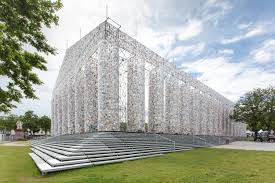
"Adam Szymczyk Led documenta to the Brink of Bankruptcy With a Show That Went Vastly Over Budget"

artnet.com

"Spanish Photographer Behind Inescapable-Infidelity Meme Speaks Out: ‘We Are Not Worried About the Meme Situation’"

nymag.com

"My costumes are part of a "quiet uprising" among women, says Handmaid's Tale designer"

dezeen.com

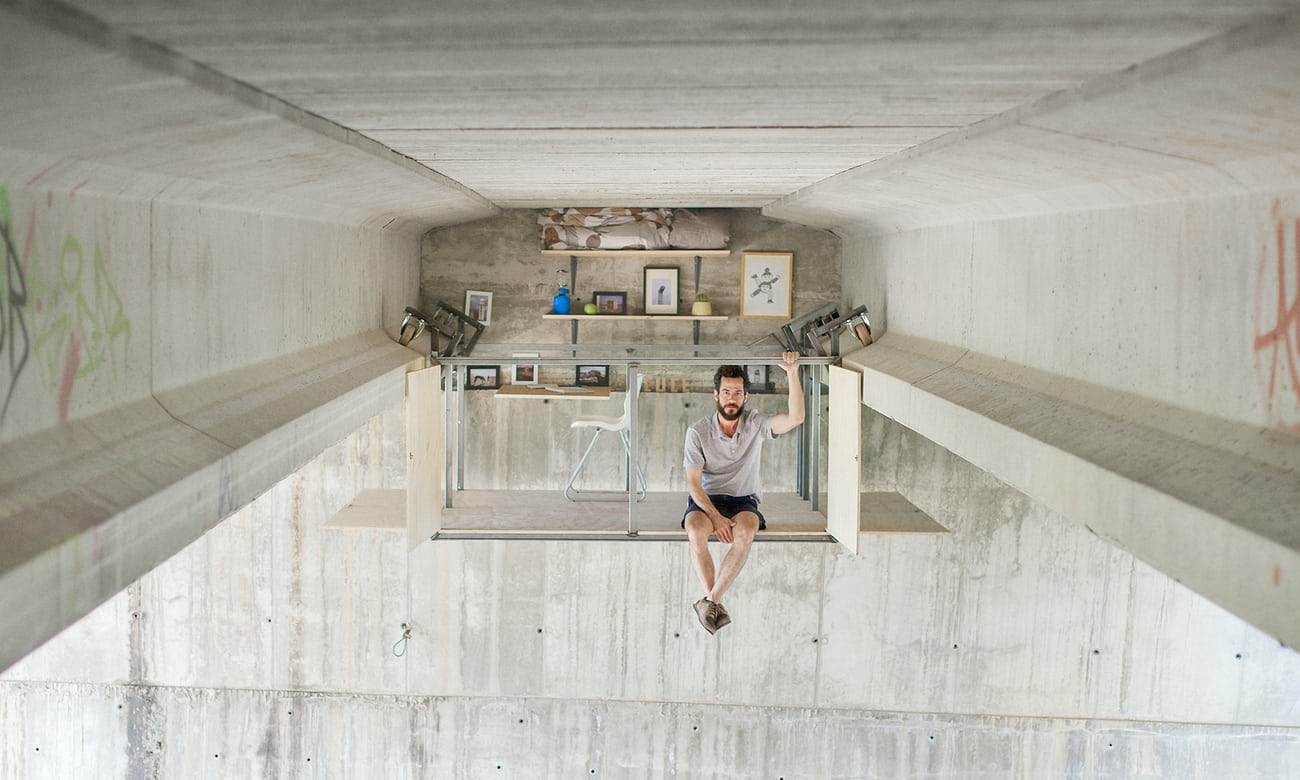
"Parasite architecture: inside the self-built studio hanging under a bridge in Valencia"

theguardian.com

"Nazi looting: Egon Schiele's Portrait of Wally (VIDEO)"

smarthistory.com

"“The Uncomfortable” by Architect Katerina Kamprani" "Julie Mehretu: Politicized Landscapes | Art21 "Extended Play" (VIDEO)" "Have Smartphones Destroyed a Generation?" "College Won’t Train You For A Job, And That Is Just Fine" "Kara Walker’s Triumphant New Show Is the Best Art Made About This Country in This Century" "Adam Szymczyk Led documenta to the Brink of Bankruptcy With a Show That Went Vastly Over Budget" "Spanish Photographer Behind Inescapable-Infidelity Meme Speaks Out: ‘We Are Not Worried About the Meme Situation’" "My costumes are part of a "quiet uprising" among women, says Handmaid's Tale designer" "Parasite architecture: inside the self-built studio hanging under a bridge in Valencia" "Nazi looting: Egon Schiele's Portrait of Wally (VIDEO)"


  • “The Uncomfortable” by Architect Katerina Kamprani
  • Julie Mehretu: Politicized Landscapes | Art21 "Extended Play" (VIDEO)
  • Have Smartphones Destroyed a Generation?
  • College Won’t Train You For A Job, And That Is Just Fine
  • Kara Walker’s Triumphant New Show Is the Best Art Made About This Country in This Century
  • Adam Szymczyk Led documenta to the Brink of Bankruptcy With a Show That Went Vastly Over Budget
  • Spanish Photographer Behind Inescapable-Infidelity Meme Speaks Out: ‘We Are Not Worried About the Meme Situation’
  • My costumes are part of a "quiet uprising" among women, says Handmaid's Tale designer
  • Parasite architecture: inside the self-built studio hanging under a bridge in Valencia
  • Nazi looting: Egon Schiele's Portrait of Wally (VIDEO)
Comment
Kenneth Noland, Sounds in the Summer Night (1962)

Kenneth Noland, Sounds in the Summer Night (1962)

Weekly Flipboard Links and Media Round Up

July 16, 2017

Finding myself back home in the middle of summer after a wonderful field school adventure to Paris and Documenta, I am finishing up one last summer class and then setting out for the year ahead on sabbatical. In many ways, I am tremendously excited, and in other ways I am quite anxious. Being a creature of habit and routine, I have wondered how I will fill the days and weeks that are carefully plotted around the university semester. Will I waste time? Can I find the external motivation to complete the projects I have planned out for the year? Will I miss the classroom? It reminds me very much of the feelings I had in the final years of my Ph.D. when I worked more or less in isolation, with only myself to rely on for a schedule and the ability to meet distant deadlines. I am easing into the idea of it all, and trusting that the constancy of this blog will be a way to keep connected to the world outside my research and projects. In the meantime, I am planning to enjoy the rest of my summer and pick up with the weekly round up now that the field school bloggers have all had a turn in the spotlight. Grab a cool summer drink and enjoy the links!

"The Art World Needs a Jolt. The Electricity Is Coming From Some Surprising Places."

vulture.com

"Fixing the Met: Art Lovers Speak"

nytimes.com

"How San Francisco’s Museum of Modern Art Used Text Messages to Make Art Go Viral"

artnet.com

"Translating Computer Algorithms into Tangible Fabrics"

hyperallergic.com

"Why Robert Rauschenberg Erased a de Kooning"

artsy.net

"The Culture Gabfest “Summer Strut 2017” Edition (PODCAST)"

slate.com

"Liu Xiaobo: The Man Who Stayed"

nybooks.com

"Power Trip: Drugs and the Pharmacology of Control"

artforum.com

"Stan Douglas: Channeling Miles Davis | Art21 "Extended Play" (VIDEO)"

art21.com

"Chris Burden: Ode to Santos-Dumont / Art Basel 2017 Unlimited (VIDEO)"

vernissage.com

"The Art World Needs a Jolt. The Electricity Is Coming From Some Surprising Places." "Fixing the Met: Art Lovers Speak" "How San Francisco’s Museum of Modern Art Used Text Messages to Make Art Go Viral" "Translating Computer Algorithms into Tangible Fabrics" "Why Robert Rauschenberg Erased a de Kooning" "The Culture Gabfest “Summer Strut 2017” Edition (PODCAST)" "Liu Xiaobo: The Man Who Stayed" "Power Trip: Drugs and the Pharmacology of Control" "Stan Douglas: Channeling Miles Davis | Art21 "Extended Play" (VIDEO)" "Chris Burden: Ode to Santos-Dumont / Art Basel 2017 Unlimited (VIDEO)"
  • The Art World Needs a Jolt. The Electricity Is Coming From Some Surprising Places.
  • Fixing the Met: Art Lovers Speak
  • How San Francisco’s Museum of Modern Art Used Text Messages to Make Art Go Viral
  • Translating Computer Algorithms into Tangible Fabrics
  • Why Robert Rauschenberg Erased a de Kooning
  • The Culture Gabfest “Summer Strut 2017” Edition (PODCAST)
  • Liu Xiaobo: The Man Who Stayed
  • Power Trip: Drugs and the Pharmacology of Control
  • Stan Douglas: Channeling Miles Davis | Art21 "Extended Play" (VIDEO)
  • Chris Burden: Ode to Santos-Dumont / Art Basel 2017 Unlimited (VIDEO)
Comment
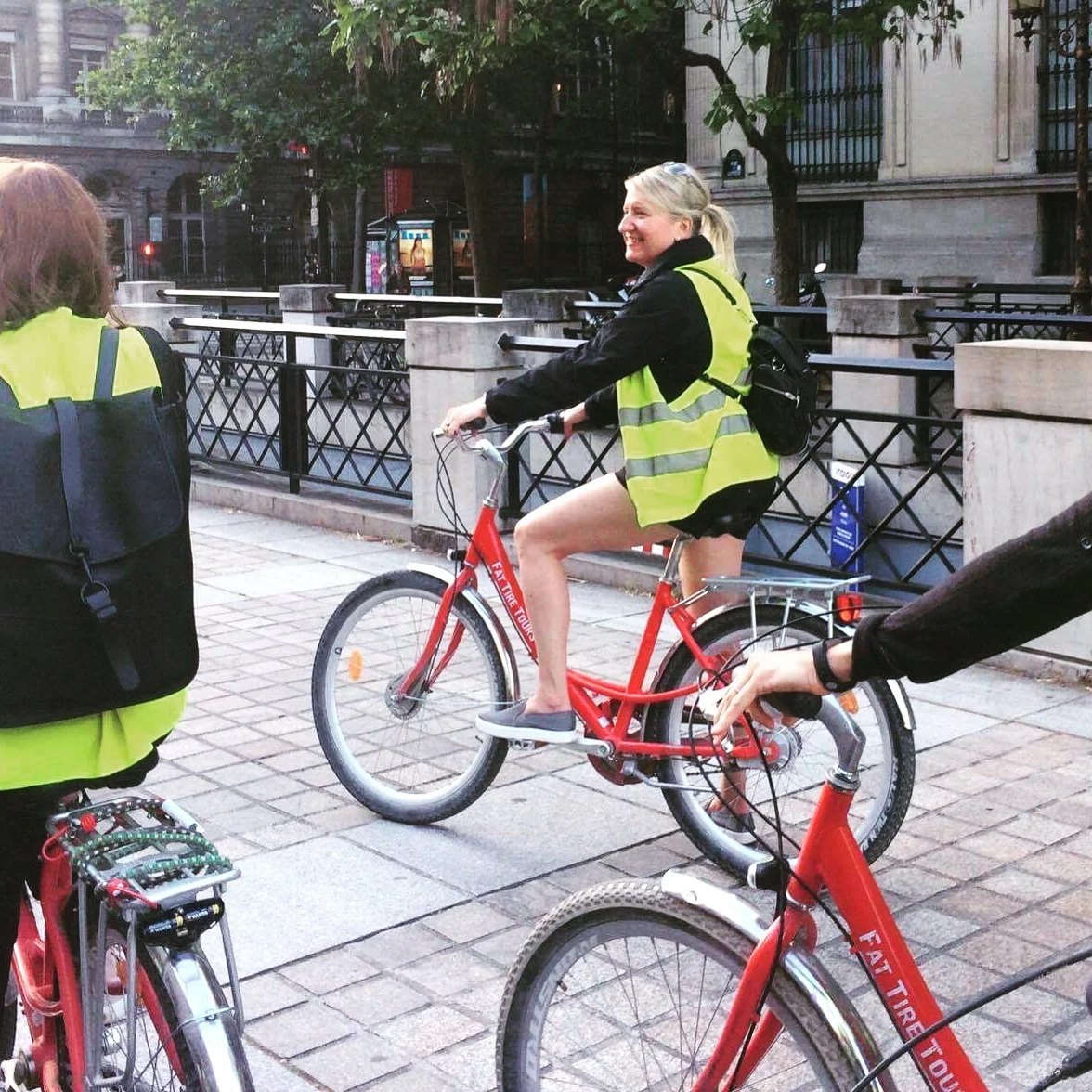
Dorothy enjoying the sights and sounds of a sunset bike tour of Paris.

Dorothy enjoying the sights and sounds of a sunset bike tour of Paris.

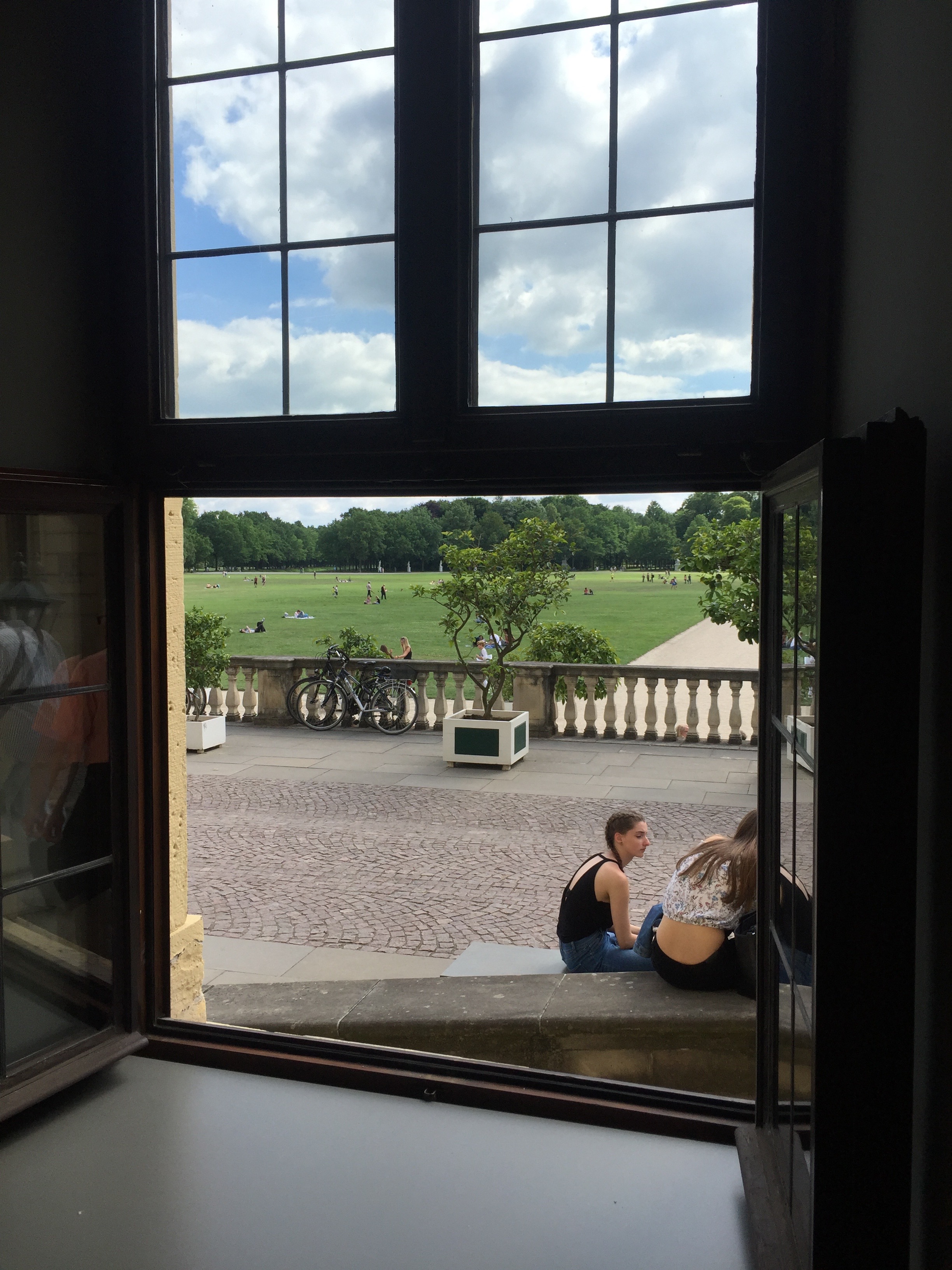
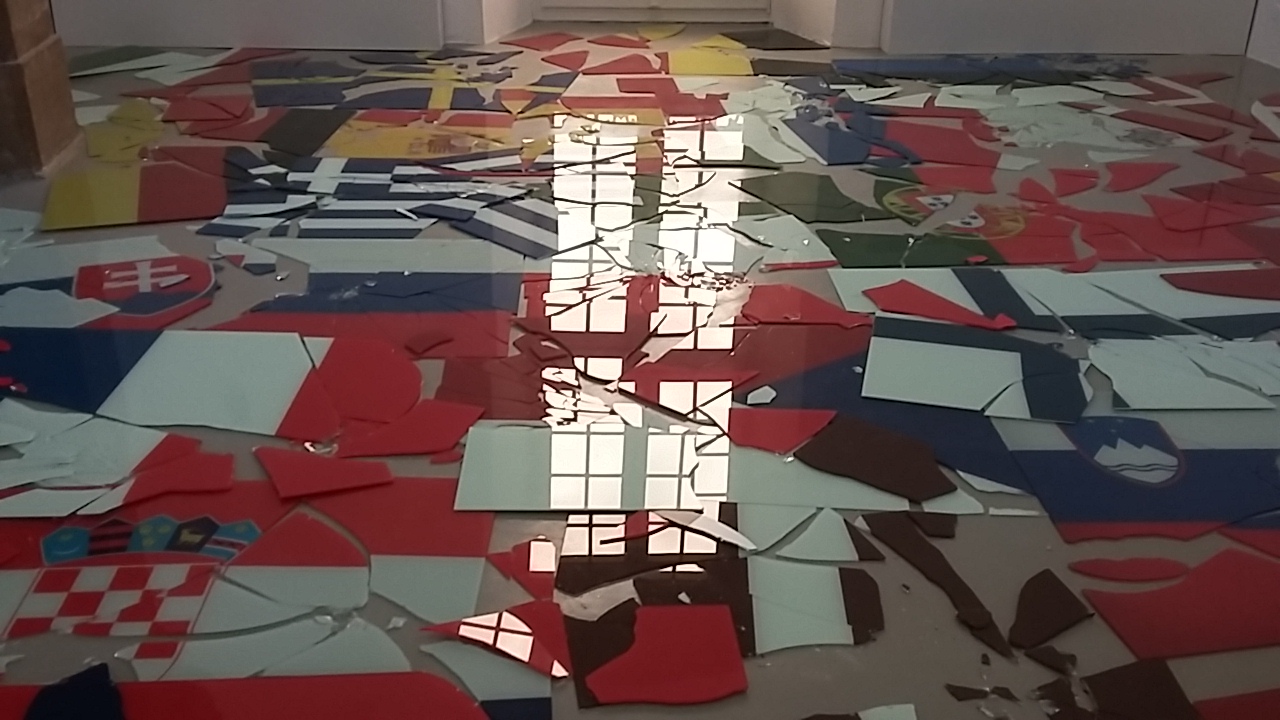
Location| Paris & Kassel: Meet Field School Co-Organizer Dorothy Barenscott

July 13, 2017

Tell us a little about yourself—your teaching areas and interests and/or your background and how you became connected to the Paris /Documenta field school?

Bonjour and Guten Tag! My name is Dorothy Barenscott and I am the co-organizer along with Elizabeth Barnes of the 2017 Field School to Paris, France and Kassel, Germany. I am an art historian and researcher with a Ph.D. and specialization in the field of modern and contemporary art, and I am proud to say that this is the third field school that I have helped organize and run through Kwantlen Polytechnic University for the Fine Arts Department (past trips include a fantastic visit to New York and Venice in 2015, and my first field school to Paris and Kassel in 2012, both with artist/studio Instructor Nancy Duff, now retired).

My interests and research in the fields of urban studies, the artistic avant-garde, theories of modernism, and the expanding field of new media studies, together with the history of art exhibitions and the art market, have informed the cities and sights of interest chosen for the field schools, but I would say that the primary goal of this type of teaching and learning environment is to bring students and artists into closer physical and intellectual proximity to the living objects and dynamic histories that the world’s great art cities have to offer. As a lifelong traveler, both as an adult and graduate student studying in the world’s archives and museums-- but also as a child traveling between Canada and Eastern Europe to visit family and navigate the complexities of very different cultures-- I have long believed that world travel fosters a kind of active and pragmatic critical thinking, compassion, and tolerance that is unique and distinctive from other kinds of social engagement. My blog (and the field school blogs assembled here) serve as extensions of this broader interest in “travel” to reach beyond the classroom and enter into dialogue across wider distances and dimensions.

Dorothy, captured here, inside Jean Dubuffet's Le Jardin d'hiver (1968-70) immersive installation at the Pompidou in Paris.

Group photo with the field school students on the night of the memorable bike tour (Dorothy pictured seventh from the left).

How did you approach the task of teaching and working with students inside and outside the classroom for the field school?

Since I have learned a great deal from past iterations of the field school, I have had the benefit of fine-tuning both the pre-trip activities and on the ground itinerary for the art history course that makes up one of the two core courses for the field school. From my experience, one of the best ways to get students to engage with the art of the past is to assign them individual and relevant artists and art works that they can study ahead of the trip. Since my course’s focus was on the nineteenth century renovation of Paris and the modern art movements that emerged in conversation with these urban transformations (i.e. Impressionism and Post-Impressionism), Elizabeth and I sat down early in the planning phase of the field school and carefully chose and assigned artists and works from the Orsay Museum collection that we anticipated would resonate with individual students enrolled in both of our classes. We did this partially based on our knowledge of the students’ interests, but also as part of our desire to push and challenge the group, as individual members and collectively, in new ways. Reading, research, and careful consideration of historical context therefore made up the condensed three-week lecture and seminar portions of our pre-trip classes.

Once on the ground in Paris, and later in Kassel, we asked students to keep a daily travel journal of their encounters with the city and the art works they had studied, prompting them to reflect (through daily questions and mini assignments) on the unfolding and deepening knowledge they were gaining about their assigned artist and artwork. For students who were enrolled in both the art history and studio courses, this engagement also translated to their art practice and the daily art assignments that Elizabeth devised in coordination with my art history questions to keep our students creatively engaged for the duration of the trip. One of the bonuses of then traveling to Kassel to see Documenta was the challenge we posed to our students to connect their nineteenth century artist to some of the many contemporary artists featured at the important global art exhibition. Many people do not realize how radical and difficult much of the art of the Impressionists and Post-Impressionists was to the audiences of the their time, and it was therefore an important goal of this field school to have students critically engage with cutting edge contemporary art—an often difficult task—through their own appreciation and knowledge of past cutting-edge art movements.

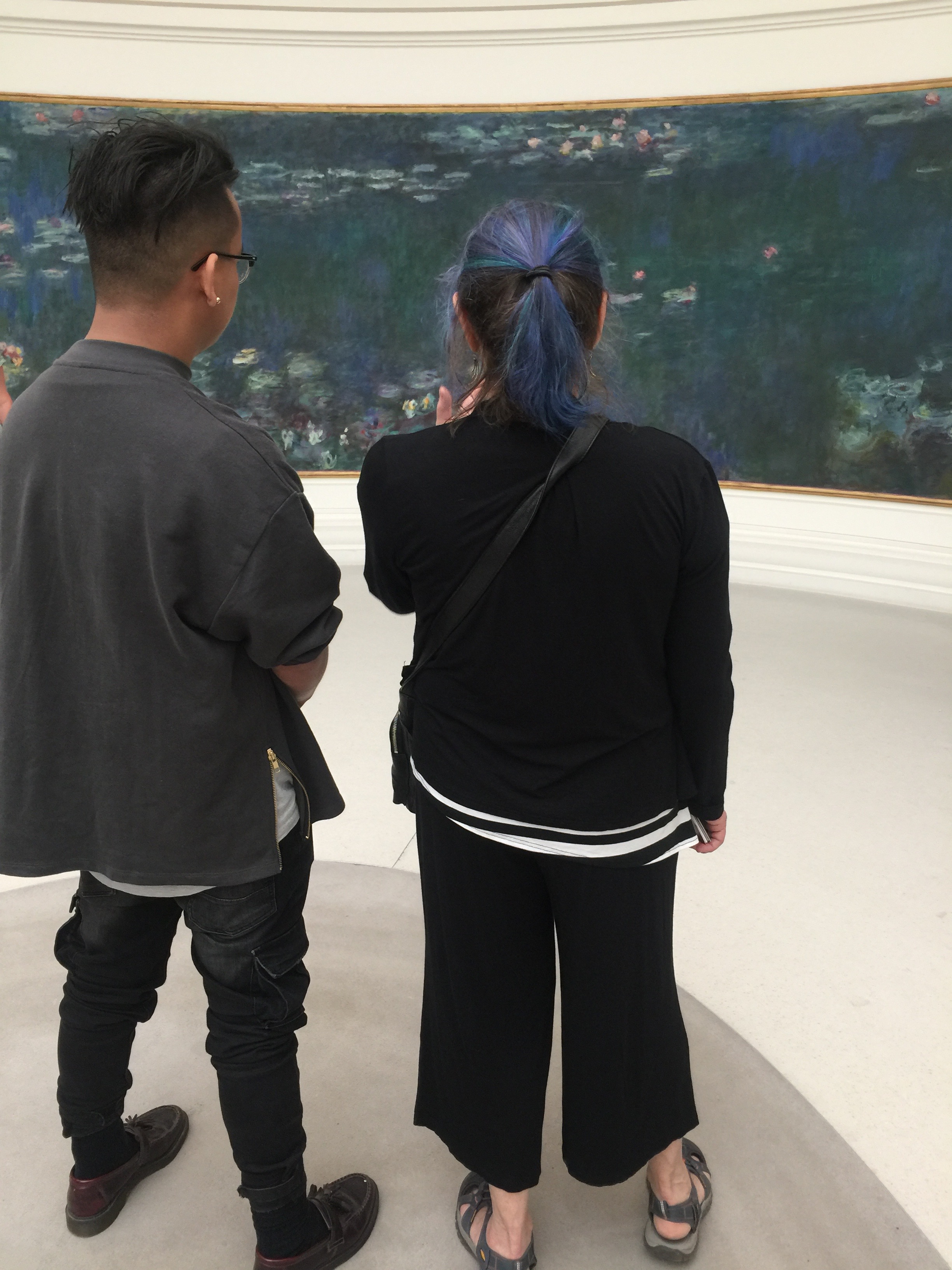
Capturing 180 degrees of Monet at the L'Orangerie Gallery in Paris.

Looking up to see Chagall at the Paris Garnier Opera House.

Traveling out to Giverny to see and experience Monet's gardens.

Graffiti and street art hunting in Kassel-- here with Graham, who made it onto both ends of the panorama shot!

What was unique or memorable about experiencing Paris and Kassel with a group of students already interested in and/or practicing art making?

So much! To be honest, part of me worried that experiencing Paris and Kassel for a second time, albeit with a new group of students, would somehow lessen the exhilaration I experienced on the first trip in 2012. But nothing could be further from the truth. My number one thrill—watching students encounter and become captivated by compelling works of art or artists that they have long loved—was something I got to experience many times on this trip, and that feeling never gets old. Other moments, like walking with students through the grand halls of the Louvre and the Orsay, hunting with them on the streets of Paris for the perfect café experience, bike-riding at sunset, dashing for the Metro in laughter, discovering new local restaurants or street art, or stumbling upon some fantastic new artwork in an unexplored part of Documenta—the many many special moments that made up this trip were experienced in entirely new ways for me. This was perhaps one of the biggest revelations of the trip. Each field school is very unique, and it is the individual students—their distinct personalities, interests, quirks, and backgrounds— that bring the energy and special character that inform the final “feel” and long-term memory of the adventure.

Dorothy photographing the Champs-Élysées after touring the Arc de Triomphe.

Dorothy photographing the Champs-Élysées after touring the Arc de Triomphe.

IMG_2523.jpg
IMG_3095.jpg
IMG_2805.jpg
IMG_3368.jpg
IMG_3619.jpg
IMG_3468.jpg
IMG_3598.jpg
party time 2.JPG
IMG_3623.jpg
IMG_3774.jpg
IMG_3775.jpg
IMG_2523.jpg IMG_3095.jpg IMG_2805.jpg IMG_3368.jpg IMG_3619.jpg IMG_3468.jpg IMG_3598.jpg party time 2.JPG IMG_3623.jpg IMG_3774.jpg IMG_3775.jpg

Which of the activities during the trip stand out to you? Any special highlights or memorable moments for you?

I can say that one of the most memorable aspects of this trip, something I had never done in the past, was that I kept an art journal and did daily sketching and drawing along with the art students. I also took many photographs and enjoyed the process of selecting, editing, and filtering images for the field school Instagram hashtag #kpuparis. Exercising another outlet for creativity besides my writing and research was a revelation, and I was grateful to be encouraged in my efforts by Elizabeth and many of the other students. I believe I am becoming a better art historian as I experiment with art making, and the more time I spend working with and teaching studio artists, the more I appreciate their mind-set and unique perspective on art history. I also made a quick exit from the field school on our final day in Paris to present a conference paper (based on the collection Canadian Culinary Imaginations I am co-editing with Dr. Shelley Boyd) at a Canada 150 themed international conference hosted by Paris Diderot University. This momentary pause to put on my researcher hat and represent KPU was somewhat surreal as it brought two very different parts of my job into sharp relief.

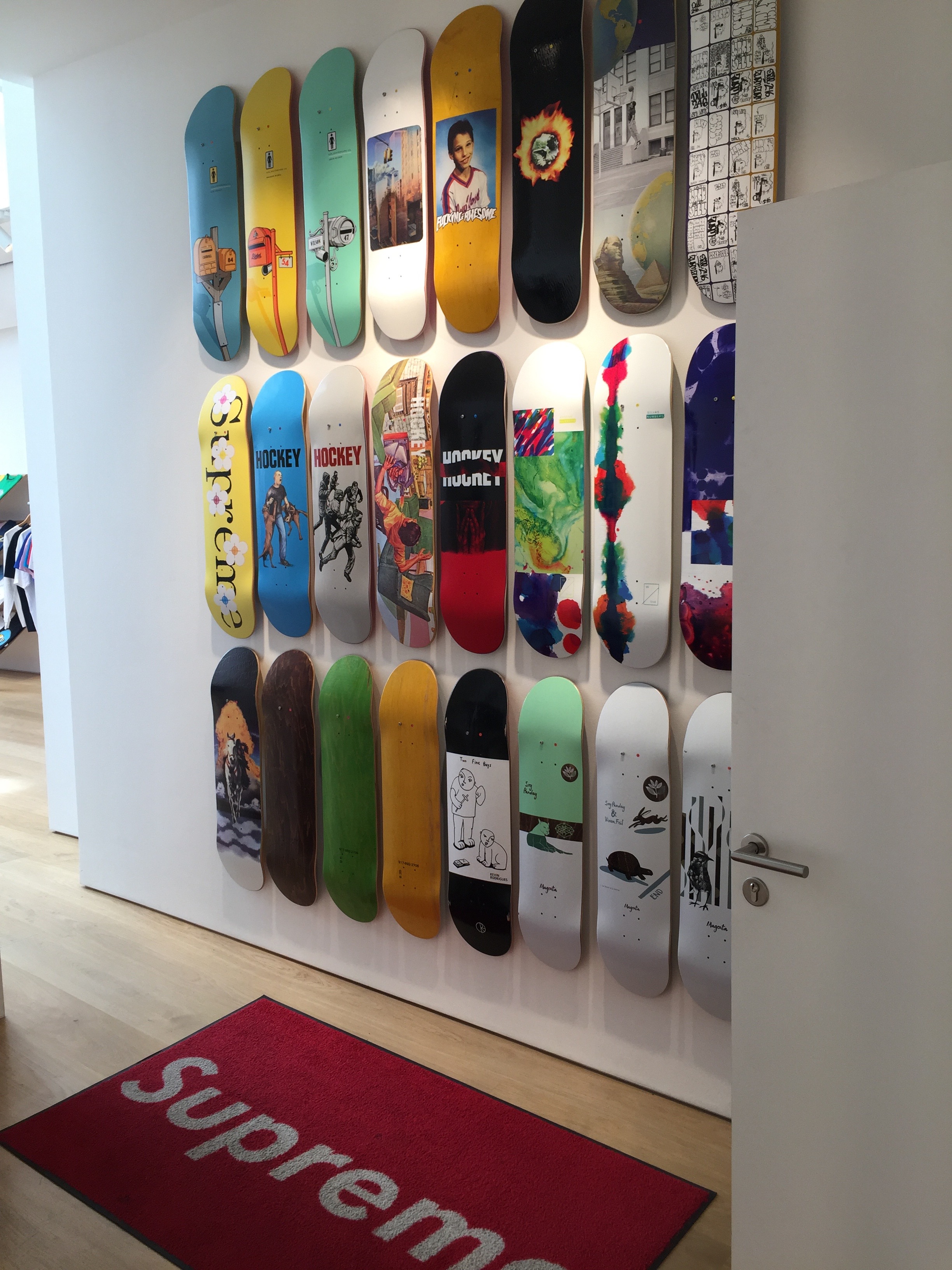
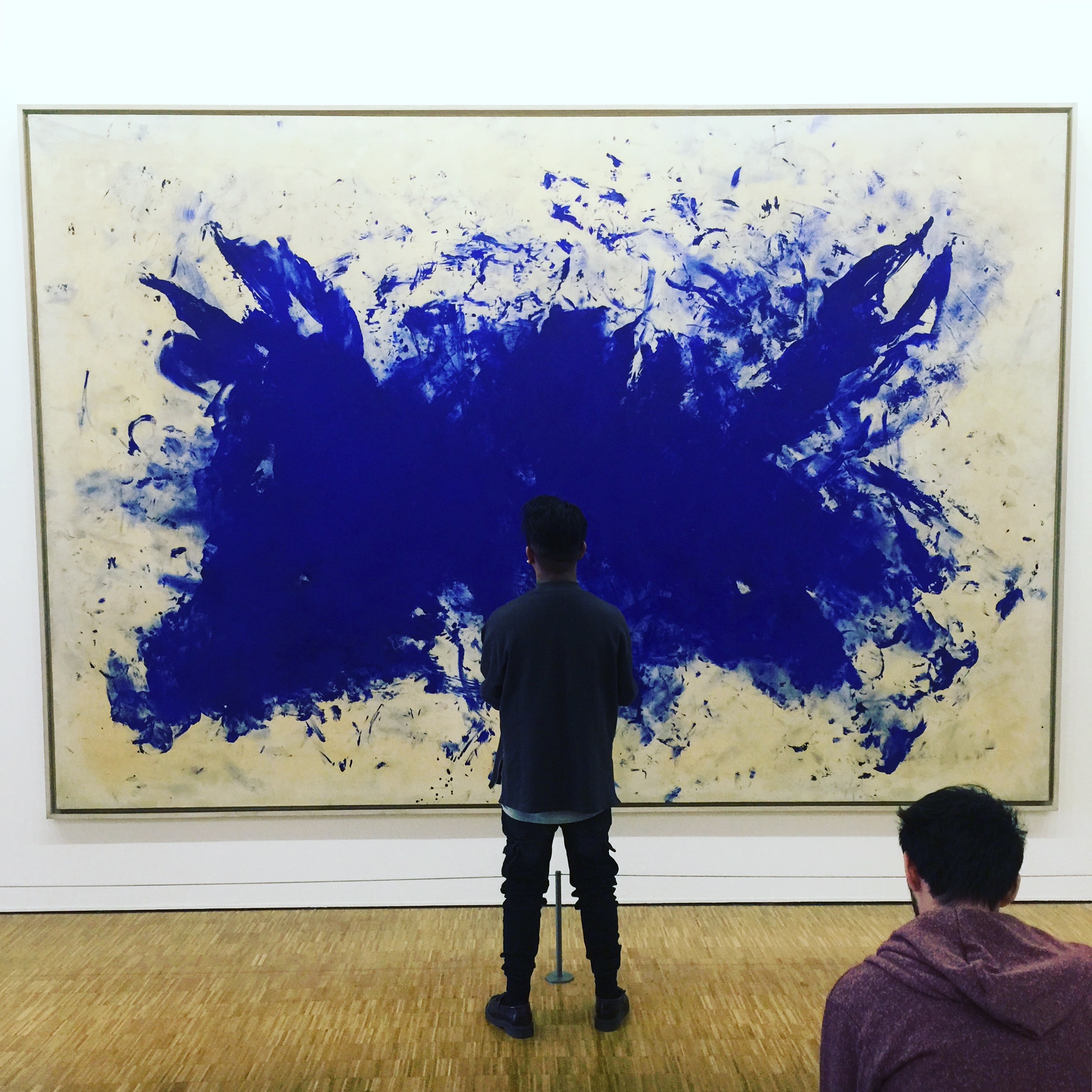
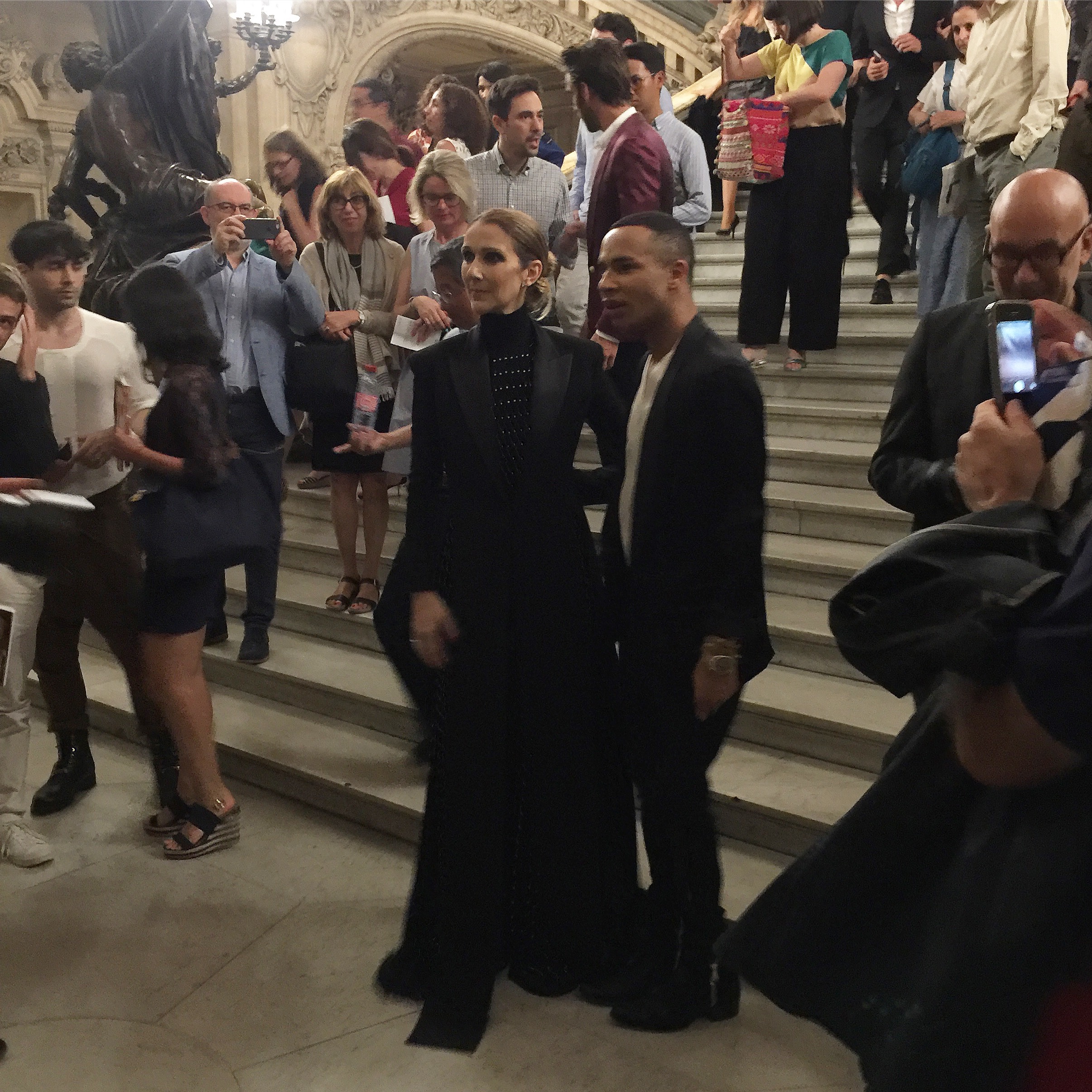
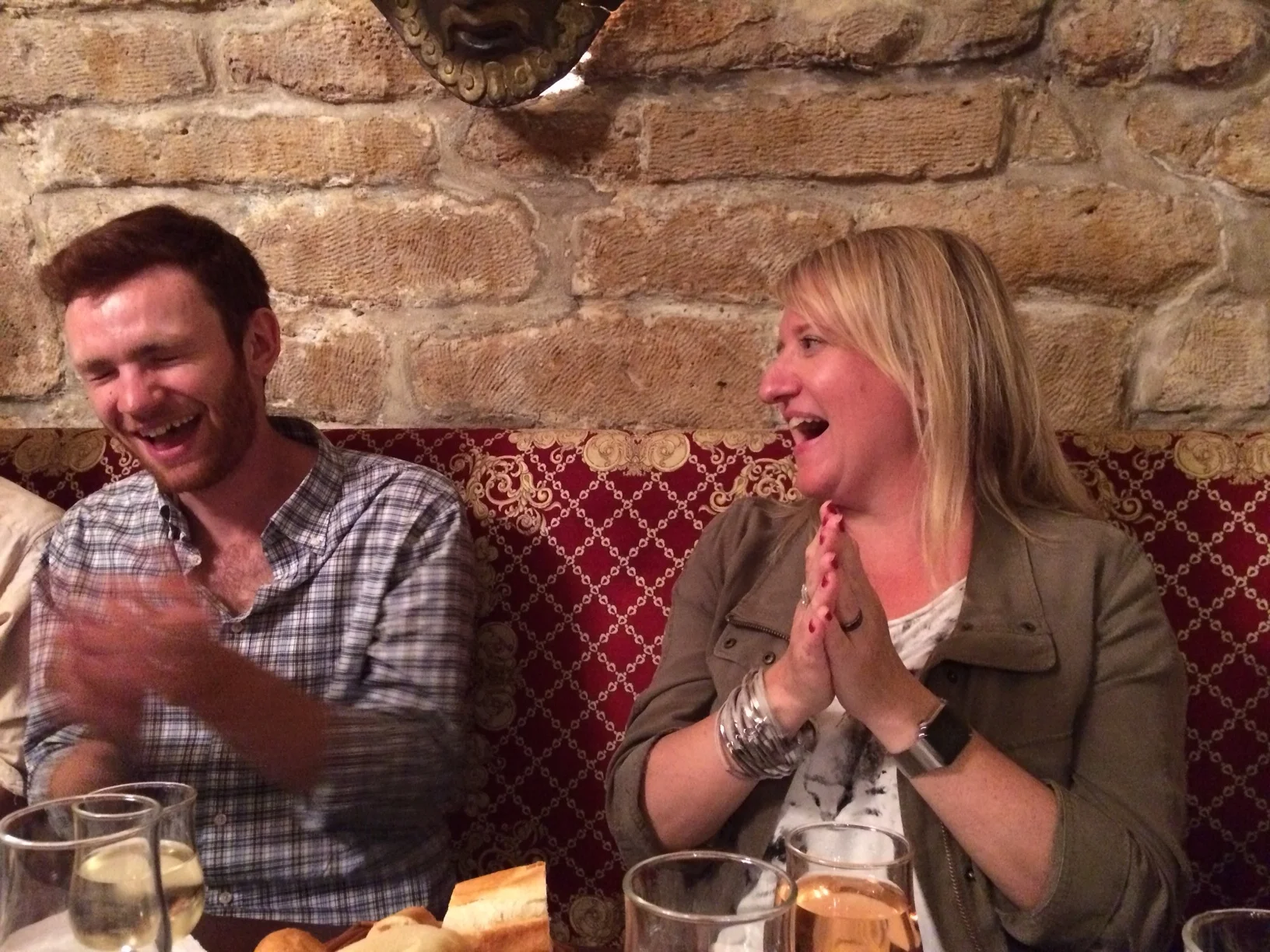
Looking back at this group and this particular field school, I have a big smile on my face as I can think of many great moments that I shared with each individual, but some of the special highlights that come first to mind include: taking a trip up to Giverny with Ashley to see Monet’s Gardens (where I think we both had one of our best meals of the trip); laughing so hard my sides hurt and tears were streaming from my face at our group dinner; wandering into the majestic Pantheon with Cameron, Kate, and Elizabeth on an impromptu visit; hunting for Yves Klein paintings with Kenneth at the Pompidou; finally experiencing the whole “Supreme” phenomenon in the Marais with Lukas; dreaming up new business ventures to pitch on Shark Tank over beers with Graham; seeing (and somehow photographing!) Celine Dion and Olivier Rousteing at the ballet I attended with Elizabeth; and finding many quiet moments alone to sit back and reflect on how fortunate I am to be on this adventure of a lifetime yet again. 

To see more photos and impressions of Paris and Kassel as the field school continues, check out our Instagram feed #kpuparis

Comment
Elizabeth performing her best Mary Cassatt In the Loge on opening night of a series of contemporary ballet performances at the Garnier Opera House.

Elizabeth performing her best Mary Cassatt In the Loge on opening night of a series of contemporary ballet performances at the Garnier Opera House.

Location| Paris & Kassel: Meet Field School Co-Organizer Elizabeth Barnes

July 08, 2017

Tell us a little about yourself—your teaching areas and interests and/or your background and how you became connected to the Paris /Documenta field school?

My name is Elizabeth Barnes and I attended the Paris / Documenta Field School as one of two faculty members. At Kwantlen Polytechnic University, I teach drawing, painting, and advanced studio courses in the Fine Arts Department. When Dorothy Barenscott approached me to teach in the field school, I agreed to do so immediately. I had never been to Paris or Documenta, so this was a very exciting proposition.

My personal studio practice is based mostly in painting, although I also work in digital media. I am particularly interested in the intersection between art and technology from both a current and historical perspective. The structure of the field school, beginning with historical work at the Louvre and ending with Documenta, where we experienced some of the most challenging contemporary art being made today, allowed me to consider the depth of my own practice with renewed focus.

Elizabeth examining and discussing a Monet panel with field school student Kenneth.

Elizabeth examining and discussing a Monet panel with field school student Kenneth.

Elizabeth (first on left in second row) with the field school students, examining the iconic Olympia (1863) by Edouard Manet at the Orsay Museum.

Elizabeth (first on left in second row) with the field school students, examining the iconic Olympia (1863) by Edouard Manet at the Orsay Museum.

How did you approach the task of teaching and working with students inside and outside the classroom for the field school?

The studio aspect of the field school began with three weeks in our Surrey studio, where students completed two projects informed by the Impressionist artist they were assigned to research. I worked with the students by sharing examples of contemporary artists whose work touched on ideas relevant to the Impressionist work they were studying. For the second project I also assigned a quote from a contemporary source for students to consider and to help students to expand their ideas. During our travels in Europe I was encouraged by the fact that quite a few students came to me relating thoughts from their studio work with what they were seeing. Students sketched daily, and their sketchbooks showed that their ideas continued to evolve.

View fullsize 2. Louvre.JPG
View fullsize IMG_2837.jpg
View fullsize 1.ParcButtes-Chaum.JPG
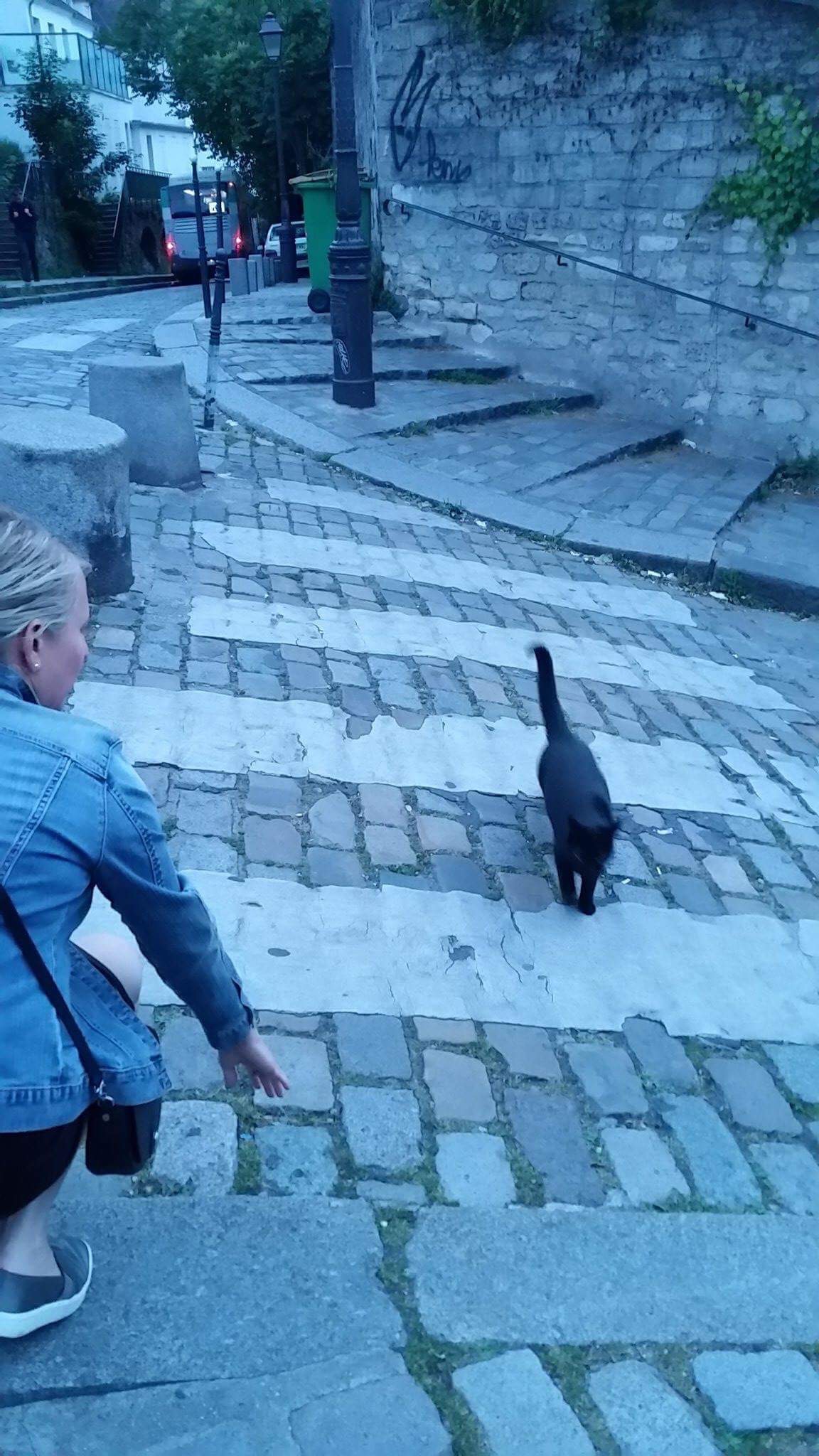
View fullsize 3.Louvre-cat.JPG
View fullsize 5.St.Chappell.JPG
View fullsize IMG_3682.jpg

What was unique or memorable about experiencing Paris and Kassel with a group of students already interested in and/or practicing art making?

Travelling with a group meant that we all became much better acquainted and more open to sharing our thoughts. Having an historical knowledge of the renovation of Paris in the 19th century and understanding its transition, affected the way in which we looked at the architecture, as well as life in the streets. Watching students become excited over seeing the actual art they had studied was equally as exciting as seeing the work myself for the first time. It became clear that this trip would change students understanding of art and the way they make it. I look forward to seeing what they produce over the next school year.

Elizabeth was delighted to see the work of Stan Whitney, her former teacher and mentor, at Documenta in Kassel, Germany.

Elizabeth was delighted to see the work of Stan Whitney, her former teacher and mentor, at Documenta in Kassel, Germany.

Elizabeth was especially struck by the work of Ross Lovegrove, a designer she encountered at the Pompidou in Paris, working in some of the same forms she has used in her art practice.

Elizabeth was especially struck by the work of Ross Lovegrove, a designer she encountered at the Pompidou in Paris, working in some of the same forms she has used in her art practice.

Which of the activities during the trip stand out to you? Any special highlights or memorable moments for you?

There were many highlights on the trip, and each museum seemed to increase the excitement, but I think that the trip to the Pompidou was a high point. It was here that the transition from modern to contemporary became clear. It was also here where I witnessed students barely able to contain their excitement upon seeing a familiar piece of art close up and live for the first time. I remember this excitement for myself, and know that this will now be an important part of life for each of these students, one that will enrich and inform who they are and who they become.

To see more photos and impressions of Paris and Kassel as the field school continues, check out our Instagram feed #kpuparis


Comment
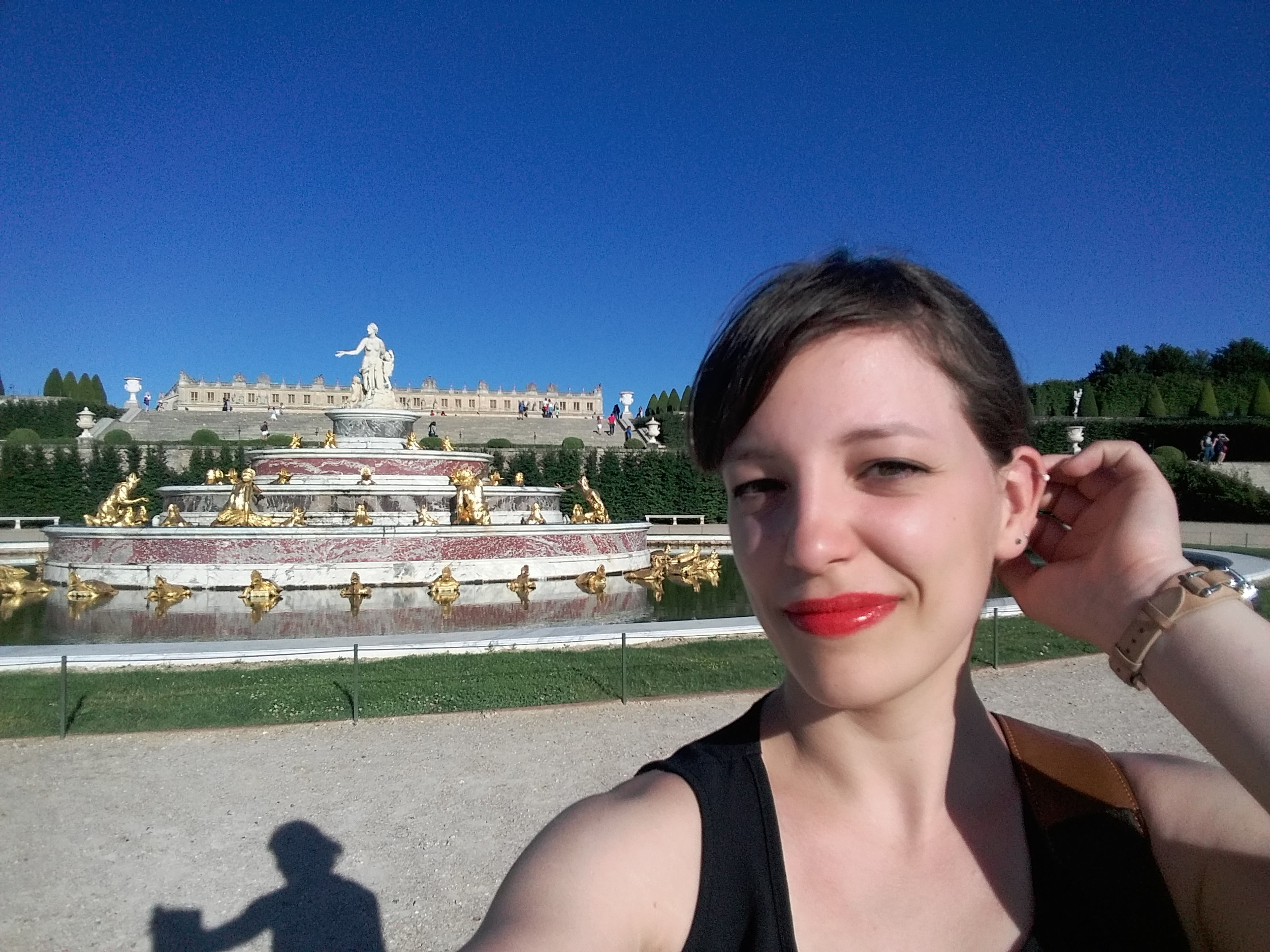
Meet Kate, posing here in a fantastic selfie at the majestic Versailles Palace.

Meet Kate, posing here in a fantastic selfie at the majestic Versailles Palace.

Location| Kassel: Meet Field School Blogger Kate Akshentseva

July 04, 2017

Tell us a little bit about yourself—your background, major program of study, reasons for taking this trip, and anything else interesting you want to share (maybe something people might not know about you).

Hello, my name is Kate, and I am a Kwantlen Polytechnic University student majoring in Psychology and Fine Arts; actually you can say that in a few days I will be a KPU graduate. My post secondary journey began with studies of developmental psychology and explorations of the mechanics of the human mind. Two years into my education I was confident enough to re explore the passion of my life, and took a painting class as a test. It turned out that years of transcultural assimilation and geographical transitions are not as omnipotent as they ought to be in terms of causing identity crises. Together with the artistic freedom I regained self-sufficiency in expression and perceptivity.

Just like that, before I had the chance to reconsider - my days were accompanied by solvent smells, paint stains, and sudden impulses to sketch, and the nights saturated with coffee and APA Journal terminology. It turns out that one cannot simply walk away from art, especially considering that the world around is practically overflowing with it. And so, having gained enough practical experience in the studio and theory in class, it is finally the time to see how it all ties in together on a larger scale. Here I am, roaming the streets of Europe, bathing in the glory of the civilizational accomplishments and soaking in the history.

View fullsize received_10209677340878938.jpeg
View fullsize received_10209677337358850.jpeg
View fullsize 20170609_172734.jpg
View fullsize received_10209677414040767.jpeg
Group photograph at the Orsay in front of one of the most important works of modern art-- Edouard Manet's Le Déjeuner sur l’herbe (1863). Kate second from far left. 

Group photograph at the Orsay in front of one of the most important works of modern art-- Edouard Manet's Le Déjeuner sur l’herbe (1863). Kate second from far left. 

What has met or exceeded ­your expectations or surprised you about Kassel?

Arriving at the city of Kassel was a refreshingly different experience; if the residency in Paris was accompanied by some knowledge of the language and expectations, Kassel was a clean slate. Doing some research ahead of time would have been a good idea, but I am not complaining, because figuring out the significance behind the city’s history on my own (by simply basing my guesses on the monuments and landmarks) was a true revelation. It turns out that the city of Kassel is famous as the place where brothers Wilhelm and Jakob Grimm created most of their world famous fairy tales.  It is an old town with a modern façade, so different from Paris that came off as a proud juxtaposition of the classical and the modern.  When I asked the locals about the reason behind this, and I was lucky enough to encounter a history enthusiast, I was told that Kassel was badly damaged and almost completely destroyed after the Second World War, and that the modernity comes from the renovation of 1945.  The heart of the city has wide shopping streets and colourful buildings, surrounded by scenic landscapes of green parks and gardens.  The first glimpse of Germany has exceeded my expectations - I got the opportunity to enjoy the picturesque nature, get acquainted with unique works of art, and of course witness the Documenta.

Kate was assigned Edgar Degas's Portraits at the Stock Exchange (1878 – 1879) from the Orsay collection.

Kate was assigned Edgar Degas's Portraits at the Stock Exchange (1878 – 1879) from the Orsay collection.

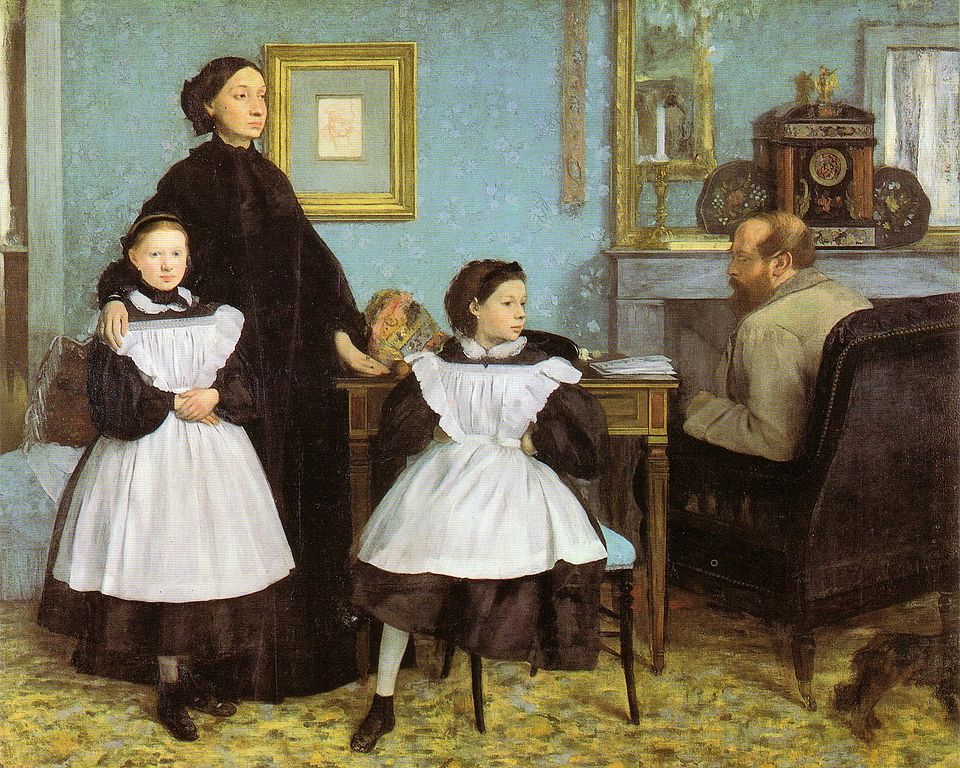
Unable to see her original Degas in person, Kate was pleased to see this work, The Bellelli Family (1858-1867), a painting that was discussed in the resource materials she studied when preparing her studio projects.

Unable to see her original Degas in person, Kate was pleased to see this work, The Bellelli Family (1858-1867), a painting that was discussed in the resource materials she studied when preparing her studio projects.

Give us some insight into your assigned artwork from the Orsay Musuem. After seeing the work in person in Paris (and any other related art from the same artist or art movement associated with the assigned work), what struck you most about it and/or how did the artwork’s form, content, and context shift for you when seeing it.

I was assigned Edgar Degas’s Portraits at the Stock Exchange (1878 – 1879), a 100 by 82 cm. oil painting on canvas; depicting a portrait of the banker Ernest May (as the title suggests) at the stock exchange. By choosing to depict a chaotic composition, and filling it with agitated faceless figures, the artist depicts a setting and the relevant mood that are so representative of the time. And just like Degas does in many of his other works, here the artist includes himself into the painting through the mood; knowing the money world well, he comments on the shady nature of the money exchange business.  

The painting, however, was not at the Musée D’Orsay on both days of my visit. Nobody seemed to know where it was, which was quite upsetting, especially after seeing all of the other works that were discussed in class and how they make an impact on first hand experience.

The piece that impressed me the most was Degas’s The Bellelli Family (1858-1867), oil on 200 by 250 cm. canvas. This painting was discussed in the assigned reading accompanying my painting, and taken apart on a very methodical level; therefore, witnessing it in person was an overwhelming experience. All of the mentioned elements were presented as detail images, which of course does not compare in any way with the opportunity to come up-close and examine them. The scale, richness of the colour, and the presence of the original images (in the same room) that were copied into the painting, all of these factors changed my reading of the painting completely. It was like getting to know a person through a photograph and then finally meeting then in person and getting the full range of the individual’s character.

Kate completed this painting titled Trend Whispers as her final studio project in dialogue with her assigned Degas painting.

Kate completed this painting titled Trend Whispers as her final studio project in dialogue with her assigned Degas painting.

How did you approach the creative task of responding to this assigned work in studio? What were your challenges as an artist to be in dialogue with the artwork and artist? Would you do anything differently now that you have seen the work in person?

As a response to my assigned work I created a piece exploring the idea of stock exchange in the context of the twenty-first century. Interviewing professionals in the area, I gathered mental images and ideas of what the market looks like in the minds of data analysts. Then, using magazine cutouts and other clippings assembled in a brainstorming sketch, I generated a vision for the final piece in terms of content and compositional layout. Combination of these research methods resulted in a 3’ by 4’ painting on canvas utilizing acrylic paint and watercolour pencils.

Titled Trend Whispers, the painting explores the meaning behind symbolism used to describe the stock market and comments on the anonymous quality of the exchange processes. Washed quality of the background and sketched finish of the figures depicted, comments of the fact that stock trading is a shady business that may be done by anyone from anywhere. Symbolism behind the use of bull and bear to describe markets comes from the way the animals attacks their opponents; the bull thrusts its hurts upwards, while the bear grounds its paws into the ground - a metaphor for how the market is behaving. Incorporating features of these animals in the painting was meant to involve the audience and raise a question of how these figures are related to the market context. Figures bearing the animal features are meant to hint at the attributes of the two types of markets, and help to piece the picture as a whole. The concept of the male gaze is inverted in that it is depicted in the image and not used as a perspective point - the viewer is confronted with the figure’s (on the left) stare, bearing the connotation of the “Big Brother watching you” in the context of stock exchange; the “Big Brother” representing the influential sources behind the economic downs and falls.

I found being in dialogue with an artwork is like having a two training wheels attached to your bicycle – it is a good starting point and at a certain stage you can just take them off and roll on your own. The assigned painting pushed me to explore a subject that I would not have chosen otherwise. Research and experimentations were the two factors that made it happen. The main challenge was reworking my process and stopping myself from obsessing about the finished quality. If I were to change anything, it would be to allow just a little bit more realism and finish in certain parts of the painting. Overall, choosing a topic and technique that is not of my character and analyzing it in the context of the present moment is definitely something that should be done every once in a while, if not for technical advancement, then at least for the sake of inspiration.

IMG_3921.jpg IMG_3747.jpg 20170618_124605.jpg 20170621_160059.jpg 20170621_160613.jpg

Today’s activity was located at the Documenta 14. What were your impressions? What will you take away of the experiences of this day?  What are the most memorable moments for you?

Today’s activity took place at the Documenta 14 exhibition in the beautiful city of Kassel. I must admit that this event is a challenge to me on many levels, however, I was taken by surprise by how engaging and flowing the experience of art viewing turned out to be. Spread out though the whole city, the exhibit makes you walk, makes you see, hear and smell in order to make a sense of the happening. Unlike in other exhibits, the viewers are not locked into one building and forced to examine art within the artificial environment, ripped out of context; here the city itself is included in the dialogue, the history plays a role as well.

Touching on many topics, mediums and scales, this exhibition redefines art. It has an attitude; it is multifaceted, controversial, yet, settle at times, and even (I will not be afraid to say) beautiful. This was an overwhelming day. If Musée du Louvre has overthrown me by its history and technicality, Documenta was a conceptual feast. In the walls of the exhibit I heard a whisper saying that ignorance is bliss. I disagree.  The Documenta is a treasury of contemporary art, a library of the modern issues, a fountain of inspiration.

To see more photos and impressions of Paris and Kassel as the field school continues, check out our Instagram feed #kpuparis

Comment
Newer / Older
Back to Top
Screenshot 2018-02-05 20.48.17.png

© Dorothy Barenscott, 2010-2025