• Fall 2025
  • Blog
  • Resources
  • Field School
  • Students
  • Feedly
  • About
Menu

Avant-Guardian Musings

  • Fall 2025
  • Blog
  • Resources
  • Field School
  • Students
  • Feedly
  • About
large monogram_2018-02-01_22-31-07.v1 (1).png
“Art is an outlet toward regions which are not ruled by time and space”
— Marcel Duchamp

Avant-Guardian Musings is a curated space of ideas and information, resources, reviews and readings for undergraduate and graduate students studying modern and contemporary art history and visual art theory, film and photography studies, and the expanding field of visual culture and screen studies. For students currently enrolled in my courses or the field school, the blog and associated social media links also serve as a place of reflection and an extension of the ideas and visual material raised in lecture and seminar discussion.

Blog RSS

Screenshot 2018-02-05 20.56.45.png
Blog
KPU FINE ARTS PARIS + VENICE BIENNALE FIELD SCHOOL (MAY/JUNE 2026)
about 2 months ago
"No Fun City" Vancouver: Exploring Emotions of Detachment in Palermo, Sicily at AISU
about 4 months ago
Making Sense of Art in the Age of Machine Learning—A Suggested Reading List
about 5 months ago
From the Archives | How (And Why) To Take Excellent Lecture Notes
about a year ago
Weekly Musings + Round Up... And A Few More Things
about 2 years ago

Screenshot 2018-02-05 20.56.51.png
As we start the week in a storm of activity, new beginnings, and global uncertainty, I am grounded in my word for 2026– INTENTIONAL 🩶— “done with purpose, willingness, deliberation, and consciousness.” I see this word represe
As we start the week in a storm of activity, new beginnings, and global uncertainty, I am grounded in my word for 2026– INTENTIONAL 🩶— “done with purpose, willingness, deliberation, and consciousness.” I see this word represented in the symbol of the heart, and for this reason and many others both personal and professional, I will be bringing this much needed energy to my year. The power of a yearly word is transformative. I started in 2019 and my words have guided and carried me through some important moments and life decisions. If you haven’t already, give it a try, but remember to choose very wisely ☺️ “Radiate” 2025 ✨ “Maintain” 2024 💪🏻 “Refine“ 2023 🙌🏻 “Acta non verba” 2022 🤐 “Audacious” 2021 💃🏼 “Fearless” 2020 😛 “Unapologetic” 2019 💅🏻 #happynewyear #wordoftheyear #intentional #monicavinader @monicavinader
Polar bear ride! 🐻‍❄️🏍️💨🏍️ First motorcycle outing of 2026 in the books. A balmy 4C 🥶We love you Vancouver— good to be home 💙😊Wishing everyone a very Happy New Year! 🥳 
.
.
.
#happynewyear #vancouver #motorcycle #motorcyclesofinstag
Polar bear ride! 🐻‍❄️🏍️💨🏍️ First motorcycle outing of 2026 in the books. A balmy 4C 🥶We love you Vancouver— good to be home 💙😊Wishing everyone a very Happy New Year! 🥳 . . . #happynewyear #vancouver #motorcycle #motorcyclesofinstagram #motocouple #husqvarna #vitpilen401 #svartpilen401 #motogirl #motogirls
2025... where did it go?! 😂 Like a ray of light, I was very much guided by my chosen word of the year “radiate”— to shine and send out beams of energy— and this allowed for a great deal of adventure, new experiences, ideas an
2025... where did it go?! 😂 Like a ray of light, I was very much guided by my chosen word of the year “radiate”— to shine and send out beams of energy— and this allowed for a great deal of adventure, new experiences, ideas and people and opportunities to flow back into my life. Above all else, I found myself very much on the move all year! Travel took me from New York to Lausanne, Paris to Seoul, and Palermo to Maui, while my motorcycling stayed more on the road and less on the track as Brian and I balanced our time, energy, and commitments. But as always, we found every spare moment to prioritize this shared passion and we hope to find a way back to the track in 2026. Professionally, the year was... A LOT... and highlighted by many new research partnerships, conferences, workshops, writing projects, some failed plans and sharp detours, but also the planting of new seeds for future ventures. In the classroom, AI brought many new challenges and opportunities to rethink the purpose of my teaching and courses, but overall I was inspired and at times surprised by what my students were able to accomplish with the new assessment models I put into place. All of this technological change remains very much a work in progress for academics, and I prefer to remain optimistic that the artists I work with will find a way to maintain their voice and vision in it all. The historian in me knows this to be true. Personally, I connected more to my heart and intuition in 2025, listening to that inner voice to guide many key decisions. Brian and I also kept up a decent health and fitness regime that had us energized and aiming for consistency to match our midlife pace. Use it or lose it is a reality in your 50s!!! Sending wishes of peace and love and a very Happy New Year to all! May your 2026 be filled with fun, awe, purpose, and good health and much happiness. Remember to be good to yourself so you can be good to others. I’m still working carefully on my 2026 word… but whatever it is, I know it will be the right one ❤️ . . . #happynewyear #yearinreview2025 #wordoftheyear #motorcyclelife #arthistorianlife
Resting, dreaming, and plotting the year ahead 💙✨😘
.
.
.
#maui #hawaii #vacationmode #newyear #planning
Resting, dreaming, and plotting the year ahead 💙✨😘 . . . #maui #hawaii #vacationmode #newyear #planning
Riding and chasing sunsets across Maui ✨💙🌺🌴🧡
.
.
.
#maui #hawaii #motorcycle #motorcyclesofinstagram #motogirl #vacationmode #sunsets
Riding and chasing sunsets across Maui ✨💙🌺🌴🧡 . . . #maui #hawaii #motorcycle #motorcyclesofinstagram #motogirl #vacationmode #sunsets

Screenshot 2018-02-05 20.57.02.png
  • November 2025 (1)
  • September 2025 (1)
  • August 2025 (1)
  • September 2024 (1)
  • February 2023 (1)
  • January 2023 (3)
  • August 2022 (1)
  • March 2022 (1)
  • February 2022 (3)
  • January 2022 (4)
  • November 2021 (2)
  • October 2021 (3)
  • September 2021 (3)
  • July 2021 (2)
  • June 2021 (1)
  • May 2021 (3)
  • April 2021 (3)
  • March 2021 (3)
  • February 2021 (4)
  • January 2021 (5)
  • December 2020 (3)
  • November 2020 (6)
  • October 2020 (4)
  • September 2020 (1)
  • July 2020 (1)
  • June 2020 (4)
  • May 2020 (9)
  • April 2020 (5)
  • December 2019 (2)
  • November 2019 (5)
  • October 2019 (3)
  • September 2019 (1)
  • July 2019 (6)
  • June 2019 (19)
  • April 2019 (2)
  • March 2019 (5)
  • September 2018 (2)
  • July 2018 (1)
  • June 2018 (4)
  • May 2018 (2)
  • April 2018 (5)
  • March 2018 (5)
  • February 2018 (8)
  • January 2018 (3)
  • December 2017 (4)
  • November 2017 (5)
  • October 2017 (7)
  • September 2017 (3)
  • July 2017 (6)
  • June 2017 (15)
  • April 2017 (2)
  • March 2017 (3)
  • February 2017 (1)
  • January 2017 (2)
  • November 2016 (2)
  • October 2016 (1)
  • September 2016 (3)
  • August 2016 (1)
  • June 2016 (2)
  • May 2016 (3)
  • April 2016 (2)
  • March 2016 (5)
  • February 2016 (7)
  • January 2016 (9)
  • November 2015 (1)
  • October 2015 (2)
  • September 2015 (3)
  • August 2015 (3)
  • July 2015 (1)
  • June 2015 (20)
  • May 2015 (4)
  • March 2015 (2)
  • January 2015 (1)
  • November 2014 (1)
  • October 2014 (2)
  • June 2014 (1)
  • May 2014 (4)
  • April 2014 (6)
  • February 2014 (1)
  • January 2014 (2)
  • November 2013 (1)
  • September 2013 (1)
  • July 2013 (3)
  • June 2013 (10)
  • December 2012 (1)
  • November 2012 (3)
  • October 2012 (6)
  • September 2012 (3)
  • August 2012 (1)
  • July 2012 (1)
  • June 2012 (25)
  • May 2012 (5)
  • April 2012 (4)
  • March 2012 (7)
  • February 2012 (11)
  • January 2012 (6)
  • December 2011 (5)
  • November 2011 (11)
  • October 2011 (11)
  • September 2011 (8)
  • June 2011 (9)
  • May 2011 (15)
  • April 2011 (9)
  • March 2011 (14)
  • February 2011 (17)
  • January 2011 (16)
  • December 2010 (11)
  • November 2010 (18)
  • October 2010 (24)
  • September 2010 (30)

Screenshot 2018-02-05 20.57.07.png

© Dorothy Barenscott, Avant-Guardian Musings, and dorothybarenscott.com, 2010-2023. Unauthorized use and/or duplication of this material without express and written permission from this blog’s author is strictly prohibited. Excerpts and links may be used, provided that full and clear credit is given to Dorothy Barenscott, Avant-Guardian Musings, and dorothybarenscott.com with appropriate and specific direction to the original content.

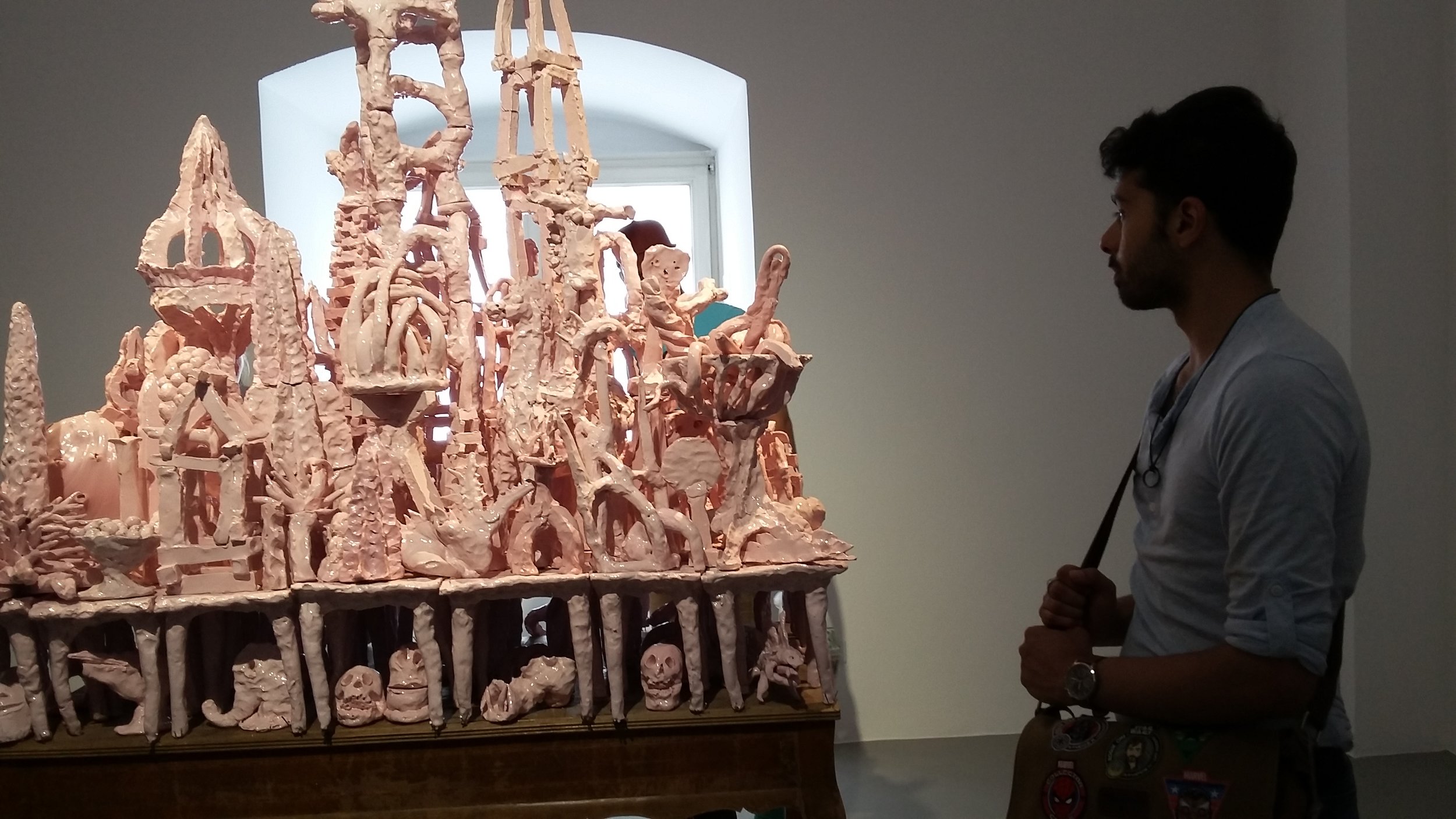
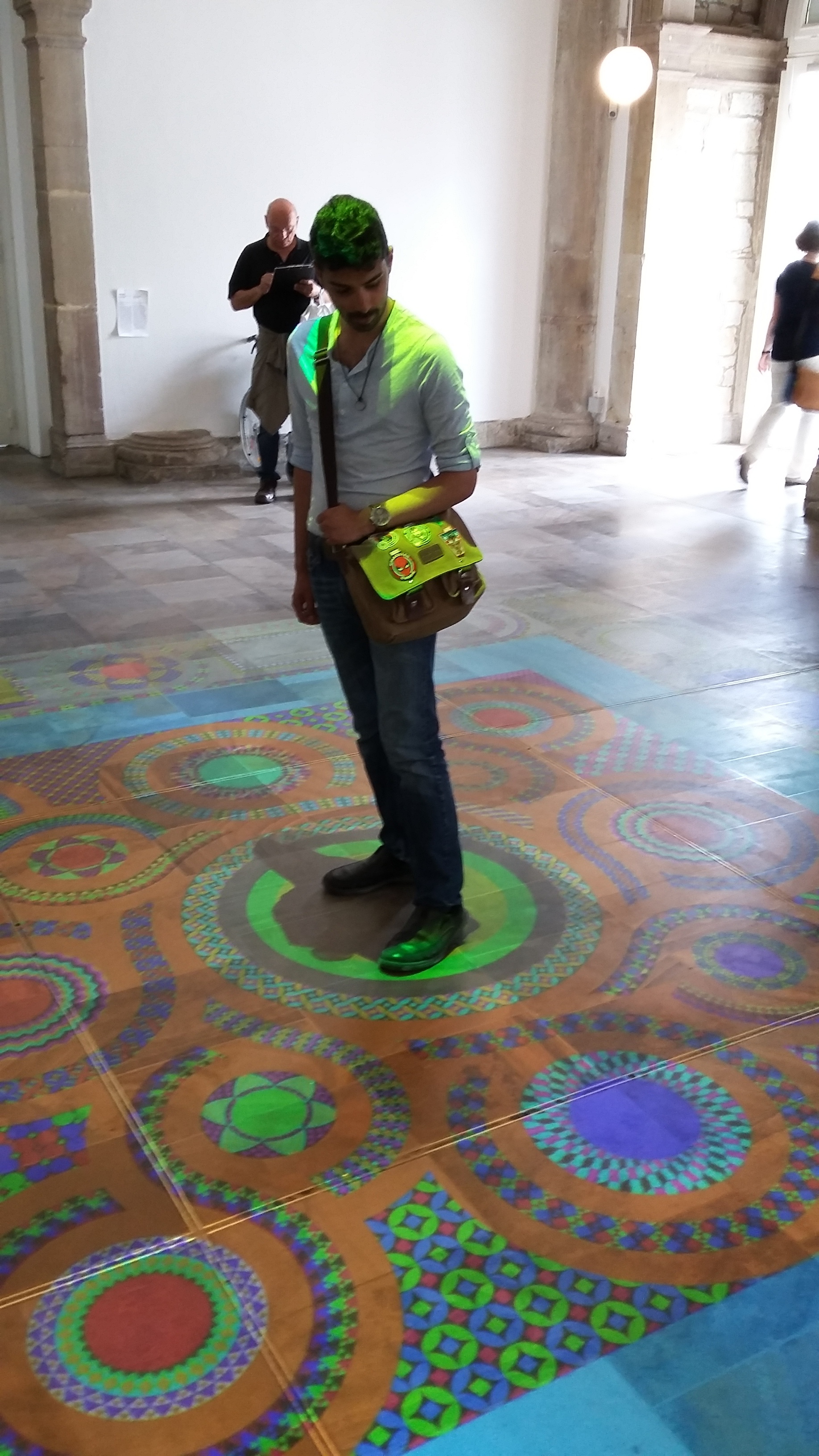
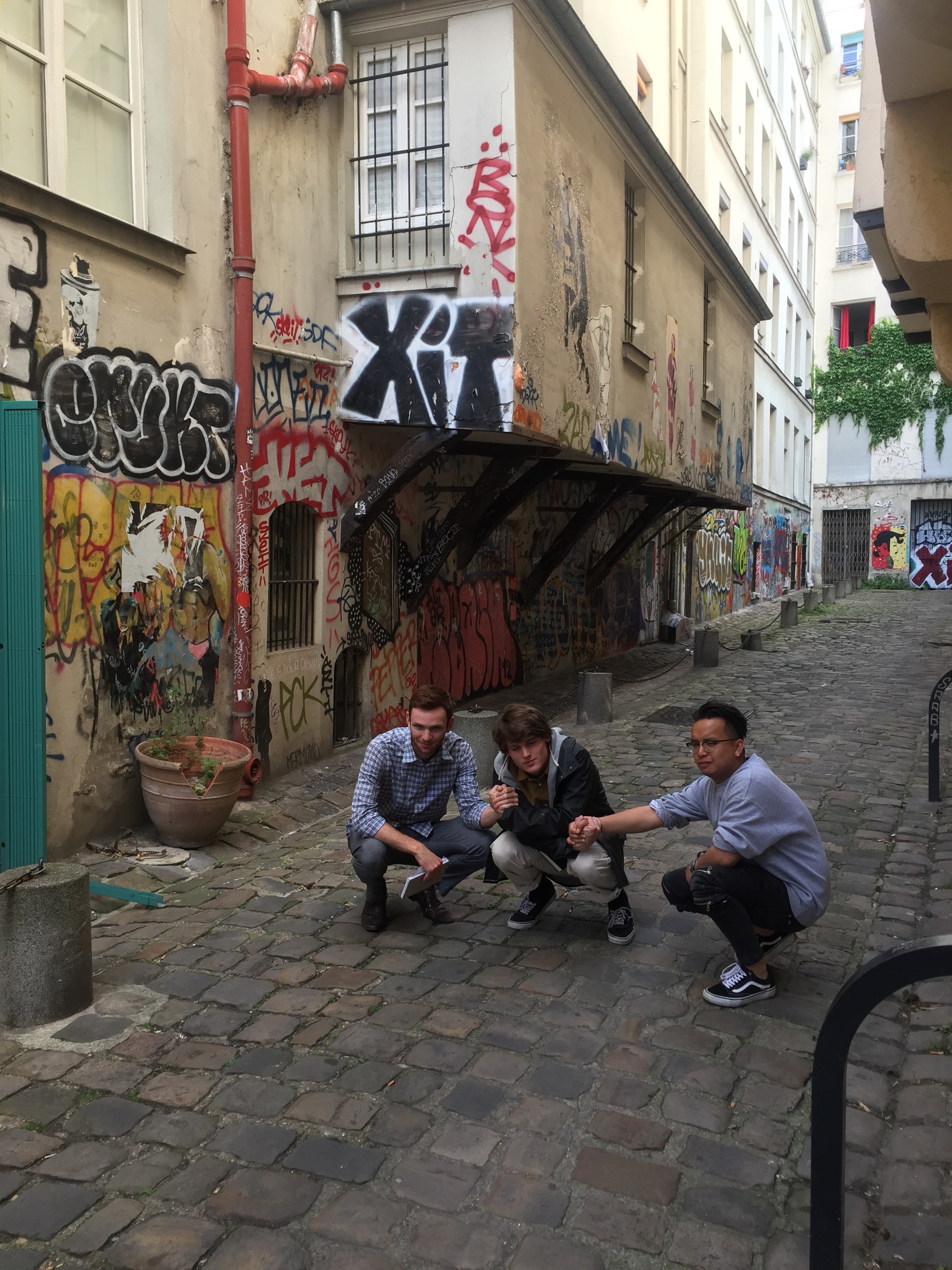
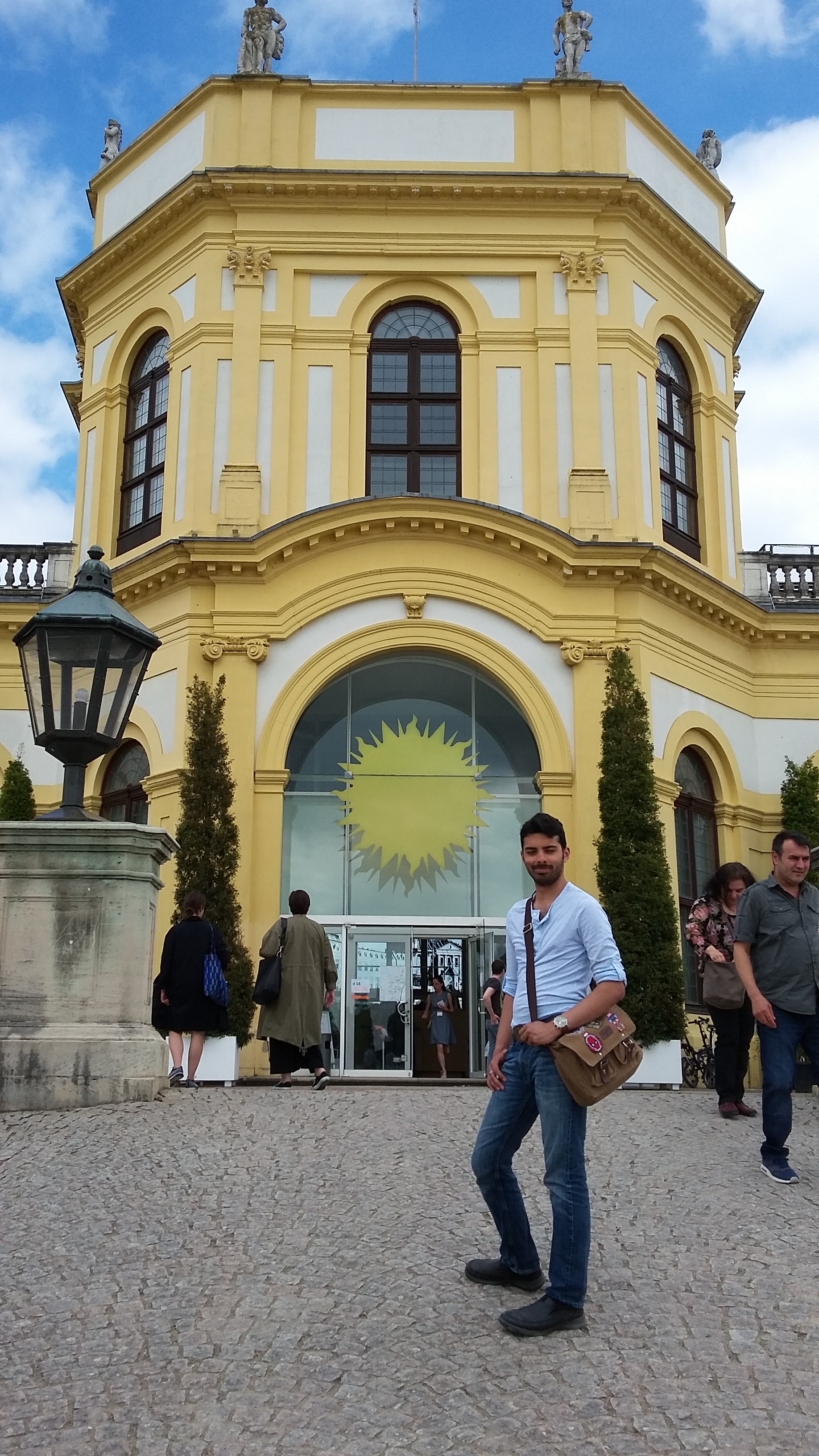
Stephane posing in downtown Kassel, the site of Documenta 14.

Stephane posing in downtown Kassel, the site of Documenta 14.

Location| Kassel: Meet Field School Blogger Stephane Dufault

July 03, 2017

Tell us a little bit about yourself—your background, major program of study, reasons for taking this trip, and anything else interesting you want to share (maybe something people might not know about you).

My name is Stephane Dufault, and I am a third year Fine Arts student moving on to fourth-year this fall. My area of study has mainly been drawing and painting, but I would like to challenge myself further by using creative nods and references found from my previous art history classes. I will be graduating in spring of 2018, and as I continue on into my fourth year program, I believe that my art requires creative aspects from art history to further push my creative thinking and ideas. As I have partaken in this trip, it felt to me as a once-in-a-lifetime opportunity to be able to study abroad with fellow students like myself, and travel and see up close artwork I have studied in my previous classes and to see them with my own eyes. The level of authenticity in viewing artwork with your own eyes and not from a computer screen makes the journey worthwhile and helps expand creative thought processing and idea building.

Back in Paris at the Louvre Museum, Stephane (at far left) poses with field school students in front of Gericault's Raft of the Medusa (1818-19).

Back in Paris at the Louvre Museum, Stephane (at far left) poses with field school students in front of Gericault's Raft of the Medusa (1818-19).

Stephane enjoying the local beverage of choice at Documenta!

Stephane enjoying the local beverage of choice at Documenta!

What has met or exceeded your expectations or surprised you about Kassel so far?

With Kassel, the city streets feel more open and vibrant to travel through. Unlike Paris, the streets are not stretched thin or narrow and are not crowded with cars wanting to get from place to place. Kassel feels more open and allows its citizens to take up as much space as they like and not be overwhelmed by its large and expansive streets. Walking towards the city from the hotel, the first glimpse of Kassel feels open and inviting. There are no restrictions in terms of travel and it feels encouraging to be able to cover ground on the streets of Kassel to explore new and unfamiliar areas of the city. As my expectations continue to grow traveling through the city, I am still looking forward to exploring uncharted areas of the city and to be able to discover areas and shops I did not notice my first time around.

Stephane was assigned Georgs Seurat's The Circus (1891) from the Orsay Museum.
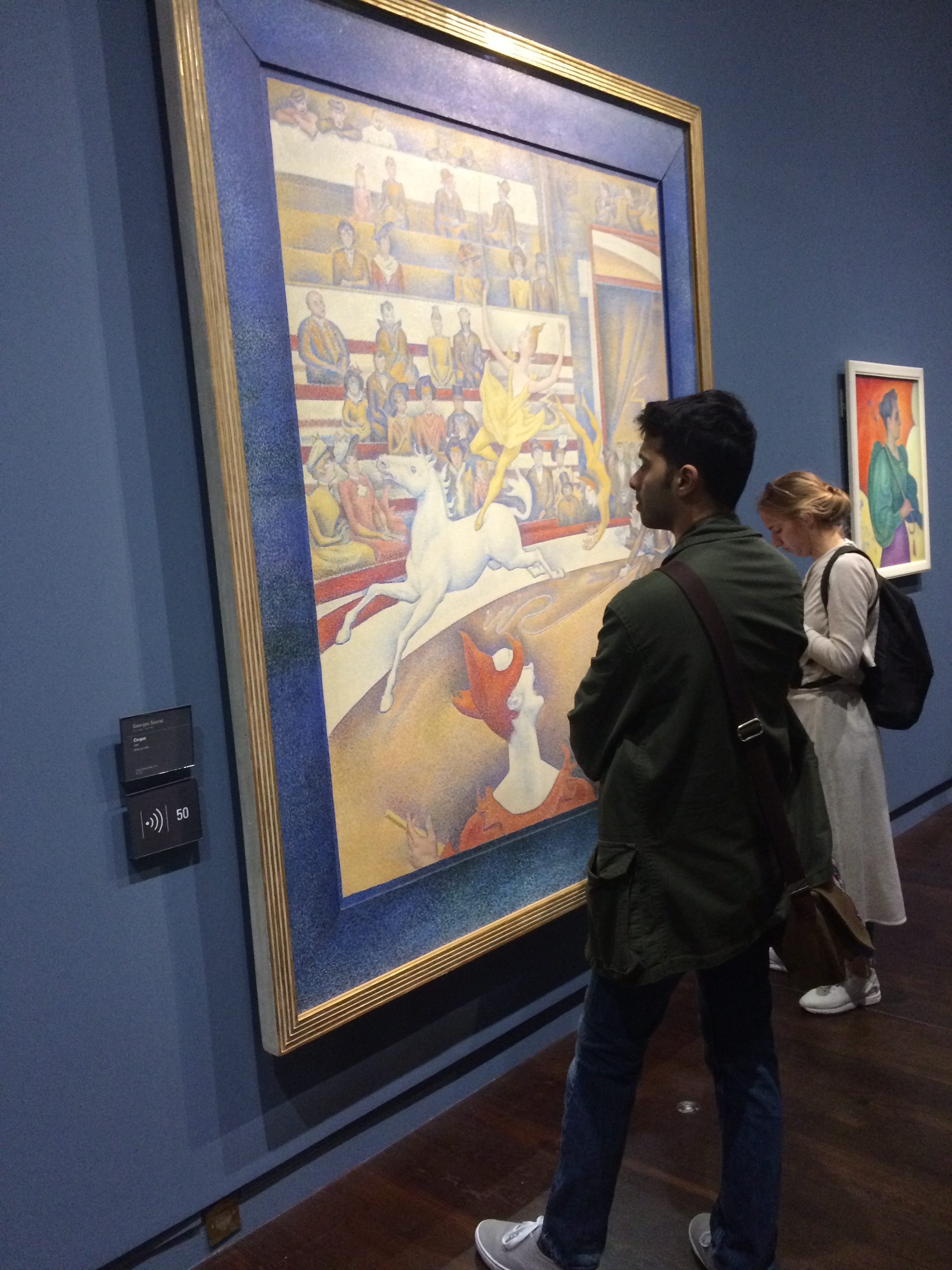
Stephane was assigned Georgs Seurat's The Circus (1891) from the Orsay Museum.

Seeing his assigned image up close, Stephane was surprised by his reaction to Seurat's painting.

Seeing his assigned image up close, Stephane was surprised by his reaction to Seurat's painting.

Give us some insight into your assigned artwork from the Orsay Musuem. After seeing the work in person in Paris (and any other related art from the same artist or art movement associated with the assigned work), what struck you most about it and/or how did the artwork’s form, content, and context shift for you when seeing it.

For my assigned artwork, I was assigned Georges Seurat’s 1891 painting The Circus. Made in a Neo-impressionistic style with oil paints on canvas, it was the last piece Seurat made before his death in 1891. The painting was created using bright vivid tones and painted in a pointillistic form. The painting, however, remains unfinished, as Seurat was never able to finish the painting after his death.

After seeing this piece in the Orsay Museum, I felt quite underwhelmed. Seeing the painting for the first time, the painting did not feel like it belonged in comparison to the other pointillistic pieces in the room in which The Circus sits. Looking at the painting through the screen seemed to be more enlightening than looking at the painting in real life. Even if the digital representation distorts or adjusts the color of the image, the painting seemed far more vivid and bright through its tones just by viewing it from a specific source. Seeing it in person, however, felt more of a bland and unfinished experience that feels as if something appears empty when gazing upon the piece.

By its content, the piece hints subtlety about the distinction of social class and how people come together through performance. Although looking at the painting does not shift this idea, it does numb this aspect due to the unfinished quality of the piece. Finally, by its context, viewing the artwork in the Orsay relies upon presenting entertainment and movement within the moment of the depicted scene. The aspect of movement is clearly retained within the piece, as it does establish a gripping sense of placing a subject found at the moment in front of an audience that is separated by social class. Seeing it in the Orsay manages to highlight an aspect of the “in the moment” quality of Neo-Impressionism as well as presenting audiences with the idea of performance being a distraction from everyday problems in the world.
IMG_2216.jpg
IMG_2294.jpg

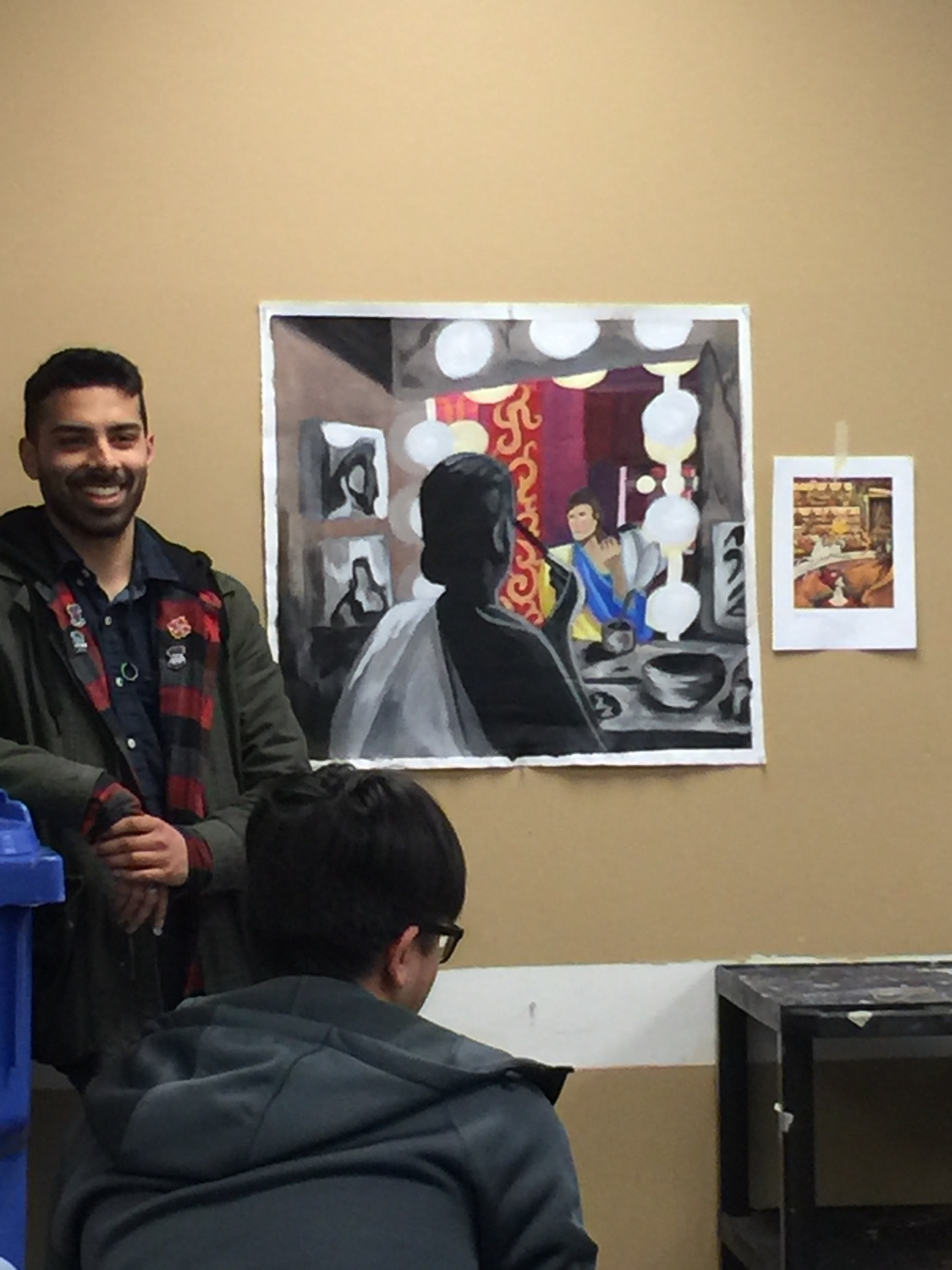
How did you approach the creative task of responding to this assigned work in studio? What were your challenges as an artist to be in dialogue with the artwork and artist? Would you do anything differently now that you have seen the work in person?

With each assignment for the studio portion of the field school, I relied solely upon creating artwork I saw and documented it in my journal. Some of the challenges I embarked on in the process was mainly with the representation of the subject I was gazing upon and sketching. Like most artists, I do not seek to recreate an entire piece of work another artist has made, but rather add my own take on its style. In regards to representation, it is challenging to make art that appears entirely new. The problem is that someone will likely have seen something like your image before and respond in their own way and will struggle to find a new take on it. In this respect, there is nothing I would change about my studio projects.
Blog Pic 3.jpg
Blog Pic 2.jpg
Blog Pic 5.jpg
Blog Pic 8.jpg
Blog Pic 9.jpg
Blog Pic 4.jpg
Blog Pic 3.jpg Blog Pic 2.jpg Blog Pic 5.jpg Blog Pic 8.jpg Blog Pic 9.jpg Blog Pic 4.jpg

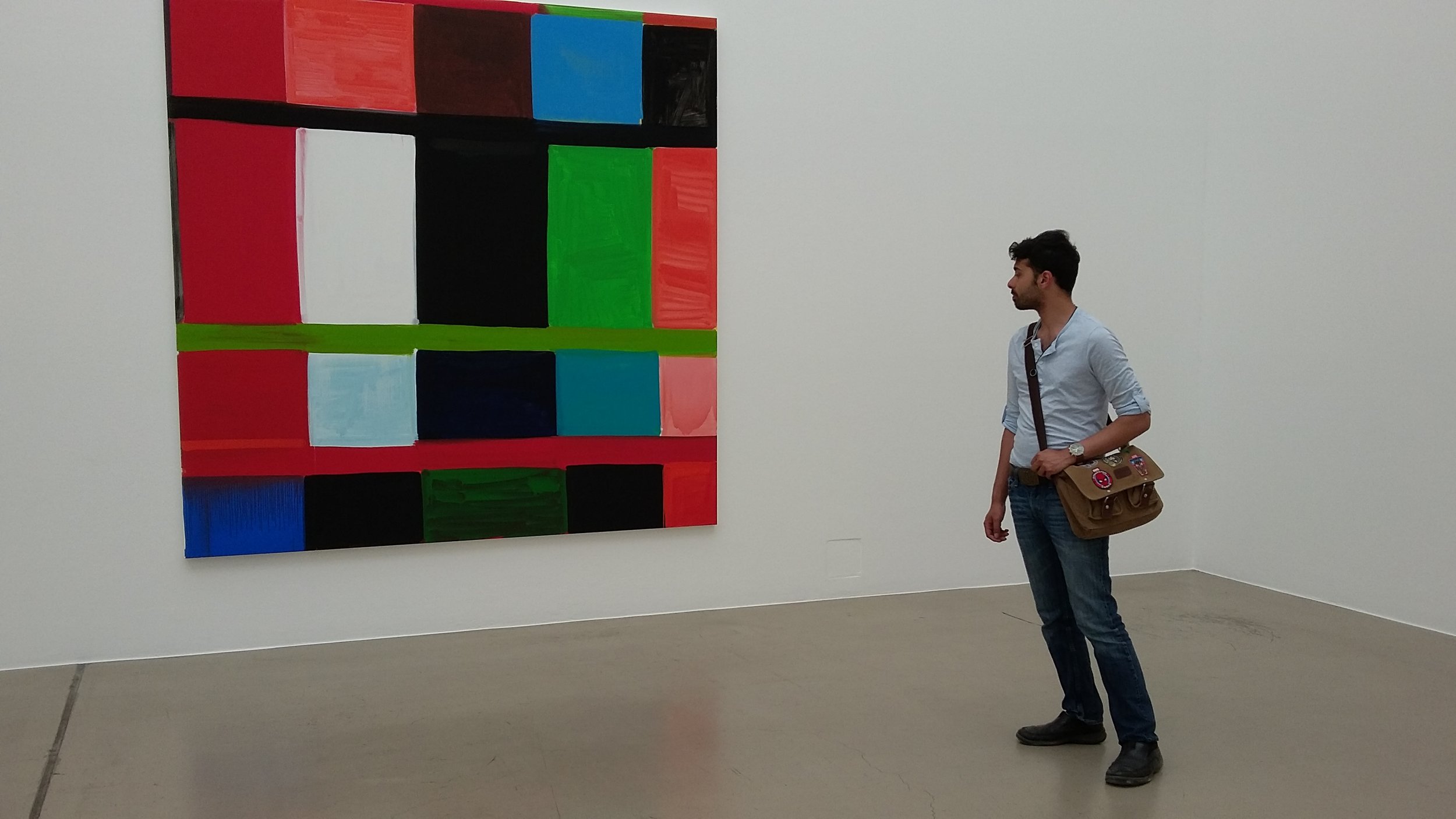
Today’s activity was located at the Documenta 14 exhibit. What were your impressions? What will you take away of the experiences of this day?  What are the most memorable moments for you?

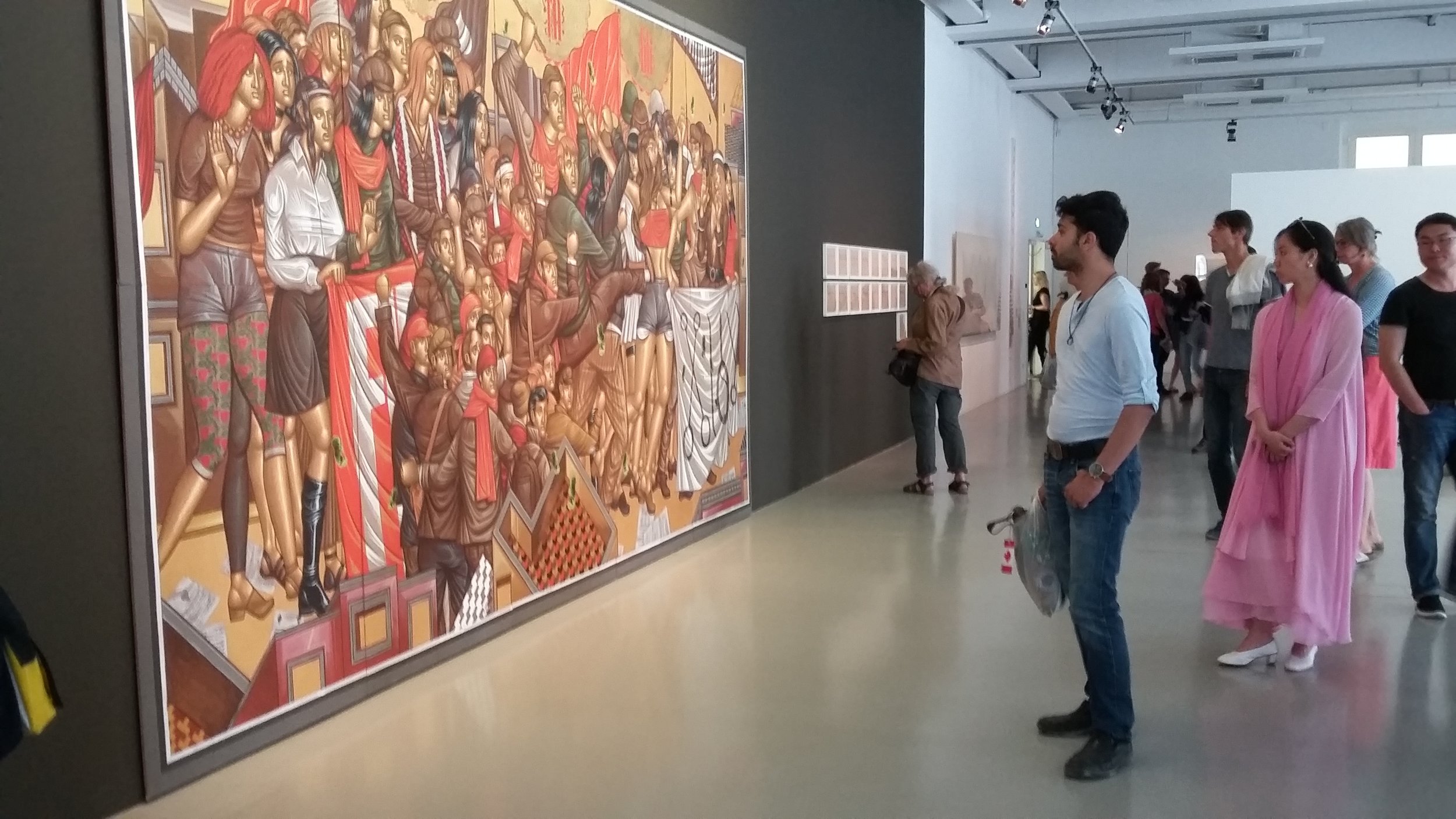
Today’s activity was located at the Documenta 14 exhibition in Kassel, Germany. As I traveled down to Documenta, the show felt very dynamic and expansive. The exhibition did not have a handholding pace to walk the viewer through the exhibition grounds. Instead, the exhibit encourages its viewers to view at their own pace and in their own time. By doing so, the exhibition feels expansive and encourages exploration, as there are artworks in unexpected areas of the city many spectators could easily miss the first time through. Traveling through Documenta, there were works of art that I did not realize at first could be considered artful in the world of art production.

Seeing Documenta made me realize that art could be as simple or as complicated as the artist wants, and can produce creative dialogue with the spectator. With today’s experience, I will be taking away the sheer dynamic range and expansive quality the show is recognized for, as well as the use of ready-made objects to create artwork in new and strange ways. Documenta will remain memorable to me for its sheer creative diversity of installation and artistic application of form and scope in art making, as well as giving audiences the expansive freedom in viewing art at their own pace. A show produced once every five years is quite something to walk away from and feel proud talking about.
To see more photos and impressions of Paris and Kassel as the field school continues, check out our Instagram feed #kpuparis

Comment
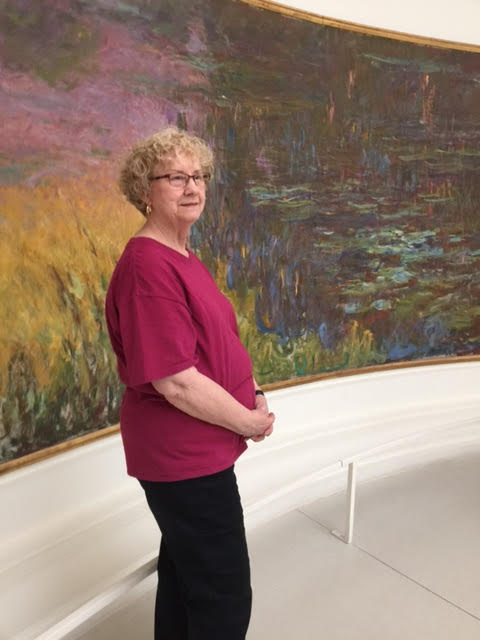
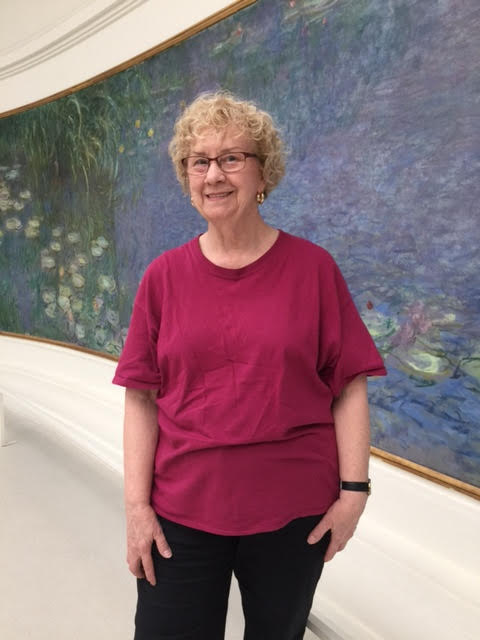
Meet Dorothy, a visual artist who first visited Documenta twenty years ago-- here she is posing in front of Monet's famous Water Lillies mural at the L'Orangerie gallery in Paris. 

Meet Dorothy, a visual artist who first visited Documenta twenty years ago-- here she is posing in front of Monet's famous Water Lillies mural at the L'Orangerie gallery in Paris. 

Location| Kassel: Meet Field School Blogger Dorothy Doherty

July 02, 2017

Tell us a little bit about yourself—your background, major program of study, reasons for taking this trip, and anything else interesting you want to share (maybe something people might not know about you).

Hello. My name is Dorothy Doherty. I’m a visual artist and a mature student in the KPU Paris/Documenta Field Trip Program. I am definitely the oldest student on this trip. It’s been twenty years since I was last at the Documenta, which takes place every five years. My main reason for joining this Field School is that I had planned to go back to Kassel this year, and when I saw the posters for the trip in the corridors at Kwantlen, I thought it would be a great way to see Documenta 14 this year. The bonus for me was the study of the French Impressionists and the two-week stay in Paris for further study.

I have spent my entire life interested in the visual arts. I was born and raised in and around Vancouver, BC. I am a graduate from the Vancouver School of art (now Emily Carr University of Art & Design), the University of Victoria (BA, MA in History in Art), Simon Fraser University (PDP), Capilano University (Studio Art Diploma), and I have taken other short courses as well.

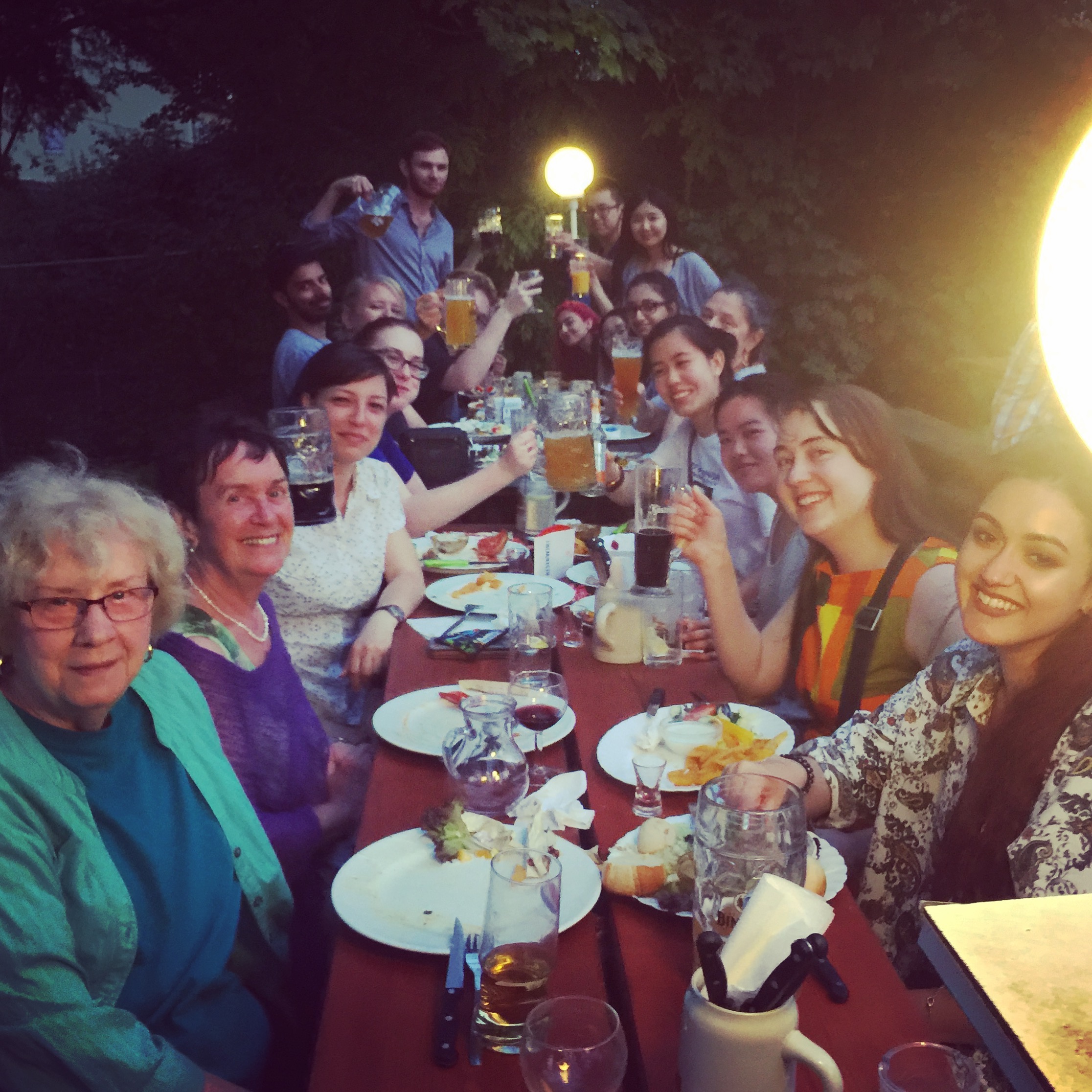
Prost! Enjoying our group's "local"-- the FIASKO beer garden in Kassel-- Dorothy in left foreground.

Prost! Enjoying our group's "local"-- the FIASKO beer garden in Kassel-- Dorothy in left foreground.

Dorothy captured at another angle in front of the Monet panorama capturing the colours and palette of one of the most influential and popular Impressionists.

Dorothy captured at another angle in front of the Monet panorama capturing the colours and palette of one of the most influential and popular Impressionists.

Dorothy having some fun with the entertainers at the Paris group dinner!

Dorothy having some fun with the entertainers at the Paris group dinner!

What has met or exceeded your expectations or surprised you about Paris (or Kassel) so far?

This was my first trip to the center of Paris, although I had driven around the outskirts many years ago on my travels through Europe. It’s my third trip to Kassel. Paris was quite a surprise from the start to the end of our stay there. The city is densely populated, with six story buildings uniformly distributed throughout the core of the city. This is largely due to the Haussmannization of Paris, a renovation of the city of Paris that occurred throughout the mid 19th century. I found this a welcome contrast to Vancouver, where the downtown core is virtually a sea of high rises, and one can often see no further than the building across the street.  I was astonished at the number of massive art galleries in Paris. Some are so large that they occupy an entire city block and more. I found the metro quick and efficient, and by the end of our stay, I felt able to go anywhere in Paris on my own.

Kassel was a refreshing change from Paris, with low-rise buildings and a wide, blue sky. Everything seemed much cleaner, and people seemed more relaxed. Of course, we were exposed mainly to people involved with Documenta 14, so there was a spirit of friendship and an interest in the arts at every turn. And the food was great – healthy, tasty and ample.

Dorothy was assigned Monet's Rue Montorgueil (1870) from the Orsay collection.

Dorothy was assigned Monet's Rue Montorgueil (1870) from the Orsay collection.

Give us some insight into your assigned artwork from the Orsay Musuem. After seeing the work in person in Paris (and any other related art from the same artist or art movement associated with the assigned work), what struck you most about it and/or how did the artwork’s form, content, and context shift for you when seeing it.

My assigned artwork was “Rue Montorgueil, 1870” - a painting in oil on canvas by Claude Monet. The painting measures approximately 23 inches high by 19 inches wide, and is situated in a room at the Orsay Museum alongside other Impressionist works of similar size and scale. To the immediate left is his painting of a train station,  “Gare Saint-Lazare,” which is one of my favorites. The painting depicts buildings on the Rue Montorgueil in Paris, replete with flags flying from many windows in celebration of the end of the Commune and other wars in the region.  The flags are painted in a very loose manner, and on close inspection, barely read as flags at all. It is only when you step back from the piece that the content becomes clear.

I was struck by the strong sense of movement in the work, accentuated by strong, distinct, directional brushwork that guides the eye through the piece. I was surprised there was no single resting place for the eye in this very active painting. The only place that offered any rest at all was the sky, and that offered little respite from this energetic scene. The choppy, distinct brushwork is in direct contrast to the soft, atmospheric painting of the railway station that stands next to it in the Orsay Museum.

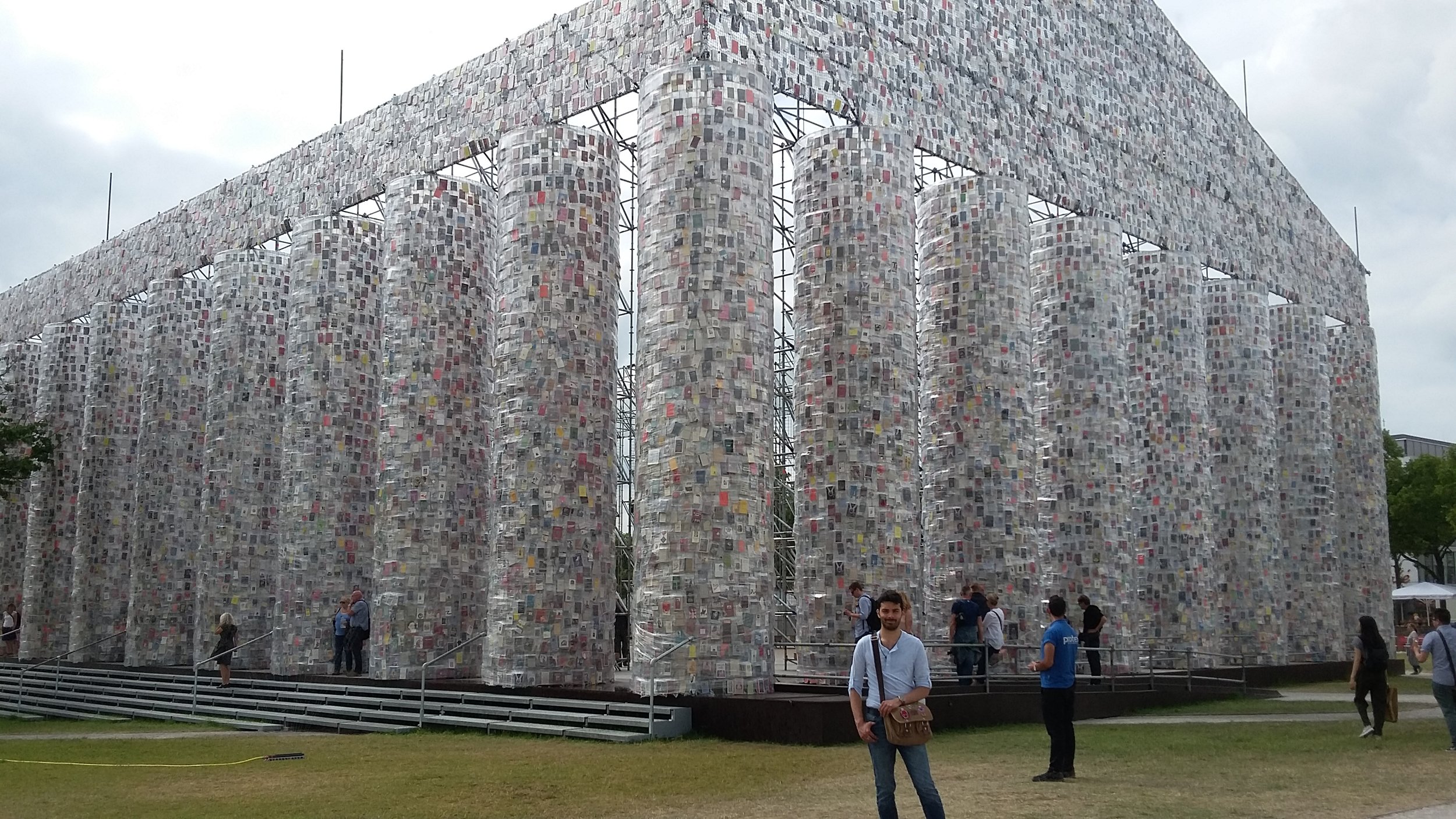
Getting a closer look at the Parthenon of Books by Marta Minujin featuring formerly or currently banned books from all over the world.

Getting a closer look at the Parthenon of Books by Marta Minujin featuring formerly or currently banned books from all over the world.

unnamed (3).jpg
unnamed (5).jpg
unnamed (4).jpg
IMG_2919.JPG
IMG_2923.JPG
IMG_2926.JPG
IMG_2928.JPG
IMG_2929.JPG
IMG_2930.JPG
IMG_2982.JPG
unnamed (7).jpg
unnamed (8).jpg
unnamed (3).jpg unnamed (5).jpg unnamed (4).jpg IMG_2919.JPG IMG_2923.JPG IMG_2926.JPG IMG_2928.JPG IMG_2929.JPG IMG_2930.JPG IMG_2982.JPG unnamed (7).jpg unnamed (8).jpg

Today’s activity was located at the Documenta 14. What were your impressions? What will you take away of the experiences of this day?  What are the most memorable moments for you?

Firstly, I loved being at the Document 14. It’s my third trip to Kassel, and I feel quite comfortable with the format, which is essentially many art works distributed throughout the city in diverse venues ranging from buildings to outdoor installations, and more.  This year many installations can be found in unexpected locations like railway stations, on city streets, in parks, and other public places. My favorites are still the Documenta Kunsthalle and the Fridericianum. However, this year the names of many buildings have been replaced with slogans and philosophical statements.

In terms of my favorite artworks, I was moved by a room in the Documenta Hall dedicated to the work of Miriam Cahn, whose powerful imagery reminds me of the loose, figurative paintings of Marlene Dumas, in both form and content. Cahn’s message here was very clear. War is not a pretty thing.  I am also impressed with the massive structure in front of the main entrance, the “Parthenon of Books,” by Argentine artist Marta Minujin. Visually, the large, airy structure betrays the intent of the artist, whose main focus is on building bridges with a view to supporting freedom of speech and ending persecution of writers across the world.

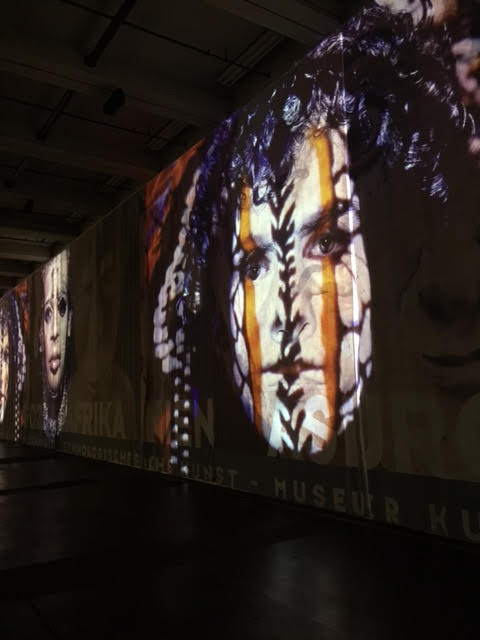
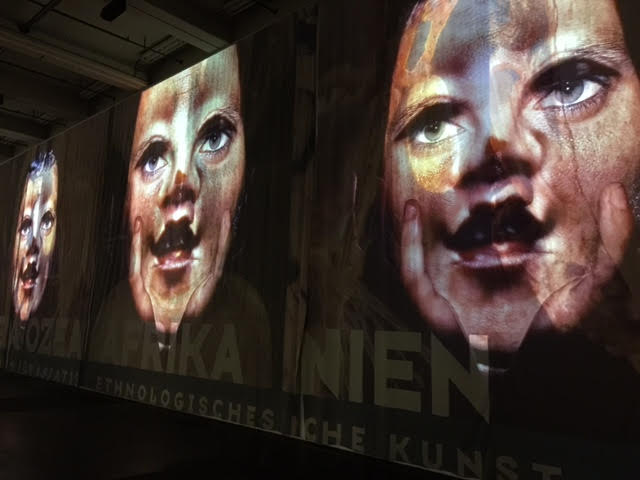
The Neue Neue Galerie continued to impress with highly challenging, monumental installations and videos. And with two more days left in Kassel to continue our pilgrimage, the rest of the venues are sure to impact us in similar ways. Much of this year’s Documenta is focused on the human condition, especially in areas where world populations are struggling with inhumane living conditions, brutal dictators, and general upheaval. The material is often difficult to deal with, and causes one to examine our consciences.  Hopefully, the messages in these works of art will invite us all to look a little deeper into our own lives to find ways in which we can make the changes that will save the planet.

To see more photos and impressions of Paris and Kassel as the field school continues, check out our Instagram feed #kpuparis

1 Comment
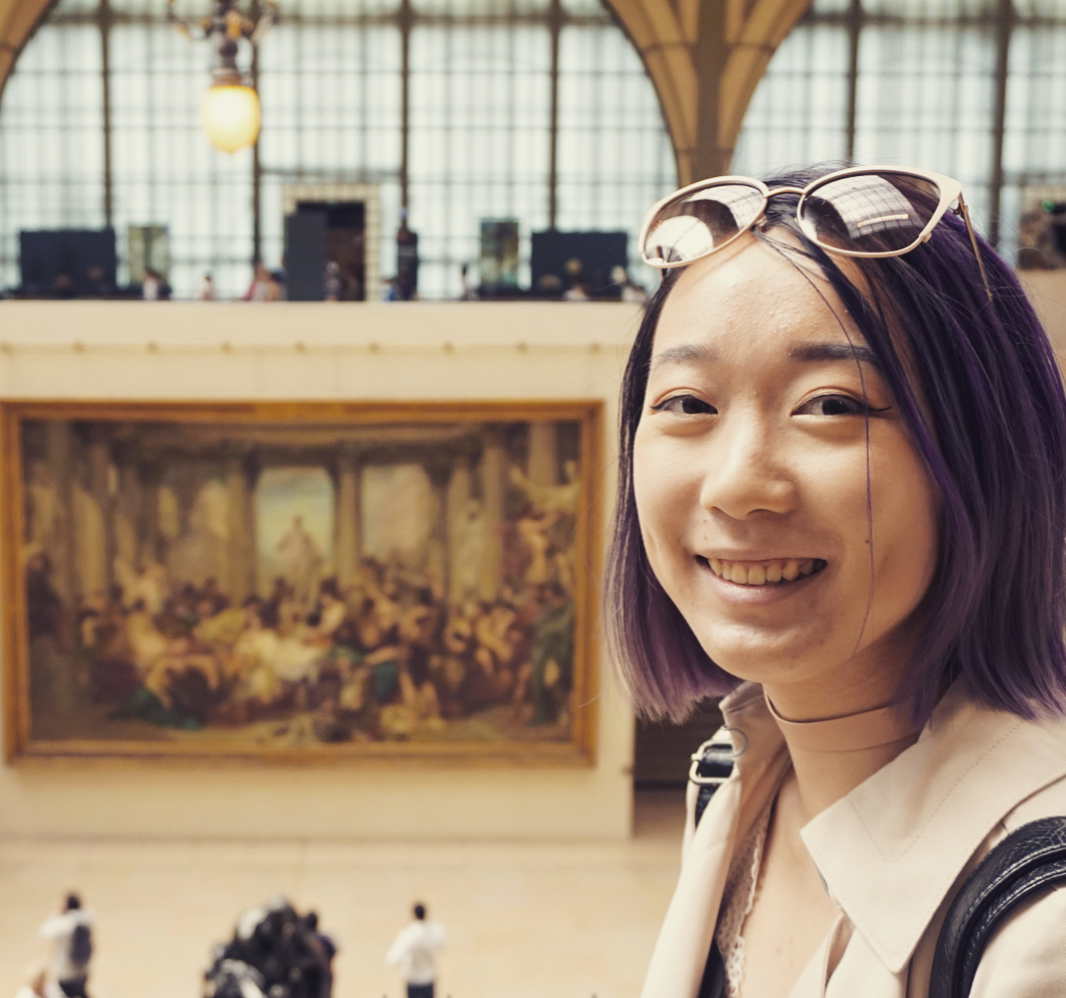
Meet Jenny, posing here in the grand hall of the Orsay Museum in Paris.

Meet Jenny, posing here in the grand hall of the Orsay Museum in Paris.

Location| Kassel: Meet Field School Blogger Jenny Yu

June 29, 2017

Tell us a little bit about yourself—your background, major program of study, reasons for taking this trip, and anything else interesting you want to share (maybe something people might not know about you).

I am a first year Fine Arts student at Kwantlen Polytechnic University. I have taken drawing classes since I was ten years old and I have fallen in love with crafts since I was five. I recently learned how to paint while taking classes at Kwantlen and I highly enjoy it. My strengths in art usually gravitate toward colours. The thing I love most about art is the emotive quality. I love how I am able to express how I feel in a safe place where everyone is supportive. Another artistic hobby I am very fond of is acting; I have been acting ever since I was thirteen when I stumbled upon a class by accident. Acting has taught me a lot of things: to never be afraid of failure, to just be yourself, and to try to strive for perfection, knowing that perfection is not attainable but if we chase it, we can catch excellence.

Jenny standing in front of human skulls and bones found in the Paris catacombs.

Jenny standing in front of human skulls and bones found in the Paris catacombs.

Jenny, Zoe, Alice, and Ashley enjoying on-the-go sandwiches while waiting on the Metro.

Jenny, Zoe, Alice, and Ashley enjoying on-the-go sandwiches while waiting on the Metro.

What has met or exceeded your expectations or surprised you about Paris (or Kassel) so far?

Before coming to Paris, I never thought that I would love the “pretentious” part of Paris. I felt that perfect things were far too artificial for my liking, but when I got here I ended up loving this part of Paris. Because of the rich history and culture Paris exhibits, the city speaks to what I love about travelling. My thirst for antiques has been quenched by all the vastly educational and lovely museums. The architectural details on the buildings baffled me. I had goosebumps just looking at the beautiful sculptures adorning the building of the Louvre. I love the adorable qualities of all the old pastel coloured apartments. The random graffiti also enhanced the artsy feeling of Paris. What surprised me the most was how important the café culture here is. It is extremely different than what I am used to in Vancouver. In Vancouver, there is a large take-out culture, whereas in Paris people stay at least an hour in cafés.

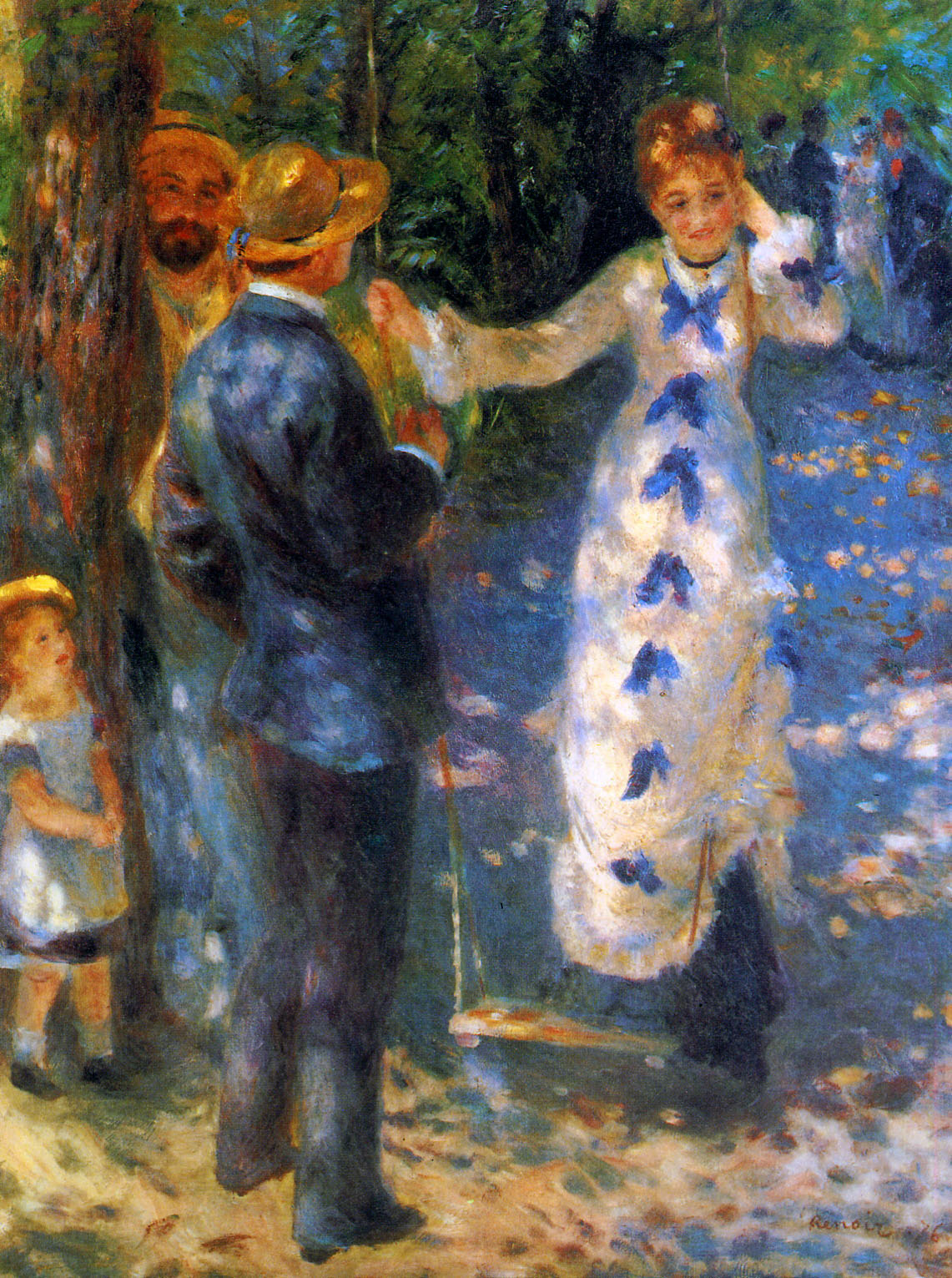
Pierre-Auguste Renoir, The Swing (1876) was Jenny's assigned artwork from the Orsay Museum.

Pierre-Auguste Renoir, The Swing (1876) was Jenny's assigned artwork from the Orsay Museum.

Give us some insight into your assigned artwork from the Orsay Musuem. After seeing the work in person in Paris (and any other related art from the same artist or art movement associated with the assigned work), what struck you most about it and/or how did the artwork’s form, content, and context shift for you when seeing it.

The painting that was chosen for me was Renoir’s The Swing (1876). Renoir was known as an artist with impeccable talent and painted scenes that encompassed a happy feeling. The figures and background for The Swing were loosely painted – giving an Impressionist feel. Renoir beautifully captures the afternoon sunlight shining on the leaves and forest floor. The male figure facing away from the audience can be seen speaking with the women on the swing. The woman on the swing is looking away with a flushed face. On the left, there is a gentlemen and young adolescent, lovingly looking at the two other figures’ interaction. When I finally got to see the work in person at the Orsay with the other Impressionist works, I realized how Renoir was different from the rest. He made the figures more life-like compared to other artists, but was still able to incorporate the Impressionist brushwork and context into his work.

View fullsize IMG_3798.JPG
View fullsize IMG_3818.JPG
View fullsize IMG_3844.JPG
View fullsize IMG_3839.JPG
View fullsize IMG_3591.JPG
View fullsize IMG_3697.JPG

Today’s activity was the trip from Paris to Kassel, Germany by train. What were your impressions? What will you take away of the experiences of this day?  What are the most memorable moments for you?

Today the group and I took a 5-hour trip by train to Kassel, Germany. Since I have never been on a train before and did not know what to expect, the ride was surprisingly very pleasant. When we got to Kassel, we were able to have a traditional German meal for dinner. I got to eat Schnitzel, bratwurst, and -of course- beer. Everything was very delicious and for a cheap price. The things I remembered doing before I left Paris were the Les 4 Temps department store and the catacombs of Paris. At the department store in the newer part of Paris, La Defense, I was surprised to see a gigantic glass arch right in front of the metro exit. Later, I was told that the arch was built in relationship to the Arc de Triomphe, the Place de la Concorde, and the Louvre. The placement and alignment of all the buildings surprised me a lot. I realize now through my field school coursework that the French really prioritize their appearance of Paris. Later that day, I went to the catacombs of Paris. I was able to get into the express line because I paid the twenty-seven-euro fee beforehand. The trip toward the underground grave was well worth the money. I have never seen so many human bones stacked in a particular way before. The audio guide also really helped guide me through and understand the necessity of the catacombs.

To see more photos and impressions of Paris and Kassel as the field school continues, check out our Instagram feed #kpuparis

Comment
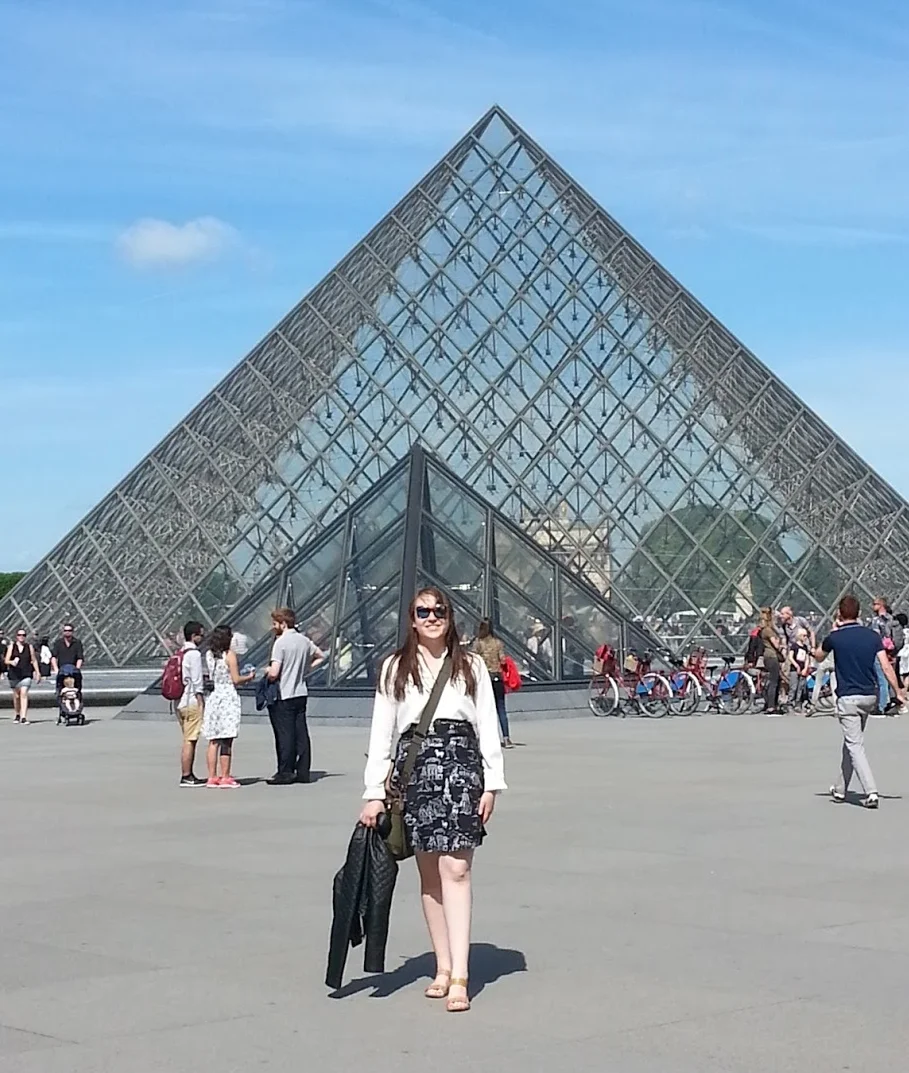
Josie posing in front of the iconic glass pyramid at the Louvres complex in Paris.

Josie posing in front of the iconic glass pyramid at the Louvres complex in Paris.

Location| Paris: Meet Field School Blogger Josie Robinson

June 28, 2017

Tell us a little bit about yourself—your background, major program of study, reasons for taking this trip, and anything else interesting you want to share (maybe something people might not know about you).

My name is Josie Robinson, and I am a third year Fashion design student. I took this trip because I wanted to challenge myself creatively and find new inspiration. I will be going into my graduating year in September, and I will be designing my thesis collection, so I wanted to really discover myself creatively. I felt that studying art would help me become a better designer, because in studying art, I can come to understand why people consume creative ideas, and what motivates cultural change.  I’ve never travelled abroad before, so this seemed like the perfect opportunity to do it with a group of like-minded individuals that I can learn from.

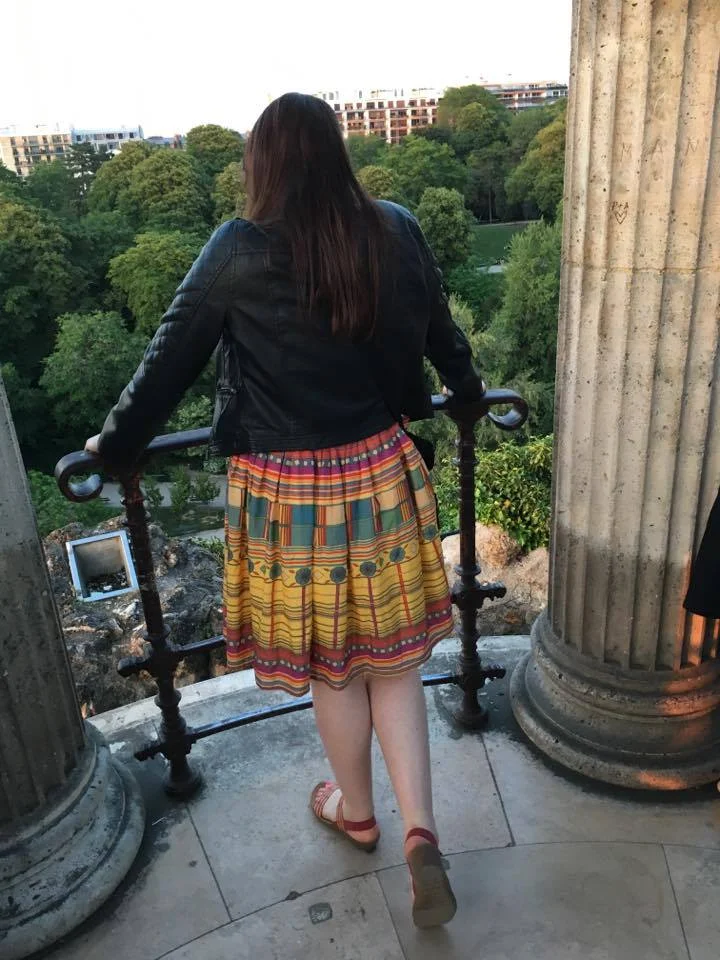
Josie looking out over a scene juxtaposing ancient and modern Paris.

Josie looking out over a scene juxtaposing ancient and modern Paris.

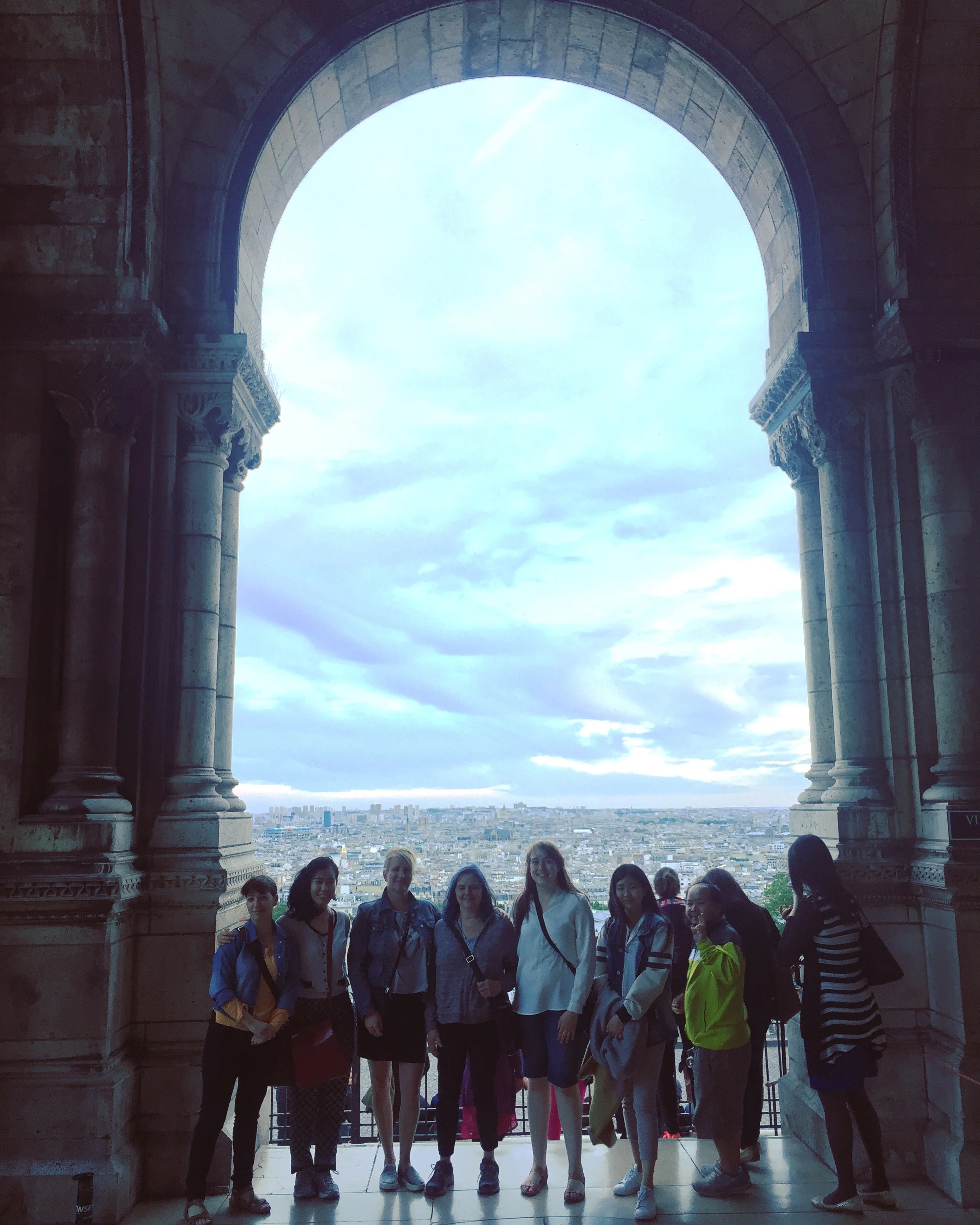
Group picture overlooking the city at sunset from the Sacre Coeur Basilica portico in Montmartre-- Josie at center. 

Group picture overlooking the city at sunset from the Sacre Coeur Basilica portico in Montmartre-- Josie at center. 

What has met or exceeded your expectations or surprised you about Paris (or Kassel) so far?

I’ll start by saying that Paris is surprisingly easy to navigate. The metro is amazing, for real. Never once have I had to take a bus to connect trains, or even leave the underground. It’s planned so that every train can seamlessly link to another. Lately I’ve been thinking to myself that this city is exemplary when it comes to urban planning.  Even if you get lost in Paris, it’s not even that bad, you just go with the flow and find a place to have a coffee and flaneur about. I will say that I am surprised at the sheer volume of creative information there is to explore here. I’ve been here for over two weeks doing days of constant creative observation, and there are still things that I haven’t seen. It’s definitely not a place you want to blast through. You want to take your time here and make note of every cultural nuance possible. The culture of France is unique in that they care about visual presentation in everything they do. I notice this in artful shop window displays, and in how food is presented when it is served, but I also notice this in things like packaging, and advertising, and print media. There is care taken to visual communication in this culture which is fascinating to me as a designer.
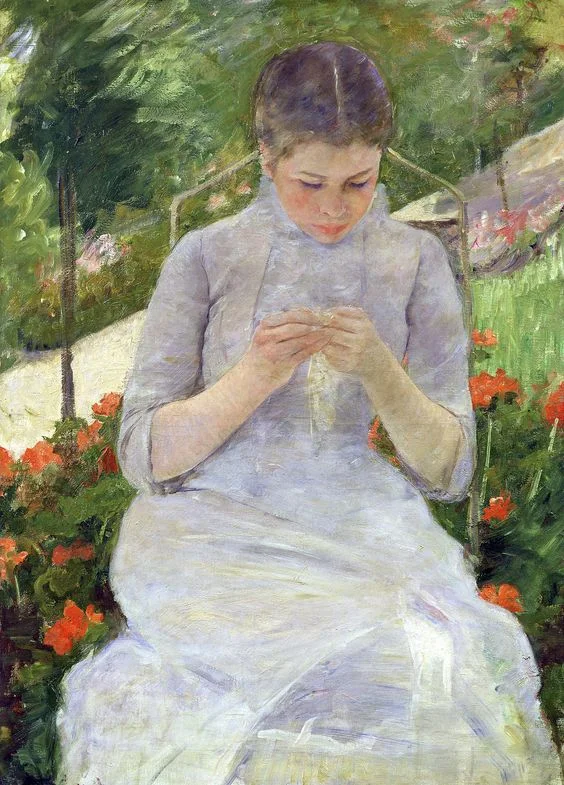
Josie was assigned Mary Cassatt's Young Girl Sewing in the Garden (1880) from the Orsay collection to dialogue with in her art projects.

Josie was assigned Mary Cassatt's Young Girl Sewing in the Garden (1880) from the Orsay collection to dialogue with in her art projects.

Give us some insight into your assigned artwork from the Orsay Musuem. After seeing the work in person in Paris (and any other related art from the same artist or art movement associated with the assigned work), what struck you most about it and/or how did the artwork’s form, content, and context shift for you when seeing it.

 My assigned artwork is Young Girl Sewing in the Garden (1880) by Mary Cassatt. For those not familiar with Cassatt, her work was unique because she predominantly expressed the details of the private lives of women at a time where their social roles were rapidly changing in a newly urbanizing society.  One thing that struck me when I saw Cassatt’s work in person was her use of colour. You just can’t understand it from seeing it on a screen.  When I saw the work up close I was looking at how she rendered the clothing and hair of the woman. When you look at the painting, at first glance, you see the woman has brown hair, but when you examine it more closely, you realize that this colour has been achieved by mixing tones of purple and even gray. The drapery of the white dress also appears to have very small amounts of blue in it when seen in person as well.  In person, it is definitely more vibrant. The reds of the flowers come out even more, and you come to have a new understanding of the brushwork in the painting. The painting has a deliberate pattern and texture in the greenery of the background. The hazy brushstrokes used in the foliage are even more exaggerated then one would expect if just seeing a printout.  Yet, the clothing and skin tone have more smooth brushwork, and the face is painted with care and detail in contrast to the greenery.

For Cassatt, this aspect of form aligns perfectly with her content and the context. She wanted women to be seen as independent in their own lives, and through form she emphasized the significance of the woman’s personality. Unfortunately, there were no other works by Cassatt on display. I would have liked to examine other works more to become more familiar with the distinct stylistic features that Cassatt may employ. It was still interesting though to see Cassatt’s work in relation to other Impressionist artists of her time.  The room that the work was displayed was predominantly filled with works by Monet and Morissott.  It was interesting to see both what unified the movement, and what set individual artists apart within it

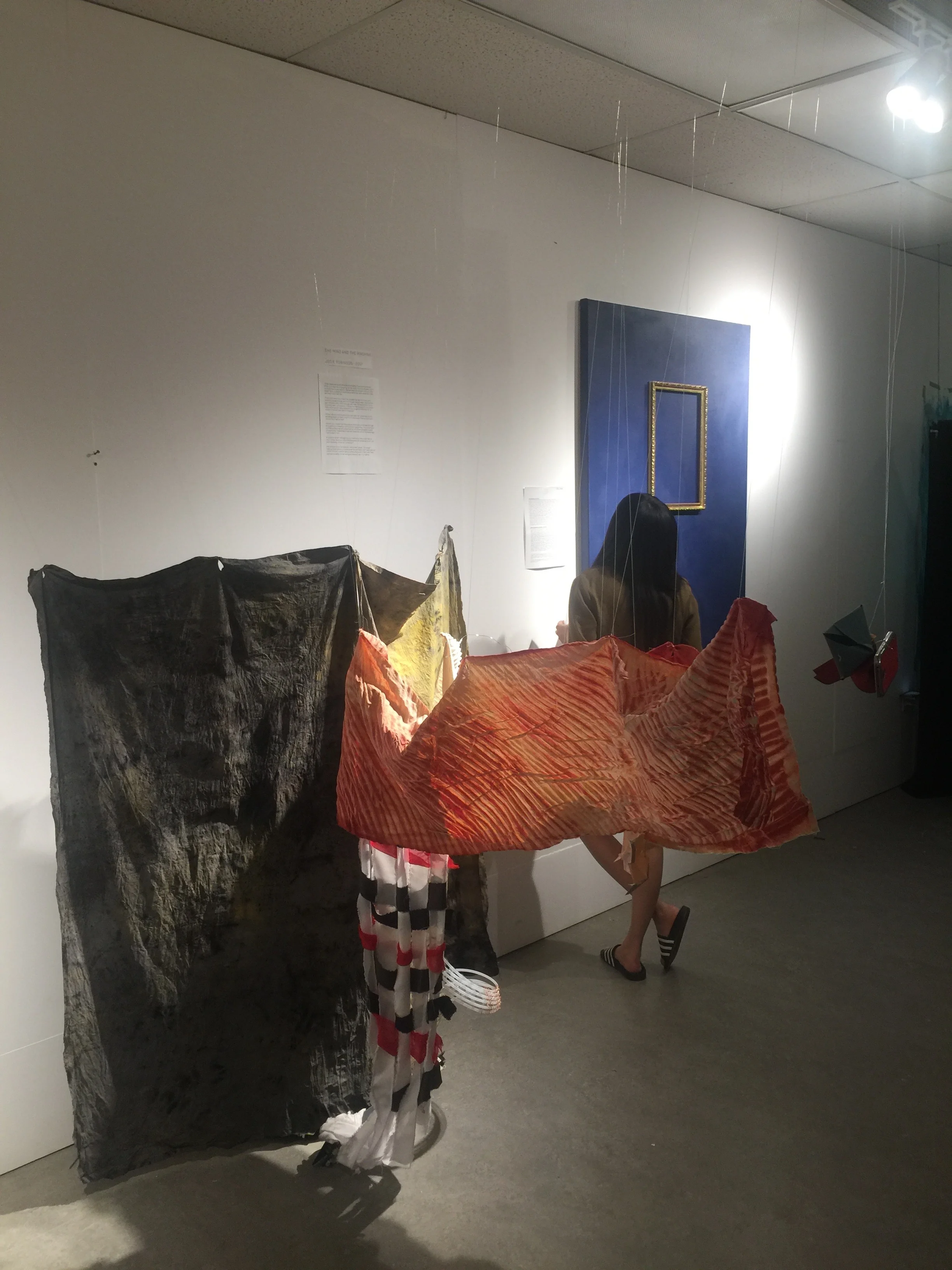
Josie's project (in foreground) featured an installation with fabrics that she dyed herself to reimagine the colour palette of the Cassatt painting.

Josie's project (in foreground) featured an installation with fabrics that she dyed herself to reimagine the colour palette of the Cassatt painting.

How did you approach the creative task of responding to this assigned work in studio? What were your challenges as an artist to be in dialogue with the artwork and artist? Would you do anything differently now that you have seen the work in person?

 For me, the biggest challenge was to consider the duality of creativity. I had to consider how to utilize the skills I have culminated as a designer and apply them in an artistic setting.  Art is a very different way to think about communication than design. It took me some time to understand that the skills I have can be artistic skills, and that I did not need to start over or learn something I had never done before to be an artist. I just needed to consider a different vantage point. In a way, design presents you with solutions, but art asks questions. I am conflicted now that I have seen the work in person. As aforementioned, I would have liked to see more works by the artist. In some ways, some of my past choices have been affirmed by seeing the work, but now I have more questions to explore.

20170606_104513.jpg
IMG_2836.jpg
20170607_112135.jpg
20170607_212436.jpg
josie orsay.jpg
20170606_191442.jpg
20170606_104513.jpg IMG_2836.jpg 20170607_112135.jpg 20170607_212436.jpg josie orsay.jpg 20170606_191442.jpg

Today’s activity was a free day on our last day in the city of Paris. What were your impressions? What will you take away of the experiences of this day?  What are the most memorable moments for you?

Today was a free day! So I took it upon myself to return to both the Centre Pompidou and Le Palais de Tokyo. I’m a person that really likes to take my time at museums, so I felt I needed a second look.  Le Palais de Tokyo had a contemporary exhibition featuring the interactions between art and science. It was fascinating, and unlike any art experience I have ever had. May of the pieces there demanded attention and interaction. At the Centre Pompidou, I went back to see the exhibition on the works of Ross Lovegrove. I felt very privileged to see his original sketchbooks. There was a video of an interview with Lovegrove, and I enjoyed hearing him talk about his design philosophy. I also gained a surge of inspiration from a film played at the Anarcheology exhibit at the Pompidou. A team of creatives attempted to replicate the acoustics of a 300 year old concert hall in India. It really got me thinking about our changing interactions with the space we live in as our society changes. Paris, in a post Haussmann era is also a perfect backdrop for this.

In the evening, I went to the Bastille Opera to see Rigoletto. I had never been to an Opera before, so why not do it in Paris! It was all in Italian. I don’t speak Italian. It was subtitled, so I looked at that enough to understand, but not detract from the visuals of the stage. What an experience that was! I got discounted student seats, right behind the orchestra, which according to the ticket seller hardly ever happens. It was amazing to see that these people were singing to an entire concert hall with no amplification, just the power of voice! And the intricacies of the costumes and the set intrigued me.  At the same time, I couldn’t help but also find it comedic. For example, (spoiler alert) in this opera, there are two women who fall madly in love with the same prince. The main character Gilda, at first feels betrayed, but then ultimately her love prevails and she sacrifices her life to save him. I couldn’t help but think to myself, “It’s a shame that Giuseppe Verdi didn’t live long enough to watch John Tucker Must Die so that he could learn how stuff actually works.” My experience in Paris has been eye opening, and today was a good conclusion to the first half of the trip. Next, we will be winding down for Kassel.

To see more photos and impressions of Paris and Kassel as the field school continues, check out our Instagram feed #kpuparis

Comment
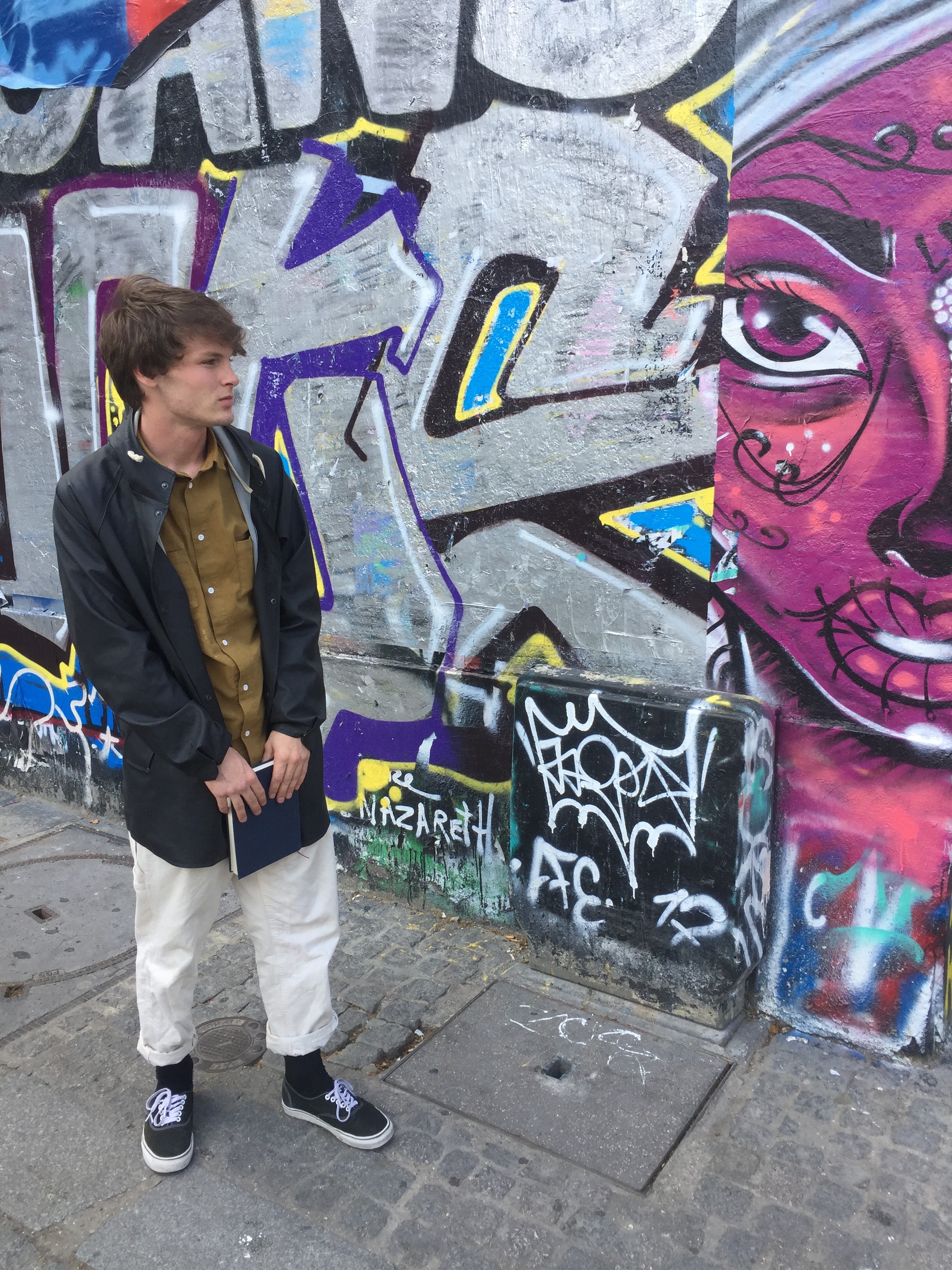
Lukas immersed in the street art and urban vibe of Paris.

Lukas immersed in the street art and urban vibe of Paris.

Location| Paris: Meet Field School Blogger Lukas Paul

June 27, 2017

Tell us a little bit about yourself—your background, major program of study, reasons for taking this trip, and anything else interesting you want to share (maybe something people might not know about you).

My name is Lukas Paul, I am a 19 year-old digital artist from Boston Massachusetts, however I spent just over half of my childhood in Albuquerque New Mexico. I am a dual citizen, and just completed my freshman year at Simon Fraser University. I am passionate about the arts, but not necessarily Fine Arts. I am especially intrigued by Film, Music Videos, Album Art, Street Art, Street Fashion, and Experimental Hip Hop music. I am currently studying Fine Arts, but it might be advantageous for me to switch into a more film-based program in the future. After first experimenting with imovie in third grade, I have always found solace behind the editing board. This is my favourite portion of the filmmaking process, and is most likely my strongest artistic talent. While I do enjoy digital design and art making, I will most likely end up paying the bills with my editing talents. I aspire to be a music video and experimental film director, and one day release my own line of Street Fashion. Ultimately I just want to support myself doing something I love, and those two things would really make me excited to get up for work in the morning.

Spotting street art, fashion, and other ephemeral moments of Parisian life became one of Lukas' favourite pastimes.

Spotting street art, fashion, and other ephemeral moments of Parisian life became one of Lukas' favourite pastimes.

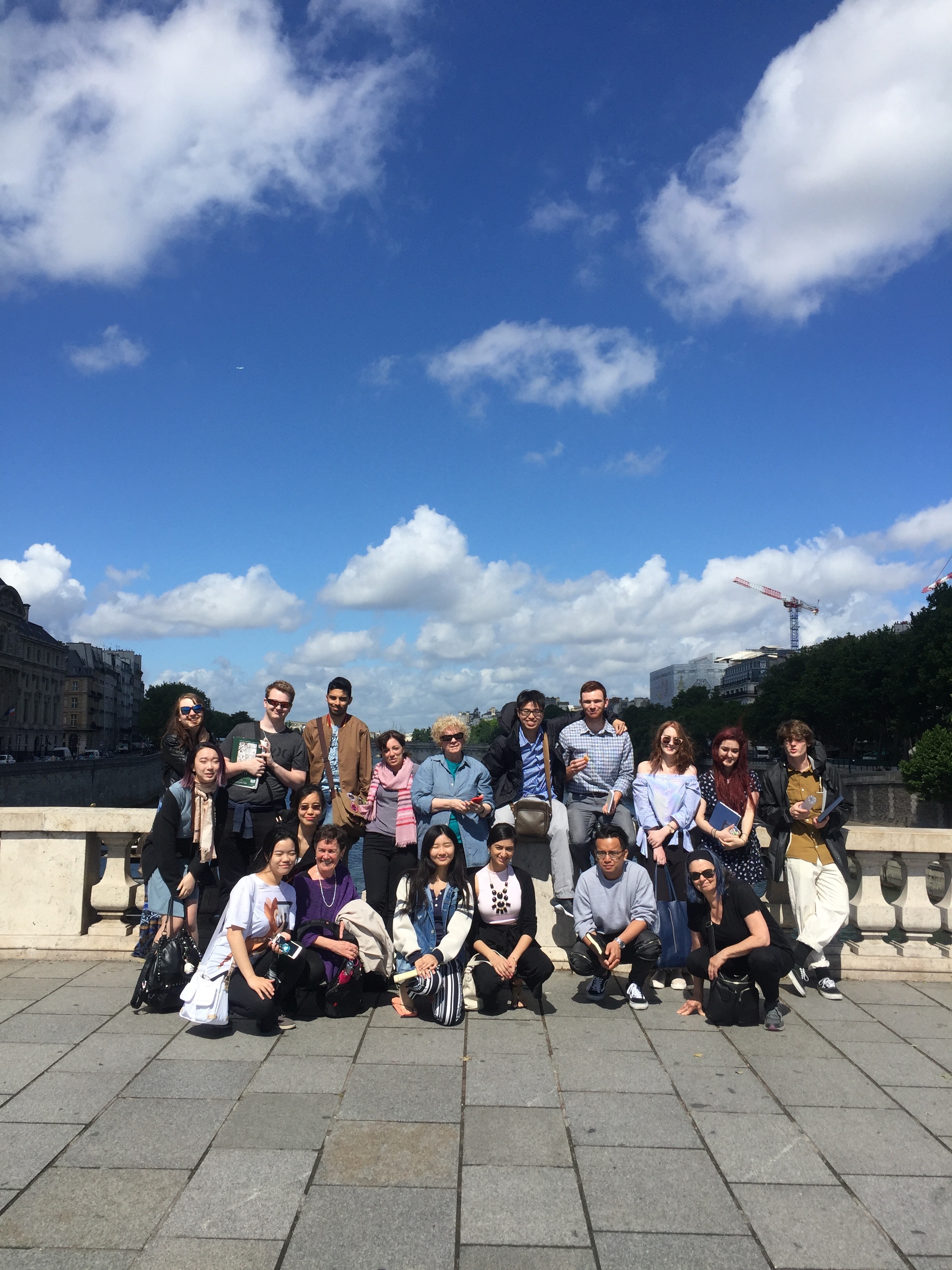
Group photograph on one of the many bridges of Paris-- Lukas on the far right.

Group photograph on one of the many bridges of Paris-- Lukas on the far right.

What has met or exceeded your expectations or surprised you about Paris so far?

To be perfectly honest this Paris trip has been life changing. I tried to go into the trip with a clean mental state, leaving any sort of expectations at home. The experiences I’ve had here will definitely affect my art profoundly, but how could they not? This entire trip has felt like some sort of French New Wave film, where my life jump cuts from one movie moment to the next. One minute I’m meeting a number one draft pick at the Louvre, the next minute me and Graham are almost getting hustled on the Rue Pigalle. I can’t see myself forgetting memories like watching the sunrise in the park with your friends while listening to Pink Floyd’s "Dark Side of the Moon." Even simply sitting at cafes absorbing the atmosphere. This entire trip has felt surreal, from beginning to end. I also did appreciate the Street Fashion, and Street Wear Boutiques of Paris. Colette ranks pretty highly in my repertoire of Street Fashion boutiques that I have visited. The street style of the Parisians is admirable as well, as they certainly blend a bit of Parisian flair. The experience of seeing these great works of art has removed a bit of the mystique from them. I have only seen these works through a computer screen or projector, so seeing them with their original aura intact has been quite an experience. It is quite an experience to see certain pieces that you hold quite a certain reverence for in person. Seeing pieces such as David’s Oath of the Horatii, Duchamp's urinal, as well as original Mondrians and Warhols were breathtaking experiences. Overall I can’t complain. Until next time Paris.

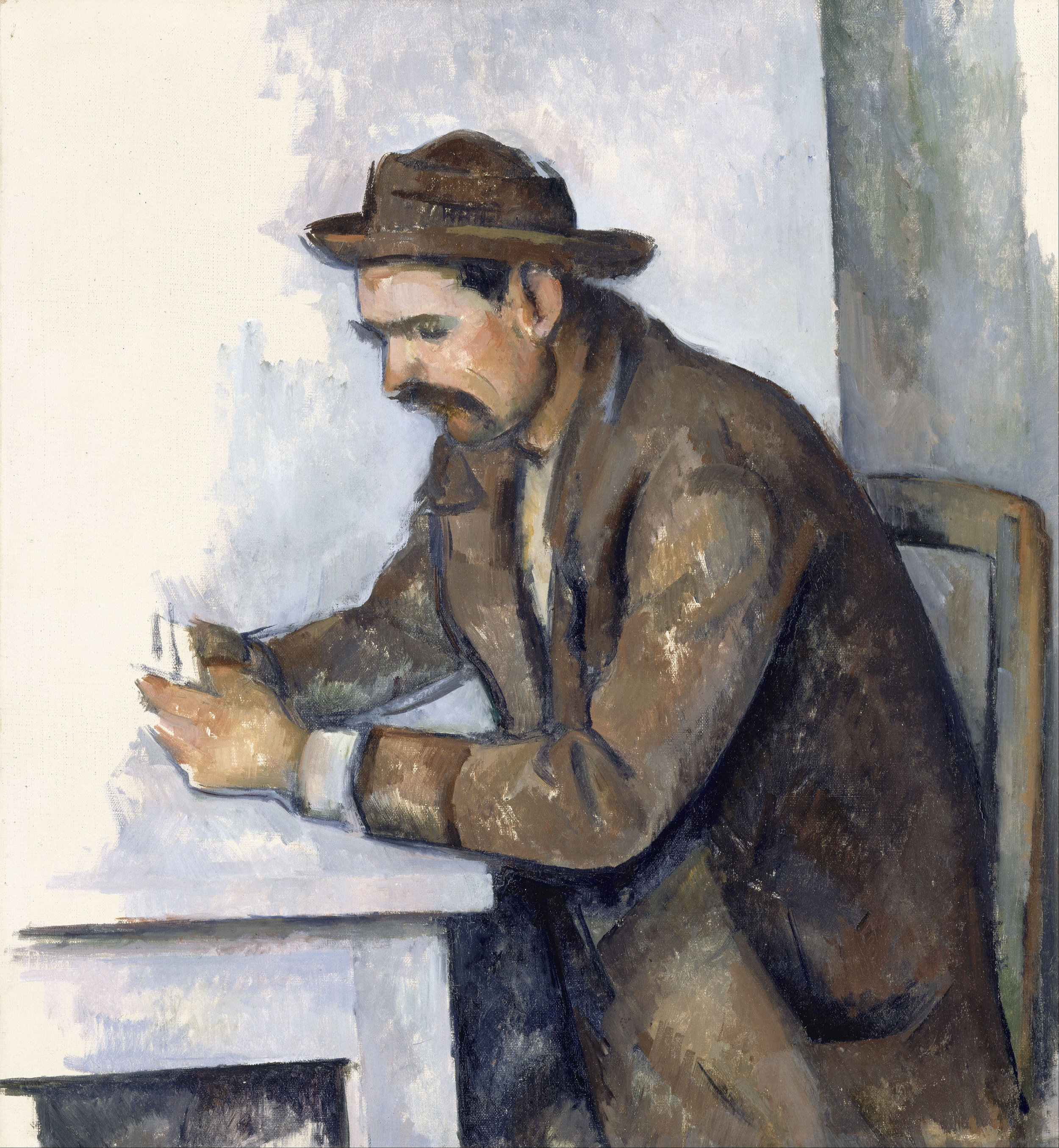
Cezanne, Card Player (1890-92) was Lukas' assigned work from the Orsay.

Cezanne, Card Player (1890-92) was Lukas' assigned work from the Orsay.

Give us some insight into your assigned artwork from the Orsay Museum. After seeing the work in person in Paris (and any other related art from the same artist or art movement associated with the assigned work), what struck you most about it and/or how did the artwork’s form, content, and context shift for you when seeing it.

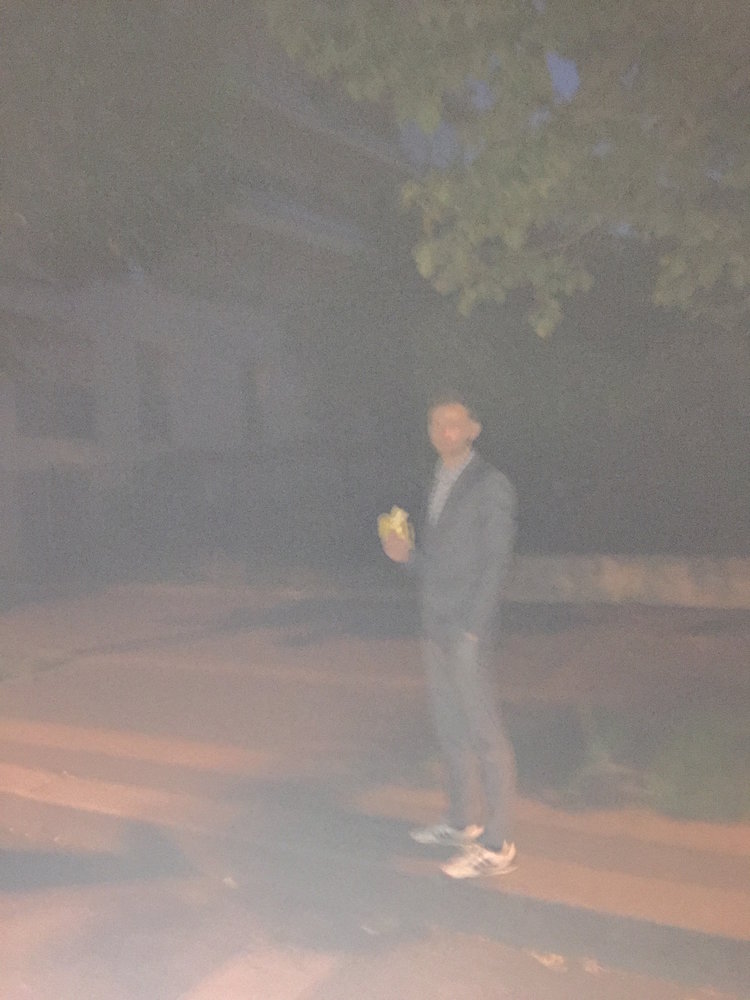
After searching for what seemed to be hours at the Orsay, I determined that my Cezanne (Card Player (1890-92)) had left the building. Upon leaving the museum I confirmed with Dorothy that these suspicions were true. While I was mildly disappointed, the show must go on. Instead of talking about someone else’s Impressionist art work in this blog, I have decided to talk about my own. At approximately six o’clock in the morning one day, I decided to take a photo of Graham eating a Banana. He was just standing there on the curb in a full business suit and futsal shoes. Just chilling there, eating his banana. For some reason I found this spectacle to be quite amusing, so I decided to take a photo. I’m not entirely sure what perfect conditions led to the artistic blurriness of the photo, but it really resembled Impressionist art. When Graham and I first looked at the photograph it immediately reminded us of Manet’s Absinthe Drinker (1859).  We felt as if our photo was an accidental update on his painting. A depiction of the modern flaneur in his natural habitat. This photo actually provoked quite a discussion between us, as we pondered on the similarities between our photo and the Impressionist movement. It is a depiction of the modern flaneur, the wanderer, the appreciator of the city. The Impressionists were also into the capturing of fleeting ephemeral moments. Quick renderings of whatever the artist was seeing, experiencing or feeling. I would say that people attempt to do this now a days with their cell phone cameras. What easier way to capture the fleeting moments of modern life than with Snapchat. I cannot believe I just said that, but there is certainly some truth to it. These coupled with the formal similarities to Impressionist art made us dub this photo Modern Impressionism. Was it arrogant to do so? Maybe. The similarities were just too apparent. See it here and judge for yourself.

 Edouard Manet,  Absinthe Drinker  (1859)

Edouard Manet, Absinthe Drinker (1859)

 Lukas Paul,  Banana Eater  (2017)

Lukas Paul, Banana Eater (2017)

 Lukas Paul,  King of Roaches  (2017)

Lukas Paul, King of Roaches (2017)

How did you approach the creative task of responding to this assigned work in studio? What were your challenges as an artist to be in dialogue with the artwork and artist? Would you do anything differently now that you have seen the work in person?

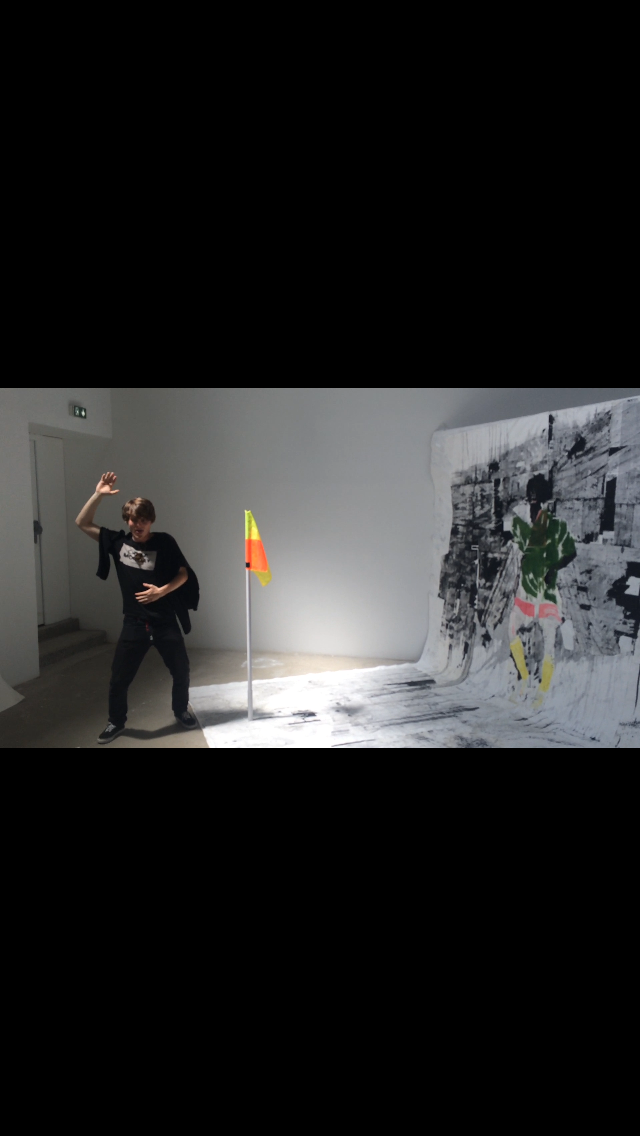
When creating my studio projects I barely kept the idea of Cezanne’s The Card Player in my head. I kept it in just enough so that it would influence my pieces, but not too much to where I was trying to update or replicate his piece. For the first piece I related my content to Cezanne’s elevation of lowly or forgotten subjects. The Gambler is not a particularly glamorous subject, and is also commonly overlooked. Lurking in the shadows of society, Cezanne elevates this lowly subject to center stage. He also did this with other lowly subject matter such as fruit and bathers. This particular elevation of commonly forgotten subject matter was probably the greatest influence in the creation of my piece. My piece was titled Holbrook AZ. Prior to the classroom portion of this field school, I drove my car from my parents’ home in Albuquerque NM to Vancouver BC. On the way from Albuquerque to Phoenix I encountered a small town in Arizona along I-40 called Holbrook. The decaying retro/Americana signage, made me think of a place past its glory days. The town almost seemed forgotten to me. People come and stop for gas and perhaps a meal. They fuel up and head out on their way. This concept of forgotten subject matter resonated with me deeply even before laying eye on the Card Player. I am lucky that the themes from Cezanne’s painting coincided with my photos of Holbrook. It made perfect sense to incorporate these photos into a pop art style video project. I related my second piece King of Roaches more to Cezanne’s formal qualities instead of his content. I used hundreds of layers of distorted images to compile the bulk of the piece. I tried to emulate Cezanne by doing an intense study of an object, formulated tediously through hundreds of individual pieces. This coupled with a choppy unfinished look tied the piece directly back to Cezanne in my eyes.

IMG_1938.jpg
IMG_1997.jpg
IMG_2002.jpg
IMG_3392.jpg
IMG_9059.PNG
IMG_2912.jpg
IMG_2505.jpg
image5.JPG
IMG_1927-1.jpg
IMG_1938.jpg IMG_1997.jpg IMG_2002.jpg IMG_3392.jpg IMG_9059.PNG IMG_2912.jpg IMG_2505.jpg image5.JPG IMG_1927-1.jpg

Today’s activity was a free day on our last day in the city of Paris. What were your impressions? What will you take away of the experiences of this day?  What are the most memorable moments for you?

On my final day in Paris, Graham and I finally found what we had been looking for; pick up football. While strolling around the gardens of Bercy we encountered a football cage inhabited by children. After butchering our first interaction once again, the children finally came to the conclusion that we wanted to play with them. While these children were about half the size of us, some of them certainly possessed more skill than me. It is crazy seeing the ridiculous talent pool in this country, individuals who possess probably the deepest roster of any national team in the world. Even the children on the street will whoop your ass. After playing with the kids for a while the adults took the pitch. I hopped in goal for my team as we battled it out in the Parisian cages. I put my body on the line on the playing surface, and have some battle wounds to show for it. I love playing Football anywhere I go, it crosses any sort of cultural or linguistic boundaries. While I might not have been able to hold a conversation with any of the people I was playing with, I can still hang out with them with a ball at our feet. While it may sound cliche the game crosses all boundaries and borders. I was really quite thrilled to finally find a good pickup game in Paris.

To see more photos and impressions of Paris and Kassel as the field school continues, check out our Instagram feed #kpuparis

Comment
Newer / Older
Back to Top
Screenshot 2018-02-05 20.48.17.png

© Dorothy Barenscott, 2010-2025