• Fall 2025
  • Blog
  • Resources
  • Field School
  • Students
  • Feedly
  • About
Menu

Avant-Guardian Musings

  • Fall 2025
  • Blog
  • Resources
  • Field School
  • Students
  • Feedly
  • About
large monogram_2018-02-01_22-31-07.v1 (1).png
“Art is an outlet toward regions which are not ruled by time and space”
— Marcel Duchamp

Avant-Guardian Musings is a curated space of ideas and information, resources, reviews and readings for undergraduate and graduate students studying modern and contemporary art history and visual art theory, film and photography studies, and the expanding field of visual culture and screen studies. For students currently enrolled in my courses or the field school, the blog and associated social media links also serve as a place of reflection and an extension of the ideas and visual material raised in lecture and seminar discussion.

Blog RSS

Screenshot 2018-02-05 20.56.45.png
Blog
KPU FINE ARTS PARIS + VENICE BIENNALE FIELD SCHOOL (MAY/JUNE 2026)
about 2 months ago
"No Fun City" Vancouver: Exploring Emotions of Detachment in Palermo, Sicily at AISU
about 4 months ago
Making Sense of Art in the Age of Machine Learning—A Suggested Reading List
about 5 months ago
From the Archives | How (And Why) To Take Excellent Lecture Notes
about a year ago
Weekly Musings + Round Up... And A Few More Things
about 2 years ago

Screenshot 2018-02-05 20.56.51.png
As we start the week in a storm of activity, new beginnings, and global uncertainty, I am grounded in my word for 2026– INTENTIONAL 🩶— “done with purpose, willingness, deliberation, and consciousness.” I see this word represe
As we start the week in a storm of activity, new beginnings, and global uncertainty, I am grounded in my word for 2026– INTENTIONAL 🩶— “done with purpose, willingness, deliberation, and consciousness.” I see this word represented in the symbol of the heart, and for this reason and many others both personal and professional, I will be bringing this much needed energy to my year. The power of a yearly word is transformative. I started in 2019 and my words have guided and carried me through some important moments and life decisions. If you haven’t already, give it a try, but remember to choose very wisely ☺️ “Radiate” 2025 ✨ “Maintain” 2024 💪🏻 “Refine“ 2023 🙌🏻 “Acta non verba” 2022 🤐 “Audacious” 2021 💃🏼 “Fearless” 2020 😛 “Unapologetic” 2019 💅🏻 #happynewyear #wordoftheyear #intentional #monicavinader @monicavinader
Polar bear ride! 🐻‍❄️🏍️💨🏍️ First motorcycle outing of 2026 in the books. A balmy 4C 🥶We love you Vancouver— good to be home 💙😊Wishing everyone a very Happy New Year! 🥳 
.
.
.
#happynewyear #vancouver #motorcycle #motorcyclesofinstag
Polar bear ride! 🐻‍❄️🏍️💨🏍️ First motorcycle outing of 2026 in the books. A balmy 4C 🥶We love you Vancouver— good to be home 💙😊Wishing everyone a very Happy New Year! 🥳 . . . #happynewyear #vancouver #motorcycle #motorcyclesofinstagram #motocouple #husqvarna #vitpilen401 #svartpilen401 #motogirl #motogirls
2025... where did it go?! 😂 Like a ray of light, I was very much guided by my chosen word of the year “radiate”— to shine and send out beams of energy— and this allowed for a great deal of adventure, new experiences, ideas an
2025... where did it go?! 😂 Like a ray of light, I was very much guided by my chosen word of the year “radiate”— to shine and send out beams of energy— and this allowed for a great deal of adventure, new experiences, ideas and people and opportunities to flow back into my life. Above all else, I found myself very much on the move all year! Travel took me from New York to Lausanne, Paris to Seoul, and Palermo to Maui, while my motorcycling stayed more on the road and less on the track as Brian and I balanced our time, energy, and commitments. But as always, we found every spare moment to prioritize this shared passion and we hope to find a way back to the track in 2026. Professionally, the year was... A LOT... and highlighted by many new research partnerships, conferences, workshops, writing projects, some failed plans and sharp detours, but also the planting of new seeds for future ventures. In the classroom, AI brought many new challenges and opportunities to rethink the purpose of my teaching and courses, but overall I was inspired and at times surprised by what my students were able to accomplish with the new assessment models I put into place. All of this technological change remains very much a work in progress for academics, and I prefer to remain optimistic that the artists I work with will find a way to maintain their voice and vision in it all. The historian in me knows this to be true. Personally, I connected more to my heart and intuition in 2025, listening to that inner voice to guide many key decisions. Brian and I also kept up a decent health and fitness regime that had us energized and aiming for consistency to match our midlife pace. Use it or lose it is a reality in your 50s!!! Sending wishes of peace and love and a very Happy New Year to all! May your 2026 be filled with fun, awe, purpose, and good health and much happiness. Remember to be good to yourself so you can be good to others. I’m still working carefully on my 2026 word… but whatever it is, I know it will be the right one ❤️ . . . #happynewyear #yearinreview2025 #wordoftheyear #motorcyclelife #arthistorianlife
Resting, dreaming, and plotting the year ahead 💙✨😘
.
.
.
#maui #hawaii #vacationmode #newyear #planning
Resting, dreaming, and plotting the year ahead 💙✨😘 . . . #maui #hawaii #vacationmode #newyear #planning
Riding and chasing sunsets across Maui ✨💙🌺🌴🧡
.
.
.
#maui #hawaii #motorcycle #motorcyclesofinstagram #motogirl #vacationmode #sunsets
Riding and chasing sunsets across Maui ✨💙🌺🌴🧡 . . . #maui #hawaii #motorcycle #motorcyclesofinstagram #motogirl #vacationmode #sunsets

Screenshot 2018-02-05 20.57.02.png
  • November 2025 (1)
  • September 2025 (1)
  • August 2025 (1)
  • September 2024 (1)
  • February 2023 (1)
  • January 2023 (3)
  • August 2022 (1)
  • March 2022 (1)
  • February 2022 (3)
  • January 2022 (4)
  • November 2021 (2)
  • October 2021 (3)
  • September 2021 (3)
  • July 2021 (2)
  • June 2021 (1)
  • May 2021 (3)
  • April 2021 (3)
  • March 2021 (3)
  • February 2021 (4)
  • January 2021 (5)
  • December 2020 (3)
  • November 2020 (6)
  • October 2020 (4)
  • September 2020 (1)
  • July 2020 (1)
  • June 2020 (4)
  • May 2020 (9)
  • April 2020 (5)
  • December 2019 (2)
  • November 2019 (5)
  • October 2019 (3)
  • September 2019 (1)
  • July 2019 (6)
  • June 2019 (19)
  • April 2019 (2)
  • March 2019 (5)
  • September 2018 (2)
  • July 2018 (1)
  • June 2018 (4)
  • May 2018 (2)
  • April 2018 (5)
  • March 2018 (5)
  • February 2018 (8)
  • January 2018 (3)
  • December 2017 (4)
  • November 2017 (5)
  • October 2017 (7)
  • September 2017 (3)
  • July 2017 (6)
  • June 2017 (15)
  • April 2017 (2)
  • March 2017 (3)
  • February 2017 (1)
  • January 2017 (2)
  • November 2016 (2)
  • October 2016 (1)
  • September 2016 (3)
  • August 2016 (1)
  • June 2016 (2)
  • May 2016 (3)
  • April 2016 (2)
  • March 2016 (5)
  • February 2016 (7)
  • January 2016 (9)
  • November 2015 (1)
  • October 2015 (2)
  • September 2015 (3)
  • August 2015 (3)
  • July 2015 (1)
  • June 2015 (20)
  • May 2015 (4)
  • March 2015 (2)
  • January 2015 (1)
  • November 2014 (1)
  • October 2014 (2)
  • June 2014 (1)
  • May 2014 (4)
  • April 2014 (6)
  • February 2014 (1)
  • January 2014 (2)
  • November 2013 (1)
  • September 2013 (1)
  • July 2013 (3)
  • June 2013 (10)
  • December 2012 (1)
  • November 2012 (3)
  • October 2012 (6)
  • September 2012 (3)
  • August 2012 (1)
  • July 2012 (1)
  • June 2012 (25)
  • May 2012 (5)
  • April 2012 (4)
  • March 2012 (7)
  • February 2012 (11)
  • January 2012 (6)
  • December 2011 (5)
  • November 2011 (11)
  • October 2011 (11)
  • September 2011 (8)
  • June 2011 (9)
  • May 2011 (15)
  • April 2011 (9)
  • March 2011 (14)
  • February 2011 (17)
  • January 2011 (16)
  • December 2010 (11)
  • November 2010 (18)
  • October 2010 (24)
  • September 2010 (30)

Screenshot 2018-02-05 20.57.07.png

© Dorothy Barenscott, Avant-Guardian Musings, and dorothybarenscott.com, 2010-2023. Unauthorized use and/or duplication of this material without express and written permission from this blog’s author is strictly prohibited. Excerpts and links may be used, provided that full and clear credit is given to Dorothy Barenscott, Avant-Guardian Musings, and dorothybarenscott.com with appropriate and specific direction to the original content.

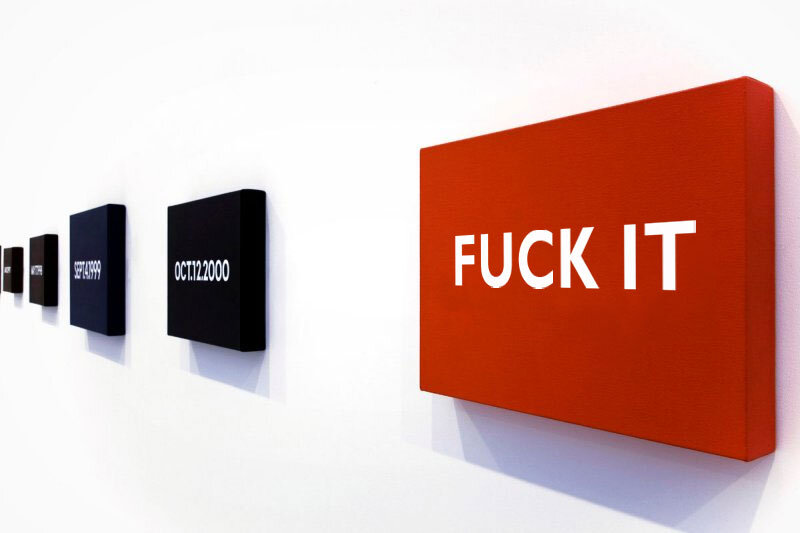
Artist Eric Wayne’s art prank imagining what conceptual artist On Kawara’s last painting may have looked like. Kawara’s signature style was established with his Today series, a duration piece that saw the artist paint one canvas a day, keeping his c…

Artist Eric Wayne’s art prank imagining what conceptual artist On Kawara’s last painting may have looked like. Kawara’s signature style was established with his Today series, a duration piece that saw the artist paint one canvas a day, keeping his composition to the date the work was executed.

Is Pandemic Productivity Truly Possible? Maybe.

May 14, 2020

I avoided writing this post for over eight weeks, and trust me, I was very tempted to draft one early on during the pandemic. Remembering back now, those first few panicked and disrupted weeks – when professors and students alike were trying to work out how to transition their learning, research, and projects online – all of us were managing the very best way we knew how. In terms of productivity, for many this largely meant moving from moment to moment and figuring out what low-hanging fruit task to do first, and then categorizing and deciding what truly mattered and what could wait. For others, there was a tendency to carry on “as normal” and expect others to do the same, leading to lots of frustration and burn-out.

As the weeks passed, there was also the insidious message creeping into social media and amongst friends about not “wasting time” while in quarantine and self-isolation. Here came what I like to call the “pandemic productivity propagandists”—the hobbyists, the “I’m going to learn Spanish” crowd, the annoying bread bakers, people overscheduling their kids with new learning activities, and those in my circle who thought this would be the perfect time to be creative and manifest an impromptu sabbatical. I’m not entirely innocent here as I have admonished those who couldn’t find ways to keep up with their fitness routine while in quarantine—I ceremoniously bought weights and a rebounder the day after we were sent into self-isolation. The temptation to prove one’s productivity never felt higher.

Bubbling beneath the surface of all this “pandemic productivity” has been the reality that many of us are having a hard time facing a whole host of feelings— myself included. Psychologists have already talked about our collective grief over the dramatic changes taking place in our lives, but there is also the reality that many of us are not used to being bored and undistracted; not used to being out of control and losing the luxury of planning out the upcoming days and months; and no longer finding solace in the same distracting behaviours that were part of our pre-pandemic life. I mean who hasn’t become immediately irritated while watching some random TV show or film where people are cavorting out in public and enjoying life in a way that you are not able to right now.

Our entire relationship with time and productivity is being challenged by the Covid-19 pandemic. How will you adjust? That item on my desk is a TimeCube and helps push me through bouts of procrastination. See Tip #6 below.

Our entire relationship with time and productivity is being challenged by the Covid-19 pandemic. How will you adjust? That item on my desk is a TimeCube and helps push me through bouts of procrastination. See Tip #6 below.

So, what to do? We have now reached a turning point where none of this is temporary anymore and things still need to get done. Is pandemic productivity truly possible? Maybe. This is where I have arrived in my thinking as I start to ponder how to advise my students later this summer and into the fall. How to find a way of working and getting things done that honours the unique and unprecedented situation we find ourselves, and allows for a gentler and more mindful approach. Here are some preliminary ideas:

1) Manage energy, not time

This is an idea that has been critical to my health and sanity in recent years, and one I have tried to embrace even more so in recent weeks. It comes down to this: figure out what times of the day you are most energized and enthusiastic, and schedule the tasks that are most important to you — the ones you enjoy and that are at the top of your priority list— to complete with full energy. Many of us now have the luxury of unstructured days to test this out. For example, I am a morning person, and my mind is most agile and alert before noon. This is when I choose to do my writing, research, and other personal projects. It is also when I lift weights and do higher intensity cardio. Later in the afternoon, when my energy is a bit flatter, I tend to do my grading or admin work or more regimented tasks that don’t require the same attention. This is also when I schedule time to read, make calls, or take a nap. And by evening, when I would normally struggle to make a creative argument or analysis, this is when I would maybe answer work emails or clean the house. It is also the time I choose to do yoga, meditation, or go for a night walk or jog. As the day progresses, I work with my natural rhythms and energy flow to schedule tasks. It also helps prevent procrastination and eliminate feelings of guilt around what you should be doing at any given hour.

2) Reduce or eliminate decision fatigue

You’ve probably heard that Apple founder Steve Jobs wore the same outfit every day, or that some athletes have the same meals when training. These are tactics to create more targeted use of your productivity each day by eliminating the fatigue that comes with making decisions. Some of the ways to reduce this drain on your energy include things like: meal planning, scheduling your day first thing each morning and sticking to it, picking out your wardrobe the night before, getting rid of “options” in your home/closet/fridge/pantry/bathroom etc… that you don’t love or use regularly, giving the decision control to someone else and sticking with it, and the overall decluttering of your life of objects (and sometimes people too) that don’t serve you. Reclaim that energy!

3) Stack your habits

This simple but powerful idea, connected to reducing decision fatigue, comes straight out of James Clear’s excellent book Atomic Habits. Clear explains that one way to establish a new habit is to tie it to an existing well-entrenched habit that you do without any real effort or motivation. For example, if you wanted to establish a habit of journaling for 15 minutes a day, or working for half hour on your class assignments, you could tie that habit to your morning coffee, or an activity you do right after brushing your teeth at night. When I first established my home workout routine after the pandemic hit, I knew I had to do it early in the day, and I tied it to making my bed in the morning. Once I complete that task, I put on my workout clothes and get started. Now, it is ritualized, and part of a habit chain that I will carry forward. Give it a try with a habit you are working on—it is a powerful tool.

4) Discover the benefits of boredom

As a child of the 1980s, this one I have on lock, but even I have to admit that it is difficult to convince others of the benefits of boredom. This pandemic, however, is giving us all a crash course. Being able to embrace being unoccupied is a gift, and one that leads, as many studies have proven, to higher states of creativity and insight. Many have experienced gaining some spark of inspiration or a new idea while showering or figuring out a problem on a long walk or during a commute. As Sandii Mann writes in her book The Science of Boredom: Why Boredom is Good, the mind is freed and able to create unique and experimental connections when spared distraction. “Harness your boredom by getting bored," Mann suggests "That means real boredom, which is where you have to let your mind wander. This is the real key. Daydreaming and mind wandering. Don't turn to the internet or try to scroll your boredom away." I recommend finding 15-20 minutes a day to give your mind a complete rest. Call it being bored or a waking meditation— just be bored and see what happens.

5) Create boundaries around your time, and stick to them

Another way to maintain productivity is to put strict controls around when you will begin and end a task, and also how you will choose to spend your time. I learned this important approach during my first year-long sabbatical and wrote about it then. And now that many of us are living much less structured lives, it is critical to set up routines that serve your needs. This means creating boundaries around your time and finding ways to uphold them. If you are asked to attend a Zoom meeting with friends, but it falls at a time you have already scheduled for a workout or homework/job task, respect your boundaries and politely decline. On the other hand, if you schedule an hour for work and it is time to take a break, respect that decision and enjoy the downtime. Boundaries breed great life balance, build your self-confidence and efficacy, and teach people how to treat you.

6) Feel the feeling and do it anyways…. for 10-15 minutes

This is an old productivity hack that comes from the Pomodoro method that I have blogged about many times over the years, but it is essentially a form of interval training. If you are feeling like procrastinating on a task (like writing, responding to emails, or working out), set a timer for 10-15 minutes and do the task anyways, promising yourself that you can stop after that set time. More often than not, you will end up finding something of a flow in the task and want to continue. You can then move to working in intervals of 45-60 minutes with 10-15 minute recovery breaks worked in. On most days, this is precisely what I do. I schedule 2-3 working sessions with breaks built in, and promise myself that I can stop after any particular timed interval if I want to. I rarely do, and that is the beauty of the Pomodoro method. You get stuff done!

7) Do what you actually like

This is a simple directive, but one that I hope more people take to heart. Choose to do things that you enjoy and actually like. It could be as simple as choosing a research topic on something that sparks your desire, and not just one you think will be easy to write up, or one you think your professor is expecting. It can also be as profound as removing/muting people from your social media feeds who bring you down, are unsupportive, or are not really your friends. It is not very often in our lives that we have the space and time to really consider what matters, and what and who brings us happiness. So try using the pandemic as a time to inventory how you are spending your hours, and with whom you share them, and continue to find ways to up the joy factor to help increase your energy and productivity.
Comment
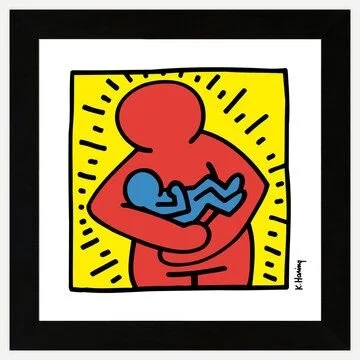
Keith Haring, Mother Holding Baby (1986). This past week on May 4th was the celebration of graffiti and pop artist Keith Haring’s birthday, and this print coincides perfectly with Mother’s Day.

Keith Haring, Mother Holding Baby (1986). This past week on May 4th was the celebration of graffiti and pop artist Keith Haring’s birthday, and this print coincides perfectly with Mother’s Day.

Weekly Round Up... And a Few More Things

May 10, 2020

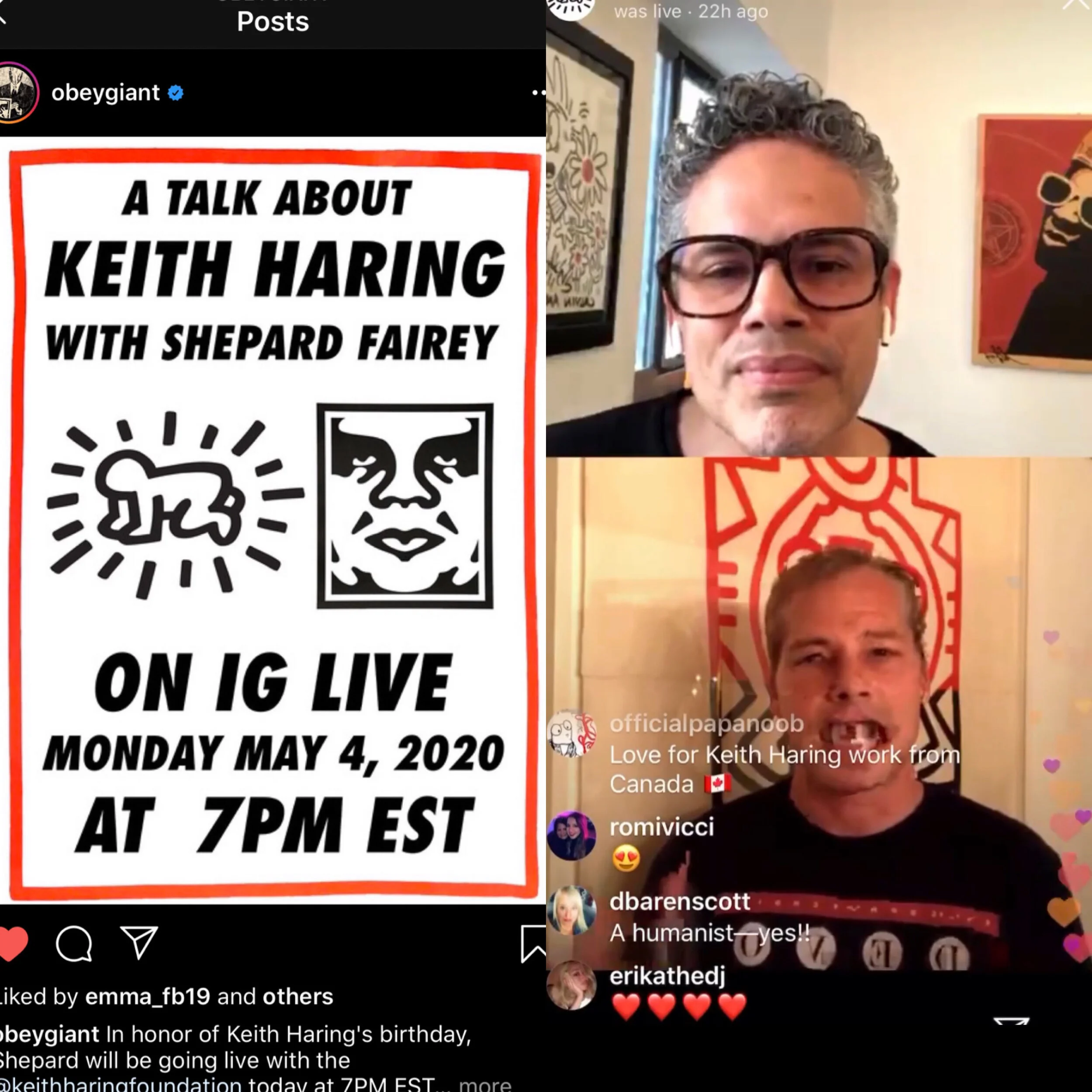
Easing into May and the ninth week of self-isolation, I am starting to find some acceptance with the new normal my daily routine brings, and this has included discovering different kinds of media channels to stay on top of emerging conversations in the art world, and to explore the state of street art in cities near and far. These two interest areas converged with an Instagram Live that Shepard Fairey hosted on May 4th as he sat down for an interview with the Keith Haring Foundation on the occasion of Haring’s birthday tribute (the full video can be found in my links below).

I loved the Instagram Live format for an artist interview! It is very neat to scroll back through and read the viewer’s comments— mine too are immortalized as you can see above. You can find this archived video at the @keithharingfoundation page.

I loved the Instagram Live format for an artist interview! It is very neat to scroll back through and read the viewer’s comments— mine too are immortalized as you can see above. You can find this archived video at the @keithharingfoundation page.

I have an incredible amount of respect for Fairey and the way he has deftly navigated his move from the streets, to the gallery, to the wider public, and into the commercial arena, and above all, I appreciate his pragmatic and unapologetic belief in the masses to apprehend, appreciate, and be part of the art world. His roots are in punk, skateboard culture, and the later days of graffiti art as they manifested and evolved in New York through the mid to late 1980s. This is precisely where we can locate Fairey’s intersection and resonance with Haring—both artists took their social, political, and often difficult messages and art works directly to the people, bypassing and in many ways thumbing their noses at the art establishment. During the 25 minute interview, Fairey discussed a wide range of topics from Haring’s particular connection to his audience, the role artists can play at a time of national and global emergency, and how his own practice and message has evolved and expanded over the years.

 The Instagram Live format was also incredibly cool for an artist interview—those attending live  interacted with one another through chat, expressed their appreciation for certain well-made points with outpouring of hearts, and got to ask questions and/or leave comments that others can pursue later on. I cannot wait to check out more of these Lives in the future.

A Few More Things…. Before the Round Up

  • If you’ve read the Elena Ferrante coming of age Neapolitan Novels (and even if you haven’t, seriously, go and read these novels now!) you will know how beautifully descriptive and evocative the world of these books is. When I first heard the novels were being made into a film and then TV series, I was doubtful anyone could match Ferrante’s narrative, characters, and voice, but somehow the Italian-made (and HBO sponsored series) My Brilliant Friend is beyond EXCELLENT. Each episode is shot like a feature film and every element of the cinematography, acting, and screenplay are carefully measured to capture the conflicting emotions and worlds at play in the books.

  • A nice Instagram follow if you are in Vancouver or beyond is mural_hunter. The account has been doing a terrific job of locating and recording images of the street art and murals that are popping up around the Lower Mainland. Fairey talked a bit about the wave of street art we are seeing in the wake of Covid-19, and accounts like this are maintaining amazing archives of the often temporary works.

  • And finally, in honour of Mother’s Day and strong women mentoring other women everywhere, I am finally sitting down to watch Little Women once again. The 2019 adaptation of Louisa May Alcott’s 1868 novel is one of many films that has been made of the book, but I enjoyed the clever self-referential twists of director Greta Gerwig’s version, and I adore Saoirse Ronan’s acting (if you haven’t seen Brooklyn (2015), add it to your list!)

A Talk About Keith Haring With Shepard Fairey (INSTAGRAM LIVE)

@obeygiant

Alone With Their Muses, Artists in Retreat Wonder if It’s Too Much

nytimes.com

Foodie Culture as We Know It Is Over

theatlantic.com

Power In Modernity New Book (PODCAST)

orgtheory

LA Times Art Critic Christopher Knight Wins the 2020 Pulitzer Prize

artnet.com

The US Cultural Landscape Is Reeling. Further North, Canada’s Art Scene Has Few Complaints

artnet.com

The Art Angle Podcast: How Marina Abramović Became the Center of a Vast Satanic Conspiracy Theory (PODCAST)

artnet.com

Open Courtauld Hour - Episode Two: Art and Wellbeing (VIDEO)

Courtauld Youtube

Introducing Virtual Views MoMA: Sculpture Garden (VIDEO)

MoMA YpuTube

The Central, Yet Invisible, Labor of Motherhood in Art

hyperallergic.com

A Talk About Keith Haring With Shepard Fairey (INSTAGRAM LIVE) Alone With Their Muses, Artists in Retreat Wonder if It’s Too Much Foodie Culture as We Know It Is Over Power In Modernity New Book (PODCAST) LA Times Art Critic Christopher Knight Wins the 2020 Pulitzer Prize The US Cultural Landscape Is Reeling. Further North, Canada’s Art Scene Has Few Complaints The Art Angle Podcast: How Marina Abramović Became the Center of a Vast Satanic Conspiracy Theory (PODCAST) Open Courtauld Hour - Episode Two: Art and Wellbeing (VIDEO) Introducing Virtual Views MoMA: Sculpture Garden (VIDEO) The Central, Yet Invisible, Labor of Motherhood in Art
  • A Talk About Keith Haring With Shepard Fairey (INSTAGRAM LIVE)

  • Alone With Their Muses, Artists in Retreat Wonder if It’s Too Much

  • Foodie Culture as We Know It Is Over

  • Power In Modernity New Book (PODCAST)

  • LA Times Art Critic Christopher Knight Wins the 2020 Pulitzer Prize

  • The US Cultural Landscape Is Reeling. Further North, Canada’s Art Scene Has Few Complaints.

  • The Art Angle Podcast: How Marina Abramović Became the Center of a Vast Satanic Conspiracy Theory (PODCAST)

  • Open Courtauld Hour - Episode Two: Art and Wellbeing (VIDEO)

  • Introducing Virtual Views MoMA: Sculpture Garden (VIDEO)

  • The Central, Yet Invisible, Labor of Motherhood in Art

Comment
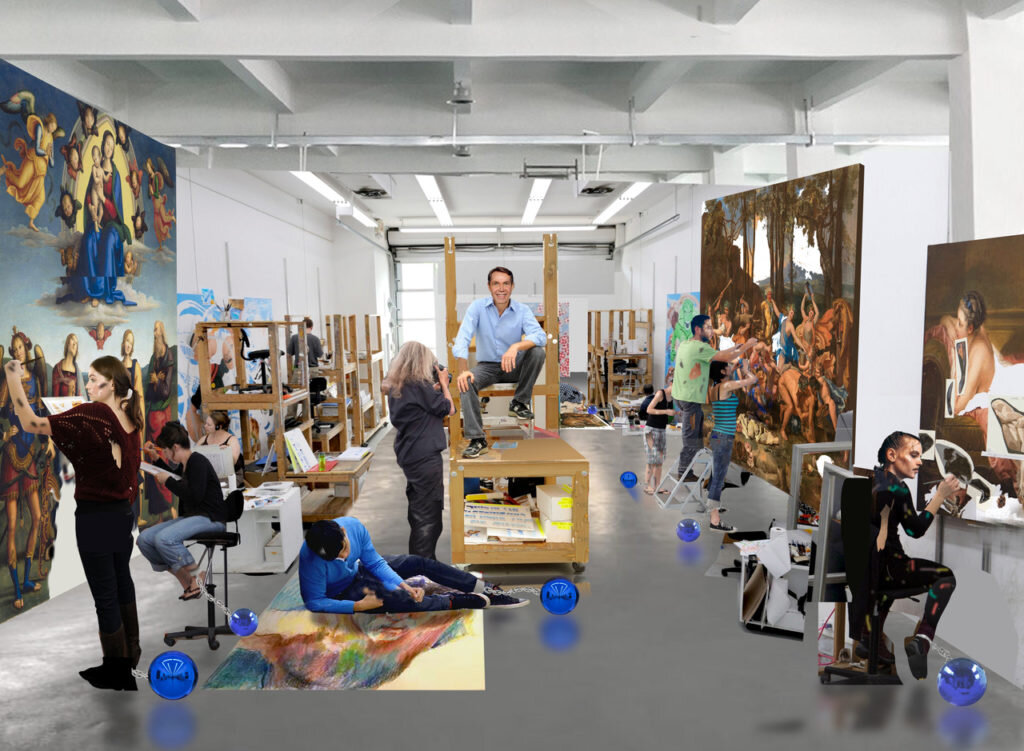
Kenny Schachter, Shackled (2020) Jeff Koons's (blue) ball and chain gang. Courtesy of Kenny Schachter.

Kenny Schachter, Shackled (2020) Jeff Koons's (blue) ball and chain gang. Courtesy of Kenny Schachter.

Bonus Assignment | The Price of Everything (Art Doc Film Series)

May 06, 2020 in bonusassignment

In the Avant-Guardian Musings "Bonus Assignment" series, I will occasionally post creative prompts for students to explore and expand their understanding around a range of art history and visual culture studies topics. These assignments will be collected under the Resources section of my website, hashtagged #bonusassignment under Search, and available as an Open Education Resource for educators. 

Few things fall inside my wheelhouse better than a well executed documentary film about artists and/or the art world. Art docs satisfy my love of filmic representation and analysis while allowing me to unpack the myriad ways in which art historical subject matter is presented, shaped, and deployed as its own unique form of narrative and visual discourse. Most recently, I’ve been researching and analyzing a whole series of art documentaries for a paper I am working on that will be part of an edited book collection on the broader topic of cinema and art. One of my core arguments is that since at least around the time of the 2007-8 financial crisis, the documentary film format has been strategically deployed by a new generation of non-fiction filmmakers working to reveal, through filmic devices, the notion of problematic aesthetics, disjuncture, and black humour that permeates the contours of the contemporary art world.

MV5BNzBhZTA2NTctMzNlYS00NzAyLTllNGQtYzVjYzNlMzBiOWNiXkEyXkFqcGdeQXVyNjcyMzE1MA@@._V1_.jpg

Of these select films, The Price of Everything (2018) has become arguably one of the more provocative and popular documentaries that I often screen in my contemporary art hIstory courses. Directed by Nathaniel Kahn, a filmmaker who’s famous father architect Louis Kahn was the subject of another of his excellent art docs My Architect (2003), the film is a searing and no-holds-barred look at the contemporary art world from a number of key perspectives— from artists, art collectors, gallerists, art critics, curators, auctioneers, and art historians to name just a few. The film also provides for provocative discussion and contemplation, at many levels, for emerging artists. Perhaps most importantly, the film tackles the thorny subject of art and money, and the subjective assessment of art’s “value,” a taboo or avoided topic in many art schools (and one that I LOVE).

The bonus assignment is based in part on a set of final exam questions and also draws on discussion prompts that I have created to allow students an engagement with the film before, during, and after viewing. The film is currently available for download through iTunes and HBO.


INSTRUCTIONS:

PART A) Before you watch the film, you will choose FOUR individuals to pay closer attention to when watching the film. TWO of the individuals must come from the “Artists” listed below, and TWO from the “Art World Insiders” listed below.

  • A) ARTISTS: Choose TWO artists to pay closer attention to when watching the film from among:

Larry Poons, Jeff Koons, Gerhard Richter, Marilyn Minter, George Condo, Njideka Akunyili Crosby

For the two artists you pick from the above list, please do a quick and simple online search (use Google Image search to see a range of works) and choose one work of art from each of the artists that catches your eye and that you are drawn to purely for aesthetics or taste. Please do this without looking too closely at context related information (we will look more closely at this once you finish watching the film). I want your first impressions, and this will work better if you do a blind reading.

Record your findings and offer a FORM and CONTENT analysis in 100-150 words for each of the two chosen artworks (in complete sentences using your own words and ideas). Cut and paste the artworks into your final document so that I can see what you chose.

  •  B) ART WORLD INSIDERS: Choose TWO art world insiders to pay closer attention to when watching the film from among:

Amy Cappellazzo, Jerry Saltz, Simon de Pury, Stefan Edlis, Holly Peterson, Jeffrey Deitch

For the two art world insiders you pick from the above list, please do a quick Google search to understand what their profession is and how their significance to the art world comes across in their web presence. Record your findings in 100-150 words for each individual, offering a quick analysis of what you think their influence and importance is to art world is (in complete sentences and using your own words and ideas).

PART B) While watching the film, keep the following question constantly in mind:

What ideas or information in the film were new or surprising to you?

Take notes and/or pause the film and record your honest and thoughtful reflections one sheet of paper (handwritten point form notes are perfectly ok for this question). There is no word limit on this, but I expect to see at least 350 words.

PART C) After watching the film, please answer the following FOUR questions:

  • QUESTION 1: How does watching this film influence you or potential audiences about “What is art?” or “What makes art valuable?” Have these ideas evolved for you since taking first taking an art history course? If so, how? If not, why not? Please answer in a rich paragraph below (aiming for 200-350 words).

  • QUESTION 2: This film is in part about the process of artists making art, and capturing this process on film is notoriously difficult. Yet, this film has won awards based on the filmmaker’s ability to represent aspects of art-making that few people will ever see. Select 1-2 scenes that particularly illuminated this process of successfully showing how art is made, and describe how the filmmaker revealed subtle and non-verbal processes that heighten audience experience. Please answer in a rich paragraph below (aiming for 200-350 words).

  • QUESTION 3: Go back to the two artists you were drawn to look at before the film screening. All of the artists quoted in the film have varying opinions on whether they should make art they believe will sell, regardless of whether that is the art they want to make. Describe what the attitude of your two chosen artists was, and reflect on whether what you learned about them changed your opinion about their art practice. Would you want to change the artist you are drawn to learning more about their practice and beliefs? If so, why? If not, what did you learn to reinforce your first blind reading. Please answer in a rich paragraph below (aiming for 200-350 words).

  • QUESTION 4: Go back to the two art world insiders you were drawn to look at for this film in Question #1. For each individual, reflect on why you think the filmmaker chose to focus on them for the purposes of the film, and describe what perspective, attitude, and/or statement(s) you strongly agreed with for each one and/or which perspective, attitude, and/or statement(s) you had a strong reaction against? Please answer in a rich paragraph below (aiming for 200-350 words).

Tags: bonusassignment
Comment
iHeart’s most recent stencil in Vancouver, captured by mural_hunter May 1, 2020.

iHeart’s most recent stencil in Vancouver, captured by mural_hunter May 1, 2020.

Weekly Round Up..... and a few more things

May 03, 2020

With a new month upon us and many coming out of April in full social isolation mode, there has been more time to think about things beyond merely surviving and establishing basic routines. I know that as I white-knuckled through teaching the final weeks of my course online, invigilating exams, and then getting grading done, I didn’t really have much time to think beyond what had to be done each day. This probably goes for most of us, but it is worth really putting out there, as a collective realization hits that all is already forever changed. I found a bit more footing last week as I completed and put the finishing touches on a book chapter for which I had an extended deadline, and even then it was tough to find my groove and creativity and put all other things out of my mind to focus on analysis, footnoting, and fine editing. I felt like I was moving through thick mud for most of it, and every part of what I wrote was shaped by a persistent question of its relevance, of how the topic at hand really mattered, and for whom. I see this reflected now in so much of the contemplative editorials, writings, and think pieces coming out of the art world, and academia in particular.

Here’s the thing—we are not going back to the way things were in academia. Not even close to it. And if there is one thing I would urge those thinking about a future in academia to consider, it would be to have a carefully honed Plan B. This was the message that struck me loud and clear this week as many are now assessing what the global pandemic will do to higher education, grad studies, and the all-important job market. To put it into perspective, before the pandemic, the running statistic was that 20-25% of university faculty on average in North American universities were full-time employees. That means upwards of 75-80% of university faculty were contingent and/or part-time. This statistic has only been getting worse since the 2008 economic downturn. I have lived this personally, as I graduated with my Ph.D. into that same 2008-2009 job market year and had more than one job offer evaporate from US schools (even after campus visits and final shortlisting). This left me “out in the wilderness” for several years, and I had to do a postdoc, a visiting position, and wait as I took on sessional work before landing my current position—a position in which I feel survivor guilt every day as I watch many talented Ph.Ds see their dreams of research and teaching dashed. I also don’t take my job for granted, imperfect as it sometimes is, and seeing the numbers of laid off, and struggling universities already declaring bankruptcy in the US, I have been thinking about my own Plan B. We all should.

These stories need to be told, and I was warned back as a graduate student of the slim chances to find work as a traditional academic, and so I hope those students contemplating grad school today have their eyes wide open as we enter into what looks like a devastating global economic recession. Please have a listen to the podcast I listed below around the already collapsing academic job market, and read through the article related to entering academia during this time. The silver lining is that a solid Plan B can end up providing an even better and more recession proof future (see the story about Smarthistory founders in my links as case in point). Saying the quiet part out loud, especially as we head into such an unknown future, is something more of us in academia need to do for ourselves, our students, and for the future of the professoriate.

A few more things…. BEFORE THE ROUND UP

I’ve been enjoying the first two episodes of Ryan Murphy’s Hollywood on Netflix… highly recommended to all the cinephiles out there, and a nice watch if you have taken my ARTH 1130 course or any history of film classes

Historian that I am, I find comfort in accounts of past events that have a bearing on today. As such, I am now reading a second book on the 1918 flu pandemic, John Barry’s The Great Influenza. It is very detailed and more North American centric and science history focused than the first one I devoured the week I went into quarantine, the more globally contextualized and narrative based Pale Rider: The Spanish Flu of 1981 and How It Changed the World by Laura Spinney. Both are compelling and eye-opening reads.

And finally, an excellent follow on Instagram during these times is Hans Ulrich Obrist, the Artistic Director of Serpentine Galleries, London. His “Do It” conceptual and Fluxus inspired art posts are though-provoking and remind us of art’s long engagement with the concerns of the everyday.

Barbie’s Back, as Basquiat?

hyperallergic.com

Preparing for the Academic Job Market in an Economic Recession

chicagomaroon.com

On ‘The Plague’
On ‘The Plague’

nybooks.com

'The Knick' is the ultimate pandemic binge-watch

mashable.com

Mail Art, a Charming Trend That Hasn’t Been Big Since the ’60s, Is Having a Big Renaissance

artnet.com

Women academics seem to be submitting fewer papers during coronavirus

thelilly.com

To Survive the Challenges Ahead, Cultural Institutions Will Need to Redefine the Value of Art

artnet.com

How two professors transformed the teaching of art history

washingtonpost.com

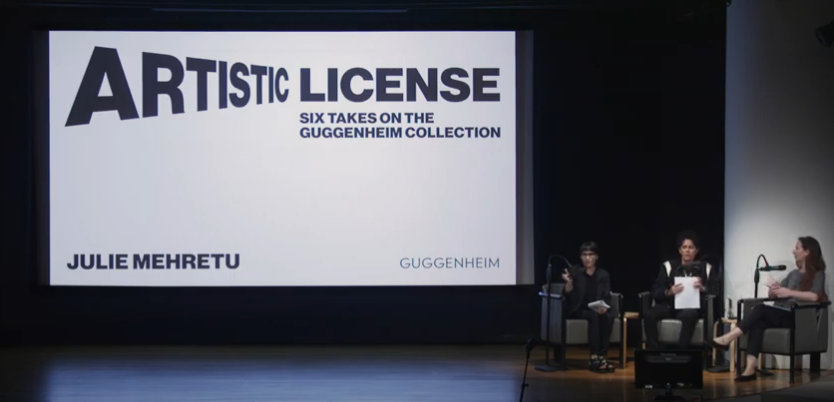
Conversation: Julie Mehretu (VIDEO)

guggenheim

The Professor Is In: Job Market Collapse (PODCAST)

theprofessorisin.com

Barbie’s Back, as Basquiat? Preparing for the Academic Job Market in an Economic Recession On ‘The Plague’ 'The Knick' is the ultimate pandemic binge-watch Mail Art, a Charming Trend That Hasn’t Been Big Since the ’60s, Is Having a Big Renaissance Women academics seem to be submitting fewer papers during coronavirus To Survive the Challenges Ahead, Cultural Institutions Will Need to Redefine the Value of Art How two professors transformed the teaching of art history Conversation: Julie Mehretu (VIDEO) The Professor Is In: Job Market Collapse (PODCAST)
  • Barbie’s Back, as Basquiat?

  • Preparing for the Academic Job Market in an Economic Recession

  • On ‘The Plague’

  • 'The Knick' is the ultimate pandemic binge-watch

  • Mail Art, a Charming Trend That Hasn’t Been Big Since the ’60s, Is Having a Big Renaissance

  • Women academics seem to be submitting fewer papers during coronavirus.

  • To Survive the Challenges Ahead, Cultural Institutions Will Need to Redefine the Value of Art

  • How two professors transformed the teaching of art history

  • Conversation: Julie Mehretu (VIDEO)

  • The Professor Is In: Job Market Collapse (PODCAST)

Comment
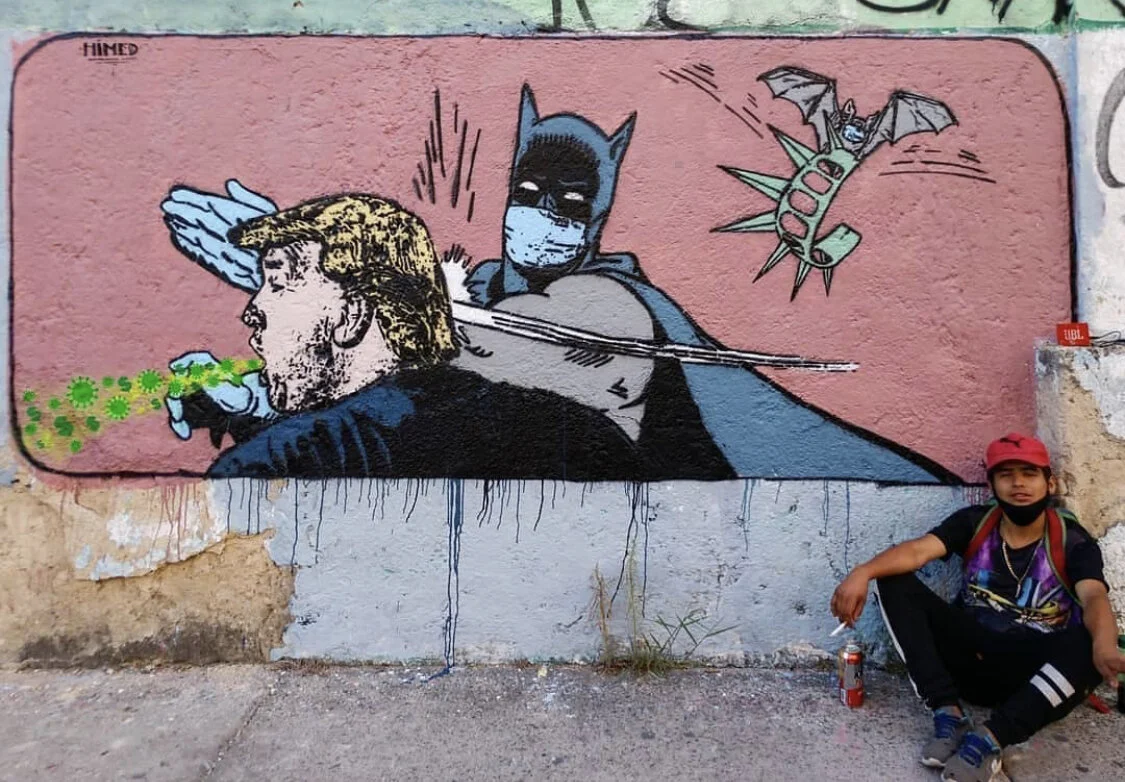
Street artist HIMED from Guadalajara, Mexico, with a Covid-19, Trump, and Batman inspired composition circulating this week on Instagram.

Street artist HIMED from Guadalajara, Mexico, with a Covid-19, Trump, and Batman inspired composition circulating this week on Instagram.

Weekly Flipboard Links and Media Round Up

April 26, 2020

I’m starting to think that all of us will soon be talking about, and thinking about, time and space as before and after the virus— kind of like another form of historic B.C. Like many of you, I have really been assessing and, quite frankly, been in complete gratitude for all of the things I took for complete granted even a few short months ago. Chief among them is travel. And yes, the privilege of flying to immerse myself in the art and culture of another place. Will we ever have the chance to move around the world in the same way again? What is lost? How will we adapt? My thoughts have been taking me to this place as I come to terms with the possibility of having to cancel a field school next summer, and perhaps field schools for many more summers to come. It is also weighing on me as I think about research and accessing archival materials and discovering new art, artists, and ideas. I am currently finishing writing a book chapter related to primary research I conducted exactly a year ago at the University of Nevada, Las Vegas. While the paper broadly deals with the influence of Vegas resort design, spatial aesthetics, and spectacle culture on current art world exhibitionary practices, I realize as I make my summaries and analyses that most of what I am writing is likely to be completely upended and made even irrelevant by the pandemic. How we think about art exhibition, public space, and even what constitutes a spectacle is likely not going to be the same. What will my research look like a year from now, five years from now, and how will it contribute to the after the virus conversation?

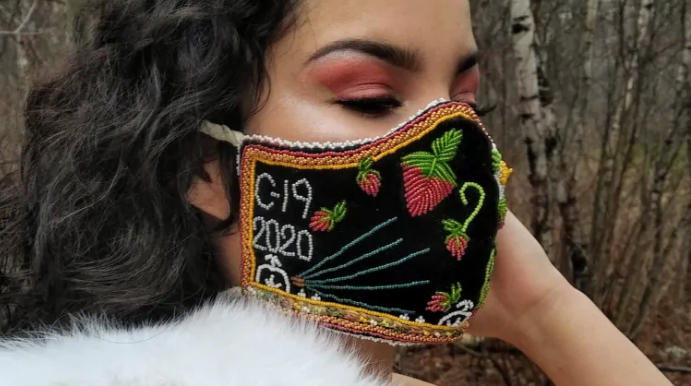
In this week’s round up, I am also noticing similar kinds of pondering and coming-to-terms with the profound changes we are already seeing in the art world. One of the questions has to do with what a post-pandemic architecture and city plan might look like, and another probes the relevance that art can have for frontline providers. I have included a timely podcast interview with Ai Weiwei and his thoughts regarding art’s new role in the wake of the pandemic, along with Jenny Holzer’s take on channeling outrage in these times. And yes, in the spirit of outrage, I have also included a link to Marina Abramovic’s New York Times editorial where she defends herself against Covid-19 conspiracy theorists who mistake her performance art for satanic ritual. I am sad at so much of what I am reading on my feed, but I know we are all experiencing a form of collective grief. Some silver linings are needed, as we are resilient humans that can adapt, and they are present in a few of my picks as well, including the question of how remote teaching can make us more human, how MFA shows can force new kinds of projects, and even how a face mask can be personalized by traditional Indigenous crafters. Hanging in there…. I hope you are doing the same.

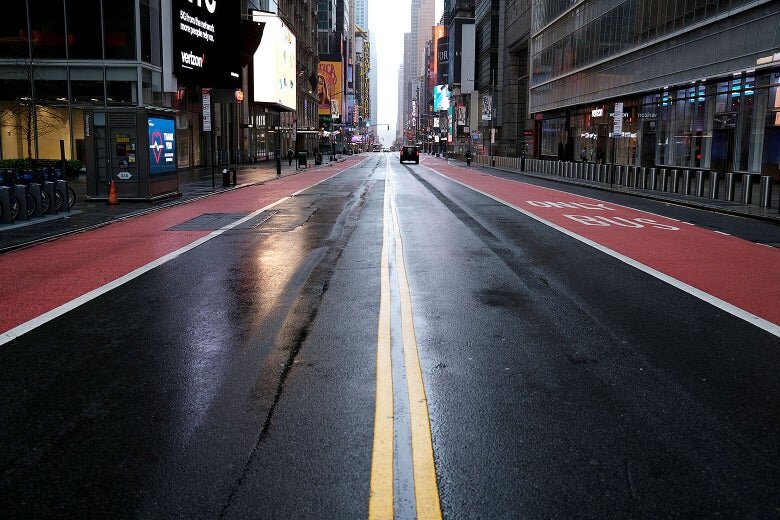
The Post-Pandemic Style

slate.com

What Relevance Can Art Have for Frontline Providers Right Now?

hyperallergic.com

A Collapsing Art Market Will Hurt Underrepresented Artists the Most

artnet.com

As MFA Shows Get Canceled, Alternative Projects Take Shape

hyperallergic.com

Marina Abramovic Just Wants Conspiracy Theorists to Let Her Be

nytimes.com

Can Remote Teaching Make Us More Human?

insidehighered.com

Jenny Holzer on How Artists Can Use Outrage to Expose the Hypocrisies of Our Time

artnet.com

Traditional crafters Indigenizing face masks during COVID-19 pandemic

cbc.ca

Home but not alone: CBC launches Art Uncontained

cbc.ca

The Art Angle Podcast: Ai Weiwei on the Coronavirus, China, and Art’s New Role (PODCAST)

artnet.com

The Post-Pandemic Style What Relevance Can Art Have for Frontline Providers Right Now? A Collapsing Art Market Will Hurt Underrepresented Artists the Most As MFA Shows Get Canceled, Alternative Projects Take Shape Marina Abramovic Just Wants Conspiracy Theorists to Let Her Be Can Remote Teaching Make Us More Human? Jenny Holzer on How Artists Can Use Outrage to Expose the Hypocrisies of Our Time Traditional crafters Indigenizing face masks during COVID-19 pandemic Home but not alone: CBC launches Art Uncontained The Art Angle Podcast: Ai Weiwei on the Coronavirus, China, and Art’s New Role (PODCAST)


  • The Post-Pandemic Style

  • What Relevance Can Art Have for Frontline Providers Right Now?

  • A Collapsing Art Market Will Hurt Underrepresented Artists the Most.

  • As MFA Shows Get Canceled, Alternative Projects Take Shape

  • Marina Abramovic Just Wants Conspiracy Theorists to Let Her Be

  • Can Remote Teaching Make Us More Human?

  • Jenny Holzer on How Artists Can Use Outrage to Expose the Hypocrisies of Our Time

  • Traditional crafters Indigenizing face masks during COVID-19 pandemic

  • Home but not alone: CBC launches Art Uncontained

  • The Art Angle Podcast: Ai Weiwei on the Coronavirus, China, and Art’s New Role (PODCAST)


Comment
Newer / Older
Back to Top
Screenshot 2018-02-05 20.48.17.png

© Dorothy Barenscott, 2010-2025