• Fall 2025
  • Blog
  • Resources
  • Field School
  • Students
  • Feedly
  • About
Menu

Avant-Guardian Musings

  • Fall 2025
  • Blog
  • Resources
  • Field School
  • Students
  • Feedly
  • About
large monogram_2018-02-01_22-31-07.v1 (1).png
“Art is an outlet toward regions which are not ruled by time and space”
— Marcel Duchamp

Avant-Guardian Musings is a curated space of ideas and information, resources, reviews and readings for undergraduate and graduate students studying modern and contemporary art history and visual art theory, film and photography studies, and the expanding field of visual culture and screen studies. For students currently enrolled in my courses or the field school, the blog and associated social media links also serve as a place of reflection and an extension of the ideas and visual material raised in lecture and seminar discussion.

Blog RSS

Screenshot 2018-02-05 20.56.45.png
Blog
KPU FINE ARTS PARIS + VENICE BIENNALE FIELD SCHOOL (MAY/JUNE 2026)
about 2 months ago
"No Fun City" Vancouver: Exploring Emotions of Detachment in Palermo, Sicily at AISU
about 4 months ago
Making Sense of Art in the Age of Machine Learning—A Suggested Reading List
about 5 months ago
From the Archives | How (And Why) To Take Excellent Lecture Notes
about a year ago
Weekly Musings + Round Up... And A Few More Things
about 2 years ago

Screenshot 2018-02-05 20.56.51.png
As we start the week in a storm of activity, new beginnings, and global uncertainty, I am grounded in my word for 2026– INTENTIONAL 🩶— “done with purpose, willingness, deliberation, and consciousness.” I see this word represe
As we start the week in a storm of activity, new beginnings, and global uncertainty, I am grounded in my word for 2026– INTENTIONAL 🩶— “done with purpose, willingness, deliberation, and consciousness.” I see this word represented in the symbol of the heart, and for this reason and many others both personal and professional, I will be bringing this much needed energy to my year. The power of a yearly word is transformative. I started in 2019 and my words have guided and carried me through some important moments and life decisions. If you haven’t already, give it a try, but remember to choose very wisely ☺️ “Radiate” 2025 ✨ “Maintain” 2024 💪🏻 “Refine“ 2023 🙌🏻 “Acta non verba” 2022 🤐 “Audacious” 2021 💃🏼 “Fearless” 2020 😛 “Unapologetic” 2019 💅🏻 #happynewyear #wordoftheyear #intentional #monicavinader @monicavinader
Polar bear ride! 🐻‍❄️🏍️💨🏍️ First motorcycle outing of 2026 in the books. A balmy 4C 🥶We love you Vancouver— good to be home 💙😊Wishing everyone a very Happy New Year! 🥳 
.
.
.
#happynewyear #vancouver #motorcycle #motorcyclesofinstag
Polar bear ride! 🐻‍❄️🏍️💨🏍️ First motorcycle outing of 2026 in the books. A balmy 4C 🥶We love you Vancouver— good to be home 💙😊Wishing everyone a very Happy New Year! 🥳 . . . #happynewyear #vancouver #motorcycle #motorcyclesofinstagram #motocouple #husqvarna #vitpilen401 #svartpilen401 #motogirl #motogirls
2025... where did it go?! 😂 Like a ray of light, I was very much guided by my chosen word of the year “radiate”— to shine and send out beams of energy— and this allowed for a great deal of adventure, new experiences, ideas an
2025... where did it go?! 😂 Like a ray of light, I was very much guided by my chosen word of the year “radiate”— to shine and send out beams of energy— and this allowed for a great deal of adventure, new experiences, ideas and people and opportunities to flow back into my life. Above all else, I found myself very much on the move all year! Travel took me from New York to Lausanne, Paris to Seoul, and Palermo to Maui, while my motorcycling stayed more on the road and less on the track as Brian and I balanced our time, energy, and commitments. But as always, we found every spare moment to prioritize this shared passion and we hope to find a way back to the track in 2026. Professionally, the year was... A LOT... and highlighted by many new research partnerships, conferences, workshops, writing projects, some failed plans and sharp detours, but also the planting of new seeds for future ventures. In the classroom, AI brought many new challenges and opportunities to rethink the purpose of my teaching and courses, but overall I was inspired and at times surprised by what my students were able to accomplish with the new assessment models I put into place. All of this technological change remains very much a work in progress for academics, and I prefer to remain optimistic that the artists I work with will find a way to maintain their voice and vision in it all. The historian in me knows this to be true. Personally, I connected more to my heart and intuition in 2025, listening to that inner voice to guide many key decisions. Brian and I also kept up a decent health and fitness regime that had us energized and aiming for consistency to match our midlife pace. Use it or lose it is a reality in your 50s!!! Sending wishes of peace and love and a very Happy New Year to all! May your 2026 be filled with fun, awe, purpose, and good health and much happiness. Remember to be good to yourself so you can be good to others. I’m still working carefully on my 2026 word… but whatever it is, I know it will be the right one ❤️ . . . #happynewyear #yearinreview2025 #wordoftheyear #motorcyclelife #arthistorianlife
Resting, dreaming, and plotting the year ahead 💙✨😘
.
.
.
#maui #hawaii #vacationmode #newyear #planning
Resting, dreaming, and plotting the year ahead 💙✨😘 . . . #maui #hawaii #vacationmode #newyear #planning
Riding and chasing sunsets across Maui ✨💙🌺🌴🧡
.
.
.
#maui #hawaii #motorcycle #motorcyclesofinstagram #motogirl #vacationmode #sunsets
Riding and chasing sunsets across Maui ✨💙🌺🌴🧡 . . . #maui #hawaii #motorcycle #motorcyclesofinstagram #motogirl #vacationmode #sunsets

Screenshot 2018-02-05 20.57.02.png
  • November 2025 (1)
  • September 2025 (1)
  • August 2025 (1)
  • September 2024 (1)
  • February 2023 (1)
  • January 2023 (3)
  • August 2022 (1)
  • March 2022 (1)
  • February 2022 (3)
  • January 2022 (4)
  • November 2021 (2)
  • October 2021 (3)
  • September 2021 (3)
  • July 2021 (2)
  • June 2021 (1)
  • May 2021 (3)
  • April 2021 (3)
  • March 2021 (3)
  • February 2021 (4)
  • January 2021 (5)
  • December 2020 (3)
  • November 2020 (6)
  • October 2020 (4)
  • September 2020 (1)
  • July 2020 (1)
  • June 2020 (4)
  • May 2020 (9)
  • April 2020 (5)
  • December 2019 (2)
  • November 2019 (5)
  • October 2019 (3)
  • September 2019 (1)
  • July 2019 (6)
  • June 2019 (19)
  • April 2019 (2)
  • March 2019 (5)
  • September 2018 (2)
  • July 2018 (1)
  • June 2018 (4)
  • May 2018 (2)
  • April 2018 (5)
  • March 2018 (5)
  • February 2018 (8)
  • January 2018 (3)
  • December 2017 (4)
  • November 2017 (5)
  • October 2017 (7)
  • September 2017 (3)
  • July 2017 (6)
  • June 2017 (15)
  • April 2017 (2)
  • March 2017 (3)
  • February 2017 (1)
  • January 2017 (2)
  • November 2016 (2)
  • October 2016 (1)
  • September 2016 (3)
  • August 2016 (1)
  • June 2016 (2)
  • May 2016 (3)
  • April 2016 (2)
  • March 2016 (5)
  • February 2016 (7)
  • January 2016 (9)
  • November 2015 (1)
  • October 2015 (2)
  • September 2015 (3)
  • August 2015 (3)
  • July 2015 (1)
  • June 2015 (20)
  • May 2015 (4)
  • March 2015 (2)
  • January 2015 (1)
  • November 2014 (1)
  • October 2014 (2)
  • June 2014 (1)
  • May 2014 (4)
  • April 2014 (6)
  • February 2014 (1)
  • January 2014 (2)
  • November 2013 (1)
  • September 2013 (1)
  • July 2013 (3)
  • June 2013 (10)
  • December 2012 (1)
  • November 2012 (3)
  • October 2012 (6)
  • September 2012 (3)
  • August 2012 (1)
  • July 2012 (1)
  • June 2012 (25)
  • May 2012 (5)
  • April 2012 (4)
  • March 2012 (7)
  • February 2012 (11)
  • January 2012 (6)
  • December 2011 (5)
  • November 2011 (11)
  • October 2011 (11)
  • September 2011 (8)
  • June 2011 (9)
  • May 2011 (15)
  • April 2011 (9)
  • March 2011 (14)
  • February 2011 (17)
  • January 2011 (16)
  • December 2010 (11)
  • November 2010 (18)
  • October 2010 (24)
  • September 2010 (30)

Screenshot 2018-02-05 20.57.07.png

© Dorothy Barenscott, Avant-Guardian Musings, and dorothybarenscott.com, 2010-2023. Unauthorized use and/or duplication of this material without express and written permission from this blog’s author is strictly prohibited. Excerpts and links may be used, provided that full and clear credit is given to Dorothy Barenscott, Avant-Guardian Musings, and dorothybarenscott.com with appropriate and specific direction to the original content.

Street artist Shepard Fairey posted to Instagram this past week a collaboration he did with American punk and new wave band Blondie on this mural at Bleeker and Bowery in downtown NYC, across from the former CBGB’s where the group got their start in…

Street artist Shepard Fairey posted to Instagram this past week a collaboration he did with American punk and new wave band Blondie on this mural at Bleeker and Bowery in downtown NYC, across from the former CBGB’s where the group got their start in the 1970s. Lead singer Debbie Harry is prominently featured.

Weekly Round Up... And A Few More Things

February 07, 2021

Lots of interesting coincidences this week, and when this happens, I tend to take notice and want to muse and share. In my Intro to Visual Art, Urban, and Screen culture course, I released an online module related to the subcultures of hip hop and punk as they emerged and evolved at around the same historical moment of the 1970-80s in the Bronx and London.  This content, coming on the heels of modules related to the rise of graffiti and street art, is critical to the pedagogical underpinnings of my course as it provides for a discussion around both the mainstreaming and commodification of urban subcultures, but also of their global proliferation, circulation, and distribution (beyond their original urban context) and cross-over appeal via the screen. In this case, the screen was MTV, the world’s first 24-hour music channel on American cable television.

Above all else, MTV emerged as a dedicated platform for music videos, and when it launched in the summer of 1981, the channel made history for debuting the first rap video ever to be broadcast—Blondie’s Rapture. So you may be asking why a new wave punk band was the first to introduce rap music to a mainstream audience? After all, rap is a form of music linked to a distinct subculture of hip hop that is closely tied to African American performers and DJs. This is the question that I am asking my students to probe, but more specifically how and why Debbie Harry becomes a kind of vicarious guide to not only the world of rap music, but also street and graffiti art. If you watch the Rapture video (linked below), you will see Harry leading and dancing the audience through an underground East Village club and street scene, merging and overlapping the worlds of punk, glam rock, and hip hop complete with cameos by street artists Jean-Michel Basquiat and Lee Quinones and hip hop pioneer Fab 5 Freddy.   

This past week, street artist Shepard Fairey happened to debut a large scale mural featuring Debbie Harry across from the famed CBGB music club in the same neighbourhood that had served as the setting for Rapture (see my feature image for this post). As Fairey describes in his Instagram post accompanying an image of the piece, Blondie had collaborated with him on the mural and he was inspired by the affinity felt with both the band and the punk subculture of New York. Fairey, who is perhaps one of the most important living street artists to mainstream graffiti to the masses (in part, with his Obey sticker series and contribution to Barrack Obama’s 2008 presidential campaign with his “Hope” poster) has spoken out and at great length about his belief in the power of subculture to unite unlikely audiences despite any residual fear of “selling out.” As Fairey explained in a 2004 interview:

“I would consider my inside/outside strategy toward corporations somewhat of a Robin Hood effect... I use their money, which becomes my money, to produce stickers, posters, stencils, etc… I have been able to convince some of the corporations to invest in the cultures that they try to exploit, helping to create a more symbiotic relationship between the creators and harvesters of culture. It's not an easy game but I'm making the best of life without a trust fund.”

Interestingly, Debbie Harry and Blondie’s choice to partner with and showcase key members of the hip hop and graffiti underground of New York in their premier MTV video has something of the same mechanisms at play. At the very least, in an effort to appeal to the harvesters of culture at MTV, Blondie provided the spotlight and opportunity for a new audience to meet and acquaint themselves with real underground figures of New York. Put another way, Harry could have appropriated rapping without doing any of this (incidentally, she did not rap again), but she chose instead to pay proper respect and shine a light on the East Village subculture however candy-coated she had to make it for MTV. Recall that the early 1980s was still a time when African American music had largely been the subject of wholesale appropriation by generations of white American musicians. As such, this was at least a step in the right direction, and within a decade or more when African American rappers would come to rightfully lead and cross over hip hop to a global audience via mainstream media channels, there would be recognition of what a punk rocker from the East Village had done to help get that process started.

tumblr_4229cbad5b0d5e863ef31aa3a281e5e9_c06c3c81_500 (1).jpg

Jean-Michel Basquiat, Debbie Harry, Fab 5 Freddy, and Lee Quiñones on the set of Blondie’s “Rapture” video, 1981. Photos by Charlie Ahearn

A few more things before the round up:

  • Instagram has proven to be a wonderful research tool for many academics, especially for those of us who explore popular culture topics and the history of film and new media. Many accounts have sprung up in recent years targeting and specializing in specific topics and posting rich content. A great example and fantastic new account that I want to share here is queer.cinema.archive run by one of my department’s BFA alumni, Derek Le Beau. Derek features what he describes as “queer films, characters, and actors in the early days of film and Hollywood’s Golden Age” and he has been teaching me a thing or two as I take in his daily posts.

  • Several weeks back I shared how I was re-watching all five seasons of The Wire. Now that I have enjoyed taking a look back at that classic series, I am turning my attention to new-to-me shows that have come highly recommended. I am now one season into Hell On Wheels—an AMC produced television series which ran back in 2011-2016 that is set around the construction of the first transcontinental railroad across the U.S. I have been struck by how relevant and timely this show is for our current historical moment—many parallels around race relations, income inequality, and government/corporate corruption—and ironically enough, not that dissimilar to The Wire in terms of richly written characters and long narrative arcs.  

"Here’s Why I Believe Lockdown Has Pushed the Art World Out of Its Comfort Zone"

artnet.com

"Indigenous Photograph: a resource for visual storytelling – in pictures"

theguardian.com

"Anarchism on Film, From the Paris Commune to Emma Goldman"

hyperallergic.com

"Postgraduate art history students in UK say they are being encouraged to produce ‘less rigorous and ambitious’ research "

theartnewspaper.com

"What Everyone Who’s Mad at Robinhood Got Wrong"

slate.com

"Art in the Netflix period drama Bridgerton"

theartnewspaper.com

"Why binge-watching TV might not replace weekly instalments"

theconversation.com

"Roni Horn’s “I am Paralyzed With Hope” Is a Flag for a New America"

vulture.com

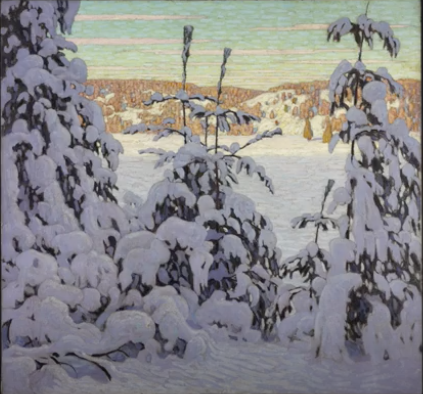
"Slow Look At Snow II: National Gallery of Canada (VIDEO)"

nationalgalleryofcanada

"OUTSIDER Art Fair New York 2021 (VIDEO)"

jameskalmroughcut

"Here’s Why I Believe Lockdown Has Pushed the Art World Out of Its Comfort Zone" "Indigenous Photograph: a resource for visual storytelling – in pictures" "Anarchism on Film, From the Paris Commune to Emma Goldman" "Postgraduate art history students in UK say they are being encouraged to produce ‘less rigorous and ambitious’ research " "What Everyone Who’s Mad at Robinhood Got Wrong" "Art in the Netflix period drama Bridgerton" "Why binge-watching TV might not replace weekly instalments" "Roni Horn’s “I am Paralyzed With Hope” Is a Flag for a New America" "Slow Look At Snow II: National Gallery of Canada (VIDEO)" "OUTSIDER Art Fair New York 2021 (VIDEO)"
  • Here’s Why I Believe Lockdown Has Pushed the Art World Out of Its Comfort Zone

  • Indigenous Photograph: a resource for visual storytelling – in pictures

  • Anarchism on Film, From the Paris Commune to Emma Goldman

  • Postgraduate art history students in UK say they are being encouraged to produce ‘less rigorous and ambitious’ research

  • What Everyone Who’s Mad at Robinhood Got Wrong

  • Art in the Netflix period drama Bridgerton

  • Why binge-watching TV might not replace weekly instalments

  • Roni Horn’s “I am Paralyzed With Hope” Is a Flag for a New America

  • Slow Look At Snow II: National Gallery of Canada (VIDEO)

  • OUTSIDER Art Fair New York 2021 (VIDEO)

Comment
Barnett Newman, Canto VII (1963–4) in the Tate Modern Collection. Newman’s birthday (January 29, 1905 – July 4, 1970) was celebrated this past week along with fellow abstract expressionist Jackson Pollock (January 28, 1912,— August 11, 1956).

Barnett Newman, Canto VII (1963–4) in the Tate Modern Collection. Newman’s birthday (January 29, 1905 – July 4, 1970) was celebrated this past week along with fellow abstract expressionist Jackson Pollock (January 28, 1912,— August 11, 1956).

Weekly Round Up... And A Few More Things

January 31, 2021

In my contemporary art history and visual culture course this past week (which covers the history of art from the post-WWII period to the present), I introduced the provocative idea surrounding the propaganda potential of Abstract Expressionist painting. I have always enjoyed this topic as a way to subvert the commonly held notion that artistic intention determines the meaning of a work of art by showing students how successfully the American government, helped in part by the CIA, were able to hijack the meaning of abstract art works created by the New York School, exporting Abstract Expressionism around the world as a symbol for a uniquely “American” form of cultural expression.

Jackon Pollock in the act of composing an Abstract Expressionist work, c. 1955.

Jackon Pollock in the act of composing an Abstract Expressionist work, c. 1955.

Significantly, the open container for meaning created by non-figurative and highly subjective art, especially as it was explored in the kinetic and non-traditional modes of Jackson Pollock, allowed the style to be exploited as a Cold War weapon against the socialist realism style of the Russians. Socialist realism, the only acceptable art allowed to be taught in Soviet and Eastern bloc art schools from around 1932-1988, was a style that drew on Romanticism and Renaissance principles of composition and aesthetics, foregrounding the glorification and idealization of communist values. Importantly, it was also a style that forbade any kind of abstraction or individual signatures to supersede the intended role of the artist in society. Socialist realism’s singular goal was to reflect the collective spirit of the proletariat.

Within this context, it is not difficult to understand how and why Abstract Expressionism could be held up as the anti-socialist realism art form. For everything this movement held out in form and content as a manifestation of the “American dream” – seen mostly in terms of the paintings’ boundlessness, freedom, all-over gesture, innovation, and fierce individuality – it was also an art form that lied about the accessibility of that dream to everyone equally. Put another way, the very real limitations of the American dream lurk in the shadows of these art works, along with the legacy of white male privilege that is associated with the art movement.

These are the bigger questions I have my students ponder beyond the unfortunate “my kid could paint that” reaction to much of abstract painting. That, and to consider how far the original intended meanings behind many Abstract Expressionist works—intentions that are not entirely knowable, by the way—have largely been subverted by historical forces. As many of you reading know, Jackson Pollock died an alcoholic, a recluse and a very depressed man, unable to come to terms with a celebrity he never asked for. As for Barnett Newman (see featured image in today’s post), he was a self-declared anarchist and wanted little to do with Cold War politics. In the end, the Abstract Expressionists as non-conformist outsiders became the poster boys for insider American culture writ large—a profound moment in art history that also helps us come closer to understanding the broad commodification and co-opting of much of contemporary art today.

A few more things before the round up:

Sandro Botticelli, Young Man Holding a Roundel, ca. 15th century sold for $92.2 million, making it the second-most expensive Old Master artwork to sell at auction

Sandro Botticelli, Young Man Holding a Roundel, ca. 15th century sold for $92.2 million, making it the second-most expensive Old Master artwork to sell at auction

  • The art world sat up and took notice this past week as one of only three Sandro Botticelli paintings in the world believed to be in private hands came up for auction. The Renaissance painter’s Portrait of a Young Man Holding a Roundel (circa 1444/5–1510) led the Sotheby’s Master paintings sale in New York on January 28th and sold for $92.2 million, making it the second-most expensive Old Master artwork to sell at auction—the first one being Leonardo da Vinci’s Salvator Mundi, which sold at Christie’s in 2017 for $450.3 million. What was perhaps even more intriguing than the sale was the rumour of its buyer, none other than Russia’s President Vladimir Putin. Protests were sparked across Russia this past week caused in part by the leaked video of Putin’s alleged secret private palace. Who knows, perhaps this will be the final home of his newest art acquisition, if the Internet rumours prove to be true.

  • I have recently changed up the way I stay on top of my social media feeds, blogs, art journals, and other related content that help me prepare my weekly content. Being a big fan of Flipboard in the past, I have recently found it to be less than reliable, so I have moved to Feedly as my news aggregator application and have placed a menu navigation link at the top of my website for those who may want to check out my account. This is where I collect and pin the best of what I am looking at in terms of art and visual culture news each week, and I am really enjoying the platform interface across all of my devices (computer, laptop, iPad, and iPhone).

"‘I almost cracked’: 16-month artistic performance of mass extinction comes to a close"

theguardian.com

"How a Dead Professor Is Teaching a University Art History Class"

slate.com

"Rauschenberg’s Mud Muse Taught Me to Find Cohesion Even Amidst Chaos"

elephant.art

"Botticelli Portrait Goes for $92 M., Becoming Second-Most Expensive Old Masters Work Ever Auctioned"

artnews.com

"Street art, social media, visibility: how the Arab Spring has changed art and culture, a decade on"

theartnewspaper.com

"Plastic Tactics: The Futility of the Digital Medium"

medium.com

"The Real Pleasure and Pain of Making Choices in Video Games"

wired.com

"GameStop Makes This a Good Time to Rewatch The Big Short"

wired.com

"The Art Angle Podcast: MoMA Curator Paola Antonelli on Design for the Post-Pandemic World (PODCAST)"

artnet.com

"JENKEM - Discussing Skateboarding with Filmmaker Werner Herzog (VIDEO)"

jenkenmag.com

"‘I almost cracked’: 16-month artistic performance of mass extinction comes to a close" "How a Dead Professor Is Teaching a University Art History Class" "Rauschenberg’s Mud Muse Taught Me to Find Cohesion Even Amidst Chaos" "Botticelli Portrait Goes for $92 M., Becoming Second-Most Expensive Old Masters Work Ever Auctioned" "Street art, social media, visibility: how the Arab Spring has changed art and culture, a decade on" "Plastic Tactics: The Futility of the Digital Medium" "The Real Pleasure and Pain of Making Choices in Video Games" "GameStop Makes This a Good Time to Rewatch The Big Short" "The Art Angle Podcast: MoMA Curator Paola Antonelli on Design for the Post-Pandemic World (PODCAST)" "JENKEM - Discussing Skateboarding with Filmmaker Werner Herzog (VIDEO)"
  • ‘I almost cracked’: 16-month artistic performance of mass extinction comes to a close

  • How a Dead Professor Is Teaching a University Art History Class

  • Rauschenberg’s Mud Muse Taught Me to Find Cohesion Even Amidst Chaos

  • Botticelli Portrait Goes for $92 M., Becoming Second-Most Expensive Old Masters Work Ever Auctioned

  • Street art, social media, visibility: how the Arab Spring has changed art and culture, a decade on

  • Plastic Tactics: The Futility of the Digital Medium

  • The Real Pleasure and Pain of Making Choices in Video Games

  • GameStop Makes This a Good Time to Rewatch The Big Short

  • The Art Angle Podcast: MoMA Curator Paola Antonelli on Design for the Post-Pandemic World (PODCAST)

  • JENKEM - Discussing Skateboarding with Filmmaker Werner Herzog (VIDEO)

Comment
Francis Picabia, L’oeil cacodylate (The Cacodylic Eye) 1921 in the MoMA Collection. Picabia’ birthday was this past week—born January 22, 1879—and this work was made exactly one hundred years ago as the Dada art movement began to flourish in the wak…

Francis Picabia, L’oeil cacodylate (The Cacodylic Eye) 1921 in the MoMA Collection. Picabia’ birthday was this past week—born January 22, 1879—and this work was made exactly one hundred years ago as the Dada art movement began to flourish in the wake of WWI and the Spanish Flu pandemic.

Weekly Round Up... And A Few More Things

January 24, 2021

Lately, I’ve been having dreams where the pandemic is a reality. This was an idea that I shared with a group of my film history students this past week in our synchronous Zoom discussion as we talked about the role of dreaming and fantasy in early motion pictures. We were discussing Charlie Chaplin’s The Kid, an iconic silent film that I often teach in the early weeks of my Intro to Film Studies course, and I had posed a question about why Chaplin may have interrupted the narrative of his film with a sequence where the main character enters a fantastical dreamland state only to have the dream “ruined” in the end with the reality of his actual life creeping in.
There are many plausible explanations about why Chaplin may have added this “dream interrupted” scene—a scene which mostly confused audiences at the time and easily could have been omitted and allowed for a still excellent film (see video clip below). But the primary reason had to do with Chaplin’s understanding of cinema’s power to hold a mirror up to our world. Chaplin firmly believed that cinema was more than just a medium of entertainment, and he took many of his cues from avant-garde filmmakers who routinely made it their business to disrupt and disturb tidy narratives like the “Hollywood ending.” This was the point where I shared how my own dreams had only recently been punctured by the reality of mask-wearing, social distancing, and the omnipresence of the pandemic. Has this happened to you yet?

My dreams for the most part were still blissfully removed from Covid-19 even a few weeks ago. But the inevitable reality that we are now all living finally crept in, just as Chaplin’s “dream interrupted” scene in The Kid. Interestingly, if you look now at the majority of the film and television shows we are watching—worlds without the pandemic and all it has wrought—there is a compelling idea left here to explore. At some point, we will have more and more filmmakers and television showrunners include the pandemic reality into their fictionalized worlds. Whether this reality is included or not will likely turn on questions of disrupting the expectations of viewers to escape that reality in their own lives. We discussed as a group a handful of television shows in particular that have already adapted to this new normal (i.e. This Is Us, The Connors, The Good Doctor, and South Park) and talked about reasons some creatives would choose to include or exclude the pandemic narrative from future films and television shows.

Coincidentally, Charlie Chaplin’s The Kid debuted exactly one hundred years ago this past week, on January 21, 1921 at New York City’s Carnegie Hall. This was also precisely the moment when Dadaism in art and cinema was flourishing in avant-garde circles both in New York and Paris. Francis Picabia – my feature artist this week celebrating a birthday on January 22nd—created L’oeil cacodylate (The Cacodylic Eye) also in 1921 as a challenge to the expectations of the traditional group portrait medium (see image in my post header and read more about the work here). And while I am not suggesting that Chaplin was a Dadaist or intended his film to be avant-garde, what we do know is that Chaplin was paying attention to the kinds of questions raised by the artistic avant-garde as they challenged what an art object could be, and what it could arouse, disrupt, and reflect for audiences. It remains to be seen how our 2020-21 moment will be represented by future filmmakers.

A few more things before the round up:

View fullsize 141328966_3767477233308688_6332833061142785006_o.jpg
View fullsize 140657718_3703519613057522_574223565791080911_n.jpg
  • All of those Bernie Sander memes following the inauguration of Joe Biden and Kamala Harris were incredibly creative and very art historically based. I could not get enough of them, and I recommend visiting art critic Jerry Saltz’s Instagram page for one of the best collections from this past week. For the record, my two favourites were Bernie inserted into Joseph Kosuth’s One and Three Chairs (for all the obvious semiotic fun) and the knitted Bernie (because I am still a new knitter and very impressed at how well made it is!)

  • I was incredibly let down by the latest Wonder Woman film that opened on Christmas Day last month. I should have paid attention to the reviews, but I am a huge Kristen Wig fan and wanted to watch one of these superhero genre films with more of an open mind. And so I was pretty reluctant to get sucked into paying another $25 for a newly released Hollywood film so quickly again, but I was hearing all the best things about Promising Young Woman and did not want it fully spoiled for me. What can I say? I absolutely loved this movie, and for reasons both at the level of critical form (cinematography and sound design) and narrative. And ironically enough, it turned out to be the “Wonder Woman” film that I was actually looking for. Go see it, and after you do, listen to the many wonderful podcast reviews (like the one I am linking below) to unpack the real brilliance of this film.  

"How Nothingness Became Everything We Wanted"

nytimes.com

"Now for the nudes: thousands turn to online life drawing"

theguardian.com

"What If the Stories We Tell in Order to Live Happen to Be Conspiracy Theories?"

lithub.com

"Landscape by 19th Century Black Abolitionist Painter Heads to U.S. Capitol as Inaugural Gift"

artnews.com

"The Bernie Sanders Meme Proves the Internet Is Resetting"

wired.com

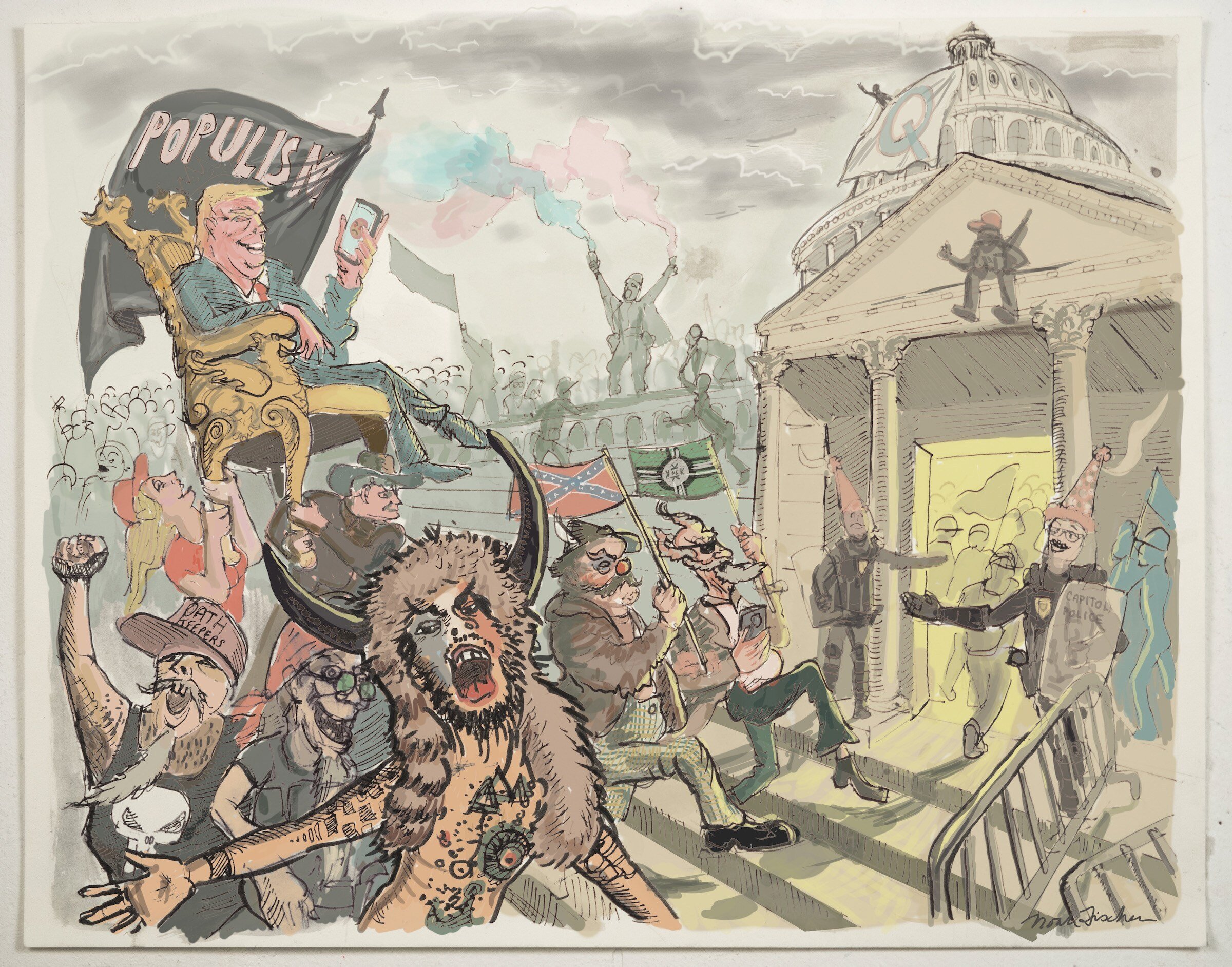
"Why the Art World Needs Populism"

hyperallergic.com

"Read (And Watch Again) Amanda Gorman’s Inauguration Poem (VIDEO)"

thehill.com

"Cindy Sherman Steps Out of Her Comfort Zone—and Ours"

elephant.art

"Einstein on the Political Power of Art"

brainpickings.org

"Promising Young Woman: Slate Spoiler Special (PODCAST)"

slate.com

"How Nothingness Became Everything We Wanted" "Now for the nudes: thousands turn to online life drawing" "What If the Stories We Tell in Order to Live Happen to Be Conspiracy Theories?" "Landscape by 19th Century Black Abolitionist Painter Heads to U.S. Capitol as Inaugural Gift" "The Bernie Sanders Meme Proves the Internet Is Resetting" "Why the Art World Needs Populism" "Read (And Watch Again) Amanda Gorman’s Inauguration Poem (VIDEO)" "Cindy Sherman Steps Out of Her Comfort Zone—and Ours" "Einstein on the Political Power of Art" "Promising Young Woman: Slate Spoiler Special (PODCAST)"
  • How Nothingness Became Everything We Wanted

  • Now for the nudes: thousands turn to online life drawing

  • What If the Stories We Tell in Order to Live Happen to Be Conspiracy Theories?

  • Landscape by 19th Century Black Abolitionist Painter Heads to U.S. Capitol as Inaugural Gift

  • The Bernie Sanders Meme Proves the Internet Is Resetting

  • Why the Art World Needs Populism

  • Read (And Watch Again) Amanda Gorman’s Inauguration Poem (VIDEO)

  • Cindy Sherman Steps Out of Her Comfort Zone—and Ours

  • Einstein on the Political Power of Art

  • Promising Young Woman: Slate Spoiler Special (PODCAST)


Comment
Umberto Boccioni, The Riot , 1911 or after, in the Museum of Modern Art Collection. Boccioni was one the highest profile Italian Futurists promoted by Futurist leader, Filippo Tommaso Marinetti, in the years during Benito Mussolini’s rise to fascist…

Umberto Boccioni, The Riot , 1911 or after, in the Museum of Modern Art Collection. Boccioni was one the highest profile Italian Futurists promoted by Futurist leader, Filippo Tommaso Marinetti, in the years during Benito Mussolini’s rise to fascist dictator in Italy.

Weekly Round Up... And A Few More Things

January 17, 2021

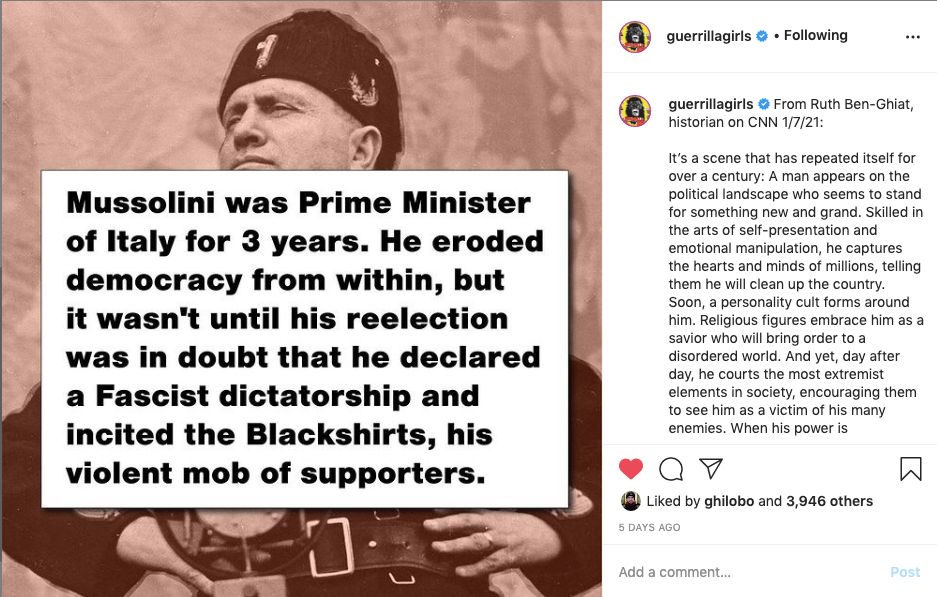
As we slowly and collectively inch our way into 2021 and find some footing, is clear that the upcoming week will have many of us holding our breath as the transition of U.S. Presidential power is set to take place. Looking over my media feeds this week, I was especially struck by an Instagram post by the activist artist group Guerrilla Girls. Featuring an image of Italian Fascist dictator Benito Mussolini overlaid with a quote by historian Ruth Ben-Ghia, the collaged image suggests a clear line from that moment in the 1920s to the one we are living today.

The quote reads: “Mussolini was Prime Minister of Italy for 3 years. He eroded democracy from within, but it wasn’t until his re-election was in doubt that he declared a Fascist dictatorship and incited the Blackshirts*, his violent mob of supporters.” Ben-Ghia, author of Strongmen: Mussolini to the Present (2020), sends this warning to all of us about the fragility of democracy, but it also reminded me of the significant transformations that Mussolini’s persona and use of the media sparked in one particular group of artists—the Italian Futurists.

The Guerilla Girls Instagrammed this post on January 12, 2021 in response to the continuing aftermath of the January 6th Trump-fuelled insurrection in Washington D.C.

The Guerilla Girls Instagrammed this post on January 12, 2021 in response to the continuing aftermath of the January 6th Trump-fuelled insurrection in Washington D.C.

Importantly, Mussolini could not have “declared” himself a dictator without significant control and undermining of the Italian press and its many media outlets. He achieved this through systematic disinformation campaigns, on the one hand, and the promotion and amplification of other groups (political and cultural) who appeared to align with his interests. In the case of the Italian Futurists, an artist movement grounded in revolution through the destruction of tradition, institutions, and what they called “pastism,” Mussolini found a kind of harmony with the movements glorification of war, speed, and destruction “as the highest form of modern art.” The Futurists leader, Filippo Tommaso Marinetti, himself a self-declared provocateur, crafted a manifesto (ceremoniously published in Paris Le Figaro newspaper in 1909) that overlapped, whether wittingly or not, with fascist politics, arguing that “There is no longer beauty except in the struggle. No more masterpieces without an aggressive character. Poetry must be a violent assault against the unknown forces in order to overcome them and prostrate them before men.”

In today’s language, we could argue that Marinetti was very much “on brand” with Mussolini’s political goals, and a kind of kinship emerged between the men, one that continues to challenge art historians who debate about the nature of alignment of Italian Futurism to Italian Fascism to this day. One undeniable outcome, however, was that artists learned from strongmen how to leverage their visibility and influence through the use of provocative speech and the use of the media. As Jon Mann succinctly argues in his overview of Futurism, “Marinetti’s public braggadocio—and his manipulation of and engagement with the mass media—changed the way artists conceived of their relationship to the art world and popular culture.” This is what I couldn’t stop thinking about this week. Who might be the Marinetti of the art world in the years to come, and will an art movement align and grow with Trumpism?

*as an aside, there was an anti-racism group in my province, British Columbia, that proclaimed this past January 15th as “Black Shirt Day.” I wonder if the organizers understand the unfortunate symbolism and history they are evoking with that choice—a point of conversation in a couple of my classes this week.

A few more things before the round up:

Walter Scott’s graphic novel series Wendy Master of Art.

Walter Scott’s graphic novel series Wendy Master of Art.

  • Canadian Art Instagrammed cover art from Walter Scott’s graphic novel series Wendy Master of Art (2020), and I immediately hunted down a copy and wanted to share this with those of you who can best relate. The publisher’s vivid description reads: “Wendy is an aspiring contemporary artist whose adventures have taken her to galleries, art openings, and parties in Los Angeles, Tokyo, and Toronto. In Wendy, Master of Art, Walter Scott’s sly wit and social commentary zero in on MFA culture as our hero decides to hunker down and complete a master of fine arts at the University of Hell in small-town Ontario. Finally Wendy has space to refine her artistic practice, but in this calm, all of her unresolved insecurities and fears explode at full volume, usually while hungover. What is the post-Jungian object as symbol? Will she ever understand her course reading, or herself? What if she’s just not smart enough? As she develops as an artist and a person, Wendy also finds herself in a teaching position, mentoring a perpetually sobbing grade-grubbing undergrad.

  • One of my Sunday morning rituals is making buttermilk pancakes and watching Fareed Zakaria’s GPS on CNN. His weekly fresh takes on global politics has always helped ground my own thinking about what is happening around the world. Zakaria recently published a powerful book that he wrote while in quarantine this past year called Ten Lessons For A Post-Pandemic World (2020). I have just started reading it and cannot put it down! I have also provided a link to an interview he did on the New York Times Book Review podcast that is both excellent and insightful. You can find that in the round up below— enjoy the links!

"Smithsonian Seeks to Create Visual Archive of Capitol Riot"

artnews.com

"Want to understand the Capitol rioters? Look at the inflamed hate-drunk mobs painted by Goya"

theguardian.com

"Anna Wintour on the Kamala Harris Vogue Cover"

nytimes.com

"A Collection of Experimental Kinetic Art, Featuring Marcel Duchamp and Jenny Holzer"

hyperallergic.com

"Teaching In the Age of Disinformation"

chronicle.com

"In Pursuit Of ‘The Zone’: The Art Of Street Photography"

culturepledge.com

"Entrepreneurs Bet Big on Immersive Art Despite Covid-19"

nytimes.com

Your Media Diet Will Never Be the Same

wired.com

"Fareed Zakaria on Life After the Pandemic (PODCAST)"

nytimes.com

"About Time: Fashion and Duration | Sunday at The Met (VIDEO)"

themet

"Smithsonian Seeks to Create Visual Archive of Capitol Riot" "Want to understand the Capitol rioters? Look at the inflamed hate-drunk mobs painted by Goya" "Anna Wintour on the Kamala Harris Vogue Cover" "A Collection of Experimental Kinetic Art, Featuring Marcel Duchamp and Jenny Holzer" "Teaching In the Age of Disinformation" "In Pursuit Of ‘The Zone’: The Art Of Street Photography" "Entrepreneurs Bet Big on Immersive Art Despite Covid-19" Your Media Diet Will Never Be the Same "Fareed Zakaria on Life After the Pandemic (PODCAST)" "About Time: Fashion and Duration | Sunday at The Met (VIDEO)"
  • Smithsonian Seeks to Create Visual Archive of Capitol Riot

  • Want to understand the Capitol rioters? Look at the inflamed hate-drunk mobs painted by Goya

  • Anna Wintour on the Kamala Harris Vogue Cover

  • A Collection of Experimental Kinetic Art, Featuring Marcel Duchamp and Jenny Holzer

  • Teaching In the Age of Disinformation

  • In Pursuit Of ‘The Zone’: The Art Of Street Photography

  • Entrepreneurs Bet Big on Immersive Art Despite Covid-19

  • Your Media Diet Will Never Be the Same

  • Fareed Zakaria on Life After the Pandemic (PODCAST)

  • About Time: Fashion and Duration | Sunday at The Met (VIDEO)

Comment
Adrian Ghenie, Untitled  (2019). Ghenie, a Berlin-based contemporary Romanian artist, has created several evocative portraits of Donald Trump. His practice has been described by Ocula as “partly figurative, partially abstract, richly textured painti…

Adrian Ghenie, Untitled (2019). Ghenie, a Berlin-based contemporary Romanian artist, has created several evocative portraits of Donald Trump. His practice has been described by Ocula as “partly figurative, partially abstract, richly textured paintings that grapple with deep, dark personal and historical states of mind.”

Weekly Round Up... And A Few More Things

January 10, 2021

As I write this post, the visual evidence of the Trump-fueled insurrection at the US Capitol on January 6th continues to pour in and shape the conversation around both the seriousness and severity of the event, but also about how to “read” what actually happened. As with many of you, my first real apprehension of the day’s events happened once I turned on my television and opened my social media feeds in order to take in the motion pictures, stream of photographs, and media accounts that were often happening live and in real-time.

We all of course take for granted that these images will exist and be forever available to us. More importantly, we are conditioned to trust and take filmed and photographed documents at face value, and as factual evidence. Going back in the history of photography, I often lecture about the 1871 Paris Commune—a revolutionary government that ruled after a four month siege and violent insurrection—and the important role of photographers in communicating the scale of death and destruction. As a relatively new and still-evolving medium, the photograph had a power to undermine and displace textual or artistic representations of that fraught historical moment. The images were also impossible to control, at least at first, and the photographs of real people lying dead in Paris streets were largely shown as unromanticized images of raw carnage. The photographs were also quickly distributed around the world, taking on new meanings and political and symbolic associations at times far removed from the original events. But in later years, many of the photographs would disappear and be banned from sale and forbidden from public view or archiving in France.

Architecture and art critic Michael Kimmelman tweeting on the Trump Insurrection this past week.

Architecture and art critic Michael Kimmelman tweeting on the Trump Insurrection this past week.

As someone who studies failed revolutions and insurrections, especially within the context of art movements, I can’t help wondering how our current moment parallels something of what was seem with the advent of politized photographs during the late 19th century. At once a medium associated with unquestionable truth, but also one open to wide distribution, manipulation, and erasure, the photograph of 1871 has many similarities to social media platforms today. There will no doubt be a much needed reckoning about the role of openly accessed social media and the fractured news environment when this episode of history is finally written. Architecture and art critic Michael Kimmelman was quick to respond and point out on Twitter how the preservation of the markers of the January 6th event—even at the level of damaged and defaced monuments and statues—needs to be maintained in order to preserve the evidence of the moment, while countering the impulse to “move on” and forget the reality of what took place. How will this avalanche of evidence— from social media posts, images, videos, to the actual physical evidence of mass violence— be collected, documented, and archived?

A number of the articles in my round up this week speak directly to this idea. Moreover, it will be important to pay attention to how artists, art critics, and art historians respond to and represent the Trump-fuelled insurrection in the weeks, months, and years to come.

A few more things before the round up:

A book for our moment, Hal Foster’s essays speak to “a world where truth is cast in doubt and shame” and asks what artists, art critics, and art historians are left to do.

A book for our moment, Hal Foster’s essays speak to “a world where truth is cast in doubt and shame” and asks what artists, art critics, and art historians are left to do.

  • During these precarious Trump years, art historian, theorist, and critic Hal Foster has spent a great deal of time and energy writing about how to demystify the current global political climate from within the framework of the art world. His recently published book of essays What Comes After Farce? Art Criticism At A Time of Debacle (Verso, 2020) was a book that I finally had a chance to read more thoroughly over the Christmas break as I worked on some new writing projects, and it is a book that I recommend widely to anyone, and especially artists, who wants a sense of what the future of a post-Trumpian era art world might look like.  

  • Speaking of insurrection and civil unrest, the 2019 BBC adaptation of Les Miserables is debuting in Canada on the CBC tonight. Starring Dominic West (who I just finished watching through a 2020 binge of five seasons of The Wire), Lily Collins (Emily In Paris—and yes, I watched that too), and the amazing Olivia Colman (The Crown and Fleabag), the eight-part mini series could not have debuted at a more perfect moment, and promises to continue conversations around the history of revolutions, formations of democracy, and class warfare. DVR is set.

"Print, Frame, and Hang This Image in the National Portrait Gallery"

vulture.com

"Donald Trump’s Last Picture Show"

nytimes.com

"Worst Revolution Ever"

theatlantic.com

"A Public Vulva Sculpture in Brazil Protests Violence Against Women"

hyperallergic.com

"The Blockbuster Avant-Garde"

artnews.com

"How To Channel Boredom"

psyche.co

"The Art World Gets Woke"

artillerymag.com

"“When did Video Become Art?” an online lecture hosted by the Whitney Museum of American Art"

flashart.com

"Queen of Kitsch, Frida Kahlo"

thecritic.co.uk

"Why Are Botched Art Restorations So Captivating?"

elephant.art

"Print, Frame, and Hang This Image in the National Portrait Gallery" "Donald Trump’s Last Picture Show" "Worst Revolution Ever" "A Public Vulva Sculpture in Brazil Protests Violence Against Women" "The Blockbuster Avant-Garde" "How To Channel Boredom" "The Art World Gets Woke" "“When did Video Become Art?” an online lecture hosted by the Whitney Museum of American Art" "Queen of Kitsch, Frida Kahlo" "Why Are Botched Art Restorations So Captivating?"
  • Print, Frame, and Hang This Image in the National Portrait Gallery

  • Donald Trump’s Last Picture Show

  • Worst Revolution Ever

  • A Public Vulva Sculpture in Brazil Protests Violence Against Women

  • The Blockbuster Avant-Garde

  • How To Channel Boredom

  • The Art World Gets Woke

  • “When did Video Become Art?” an online lecture hosted by the Whitney Museum of American Art

  • Queen of Kitsch, Frida Kahlo

  • Why Are Botched Art Restorations So Captivating?

Comment
Newer / Older
Back to Top
Screenshot 2018-02-05 20.48.17.png

© Dorothy Barenscott, 2010-2025