• Fall 2025
  • Blog
  • Resources
  • Field School
  • Students
  • Feedly
  • About
Menu

Avant-Guardian Musings

  • Fall 2025
  • Blog
  • Resources
  • Field School
  • Students
  • Feedly
  • About
large monogram_2018-02-01_22-31-07.v1 (1).png
“Art is an outlet toward regions which are not ruled by time and space”
— Marcel Duchamp

Avant-Guardian Musings is a curated space of ideas and information, resources, reviews and readings for undergraduate and graduate students studying modern and contemporary art history and visual art theory, film and photography studies, and the expanding field of visual culture and screen studies. For students currently enrolled in my courses or the field school, the blog and associated social media links also serve as a place of reflection and an extension of the ideas and visual material raised in lecture and seminar discussion.

Blog RSS

Screenshot 2018-02-05 20.56.45.png
Blog
KPU FINE ARTS PARIS + VENICE BIENNALE FIELD SCHOOL (MAY/JUNE 2026)
about 2 months ago
"No Fun City" Vancouver: Exploring Emotions of Detachment in Palermo, Sicily at AISU
about 4 months ago
Making Sense of Art in the Age of Machine Learning—A Suggested Reading List
about 5 months ago
From the Archives | How (And Why) To Take Excellent Lecture Notes
about a year ago
Weekly Musings + Round Up... And A Few More Things
about 2 years ago

Screenshot 2018-02-05 20.56.51.png
As we start the week in a storm of activity, new beginnings, and global uncertainty, I am grounded in my word for 2026– INTENTIONAL 🩶— “done with purpose, willingness, deliberation, and consciousness.” I see this word represe
As we start the week in a storm of activity, new beginnings, and global uncertainty, I am grounded in my word for 2026– INTENTIONAL 🩶— “done with purpose, willingness, deliberation, and consciousness.” I see this word represented in the symbol of the heart, and for this reason and many others both personal and professional, I will be bringing this much needed energy to my year. The power of a yearly word is transformative. I started in 2019 and my words have guided and carried me through some important moments and life decisions. If you haven’t already, give it a try, but remember to choose very wisely ☺️ “Radiate” 2025 ✨ “Maintain” 2024 💪🏻 “Refine“ 2023 🙌🏻 “Acta non verba” 2022 🤐 “Audacious” 2021 💃🏼 “Fearless” 2020 😛 “Unapologetic” 2019 💅🏻 #happynewyear #wordoftheyear #intentional #monicavinader @monicavinader
Polar bear ride! 🐻‍❄️🏍️💨🏍️ First motorcycle outing of 2026 in the books. A balmy 4C 🥶We love you Vancouver— good to be home 💙😊Wishing everyone a very Happy New Year! 🥳 
.
.
.
#happynewyear #vancouver #motorcycle #motorcyclesofinstag
Polar bear ride! 🐻‍❄️🏍️💨🏍️ First motorcycle outing of 2026 in the books. A balmy 4C 🥶We love you Vancouver— good to be home 💙😊Wishing everyone a very Happy New Year! 🥳 . . . #happynewyear #vancouver #motorcycle #motorcyclesofinstagram #motocouple #husqvarna #vitpilen401 #svartpilen401 #motogirl #motogirls
2025... where did it go?! 😂 Like a ray of light, I was very much guided by my chosen word of the year “radiate”— to shine and send out beams of energy— and this allowed for a great deal of adventure, new experiences, ideas an
2025... where did it go?! 😂 Like a ray of light, I was very much guided by my chosen word of the year “radiate”— to shine and send out beams of energy— and this allowed for a great deal of adventure, new experiences, ideas and people and opportunities to flow back into my life. Above all else, I found myself very much on the move all year! Travel took me from New York to Lausanne, Paris to Seoul, and Palermo to Maui, while my motorcycling stayed more on the road and less on the track as Brian and I balanced our time, energy, and commitments. But as always, we found every spare moment to prioritize this shared passion and we hope to find a way back to the track in 2026. Professionally, the year was... A LOT... and highlighted by many new research partnerships, conferences, workshops, writing projects, some failed plans and sharp detours, but also the planting of new seeds for future ventures. In the classroom, AI brought many new challenges and opportunities to rethink the purpose of my teaching and courses, but overall I was inspired and at times surprised by what my students were able to accomplish with the new assessment models I put into place. All of this technological change remains very much a work in progress for academics, and I prefer to remain optimistic that the artists I work with will find a way to maintain their voice and vision in it all. The historian in me knows this to be true. Personally, I connected more to my heart and intuition in 2025, listening to that inner voice to guide many key decisions. Brian and I also kept up a decent health and fitness regime that had us energized and aiming for consistency to match our midlife pace. Use it or lose it is a reality in your 50s!!! Sending wishes of peace and love and a very Happy New Year to all! May your 2026 be filled with fun, awe, purpose, and good health and much happiness. Remember to be good to yourself so you can be good to others. I’m still working carefully on my 2026 word… but whatever it is, I know it will be the right one ❤️ . . . #happynewyear #yearinreview2025 #wordoftheyear #motorcyclelife #arthistorianlife
Resting, dreaming, and plotting the year ahead 💙✨😘
.
.
.
#maui #hawaii #vacationmode #newyear #planning
Resting, dreaming, and plotting the year ahead 💙✨😘 . . . #maui #hawaii #vacationmode #newyear #planning
Riding and chasing sunsets across Maui ✨💙🌺🌴🧡
.
.
.
#maui #hawaii #motorcycle #motorcyclesofinstagram #motogirl #vacationmode #sunsets
Riding and chasing sunsets across Maui ✨💙🌺🌴🧡 . . . #maui #hawaii #motorcycle #motorcyclesofinstagram #motogirl #vacationmode #sunsets

Screenshot 2018-02-05 20.57.02.png
  • November 2025 (1)
  • September 2025 (1)
  • August 2025 (1)
  • September 2024 (1)
  • February 2023 (1)
  • January 2023 (3)
  • August 2022 (1)
  • March 2022 (1)
  • February 2022 (3)
  • January 2022 (4)
  • November 2021 (2)
  • October 2021 (3)
  • September 2021 (3)
  • July 2021 (2)
  • June 2021 (1)
  • May 2021 (3)
  • April 2021 (3)
  • March 2021 (3)
  • February 2021 (4)
  • January 2021 (5)
  • December 2020 (3)
  • November 2020 (6)
  • October 2020 (4)
  • September 2020 (1)
  • July 2020 (1)
  • June 2020 (4)
  • May 2020 (9)
  • April 2020 (5)
  • December 2019 (2)
  • November 2019 (5)
  • October 2019 (3)
  • September 2019 (1)
  • July 2019 (6)
  • June 2019 (19)
  • April 2019 (2)
  • March 2019 (5)
  • September 2018 (2)
  • July 2018 (1)
  • June 2018 (4)
  • May 2018 (2)
  • April 2018 (5)
  • March 2018 (5)
  • February 2018 (8)
  • January 2018 (3)
  • December 2017 (4)
  • November 2017 (5)
  • October 2017 (7)
  • September 2017 (3)
  • July 2017 (6)
  • June 2017 (15)
  • April 2017 (2)
  • March 2017 (3)
  • February 2017 (1)
  • January 2017 (2)
  • November 2016 (2)
  • October 2016 (1)
  • September 2016 (3)
  • August 2016 (1)
  • June 2016 (2)
  • May 2016 (3)
  • April 2016 (2)
  • March 2016 (5)
  • February 2016 (7)
  • January 2016 (9)
  • November 2015 (1)
  • October 2015 (2)
  • September 2015 (3)
  • August 2015 (3)
  • July 2015 (1)
  • June 2015 (20)
  • May 2015 (4)
  • March 2015 (2)
  • January 2015 (1)
  • November 2014 (1)
  • October 2014 (2)
  • June 2014 (1)
  • May 2014 (4)
  • April 2014 (6)
  • February 2014 (1)
  • January 2014 (2)
  • November 2013 (1)
  • September 2013 (1)
  • July 2013 (3)
  • June 2013 (10)
  • December 2012 (1)
  • November 2012 (3)
  • October 2012 (6)
  • September 2012 (3)
  • August 2012 (1)
  • July 2012 (1)
  • June 2012 (25)
  • May 2012 (5)
  • April 2012 (4)
  • March 2012 (7)
  • February 2012 (11)
  • January 2012 (6)
  • December 2011 (5)
  • November 2011 (11)
  • October 2011 (11)
  • September 2011 (8)
  • June 2011 (9)
  • May 2011 (15)
  • April 2011 (9)
  • March 2011 (14)
  • February 2011 (17)
  • January 2011 (16)
  • December 2010 (11)
  • November 2010 (18)
  • October 2010 (24)
  • September 2010 (30)

Screenshot 2018-02-05 20.57.07.png

© Dorothy Barenscott, Avant-Guardian Musings, and dorothybarenscott.com, 2010-2023. Unauthorized use and/or duplication of this material without express and written permission from this blog’s author is strictly prohibited. Excerpts and links may be used, provided that full and clear credit is given to Dorothy Barenscott, Avant-Guardian Musings, and dorothybarenscott.com with appropriate and specific direction to the original content.

Remy Gerega, Ice Blue (2019). The Australian based photographer captures evocative photographs that raise questions around nature, privilege, and access that speak to our current global moment. This photograph, captured off the coast of Bondi Beach at the Bondi Icebergs Swimming Club was shot from a doorless helicopter. To learn more about Gerega, follow him on Instagram and/or look up his profile on Saatchi Art.

On Summer Vacation... Weekly Round Up + Posts Resume in Early September

July 26, 2021

Some of you have asked, and yes, I have put my art-focused round up and posts on hiatus for the remainder of my summer vacation. I have a busy and exciting academic year ahead-- the 2022 summer field school to Paris and Venice Biennale is in the final stages of being approved-- and I will be back with weekly art-related posts in early September. To learn more about the courses I will be offering, please see this post. Have a fun and relaxing August!

Comment
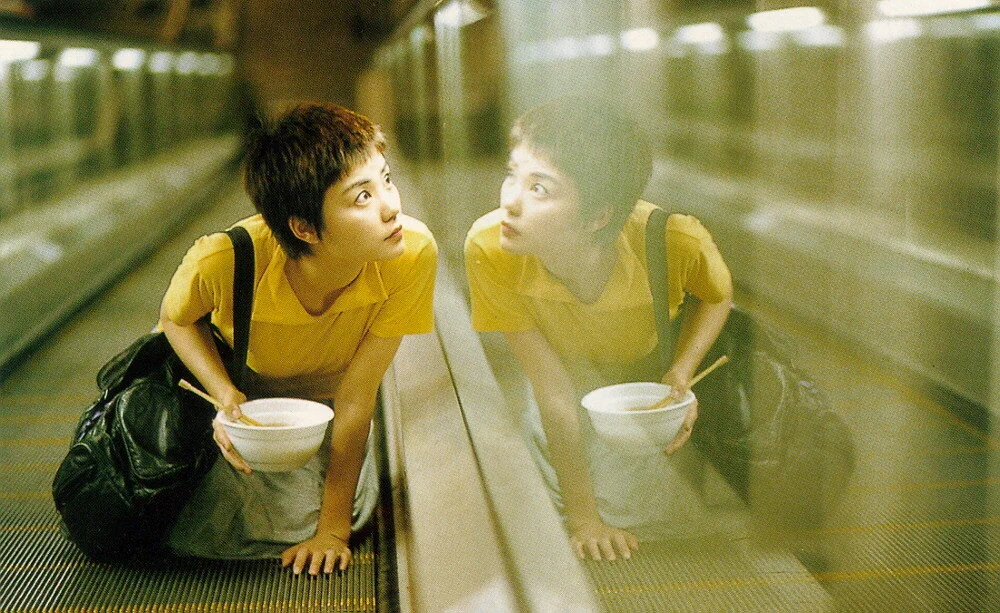
Film still from Chungking Express (1996) dir. Wong Kar-wai.

Film still from Chungking Express (1996) dir. Wong Kar-wai.

Courses for Fall 2021: Film and the City, Urban Screen Culture, Film Studies, and 19th C. Modern Art

July 16, 2021

As registration for the Fall 2021 academic semester begins, I wanted to provide more information about courses I will begin teaching starting September, 2021. Please see detailed descriptions below. If you have any specific questions that are not answered here, you can contact me directly. I look forward to another rich and engaging semester with both new and familiar faces (some in person this year following the difficulties of Covid-19, yay!)


ARTH 3130: Film and the City

Fall 2021: In-person Instruction

Kwantlen Polytechnic University

Wednesdays 4:00-6:50pm, Room Fir 130

This course takes as its focus the dynamic intersections of the filmic medium and the emergence of the “city” as both a conceptual and material idea, examining how filmmakers and the techniques of filmmaking from the early 20th C. forward have been closely bound up in representing the visual, spatial, and mental contours of the metropolis. Beginning with an examination of film’s critical role in the development of modern art and the history of the avant-garde, this course will also draw from existing issues and debates concerning the expanding field of visual culture, exploring how the evolving city (as place and idea) and its various filmic representations have played a reflexive role in the development and understanding of important themes emerging in the modern and contemporary art of the past century. In this way, the course will roughly follow the history and theory of visual arts as it moves from the emergence of the modern period in Europe through the demise of modernism following WWII and into the areas of post-modernism, post-colonialism, and identity politics informing current debates about globalization/migration.

The course is organized using case studies beginning with European cities and representative films that engage with questions of modernism and modernity, then working outwards to non-Western and North American cities, allowing for both a chronological and thematic approach to exploring the intersections of film and the city. Cities under investigation will include Rome, Tokyo, Paris, London, New York, Rio de Janeiro, Berlin, Lahore, Los Angeles, Beijing, and Vancouver.


ARTH 1130: Introduction to Film Studies

Fall 2021: Online, asynchronous with weekly synchronous meetings Fridays

Kwantlen Polytechnic University

The ever popular film studies course has moved online once again for Fall 2021 and is continuing to evolve and update to consider recent developments in the film industry, together with new research that links histories of cinema's past to its present. This is a course that will have you thinking critically about motion pictures long after the final exam-- it also provides an opportunity to visit and see films at the Vancouver International Film Festival (October 1-11). 

COURSE DESCRIPTION: Students will study the history and development of world cinema, and the comprehension and theory of film as a visual language and art-making practice from its inception in the late nineteenth century to the present. The goal of the course is to introduce students to the critical interpretation of the cinema and the various vocabularies and methods with which one can explore the aesthetic function, together with the social, political, and technological contexts and developments, of moving pictures. The format of this course (as an asynchronous online course with a one hour online synchronous weekly discussion) will normally entail a short interactive presentation, the screening of a full-length film, and a focused group discussion. Each film will serve as a starting point and gateway for discussion about the course’s daily theme. 


ARTH 1140: Introduction to Visual Art, Urban, and Screen Culture

Fall 2021: Online, fully asynchronous with optional synchronous bi-monthly meetings on Thursdays

Kwantlen Polytechnic University

Formulated to compliment ARTH 1130: Introduction to Film Studies, this course extends the conversation about screen culture to the world of urban studies and public art. We begin with the question "How do we navigate and make sense of the fast-changing world of new urban visual environments and the emerging world of screen culture?" and explore case studies in street and graffiti art, hip-hop and punk culture, video gaming, anime, new media and Internet art, urban performance art, activist art, grassroots fashion, street photography, and the world of mobile photography and filmmaking.

COURSE DESCRIPTION: Students will study the broad field of contemporary visual art and culture with a specific focus on the role of urban environments and the emerging world of screen culture in shaping new possibilities for global art production and circulation. Students will explore how they can become active agents rather than passive observers through engagement with the diversity of visual art and culture surrounding them. They will investigate interdisciplinary topics connecting the world of visual art with urban and screen cultures through case studies in street and graffiti art, hip-hop and punk culture, video gaming, anime, new media and Internet art, urban performance art, activist art, grassroots fashion, street photography, and the world of mobile photography and filmmaking.


CA 117: Modern Art History

Fall 2021: In-person Instruction

Simon Fraser University

Thursdays 6:30-9:20pm, Vancouver Harbour Centre Campus 1700.

Offered as a core required course in SFU’s School for the Contemporary Arts, CA 117 offers an introduction the visual arts of the nineteenth century, with a critical focus on the roots of modernism and the avant-garde. If you have ever wondered how Western art evolved from its more traditional, Renaissance roots to the challenging and at times difficult-to-understand contemporary art of today, this is the course that holds many of your answers.

COURSE DESCRIPTION: This course provides an introduction to the complex ways in which social and political change, and ideologies of gender, class, race and ethnicity, worked to shape aspects of nineteenth century visual culture in Europe and North America. Emphasis will be placed on the roles played by industrialization, political revolution, rapid urban growth, global commerce, and the new media technologies of an expanding consumer culture in defining a wide range of visual culture. Throughout the term we will also examine different representations and debates around the idea of modernity and the “modern.” Since the time period under investigation has often been called “The First Modern Century”, we will pay particular attention to shifting ideas related to labour and leisure, urban social space and spectacle, and issues bearing on Euro-American expansion of empires in relation to indigenous populations, throughout the nineteenth  century to turn of the twentieth century up to WWI.

Comment
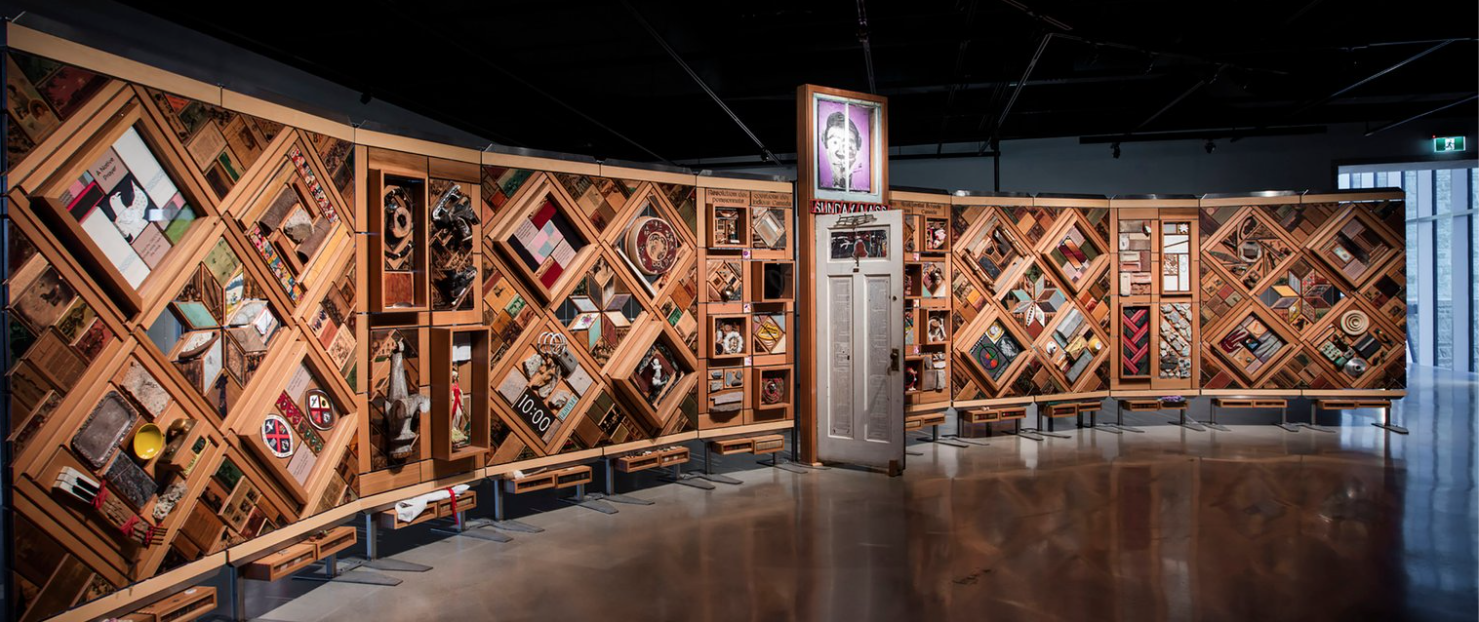
Carey Newmanor Hayalthkin’geme, excerpt from The Witness Blanket project, completed in 2015 and currently touring Canada. A National Monument to recognize the atrocities of Indian Residential Schools, this large scale ‘blanket’ art installation is constructed out of items reclaimed from residential schools, churches, government buildings and traditional structures across Canada. An iOS mobile app to view and experience the art project can be found here.

Carey Newmanor Hayalthkin’geme, excerpt from The Witness Blanket project, completed in 2015 and currently touring Canada. A National Monument to recognize the atrocities of Indian Residential Schools, this large scale ‘blanket’ art installation is constructed out of items reclaimed from residential schools, churches, government buildings and traditional structures across Canada. An iOS mobile app to view and experience the art project can be found here.

Weekly Round Up... And A Few More Things

June 06, 2021

As news broke of the discovery of the remains of 215 Indigenous children on the grounds of the Kamloops residential school late last week, I had just finished wrapping up a Zoom meeting of the contemporary Indigenous art history course I have been teaching since early May. Having studied the history of the residential school system and the generational trauma it had created, as part of my own graduate school training at UBC, I had learned of the impact of this dark chapter of Canadian history even more intimately through an introduction to contemporary Indigenous art. Over my years at UBC, I would come to learn more from many artists, some of whom shared their direct experience and family stories in classroom and studio visits.

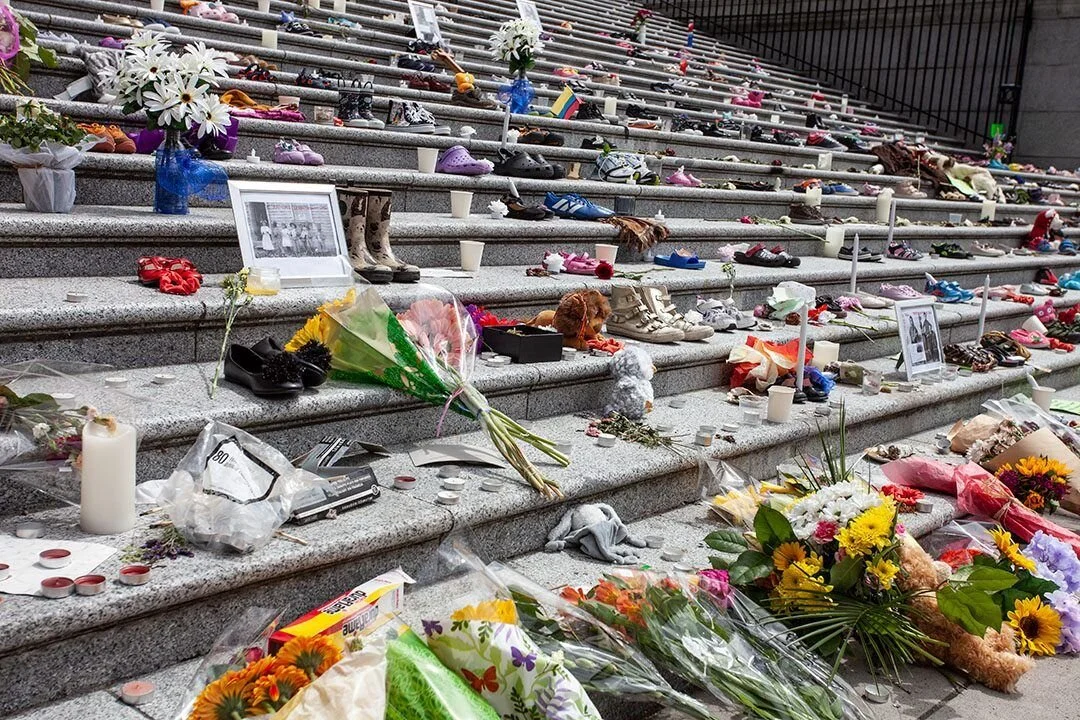
An image of Tamara Bell’s powerful and impromptu public art installation at the Vancouver Art Gallery. Image taken from this Art Newspaper report which had global reach across the art world this week.

An image of Tamara Bell’s powerful and impromptu public art installation at the Vancouver Art Gallery. Image taken from this Art Newspaper report which had global reach across the art world this week.

As the news sank in for Canadians, I felt a responsibility to remain silent and amplify the voices of Indigenous creatives, artists, and leaders, as they spoke to the Canadian and global public about the emotional and political weight that this discovery held. As a white woman born to immigrant settlers and today living on Native lands in this country we call Canada, I have always felt deeply conflicted about my own position as a historian teaching Indigenous art history. Even as I completed a BA history thesis on the topic of Indigenous ethnologist George Hunt and the photographs he had made capturing the everyday lives of the Kwakwaka'wakw peoples of the Northwest Coast, and later worked to incorporate in my MA and Ph.D. aspects of nomadic theory emanating from postcolonial texts based in radically different spatial understandings of Indigenous peoples when visually representing their worlds, I have struggled with how to impart the knowledge I have gained.

Amplifying contemporary Indigenous artists, especially those who attempt to capture the unfathomable dimensions of the colonial experience is a critical way to educate the Canadian public about Canada’s past and present relationship with First Nations peoples.

Amplifying contemporary Indigenous artists, especially those who attempt to capture the unfathomable dimensions of the colonial experience is a critical way to educate the Canadian public about Canada’s past and present relationship with First Nations peoples.

Two years ago, I finally felt the need, and the call, to take up and teach an Indigenous art history course that had been on my department’s books for over a decade. Knowing that this content was critical as a counterbalance to the Western-dominated courses in art history, while also being supportive of all Canadian universities’ mandate to apply Indigenous protocols to the curriculum, the time had come. After consulting extensively over the years with Indigenous scholars and art historians—many of whom urged me to teach the course— I finally found what I think is a respectful, balanced, and self-reflective way to approach the topic. Most importantly, I refrain from any traditional lecturing in this course and instead work with an incredibly rich array of open educational resources, readings, videos, first-person artist interviews, and (when we return to post-Covid times), visits with Indigenous artist guest speakers and tours of local exhibitions and studios, to create a flipped classroom model and course curriculum.

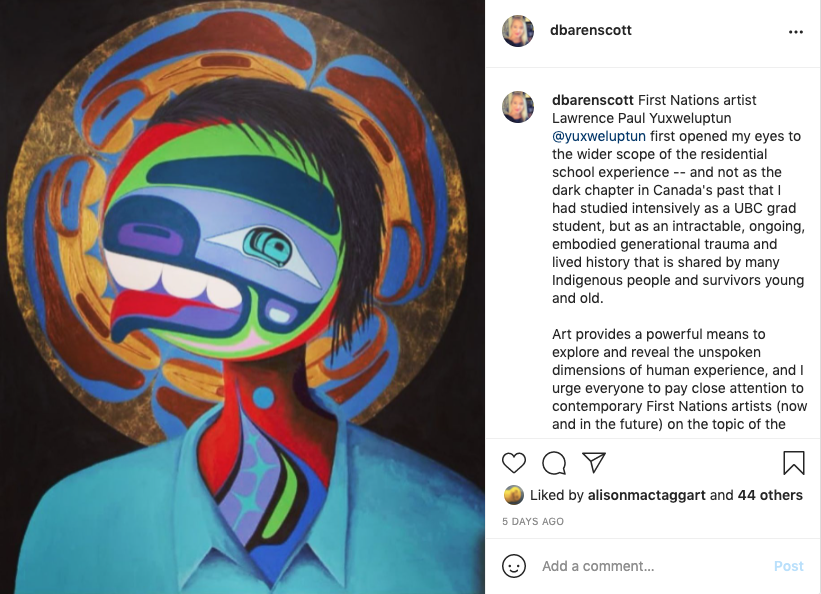
As I wrote in one social media post last week, emphasizing my own focus on introducing contemporary Indigenous artists to my students : “Art provides a powerful means to explore and reveal the unspoken dimensions of human experience, and I urge everyone to pay close attention to contemporary First Nations artists (now and in the future) on the topic of the Canadian residential school experience. There is a power in these art works that supersedes much of the rhetoric and attempts to explain the unfathomable.”

An installation shot of Carey Newmanor Hayalthkin’geme, The Witness Blanket  (2015) housed in the Canadian Museum of Human Rights.

An installation shot of Carey Newmanor Hayalthkin’geme, The Witness Blanket (2015) housed in the Canadian Museum of Human Rights.

Look for example to the immediate response by Haida artist Tamara Bell and her public art installation that gathered 215 pairs of children’s shoes on the steps of the Vancouver Gallery. Here is an artistic expression that does more “work” than any traditional memorial could possibly achieve, and once again underscores the special and distinctive power of art to connect and unite audiences in new understandings of the past. I also want to highlight here the ongoing work of Kwakwak’awakw artist Carey Newmanor Hayalthkin’geme and The Witness Blanket project he created for the Canadian Museum of Human Rights that has toured Canada in one iteration or another since 2015. If you have not yet heard of this art work, this would be a great place to begin an education about the atrocities of the Indian Residential School era in Canada, but also of the resilience and dedication to healing and recovery within First Nations communities. In the end, we all share a responsibility as citizens of a multi-cultural and open democracy to learn more about all dimensions of our country’s history. We can start by looking to our artists.

"Punk Was Never Just for White Dudes"

slate.com

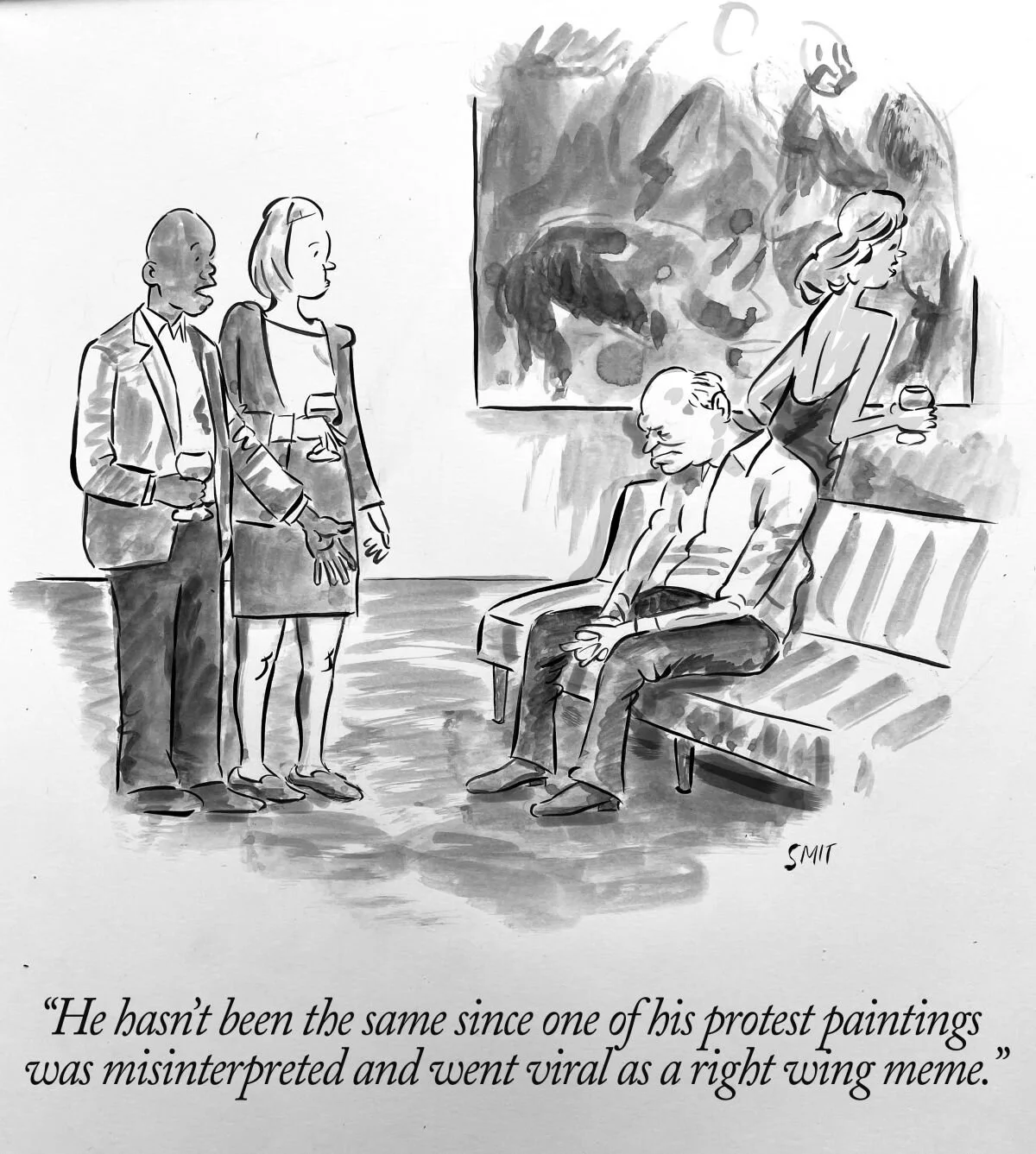
"When Your Protest Art Gets Coopted"

hyperallergic.com

"First-Generation Academics and False Promises"

insiderhighered.com

"The Back Room: Punking the Market"

artnet.com

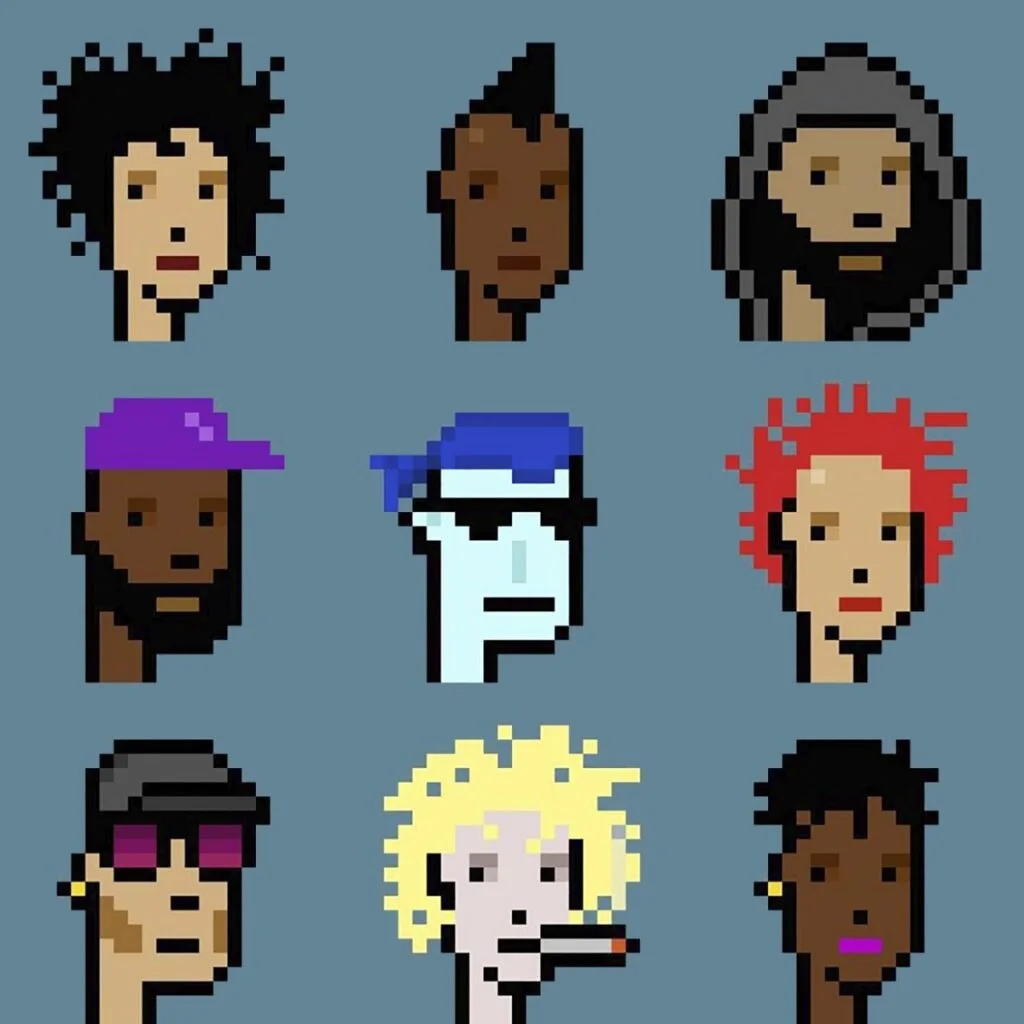
"An Italian Artist Auctioned Off an ‘Invisible Sculpture’ for $18,300. It’s Made Literally of Nothing"

artnet.com

"Thomas Crow Envisions A More “Modest” Museum"

artforum.com

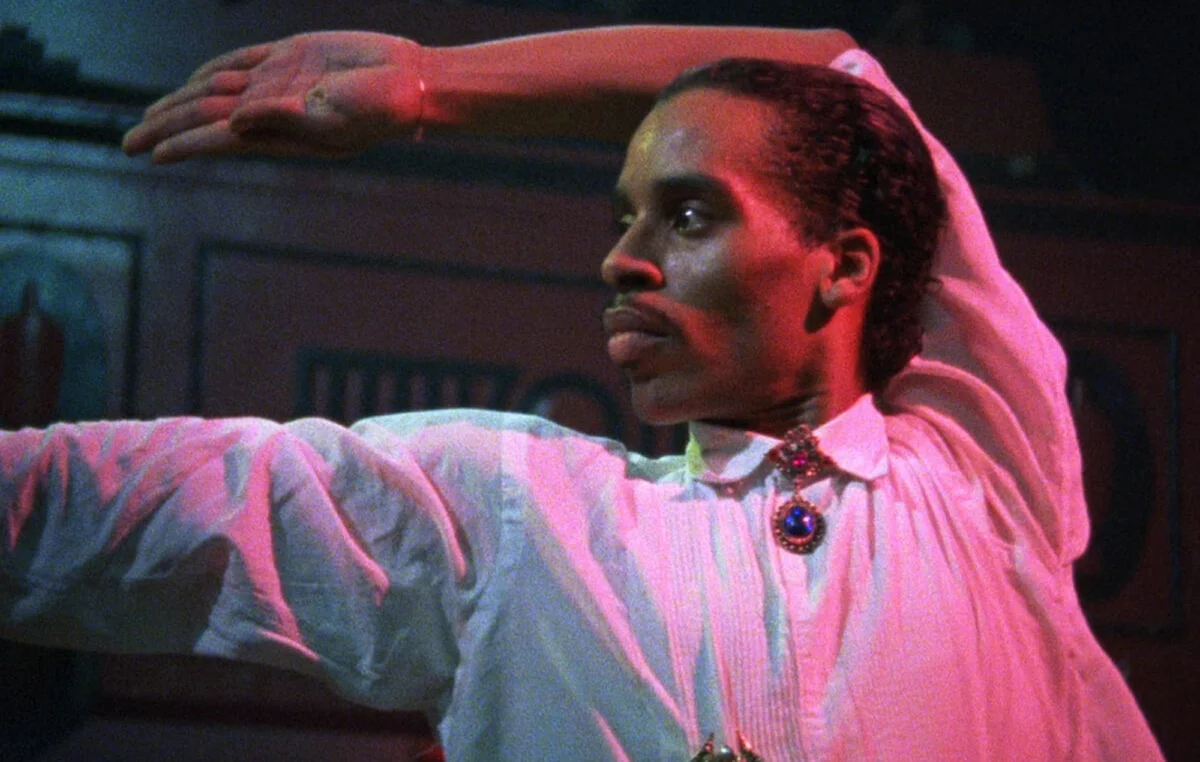
"The Queer Films We’re Watching All Year"

culturedmag.com

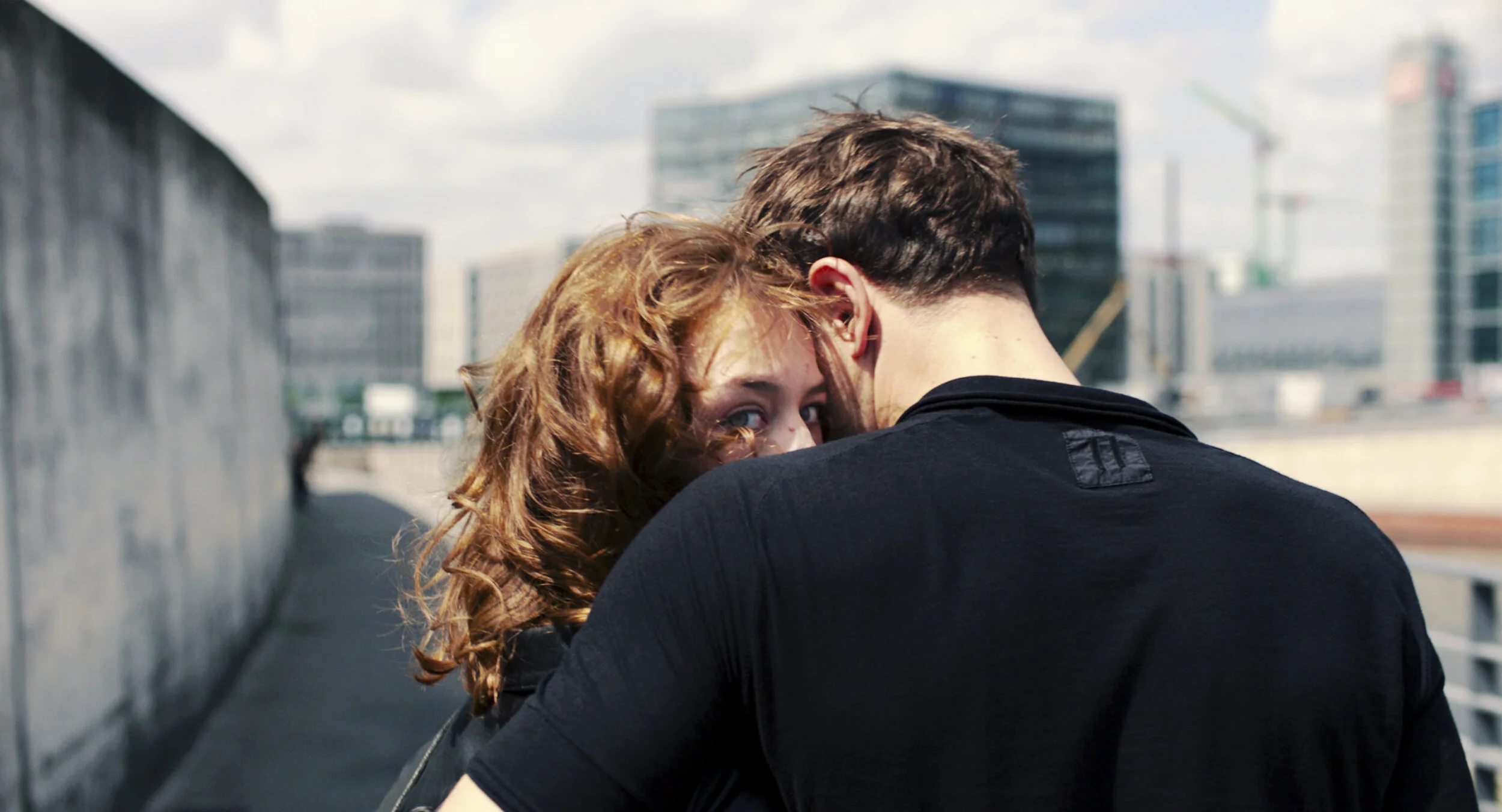
"‘Undine’ Retold"
"‘Undine’ Retold"

nybooks.com

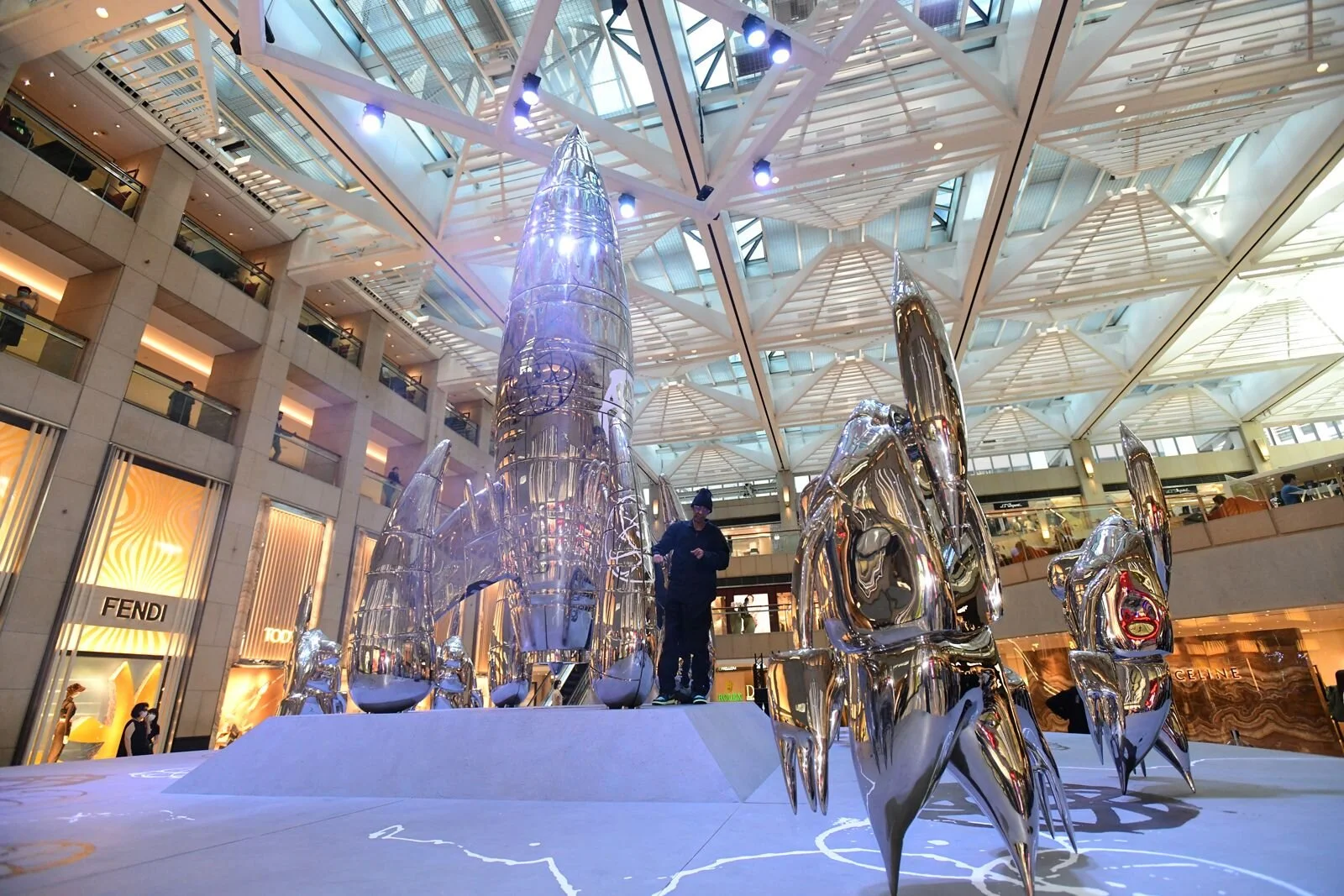
"Street artist Futura unveils his biggest-ever work in Hong Kong"

theartnewspaper.com

""Art is our spiritual oxygen": new shows in London and New York (PODCAST)"

artnewspaper.com

"Punk Was Never Just for White Dudes" "When Your Protest Art Gets Coopted" "First-Generation Academics and False Promises" "The Back Room: Punking the Market" "An Italian Artist Auctioned Off an ‘Invisible Sculpture’ for $18,300. It’s Made Literally of Nothing" "Thomas Crow Envisions A More “Modest” Museum" "The Queer Films We’re Watching All Year" "‘Undine’ Retold" "Street artist Futura unveils his biggest-ever work in Hong Kong" ""Art is our spiritual oxygen": new shows in London and New York (PODCAST)"
  • Punk Was Never Just for White Dudes

  • When Your Protest Art Gets Coopted

  • First-Generation Academics and False Promises

  • The Back Room: Punking the Market

  • An Italian Artist Auctioned Off an ‘Invisible Sculpture’ for $18,300. It’s Made Literally of Nothing

  • Thomas Crow Envisions A More “Modest” Museum

  • The Queer Films We’re Watching All Year

  • ‘Undine’ Retold

  • Street artist Futura unveils his biggest-ever work in Hong Kong

  • "Art is our spiritual oxygen": new shows in London and New York (PODCAST)


Comment
Andy Warhol, Four portraits of Halston (1975), silkscreen on canvas. Image via ArtNet auctions database

Andy Warhol, Four portraits of Halston (1975), silkscreen on canvas. Image via ArtNet auctions database

Weekly Round Up... And A Few More Things

May 24, 2021

There’s a great line in the “Versailles” episode of Halston, the new Netflix biopic miniseries based on the fashion designer’s life, that sums up the existential question that many artists end up pondering at some point in their career. Halston turns to a trusted friend and asks, “Which is it do you think, am I a businessman or an artist?” By this point in the story, we have learned about the fashion designer’s early years struggling as an unknown window dresser and milliner, but then also of his big break in 1961 when Halston achieved overnight fame by designing the signature pillbox hat worn by Jacqueline Kennedy to her husband’s presidential inauguration. Fast forward to the early 1970’s and we see a designer evolving into one of the most powerful fashion brands in the United States. From there (spoiler alert), the story takes a dark turn.

The moral of the story is already foreshadowed in that same early episode. For when Halston ponders that question, his friend, prominent fashion publicist Eleanor Lambert, perhaps most famous for creating New York Fashion Week and founding the Met Gala, replies, “you have to choose?” and Halston answers without hesitation, “yes, I probably do.” And back in the mid-1970-80’s, well before the advent of lifestyle marketing, the Internet, social media, influencers, and the final collapse of the historical avant-garde, there yet existed a fine and perceptible line between “high art” and the pedestrian culture of mass-produced goods.

In this sense, Halston’s story is a fascinating look at the world of art and fashion in the years immediately preceding what art historian’s term the “postmodern” turn in art and visual culture. These were the same years when art world “superstars” Andy Warhol and Jean-Michel Basquiat, were largely ignored, overlooked, and seen as vulgar and déclassé by art world elites. Serious artists did not co-mingle with celebrities, nor did they pursue commercial interests (at least not overtly). Legitimate artists did not look to the “everyday” or the streets for their inspiration. So, does that mean today things have ideally changed? Maybe, but only for the lucky few.

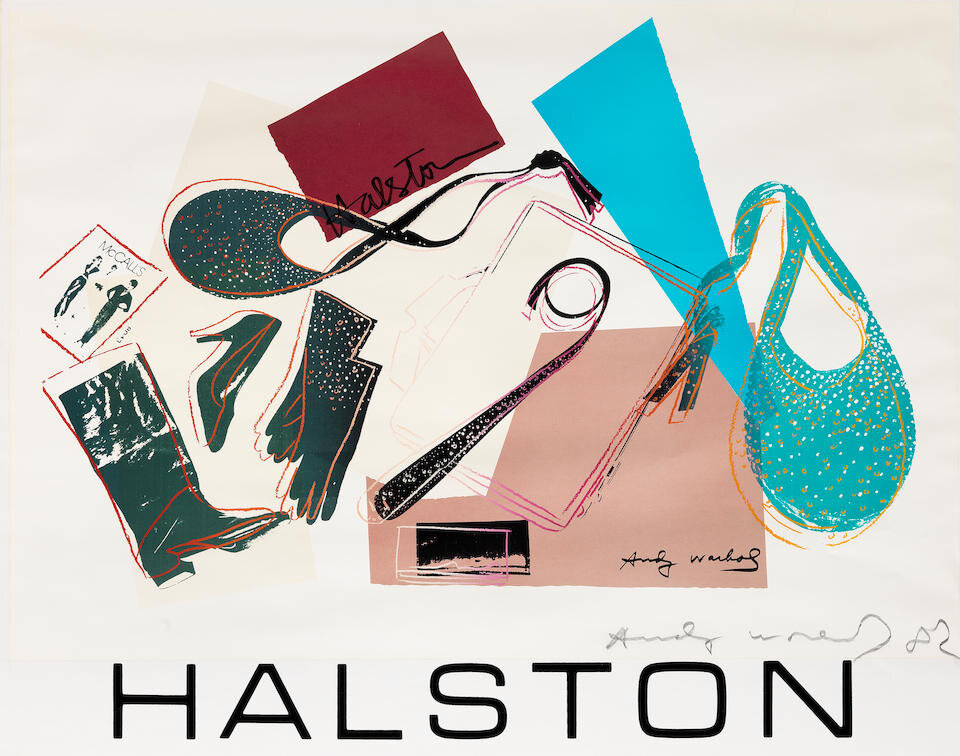
Halston and Warhol were life long-friends and both came to prominence following early careers in advertising. In the early 1980’s as Halston’s brand was becoming more and more diluted into the mainstream, the designer hired Warhol to create four double-page advertisements for his fashion line in an attempt to build cultural capital for his brand. Ironically, Warhol was already by that time beginning to diminish in the eyes of the art world elite who declared him merely a “business artist.”

Halston and Warhol were life long-friends and both came to prominence following early careers in advertising. In the early 1980’s as Halston’s brand was becoming more and more diluted into the mainstream, the designer hired Warhol to create four double-page advertisements for his fashion line in an attempt to build cultural capital for his brand. Ironically, Warhol was already by that time beginning to diminish in the eyes of the art world elite who declared him merely a “business artist.”

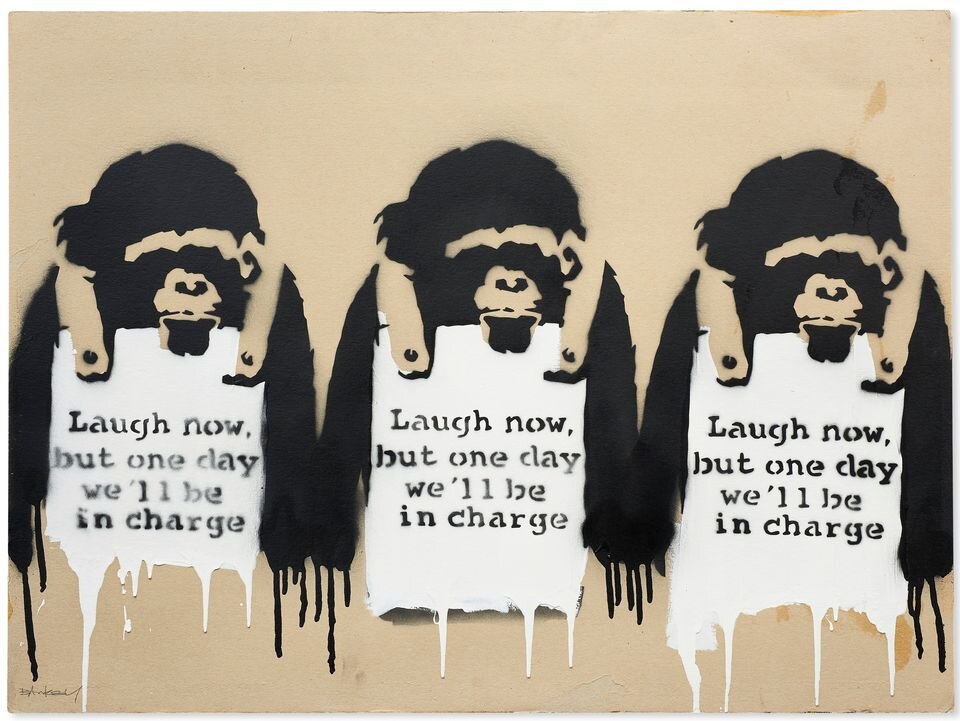
This is still one of the hardest concepts for many of my students to understand—the idea that despite the postmodern turn, which includes the co-mingling of “high” and “low” culture, interdisciplinary experimentation, and the acceptance and even celebration of differences in identity, gender, class, and the like, there is still a gate-keeping function within the art world that declares who is “in” and who is “out” at any given time. Indeed, popular contemporary artists of today, the ones whose names are most often recognized by the masses (i.e. Banksy, Jeff Koons, Takashi Murakami, KAWS, etc..) are also still largely ignored or dismissed by many art world insiders specifically because of their ties to commercial branding and/or rise through street and graffiti culture. Sound familiar?

The art market only complicates these calculations and helps determine other forms of “value” that appear at times to supersede what is understood as legitimate art by art elites, but the bottom line is that an often-enigmatic cultural capital accrues around those artists and designers who are never directly accused of “selling out” or, worse, becoming business men and women, despite them clearly being a brand. Until this system is more fully interrogated and brought to public scrutiny, artists will find themselves asking the very same question that wracked a talented artist and designer fifty years ago at a key moment in their career. Some things never really change.  

A few more things before the round up:

  • The Halston Netflix series is based on the book Simply Halston, a now out of print book by author Steven Gaines. This got me thinking of all the fantastic fashion biographies and non-fiction accounts out there I have read over the years. If you are new to this genre, I can recommend three off the top of my head: Alicia Drake, The Beautiful Fall (2009); Dana Thomas, Deluxe: How Luxury Lost Its Luster (2007) and Gods and Kings (2015) and; Teri Agins, The End of Fashion (2010).

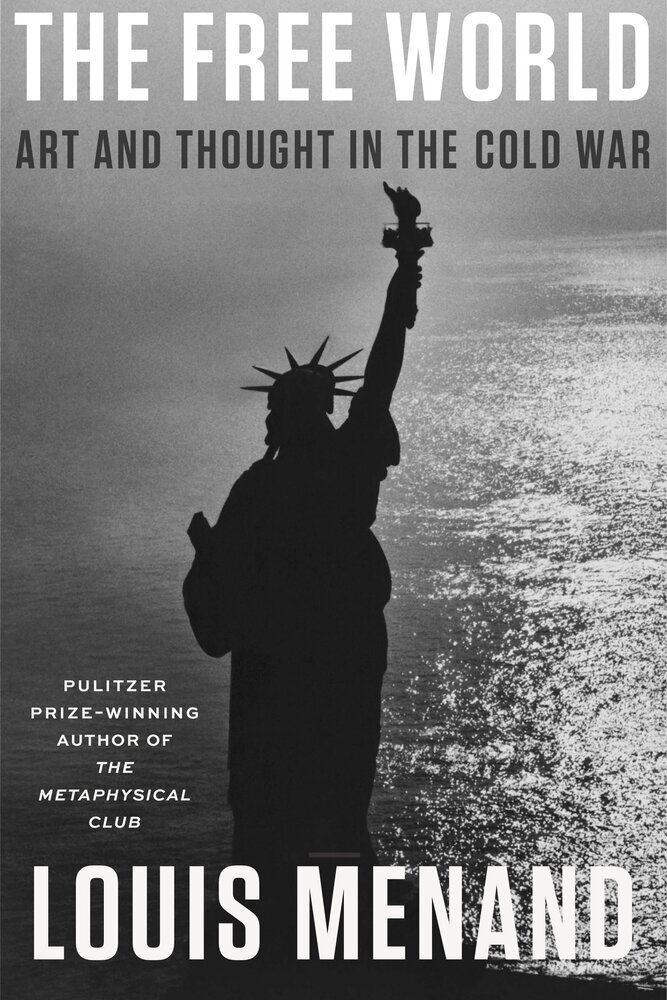
  • Another book that has been on my radar related to the topic of North American art and fashion in the formative decades when Halston or Warhol would have been art students is Louis Menand’s The Free World: Art and Thought in the Cold War (2021). I have included a podcast link in my weekly roundup for an interview with the author, but you can find the New York Times review for the book here.  

"Sean Scully Opened His Studio to the Public to Showcase the Gripping Paintings He Made During Lockdown (VIDEO)"

artnet.com

"What Should We Call the Great Women Artists?"

hyperallergic.com

"Louis Menand on ‘The Free World.” (PODCAST)"

nytimes.com

"Banksy Dealt Blow in Trademark Case Involving Monkey Image"

artnews.com

"Is Instagram Twisting Art into Its Own Image?"

elepahant.art

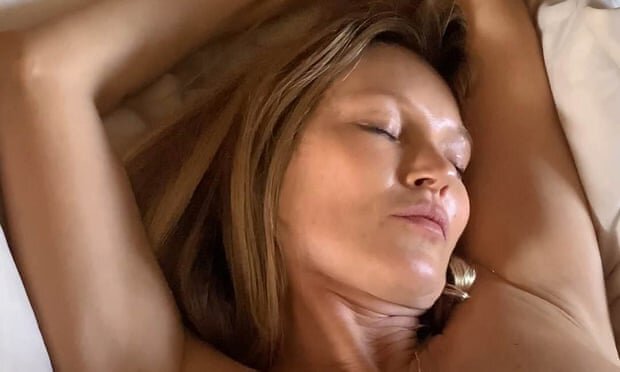
"Kate Moss auctions Sleep With Kate video as non-fungible token"

theguardian.com

"25 Curators Shaping the Art World Today"

artnews.com

"What I Buy and Why: Art Advisor Alaina Simone on Bartering for Work in Her Collection, and the Market Advice She’d Give Young Artists"

artnet.com

"Activestills Collective documents the assault on Palestinian life"

artforum.com

"Christie's 360 Experience | 20th Century Evening Sale (VIDEO)"

christies

"Sean Scully Opened His Studio to the Public to Showcase the Gripping Paintings He Made During Lockdown (VIDEO)" "What Should We Call the Great Women Artists?" "Louis Menand on ‘The Free World.” (PODCAST)" "Banksy Dealt Blow in Trademark Case Involving Monkey Image" "Is Instagram Twisting Art into Its Own Image?" "Kate Moss auctions Sleep With Kate video as non-fungible token" "25 Curators Shaping the Art World Today" "What I Buy and Why: Art Advisor Alaina Simone on Bartering for Work in Her Collection, and the Market Advice She’d Give Young Artists" "Activestills Collective documents the assault on Palestinian life" "Christie's 360 Experience | 20th Century Evening Sale (VIDEO)"
  • Sean Scully Opened His Studio to the Public to Showcase the Gripping Paintings He Made During Lockdown (VIDEO)

  • What Should We Call the Great Women Artists?

  • Louis Menand on ‘The Free World.” (PODCAST)

  • Banksy Dealt Blow in Trademark Case Involving Monkey Image

  • Is Instagram Twisting Art into Its Own Image?

  • Kate Moss auctions Sleep With Kate video as non-fungible token

  • 25 Curators Shaping the Art World Today

  • What I Buy and Why: Art Advisor Alaina Simone on Bartering for Work in Her Collection, and the Market Advice She’d Give Young Artists

  • Activestills Collective documents the assault on Palestinian life

  • Christie's 360 Experience | 20th Century Evening Sale (VIDEO)

Comment
Lee Kyu-Hak, Monument- Spring No. 2, 2012 after Marcel Duchamp, Fountain, c. 1917 (2012) was made from pieces of Styrofoam wrapped in magazine/newspaper pieces and created in the visual vocabulary of Vincent Van Gogh. Image source: Huffington Post

Lee Kyu-Hak, Monument- Spring No. 2, 2012 after Marcel Duchamp, Fountain, c. 1917 (2012) was made from pieces of Styrofoam wrapped in magazine/newspaper pieces and created in the visual vocabulary of Vincent Van Gogh. Image source: Huffington Post

Weekly Round Up... And A Few More Things

May 16, 2021

How do I say this in the nicest way possible? No, I will not be going to that immersive Van Gogh exhibition. I have tried to avoid talking about this particular show since it hit my city, and remain tactful when it is brought up in conversation. I try really hard to change the subject before the inevitable question arises—“so, when are you going? Isn’t it so exciting?”—and avoid appearing like a total art snob or intellectual elitist when I have to answer as diplomatically as possible that no, in fact I will be passing on that show.

Van Gogh is one of those artists around whom art historians have very charged emotions and experiences. His persona looms large, especially for those of us who specialize in modern and contemporary art, and we spend a great deal of time challenging a lot of the stereotypes and cult of personality that accumulate in the canon of art history around “genius artists” like Van Gogh. In a nutshell, the problem with Van Gogh is one of both the commodification of his art and the distancing of the circulating meaning of his works from their original context. Not unlike the Impressionists and artists like Monet and Renoir who are now largely identified through the confectionary visual vocabulary of flowers, ballet dancers, and many art gift store decorations fit for little girls and grandmothers, the Van Gogh “brand” is closely linked with the spectacle of consumer culture and the narrative of the suffering artist.

A promotional image of the immersive Van Gogh show that has been making its way around the world in the past year. Image source: Toronto Star

A promotional image of the immersive Van Gogh show that has been making its way around the world in the past year. Image source: Toronto Star

The persistent focus on Van Gogh’s psycho-biography and how this creates the intention and meaning around his art presents art historians with one of the toughest fallacies to overcome in the teaching of modern art. The irony is that the modern art movement, of which Van Gogh was both a leader and catalyst, was part of an unfolding revolution (social and politically charged) by generations of avant-garde artists in the rendering of form and content in painting. Van Gogh’s paintings were radical acts in and of themselves and not the stuff of décor, entertainment, or meditations on his mental health.

I recently read a review by Guardian art critic Andrew Frost, aptly titled “Van Gogh Alive—resurrecting the dead in a glossy, impersonal blockbuster,” that comes close to capturing my thoughts on what is so wrong with this show. “: “…death has taken Van Gogh’s art and his biography and made it the stuff of entertainment, and no matter how reverent or meaningful its makers might think it is, they’ve merely created a feed point from which his art endlessly circulates in the world system of social media, images disconnected from their maker, just another visual distraction alongside good doggos, funny cats, and Trump speeches.”

The technologically intensive and immersive Van Gogh experience does nothing to recognize or situate the artist in his historical moment. Worse, the very means of representation chosen by the show’s organizers—cinematic, large-scale, and theatrical—has little to nothing to do with the quiet canvases Van Gogh created in his relatively short career. How and why his legacy (long after his death) ended up in the state we find it today is the stuff of many of my lectures, and suffice it to say here that much of it has to do with the agenda of influential art collectors and institutions, reinforced by art historical narratives, that many in my field dutifully work to expose, unpack, question, and over-turn.

So no, I won’t be supporting this show or the manufactured hype of the Van Gogh brand. It all goes against too much of what I do as an art historian. But I also won’t judge too harshly if you go. I enjoy pop culture too and a decent spectacle here and there. But if you were to ask me where your art-going dollars might be better spent, I would urge those locally to attend the Vancouver Art Gallery’s upcoming exhibition “Vancouver Special: Disorientations and Echo’’ It is a show that surveys the current state of contemporary art in the city, along with featuring emerging artists, who in the spirit of the Van Gogh many of us prefer to uphold, are looking for their own visual vocabulary and point of radical intervention in the art world. As the VAG promises, “Encompassing a variety of media, scale and modes of presentation, the artworks that comprise the exhibition address themes that include cultural resilience, the articulation of suppressed histories, the performance of identity and embodied knowledge.” Money much better spent in my humble opinion.

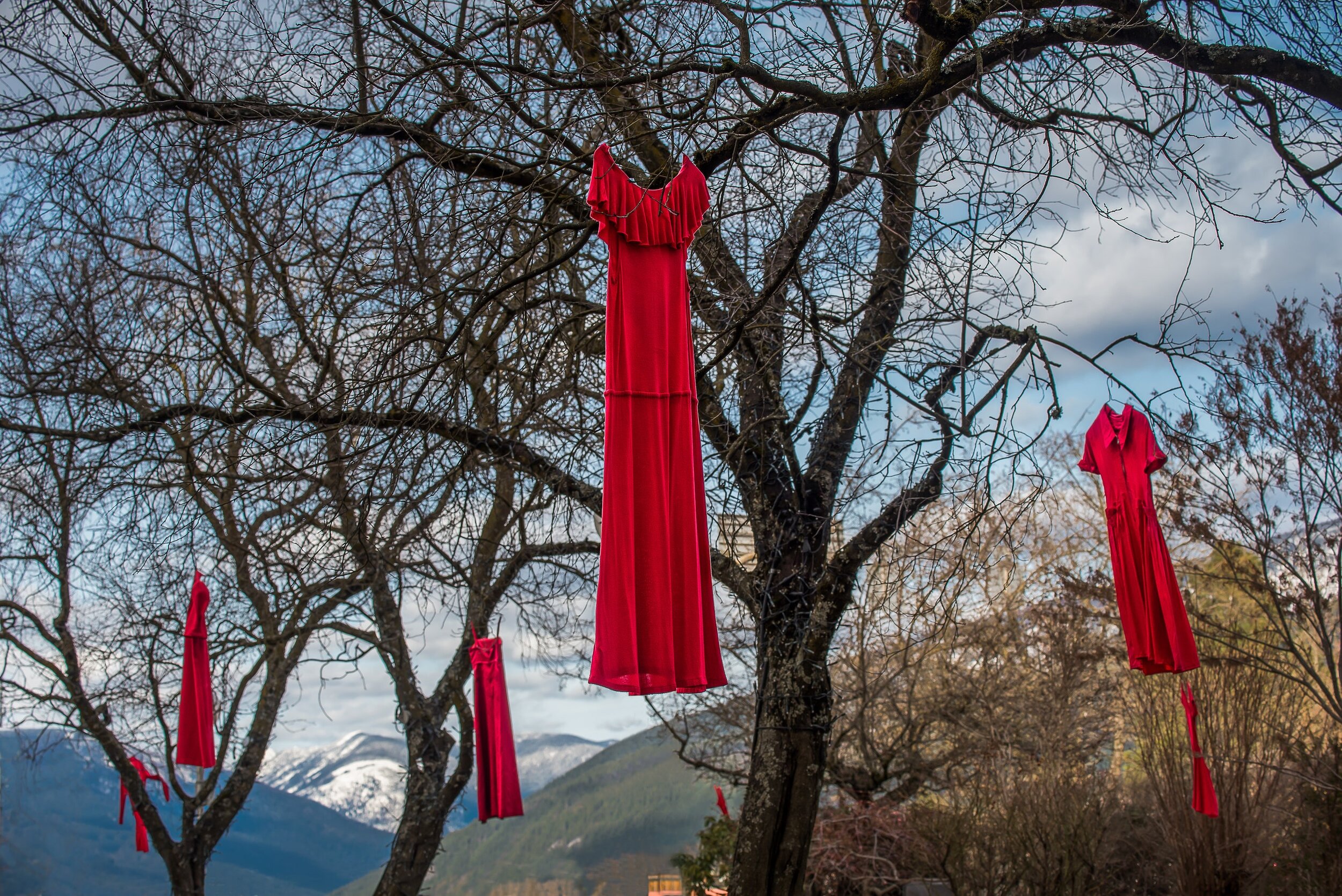
"How Red Dresses Became a Symbol for Missing and Murdered Indigenous Women"

vogue.com

"Why We Need Unconventional Public Art Now More Than Ever"

hyperallergic.com

"Unplanned Parenthood: Photography and Family Life in a Pandemic"

elephant.art

"Why are some people punks?"

lrb.com

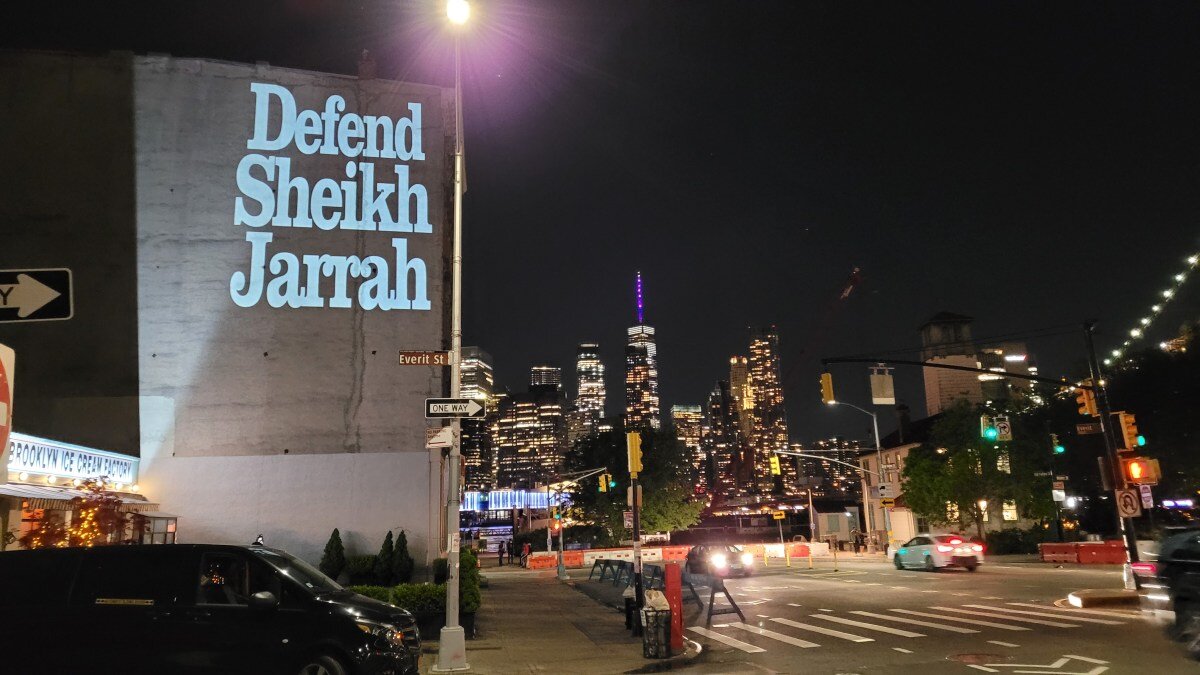
"NYC Artists Project Messages of Solidarity With Palestine"

hyperallergic.com

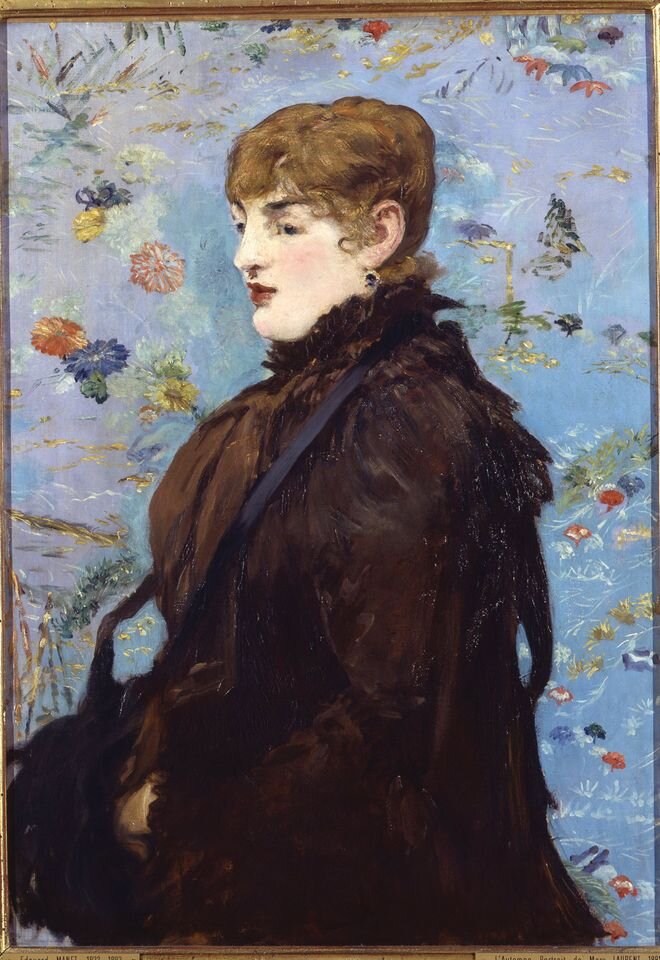
"Édouard Manet and modern beauty: prettier, more frivolous and gallant"

artnewspaper.com

"In the Kitchen: Artist Yto Barrada on the Moroccan Soup Recipe That Sustained Her (and Other Hungry New Yorkers) During the Pandemic"

artnet.com

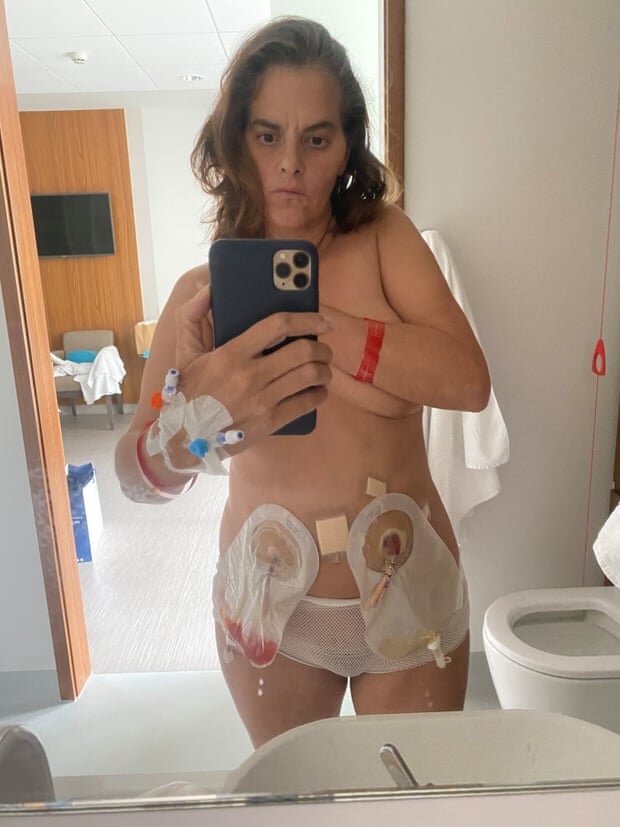
"Tracey Emin on her cancer self-portraits: ‘This is mine. I own it’"

theguardian.com

"Hard Choices: Should You Become A Museum Curator"

artnews.com

"Crowds flock to revamped Uffizi Galleries—but can't post pictures on social media"

theartnewspaper.com

"How Red Dresses Became a Symbol for Missing and Murdered Indigenous Women" "Why We Need Unconventional Public Art Now More Than Ever" "Unplanned Parenthood: Photography and Family Life in a Pandemic" "Why are some people punks?" "NYC Artists Project Messages of Solidarity With Palestine" "Édouard Manet and modern beauty: prettier, more frivolous and gallant" "In the Kitchen: Artist Yto Barrada on the Moroccan Soup Recipe That Sustained Her (and Other Hungry New Yorkers) During the Pandemic" "Tracey Emin on her cancer self-portraits: ‘This is mine. I own it’" "Hard Choices: Should You Become A Museum Curator" "Crowds flock to revamped Uffizi Galleries—but can't post pictures on social media"
  • How Red Dresses Became a Symbol for Missing and Murdered Indigenous Women

  • Why We Need Unconventional Public Art Now More Than Ever

  • Unplanned Parenthood: Photography and Family Life in a Pandemic

  • Why are some people punks?

  • NYC Artists Project Messages of Solidarity With Palestine

  • Édouard Manet and modern beauty: prettier, more frivolous and gallant

  • In the Kitchen: Artist Yto Barrada on the Moroccan Soup Recipe That Sustained Her (and Other Hungry New Yorkers) During the Pandemic

  • Tracey Emin on her cancer self-portraits: ‘This is mine. I own it’

  • Hard Choices: Should You Become A Museum Curator

  • Crowds flock to revamped Uffizi Galleries—but can't post pictures on social media

Comment
Newer / Older
Back to Top
Screenshot 2018-02-05 20.48.17.png

© Dorothy Barenscott, 2010-2025