Weekly Twitter Round Up


Artistic appropriation is considered in a great article tweeted by the NYTimes below
image source: NYTimes
Happy New Year! It was wonderful getting away for the holidays to a warm and tropical locale—a highly recommended remedy to weeks of final exams, marking, and final project deadlines. Faced with the new term and a new slate of students, I am truly refreshed and looking forward to what the semester will bring in terms of good conversation and new musings.

The Twitter world also went into something of a hibernated state over the holidays and has reawakened with a great deal of activity. Glancing at my feed over the past week, I was happy to see artist/activist Ai Weiwei returning to his Twitter account, but it seems that the sad developments in Egypt have also taken over much renewed discussion (see my final tweet pick for an engaging article). The requisite best-of 2011 lists are also fun to read, and so a few of my picks will have you thinking back and assessing what you gained and learned. It’s great to be back home and ready to tackle a new year!

GOOD Books: When 2012 was the future 


Today's #TED: Paddy Ashdown on how global power is shifting and how nations are connected in ways never seen before


Scorsese's HUGO is the best movie I've seen in at least a year. Don't miss it. It's wonderful.


Outdated law + rip/mix culture collide: Richard Prince & Fair Use in the NYTimes:


12 Art World Habits to Ditch in 2012... are you offended?


Show & Tell: “Things I Saw This Year”: 


 “To live in Cairo these days is to live in constant disorientation.”@yasminerashidi on the spasms of violence in Egypt

Top 10 Modern and Contemporary Art Exhibitions of 2012 Worth Visiting

With a new year ahead of us, it is time once again to start thinking about all the great opportunities to plan and research potential trips, or even just great fantasy visits, to a whole new crop of exciting art exhibitions around the world.  As with the list I compiled in 2011, my picks usually revolve around visits to great art cities or to places I have already put on my conference and/or research itinerary. This year I am most excited about the planned Field School to Paris that I blogged about here that will include an optional trip to Documenta  13 in Kassel, Germany—arguably the premier art exhibition event of this year. I hope my list inspires some of you to push your travel plans in new directions. It was especially wonderful hearing back from those of you who actually got to the shows on my 2011 list (I was most jealous of those who got to see the Richter show at the Tate—I missed it by a few weeks when I was in the UK last fall!). But even for those of us sticking closer to home, there are always great shows taking place in local galleries.

Once again, the list reflects the information made available on gallery websites for upcoming exhibitions and is purely based on my own interests. See it as a wish list. Happy New Year!

10.  Vancouver Art Gallery, Vancouver: Beat Nation (February 25-June 3): As with last year, I am starting close to home with an intriguing show that examines the new cultures of hybridity that fuse forms of popular youth, music, and hip hop culture and the language of aboriginal storytelling and visual arts. For those of you familiar with the work of Brian Jungen, this exhibition promises to be a dynamic and innovative one.  

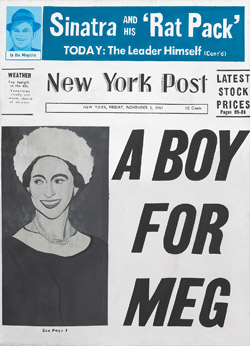
Andy Warhol, A Boy for Meg (1962). source:
National Gallery of Art, Washington D.C.
9. National Gallery of Art, Washington D.C.: Warhol Headlines (traveling through Europe 2012): This past winter I had a chance to see this fascinating and very eye-opening exhibition in Washington D.C. exploring Andy Warhol’s lifelong obsession with the news media and tabloid headlines. The National Gallery of Art assembled 80 Warhol works of various media to examine this theme, and I was happy to see that the show will be traveling through Europe this summer, landing first in Frankfurt at the Museum of Modern Art from February 11-May 13th and then off to Rome at the National Gallery of Art from June 11-September 9th. It will then make a reappearance in the US from October 14- January 16, 2013 in Pittsburgh at the Andy Warhol Museum.

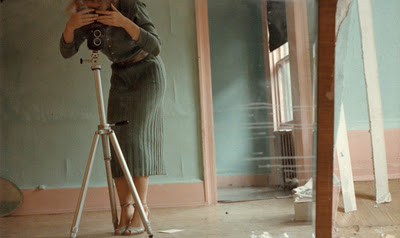
8. San Francisco Museum of Modern Art, San Francisco: Francesca Woodman (November 5-February 20): Francesca Woodman was part of an important and somewhat controversial film that I previewed as part of the 2010 Vancouver International Film Festival. Her life story and unique photographic practice are often difficult to disentangle, but this retrospective of Woodman’s work  (the first in twenty years) introduces her vision and approach to a new generation of artists dealing with the ambiguities and difficulties of subjecthood and self-portraiture.

7. Museum of Contemporary Art, Los Angeles: Ends of the Earth (April 8-July 30): This exhibition caught my attention for its unique and ambitious scope, aiming to trace the development and history of Land Art, an art form and media practice that deliberately attempts to escape the art institution all together. Over eighty artists from around the world will be represented in what looks to be a one of a kind show, not unlike the recent exhibition MOCA did dealing with Street Art.
Francesca Woodman, Untitled (1979-80). source: ARTINFO

6. New Museum, New York: The Ungovernables (February 15-April 22): The New Museum is a unique institution dedicated to showcasing under-recognized contemporary artists from around the world. Since its founding in the 1970’s, the New York based museum has launched the careers and/or brought to worldwide attention many of the artists studied in contemporary art history classes today such as Ana Mendieta, Andrea Zittel, and William Kentridge. This show is part of the museum’s second triennial and will, as stated on its website, feature thirty-four artists, artist groups, and temporary collectives—totaling over fifty participants—born between the mid-1970s and mid-1980s, many of whom have never before exhibited in the US. I especially love the title of the exhibition and the themes involving civil disobedience and questions of central power that will shape the discussion around this show.

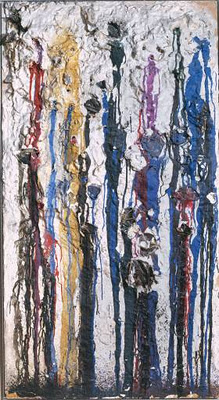
Niki de Saint Phalle, Shooting Picture (1971)
source: Tate Modern
5. Tate Modern, London: A Bigger Splash- Painting After Performance Art (November 7- April 1,2013): I spend a great deal of time talking about the crisis around painting after the late 1960’s with my students, and so I was most intrigued with this show exploring the juxtaposition of action and abstract painting with performance based art practices. So far, the description from the Tate is pretty brief, but it promises to deliver what looks like one of the most dynamic conversations around painting this year.

4. Metropolitan Museum of Art, New York: The Steins Collect (February 28-June 3): For any of you who caught Woody Allen’s 2011 film Midnight in Paris this year, you will recall all of the great sequences that captured the world of Gertude Stein, Pablo Picasso, Salvador Dali, and other luminaries of the Paris Avant-Garde. This exhibition pays homage to the patronage of the Steins and their close relationships and influence on an art community that could not have existed or come to public acclaim without their support.

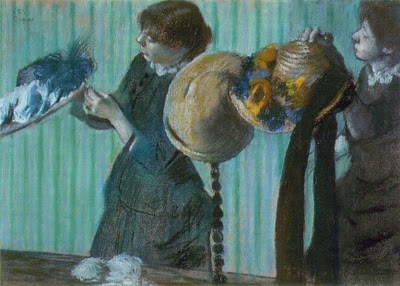
Edgar Degas, The Milliners (1882) source: Artfixx
3. Musee D’Orsay, Paris: Degas and the Nude (March 13-July 1); Impressionism and Fashion (Sept25-end of year): One of my favourite points in any late nineteenth century art history class that I teach is the moment where I get to “de-code” the Degas nude and ballerina for an unknowing audience. I won’t spoil the surprise for those yet to catch up on their Impressionist art history, but I am very excited that the Orsay will tackle this subject, along with the permutations of Impressionism and its link to fashion in these two very important exhibitions.

Cindy Sherman, Untitled #466 (2008) source: MoMA
2. Museum of Modern Art, New York: Cindy Sherman (February 26-June 11): Along with Documenta, this is the show I long to see the most. For all of the hype around Sherman and the recent criticisms she has received from the art world surrounding her commercial ventures (with cosmetics company MAC as just one example), her body of work stand as among the most important and influential of any living artist today. I blogged about Sherman’s record-breaking photograph here last year, and think this retrospective will garner the same kind of excitement and interest as Abramovic in 2010.

1. Kassel, Germany: Documenta13 (June 9-September 16): Simply put, a once every five year event that is a must-see for anyone interested in the present state of contemporary art. I have blogged extensively about the event already and look forward to experiencing it with a great group of students in the summer! Let me know if you get to any of these exhibitions as the year goes on. Happy travels!

Seasons Greetings: Gone on Vacation, See you in 2012!

A fun way to wake up Christmas morning.
This fall semester has been one of the busiest of all time for me-- a great deal of travel and teaching and many fantastic opportunities to begin new projects and make new personal and professional connections. Thankfully however we thought ahead and booked a much needed Caribbean holiday vacation back in the summer-- good thinking!

I will be handing in final marks tonight and bidding adieu to students and faculty (and my blog as well) until the new year. I wish all of you a wonderful holiday season and a very happy and safe new year's celebration. Thanks once again for all of your warm feedback on my blog and its contents-- it has become a true labour of love that I hope to find more time for in the spring semester. Look for me to resume posting in early January with a new series of posts on essential art exhibitions to visit in 2012 and an update on the many new technological tools I have been testing out on my tablet and home computer.

For now, have a listen to the Three Tenors covering John Lennon and Yoko Ono's Happy Christmas, War is Over. Considering all of the tumultuous events globally in 2011, it seemed a very fitting wish to send out to the blogosphere.

Peace, Dorothy.
 

Weekly Twitter Round Up

Cool collection of NYC street posters from the 1980's-- check out first tweet below

The countdown to end of term marking completion begins. Until then, piles of papers, exams, projects, journals sitting on my desk, on my computer, in my email, under my office door-- you get the picture. For those who are done: Congratulations! To those still slogging along: we are almost at the finish line! In the meantime, grab a cup of coffee and check out some of my favourite tweets from the past week.

Crazy DIY Street Posters from New York City


Careers: How to finish your dissertation and maintain your sanity


Anyone who is sanguine about China's attitude toward academic freedom hasn't been paying attention


YOU CAN OWN A $15,000, SIGNED BANKSY! The catch, you must "steal" it without getting caught


Naomi Klein on our addiction to risk -- and its consequences


The Artist: Mostly mute, it speaks volumes about silent film


RIP John Lennon who died today in 1980, taken from the world far too soon

End of Semester Advice? Simple. Don't Cheat.

Oh, you thought we didn't know about this......remember, we were students once as well.
The unspoken reality of university life is that cheating and plagiarism are everpresent. It is something that professors rarely want to admit, but it is part of an escalating problem within most academic settings. With all of the access to digital materials and increasing capabilities to find new technological avenues for cheating, there is little doubt that students have been faced with the temptation to pass off other ideas as their own and/or find ways to smuggle information into examination rooms. Keep in mind however that most professors have become incredibly savvy in spotting the signs of cheating. I won't reveal all of our tricks (let's just say we have as many new and technological ways to do it) but sometimes it doesn't take much to find it. This week in fact I found the tell-tale signs of a rookie plagiarist's classic mistake-- not changing fonts on a badly executed cut and paste in an essay. This is about as bad as the thief who leaves his cell phone behind at a bank robbery. Lame indeed.

What prompted my post in particular was Claire Potter's advice column (AKA Tenured Radical) I came across yesterday on The Chronicle of Higher Education. It was a very useful, entertaining, and highly pragmatic tongue-in-cheek interview discussing the pitfalls of cheating. Part of what may surprise students is that a professor will more often respect a student who attempts and fails or does poorly on a class assignment versus cheating and/or plagiarizing (however unknowingly) to earn a higher mark. And over time, cheaters will find that the short term payoffs are never worth the long term damage to your university experience. Another wonderful part of this interview deals with the moment of confrontation with a suspected cheater-- this is a scenario that I can completely relate to, having successfully caught both plagiarizers and cheaters in the relatively short span of my teaching career. 

Here is the interview for you to enjoy below (cut and paste I might add, but clearly cited!). It is also worth visiting the original post to read the response of other academics in the comments section. It should prove eye-opening to many students:

If I Had College-Age Children, I Would Give Them This Advice for the Final Weeks of School: Don’t Cheat

I imagine this conversation would occur sometime during Thanksgiving, perhaps as we were washing up the endless number of dinner dishes and de-greasing the kitchen.  No, no: let’s put it in a neutral location, as Tenured Radical and the returning college student are having a final cup of coffee at the airport while waiting out a flight delay.  This is how it would go:

Spawn of the Radical: Esteemed Parental Unit, you have taught at a selective liberal arts college for two decades. What advice do you give for the hellish, final weeks of school?

Tenured Radical: I am so glad you asked, Spawn.  (Ruminates briefly.) OK, here goes.  First piece of advice? Don’t plagiarize, buy a paper off the internet, pay someone else to write for you, or retype an ancient term paper secreted away in the files of your Greek organization.  I will be far more sympathetic if you simply fail the class, or get a bad grade, than I will be if you are hauled up before a disciplinary board and hung out to dry for preventable a$$hattery.

Spawn: Why?  It seems like such an easy and obvious solution to not having done the work for the course. Besides, so many of my friends get away with it.

TR: True dat.  And yet, if your friends jumped off the Brooklyn Bridge and managed to live, would you do it too?  My point is this: because cheating is evidence of rank stupidity, many people do not get away with it.  In fact, many people are no better at cheating than they are at doing the work for the course.  Others spend time that might have gone into conventional studying devising elaborate systems for cheating (Profs, follow these links and track what your students already know.) It would be far better to fail a course, take an incomplete, or throw yourself on the mercy of the professor than to be expelled from college.  As my dear friend Flavia Fescue points out, even though it “breaks her heart” she catches one or two plagiarists every semester and she takes them down.  It is part of our job to take you down (think, selling crack on the steps of a police station, ok?)  Historiann concurs. “Message to students,” she writes. “We care. Please don’t f^(k up. But know this: we will work you over if you f^)k up, and it will hurt you more than it hurts us, for realz. In my experience, it never pays to give a plagiarist a break. Hang’em high, regretfully if you must, but hang’em high, friends.”

Spawn: Parental unit, have you ever caught a plagiarist?

TR: Indeed, and those who cheat on exams. Even though there are some who slip through my net, even before Turnitin.com I have always known when I have snagged a plagiarist that I was right, even prior to being able to prove it. And I can always prove it because I am a far better at research than an undergraduate is at covering up plagiarism.

Spawn: How do you know before you can prove it?

TR: It’s all in the confrontation. The almost uniform response of a guilty plagiarist is to deny the offense with a kind of astonishment and disbelief that is meant to simulate innocence.  Students who are actually innocent (and this was certainly the case when one student had copied from another on an exam, and the challenge was discovering which one had copied and whether the other had permitted it) get genuinely angry.

Spawn: (taking notes furiously) Wow.  So, if accused of cheating and innocent, do not defer — let it rip?

TR: I would advise so.  You will end up in a disciplinary procedure anyway, so you really have nothing to lose.  And here are some precautions worth taking, from my perspective. Sit away from other students in exams, and don’t leave drafts of your papers and notes for papers on campus computers for anyone to find.  There are a fair number of students who cruise around looking for digital work that has been abandoned in computer labs. Even if you are unaware that this has happened, you will be implicated.  And if you are aware of it?  Most honor codes require you to notify someone, and if you don’t, you could be disciplined anyway. Read over your college’s policies about plagiarism, so that you are clear about which of the things that your high school teachers turned a blind eye to, and might have even encouraged you to do, constitute plagiarism.  Using commercially available outlines rather than reading and using the books for the course is cheating. Having someone help you with your paper (for example, the fact that you send your papers to your mother for a final edit just like you did in high school) is acceptable: not acknowledging that you had help is cheating. Using research that you found on your roommate’s desk is cheating. Copying things off the Interwebz or directly out of books is cheating.  Make sure you know how to write a good citation and use more of them rather than fewer. As Flavia points out in her post, when in doubt, cite, cite, cite.

Spawn: Is there anything I might not recognize as cheating that actually is?

TR: Glad you asked that question clever Spawn.  What few undergraduates grasp, given that dollars are paid in exchange for their heads being cracked open and education poured in, is that you don’t purchase ideas with tuition.  The people you read actually own their ideas, and deserve credit for them.  Think of it as idea rental:  you are free to use any ideas you want, but you must distinguish between an idea, or point of analysis, that is actually yours and one that has been offered up by someone else whose book you have read.  For example, to announce in your opening paragraph that the workers have nothing to lose but their chains may seem like common knowledge to you, particularly given the Radical home where you have been raised.  But actually, we must credit this phrase to Karl Marx, even though he never made a nickel off of it and never will. As another example, you might note that I credited two of my colleagues in the blogosphere for inspiring this post in the first place by linking them.  This is not only respectful, it allows someone to follow up an idea to its point of origin, evaluate the idea and address how you made use of it. They are calling your delayed flight, Spawn.

Spawn: (Gathering bags and an extraordinarily expensive airport snack.) Is there anything else I absolutely need to do during exam period?

TR: Yes, Spawn. Don’t stop bathing.  I know it will be tempting, but have mercy on the faculty and wash diligently.