• Fall 2025
  • Blog
  • Resources
  • Field School
  • Students
  • Feedly
  • About
Menu

Avant-Guardian Musings

  • Fall 2025
  • Blog
  • Resources
  • Field School
  • Students
  • Feedly
  • About
large monogram_2018-02-01_22-31-07.v1 (1).png
“Art is an outlet toward regions which are not ruled by time and space”
— Marcel Duchamp

Avant-Guardian Musings is a curated space of ideas and information, resources, reviews and readings for undergraduate and graduate students studying modern and contemporary art history and visual art theory, film and photography studies, and the expanding field of visual culture and screen studies. For students currently enrolled in my courses or the field school, the blog and associated social media links also serve as a place of reflection and an extension of the ideas and visual material raised in lecture and seminar discussion.

Blog RSS

Screenshot 2018-02-05 20.56.45.png
Blog
KPU FINE ARTS PARIS + VENICE BIENNALE FIELD SCHOOL (MAY/JUNE 2026)
about 2 months ago
"No Fun City" Vancouver: Exploring Emotions of Detachment in Palermo, Sicily at AISU
about 4 months ago
Making Sense of Art in the Age of Machine Learning—A Suggested Reading List
about 5 months ago
From the Archives | How (And Why) To Take Excellent Lecture Notes
about a year ago
Weekly Musings + Round Up... And A Few More Things
about 2 years ago

Screenshot 2018-02-05 20.56.51.png
As we start the week in a storm of activity, new beginnings, and global uncertainty, I am grounded in my word for 2026– INTENTIONAL 🩶— “done with purpose, willingness, deliberation, and consciousness.” I see this word represe
As we start the week in a storm of activity, new beginnings, and global uncertainty, I am grounded in my word for 2026– INTENTIONAL 🩶— “done with purpose, willingness, deliberation, and consciousness.” I see this word represented in the symbol of the heart, and for this reason and many others both personal and professional, I will be bringing this much needed energy to my year. The power of a yearly word is transformative. I started in 2019 and my words have guided and carried me through some important moments and life decisions. If you haven’t already, give it a try, but remember to choose very wisely ☺️ “Radiate” 2025 ✨ “Maintain” 2024 💪🏻 “Refine“ 2023 🙌🏻 “Acta non verba” 2022 🤐 “Audacious” 2021 💃🏼 “Fearless” 2020 😛 “Unapologetic” 2019 💅🏻 #happynewyear #wordoftheyear #intentional #monicavinader @monicavinader
Polar bear ride! 🐻‍❄️🏍️💨🏍️ First motorcycle outing of 2026 in the books. A balmy 4C 🥶We love you Vancouver— good to be home 💙😊Wishing everyone a very Happy New Year! 🥳 
.
.
.
#happynewyear #vancouver #motorcycle #motorcyclesofinstag
Polar bear ride! 🐻‍❄️🏍️💨🏍️ First motorcycle outing of 2026 in the books. A balmy 4C 🥶We love you Vancouver— good to be home 💙😊Wishing everyone a very Happy New Year! 🥳 . . . #happynewyear #vancouver #motorcycle #motorcyclesofinstagram #motocouple #husqvarna #vitpilen401 #svartpilen401 #motogirl #motogirls
2025... where did it go?! 😂 Like a ray of light, I was very much guided by my chosen word of the year “radiate”— to shine and send out beams of energy— and this allowed for a great deal of adventure, new experiences, ideas an
2025... where did it go?! 😂 Like a ray of light, I was very much guided by my chosen word of the year “radiate”— to shine and send out beams of energy— and this allowed for a great deal of adventure, new experiences, ideas and people and opportunities to flow back into my life. Above all else, I found myself very much on the move all year! Travel took me from New York to Lausanne, Paris to Seoul, and Palermo to Maui, while my motorcycling stayed more on the road and less on the track as Brian and I balanced our time, energy, and commitments. But as always, we found every spare moment to prioritize this shared passion and we hope to find a way back to the track in 2026. Professionally, the year was... A LOT... and highlighted by many new research partnerships, conferences, workshops, writing projects, some failed plans and sharp detours, but also the planting of new seeds for future ventures. In the classroom, AI brought many new challenges and opportunities to rethink the purpose of my teaching and courses, but overall I was inspired and at times surprised by what my students were able to accomplish with the new assessment models I put into place. All of this technological change remains very much a work in progress for academics, and I prefer to remain optimistic that the artists I work with will find a way to maintain their voice and vision in it all. The historian in me knows this to be true. Personally, I connected more to my heart and intuition in 2025, listening to that inner voice to guide many key decisions. Brian and I also kept up a decent health and fitness regime that had us energized and aiming for consistency to match our midlife pace. Use it or lose it is a reality in your 50s!!! Sending wishes of peace and love and a very Happy New Year to all! May your 2026 be filled with fun, awe, purpose, and good health and much happiness. Remember to be good to yourself so you can be good to others. I’m still working carefully on my 2026 word… but whatever it is, I know it will be the right one ❤️ . . . #happynewyear #yearinreview2025 #wordoftheyear #motorcyclelife #arthistorianlife
Resting, dreaming, and plotting the year ahead 💙✨😘
.
.
.
#maui #hawaii #vacationmode #newyear #planning
Resting, dreaming, and plotting the year ahead 💙✨😘 . . . #maui #hawaii #vacationmode #newyear #planning
Riding and chasing sunsets across Maui ✨💙🌺🌴🧡
.
.
.
#maui #hawaii #motorcycle #motorcyclesofinstagram #motogirl #vacationmode #sunsets
Riding and chasing sunsets across Maui ✨💙🌺🌴🧡 . . . #maui #hawaii #motorcycle #motorcyclesofinstagram #motogirl #vacationmode #sunsets

Screenshot 2018-02-05 20.57.02.png
  • November 2025 (1)
  • September 2025 (1)
  • August 2025 (1)
  • September 2024 (1)
  • February 2023 (1)
  • January 2023 (3)
  • August 2022 (1)
  • March 2022 (1)
  • February 2022 (3)
  • January 2022 (4)
  • November 2021 (2)
  • October 2021 (3)
  • September 2021 (3)
  • July 2021 (2)
  • June 2021 (1)
  • May 2021 (3)
  • April 2021 (3)
  • March 2021 (3)
  • February 2021 (4)
  • January 2021 (5)
  • December 2020 (3)
  • November 2020 (6)
  • October 2020 (4)
  • September 2020 (1)
  • July 2020 (1)
  • June 2020 (4)
  • May 2020 (9)
  • April 2020 (5)
  • December 2019 (2)
  • November 2019 (5)
  • October 2019 (3)
  • September 2019 (1)
  • July 2019 (6)
  • June 2019 (19)
  • April 2019 (2)
  • March 2019 (5)
  • September 2018 (2)
  • July 2018 (1)
  • June 2018 (4)
  • May 2018 (2)
  • April 2018 (5)
  • March 2018 (5)
  • February 2018 (8)
  • January 2018 (3)
  • December 2017 (4)
  • November 2017 (5)
  • October 2017 (7)
  • September 2017 (3)
  • July 2017 (6)
  • June 2017 (15)
  • April 2017 (2)
  • March 2017 (3)
  • February 2017 (1)
  • January 2017 (2)
  • November 2016 (2)
  • October 2016 (1)
  • September 2016 (3)
  • August 2016 (1)
  • June 2016 (2)
  • May 2016 (3)
  • April 2016 (2)
  • March 2016 (5)
  • February 2016 (7)
  • January 2016 (9)
  • November 2015 (1)
  • October 2015 (2)
  • September 2015 (3)
  • August 2015 (3)
  • July 2015 (1)
  • June 2015 (20)
  • May 2015 (4)
  • March 2015 (2)
  • January 2015 (1)
  • November 2014 (1)
  • October 2014 (2)
  • June 2014 (1)
  • May 2014 (4)
  • April 2014 (6)
  • February 2014 (1)
  • January 2014 (2)
  • November 2013 (1)
  • September 2013 (1)
  • July 2013 (3)
  • June 2013 (10)
  • December 2012 (1)
  • November 2012 (3)
  • October 2012 (6)
  • September 2012 (3)
  • August 2012 (1)
  • July 2012 (1)
  • June 2012 (25)
  • May 2012 (5)
  • April 2012 (4)
  • March 2012 (7)
  • February 2012 (11)
  • January 2012 (6)
  • December 2011 (5)
  • November 2011 (11)
  • October 2011 (11)
  • September 2011 (8)
  • June 2011 (9)
  • May 2011 (15)
  • April 2011 (9)
  • March 2011 (14)
  • February 2011 (17)
  • January 2011 (16)
  • December 2010 (11)
  • November 2010 (18)
  • October 2010 (24)
  • September 2010 (30)

Screenshot 2018-02-05 20.57.07.png

© Dorothy Barenscott, Avant-Guardian Musings, and dorothybarenscott.com, 2010-2023. Unauthorized use and/or duplication of this material without express and written permission from this blog’s author is strictly prohibited. Excerpts and links may be used, provided that full and clear credit is given to Dorothy Barenscott, Avant-Guardian Musings, and dorothybarenscott.com with appropriate and specific direction to the original content.

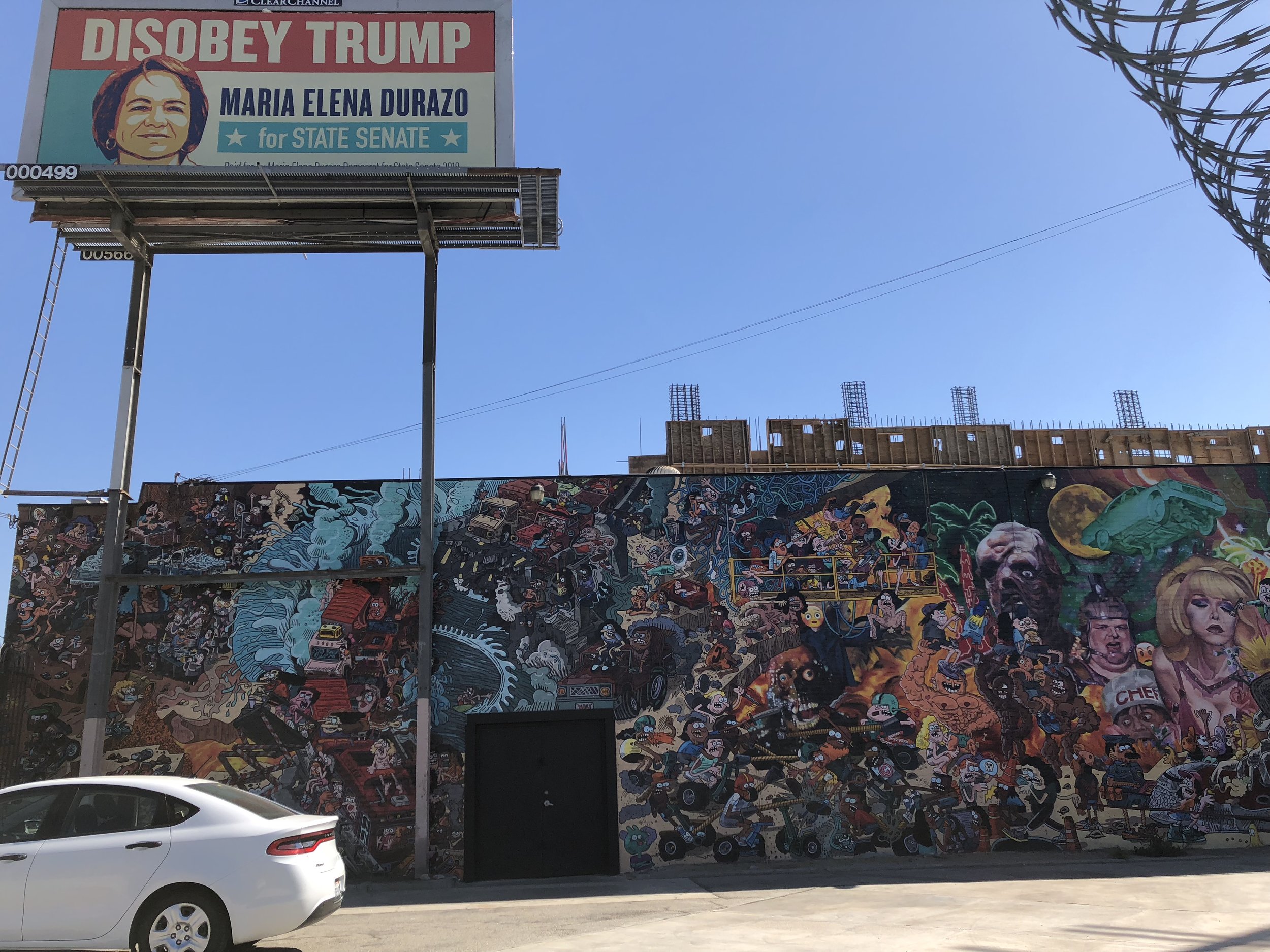
A detail from artist Kim West's Only One Way Through building mural at 901 East 3rd Street in the Los Angeles Arts District. All images in post captured by Dorothy Barenscott.

A detail from artist Kim West's Only One Way Through building mural at 901 East 3rd Street in the Los Angeles Arts District. All images in post captured by Dorothy Barenscott.

Location| Los Angeles: Reflections on LA's Street Art Scene

March 01, 2018
Our guide, Hector Calderon (aka Shandu One), is a pioneering LA street artist and served as our guide on the 2.5 hour tour.

Our guide, Hector Calderon (aka Shandu One), is a pioneering LA street artist and served as our guide on the 2.5 hour tour.

One of the highlights of my recent trip to Los Angeles was the opportunity to visit the LA Arts District, and more specifically, to be toured around the vibrant street art scene. Much like in New York, the city that gave birth to contemporary street art via a long and rich history of urban graffiti married to street and hip-hop culture, Los Angeles has played an important and influential role in shaping the visual vocabulary and emerging trends in today's vibrant global street art scene. In recent decades, social media and image sharing on the Internet have only accelerated the pace of experimentation, together with the involvement of a diverse and new cross section of the visual arts community. 

I booked my tour through LA Art Tours after some research into the best options for knowledgeable guides. Reading through the reviews, I was immediately impressed that all of the tour guides are practicing artists working in the neighbourhood. When we arrived on the sunny Saturday morning of our tour, we met Hector, aka Shandu One, and learned that he had formed one of the original graffiti crews back in the 1980s, the LA Bomb Squad, and was among the pioneering graffiti and street artists of the Los Angeles scene. Today, he continues his practice inside and outside the studio while mentoring young street artists and educating the public about LA's street art history. 

The LA Arts District lies to the east of the main commercial hub of downtown LA and is a neighbourhood undergoing profound transformation as a result of urban gentrification. 

The LA Arts District lies to the east of the main commercial hub of downtown LA and is a neighbourhood undergoing profound transformation as a result of urban gentrification. 

The LA Arts District is an area in downtown Los Angeles that lies to the east of the main commercial hub of the city. Traveling there, we were warned about the severe homelessness and tent cities that took up several city blocks on the streets bordering the district. Being from Vancouver, this was sadly not at all unfamiliar, but it was clear that a tide of gentrification was squeezing the city's poorer populations into a smaller space. The Arts District itself is an urban neighbourhood in transformation and has been populated by artists seeking cheaper rents and access to studio space for many years. It is also unusual in the landscape of LA as being a very walkable part of the city. Parking your car and moving on foot is not the norm, but the demand for city living, as Hector explained, has transformed the District in recent years as developers seek new projects in a heated real estate market. 

Moving through the streets, back alleys, and other niches of the District, I was immediately struck by the diversity and experimentation of the street art that we saw. Listening to Hector, we learned about the give and take, and unspoken rules of conduct among the street artists working the area, and he pointed out many important nuances about the painting techniques and various approaches to style and content that were on display. While it would be impossible to definitively categorize all that was there, my art historian impulses kicked in and I was able to note some commonalities and reflect on the uniting features of the scene. For more information about the artists featured below, please see this useful guide provided by LA Art Tours, and in my image galleries below, simply click on any image to see up close in a shadow box. 

COLOUR, LIGHT, FORMS 

One of the first things I noted purely at the level of form was the predominance of a lighter and more neutral/cool colour palette on the walls. Being in hot and sunny Los Angeles, it makes sense that the contrast of cool/neutral would pop against the warmth of the sun and play well with the deep shadows that crept across surfaces over the course of a day. Also notable was the move away from purely figurative forms to experiments in abstraction, dripping, and repeated patterns. Many painters were clearly working with ideas taken from the studio, and Hector described how many of the artists worked with stencils, projectors, and other computer-aided designs to achieve their final effects. He also kept reminding us that much of what we saw was achieved using spray painting alone, or paint pouring and mixing, without the help of any brushes, and often painted in tight time frames. 

View fullsize IMG_6519.jpg
View fullsize IMG_6516.jpg
View fullsize IMG_1938.jpeg
View fullsize IMG_1939.jpeg
View fullsize IMG_6463.jpg
View fullsize IMG_6562.jpg
View fullsize IMG_6482.jpg
View fullsize IMG_6523.jpg

Building Murals

Murals taking up entire buildings are another important feature of the LA scene. As ready-made canvases, the building owners in the area often work closely with artists to negotiate and approve many of the large-scale designs. Importantly, artists appear to pay close attention to the architectural elements of the built space (including how the sun will hit the facade at different points in the day) to render murals that are dynamic and experimental. I was struck by how clean and untagged many of these murals were, and we learned that there was an active effort to monitor and clean up the murals and/or come to agreements among local artists to allow individual projects to have their moment in the community.

View fullsize IMG_6506.jpg
View fullsize IMG_6473.jpg
View fullsize IMG_6510.jpg
View fullsize IMG_6561.jpg
View fullsize IMG_6503.jpg
View fullsize IMG_6493.jpg

Old School

While the predominance of cleaner and more accepted street art murals was the norm, it was great to see a diversity of old school graffiti and tagging culture represented everywhere in the District. Hector decoded almost every tag as we walked the tour, and provided context and background about the graffiti crews and other individuals who continued to work in the old school styles of the original LA street art scene. There are also areas known as painting gardens where crews practice and hone their techniques. 

View fullsize IMG_6465.jpg
View fullsize IMG_6471.jpg
View fullsize IMG_6511.jpg
View fullsize IMG_6549.jpg
View fullsize IMG_6569.jpg
View fullsize IMG_6578.jpg

Works on the Ground

Art is everywhere in the District-- paint, stickers, wheatpasting, and markers are attached to every surface-- on the walls, on the street, on the poles, and on the ground. At many points along the tour, I was completely distracted by what I saw under my feet, and I do not think I have ever seen as much attention paid to the sidewalk as the walls in any city I have visited. Hector pointed out the evidence of conversations between artists, and how to read the various tags as they accumulated, especially on the ground works. This dimension of street art alone is worthy of separate study!

View fullsize IMG_6507.jpg
View fullsize IMG_6520.jpg
View fullsize IMG_6515.jpg
View fullsize IMG_6546.jpg

Social Media Presence

Another striking aspect was the use of Instagram account tags to effectively provide visual signatures of works. As a very effective social media strategy to both connect artists and also circulate and distribute imagery, I found myself looking up and following many of the artists we came across on the tour.

View fullsize IMG_6467.jpg
View fullsize IMG_6477.jpg
View fullsize IMG_6479.jpg
View fullsize IMG_6454.jpg

Political and social Activism

The history of LA's street art and graffiti scene has deep connections to, and intersects with, many social and political issues in the city. Today, concerns around gentrification, racism, homelessness, and income inequality in LA are exacerbated by Trump's presidency and the crack-down on illegal immigrants and the defunding of the arts. Everywhere we looked in the District, there were direct visual reference to the social and political tensions of the city, as well as artist activism on a global scale. 

View fullsize IMG_6564.jpg
View fullsize IMG_1945.jpeg
View fullsize IMG_6572.jpg
View fullsize IMG_6566.jpg
View fullsize IMG_6577.jpg
View fullsize IMG_6567.jpg

Signs of Gentrification

As I described at the begging of this post, the pressures of gentrification have started to transform the area we visited, and it was seen everywhere in major condominium and commercial development. When I asked Hector what percentage of the new buildings had to be put towards affordable housing, he shared with me that it was only 4%, and that much of that could not be used as the live/work space favoured by artists. As we walked, we also noted many of the new commercial art galleries in the area that sat alongside trendy new restaurants and bars. Hector told us how many of his friends were now represented by galleries and showing around the world, and how the LA street art scene was getting global attention. As it was a gorgeous sunny Saturday, we saw many people enjoying the patios and brunch spots popping up in the area. Bloggers also used the murals as backdrops for photo shoots (the painted wings on many buildings were especially popular), sending out images across social media. Interestingly enough, I also spotted two art projects in semi-public areas of an open art space by contemporary and well-known artists Pipilotti Rist and Paul McCarthy, demonstrating how fluidly the world of "high" and "low" art converge in the LA Art District.

View fullsize IMG_6531.jpg
View fullsize IMG_6505.jpg
View fullsize IMG_6571.jpg
View fullsize IMG_6528.jpg
View fullsize IMG_6542.jpg
View fullsize IMG_6534.jpg

Reflecting on my visit, I see how profoundly the image culture of the Internet and social media has changed the perception of street and graffiti art. Two years ago when I taught a special topics course on the topic, I encouraged students to utilize the Google Street Art Project to explore and research street art around the world. Later, when I lead a field school to New York, some of these same students were able to expand their knowledge while residing in Brooklyn and seeing the artists at work close up (some even making their own mural!). And while the pressures of gentrification challenge art communities like the one I visited in Los Angeles, the vibrancy and importance of the scene cannot be dismissed. As Hector told us, the attention paid to the art and artists in his community, along with the legitimacy it brings to their voices and concerns, is the most important win for the scene.

1 Comment
I took many photos like this of the painted sidewalks in the LA Arts District-- be sure to keep your eyes down as much as up when hunting for street art. Image: @dbarenscott Instragram

I took many photos like this of the painted sidewalks in the LA Arts District-- be sure to keep your eyes down as much as up when hunting for street art. Image: @dbarenscott Instragram

Weekly Flipboard Links and Media Round Up

February 25, 2018

Writing this week's round up from Los Angeles, I am reflecting on a whirlwind of art activity that took me from one end of the city to the other. No doubt this is an urban locale focused around car travel, and for people who prefer to walk and stroll the city without much worry about parking and commuting times, I highly recommend staying in Downtown LA. As the CAA Conference was located at the Los Angeles Convention Centre, the decision to stick closer to the event made sense, but what I was not expecting was the vibrancy and livability of this part of the city, especially how accessible parts of downtown are by foot. In year's past, this was a part of LA that I seldom visited, choosing to stick closer to the UCLA or Getty area, or within reach of West Hollywood and/or Santa Monica. This time, however, I knew that I wanted to visit The Broad and MOCA, attend the conference, and tour the LA Arts District, and other parts of the city in a short 3-4 day period of time. As an urban place in transition, change in Downtown LA has come about (as in other cities like Brooklyn, or even my hometown Vancouver) from a mix of artist communities, new development, and the pressures of gentrification. This of course comes with many pros and cons for artists and residents alike, but the creative energy was palpable, and it was wonderful to discover new art spaces, restaurants, bars, and unique stores. I will be blogging in the weeks to come of my visit with some more reflections, but I have added a few links in the round-up signalling how the local LA art scene is being transformed. Signing off from sunny and breezy LA-- enjoy the links! 

"The Story Behind This Year’s Winter Olympics Medal Design"

hyperallergic.com

"The Afrofuturistic Designs of ‘Black Panther’"

nytimes.com

"Artist Sues Kendrick Lamar, Alleging Black Panther Music Video Copied Her Work"

artsy.net

"How the Glitz and Excess of the 1980s Shaped Contemporary Art"

artsy.net

"What’s Behind the Art Market’s Turnaround"

wsj.com

"Frieze to launch a Los Angeles art fair at Paramount Studios in 2019"

latimes.com

"$50 Million for the Hammer Museum, and Fresh Energy for Arts Giving in L.A."

nytimes.com

"The New Museum’s ‘I Am More Woke Than You’ Triennial "

vulture.com

"Barbara Kruger: Part of the Discourse | Art21 "Extended Play" (VIDEO)"

art21

"Michael Alvarez "We’re Out Here" at Marlborough Contemporary (VIDEO)"

jameskalm

"The Story Behind This Year’s Winter Olympics Medal Design" "The Afrofuturistic Designs of ‘Black Panther’" "Artist Sues Kendrick Lamar, Alleging Black Panther Music Video Copied Her Work" "How the Glitz and Excess of the 1980s Shaped Contemporary Art" "What’s Behind the Art Market’s Turnaround" "Frieze to launch a Los Angeles art fair at Paramount Studios in 2019" "$50 Million for the Hammer Museum, and Fresh Energy for Arts Giving in L.A." "The New Museum’s ‘I Am More Woke Than You’ Triennial " "Barbara Kruger: Part of the Discourse | Art21 "Extended Play" (VIDEO)" "Michael Alvarez "We’re Out Here" at Marlborough Contemporary (VIDEO)"
  • The Story Behind This Year’s Winter Olympics Medal Design
  • The Afrofuturistic Designs of ‘Black Panther’
  • Artist Sues Kendrick Lamar, Alleging Black Panther Music Video Copied Her Work
  • How the Glitz and Excess of the 1980s Shaped Contemporary Art
  • What’s Behind the Art Market’s Turnaround
  • Frieze to launch a Los Angeles art fair at Paramount Studios in 2019
  • $50 Million for the Hammer Museum, and Fresh Energy for Arts Giving in L.A.
  • The New Museum’s ‘I Am More Woke Than You’ Triennial
  • Barbara Kruger: Part of the Discourse | Art21 "Extended Play" (VIDEO)
  • Michael Alvarez "We’re Out Here" at Marlborough Contemporary (VIDEO)
Comment
The iconic biker jacket is one of 111 items featured in the Museum of Modern Art's exhibition Is Fashion Modern? This classic Allsaints Papin Leather Biker Jacket is from my own closet and a much loved staple in my wardrobe. 

The iconic biker jacket is one of 111 items featured in the Museum of Modern Art's exhibition Is Fashion Modern? This classic Allsaints Papin Leather Biker Jacket is from my own closet and a much loved staple in my wardrobe. 

Book Review| ITEMS: Is Fashion Modern?

February 21, 2018

What is it about fashion that makes the art world so nervous? No doubt the subject has been cast a peripheral role in the scholarship of visual arts and culture even as fashion remains one of the most intimate aesthetic expressions we all make. In the Museum of Modern Art’s recent exhibition Items: Is Fashion Modern? curators Paola Antonelli and Michelle Millar Fisher took up the challenge of organizing MoMA’s first exhibition on fashion in several decades. On its face, the idea of a big blockbuster show examining fashion seems very timely and even necessary for MoMA, especially as the popularity of the Metropolitan Museum’s annual costume gala and exhibition has continued to push the conversation around fashion as art into the public discourse. At the same time, the intersection of art and fashion in the practices of high profile artists such as Marina Abramovic, Takashi Murakami, Cindy Sherman, Vanessa Beecroft, and others has pushed the sometimes uncomfortable conversation around fashion’s role in the art world into academic circles. The topic has also come up a number of times in this blog, and I refer you to the list of further readings to explore at the end of this post.

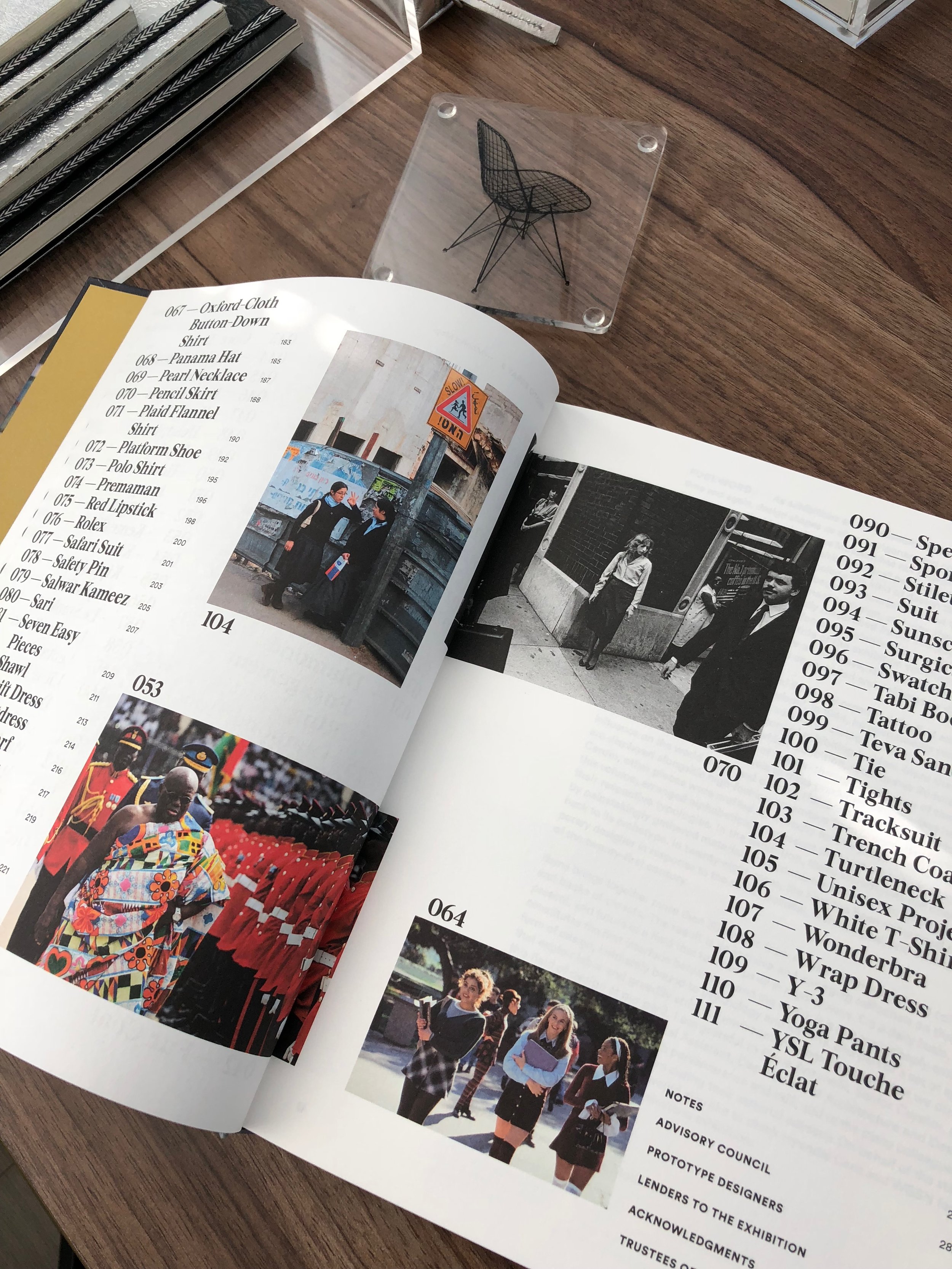
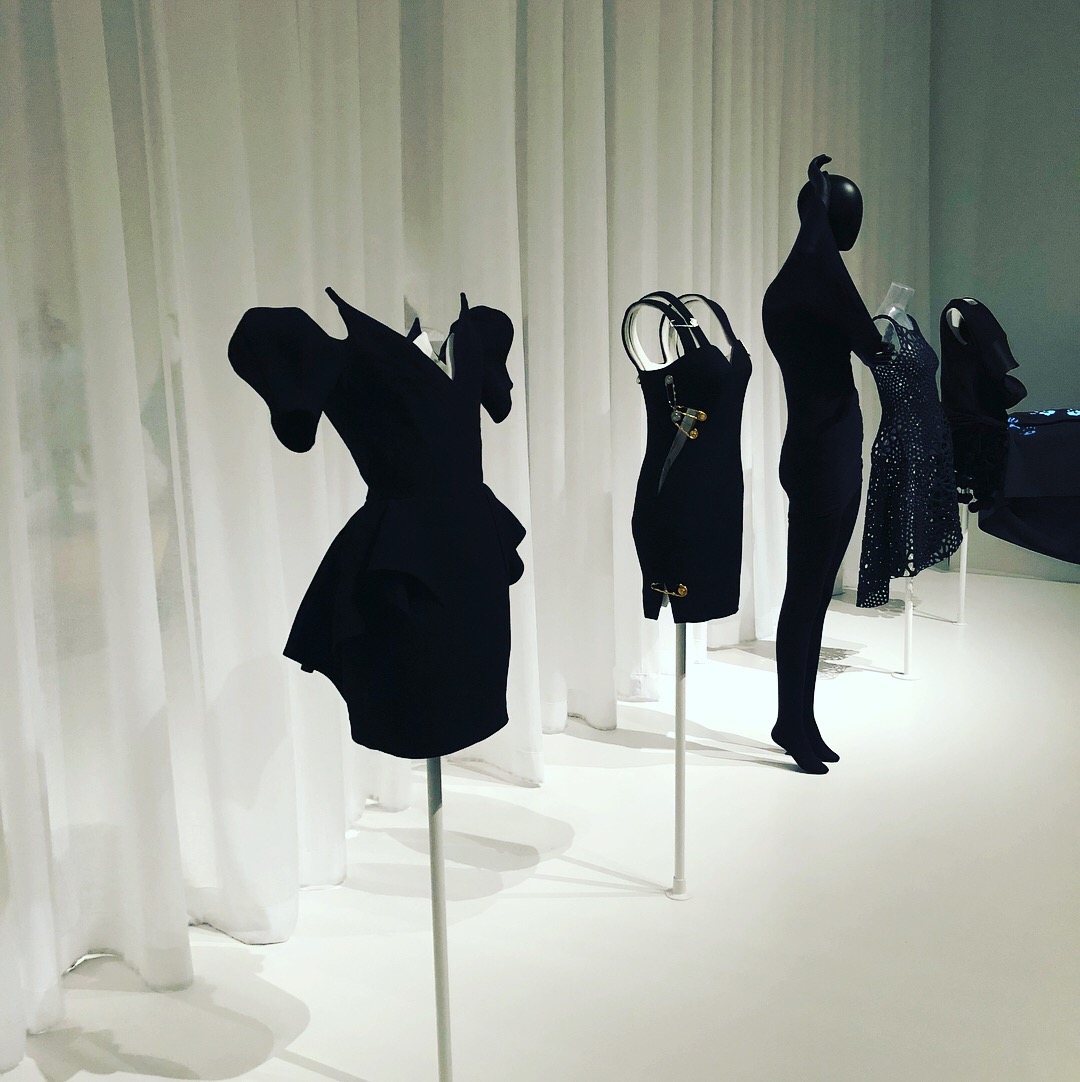
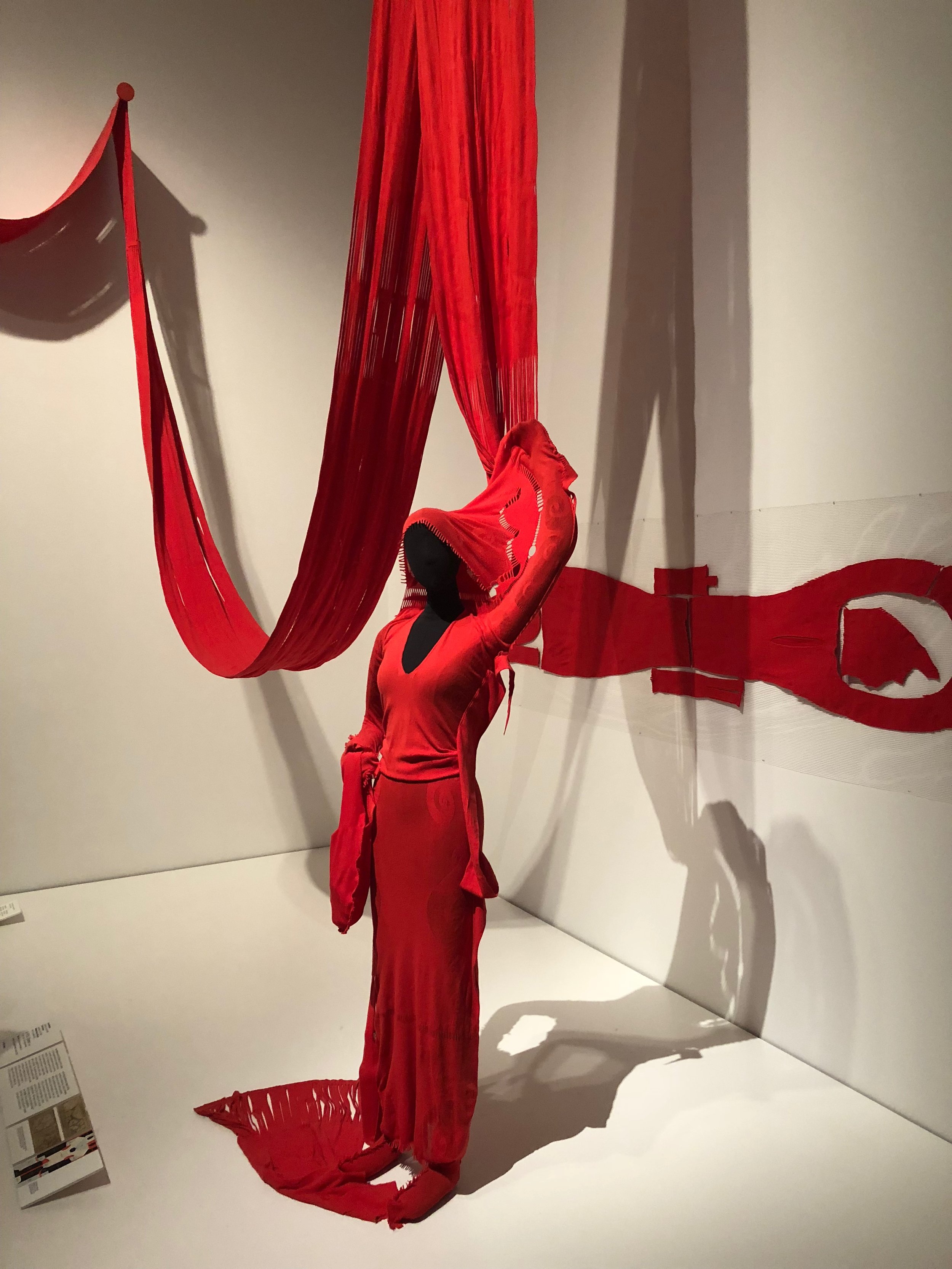
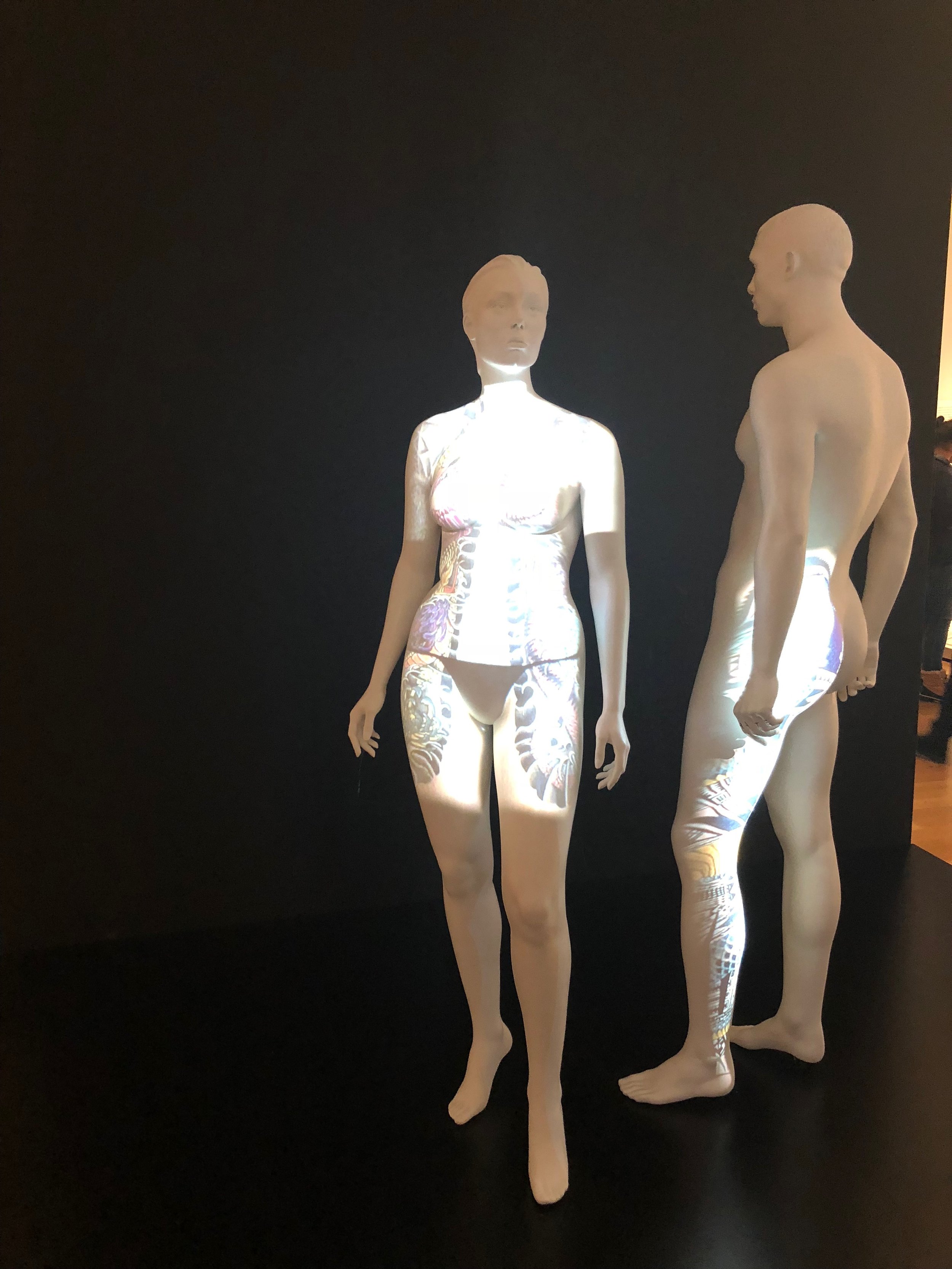
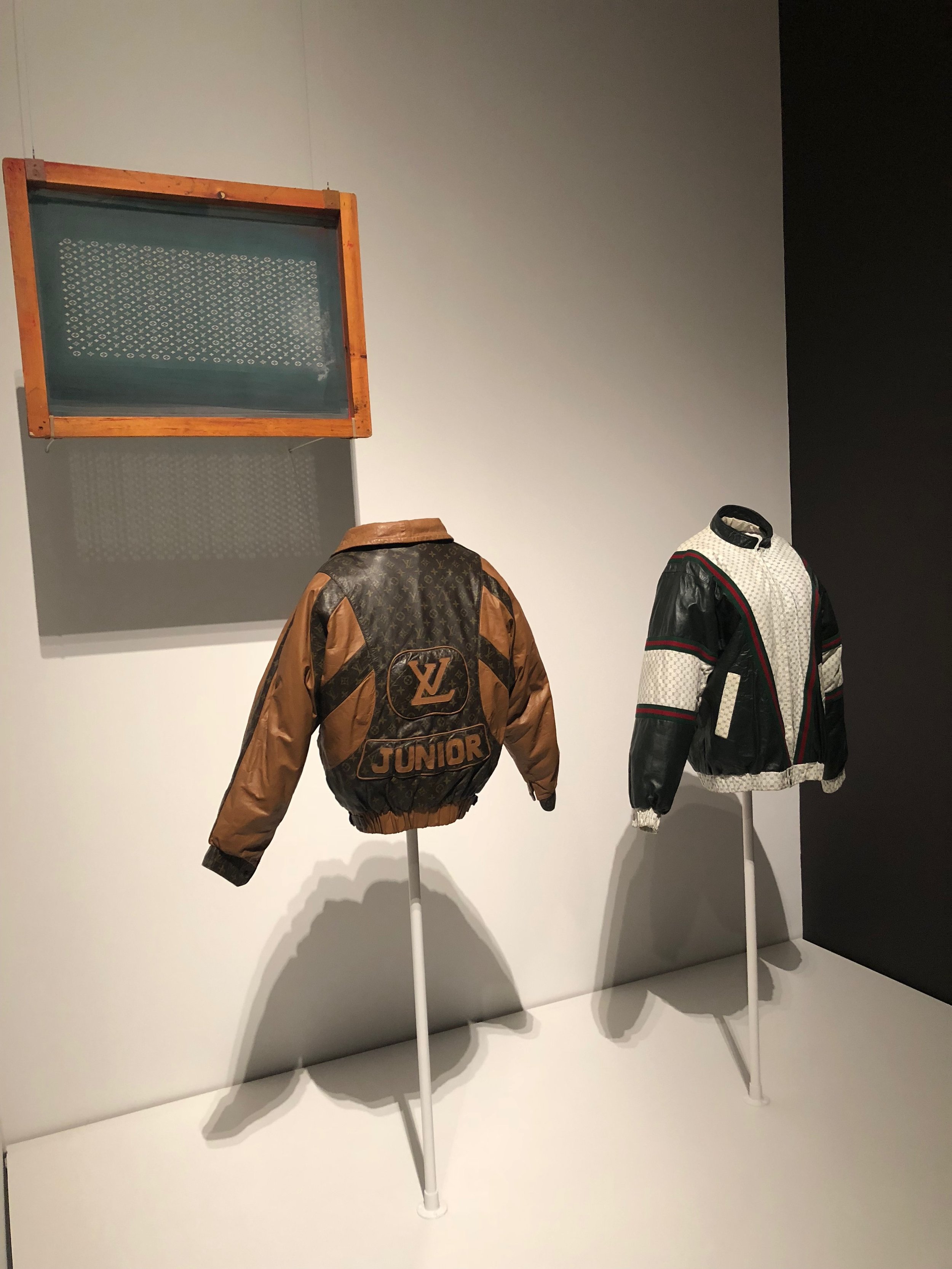
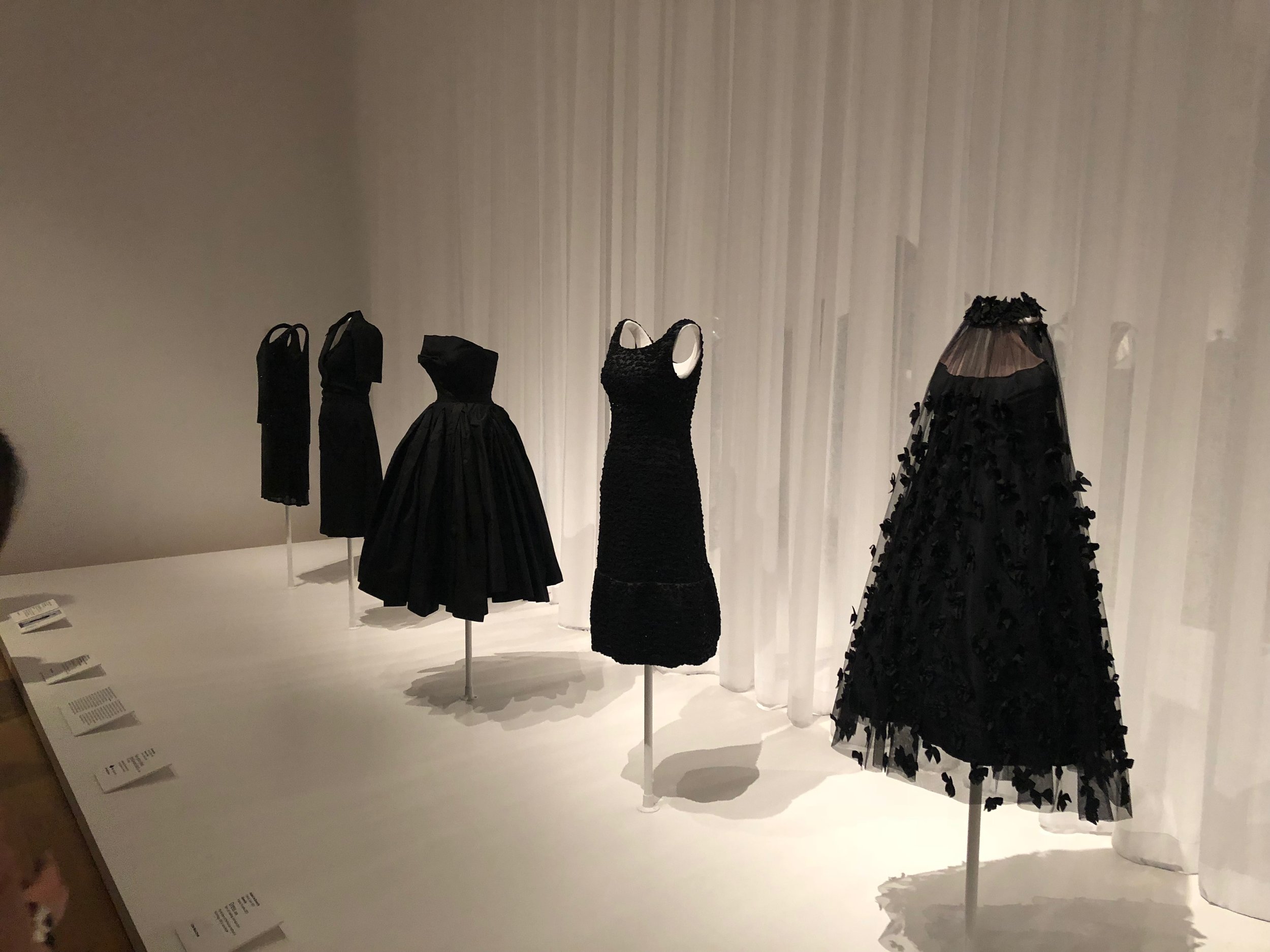
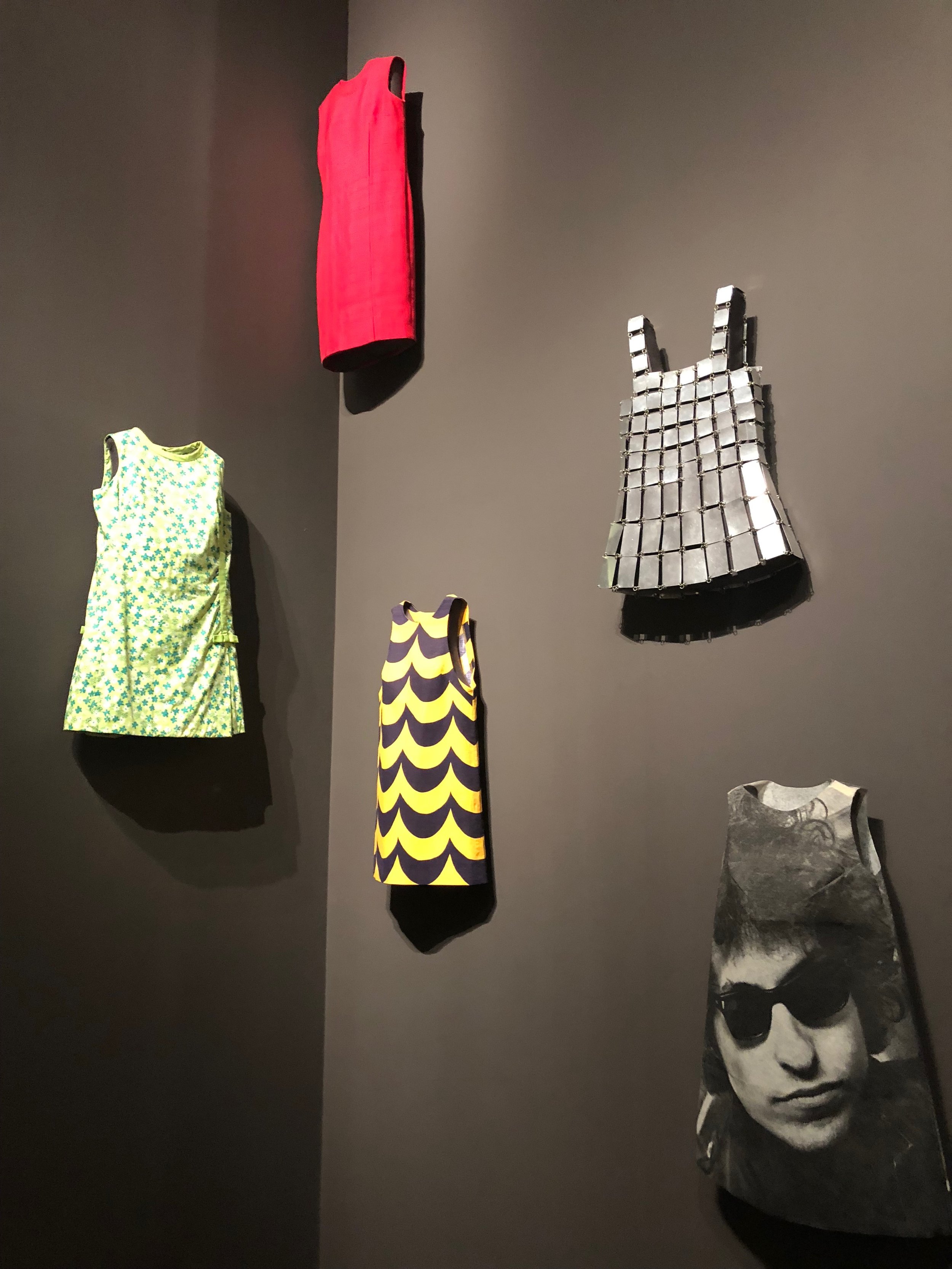
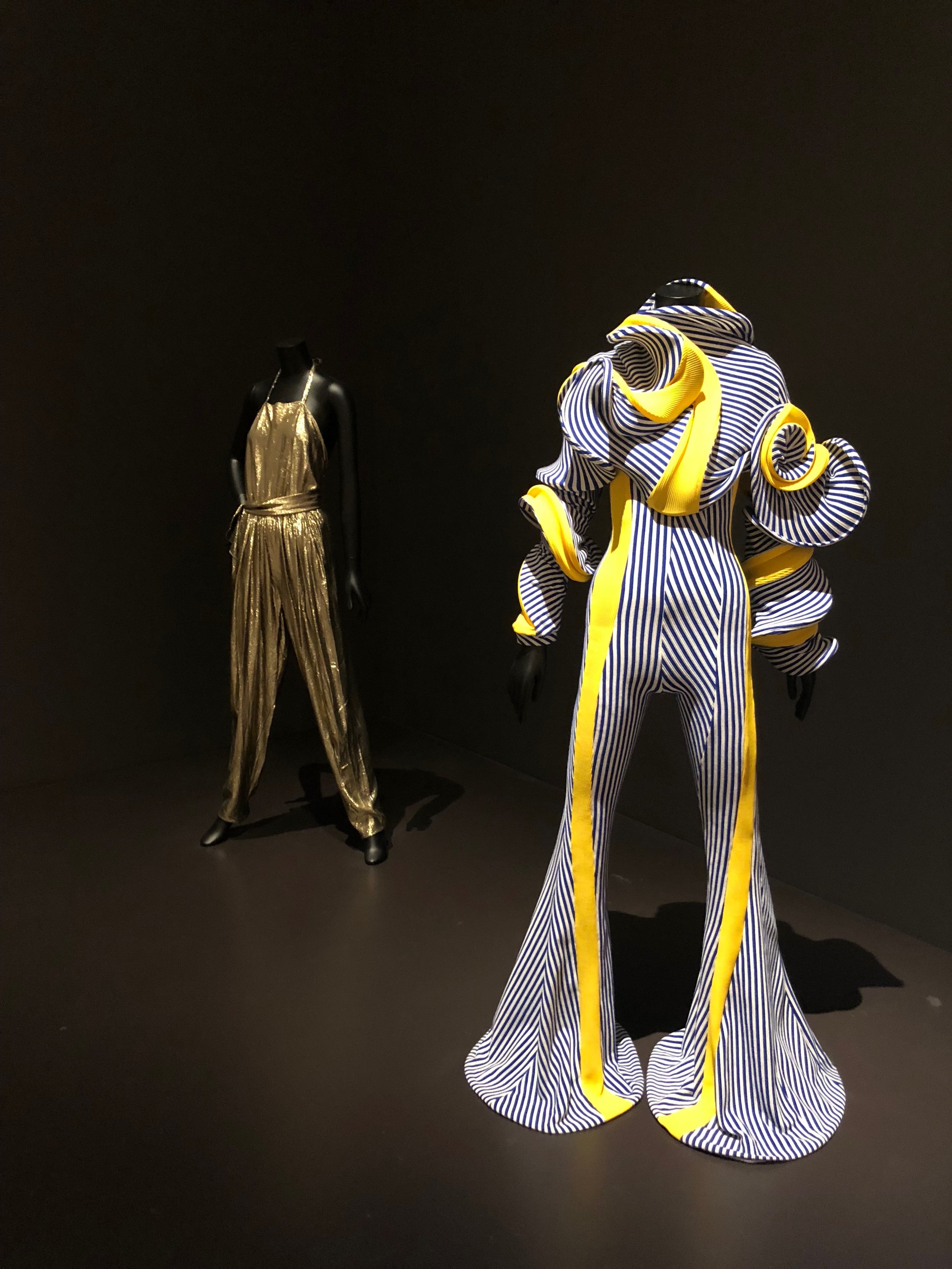
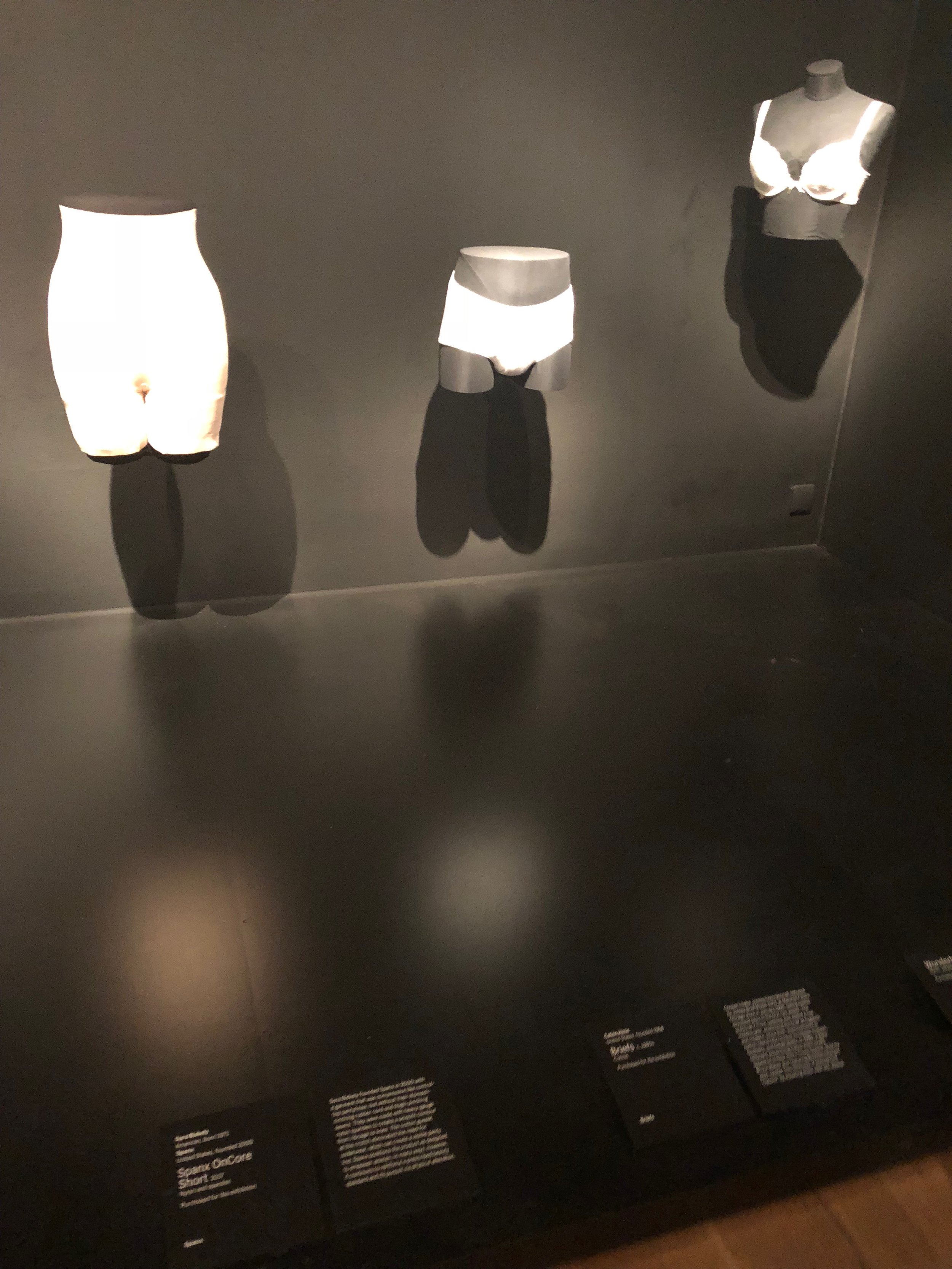
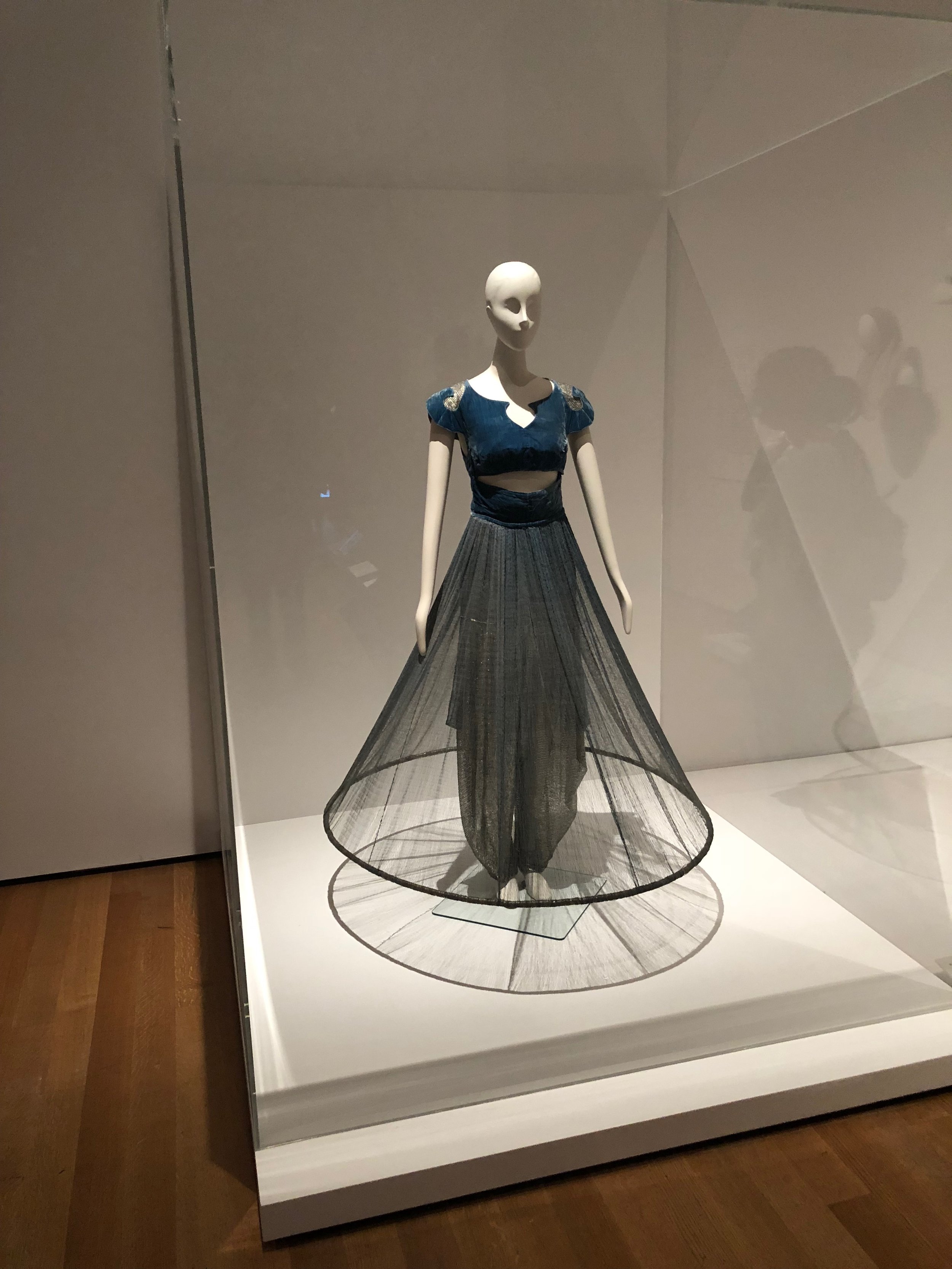
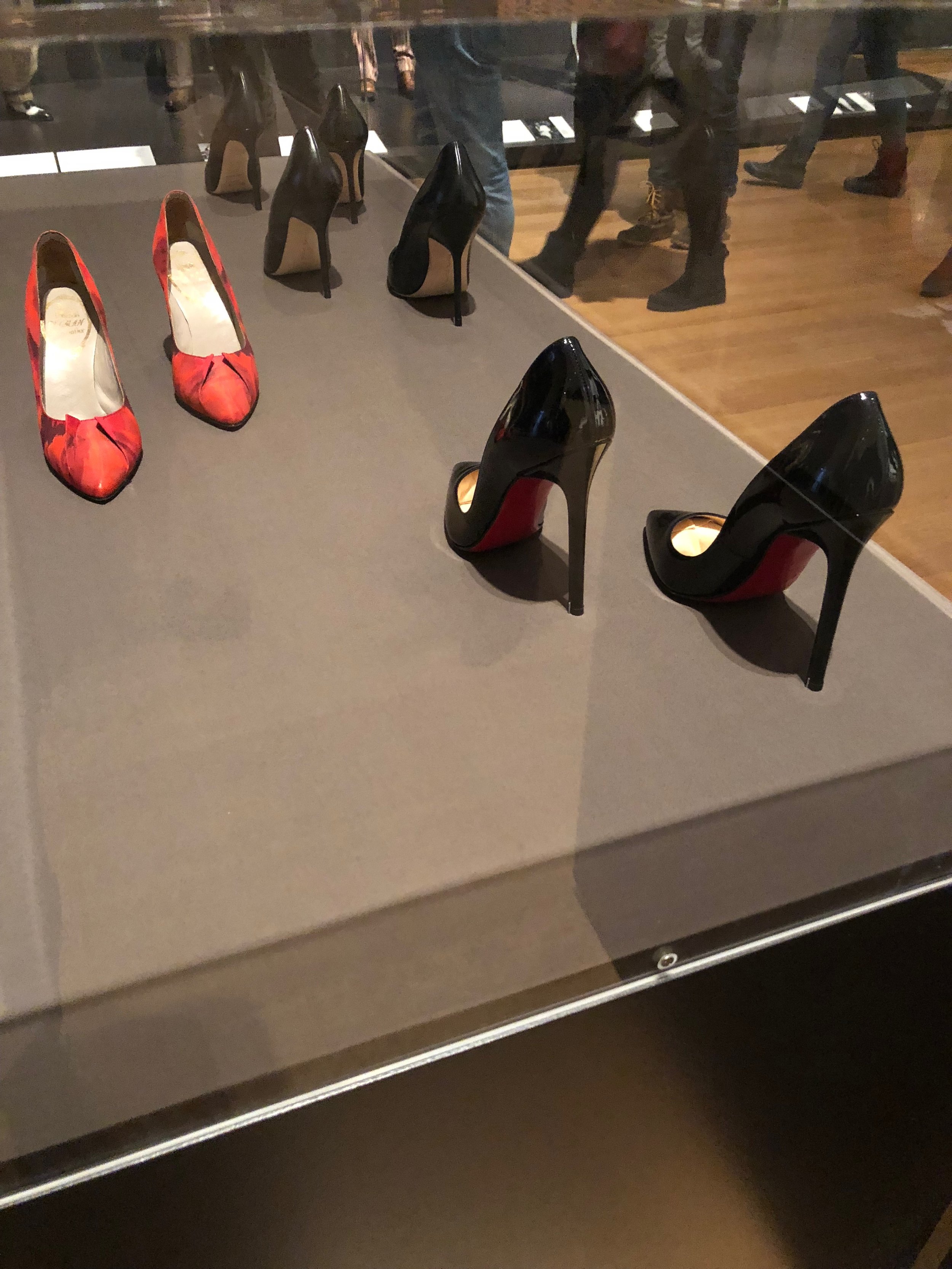
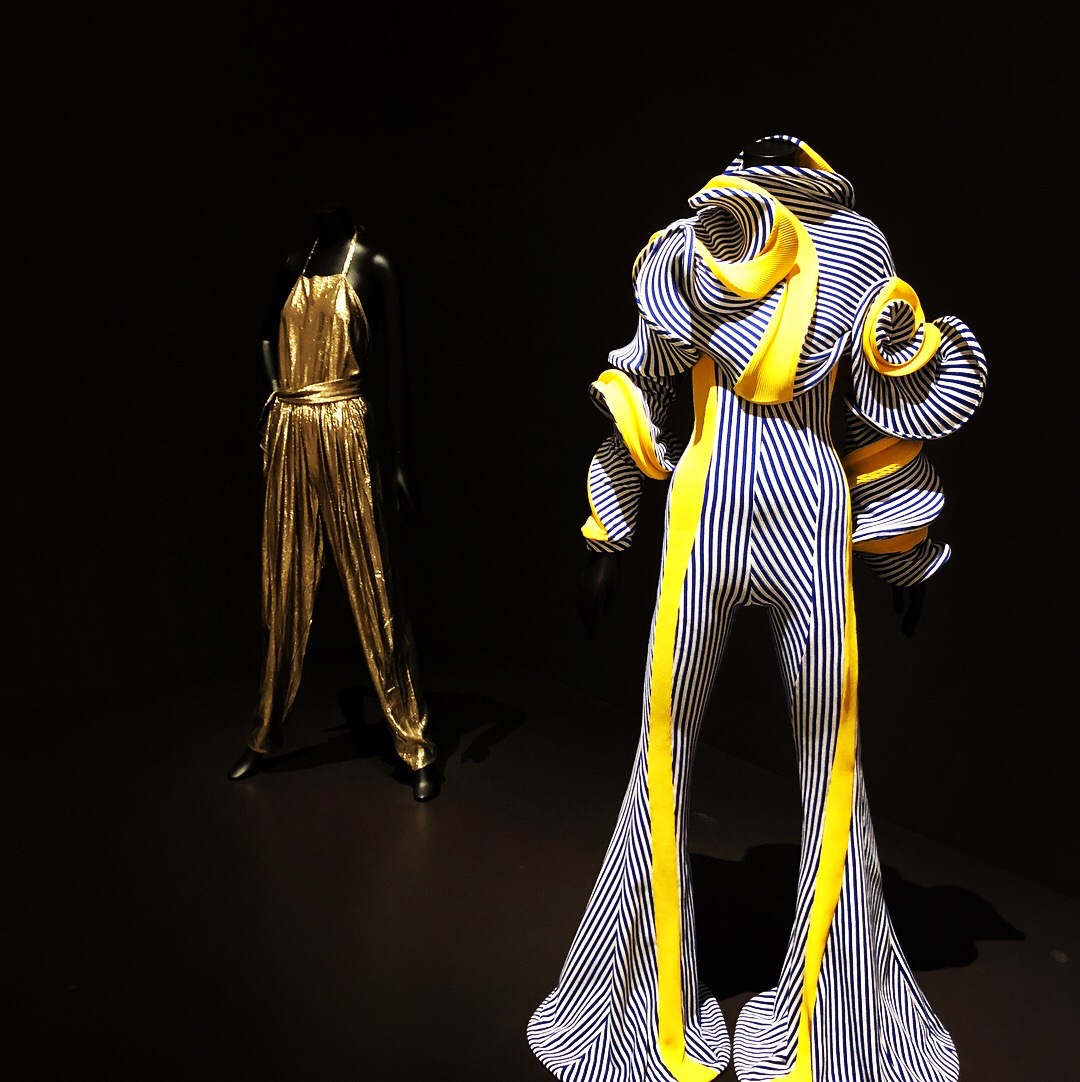
Each of the 111 objects chosen for the exhibition represent a check-list of "garments that changed the world" in the modern era represented by the MoMA art collection. 

Each of the 111 objects chosen for the exhibition represent a check-list of "garments that changed the world" in the modern era represented by the MoMA art collection. 

“In the exhibition and in this catalogue, garments created for the benefit of the many such as the white t-shirt or the dashiki) coexist with rarefied fashion episodes for the delight of a few (Martin Margiela’s Tabi footwear series, for instance, or Yves Saint Laurent’s Le Smoking). What they have in common is their influence on the world, whether direct and immediate, as evidenced by millions of purchases, or mediated and metabolized at first by institutional and financial elites. Thanks to the cross-pollination made possible by physical and cultural migrations, rampant appropriation, and the disseminating power of media both old and new, nowhere do high and low engage in so productive a conversation as in fashion.”
— Paola Antonelli

When I visited the exhibition last month in New York, I was immediately struck by how cleverly the show had resolved avoiding the typical narrative of exhibitions engaging fashion that focus on artist/designer careers, or thematic approaches that intersect moments in art and fashion history. Instead, in very typical and minimal MoMA style, audiences were greeted with a massive wall of simple black text on a white wall listing a 111 item "check-list of fashion." Walking through the exhibition, the items were presented and staged as art objects, yes, but firmly within the spaces of the great white cube, and there was the constant awareness of questioning how the item fit (or perhaps did not) in the overall scope of the museum. Antonelli, reflecting on the carefully plotted curatorial vision for the show in the catalogue accompanying the exhibition, emphasizes the ways in which she wants to address the role of fashion as a conceptual question first and foremost, examining how fashion objects work within models and debates concerning modernism and the ethos of the avant-garde.  

View fullsize IMG_6275.jpg
View fullsize IMG_6276.jpg
View fullsize IMG_6277.jpg
View fullsize IMG_6278.jpg

The catalogue itself is an important compendium to the exhibition and is presented almost as an encyclopedia, beginning with the introductory essay by Antonelli and then followed by individual entries of 500-1000 words for each of the 111 alphabetically ordered checklist items. Each entry is carefully and expertly written, offering context, analysis, and fantastic notes that can be followed up for further research. Importantly, the entries move beyond historical description and connect back to the question of modernism posed by the book and exhibition title. Interspersed throughout the entries are creative photo essays produced by five selected photographers who were asked to interpret and offer their own point of view in representing the items. These alone are worthy of reflection and further analysis not directly offered by the book's authors.

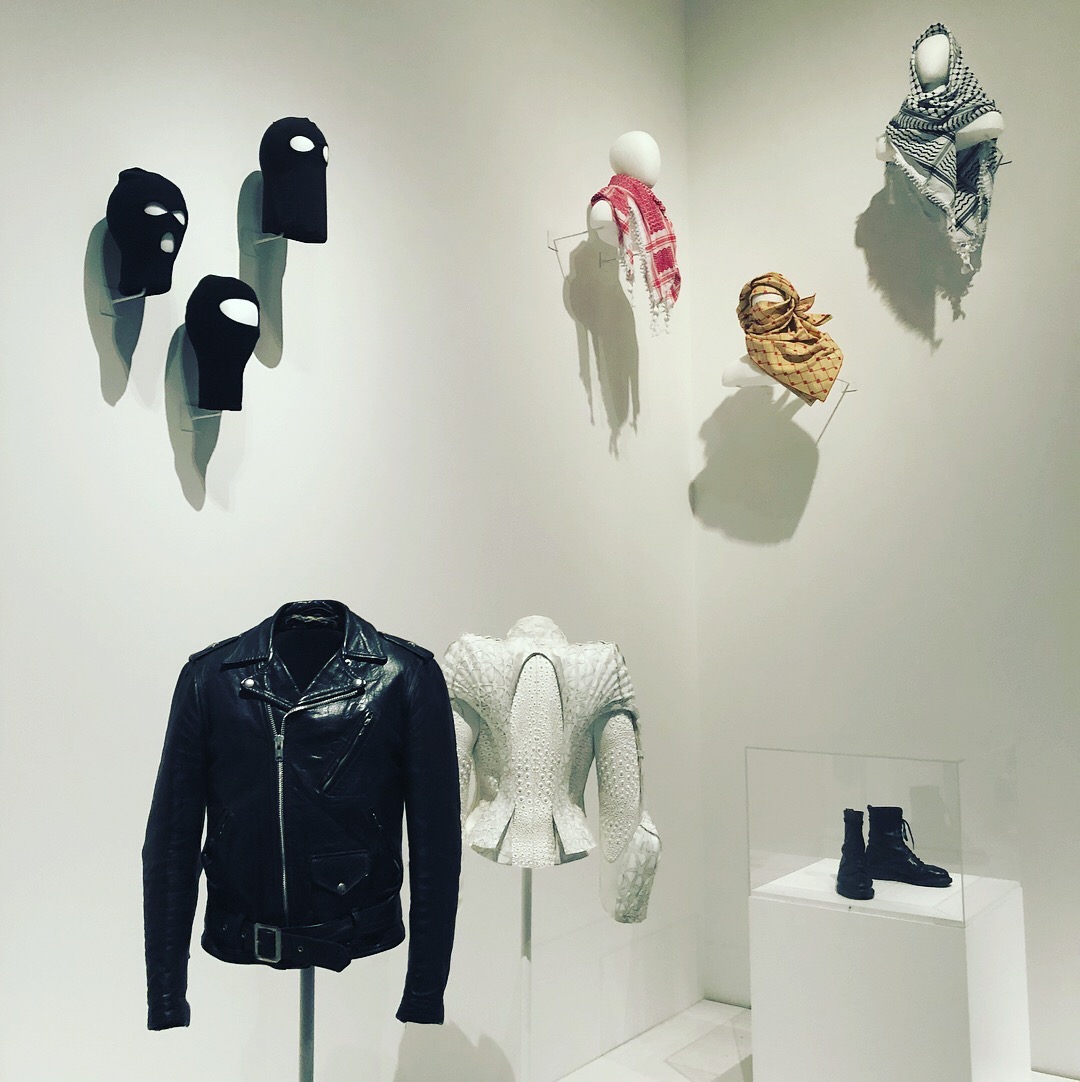
One of the objects that immediately captured my attention when I visited the show (see my photo gallery below), and is also well analyzed in the book, is the biker jacket. Associated with the subculture of motorcycle gangs, the punk movements of the 1970-80’s, along with the aura of rebellion popularized by screen legends like Marlon Brando, few items of fashion singularly express such subversive, anti-establishment, and outsider qualities. As the entry explains: “A biker jacket is a readymade exoskeleton, replete with instant meaning…Its mystique owes much to a history of provocative owners, but its appeal is equally indebted to its enigmatic design, in which streamlined sophistication is held in tension with chaotic symmetry” In the exhibition, the biker jacket was featured alongside the balaclava—a knitted head covering covering most of the face— Doc Martens, and head coverings/shawls, offering a fantastic and provocative juxtaposition of clothing that tends to be associated with violence, fear, concealment, and intimidation. 

IMG_5888.jpg
IMG_5890.jpg
IMG_5872.jpg
IMG_5883.jpg
IMG_5880.jpg
IMG_5859.jpg
IMG_5875.jpg
IMG_5873.jpg
IMG_5863.jpg
IMG_5878.jpg
IMG_5885.jpg
IMG_5887.jpg
IMG_5888.jpg IMG_5890.jpg IMG_5872.jpg IMG_5883.jpg IMG_5880.jpg IMG_5859.jpg IMG_5875.jpg IMG_5873.jpg IMG_5863.jpg IMG_5878.jpg IMG_5885.jpg IMG_5887.jpg

I purchased the catalogue as a sourcebook for a special topics course I will be teaching this fall at KPU looking at the intersection of art and fashion from an art historical perspective. In my own research, the subject of fashion has become increasingly important, especially as I move to consider how recent forces within the global art market have adopted elements of fashion, lifestyle, and subculture branding to extend and create new audiences for art. At the same time, the subject of fashion is a recurring topic in courses where I explore urban visual environments. In my Introduction to Visual Art, Urban, and Screen Culture course, for example, the exploration of case studies in street and graffiti art, along with hip-hop and punk culture, are informed by subcultures where fashion plays a critical and even guiding role. To be sure, there is a great deal to be gained in the study and instruction of fashion via an art historical and visual arts lens, and the MoMA book and exhibition have provided the perfect launching off point.

Related Blog Posts:

PERFORMING FASHION AS ART: DAPHNE GUINNESS FOR ALEXANDER MCQUEEN

UNPACKING THE FASHION/ART DIVIDE: SOME REFLECTIONS

QUICK COMPARE | CINDY SHERMAN, MARTHA ROSLER, AND VOGUE MAGAZINE

LOCATION| NYC AND THE MET'S PUNK: CHAOS TO COUTURE EXHIBITION

AN ARCHITECT OF CLOTH: CHARLES JAMES "BEYOND FASHION" AT THE MET

Comment
David Hockney, Pool and Steps (1971). When I think of Los Angeles, I think of David Hockney paintings.

David Hockney, Pool and Steps (1971). When I think of Los Angeles, I think of David Hockney paintings.

Weekly Flipboard Links and Media Round Up

February 18, 2018

Half way into February and it is finally starting to feel like spring is around the corner. Later this week, I will get a preview of the warmer weather I am craving while visiting Los Angeles to take in CAA, my discipline's annual meeting (mostly of North American art historians, visual artists, and others working in the academic fields related to art) at the College Art Association. I have been attending and/or presenting my research at CAA for well over a decade, first as a nervous grad student trying to figure out my field, and now increasingly as a confident member of a profession that I both love and want to help shape. I encourage anyone interested in getting a peek into the workings of art history to attend if they have a chance (here is a look at this year's program), as it is open and welcome to the public. Some years ago, the conference organizers decided to anchor the conference in New York and then move it to other art cities every second year. This year-- lucky us-- we are back in La-La Land.  

When I think of Los Angeles, I think, like many of you, of sunshine, palm trees, cars, and the dream factories of Hollywood. I also think of David Hockey. Last year while in London, I visited the David Hockney retrospective at Tate Britain (now at the Met in NYC) and was struck by the incredible size and scale of his famous California paintings. These were works produced during the 1960-70's, mostly staged in private homes, that have since come to define Los Angeles and its particular cultural identity. Hockney's paintings reveal the world of leisure, social isolation, urban sprawl, and manufactured utopias that place the swimming pool at the centre of the Southern California dream. It is such a completely different kind of urban experience than being in New York, yet I completely understand the lure of both places and spaces. I am planning on seeing some fantastic art in LA and hearing some great sessions while at the conference, and will look forward to reporting back more next week. Enjoy the links!

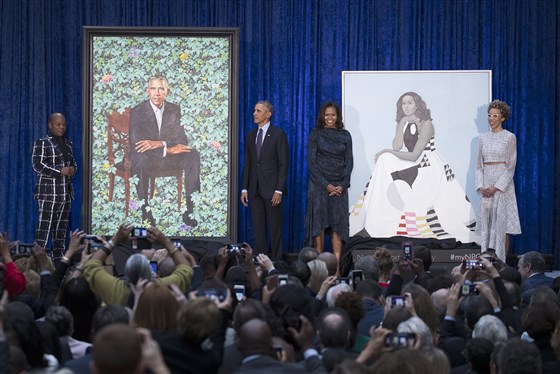
"The Obamas’ Official Portraits Rise to the Occasion"

vulture.com

"Kehinde Wiley's Obama portrait controversy proves Americans struggle to engage with art"

nbcnews.com

"Who Is Threatened by Women Who Curate Political Art?"

hyperallergic.com

"Ai Weiwei: The artwork that made me the most dangerous person in China"

theguardian.com

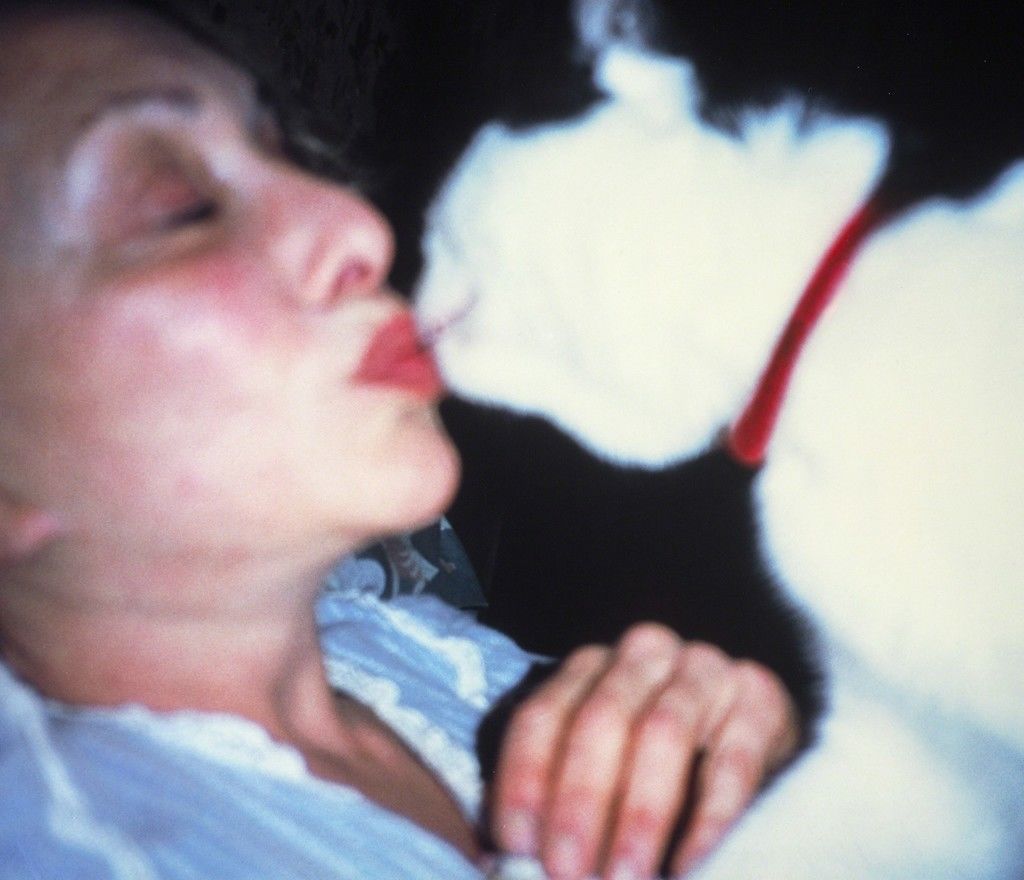
"Carolee Schneemann’s Lifelong Love Affair with Her Cats"

artsy.net

"Frank O’Hara & ‘the Skies of Italy in New York’"

nybooks.com

"How to manage the emotional toll of teaching"

universityaffairs.ca

"The Provocation and Power of Black Panther"

theatlantic.com

"Strange Worlds, immigration in the early 20th century (VIDEO)"

smarthistory

"Peter Doig’s 'Charley’s Space' and 'Snowballed Boy' (VIDEO)"

christie's

"The Obamas’ Official Portraits Rise to the Occasion" "Kehinde Wiley's Obama portrait controversy proves Americans struggle to engage with art" "Who Is Threatened by Women Who Curate Political Art?" "Ai Weiwei: The artwork that made me the most dangerous person in China" "Carolee Schneemann’s Lifelong Love Affair with Her Cats" "Frank O’Hara & ‘the Skies of Italy in New York’" "How to manage the emotional toll of teaching" "The Provocation and Power of Black Panther" "Strange Worlds, immigration in the early 20th century (VIDEO)" "Peter Doig’s 'Charley’s Space' and 'Snowballed Boy' (VIDEO)"
  • The Obamas’ Official Portraits Rise to the Occasion
  • Kehinde Wiley's Obama portrait controversy proves Americans struggle to engage with art
  • Who Is Threatened by Women Who Curate Political Art?
  • Ai Weiwei: The artwork that made me the most dangerous person in China
  • Carolee Schneemann’s Lifelong Love Affair with Her Cats
  • Frank O’Hara & ‘the Skies of Italy in New York’
  • How to manage the emotional toll of teaching
  • The Provocation and Power of Black Panther
  • Strange Worlds, immigration in the early 20th century (VIDEO)
  • Peter Doig’s 'Charley’s Space' and 'Snowballed Boy' (VIDEO)


Comment
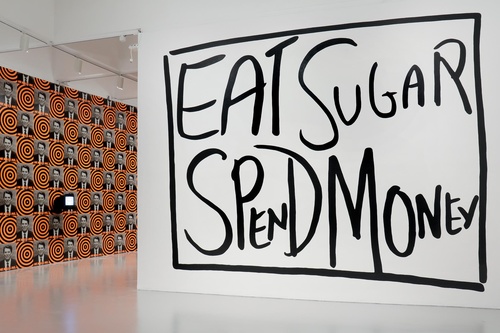
I don't think there is any doubt that if Andy Warhol were alive today, he would have the best Instagram account in the art world. Image taken from his famous quotes print series.

I don't think there is any doubt that if Andy Warhol were alive today, he would have the best Instagram account in the art world. Image taken from his famous quotes print series.

Mini Intro Guide to Artists and Art World People To Follow On Instagram

February 15, 2018

As with most people who research and think about visual art and culture, I have a love/hate relationship with Instagram. On the one hand, I absolutely love the democratizing function of the platform, and the ways in which art works can have an expanded audience. Seeing images and art works from the best known artists in the world scroll alongside pictures posted by emerging artists I work with close to home is always eye-opening and alters my perspective in important ways.  On the other hand, I am ever mindful of the more facile aspects of Instagram, and the damaging effects the platform can have on visual literacy and the superficial nature of a format that allows for little depth and context.

My own personal introduction to Instagram came about in 2012 when I decided to download the app to document and track images while in Europe over Christmas. I knew I would be visiting a few different cities, and several art exhibitions, so I used the tool as a way to share and disseminate images to my students and colleagues who asked to follow along on my journey. Within a few months, I was being followed by a number of art historians, artists, and art world types, and I in turn began following them. Over the years, I have evolved what I post and focus on, and have noticed in myself and others how much more carefully curated and intentional the nature of posting has become (interestingly enough, the original spirit of Instagram’s more spontaneous and unedited nature is now seen more so in the “stories” feature of the platform).

Understandably, the art world has been cautious of its embrace of Instagram, but there have been many key individuals that I have enjoyed following and watching shift and evolve over the years. The following is a mini introductory guide to the accounts I consider “must-follows,” a list that I often provide when asked where to begin with following artists and art world types on Instagram. I hope you find some inspiration as you scroll through these accounts and work on finding your own signature Instagram style in the process.

Screenshot 2018-02-15 14.28.35.png
Screenshot 2018-02-15 14.28.00.png
Screenshot 2018-02-15 14.28.15.png
Screenshot 2018-02-15 14.28.50.png
Screenshot 2018-02-15 14.48.41.png
Screenshot 2018-02-15 14.30.52.png
Screenshot 2018-02-15 14.43.18.png
Screenshot 2018-02-15 15.18.43.png
Screenshot 2018-02-15 14.29.07.png
Screenshot 2018-02-15 14.28.35.png Screenshot 2018-02-15 14.28.00.png Screenshot 2018-02-15 14.28.15.png Screenshot 2018-02-15 14.28.50.png Screenshot 2018-02-15 14.48.41.png Screenshot 2018-02-15 14.30.52.png Screenshot 2018-02-15 14.43.18.png Screenshot 2018-02-15 15.18.43.png Screenshot 2018-02-15 14.29.07.png

ARTISTS TO FOLLOW

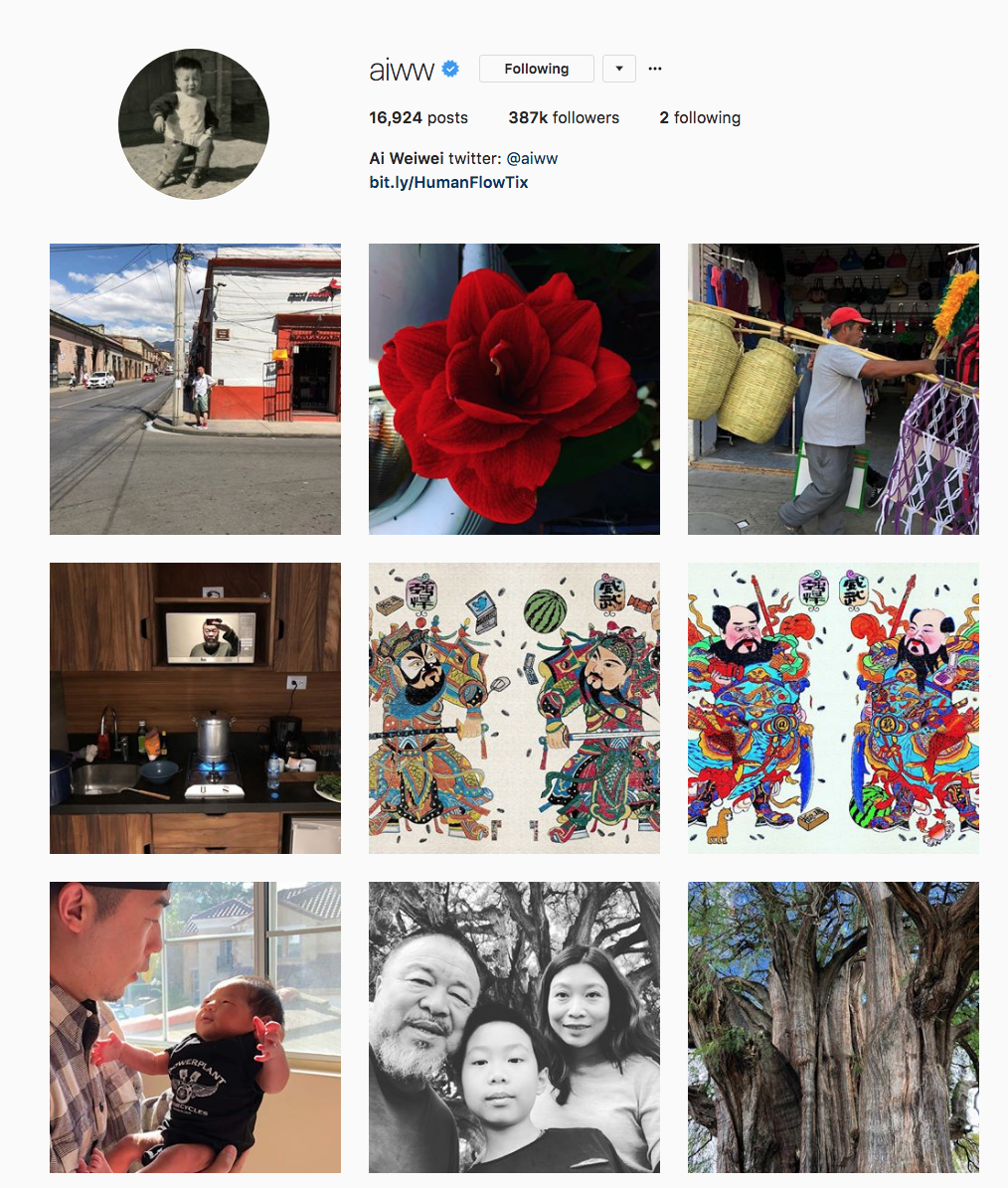
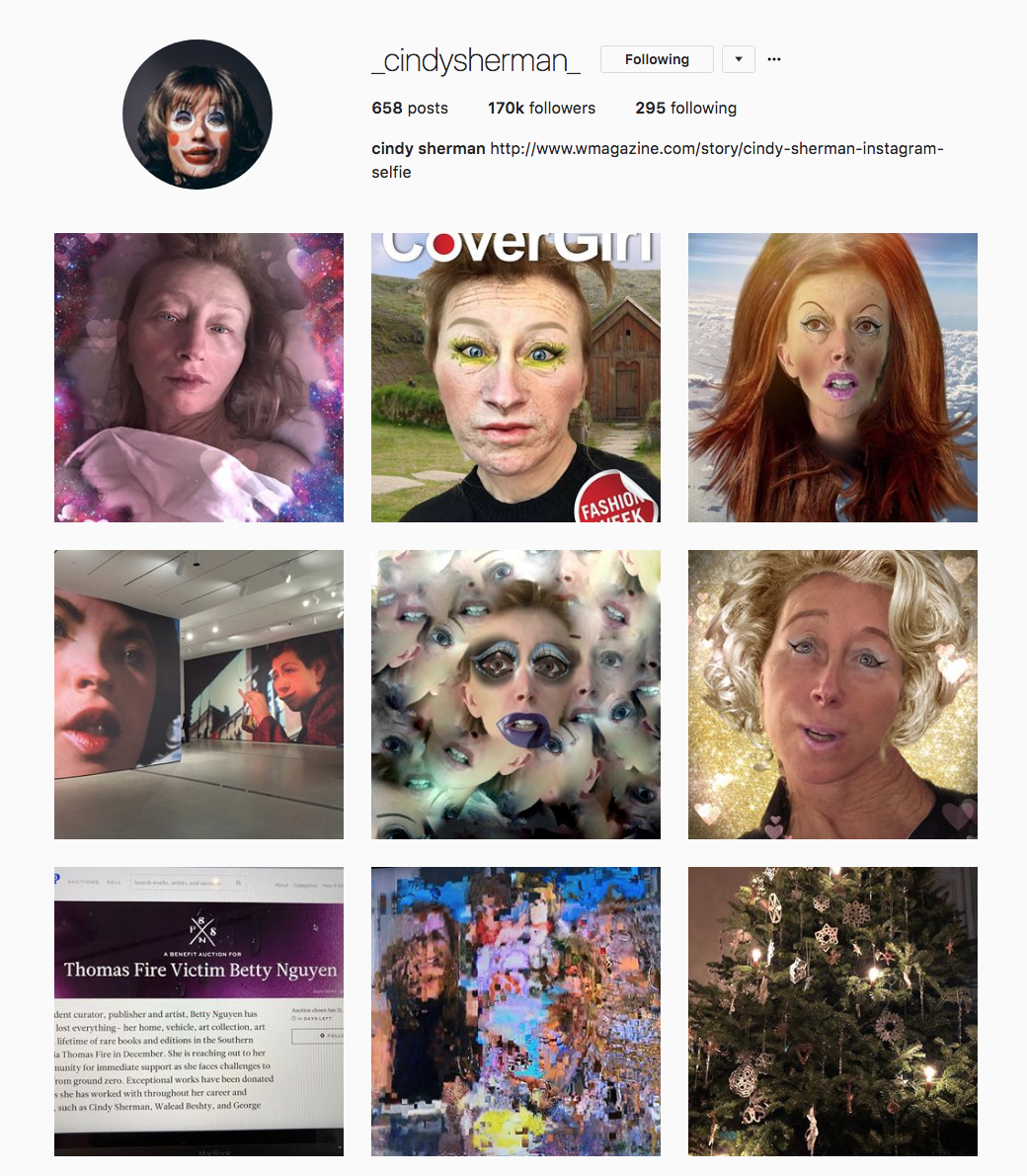
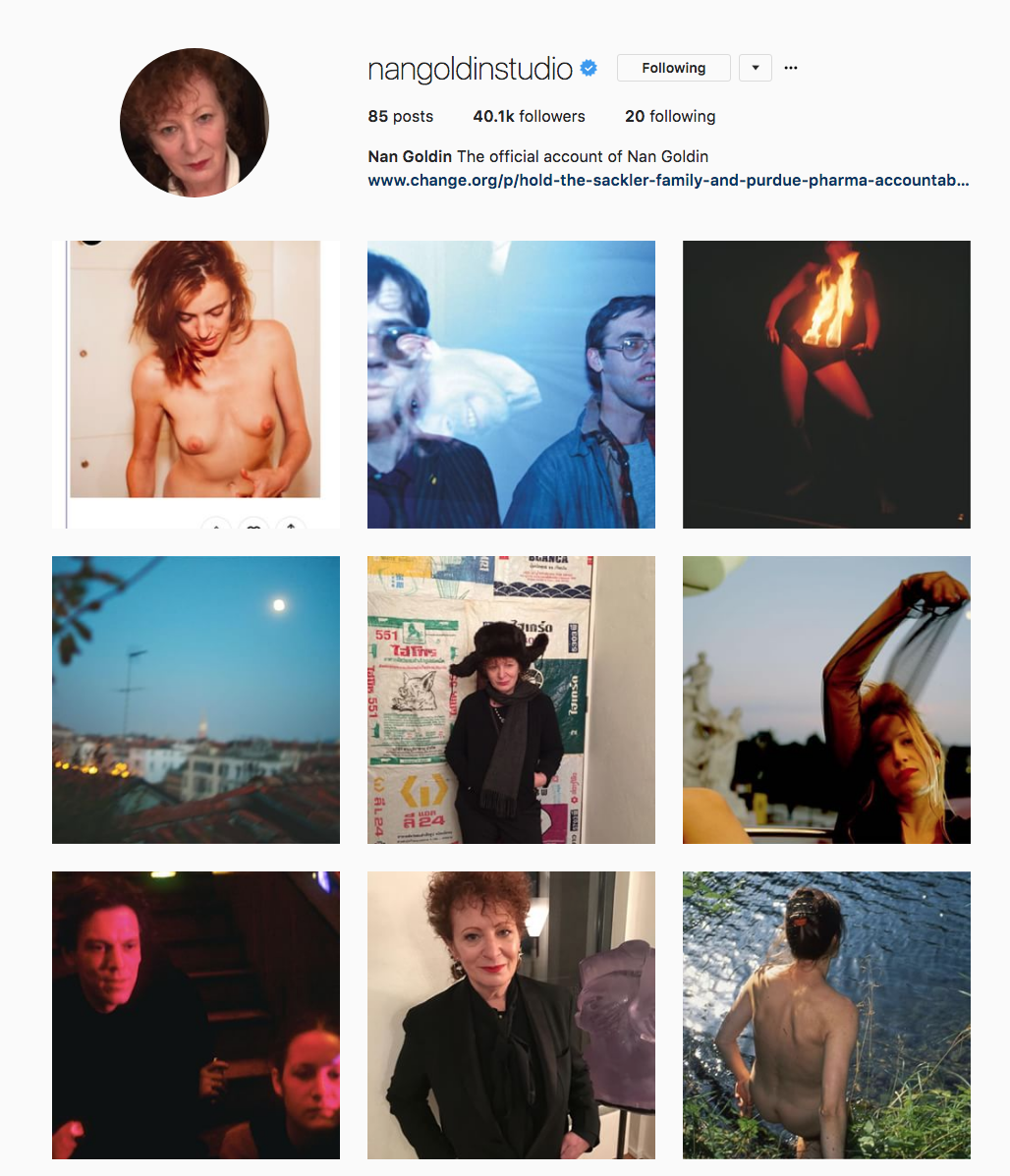
One of the first artists I began following when joining Instagram was Ai Weiwei. At the time, his Twitter account had been shut down by the Chinese government and he had begun using Instagram as a way to keep connected to his followers. Over the years, Ai has used his account to share progress on his art and film projects (most notably documenting the migrants he met and worked with while filming Human Flow) and showing followers the close connection between his work and personal life. Since Instagram is all about photography, two of the best contemporary artists working in the medium, Cindy Sherman and Nan Goldin, also have an important presence on the platform. Sherman, who has been on Instagram longer has been using her account to present new projects and, at times, challenge her audience with her "straight" photography, while Goldin's relatively new account showcases the best of her practice from the 1980-90's alongside new projects. 

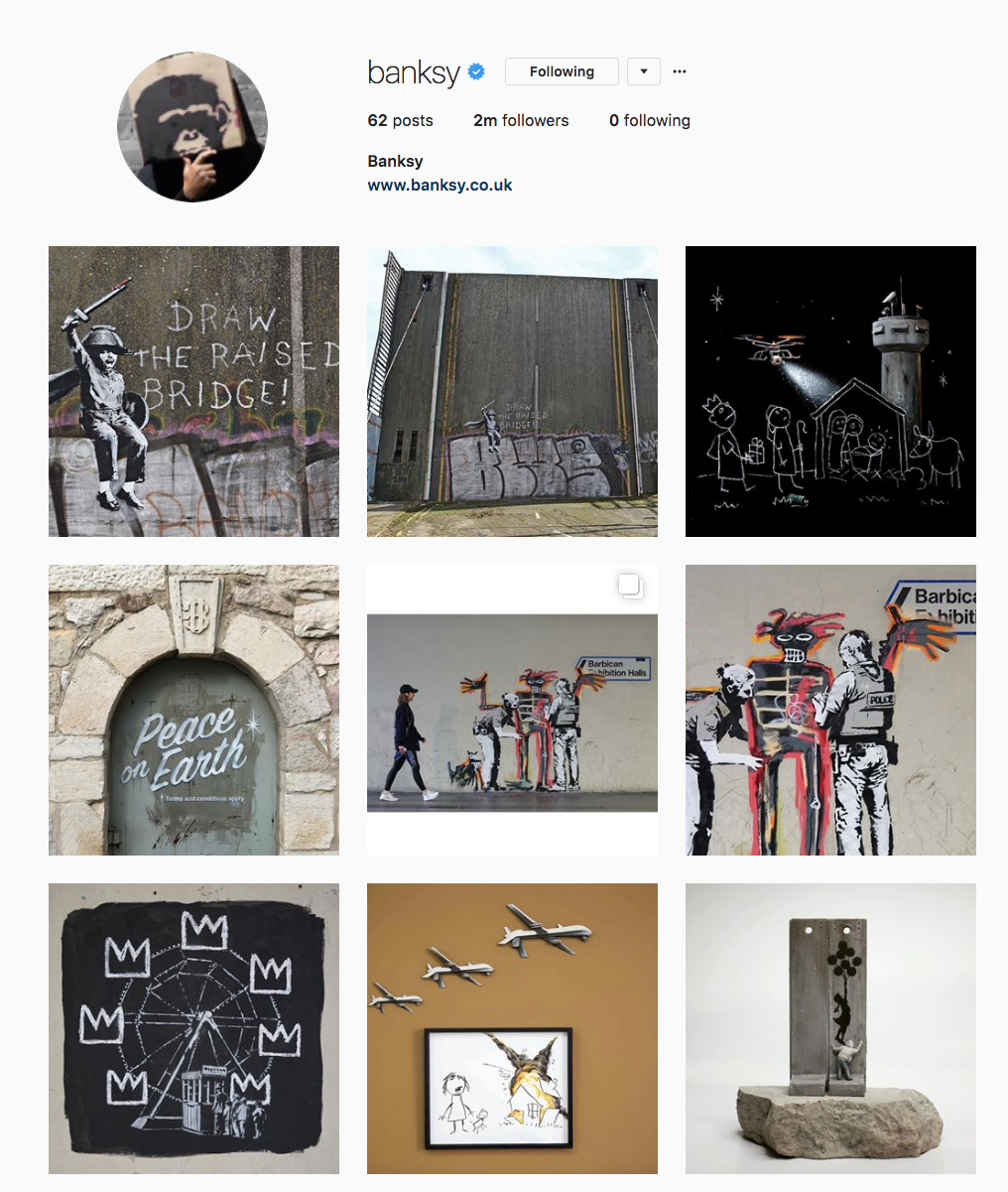
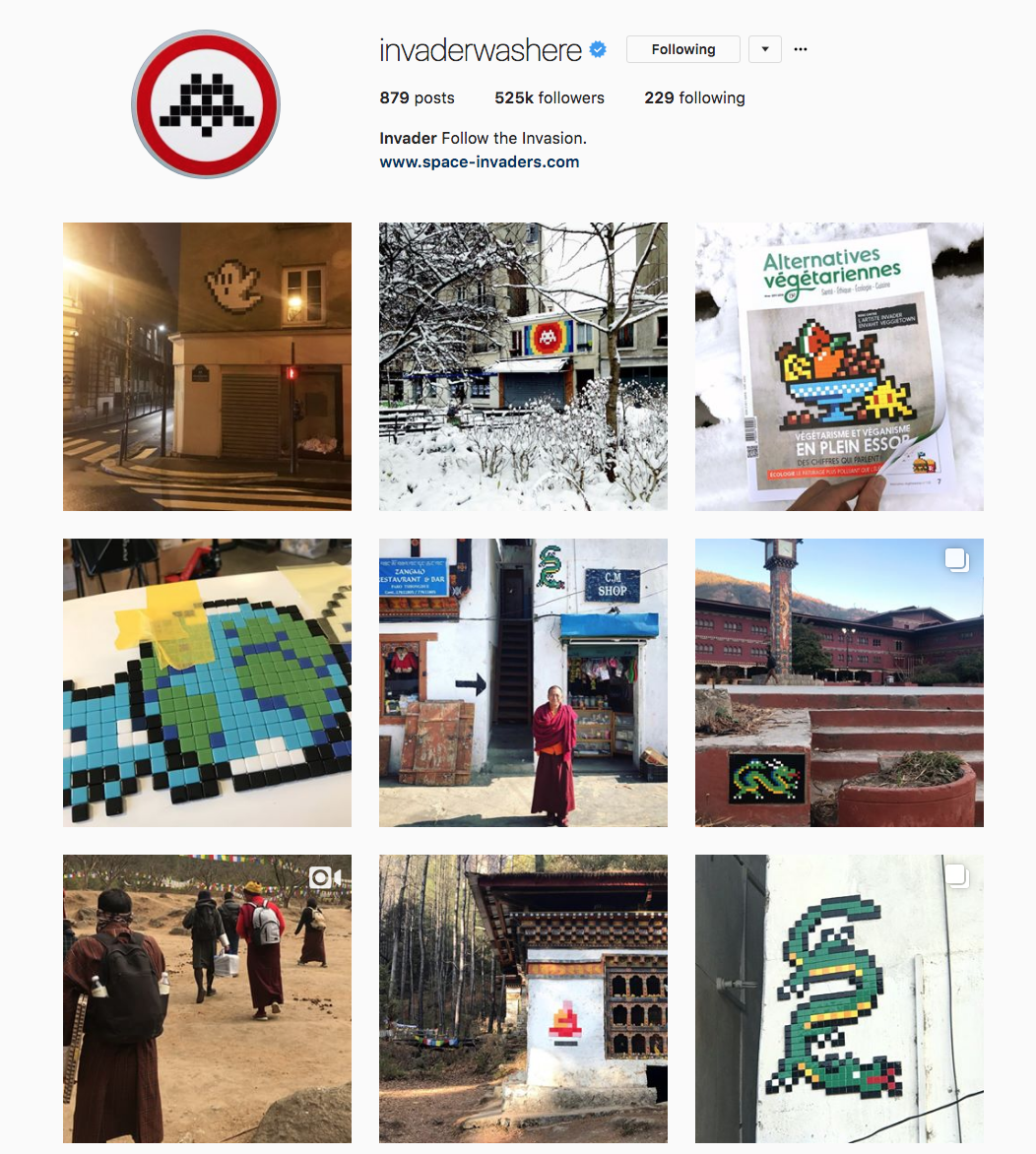
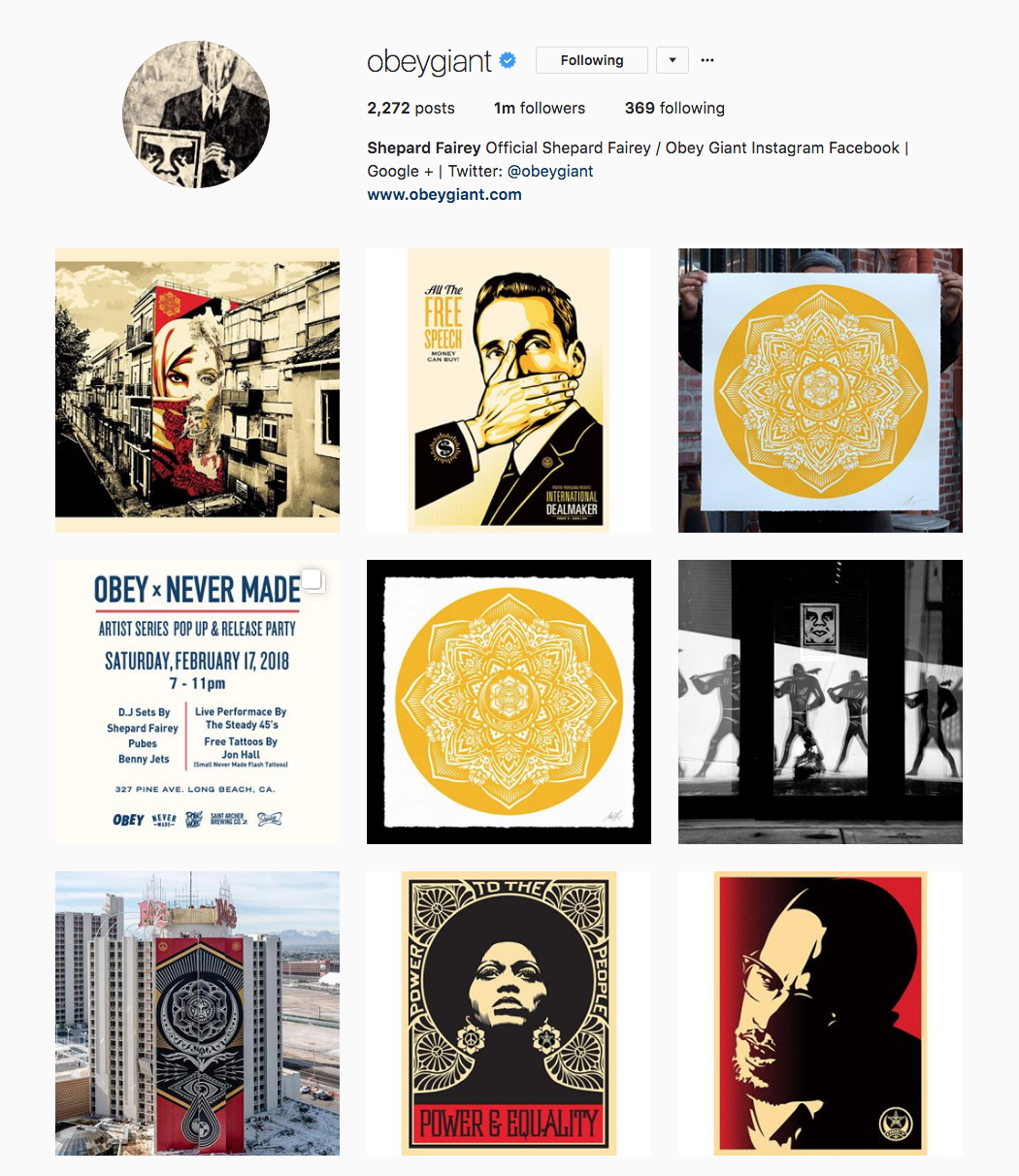
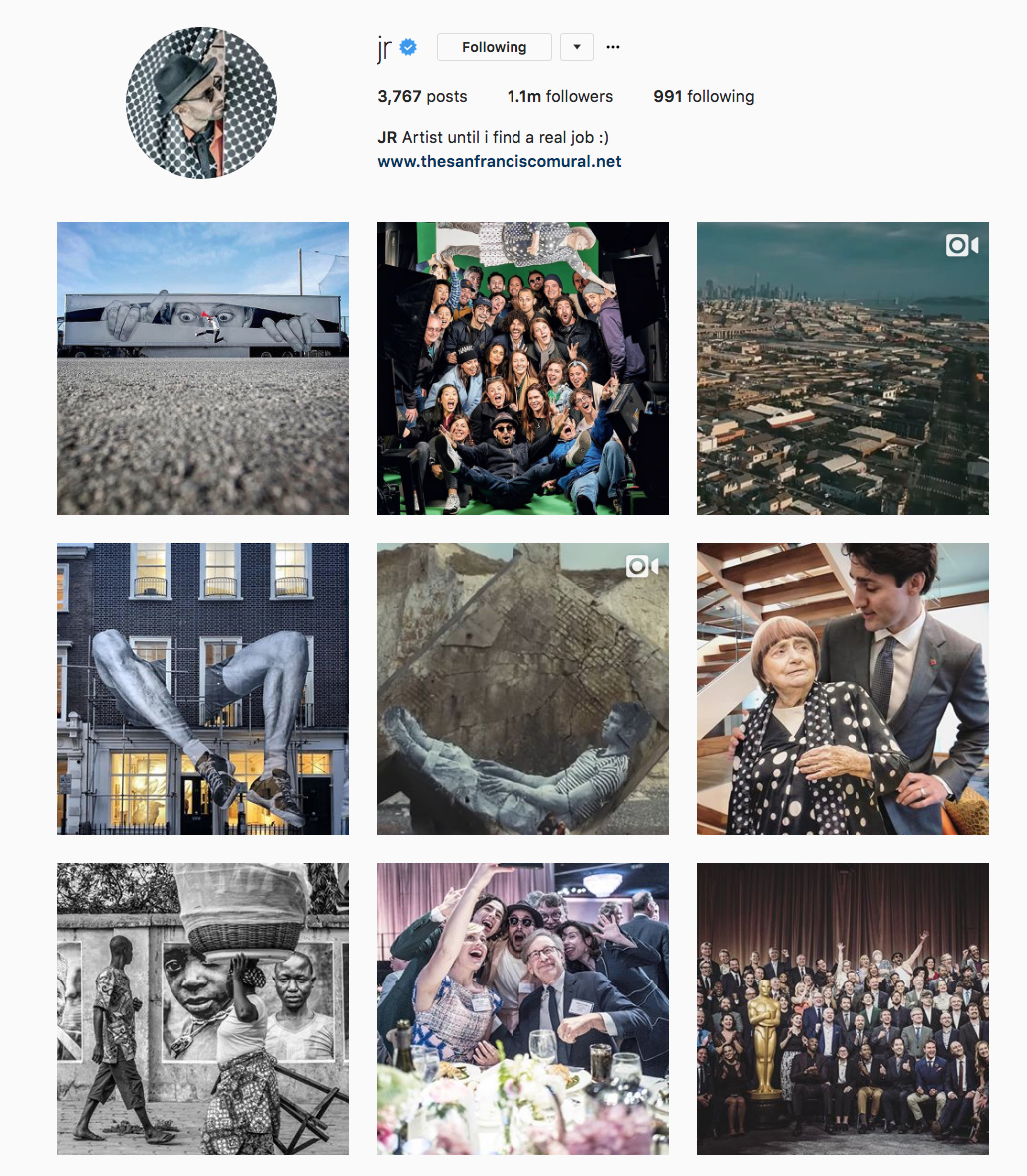
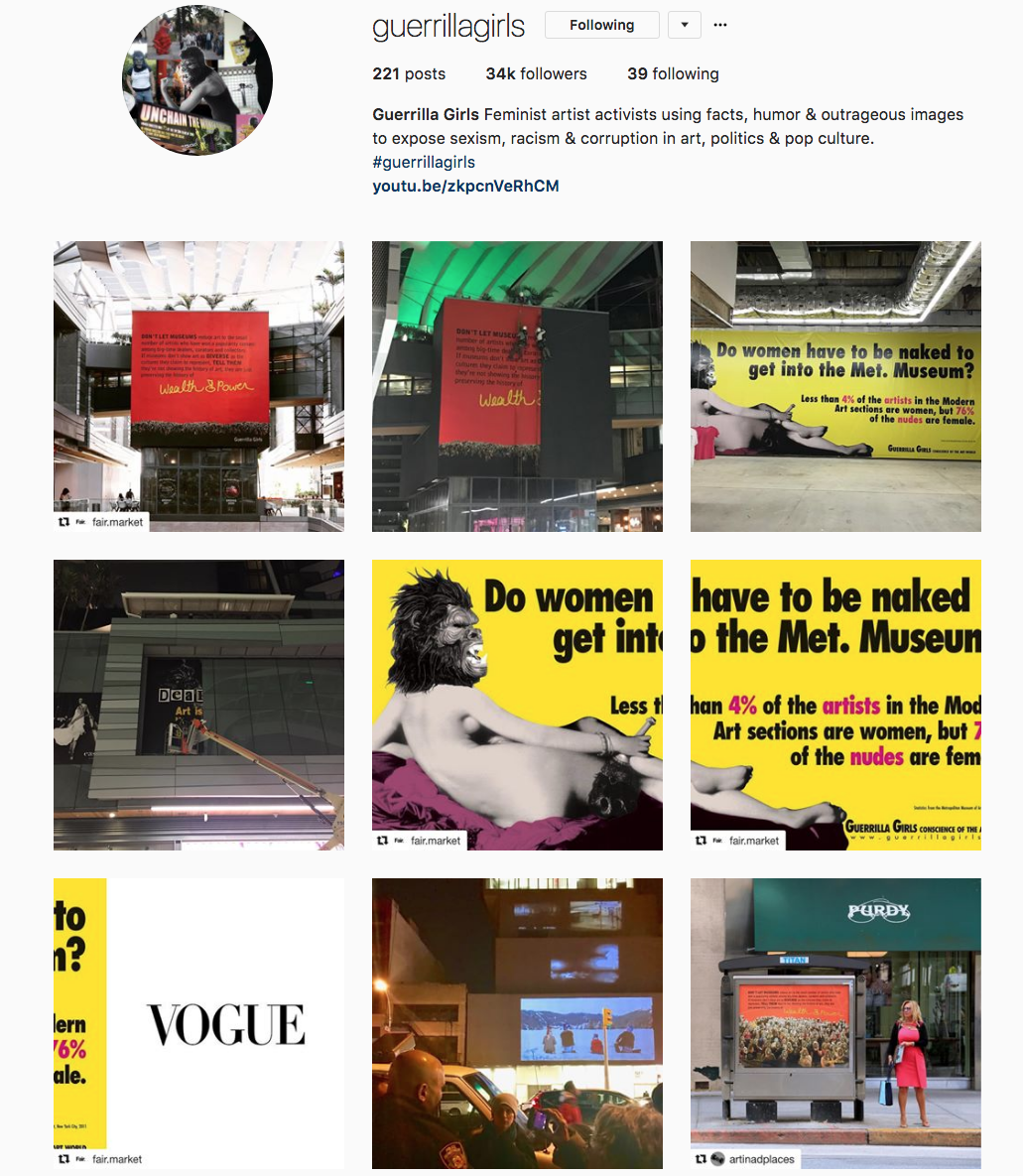
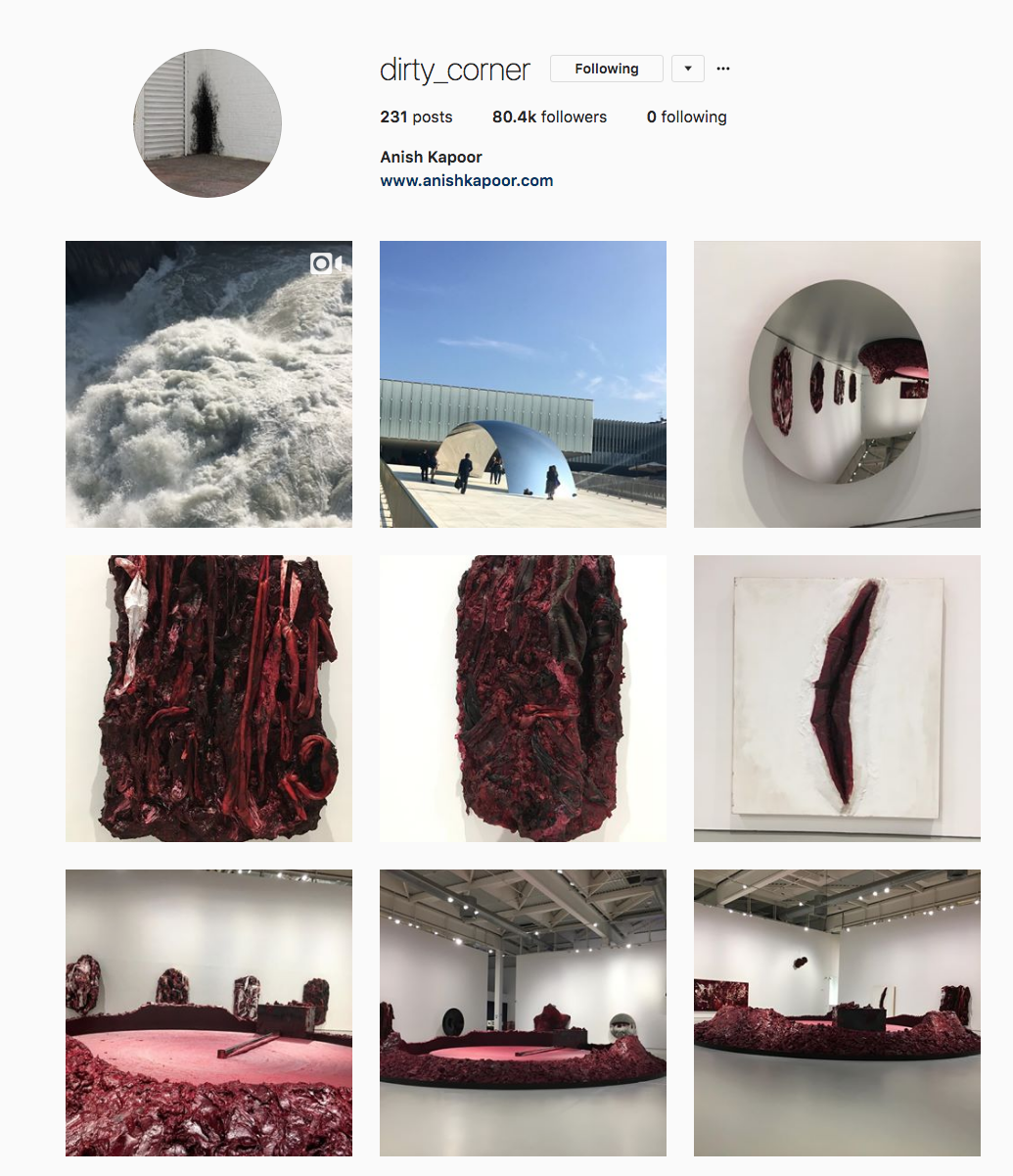
My next category of artists all have connections to street and urban art. Included here are early adopters to Instagram: Banksy, Invader, JR, and Shepard Fairey. Not surprisingly, some of the best Instagram accounts document the work of graffiti and street artists as they work clandestinely and at times anonymously. Banksy in particular gained notoriety a few years ago when he created his own NYC residency and used the platform to create a scavenger hunt of his works around the city. And finally, I include the carefully curated account of Anish Kapoor-- who uses colour blocking strategies from his art practice to build visual stories in his gallery, a primer for artists interested in using Instagram successfully-- and the Guerrilla Girls, an anonymous art collective that builds its account to disseminate information and statistics related to abuses of power (sexism, racism, and corruption) in the art world.

Screenshot 2018-02-15 14.27.16.png
Screenshot 2018-02-15 14.29.21.png
Screenshot 2018-02-15 15.20.38.png
Screenshot 2018-02-15 14.46.32.png
Screenshot 2018-02-15 14.27.16.png Screenshot 2018-02-15 14.29.21.png Screenshot 2018-02-15 15.20.38.png Screenshot 2018-02-15 14.46.32.png

Curators and Critics TO FOLLOW

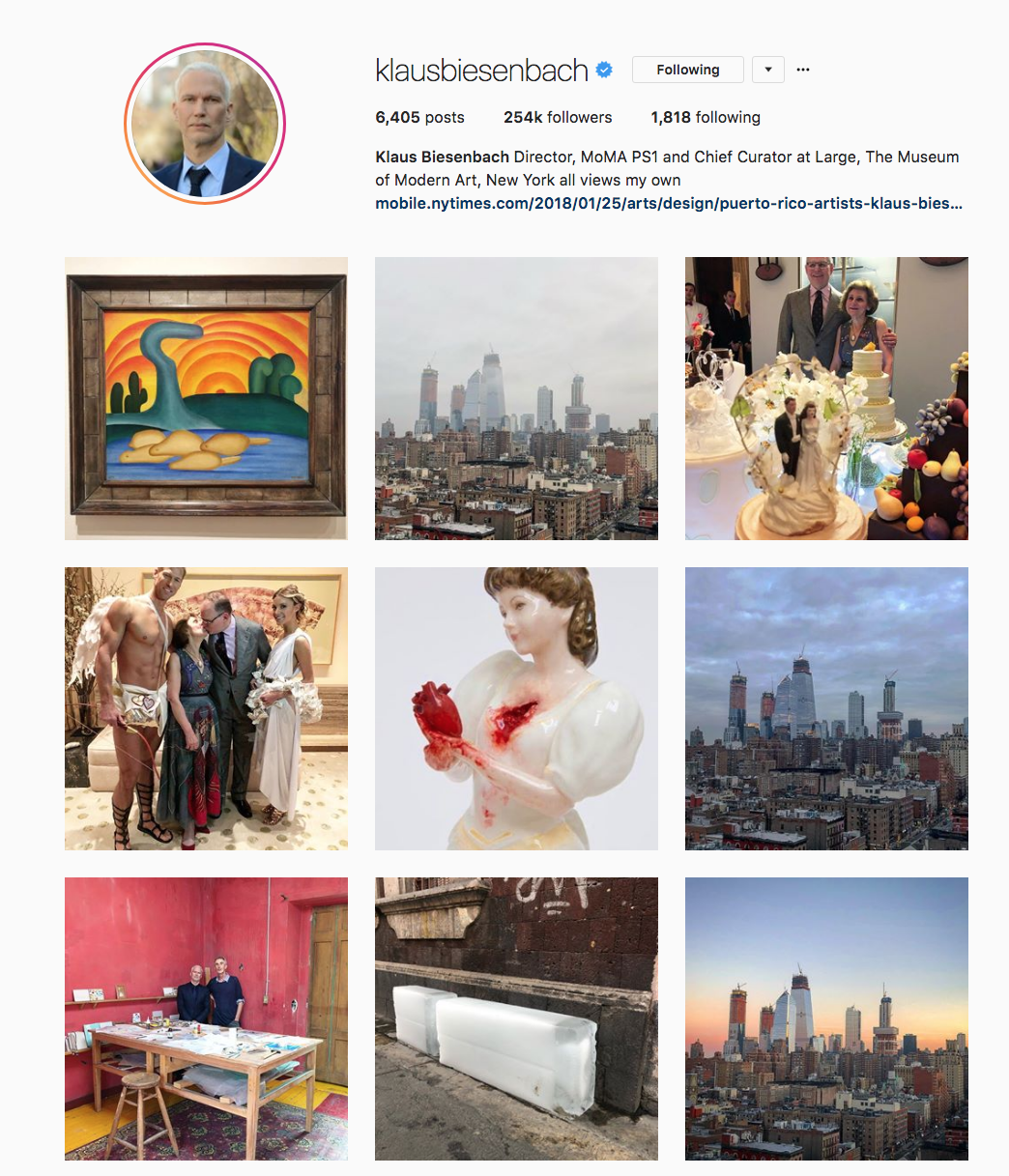
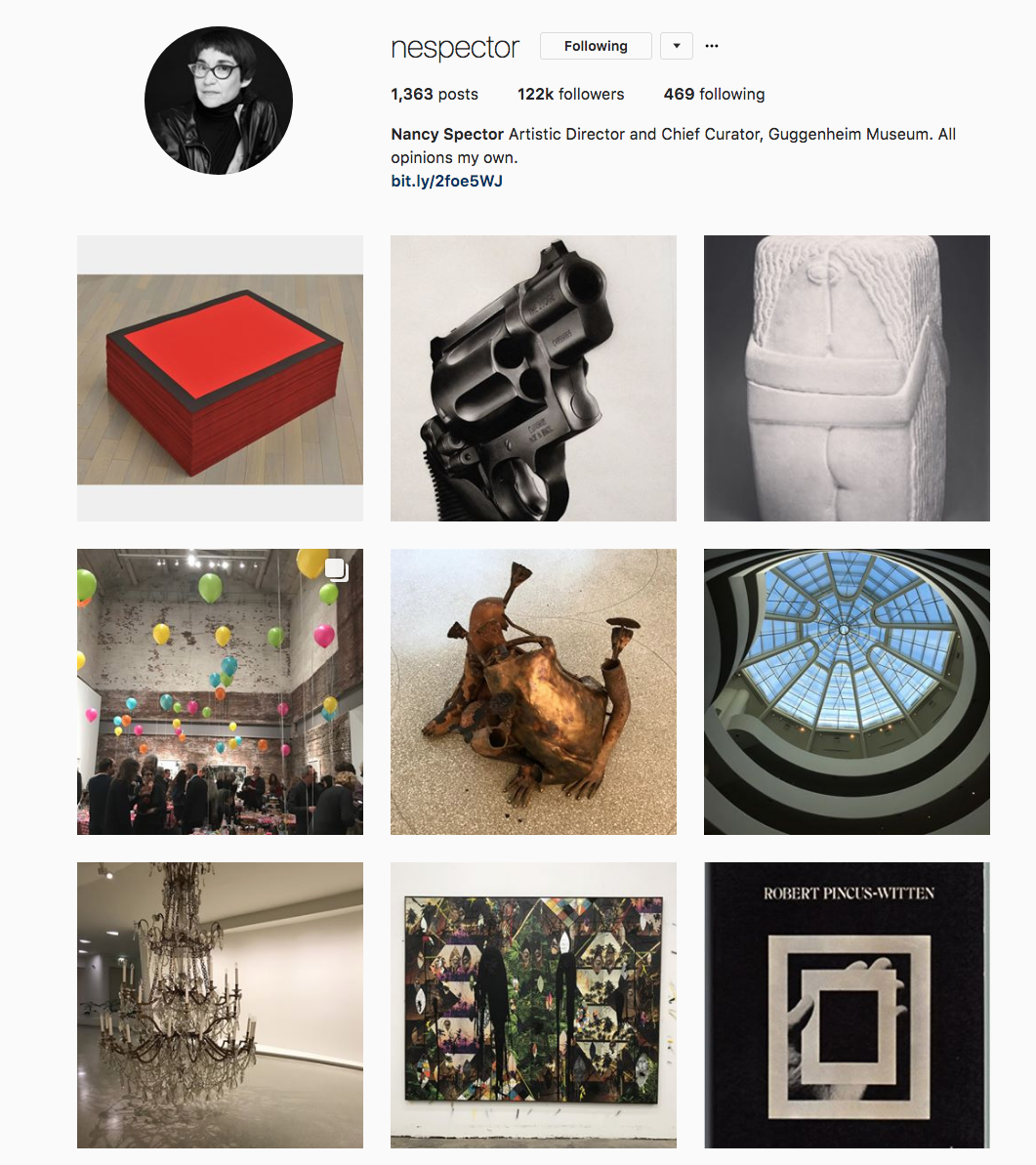
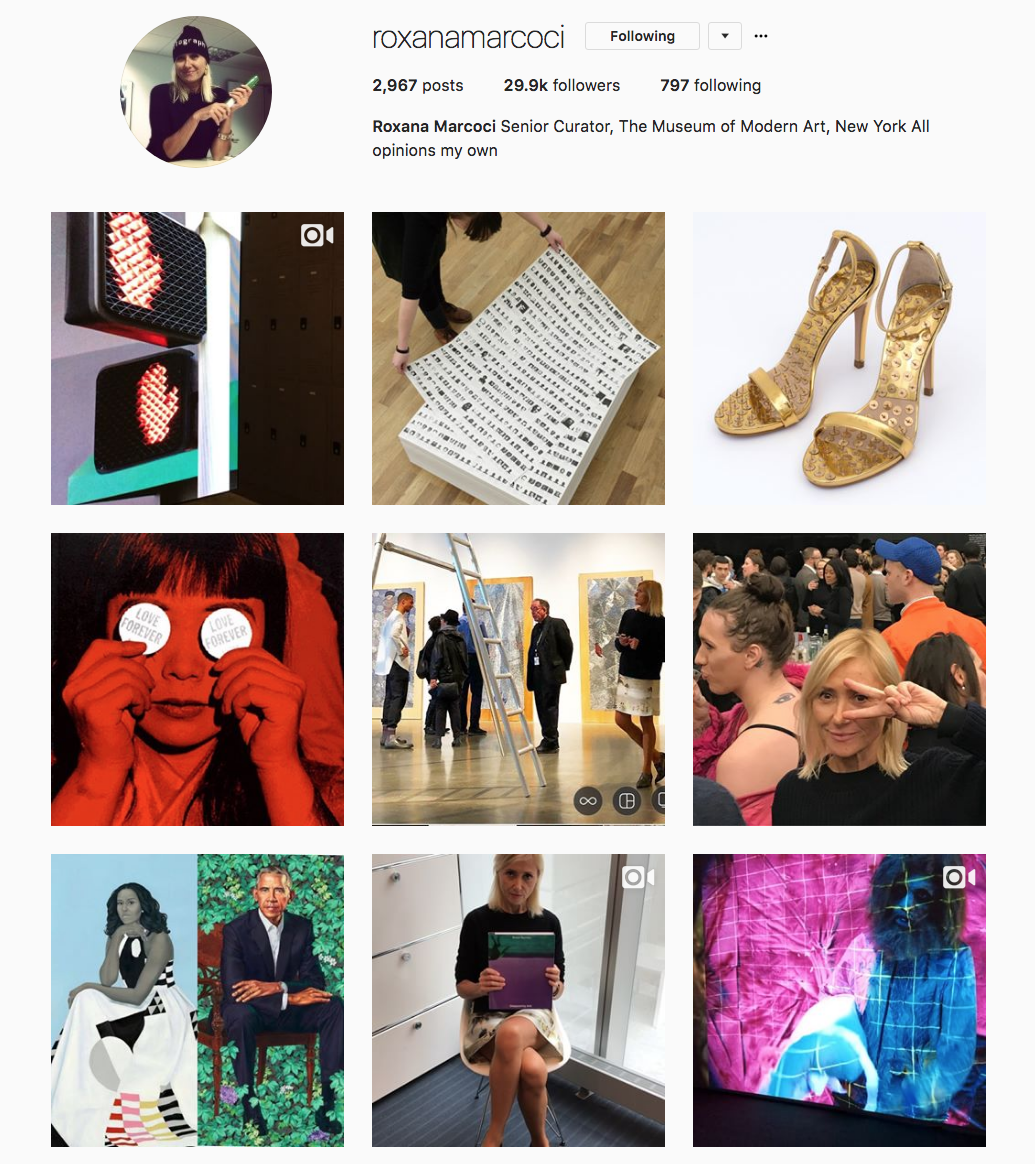
Another great category of art world people to follow are curators and critics. Not only do they travel and see some fantastic work all over the world, they have their own personal quirks and interests that makes following them worthwhile. A few years ago, one of my favourite art critics, Jerry Saltz, began an Instagram account that essentially attempted to test the limits of the platform's rules concerning nudity and obscenity. A prolific daily poster, Saltz continues to use his account as a way to create dialogue about taste and norms in the visual representation of gender and sexuality (and he still gets banned from time to time!). I also enjoy the much followed chief curator of MoMA, Klaus Biesenbach. As one of the most important taste-makers in North American art circles, he also has a great conceptual and even ironic take with his account, posting nearly daily images of the same view from his window at work while documenting his globe trotting and exotic art travels to distant locales and artists' studios. Two other important NYC curators in a similar vein, Nancy Spector from the Guggenheim and Roxana Marcoci from MoMA, have wonderful Instagram pages that document their professional and personal lives. 

Screenshot 2018-02-15 14.29.41.png
Screenshot 2018-02-15 14.27.35.png
Screenshot 2018-02-15 14.49.16.png
Screenshot 2018-02-15 14.29.41.png Screenshot 2018-02-15 14.27.35.png Screenshot 2018-02-15 14.49.16.png

art Historians and Advisors TO FOLLOW

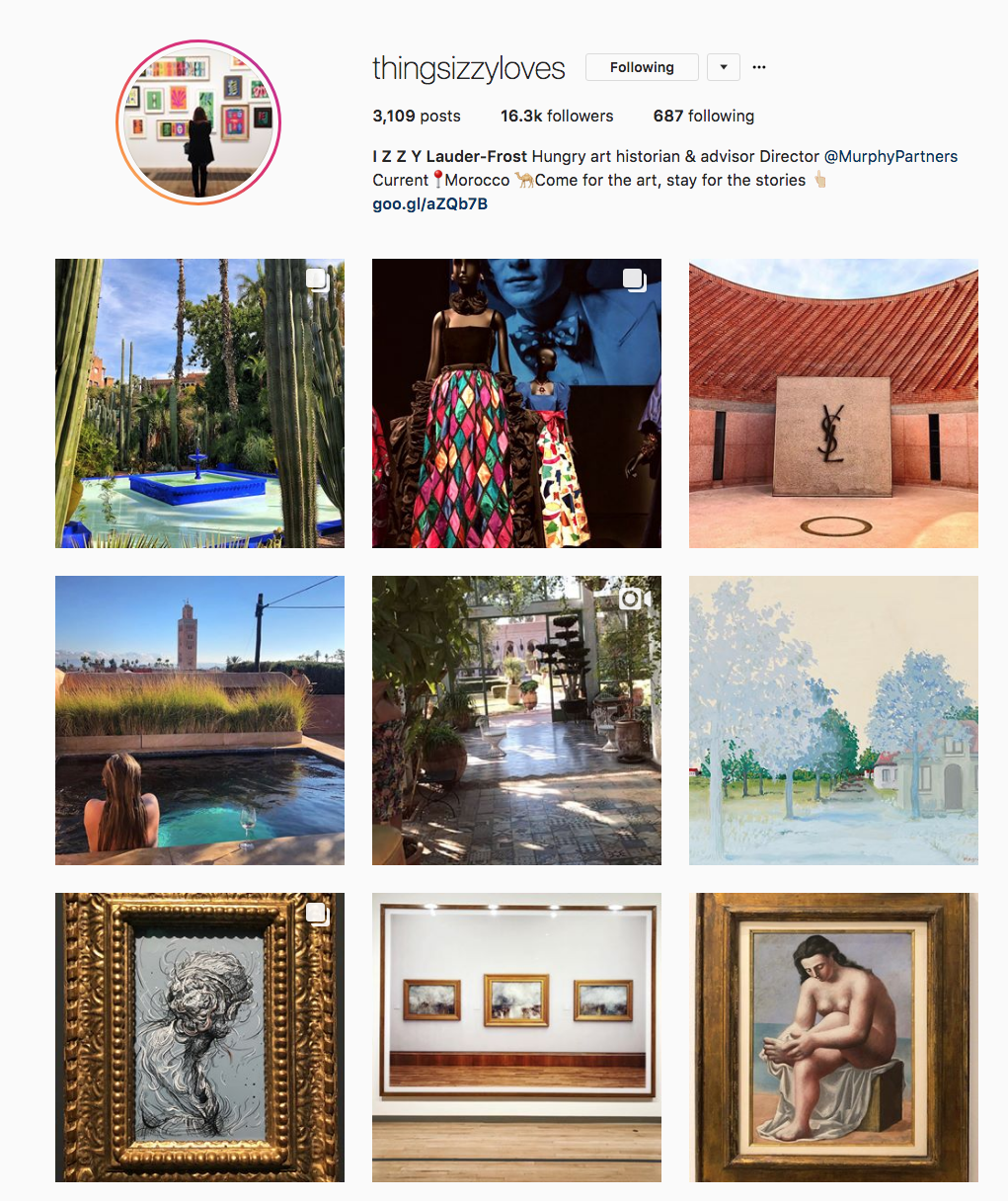
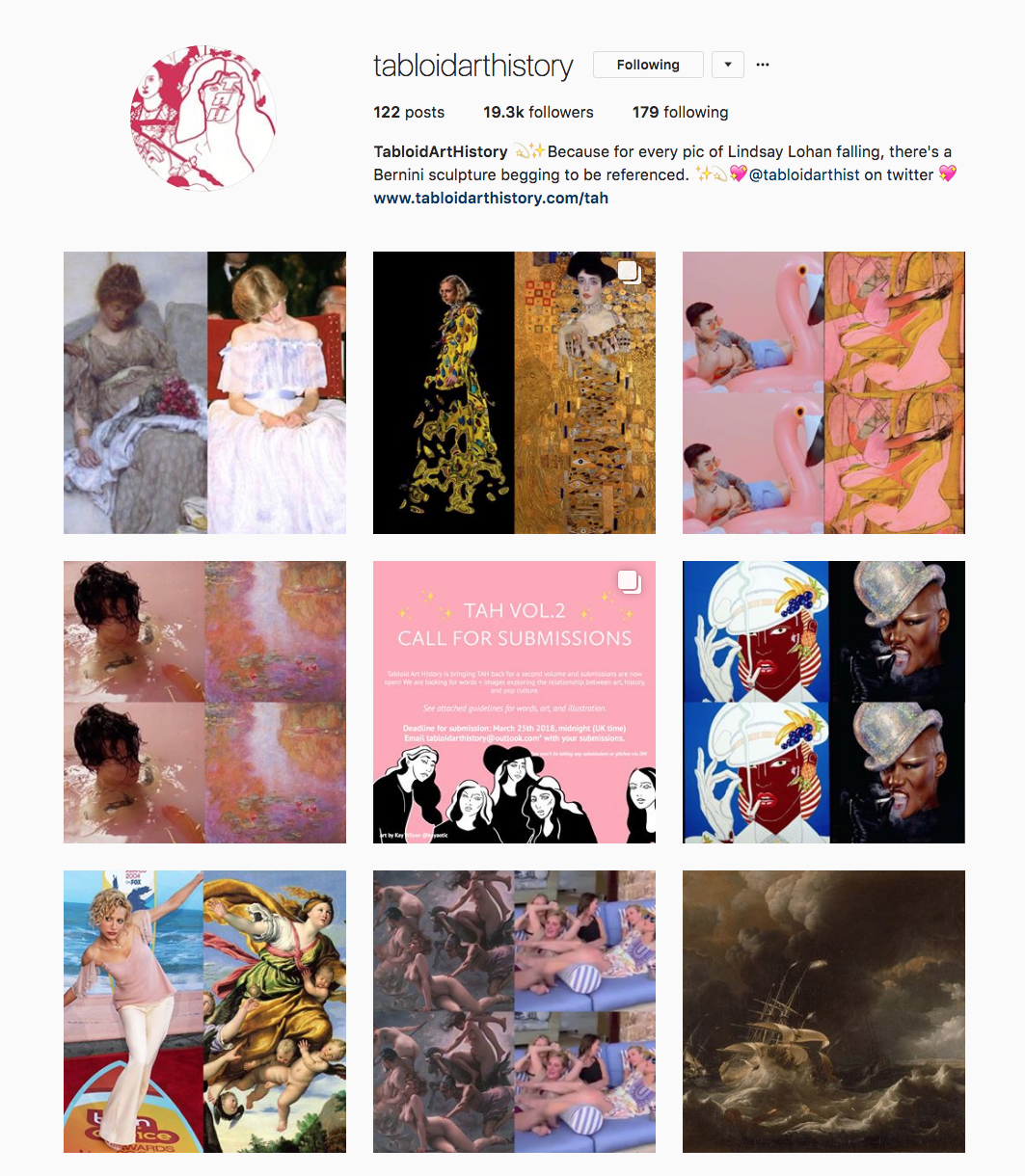
Last but not least are the many art historians and advisors to follow on Instagram. As with artists and curators/critics, these are individuals who spent a great deal of time traveling and looking at a diverse cross-section of art all over the world. Very early on in the first months of using Instagram, I received comments and a follow from art historian Izzy Lauder-Frost, an art historian turned art advisor working in London who has gone on to create one of the most interesting accounts documenting her work with clients and auction houses in the art world. Her travels and lifestyle are fun to follow, and she provides a mix of traditional and contemporary art. Another fantastic resource and personal twist on an art historian's Instagram account is lets_talk_about_art by Dutch art historian and teacher Jurgen Vermaire. His daily picks of art works, often coinciding with his travels, are accompanied by rich descriptions and context about the artist and works. And last but not least is the viral success of the tabloidarthistory Instagram account. Run by three French and UK- based art historians, the account that features juxtaposed images of tabloid celebrity photography with traditional art works, is part of a larger research project exploring the relationship between popular culture and the practice of art history.

As you go on to follow some of these accounts, pay attention to the "who to follow" feature of Instagram that matches your current follows and tastes with other similar accounts. This has been one of the best ways I have found to discover new artists, curators, critics, and art historians on the platform. 

Comment
Newer / Older
Back to Top
Screenshot 2018-02-05 20.48.17.png

© Dorothy Barenscott, 2010-2025